Home Blog Page 6410

BCEL-KT: Trade Summary (Nov 25, 2016)

Trade Summary

At the end of the week, LSX closed unchanged at 1,014.43 point. The market generated about 211 million kip form the trading of BCEL shares. The banking shares today traded down at 5,000 kip. However, it managed to close unchanged at 5,100 kip with the total trading volume of 42,100 shares. In the meantime, other stocks saw no matching, with EDL-Gen closing at 5,000 kip, LWPC at 6,000 kip, PTL at 2,500 kip and SVN at 3,000 kip.

Changing Mekong Currents Compound Dam Anxieties in Southeast Asia

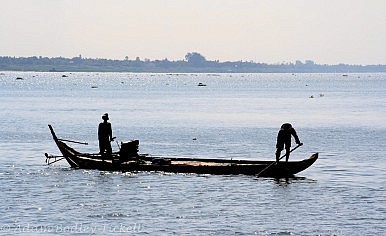
The government of Laos officially submitted the Pak Beng Dam to the Mekong River Commission in mid-November and has begun preparatory work around the future dam site. While this announcement appears to indicate that the government of Laos and international funders for more than 100 hydropower projects are continuing to move full steam ahead despite serious concerns from downstream countries and affected communities, emerging financial risks and regional shifts are increasingly impacting the risk calculus for future projects.

There are three regional factors disrupting the terrain for investment in large hydropower dams in mainland Southeast Asia. The first is the emergence of Myanmar as a competitor for energy sector investment. Myanmar is an underdeveloped country with significant hydropower potential of up to 100,000 megawatts (MW), nearly four times that of Laos. Western sanctions and domestic instability previously prevented hydropower from moving ahead in Myanmar, and as a result the Salween and Irrawaddy remain largely undisturbed.

Although internal political issues in Myanmar raise questions about the speed and extent of development that is politically feasible, investors are interested. The IFC is supporting a country-wide Strategic Environmental Assessment for hydropower development, and there have been a plethora of Thai-Chinese joint projects in the Salween River Basin announced in recent years. These projects will compete strongly for financing that previously may have flowed towards projects in Laos.

The second trend is the economic slowdown in China. China’s role in designing and constructing more than half of all large dams globally means that it would previously have been a likely replacement for any loss of funding from ODA donors or MDBs. However, there is emerging evidence that China’s economic slowdown may impact the ability of Chinese developers to get financing for large infrastructure investments abroad. Chinese banks were previously given political mandates to support projects abroad in strategic sectors such as hydropower, mining, and fossil fuels. Even in cases where financing analysts recognized high project risks, such as the Myitsone Dam in Myanmar, the political mandate and the influence of large investment companies meant that loans gained approval.

While supporting unprofitable projects was possible in years of fast growth, the central government is increasingly concerned over China’s rising stock of non-performing loans. As year-on-year growth forecasts drop to a range of only 6.5-4.5 percent for 2016, financial institutions in China are increasingly under pressure to rein in bad debt. China’s debt issue is now widely recognized, and concerns over debt prompting a recessionhave prompted greater consideration of risks by Chinese regulators.

This may lead to a drop in support for risky projects such as hydropower projects, where profit margins are returned over long periods of time, subject to shocks in electricity pricing and demand, and face long term maintenance costs. Anecdotal evidence shows this is already happening: China Export-Import Bank has a hold on loans for six hydropower projects in Myanmar until political issues over the Myitsone Dam are addressed. In Laos, Chinese developers are postponing the construction of some tributary dams due to the inability of Chinese banks to follow up on funding the continued development of projects.

This raises the question: if China becomes unwilling to fund the controversial and potentially risky projects on the Mekong mainstream, who will? All of the signed MOUs for mainstream Mekong hydropower are build-own-operate-transfer (BOOT) projects. Neither Laos nor Cambodia has the financial strength to finance such large projects themselves. Practical concerns over losing money have led many Chinese hydropower companies to shift from the BOOT model, where they have to take on loans directly, towards a sub-contracting model that allows Chinese companies to avoid long-term ownership and management risks while continuing to export the design, procurement, and construction of dams.

This appears to be what happened with the Don Sahong Project, which is owned and financed by a Malaysian company called Mega First but will be built by Sinohydro. In other cases, Chinese firms may projects into joint ventures to share the risk: the Pak Beng project, which has been on the books as a Datang Hydropower project for years, has apparently shifted to a joint venture with a Thai company.

Finally, the severe drought in 2016 has highlighted the need for a more coordinated approach to water management throughout the basin. Food security and livelihoods have been impacted throughout the region and particularly in Vietnam’s Mekong Delta, with up to half of the Delta’s paddy affected by encroaching salinization during the worst drought recorded in 90 years. In Thailand the 2016 drought prompted the government to announce intensive irrigation plans to draw water from the Mekong tributary system when reservoirs ran dry. This stirred regional controversy, as the diversion of water was done without consultation through the MRC and in the face of concerns from Vietnam and Cambodia.

The extreme challenges posed by the drought and growing recognition of emerging political and financial risks have brought the issue of optimization of resources to the forefront of the conversation about regional development. Climate change predictions anticipate more flooding and more drought in coming years, making optimization planning vital if Mekong countries want to efficiently operate cascades in an uncertain water future. According to one senior engineer at the Mekong River Commission, these risks mean Laos will likely only end up building five of the nine proposed dams, including Xayaburi and Don Sahong. This is not unanticipated—globally, most river basins do not proceed with construction for all proposed hydropower projects. This raises questions as to which planned projects will ultimately be built.

The time seems ripe for Laos to consider alternative development options and better cumulative project analysis to ensure that it makes the best decisions about which projects will move forward. There are emerging models and analytical tools that can explore multiple development scenarios and compare the benefits and costs across a variety of sectors, such as The Nature Conservancy’s Hydropower by Design concept. Utilization of these tools could help Lao decision-makers explore different development options that would provide similar amounts of power with differing levels of social and environmental impacts.

It is clear that the government will not end up with a hundred percent of the planned projects currently on the books and considered in its revenue plans. The earlier Lao officials start to consider alternative development scenarios, the higher the likelihood that high-revenue, low-impact options will remain on the table and the more strategic their decisions about which projects to pursue will be.

Courtney Weatherby is a research associate with the Southeast Asia program at the Stimson Center, a Washington, D.C.-based think tank.

Source: The Diplomat

Rice Cooperatives still Held Back by Marketing

Lao rice cooperatives have made good progress in terms of their rice production efforts but marketing and sales deficiencies are still causing problems for the co-ops.

Agricultural officials and representatives from model cooperatives in the provinces of Xayaboury, Khammuan, Savannakhet and Vientiane are currently meeting in Vientiane to exchange experiences on rice planting techniques and discuss issues related to production and marketing.

Despite the government, especially the Ministry of Agriculture and Forestry, having launched various initiatives to encourage farmers to boost their yields through new techniques the sale of the surplus rice produced is still proving difficult.

Problems with marketing and sales include the instability of the rice price, farmers’ lack of understanding about rice standards and quality controls, planting of old rice varieties instead of those in high demand in regional markets as well as the lack of contractual arrangements between farmers groups and rice millers and marketers.

Some cooperatives are adopting modern methods including machines, especially tractors, even though most of their rice plots are small.

However some fields have not been properly levelled while there may be no good warehouses to store the rice after it is harvested.

New planting and farming methods, as well as better rice varieties, need to be adopted by farmers if they wish to increase their yields while larger and properly levelled rice plots are preferable where possible.

O f course, a reliable water supply is an essential prerequisite to the production of a good rice crop. Minister of Agriculture and Forestry, Dr Lien Thikeo believed that the seminar will help to promote the new rice production methods for expansion around the country in order to reduce capital and food security.

After the meeting, he stressed to agricultural officials to bring the problems for improvement and resolution in the near future.

Many farmers in different areas are still planting their rice crops by traditional methods, which result in reduced yields and large amounts of labour.

Still, thanks to the government’s efforts, each year farmers are able to produce yields that match the government’s plan and quantities have continued to increase every year.

Rice production in Laos for 2012-13 reached about 3.52 million tonnes while 4.12 million tonnes was harvested in 2015-16. This was sufficient for domestic consumption and a surplus was produced for export.

Next year, the government plans to expand the area of rice cultivation by 1.03 million hectares for a yield of 4.35 million tonnes with an average yield of five tonnes per hectare.

About 100,000 tonnes of the rice harvested will be used as seeds while 2.5 million tonnes will be used for consumption within Laos.


Source: Vientiane Times

Human Trafficking Needs Urgent Action: Mekong Nations

Human trafficking continues to flourish within the region, requiring a joint effort by the Mekong countries to actively stamp out the trade and penalise those responsible.

Human trafficking is harmful to socio-economic development and social order in the region and could worsen when the ASEAN Economic Community is fully integrated.

Speaking at the Coordinated Mekong Ministerial Initiative against Trafficking (COMMIT) meeting in Vientiane yesterday, Minister of Public Security, Major General Somkeo Silavong stressed that human trafficking was destructive and should be tackled more vigorously.

Human trafficking is one of the most harmful crimes and is transnational. It involves the acquisition of people by improper means such as force, fraud or deception, with the aim of exploiting them, he said.

Action is being taken to address the root causes of human trafficking and support the recovery and reintegration of victims. Joining together to address this issue is the responsibility of everybody in society, he added.

He said human trafficking had become a highly profitable business and now ranked third behind the arms trade and drug trafficking.

The victims of trafficking are mostly young women, and girls and boys under the age of 18.

Maj. Gen Somkeo said the linking of regional and international economies, the rapid development of IT, easy transportation, free movement of people and other issues had made it easier for traffickers to carry out their business.

Laos and the other Mekong countries have reaffirmed their commitment to work with neighbouring countries to combat human trafficking more effectively.

In a bid to curb human trafficking, the six lower Mekong countries – Cambodia, China, Laos, Myanmar, Thailand and Vietnam – signed a Memorandum of Understanding on COMMIT in 2004.

Some experts and researchers said most human trafficking victims illegally entered neighbouring countries to seek work because they came from poor areas and needed money to support their families.

Other reasons for migration to other provinces or countries are limited job opportunities in Laos and a lack of employers in the form of factories and companies.

Experts said the sectors concerned needed to persuade families to provide their children with information about human trafficking, so they were aware of the risks.

Raising awareness among children and young people about the potential benefits and dangers of migration is very important, and requires the government and the authorities concerned to work together, they said.

Statistics for 2012 from the United Nations Office on Drugs and Crime show that about 27 million people in 127 countries around the world, including Laos, fall victim to human trafficking every year, with 70-80 percent being women and children.


Source: Vientiane Times

Govt, Development Partners to Agree on Next Ten Years Cooperation

Vientiane province: –Localisation of Sustainable Development Goals (SDGs), effective development partnerships, food and nutrition security, green growth, climate change and disaster response preparedness are cross-sectoral topics of discussion between the government and development partners this year.

Experts from the government and development partners’ representative agencies began discussion on these issues yesterday at the 2016 Round Table Implementation Meeting, which continues today in Vientiane province’s capital.

Serving as a forum to discuss how partners can collaborate on national development priorities, the Round Table Implementation Meeting is taking stock of progress made in 2016 and guiding joint efforts for 2017.

As a main output of this meeting, the government will endorse with its partners, the Vientiane Declaration Country Action Plan for 2016-2025, which outlines key actions to enhance effective development cooperation, and will help put into practice the SDGs and the Eighth Five-Year National Socio-Economic Development Plan (NSEDP).

In his opening remarks at the meeting, Deputy Minister of Planning and Investment Dr Kikeo Chanthaboury noted the importance of learning about implementation and achievement of various goals, and the integration of local and national level indicators.

We have to learn about how the indicators are implemented at provincial level so that they continue to comply and are integrated with those at national level, he said.

Dr Kikeo mentioned food and nutrition security, saying it was very important in terms of poverty reduction.

The deputy minister reminded the meeting about the government’s clear policy on environmental protection through issuing the decree to stop logging and timber exportation.

Dr Kikeo noted the cooperation between the government and its development partners over the past 15 years with appreciation, saying the country had became a model in the implementation of the Millennium Development Goals.

According to a report from the ministry, 447 projects have been implemented in the 2015/16 fiscal year around the country with Official Development Assistance funding of US$367 million. Of this amount US$228 million has been actually been disbursed.

Speaking at the meeting, Vientiane province Vice Governor Ms Singkham Khongsavanh highlighted the geographic and demographic specifications of the province, which she said had an abundance of nature and diversity of multiethnic cultures.

She also noted the economic growth, which had not been strong enough, referring to several targets not achieved. She pointed to the shortage of funds and capable personnel and specialists, and a large portion of the population still relying on nature for a living as challenges in achieving the goals.

Vientiane province has around 1,000 families or 1.2 percent of total families in the province living under the poverty line, and 10 villages are noted as extremely poor.


Source: Vientiane Times

Economists Query Accuracy of Investment Figure

Economists have queried the investment figure reported by the government, saying it does not reflect the reality of economic growth.

Minister of Planning and Investment Dr Souphan Keomixay told the National Assembly recently that the total investment figure over the past nine months of the 2015-16 fiscal year was 41.82 trillion kip, equal to 38 percent of Gross Domestic Product (GDP).

Investment funding came from both domestic and foreign sources, the state budget, Official Development Assistance (ODA), and the banking sector.

The minister was asked by Assembly members to clarify the figure, saying that if investment was equal to 30 percent of GDP, the country’s economic growth rate would be 7.5 percent.

However, the economy grew by only 6.9 percent this year so it must be impossible for total investment to equal 38 percent of GDP.

A senior economist at the National Economic Research Institute and a member of the National Assembly, Dr Leeber Leebouapao, told Vientiane Times this week the minister has told us that the investment figure was inaccurate.

Dr Leeber said government bodies calculated the value of project investment in their annual fiscal reports after the projects had been approved by the government.

But many of these projects failed to get off the ground or were postponed.

In addition, some mega projects took four or five years to complete, but all of the capital ploughed into them was included in the one-year report. To be accurate, we should calculate the actual money spent on a project each year (not the approved investment figure) since that is the amount that is in circulation in the economy, Dr Leeber said.

I think the figure on investment values is unclear. We still don’t know exactly how much investment funding goes into the economy each year.

According to the Ministry of Planning and Investment, 1,222 investment projects were approved for domestic and foreign businesses over the past nine months, with registered capital of over 25.5 trillion kip (US$3.13 billion).

Of the total, nine projects were approved in the form of concessions, worth US$447 million. Approval was given to another 33 projects for operation in special and specific economic zones, with a total value of US$443.9 million. The rest were general businesses.

However, only US$883.7 million of the money invested in these projects has been transferred through the banking system for investment in Laos.

Concerning the economic growth figure of 6.9 percent this year, Dr Leeber said he believed it was accurate because the calculation of GDP was based on productivity, not on the approved investment capital.

The government has projected that the economy will grow by 7 percent next year due to the revenue shortfall and the global economic slowdown.

Laos, Vietnam Highly Value Time-honoured Ties, Sign Deals to Deepen Cooperation

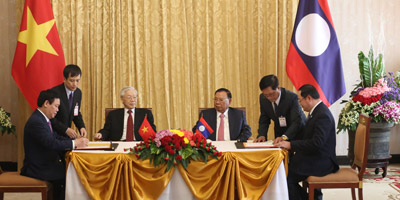
Lao and Vietnamese leaders yesterday reiterated their deep appreciation of the time-honoured friendly relations, special solidarity and comprehensive cooperation between the two neighbours at the start of a three day state visit to Laos by the General Secretary of the Communist Party of Vietnam (CPV), Nguyen Phu Trong.

General Secretary Nguyen Phu Trong and his high-level delegation are visiting Laos at the invitation of the Secretary General of the Lao People’s Revolutionary Party and President, Bounnhang Vorachit.

An official welcoming ceremony took place at the Presidential Palace where General Secretary Nguyen Phu Trong and his delegation were greeted by Secretary General Bounnhang and other high-level Lao officials.

At the bilateral talks held shortly after the welcoming ceremony, the Lao Party and state leader officially welcomed General Secretary Nguyen Phu Trong and his delegation.

The Lao leader said he highly valued the visit to Laos by the Vietnam Party Chief, saying it would further strengthen the traditional friendly relations, special solidarity and comprehensive cooperation between the two Parties, states and peoples, which was engendered by President Ho Chi Minh, President Kaysone Phomvihane and President Souphanouvong and nurtured since by generations of leaders and citizens.

General Secretary Nguyen Phu Trong expressed his delight at leading his delegation to visit Laos, making his first overseas trip following his re-election as Party General Secretary in January 2016. He expressed heartfelt thanks to Party and state leaders and the people of Laos for the warm hospitality extended to him and his delegation.

The Vietnam Party Chief expressed his confidence that the Lao people under the leadership of the Lao People’s Revolutionary Party would enjoy greater achievements and successfully realise the Resolution of the 10th Party Congress.

The leaders briefed each other on the important issues taking place within their respective parties and countries. T hey reviewed the relations and cooperation between the two nations in recent years and discussed future cooperation in order to elevate the special relationship to new heights .

Following their talks, the leaders witnessed the signing of seven documents to enhance Laos-Vietnam relations and cooperation.

The documents are as follows: a Memorandum of Understanding (MOU) in which the Party, state and people of Vietnam will support the construction of a new National Assembly building for Laos. Another MOU undertook to build a school in Borikhamxay province as a gift from General Secretary Nguyen Phu Trong.

The third document is a five-year cooperation agreement (2016-2020) between the Lao Front for National Construction and its Vietnamese counterpart. The fourth is an agreement to revise the cooperation strategy between Laos and Vietnam in Huaphan and Xieng Khuang provinces until 2020.

The remaining three documents comprise an agreement on investment for the planned Vientiane-Hanoi Highway Project, an agreement on the five-year transport cooperation plan (2016-2020), and an MOU to create an economic and trade cooperation website.

Later in the day, the Vietnam Party chief and his delegation called on Prime Minister Thongloun Sisoulith at the Prime Minister’s Office, and President of the National Assembly Ms Pany Yathotou at the National Assembly Office.

General Secretary Nguyen Phu Trong also received courtesy visits from the President of the Lao Front for National Construction Dr Xaysomphone Phomvihane, and President of the Laos-Vietnam Friendship Association Dr Vilayvong Boutdakham.

Secretary General Bounnhang hosted a banquet in honour of General Secretary Nguyen Phu Trong and his delegation.


Source: Vientiane Times

Huawei’s Seeds for the Future Programme Launches in Laos

Ten students from the National University of Laos, University of Savannakhet, University of Champassak and Souphanouvong University in LuangPrabang province have been selected to take part in an ICT study trip to China.

Huawei, in collaboration with the Ministry of Education and Sports, yesterday organised a launch ceremony for the Seeds for the Future Programme in Vientiane, attended by Minister of Education and Sports Ms Sengdeuane Lachanthaboun, Chinese Ambassador to Laos Mr Guan Huabing and Chief Executive Officer of Huawei Technologies (Lao) Sole Co., Ltd., Mr ZangDongya.

This is Huawei’s global Corporate Social Responsibility programme that aims to nurture the ICT talents of Laos. It also aims to facilitate the transfer of ICT knowledge, thus supporting Laos to be a digitally empowered nation.

Initiated by Huawei in 2008, the Seeds for the Future Programme seeks to develop local ICT talent, enhance knowledge transfer, promote a greater understanding of and interest in the telecommunications sector, and improve and encourage regional building and participation in the digital community.

Every year, Huawei invites 1,000 students, 10 per country, to study at the company’s headquarters. There, they discuss future trends and are shown how to harness new opportunities.

During the trip, the students will experience Chinese traditional culture and take short courses in Chinese calligraphy and painting at the Beijing Language and Culture University for one wee k.

The students will also have opportunities to study cutting-edge technologies such as 5G, LTE, and cloud computing, and hands-on practice in Huawei Headquarters’ most advanced labs in Shenzen.

Speaking at the launch, Mr Zang Dongya explained how they are committed to long time contributions in Laos such as cultivating local talents. Thus, the Seeds for the Future Programme will greatly assist Laos, local communities, universities and students, and the Lao ICT industry.

Mr Zang also said Huawei wants to support the government in ICT development. Students in the programme can enhance their ability to adapt to the ICT industry as they learn about state-of-the-art technologies and skills, as well as the innovation needs of the Lao market.

By acquiring such skills, students will boost their confidence, which will help them to excel in their careers and in multi-cultural business environments.

Information and communication technologies have become crucial growth engines for many different industries. As an ICT leader, Huawei is committed to promoting ICT industry development in the countries it operates in, and aims to drive long-term economic, social, and environmental sustainability, Mr Zang said.

Source: Vientiane Times