Home Blog Page 7

BON Unveils Joint Lab for Natural Ingredients & Biomanufacturing with China Oat Group, Advancing Life Sciences Innovation

XIAN, China, Nov. 21, 2026 /PRNewswire/ — Bon Natural Life Limited (NASDAQ: BON) (“BON” or the “Company”), a leading provider of bio-ingredient solutions for the natural, health, and personal care industries, today announced that its subsidiary, Xi’an App-Chem Bio (Tech) Co., Ltd. (“App-Chem”) recently convened a symposium with China Oat Group Co., Ltd. (“China Oat Group”) on the theme of “Advancing the High-Quality Development of China’s Health Industry“. At the event, the two parties announced the establishment of the BON Natural Ingredients and Biomanufacturing Joint Laboratory (the “BON Joint Lab” or the “Joint Lab”).

Through an innovative collaboration model, the BON Joint Lab aims to build an integrated innovation framework spanning the entire value chain, from fundamental research and pilot-scale development to standard-setting and industrial commercialization. The Joint Lab will focus on developing an AI-driven technological platform for the biomanufacturing of natural ingredients, with synthetic biology serving as its technological foundation and artificial intelligence (AI) as a key competitive differentiator. Its primary focus will be the development of biomanufacturing technologies for high-value natural ingredients. This integrated technological framework is expected to enhance the Joint Lab’s competitive position in the natural ingredients biomanufacturing sector while offering the industry new alternatives to conventional production methods.

Oats are widely recognized for their nutritional value and health benefits. They contain bioactive compounds such as beta-glucan and avenanthramides (AVAs), which have demonstrated various biological activities, including cardiovascular protection, blood glucose regulation, antioxidant effects, and anti-inflammatory properties. As a supplier of oat-based health products, China Oat Group serves a market characterized by strong demand and significant growth potential. However, limited availability of natural raw materials and high sourcing costs have constrained the broader commercial application and market expansion of oat-derived products.

Through the establishment of the Joint Lab, BON and China Oat Group aim to develop biomanufacturing technologies for oat-derived natural ingredients, with the goal of fundamentally addressing challenges related to supply availability, supply stability, and high production costs. BON and China Oat Group believe that this initiative is of significant importance in expanding the market for oat-derived natural ingredients.

Standards development plays a critical role in the biomanufacturing of natural ingredients. The unique complexity of natural ingredient sourcing, heightened regulatory scrutiny of product safety, and distinct consumer preferences for naturally derived ingredients make the establishment of standards for biomanufactured natural ingredients critically important to their commercial value.

BON and China Oat Group have undertaken extensive and productive work in developing quality standards for natural ingredients. The Joint Lab will make standards development a dedicated area of focus, conducting systematic testing and validation of key parameters, including ingredient purity, safety, and elemental and isotopic profiles. Through a comprehensive and integrated process of evaluation and optimization, the Joint Lab aims to establish systematic differentiation in product standards across multiple dimensions, including safety, differentiated quality standards, and similarity to naturally derived counterparts.

BON has established a strong presence in the natural ingredients biomanufacturing sector and has articulated its vision of becoming an “AI-driven pioneer in digital nutrition“. The Company is committed to accelerating the transition from conventional natural extraction methods to AI-driven biomanufacturing. The Company believes that it has built a strong technological foundation in natural products, biosynthesis, and the application of AI in biology, supported by robust industrialization capabilities and global market development expertise.

China Oat Group has developed extensive expertise across the entire oat value chain and holds more than ten invention patents in China, along with multiple patents in the United States, Europe, Canada, Australia, and other markets. Leveraging its advanced technologies in areas such as oat protein enzymatic hydrolysis and the preservation of beta-glucan bioactivity, China Oat Group has developed a portfolio of oat-based nutritional products whose health benefits have been evaluated through medical research. China Oat Group was also among the first companies to achieve large-scale, standardized deep processing of oats, with its related technologies receiving authoritative certifications in Europe and the United States.

Mr. Yongwei Hu, Chairman of BON, commented, “Our strategic collaboration with China Oat Group marks a pivotal step in our efforts to establish a stronger presence in the core natural ingredients sector, accelerate our expansion into the rapidly growing global biomanufacturing market, and further strengthen our position as an innovation leader in the industry. Through the Joint Lab, we aim to advance cutting-edge research in areas such as the biosynthesis of high-value natural ingredients, the discovery of functional bioactive compounds, and precision nutrition interventions. We are committed to accelerating the commercialization of scientific and technological innovations and delivering a broader range of safe and effective health solutions to consumers. Through the disciplined execution of our technology-driven business strategy, we seek to unlock significant commercial value and generate sustainable returns for our investors.”

About Bon Natural Life Limited (“BON”)

BON is a Cayman Islands company engaged in the business of natural, health, and personal care industries. For more information, please visit the Company’s website at http://www.bnlus.com.

For more information, please contact:
Cindy Liu | IR
Email: bonnatural@appchem.cn 

Safe Harbor Statement

This press release contains certain statements that may include “forward-looking statements.” All statements other than statements of historical fact included herein are “forward-looking statements.” These forward-looking statements are often identified by the use of forward-looking terminology such as “believes,” “expects” or similar expressions, involve known and unknown risks and uncertainties. Although the Company believes that the expectations reflected in such forward-looking statements are reasonable, they do involve assumptions, risks, and uncertainties, and these expectations may prove to be incorrect. You should not place undue reliance on these forward-looking statements, which speak only as of the date of this press release. The Company’s actual results could differ materially from those anticipated in these forward-looking statements as a result of a variety of factors, including those discussed in the Company’s periodic reports that are filed with the Securities and Exchange Commission and available on its website (http://www.sec.gov). All forward-looking statements attributable to the Company or persons acting on its behalf are expressly qualified in their entirety by these factors. Other than as required under the securities laws, the Company does not assume a duty to update these forward-looking statements.

 

The Thanksgiving Reunion That Turned Gratitude Into Color — Inside CASEKOO Founder Ralph Ye’s Montana Story

NEW YORK, Nov. 21, 2026 /PRNewswire/ — CASEKOO, the design-led lifestyle brand known for its phone cases and for turning everyday carry into a statement of personal freedom, today shared a new promo across its social media channels—a set of four warm, hazy, light-drenched color fields carrying a simple Thanksgiving message for every CASEKOO user: “Remember to visit your important ones. No matter how late.”

The New LinKOO Luxe in Mocha Brown

The colors were born not in a design lab, but at a Thanksgiving dinner table in Montana, where CASEKOO founder Ralph Ye rediscovered the warmth of an old friendship and the quiet power of simply being present.

The Trip That Started With a Text

In November 2025, Ralph Ye boarded a flight to Montana with no product deck, no factory samples, and no agenda. He was going to see Alex—his best friend from college, a person he had once shared dorm rooms, late-night dreams, and a decade of inside jokes with before life, work, and two different time zones quietly stretched the space between them.

“We kept saying we’d meet up,” Ye recalled. “For twenty years, we kept saying it. And then one day I just booked the ticket.”

Alex and his wife welcomed Ye into their home and cooked a Thanksgiving meal that Ye still describes with a kind of reverent slowness—the turkey, the sides, the kitchen that smelled like butter and rosemary, the way Alex’s wife kept refilling plates without being asked. The two old friends sat at the table long after the dishes were cleared, talking through two decades of missed updates and half-remembered stories, the kind of conversation that only happens when no one is checking the time.

The Moment the Room Blurred Into Color

As the night deepened and the wine settled in, Ye found himself half-closing his eyes. The edges of the room began to soften. Alex’s voice became a warm hum. The lamp in the corner, the wooden cabinets, Alex’s silhouette against the kitchen light—all of it started to faint, to blend, to dissolve into a single, luminous wash of warm, cozy, light color.

“I wasn’t asleep,” Ye said, laughing. “I was just… swimming in it. The color of that room, the color of being taken care of by people who remember who you were before you became whoever you are now. I opened my eyes and thought, This is the color I want to carry.”

That color and feeling inspired the promo, with CASEKOO’s Thanksgiving campaign drawing its four colors from Ye’s November 2025 reunion with Alex in Montana.

A Message for Every CASEKOO User

The promo does not show a product. It shows a feeling. And for Ye, that feeling is the whole point.

“We spend so much time designing for the hand,” Ye said. “This time, we designed for the heart. The color is the Thanksgiving kitchen. The color is twenty years of friendship picking right back up. The color is a little thanks.”

The campaign invites users to share their own “little thanks” moments—a late-night call to a parent, a surprise visit to a friend, a drive to a hometown that felt farther away than it should have. For Ye, the campaign is not a marketing exercise. It is a correction.

“I built CASEKOO around the idea that your phone should free you to be present,” he said. “And then I realized I had been too busy building to be present with the people who mattered most. That night in Montana, Alex didn’t ask me about product roadmaps. He asked me if I was happy. That’s the kind of question you can only ask someone you’ve known for twenty years. I want every CASEKOO user to go get asked that question.”

That invitation to reconnect gives CASEKOO’s “Less Effort, More Living” philosophy a personal meaning: making time for the people who matter.

Coming at the End of November

The promo is now live on CASEKOO’s official social media channels. A new chapter inspired by that Montana Thanksgiving will arrive at the end of November.

For more information and to follow the campaign, visit casekoo.com.

About CASEKOO

CASEKOO is a design-led lifestyle accessories brand known for its phone cases. Its core philosophy is built around a simple idea: freeing your hands in everyday life. Guided by the philosophy of “Less Effort, More Living,” the company has sold more than 20 million phone cases across 32 countries, building a global community of over 17 million users. From its breakthrough StandKOO MagicStand™ for hands-free viewing to the revolutionary LinKOO ClipSafe™ for hands-free carrying, CASEKOO continues to redefine what a phone case can be — not just protection, but liberation. The brand has received multiple design recognitions, including Red Dot and iF Design Awards.

GEYOTO Wraps Up RE+ 2026 Debut with Strong Visitor Engagement and Real-World Product Experiences

From creator coverage and product demonstrations to an artist-painted N1000, GEYOTO’s Las Vegas debut connected energy innovation with everyday needs.

LAS VEGAS, Nov. 21, 2026 /PRNewswire/ — GEYOTO concluded its first appearance at RE+ 2026 with an active booth, interest among content creators and visitors, and product experiences that brought its “Go-to Energy” philosophy to life. During the Nov. 17–19 exhibition at the Las Vegas Convention Center, attendees stopped to photograph the booth, explore new products and speak with the team about energy needs at home and outdoors.

A First Appearance That Gave Visitors a Reason to Stop

A First Appearance That Gave Visitors a Reason to Stop

At Booth C4753, sandstone textures and warm desert tones gave GEYOTO an American Southwest-inspired setting. The oversized “YO!” installation at the front added a playful welcome, expressing the brand’s lively, approachable personality and giving visitors another reason to stop and take a photo.

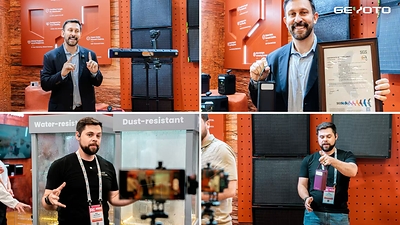
Content creators, including @911Reviews and @Minute Man Solar, visited the booth to explore and record the new lineup. Alongside invited creators, other attendees passing through the exhibition also stopped to film and photograph the products, drawn to their distinctive designs. Attendees shared their own photos and posts on social media, carrying their impressions of GEYOTO beyond the exhibition floor.

Creators at the Booth

This interest also led to conversations with distributors, retailers and solar industry professionals about product applications and potential North American partnerships, giving the team opportunities to continue discussions beyond the show.

Product Stories That Went Beyond the Specification Sheet

The N1500X demonstration setup was one of the booth’s focal points, inviting visitors to look more closely at the model’s outdoor-oriented protective design. With an IP65 rating for dust and water resistance, the portable power station gave the team a concrete starting point for discussing outdoor use, product protection and practical operating needs.

Another memorable exhibit was an N1000 previously used by participants at Burning Man and featuring original artwork painted by several artists. Brought from the desert to RE+, the unit paired a real-world use story with a distinctive visual identity, showing how a power station can support outdoor experiences while becoming part of the memories people bring home.

New Products Built Around Practical Details

GEYOTO’s next-generation N300L, N1000L and N2000L portable power stations put a familiar travel inconvenience in focus: managing charging cables. Each model features an integrated retractable cable that delivers up to 140W of fast charging to compatible devices, bringing cable storage and device charging together in one design.

On the solar side, the S200 Rigid and S400 Rigid panels use heterojunction (HJT) cell technology and support bifacial generation, with a bifaciality rating of up to 95%. Reinforced aluminum frames are designed to support long-term outdoor use. The modular Y3000 and Y6000 balcony energy storage systems added another application to the display, with battery expansion options for different energy needs.

Small Gestures Made Energy Useful on the Show Floor

Beyond the displays, the team offered hats, charging adapters and cables, along with access to charging at the booth. For visitors who needed to recharge a device during the show, GEYOTO’s products became part of their day rather than simply something to look at.

For some visitors, interest went beyond filming and conversation. Several visitors asked to buy the equipment directly and take it home, and nearly all of the spare units available at the booth were purchased on site. The response gave GEYOTO a tangible sign of product appeal during its first RE+ appearance.

As RE+ 2026 came to a close, GEYOTO left with new industry contacts, content from creators and attendees, and direct feedback from people who had seen and used its products. From a charging cable offered when a visitor needed one to a power station taken home after the show, the debut connected GEYOTO’s products with real people and immediate needs, giving its “Go-to Energy” philosophy a practical expression.

Reliable Energy Ready for Real Life.

About GEYOTO

GEYOTO develops portable power stations, solar panels and modular balcony energy storage systems, focusing on reliable energy solutions designed around everyday needs.

Website: https://www.geyoto.com/

Hoymiles showcases versatile residential solar and storage solutions at RE+ 2026

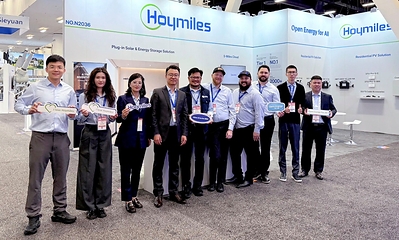
LAS VEGAS, Nov. 21, 2026 /PRNewswire/ — Hoymiles showcased its latest residential solar and energy storage solutions at RE+ 2026, featuring the HiFlow Pro plug-in microinverter, HiBattery 4020 series and HMS series microinverters. Designed for a range of household energy needs, the portfolio covers emerging plug-in PV applications, expandable home energy storage and rooftop solar, highlighting Hoymiles’ continued commitment to the North American market.

Hoymiles showcases versatile residential solar and storage solutions at RE+ 2026

HiFlow Pro brings flexibility to plug-in solar

HiFlow Pro microinverter, named to TIME’s Best Inventions 2026 list, is the first plug-in microinverter in the U.S. market to meet the UL 3700 safety standard. The HiFlow Pro 1-in-1 model connects to a single solar module and weighs approximately 1.8 kg, making installation straightforward. With a startup voltage as low as 22V and peak MPPT efficiency of 99.8%, it is designed for efficient solar generation in a compact form. Built-in Wi-Fi and Bluetooth connectivity enable real-time system monitoring through the S-Miles Home app.

HiBattery 4020 X combines solar generation and storage

The HiBattery 4020 X combines solar generation and storage in one compact system, featuring a built-in 4.02 kWh battery, four MPPTs, up to 4 kW PV input and 1,200 W output. It supports Hoymiles and third-party smart meters, with MQTT connectivity for integration with external energy management platforms. The system features 48 BMS protection functions and multiple safety measures, encased in an IP66-rated enclosure. For greater storage capacity, users can add HiBattery 4020 S expansion battery stack to scale the system up to 16.08 kWh.

HMS microinverters offer flexible rooftop configurations

Hoymiles also presented three HMS microinverter models: the HMS-500-1T-NA, HMS-1000-2T-NA and HMS-2000-4T-NA. With one, two and four PV module connections respectively, the microinverters provide flexible options for different rooftop layouts.

TÜV Rheinland recognizes HoyUltra 261A’s functional safety performance

During the exhibition, TÜV Rheinland presented Hoymiles with a functional safety test report for its HoyUltra 261A C&I BESS. The testing was conducted in accordance with IEC 60730-1:2022 Annex H and UL 60730-1:2024 Annex H, with the system receiving a “Pass” result. The report provides independent third-party testing evidence for the system’s functional safety design.

With its U.S. operations and North American technical service team, Hoymiles continues to strengthen local partnerships and deliver responsive support, while developing products and services tailored to local needs to help households build more flexible and resilient energy systems.

/C O R R E C T I O N – Relativity/

In the news release, Most Legal Professionals Say AI Has Not Yet Changed Hiring, According to a Relativity Study, issued 12-Nov-2026 by Relativity over PR Newswire, we are advised by the company that changes have been made. The complete, corrected release follows, with additional details at the end:

Most Legal Professionals Say AI Has Not Yet Changed Hiring, According to a Relativity Study

News Summary

  • Relativity today released AI in Legal: 2026 Research Data, a new study finding that the majority of respondents (57.9%) said AI has had no impact on hiring, with more reporting increasing hiring (24.2%) than decreasing it (9.2%).
  • 80.5% of legal professionals currently use AI in their legal work, with an even larger share of chief legal officers doing so. More than 99.0% of respondents either use AI now or plan to within 12 months.
  • Respondents favored accuracy over speed by 92.3% to 7.7% and higher trust over lower cost by 79.3% to 20.7%.

CHICAGO, Nov. 12, 2026 /PRNewswire/ — Relativity, a legal data intelligence company, today announced findings from AI in Legal: 2026 Research Data, with research and analysis by International Data Corporation (IDC), a new study examining how legal professionals are adopting and governing AI. The study combines primary research from IDC, a survey of state court judges conducted by Relativity and the National Association of Women Judges (NAWJ), and findings from the upcoming eighth annual edition of The General Counsel Report, produced by Relativity and FTI Consulting. Together, these perspectives offer a broad view of AI use across the legal landscape, along with the growing importance of trust, governance and accountability.

The study draws on research conducted from April to October 2026, incorporating feedback from 700 legal professionals across 20 nations, including an IDC study of 401 respondents. Participants included lawyers, paralegals, legal technologists and legal IT professionals. The countries represented are Argentina, Australia, Brazil, Canada, China (Hong Kong), Colombia, France, Germany, India, Ireland, Japan, the Netherlands, New Zealand, Singapore, Spain, Sweden, Switzerland, the United Arab Emirates, the United Kingdom and the United States.

“In this 2026 follow-up to our 2024 study, the data show that AI use in the legal profession is now a fait accompli. The question is no longer ‘Are legal teams using AI?’ but ‘How and why are lawyers and their colleagues using it?'” said David Horrigan, Discovery Counsel and Legal Education Director at Relativity. “Some of the data, such as more than 91.0% of chief legal officers and more than 80.0% of all legal professionals using AI, was not surprising at all. What did surprise us was that, for most respondents, AI has had no effect on hiring at this point, and more reported adding staff than cutting it.”

AI has not yet upended hiring or billing in aggregate

The data suggest AI is not yet driving widespread staffing reductions. According to IDC, 57.9% of respondents said AI has had no impact on their hiring, and more reported increasing hiring (24.2%) than decreasing it (9.2%).

“Many have predicted that AI will end the billable hour on the theory that faster work will lead clients to demand task-based billing,” said Horrigan. “The research indicates that has not happened broadly, at least not yet.”

The billable hour remains the most common primary billing method among law firms (45.7%), ahead of hybrid billing (31.8%), task-based billing (17.2%), and contingency fees (5.3%).

The research also points to cost savings, with 82.8% of respondents saying AI has saved their organization money.

AI becomes the baseline, not the differentiator

The research indicates 80.5% of legal professionals and more than 91.0% of chief legal officers currently use AI in their legal work, and more than 99.0% of respondents either use it now or plan to within 12 months. The level of usage is also growing, with 93.0% of respondents saying they have increased their AI use, by an average of 65.0%, while just 0.9% have decreased it.

“When adoption ceilings sit above 90.0%, using AI stops being a differentiator and starts being a floor,” said Ryan O’Leary, Research Director for Privacy and Legal Technology at IDC. “The advantage moves to how well it is used.”

Outlook on and adoption of AI differ by role

According to data from The General Counsel Report, 86.8% of chief legal officers are very or somewhat optimistic about AI.

Judges, by contrast, are adopting AI at a slower pace. Data from the Relativity-NAWJ survey indicate 16.6% of respondents never use AI and another 33.3% use it only rarely. About one in five federal and state judges (20.4% and 20.0%, respectively) prohibit court staff from using AI, while 7.4% of federal judges and 14.2% of state judges permit and encourage it.

Their outlook is also more divided. In the Relativity-NAWJ survey, 47.1% of state court judges said they are very or somewhat optimistic, and 36.0% said they are very or somewhat concerned. Among federal judges surveyed by The Sedona Conference, 43.6% were optimistic, and 41.7% were concerned.

Accuracy beats speed, and trust beats cost

In the IDC research, trust consistently outweighed speed and cost. When forced to choose, respondents favored accuracy over speed by 92.3% to 7.7%, and higher trust over lower cost by 79.3% to 20.7%. Respondents also preferred keeping a human in the loop (64.1%) over complete automation (35.9%).

As AI agents enter legal workflows, the study indicates that oversight will determine whether trust keeps pace with adoption. For agentic AI, respondents said human approval (67.0%) and mandatory source citations (60.0%) are the most commonly required safeguards.

Security posture (59.9%), governance capabilities (59.4%) and clear AI principles (51.9%) are the top three qualities legal professionals look for in AI vendors.

“Buyers aren’t shopping for features first,” said O’Leary. “They’re checking whether you’re safe to let near their data.”

Inside organizations, governance work is still underway: about 91.0% have an AI governance framework in place or in progress, yet only 23.0% have fully adopted one, and 9.0% have no plans at all, according to IDC’s research.

Concerns about accuracy and data security remain the gatekeepers to deeper adoption. Hallucinations, which were not a leading concern in the 2024 study, are now respondents’ top worry (52.0%), followed by data loss (46.0%) and data bias (41.0%). Yet hallucinations are also the risk legal professionals feel best equipped to handle: 44.7% say they are almost or fully prepared for them, and only 15.5% say they are not prepared at all.

To learn more about the findings in AI in Legal: 2026 Research Data, with research and analysis by IDC, download the full study here.

About Relativity

Relativity is a leading legal data intelligence company that builds technology to help users organize data, discover the truth, and act on it. Its AI platform, Relativity aiR, transforms complex data into actionable insights at massive scale for litigation, investigations, regulatory inquiries, data breach responses, and other legal use cases. The world’s largest law firms and corporations, government agencies, and a robust network of channel partners rely on Relativity’s legal AI to securely surface and manage the most relevant and impactful information in their matters. The company also expands access to technology by providing its platform at no cost to academic institutions through its Relativity Academic program and to organizations supporting pro bono legal work through its Justice for Change initiative.

CONTACT: PR@relativity.com 

Correction: The third paragraph under the section AI has not yet upended hiring or billing in aggregate has been updated.

China-ASEAN Legal Forum Launches Secretariat and AI Research Alliance in Chongqing

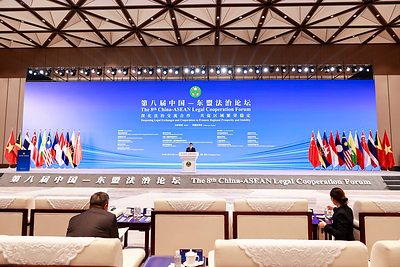
CHONGQING, China, Nov. 21, 2026 /PRNewswire/ — A news report from iChongqing – The 8th China-ASEAN Legal Cooperation Forum opened in Chongqing on Nov. 19, bringing together legal officials, judges and experts to discuss how closer judicial cooperation could help businesses navigate local laws and resolve commercial disputes. The forum marked the launch of a permanent secretariat and a research alliance focused on artificial intelligence and law.

Opening ceremony of the 8th China-ASEAN Legal Cooperation Forum, which opened in Chongqing on Nov. 19. (Photo/Southwest University of Political Science and Law)

Chongqing’s trade with ASEAN reached 116.41 billion yuan (about US$17.4 billion) in the first three quarters of 2026, up 17% from a year earlier, according to forum organizers.

Shaun Wong, managing director of Shaun Wong LLC in Singapore, called for regular exchanges on company, contract and trade laws, citing differences among ASEAN’s legal systems. He said Singapore aims to provide a neutral venue for resolving international trade disputes.

Tran Anh Tu, director of Hoa Viet Tin International Law Firm in Vietnam, said Chinese investment in Vietnam had grown and urged companies to keep up with changes to the country’s investment laws. He said incentives were increasingly tied to companies’ long-term operations and their ability to meet eligibility requirements.

Discussions also focused on the New International Land–Sea Trade Corridor, which links western China with ASEAN and other markets. Courts along the corridor have operated a “13+2” judicial cooperation mechanism since May 2024 to coordinate the resolution of commercial disputes across jurisdictions and improve the handling of cases involving foreign parties or transactions.

Parulian Paidi Aritonang, dean of the Faculty of Law at the University of Indonesia, said a reliable legal environment was essential to sustaining the trade links created by the corridor. He welcomed the new secretariat as a way to maintain dialogue and support long-term cooperation in legal education and practice. Tran said it could also help businesses gain better access to legal information.

The China–ASEAN Alliance for Artificial Intelligence and Law Research, initiated by Southwest University of Political Science and Law, will bring together universities, research institutions, legal practitioners and industry groups to study AI and digital governance, cross-border data flows and corporate compliance.

The forum took place in a year that marks 35 years of China–ASEAN dialogue relations and five years since the two sides established their comprehensive strategic partnership.

Frost & Sullivan Highlights Emerging Growth Opportunities as AI Governance Becomes a Strategic Business Priority

New analysis reveals how interoperability, data privacy and digital ethics are reshaping enterprise AI adoption and creating opportunities for innovation and competitive differentiation

LONDON, Nov. 21, 2026 /PRNewswire/ — As enterprises accelerate their adoption of generative AI and autonomous systems, the challenge of governing these technologies responsibly is opening new avenues for growth. According to new research from Frost & Sullivan, AI governance is evolving from a predominantly compliance-driven function into a strategic capability that can help businesses innovate, scale and compete more effectively.

The company’s latest analysis, Applications and Growth Opportunities for AI Governance Platforms, explores how AI adoption, evolving regulations and concerns over transparency, privacy and accountability are reshaping the global governance landscape through 2030. As organisations embed AI into business-critical operations, Frost & Sullivan identifies interoperability, data privacy and digital ethics as three pillars underpinning the next generation of governance platforms.

Evolving regulations, including the EU AI Act, are driving demand for automated compliance monitoring, risk assessments and audit-ready governance solutions. At the same time, rising expectations around transparency and accountability are creating opportunities for ethical AI technologies, including explainability, observability and human oversight.

Meanwhile, the proliferation of AI models and platforms is accelerating demand for interoperable solutions that enable secure data exchange, seamless integration and consistent governance across enterprise ecosystems.

From Risk Management to Competitive Advantage

Beyond regulatory compliance, effective AI governance can deliver tangible operational and commercial benefits. Automating risk assessments, streamlining reporting, policy adherence and embedding oversight into enterprise workflows can improve efficiency, accelerate responsible AI deployment and strengthen stakeholder confidence.

However, high implementation costs, talent shortages, the complexity of overlapping EU regulations, and organisational resistance to new governance remain significant barriers to adoption.

Avinab Das, Industry Analyst in Frost & Sullivan’s TechVision practice, commented:

“The real opportunity in AI governance lies in moving beyond compliance to enabling innovation at scale. As enterprises deploy increasingly sophisticated AI systems, those that embed transparency, accountability and interoperability into their operations will be better equipped to navigate complexity, build trust and turn technological advances into sustainable growth.”

Looking ahead to 2030, Frost & Sullivan expects accelerating AI adoption, evolving regulations and rising stakeholder expectations to sustain demand for sophisticated governance solutions, creating opportunities for technology providers and enterprises alike.

To learn more about Frost & Sullivan’s analysis of the Applications and Growth Opportunities for AI Governance Platforms, click here.

About Frost & Sullivan

Frost & Sullivan, the Growth Pipeline Company, enables clients to accelerate growth and achieve best-in-class positions in growth, innovation, and leadership. The company’s Growth Pipeline as a Service provides the CEO’s Growth Team with transformational strategies and best-practice models to drive the generation, evaluation, and implementation of powerful growth opportunities. For over 60 years, Frost & Sullivan has partnered with investors, corporate leaders, and governments to identify, prioritise, and execute transformational growth strategies.

Editor’s note: To arrange an interview or for any questions, please contact:

Kristina Menzefricke
Marketing & Communications
Global Customer Experience, Frost & Sullivan
kristina.menzefricke@frost.com 

Education Cannot Wait announces US$52 million to keep 300,000 children learning in Lebanon, Myanmar and South Sudan

About 10% of the money is set aside for the next shock, and most of the funding goes to local organisations who know these communities

GENEVA, Nov. 21, 2026 /PRNewswire/ — More than 300,000 children whose lives have been upended by war, floods and displacement in Lebanon, Myanmar and South Sudan will get back to learning, catch up on lost lessons and receive psychosocial support, thanks to US$52 million announced today by Education Cannot Wait (ECW), the global fund for education in crises within the United Nations.

A girl points to a subtraction problem written in chalk on the blackboard during a maths lesson. © UNICEF/Mark Naftali

The funding commitment comes on World Children’s Day, as 258 million children worldwide have their education disrupted by crises. 

“Every child has the right to learn, and for children living through war, floods and displacement, school is often what keeps hope alive,” said Maysa Jalbout, Director of Education Cannot Wait. “Too often, help arrives only after the classrooms have emptied. These programmes keep children learning today and set aside emergency funds to keep them in school when the next crisis strikes.”

In Lebanon, more than 1.1 million people, including over 390,000 children, have been displaced since the conflict escalated in March 2026. The US$13 million programme, led by Ana Aqra Association and the International Rescue Committee, will help about 59,000 children back into school with catch-up classes, early childhood education, safer classrooms and psychosocial support. Local organisations will manage 74% of the funding.

In Myanmar, the US$16 million programme will reach nearly 150,000 children and adolescents across the country. Half of them are out of school today, and more than a third have been forced from their homes. The programme is delivered by international and national humanitarian partners, and local organisations will manage or receive 74% of the funding.

South Sudan is the country most at risk of humanitarian crisis in the world, and around 2.8 million of its children are out of school. There, the US$23 million programme will reach more than 100,000 children in some of the hardest-hit areas, where floods, conflict and new arrivals from Sudan keep disrupting learning. It is led by Save the Children International, the national organisation Universal Network for Knowledge and Empowerment Agency (UNKEA), and local organisations will receive 59% of the funding. 

In all three countries, at least half of the children reached are girls, and about one in ten is a child with a disability.

The three programmes are among the first under ECW’s new Crisis-Oriented Resilience and Emergency (CORE) approach, which brings together emergency response and longer-term support in a single investment. The response and a portion of the funding is planned in advance so classes can continue when a new crisis hits. Together, the programmes set aside more than US$5 million in crisis modifiers; funding that can be released quickly, without a new proposal, when agreed warning signs appear. Across the three countries, national and local organisations, including women-led organisations and organisations of persons with disabilities, will manage or receive most of the funding.

Help close the gap

Earlier this month, donors at ECW’s High-Level Replenishment Conference in Geneva, hosted by Switzerland, helped ECW reach 90% of its US$600 million goal for 2027–2030. ECW is calling on public and private partners to close the remaining US$58.4 million gap, so that more children in crises can keep learning. 

Notes to Editors

Download fact sheets for: 

About Education Cannot Wait: 

Education Cannot Wait (ECW) is the global fund for education in crises. The Fund provides rapid, flexible funding to locally-led education responses that protect learning for refugee, internally displaced and other children, while strengthening systems to sustain learning and resilience in fragile and conflict-affected contexts. ECW works with governments, public and private funders, UN agencies, civil society organisations, and other humanitarian and development aid actors so that no child is left behind. 

As global crises intensify and the education financing gap widens, ECW calls on public and private sector partners to scale up investments so millions more crisis-affected girls and boys can learn and rebuild their futures. 

Additional information available at: www.educationcannotwait.org