Home Blog Page 782

Assembling Over 1,000 Human Genomes Affordably: New Method Powers Medicine’s Future

HANGZHOU, China, April 3, 2026 /PRNewswire/ — A research team led by Zhen-Xing Endowed Professor Jian Yang at the School of Life Sciences, Westlake University, together with collaborators, published their latest findings in Nature on April 1. The study innovatively developed a pangenome-informed genome assembly (PIGA) method. By combining a cost-effective hybrid sequencing strategy of long and short reads, the team successfully constructed a pangenome for over a thousand individuals. This achievement breaks through the limitations of previous small-sample pangenomes and provides a critical foundational infrastructure for medical and population genetics research.

Since the completion of the Human Genome Project, single linear reference genomes (such as GRCh38) have served as the foundation for biomedical research. However, the genetic backgrounds of human individuals vary significantly, and a single reference genome cannot capture the full extent of genetic diversity across populations. This leads to complex forms of genetic variations, such as structural variants (SVs) and tandem repeats (TRs), being overlooked in traditional analyses. To address this challenge, researchers proposed the concept of a pangenome—a collection of genome sequences representing the genetic diversity of a population.

While advancements in long-read sequencing have enabled the assembly of high-quality diploid genomes, the high costs of sequencing have limited the sample sizes of previous pangenomes to only a few dozen individuals. Such small sample sizes are insufficient to accurately estimate the frequency of genetic variants in populations or to resolve low-frequency variants and high-complexity regions. Therefore, developing a cost-effective pangenome construction strategy for large-scale populations has become an urgent requirement for resolving the functional impact of complex variants and enhancing clinical diagnostics.

Yang’s team has long been dedicated to methodological research in statistical genetics, genomics, and the big data analysis of human complex traits. By developing efficient computational methods, the team has consistently tackled core challenges in processing large-scale genomic data. Analysis tools developed by the team, such as GCTA-GREML, SMR, and gsMap, have been widely adopted globally. To address the challenge in constructing large-scale pangenomes, the research team developed the pangenome-informed genome assembly (PIGA) workflow (Fig. 1). Unlike de novo assembly approaches, which rely on sequencing data from individual samples, PIGA adopts a pangenome-guided framework to integrate sequence information across the entire cohort. It fully leverages a cost-effective hybrid sequencing strategy based on modest-coverage Illumina short-read and PacBio long-read whole-genome sequencing (WGS) data. This approach substantially reduces sequencing costs while enabling the assembly of genomes from modest-coverage data, thereby providing a practical new technical pathway for future population-scale hybrid sequencing studies.

Applying this method, the research team constructed the world’s largest human pangenome to date, comprising 1,116 diploid genomes with a mean quality value (QV) of 46. The pangenome identified 405.3 million base pairs (Mb) of non-reference sequences absent from current references (GRCh38 and CHM13). Notably, the team annotated 26.2 Mb of these sequences as functional genic and predicted regulatory elements, greatly expanding our understanding of the non-reference sequences in the human genome.
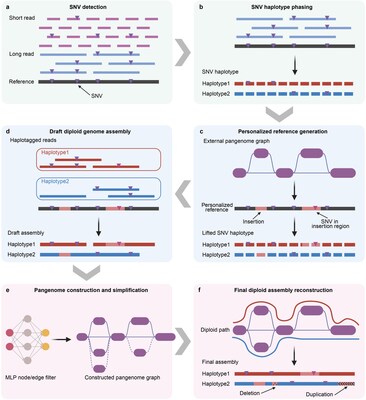
Fig. 1. The pangenome-informed genome assembly (PIGA) workflow.

Leveraging the large-scale assembly dataset, the researchers compiled a comprehensive catalog of genetic variation. In addition to 35.4 million small variants, the catalog captured a wide range of complex variants, including 110,530 SVs, 485,575 TRs, and 0.86 million nested variants embedded within non-reference sequences.

Using this catalog, the team characterized medically relevant variations at multiple scales (Fig. 2), including gene-altering SVs, pathogenic TR expansions, gene cluster variations, and HLA gene haplotypes. These findings indicate that the 1KCP variant catalog provides an important reference for the clinical screening of pathogenic mutations.

By integrating gene expression data, the team conducted pan-variant expression quantitative trait loci (eQTL) mapping. They identified 3,256 eQTLs involving complex variants (SVs, TRs, and nested variants), elucidating the regulatory complexity of these diverse variant types.

Together, this study significantly advances our understanding of complex genetic variants and their functional implications, establishing a new paradigm for human health research and pangenome studies in other species.

Ph.D. student Yifei Wang and Research Assistant Professor Zhongqu Duan are the co-first authors of the study. Professor Jian Yang is the last author. This work was supported by the National Natural Science Foundation of China, the National Key R&D Program, the Zhejiang “Pioneer & Leading Goose” Program, and the New Cornerstone Science Foundation. Computational resources were provided by the High-Performance Computing Center at Westlake University.

Professor Jian Yang’s research group is dedicated to developing statistical genetics and bioinformatics methods. By deeply analyzing genomic and multi-omic data from large-scale population cohorts, they aim to uncover the genetic architecture and molecular mechanisms underlying complex diseases, translating these discoveries into novel strategies for disease diagnosis, drug target discovery, and precision medicine.

Related links:
Paper link: https://www.nature.com/articles/s41586-026-10315-y
Jian Yang lab website: https://yanglab.westlake.edu.cn/

Media contact:
Chi Zhang
media@westlake.edu.cn 
+86-15659837873

Sanya, China Deepens Tourism Ties with Malaysia ​- Exclusive Benefits Launched for Malaysian Tourists, Ushering in a Tropical Island Getaway at a Moment’s Notice


SANYA, CHINA – Media OutReach Newswire – 3 April 2026 – As tropical sea breezes blend with Eastern charm, a journey from Malaysia to China’s island paradise is now more convenient and exciting than ever. On April 2, the Sanya Tourism Development Bureau of China’s Hainan Province signed a strategic cooperation agreement with Tourism Malaysia. This partnership will further strengthen tourism collaboration between the two destinations during “Visit Malaysia Year 2026” and jointly enhance promotional efforts. Tourism Malaysia has officially become a “Strategic Tourism Promotion Partner of Sanya.”

Sanya, China Deepens Tourism Ties with Malaysia

In addition, the Sanya Tourism Development Bureau has entered into cooperative exchanges with the Malaysian Association of Tour and Travel Agents (MATTA) and the Malaysian Budget Hotel Association (MBHA) to strengthen synergy in tourism management, product development, and visitor exchange. The newly established Sanya Tourism Overseas Promotion (Malaysia) Liaison Office will serve as a one-stop information and booking platform for Malaysian travelers, reinforcing Sanya’s position as a preferred gateway to China.

Seamless Entry, Fully Upgraded Travel Convenience

Visa-free access with zero barriers

Under China’s visa-free policy for Hainan, Malaysian citizens may enter with only a passport and stay for up to 15 days—no prior visa, financial proof, or invitation letter is required, allowing for truly spontaneous getaways.

Faster flights, greater efficiency

Direct flights from Kuala Lumpur to Sanya take just about three hours, with high occupancy rates during peak seasons reflecting strong demand. Plans to launch direct flights from Penang and Kota Kinabalu to Sanya are under discussion, promising greater accessibility and cost-effective travel options.

Streamlined clearance procedures

Efficiency is prioritized with paperless self-declaration at both Phoenix Cruise Port and Sanya Phoenix International Airport, significantly reducing clearance time. International arrival halls support payments via all major international credit cards, ensuring seamless transactions.

Comprehensive multilingual support

Multilingual support is in place across Sanya—from bilingual signage at attractions and hotels to a dedicated foreign-language service line via the 12345 hotline. The multilingual official website visitsanya.com provides comprehensive information, guaranteeing smooth communication for Malaysian tourists.

Exceptional Value: Exclusive Promotions for Malaysian Visitors

To offer a more value-packed holiday experience, Sanya has prepared tailored benefits and significant discounts, from customized packages to special Asian Beach Games offers, demonstrating its warm hospitality.

The newly established Sanya Tourism Overseas Promotion Liaison Office, in collaboration with the Malaysian Budget Hotel Association and the Malaysian Association of Tour and Travel Agents, will launch specially curated travel packages that align with local preferences.

On Trip.com, the “Travel with the Asian Beach Games” promotion features discounted Sanya tourism products, covering hotels, attractions, and holiday packages, with exclusive offers for the Malaysian market.

The 2026 Asian Beach Games bring additional surprises: popular attractions like Wuzhizhou Island and Atlantis Sanya offer tickets at up to 73% off . Hotel rooms across categories—family, couples, and resort suites—enjoy discounts of up to RMB 5,899. Local delicacies and international cuisines are available at discounts of around 48% , promising a delightful culinary journey.

Moreover, 118,000 Asian Beach Games tickets are now on sale globally. With just a few clicks online, visitors can secure their seats to experience the excitement of the 6th Asian Beach Games up close.

Diverse Experiences for Every Traveler

Sanya offers far more than just sun and sand. Whether traveling with family, as a couple, or with friends, everyone can find their ideal way to enjoy the destination.

For families :

Atlantis Sanya Water Park, ranked among the “2026 Global Top 20 Water Parks” and tied for seventh place worldwide with Universal Orlando’s Volcano Bay, offers endless aquatic fun for children, while parents can explore the adjacent world-class duty-free complex for shopping and leisure.

For Adventure Seekers:

Wuzhizhou Island, known as “China’s Premier Diving Base,” features crystal-clear waters with visibility up to 27 meters and abundant coral reefs. A variety of water sports, including diving, parasailing, and jet skiing, deliver an adrenaline-filled coastal experience.

For Culture and Wellness:

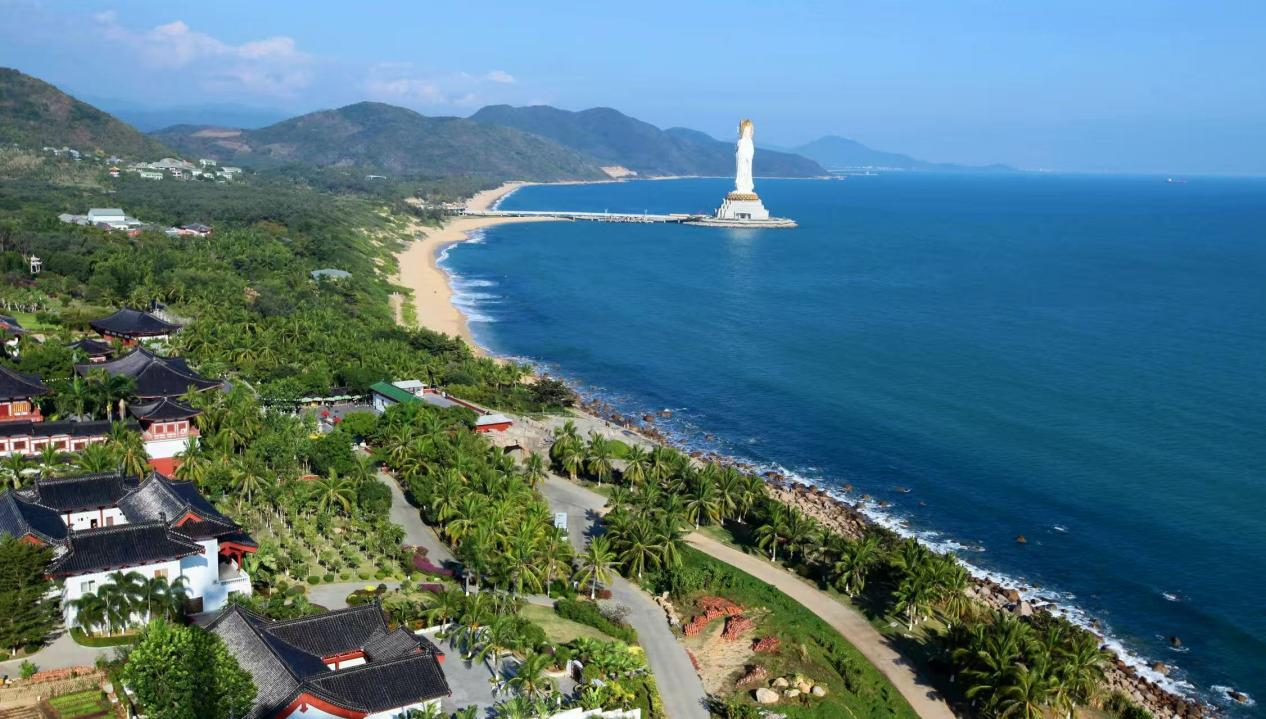
The 108-meter-tall Guanyin statue at Nanshan and immersive Li and Miao ethnic cultural experiences provide a harmonious blend of spiritual reflection and cultural discovery.

For Luxury and Retail: Sanya’s world-class duty-free complex brings together international brands, art exhibitions, and immersive experiences, creating a high-value shopping and lifestyle destination.

Sanya’s commitment to visitor convenience, diverse offerings, and tailored benefits continues to strengthen its appeal among Malaysian travelers. Since the beginning of this year, Hainan has welcomed a remarkable 204% increase in Malaysian tourist arrivals, making Malaysia one of the fastest-growing Southeast Asian source markets for Sanya.From visa-free access and direct flights to enhanced services and multifaceted experiences, Sanya is positioning itself as a leading gateway for Malaysian tourists to China.

As the Hainan Free Trade Port continues to develop, tourism cooperation between Sanya and Malaysia is poised to deepen, evolving from one-way attraction to mutual engagement.For those planning their first trip to China, Sanya offers an ideal starting point—where azure seas, golden shores, modern amenities, and heartfelt hospitality come together to create the perfect tropical escape.

Hashtag: #SanyaTourismDevelopmentBureau

The issuer is solely responsible for the content of this announcement.

Bybit Alpha Trading Fiesta Returns with 600,000 USDT in Rewards

DUBAI, UAE, April 3, 2026 /PRNewswire/ — Bybit, the world’s second-largest cryptocurrency exchange by trading volume, has announced the latest instalments of the Bybit Alpha Trading Fiesta. From now until June 22, 2026, participants can compete for 600,000 USDT in rewards across four seasons (Season 6 to Season 9), with a chance to snag the top prize of 8,000 USDT in the trading competition segment in each round.

Recording over $150 million in trading volume since its commencement, the Bybit Alpha Trading Fiesta has been celebrated by thousands of alpha hunters. From now until April 20, 2026, Bybit Alpha Trading Fiesta Season 6 offers two reward mechanisms catering to traders of varying experience levels. Parallel to a competitive leaderboard, the Alpha Lucky Draw offers an alternative reward track for everyday traders:

  1. Alpha Lucky Draw: Featuring a 50,000 USDT prize pool, Bybit Alpha users can earn lucky draw tickets and win up to 100 USDT by completing their first trade or liquidity farming order on Bybit Alpha, or achieving their daily trading volume target.
  2. Alpha Trading Competition: With 100,000 USDT in prizes up for grabs, the competitive segment is for avid traders who aim to win big on leaderboards. The top 100 leaders will receive tiered rewards with 4,000 USDT, 6,000 USDT, and 8,000 USDT in rewards for the top three traders respectively.

How it works: After signing up for the Fiesta in each Season, users simply need to select their preferred tokens and trade on Bybit Alpha with their Unified Trading Account balance

As cryptocurrency markets evolve and traders seek to diversify beyond mainstream tokens, Bybit Alpha emerges as a gateway to alternative opportunities. The platform offers participants access to innovative and the latest trending projects. With Bybit Alpha Trading Fiesta, Bybit reinforces its commitment to empowering traders with tools that unlock competitive advantage and portfolio diversification.

The crypto trading community spans across varying risk appetites and trading horizons. Through Alpha, Bybit positions itself as a partner in traders’ evolution, delivering infrastructure that bridges the gap between retail participation and institutional-grade trading sophistication. As the Crypto Ark, Bybit is dedicated to supporting traders at every stage of their crypto journey.

Bybit Alpha Trading Fiesta Returns with 600,000 USDT in Rewards

Terms and conditions apply. For details of participation requirements and restrictions, users may visit: Alpha Trading Fiesta Season 6

#Bybit / #TheCryptoArk / #IMakeIt

About Bybit

Bybit is the world’s second-largest cryptocurrency exchange by trading volume, serving a global community of over 80 million users. Founded in 2018, Bybit is redefining openness in the decentralized world by creating a simpler, open and equal ecosystem for everyone. With a strong focus on Web3, Bybit partners strategically with leading blockchain protocols to provide robust infrastructure and drive on-chain innovation. Renowned for its secure custody, diverse marketplaces, intuitive user experience, and advanced blockchain tools, Bybit bridges the gap between TradFi and DeFi, empowering builders, creators, and enthusiasts to unlock the full potential of Web3. Discover the future of decentralized finance at Bybit.com.

For more details about Bybit, please visit Bybit Press
For media inquiries, please contact: media@bybit.com
For updates, please follow: Bybit’s Communities and Social Media

Discord | Facebook | Instagram | LinkedIn | Reddit | Telegram | TikTok | X | Youtube

New Plant Opens as Vientiane Villages Go Weeks Without Water

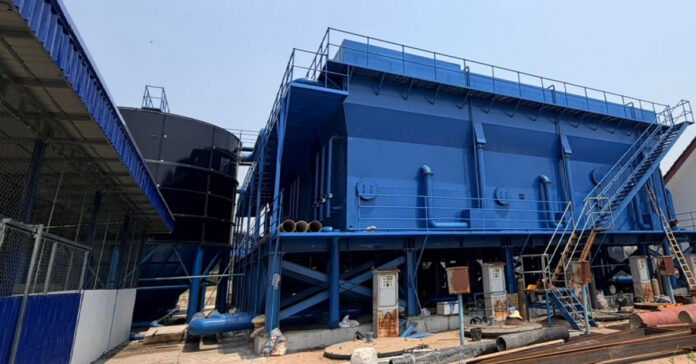
Thatkhao Water Treatment Plant in Sisattanak district, Vientiane Capital. 2 April 2026.

Tap water has not been running for over a month in Khamngoy village, Vientiane’s Xaysettha district, residents noticed.

But that’s not the only affected area. 

“The tap water in Sivilay, Xaythany district, has not been running for three weeks,” another resident wrote on Facebook.

Authorities acknowledged the shortfall and said they are working to address the ongoing challenge.

On 2 April, Vientiane Water Supply State Enterprise began operations at the Thatkhao Water Treatment Plant, a new addition to the capital’s water infrastructure. 

Situated in Sisattanak district beside the Mekong River, the plant now feeds into the city’s piping system with a production capacity of 20,000 cubic metres per day. Construction began in mid-2025, and the facility is now fully operational.

The plant is expected to improve water access across several nearby villages, including Dongpalan, Phonsinouan, Phonthan, and Saphanthong, and could also benefit parts of the neighbouring Chanthabuly and Xaysettha districts.

The opening comes at a critical time. 

Tap water shortages remain a recurring problem in the capital, particularly between March and May, when temperatures peak and the Mekong River, the city’s main raw water source, runs at its lowest. 

According to the Department of Water Supply, current production stands at around 370,000 cubic metres per day against a demand of roughly 400,000, leaving about 10 percent of the city unserved.

The gap is felt on the ground. In Xaysettha district, residents of both Sengsawang and the neighbouring Khamngoy village have been without water for weeks,  a situation that mirrors last year. 

A second new plant in Thapha village, also in Sisattanak, is more than 90 percent complete and will add another 20,000 cubic meters per day. The existing Chinaimo Water Plant in the same district is also being upgraded, from 80,000 to 120,000 cubic meters per day, with completion expected by 2028.

M moneyX Partners with Visa to Expand Digital Payment Services in Laos

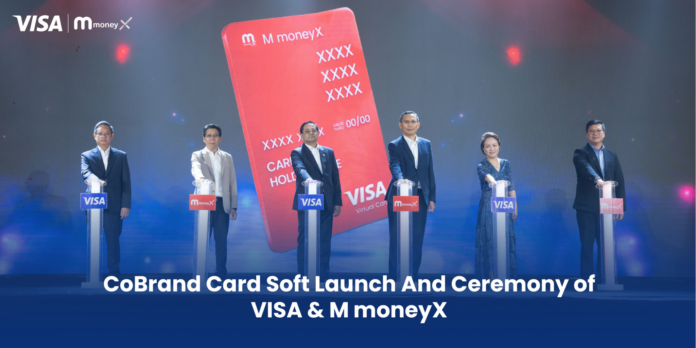
M moneyX Partners with Visa to Soft Launch Co-brand Card and Explore Visa Pay for Digital Payments in Laos and Internationally. (Photo by M moneyX)

Lao Mobile Money Sole Co., Ltd. (M moneyX) has partnered with Visa to introduce a co-branded prepaid card and explore the integration of Visa Pay into its application, marking a step in the development of digital payments in Laos.

The initiative, supported by Joint Development Bank as the partner, aims to expand access to digital financial services and support the country’s transition toward a cashless economy.

The M moneyX Visa prepaid card allows users to create and use a digital card directly within the app without the need for a physical card. The solution is designed for both domestic and international transactions.

As part of the collaboration, the company is also exploring the integration of Visa Pay, which would enable features such as QR code payments, tap to pay, and online payments within the platform.

The partnership shows ongoing efforts to improve payment convenience and accessibility, while supporting the development of a more modern and secure digital financial ecosystem in Laos.

ASEAN Travel Influencers Check In at Beibu Gulf! This Cultural-Tourism Exchange Is a Hit — “Not-So-Distant Destinations” Are on Fire

NANNING, CHINA – Media OutReach Newswire – 3 April 2026 – Recently, the “Romantic Coast, Beautiful Southern Border” promotion — a new-media cultural and tourism campaign inviting ASEAN travel influencers to check in across Guangxi’s Beibu Gulf — was held in six cities: Nanning, Beihai, Qinzhou, Fangchenggang, Yulin and Chongzuo. The event invited travel influencers from Malaysia, Singapore, Thailand, Vietnam, the Philippines and Indonesia, and formed a media delegation with representatives from China News Service, China Culture Daily, Guangxi Daily and others. Working along two routes, they took in the Beibu Gulf (Guangxi) Golden Tourism Belt in depth, using their lenses to capture the beauty of mountains and sea and their pens to tell stories of the southern border, so that the unique charm of Guangxi’s Beibu Gulf could ride the wave of the internet and go viral across ASEAN social circles.

Six days, six cities, two routes — the itinerary was full and surprises kept coming. Among the flower seas of Qingxiu Mountain, breezes carrying the scent of blossoms brushed their faces; beside the China-Vietnam border river, they shared coffee across the water and sampled borderland atmosphere; on Weizhou Island by volcanic rock, they waited for a tangerine-red sunset over the sea, a panorama that left influencers calling it “breathtaking”; beneath Zhenwu Pavilion, the nail-free, bolt-free pure-wood construction amazed everyone; at the Jing ethnic museum, the plaintive notes of the single-stringed lute lingered in the ear; in the swell of Sanniang Bay, playful white dolphins suddenly appeared… These vivid, restorative experiences were captured on camera and in writing by the influencers, transformed into short videos and illustrated guides, crossing oceans to precisely strike the hearts of ASEAN netizens and make viewers yearn for the destination even through their screens.

Why the Beibu Gulf? This cultural–tourism exchange was bound to happen.

The Beibu Gulf (Guangxi) is already China’s foremost “traffic window” for exchanges with ASEAN. Geographic proximity and shared cultural roots make it the most familiar first stop for ASEAN visitors entering China. Nanning is a gateway and frontline of China-ASEAN openness and cooperation, known as the “China Green City” and “a place beloved by folk singers,” and holding honors such as the UN-Habitat Award, National Civilized City, National Ecological Garden City, National Sanitary City, National Forest City, and China Excellent Tourist City. As the permanent host city of the China-ASEAN Expo, every autumn political leaders, businesspeople and tourists from ASEAN converge here—so the city already carries an innate warmth for ASEAN guests. Fangchenggang lies just a river away from Mong Cai, Vietnam; border residents routinely cross over to visit, and Cantonese, Zhuang and Vietnamese blend seamlessly through the streets. Detian Waterfall in Chongzuo spans China and Vietnam—China on the left bank, Vietnam on the right—where the roar of the falls brings the two countries’ stories together in a single striking scene. Beihai was one of the earliest departure ports on the ancient Maritime Silk Road and still welcomes cruises and travelers from Southeast Asia; on Silver Beach you can often hear familiar Thai and Malay languages. Container ships from Qinzhou Port shuttle frequently between the Beibu Gulf and ASEAN ports. Although Yulin is inland, its trade in traditional Chinese medicine links it to ASEAN markets—medicinal materials distributed from Yulin reach Vietnam, Thailand, Malaysia and beyond each year, forming an “invisible tie” with ASEAN.

This geographic closeness creates a natural cultural affinity. As the influencers observed, ASEAN visitors can immediately find familiar “home tastes” upon arriving in the Beibu Gulf—Vietnamese drip coffee, Thai spices, Malaysian Musang King durian and other ASEAN foods are everywhere, prompting comments like “it feels just like home.” At the same time, the majestic beat of Zhuang bronze drums, the intangible-heritage charm of the Jing one-stringed lute, the resplendent singing of Yong opera, and the craftmanship of Zhenwu Pavilion introduce them to a different facet of Chinese culture. That blend of “familiar surprises and friendly strangeness” is Guangxi Beibu Gulf’s most compelling cultural-tourism asset—it is not a faraway, unattainable place but a heartwarming destination ASEAN visitors can “come to on a whim,” and a treasure trove where many find they “don’t want to leave.”

For these reasons, the campaign deliberately targeted ASEAN travel influencers as “seeders.” This was not a one-way promotional push but a two-way content co-creation. Influencers used their native languages and the forms their followers trust to share authentic experiences in Guangxi. That natural trust and empathy cut far deeper than blunt advertising. As one accompanying journalist remarked, “When they post it, ASEAN audiences just can’t stop watching.” The influencers understand exactly what their followers want to see and how to bring a city to life in the most relatable way.

With policy incentives and innovative communication, the gateway to culture and tourism in the Beibu Gulf is opening wider and wider!

To stand out in the cultural tourism scene, it’s not enough to have stunning attractions—thoughtful service matters just as much. The implementation of inbound travel facilitation policies such as “China’s 240-hour visa-free transit” and “instant tax refunds upon departure purchase” has made travel to the Beibu Gulf much easier for ASEAN visitors. With simpler visa procedures and more cost-effective spending, spontaneous cross-border trips have become effortlessly achievable here.

At the same time, innovative promotional strategies combining “offline immersive experiences + online viral dissemination” have been adopted. Influential ASEAN travel creators, each with their own following, have become ambassadors for the Beibu Gulf. Through their lenses, they capture its coastal and mountain scenery, historical heritage, cuisine, and local customs—not as cold descriptions, but as vivid, heartfelt, and relatable moments. This people-centered, emotion-driven approach to storytelling allows the romance and charm of the Beibu Gulf to ripple across ASEAN digital networks, continuously expanding its reach.

Although the event has concluded, the cultural tourism promotion of the Beibu Gulf is only just beginning. The creators return home with rich materials—editing dynamic short videos, writing practical travel guides, and sharing their experiences with followers. In the past, Guangxi’s Beibu Gulf may have been just a vague geographical concept for ASEAN tourists. Now, through the creators’ perspectives, it has become a “distant yet reachable destination”—a place filled with familiar everyday warmth, surprising intangible cultural heritage, breathtaking coastal and mountain views, the gentle charm of local streets and alleys, a profound history spanning millennia, and the vibrant pulse of China–Vietnam cultural integration.

As the impact of the campaign continues to grow, the story of the Beibu Gulf in Guangxi is being seen by more and more people—and its charm awaits even more visitors to discover it for themselves.

Hashtag: #BeibuGulf

The issuer is solely responsible for the content of this announcement.

Viettel Marks 20 Years of Global Expansion, Overseas Revenue Up 25%

HANOI, Vietnam, April 3, 2026 /PRNewswire/ — Viettel Group marked the 20th anniversary of its international business operations, highlighting two decades of expansion that have positioned the Vietnamese company among the world’s multi-market telecom operators.

Viettel began its international journey in 2006 with its first overseas investment in Cambodia. Over the past two decades, the Group has expanded its presence to 16 countries, including operational markets and representative offices.

Nowadays, Viettel operates telecommunications networks in 10 international markets, holding the No.1 market position in seven countries. The company’s overseas operations generate more than USD 3 billion in annual revenue and have maintained average growth of around 20% for several consecutive years.

Financial results released earlier this year also reflect the strong momentum of Viettel’s global business. According to audited financial statements from Viettel Global, international operations recorded net revenue of VND 44.27 trillion (approximately USD 1.74 billion) in 2025, representing 25% year-on-year growth and the highest level since Viettel began investing abroad.

Profitability also improved significantly. Net profit after tax reached VND 11.25 trillion (around USD 442 million), up 57% compared with the previous year, while profit attributable to the parent company rose 65% to over VND 9.3 trillion (approximately USD 365 million).

The strong performance has improved the efficiency of Viettel’s international investments. By the end of 2025, the capital recovery ratio reached 92%, while the market capitalization of Viettel Global stands at approximately USD 10 billion. Overseas operations have also become a stable source of capital inflow to Vietnam, contributing USD 350–400 million in repatriated cash annually in recent years.

At the anniversary ceremony held on March 28, Viettel Global was awarded the prestigious Hero of Labour, one of Vietnam’s highest state honors for organizations with outstanding achievements in innovation and productivity.

Speaking at the ceremony, General Phan Van Giang, Member of the Politburo and Minister of National Defence, on behalf of the Communist Party of Vietnam and the State said Viettel’s international expansion demonstrates the company’s pioneering spirit and its ability to master advanced technologies while transforming from a domestic telecom operator into a global technology enterprise. He added that Viettel’s overseas presence also contributes to strengthening cooperation and friendship between Vietnam and its international partners.

According to Lieutenant General Tao Duc Thang, Member of the Party Central Committee and Chairman and CEO of Viettel Group, Viettel aims to continue expanding telecommunications services while developing new areas such as digital technology, high-tech industry, e-commerce and logistics. The Group targets minimum annual growth of 20% in its global operations.

After two decades abroad, Viettel is transitioning from a model focused primarily on overseas investment to a broader global business strategy known internally as “Go Global 2.0.” The strategy aims to bring the capabilities of a Vietnamese high-tech industrial and technology group to international markets, contributing to the growing global presence of Vietnam’s technology sector.