SUZHOU, China, Sept. 11, 2026 /PRNewswire/ — Driven by the rapid advancement of artificial intelligence, China has witnessed a surging power demand from the computing industry. In Changshu, Suzhou, the electricity load generated by computing infrastructure has grown remarkably. This summer, power consumption increments from the computing sector have overtaken seasonal air-conditioning loads to become the primary driver of regional electricity consumption growth. Concurrently, China’s ongoing market‑oriented power sector reform is deepening, with a series of policies governing electricity trading, green power and green certificate settlement being rolled out.
The Hongyun Technology (Changshu) Big Data Center, a key provincial digital infrastructure project, is now operating at full capacity, delivering robust computing‑power support for the Yangtze River Delta’s digital economy. State Grid Suzhou Power Supply Company has provided full-cycle, tailored power guarantee services for the project. During the construction phase, the company implemented the “Power-on Upon Arrival” service model and deployed a 110kV dual-power supply system to ensure on-schedule power delivery. After official operation, a 24/7 dedicated operation and maintenance system was established to sustain the stable and reliable performance of the center’s computing businesses.
To support the full roll‑out of market‑based power policies, State Grid Suzhou has proactively partnered with Hongyun Technology to take part in power market seminars. It clarifies key operational points for retail power transactions and green power settlement, and encourages enterprises to optimize energy consumption based on market price signals. During the critical summer peak power consumption period, the two parties further deepened government-enterprise collaboration to tap load regulation potential and build a standardized demand response mechanism. By optimizing refrigeration systems, deploying self-contained power supplies, and scheduling non-urgent computing tasks off-peak, the project has achieved an adjustable load capacity of 13,000 kilowatts without compromising core business operations, enabling rapid load reduction within 30 minutes.
Following the implementation of the new transmission and distribution tariff policy, State Grid Suzhou conducted on-site policy briefings and precise electricity cost calculations for Hongyun Technology, helping the enterprise save over ten million yuan in annual electricity expenses. Both parties continue to conduct in-depth research on green power consumption and digital twin applications for data centers. The collaboration is transforming the traditional one-way power supply relationship into a two-way symbiotic digital energy partnership, setting a replicable practical example for the coordinated development of the new power system and the digital economy.
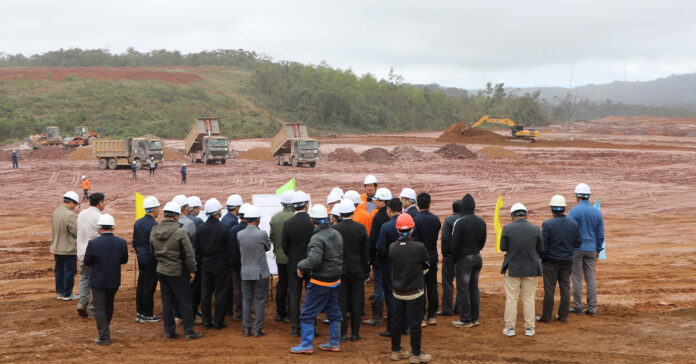
A picture of aluminium smelting project in Sekong Province, southern Laos, is expected to produce 1 million tonnes annually, with operations to begin in 2028.
A major bauxite project in southern Laos is moving closer to production, with Lao and Vietnamese officials now turning their attention to the environmental risks and community impacts of the operation.
A workshop in Vientiane on 10 September brought together officials and project developers to discuss management, technical standards and preparations for a local workforce at the Dakcheung project in Xekong.
The complex will process bauxite into alumina, allowing Laos to process more of its mineral resources domestically before the material is exported or used in further production.
Phase one of the Dakcheung complex requires is designed to produce 1 million tonnes of alumina annually. Production capacity is planned to increase to 2 million tonnes by 2035.
The project is also expected to create more than 1,000 direct jobs during its first three years, rising to around 1,500–1,800 workers once fully operational.
Developers said they will prioritize local recruitment and training as the project moves toward production.
According to Lao state media, environmental management was a major focus of the discussions in the latest workshop. Talks also included measures to manage water resources, mining waste, and red mud generated during alumina production.
The project’s developers are Vietnam-Phuong Group (VPG) and its Lao subsidiary VPG Lao-Viet One Member Co., Ltd. (VLV) located in Dakcheung district.
Environmental Concerns
The focus on safeguards comes amid previous environmental and community concerns over bauxite mining in southern Laos.
In 2019, Thai and Chinese investors pursued a bauxite mining project on the Bolaven Plateau in Champasak Province, according to Mekong Watch. The area had already seen communities displaced and lost access to land amid agribusiness and hydropower development.
Despite a government advisory urging restrictions on mining, the project appeared to have been delayed rather than cancelled by mid-2020, raising concerns over potential impacts on livelihoods and the environment.
Lao and Vietnamese officials said the Dakcheung project must therefore combine industrial development with environmental safeguards and measures to limit its impact on local communities.
BEIJING, CHINA – Media OutReach Newswire – 11 September 2026 – On 10 September, the one-year countdown event for the World Athletics Championships Beijing 27 (WCH Beijing 27) was held in the Golden Hall of the National Stadium, commonly known as the Bird’s Nest. Amidst the anticipation of the audience, the emblem, mascot, and theme slogan of the WCH Beijing 27 were officially unveiled, conveying the message of Beijing through unique designs.
The Emblem of WCH Beijing 27: Jing Yue
The emblem, “Jing Yue”, centred on the Temple of Heaven and the Chinese character “京” (Jing), draws on the expressive charm of Chinese calligraphy, engraves Beijing’s local identity, and radiates the vibrant energy of athletics.
The Mascot of WCH Beijing 27: Jing Yan
The mascot, “Jing Yan”, draws inspiration from “Yan’er”, the mascot of the 2015 edition of the Championships. Modelled after the Beijing swift, it symbolises “the return of the swift after 12 years”. The design subtly incorporates traditional Chinese kite patterns and the expressive eye makeup of Peking Opera, while a lightning-bolt dynamic adds a sense of speed. This seamlessly blends natural vitality, culture, art, and athletic competition. It not only nods to the 2015 edition of the Championships, but also brings Beijing’s rich cultural heritage vividly to life.
The theme slogan “Every Step Counts” embodies the relentless competitive spirit that every step and every effort matters. It sends a warm yet resolute message to the world: on the road to excellence, every wholehearted effort holds extraordinary value.
In his video address, President of World Athletics Sebastian Coe noted that Beijing is the first city in the world to have successfully hosted both the Summer and Winter Olympics, with a remarkable record of staging world-class events. He said the World Championships Beijing 2015 produced many iconic moments, and that World Athletics firmly believes China will stage the 2027 edition of the Championships to the highest possible standard and deliver an unforgettable sporting spectacular for audiences across the globe.
The World Athletics Championships Beijing 27 will be held at the National Stadium from 10 to 19 September 2027. More than 2,000 athletes from over 200 countries and regions will gather at the Bird’s Nest for this grand athletics celebration. Hashtag: #WCHBeijing27 #EveryStepCounts
The issuer is solely responsible for the content of this announcement.
HONG KONG SAR – Media OutReach Newswire – 11 September 2026 – WWF-Hong Kong (WWF) today released Recommendation Report for Conservation of Shui Hau Sandflat, revealing an alarming trend in one of Hong Kong’s most unique marine ecosystems: Based on seven years of ecological data collected at Shui Hau sandflat, the study confirms that Shui Hau remains a critical stronghold for the Chinese Horseshoe Crab (Tachypleus tridentatus). However, overall clam density has declined precipitously by 65% since 2018, reflecting the current harvesting activity has exceeded sustainable levels. This poses an immediate threat to the sandflat ecosystem and directly jeopardises the survival of globally Endangered horseshoe crabs. The overall trend is deeply concerning, underscoring the urgent need to implement science-based conservation measures more urgent than ever.
These findings, collected through WWF’s community-based conservation project, paint a complex picture of ecological stress and behavioural shifts along Shui Hau’s coastline. While the sandflat continues to support significant number of juvenile horseshoe crabs, made up largely by the globally endangered Chinese Horseshoe Crab, its dependent habitat faces mounting pressure from escalating clam harvesting activities.
“Grounded in scientific evidence and informed by the expertise of ecologists, academics and conservation groups, this report presents a range of practical recommendations and calls on all sectors to take action for the sustainable future of Shui Hau.” said Kelvin So, Oceans Conservation Manager at WWF-Hong Kong. “The science is clear: the ecological health of Shui Hau is at a tipping point, and we must act now to balance recreational use with the survival of threatened species.”
Key Findings of the Report:
Alarming Decline in Clam Populations: A 65% decline in overall clam density since 2018 signals that current harvesting pressure is ecologically unsustainable, placing enormous pressure on the ecosystem, with negative impact rippling through the entire food web.
High Vulnerability of Horseshoe Crabs: Analysis reveals a 16% overlap between juvenile horseshoe crab habitat and recreational activity zones. Critically, over 70% of all horseshoe crab sightings were concentrated within just 6% of the sandflat. This extreme concentration means that even minor human disturbances—such as trampling and digging—can have a devastating impact on the population.
Positive Behavioural Shift in Visitors: Despite a marked decline in clam numbers, the study observed a positive shift in visitor behaviour. A higher proportion of visitors now proactively avoid collecting immature clams, demonstrating that sustained public education efforts, including the distribution of the WWF-developed clam gauges are effectively driving noticeable compliance with sustainable harvesting.
Technology-enabled Smart Conservation: The project successfully integrated advanced technologies, including AI-assisted clam size monitoring and real-time IoT spatial visitor tracking, to monitor the site. This “Smart Conservation” approach helps advance adaptive management, ensuring conservation strategies remain responsive to real-time ecological and visitor dynamics.
“In Hong Kong, there are few examples of ecologically important coastal sites where systematic monitoring has been conducted consistently across multiple years, generating the datasets needed for meaningful comparisons,” said Professor Hui Tin-yan, Assistant Professor, Division of Science, Lingnan University, and a core member of the expert group. “WWF’s seven years of continuous monitoring at Shui Hau Sandflat have generated a rare dataset that allows us to detect ecological changes, and to understand how human activities are influencing ecological conditions over time. These long-term data not only demonstrate Shui Hau’s significant conservation value, but also provide an important foundation for developing future targeted management measures.”
The report presents concrete conservation recommendations to the Hong Kong government and key stakeholders, advocating for an integrated management model that combines robust science, community participation, and statutory governance. Recent observations, including visitor surges during major holiday periods such as the Labour Day Golden Week, suggest that recreational pressure on Shui Hau is likely to increase further. WWF-Hong Kong believes there is now a golden opportunity to establish proactive management measures before ecological impacts become irreversible. WWF-Hong Kong urges the government to implement four key actions, including:
Zoning Management Strategy: Designating a “Biodiversity Management Zone” to protect ecologically sensitive horseshoe crab and waterbird hotspots, while allowing controlled public access in a designated “Wise Use Zone”.
Visitor Capacity Management: Establishing a science-based daily visitor carrying capacity supported by real-time monitoring and alert systems to prevent overcrowding.
Clam Harvesting Management: Introducing minimum size restrictions and quotas, alongside incentive mechanisms for voluntary clam release.
Clamming Tool Management: Restricting the use of high-impact tools that disrupt sediment layers, while permitting only lower-impact tools like small hand rakes.
On the same day, WWF-Hong Kong hosted the “Shui Hau Sandflat Science and Conservation Forum,” bringing together representatives from government advisory committees and departments, academia, conservation groups, environmental consultants and other stakeholders to share the latest research findings and practical experience on horseshoe crab conservation, intertidal ecology and the Shui Hau sandflat.
During the Forum, participants exchanged views on topics including horseshoe crab conservation, blue carbon ecosystems, visitor management and community engagement, discussing how cross-sector collaboration, grounded in scientific data, can drive the long-term conservation for the site going forward.
Speaking at the forum, Professor Cheung Siu-Gin, Associate Professor, Department of Chemistry, City University of Hong Kong, another member of the expert group, said: “One of the most distinctive features of the Shui Hau sandflat is that juvenile Chinese Horseshoe Crabs are not evenly distributed across the sandflat, but are instead highly concentrated in a small area of core habitats. This pattern is relatively rare among Hong Kong’s coastal ecosystems. From a conservation perspective, effectively protecting these key areas brings significant benefits, conversely, even minor disturbance to these core habitats could have a far greater impact than we might expect.”
” Our recommendations allow people to continue enjoy this secluded bay while critical biodiversity areas receive targeted protection they need.” said Lydia Pang, Head of Oceans Conservation at WWF-Hong Kong. ” Our long-term data clearly alerts us the risk of environmental degradation while guiding us to identify the most ecologically sensitive habitats. To ensure its long-term sustainability, we must move beyond voluntary measures. The government’s Hong Kong Biodiversity Strategy and Action Plan (BSAP) 2035 provides a clear vision to enhance conservation of Shui Hau through area-based conservation. We stand ready to work closely with all stakeholders to safeguard this irreplaceable natural asset.”
The issuer is solely responsible for the content of this announcement.
About WWF-Hong Kong
WWF is a leading global conservation organisation, with a network active in more than 100 countries. WWF’s mission is to build a future in which humans live in harmony with nature. WWF-Hong Kong has been working since 1981 to deliver solutions for a living planet through conservation, footprint and education programmes, with the aim of transforming Hong Kong into Asia’s most sustainable city. More details on wwf.org.hk.
BANGKOK, THAILAND – Media OutReach Newswire – 11 September 2026 – Thai Cement Manufacturers Association (TCMA) has received two major national recognitions in 2026, highlighting the progress of Thailand’s cement industry in translating its Net Zero 2050 ambition into practical action through collaboration across government, industry, technology, finance and international partners.
TCMA received the Thai Climate Partnership: DCCE Climate Partner Award from the Department of Climate Change and Environment (DCCE), Ministry of Natural Resources and Environment, in recognition of its continued collaboration to advance climate action in Thailand. TCMA also received the Trade Prestige Award 2026 at the Excellent Level from the Department of Business Development (DBD), Ministry of Commerce, for the fourth consecutive year, recognizing its contribution to industry competitiveness and Thailand’s economic development.
“These recognitions reflect the power of collective action. The transition to Net Zero cannot be achieved by any single organization or sector. It requires collaboration that connects policy, technology, investment and implementation, both within Thailand and internationally,” said Mr. Surachai Nimla-or, Chairman of TCMA.
A key framework guiding the industry’s transition is the Thailand 2050 Net Zero Cement and Concrete Roadmap, which brings together technology, innovation, standards, energy transition and economic mechanisms to reduce emissions across the cement and concrete value chain.
One of the most significant areas of progress has been the broad adoption of hydraulic cement, a lower-carbon cement that has become mainstream in Thailand and is increasingly used across infrastructure, public buildings, industrial facilities and housing. The transition has contributed to cumulative greenhouse gas emissions reductions of more than 3.8 million tonnes of CO₂ equivalent since 2019. In parallel, the industry is advancing energy transition and energy efficiency, including greater use of alternative fuels and renewable energy, together with efforts to improve energy performance across cement production.
At the local level, the Saraburi Sandbox is providing a practical environment to connect policy, technology, investment and implementation, with the aim of testing solutions that can be replicated and scaled.
International cooperation and financing are supporting the transition from ambition to implementation. TCMA has worked with international partners through the Decarbonization of Cement and Concrete Sectors in Thailand initiative, supported by Environment and Climate Change Canada (ECCC), UNIDO and the Global Cement and Concrete Association (GCCA). The programme supports technology development, standards and certification, capacity building and practical pathways for low-carbon cement and concrete. It also includes the development and demonstration of innovative solutions, including a Mobile Carbon Capture Unit (MCCU) pilot, providing a platform to explore carbon capture technologies under real industrial conditions and build knowledge for future scale-up.
At the regional level, TCMA is supporting the development of the 2035 AFCM Decarbonization Roadmap, helping cement producers across ASEAN move towards a common direction on decarbonization while strengthening regional cooperation and knowledge exchange.
The transition to a low-carbon cement sector requires more than technology alone. It depends on an enabling ecosystem that brings together policy and regulatory frameworks, technology and innovation, finance and investment, standards and certification, and effective governance and implementation. These elements are increasingly important to strengthen industrial competitiveness and support Thailand’s transition towards a low-carbon economy.
“The next stage is about moving from individual initiatives and pilots to wider implementation and scale. We need an environment where technology providers, investors, governments, academia and industry can work together to develop solutions that are technically viable, economically meaningful and scalable,” Mr. Surachai said.
“For Thailand, the Net Zero transition is also an opportunity to strengthen industrial competitiveness and create new opportunities for innovation, investment and international cooperation. Continued collaboration across sectors and across borders will be essential to turn shared ambitions into practical solutions and lasting value for Thailand and the region,” he added.
Building on these achievements, Thailand’s cement industry is entering “The NEXT Chapter to Net Zero 2050,” with a focus on scaling technology and innovation, accelerating energy and circular economy transitions, and strengthening the enabling conditions for long-term, collaborative action across Thailand and the region. Hashtag: #TCMA #TCMAtoNetZero2050 #NextChapterToNetZero2050 #CementDecarbonization #ClimateSolutionsPartner #InternationalCollaboration #ClimateFinance #CleanTechnology
The issuer is solely responsible for the content of this announcement.
BERLIN, GERMANY – Media OutReach Newswire – 11 September 2026 – As IFA 2026 officially kicks off, the highly anticipated Tech Festival has made its grand debut at Booth H17 220 in Hall 17. Centered around immersive, user-centric lifestyle technology experiences, the event brings together four renowned brands—DJI, Bosch, Roborock, and UMAY—to showcase a range of innovative consumer products designed to elevate modern smart daily living.
The core highlight of the event is an exclusive, live on-site exhibition tour hosted by world-renowned creator Pamela. During the live stream, Pamela visited the booths to experience several flagship products firsthand. Sharing her genuine personal impressions, she effectively communicated the key features and advantages of each product to a global audience. This livestreaming seamlessly bridged the physical exhibition with online digital communities, significantly boosting the exposure and global impact of the Tech Festival.
The exhibition features four major categories of technology products, covering image creation, home cooking, smart cleaning, and home fitness. DJI presents its portable, intelligent pocket imaging devices, leveraging advanced sensor technology and AI-optimized algorithms to deliver stable, high-quality footage for everyday content creation. Bosch showcases its upgraded dual-chamber air fryer, optimizing the home cooking experience with a healthier, more efficient, and user-friendly solution. Roborock introduces its high-end flagship robotic vacuum, equipped with precise smart navigation and all-scenario adaptive cleaning capabilities to effortlessly achieve whole-house smart cleaning. Meanwhile, UMAY exhibits its ergonomically designed, smart-connected fitness equipment, lowering the barrier to entry for long-term, professional home workouts.
Driven by its youthful, scenario-based, and experiential exhibition format, the Tech Festival has emerged as one of the most popular and iconic experiential highlights of IFA 2026. It vividly illustrates the emerging trend of how lifestyle technology empowers and elevates the quality of everyday life.
Hashtag: #TechFestival
The issuer is solely responsible for the content of this announcement.
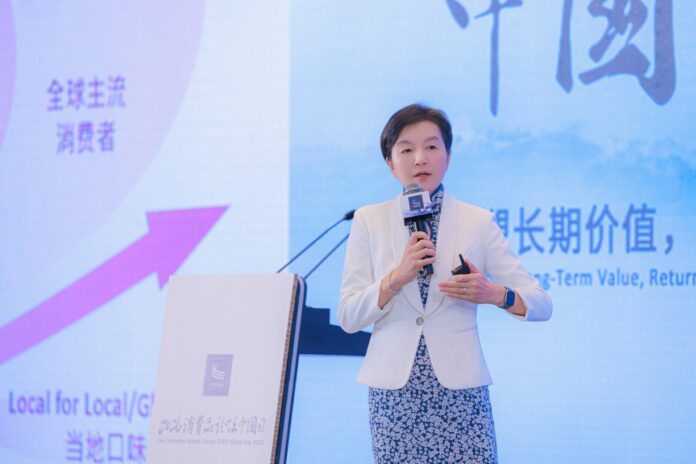
SHANGHAI, CHINA – Media OutReach Newswire – 11 September 2026 – Lee Kum Kee Sauce (“Lee Kum Kee”), the century-old sauce brand and a member of the Consumer Goods Forum (CGF), actively participated in CGF China Day 2026, held in Shanghai, China from 9 September to 10 September. Julie Xing, Ph.D., Global Board Chairman and Chief Executive Officer of Lee Kum Kee Sauce, was invited to deliver a keynote speech and join a roundtable discussion, underscoring the Company’s commitment to partnership, responsible growth, and improved industry collaboration within China’s consumer goods ecosystem.
Julie Xing, Ph.D., Global Board Chairman and Chief Executive Officer of Lee Kum Kee Sauce, delivers a keynote speech at CGF China Day 2026, sharing insights on the future of the food industry.
In her keynote speech, “Consumer-Centric: Creating Value Across the Entire Ecosystem,” Dr. Xing shared Lee Kum Kee Sauce’s perspective on the future development of the food industry, linking them to China’s 15th Five-Year Plan for consumption upgrading and broader industry trends.
Dr. Xing highlighted that consumers today are experiencing a threefold awakening of value, awareness, and health. Consumers are more proactive in researching product ingredients before buying, and seeking out low-sugar, low-salt and low-fat options. Consequently, health consciousness is shifting from a premium selling point to a default industry expectation.
Dr. Xing said, “Faced with increasingly diverse consumer demands, no single company can succeed in isolation. Consumer goods companies must build a comprehensive innovation portfolio over the next three to five years, spanning the entire value chain — from products and consumption scenarios to experience, channels, and business models. Only by breaking down silos and collaborating through cross-sector co-creation can we put consumers at the centre and forge new pathways for industry growth through shared value creation.”
Dr. Xing (far right) participates in the roundtable discussion on “Reshaping Growth Logic, Co-creating Long-Term Value,” exploring how the consumer goods industry can leverage AI to enhance data-driven insights and create value for consumers.
During the roundtable session, Lee Kum Kee joined consumer goods leaders to discuss emerging industry trends and the drive toward a more resilient consumption ecosystem that creates greater value for consumers in the new era. Dr. Xing engaged in dialogue with Ken Murphy, Global CEO of Tesco and Co-Chair of the CGF Global Board; Pu Shaohua, Chairman of Bailian Group and Co-Chair of the CGF China Board; and Anne Tse, CEO of PepsiCo Asia Pacific, on “Reshaping Growth Logic, Co-creating Long-Term Value.” Moderated by Derek Deng, Senior Global Partner at Bain & Company and Chairman of the Consumer Products Practice for Greater China, the four panellists shared insights on AI applications and efficiency improvements in the consumer industry, as well as how to sustainably create consumer value through a long-termism approach. Dr. Xing shared Lee Kum Kee’s experience in applying AI in supply chain optimisation and consumer insights, and noted that innovation investment often yield results over multi-year horizons, requiring leadership resolve and patience to balance short-term returns with long-term strategic positioning.
Dodie Hung, Executive Vice President – Corporate Affairs of Lee Kum Kee Sauce shares how the company embeds sustainability into its day-to-day operations.
CGF China Day 2026 spanned two days. On the second day, Dodie Hung, Executive Vice President – Corporate Affairs at Lee Kum Kee Sauce shared the Company’s experience in embedding sustainable development across three areas: green production, responsible product packaging, and community giving during the “China Green Sustainable Development Day” session.
Moreover, CGF announced that Lee Kum Kee’s sustainable packaging cases were featured in the 2026 Golden Design Rules Case Study, and the China Research Report on the Design-for-Recycling (DfR)Standards for Plastic Packaging in the FMCG Industry, for which Lee Kum Kee served as a member of the Chinese Expert and Advisory Group, was officially released. Both achievements demonstrate Lee Kum Kee’s innovative practices in packaging design that balance product safety, user experience, and environmental sustainability, reflecting the brand’s commitment to providing consumers with products that combine great taste with sustainable development value.
As CGF’s flagship annual event in China, CGF China Day is one of the most influential exchange platforms in the consumer goods industry. This year’s conference brought together over 350 industry executives and professionals from retailers and manufacturers across China and the global FMCG ecosystem, engaging in in-depth discussions on strategic opportunities and development trends in China’s consumer goods market.
Looking ahead, Lee Kum Kee will continue to work hand in hand with partners to advance industry alignment, foster a healthier, more sustainable, and more vibrant consumption ecosystem, and deliver value to consumers. Hashtag: #LeeKumKee #LKK
The issuer is solely responsible for the content of this announcement.
About Lee Kum Kee Sauce
Lee Kum Kee Sauce is the global gateway to Asian culinary culture, dedicated to promoting Chinese culinary culture worldwide. Since 1888, it has brought people together over joyful reunions, shared traditions and memorable meals. Beloved by consumers and chefs alike, Lee Kum Kee Sauce’s range of more than 300 sauces and condiments sparks creativity in kitchens everywhere, inspiring professional and home chefs to experiment, create, and delight. Headquartered in Hong Kong, China and serving over 100 countries and regions, Lee Kum Kee Sauce’s rich heritage, unwavering commitment to quality, sustainable practices and “Constant Entrepreneurship” combine to enable superior experiences through Asian cuisine for people worldwide. For more information, please visit www.LKK.com.
About Consumer Goods Forum
The Consumer Goods Forum (CGF) was founded in Paris, France, in 1953. It is the only global CEO-led organisation that unites consumer goods retailers and manufacturers worldwide. With some 400 members, the CGF brings together leading consumer goods retailers, manufacturers, service providers and other stakeholders from more than 70 countries. Governed by a Board of Directors comprising CEOs from more than 56 manufacturers and retailers, its member companies represent combined global sales of over €4.6 trillion. The CGF’s mission is “Better Lives Through Better Business”– benefiting people and the planet while supporting member companies in achieving long-term sustainable growth.
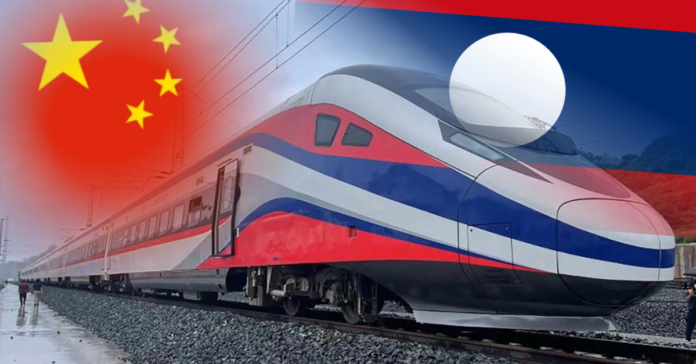
A picture of The Lao China railway in operations. (Photo by Lao Travel)
Passenger traffic on the China–Laos Railway has increased significantly this year, boosting tourism and cross-border economic links as Laos prepares to graduate from Least Developed Country status, the China State Railway Group said in a report on 9 September.
The group said that the railway carried 244,000 cross-border passenger trips during the first eight months of 2026, up more than 50 percent from the same period last year.
During the summer travel period from 1 July to 1 September, the Mohan railway port processed more than 57,000 entry and exit travellers from 72 countries and regions. Daily passenger clearances peaked at more than 1,100 at the Mohan port.
The railway directly connects Vientiane with Kunming and Xishuangbanna in China, providing faster access to more than 560 cultural and tourism attractions along the route. Rising passenger numbers have supported businesses including tourist attractions, hotels and restaurants.
Key Connection
Since its opening in late 2021, the railway has become a key part of Laos’ efforts to improve regional connectivity and develop its role as a transport and logistics hub.
Lao officials highlighted the railway’s role in the country’s economic development at the 11th Hong Kong Belt and Road Summit on 9 September. They presented investment opportunities in tourism, green innovation, modern industry, digital connectivity, clean energy, human-resource development and agriculture.
These priorities align with Laos’ 10th National Socio-Economic Development Plan for 2026–2030, which focuses on improving connectivity, expanding industry, developing human resources and promoting sustainable growth.
Lao officials also called on Belt and Road partner countries and businesses to invest in these sectors as Laos prepares to graduate from Least Developed Country status at the end of this year.




 https://wwf.org.hk
 https://www.linkedin.com/company/wwf-hong-kong/
 https://www.facebook.com/wwfhongkong
 https://www.instagram.com/wwfhk/




 www.LKK.com