Home Blog Page 907

Heineken Lao Brewery Receives Green Industry Certification

A picture of Heineken Lao Brewery facility that receiving Green Industry certification in Laos that recieved a certificate highlighting

On 24 March, Heineken Lao Brewery Company Limited was awarded the Green Industry Certificate (Level I) by the Department of Manufacturing Industry under the Ministry of Industry and Commerce, marking a step in its environmental and operational standards in Laos.

The recognition makes the company the first brewer in Laos, and one of a small number of businesses nationwide, to receive the certification. It reflects compliance with national regulations and alignment with international sustainability standards.

The company also holds ISO 9001:2015 certification for quality management and ISO 22000:2015 for food safety management in the production of beverages in cans, bottles, and kegs, supporting consistency in product quality and operational processes.

Iina Kaepynen, Managing Director of Heineken Lao Brewery, said that safety, environmental responsibility, and community impact remain key priorities for the company. She said the certification encourages continued collaboration with local authorities and partners to support sustainable growth.

Pisey Hoeung, Supply Chain Director, said the certification reflects the company’s ongoing efforts while highlighting future plans to improve efficiency and expand environmentally focused operations as part of its long-term sustainability commitments.

The certification supports broader efforts to strengthen sustainable industrial development in Laos, as the company continues to invest in production systems, environmental management, and operational efficiency.

Operating in Laos since 2006, Heineken Lao Brewery produces a range of beverage products and contributes to the local economy through manufacturing, employment, and skills development. The company also implements initiatives related to community development, environmental protection, and responsible consumption.

Save the Children Hong Kong’s “Heart to Heart Parent-Child Programme” Helps Parents Build Warmth and Boundaries for Children

From Authority to Companion: The Positive Parenting Journey of First-time Parents

HONG KONG SAR – Media OutReach Newswire – 25 March 2026 – For many families in Hong Kong, parenting can feel like a constant tug‑of‑war between time, stress and emotions. The Heart to Heart Parent‑Child Programme of Save the Children Hong Kong is a parent and child support programme that aims to help parents build confidence and skills in practising positive parenting and non‑violent communication, enabling children to feel respected, develop awareness of self‑protection, and strengthen parent‑child and family relationships.

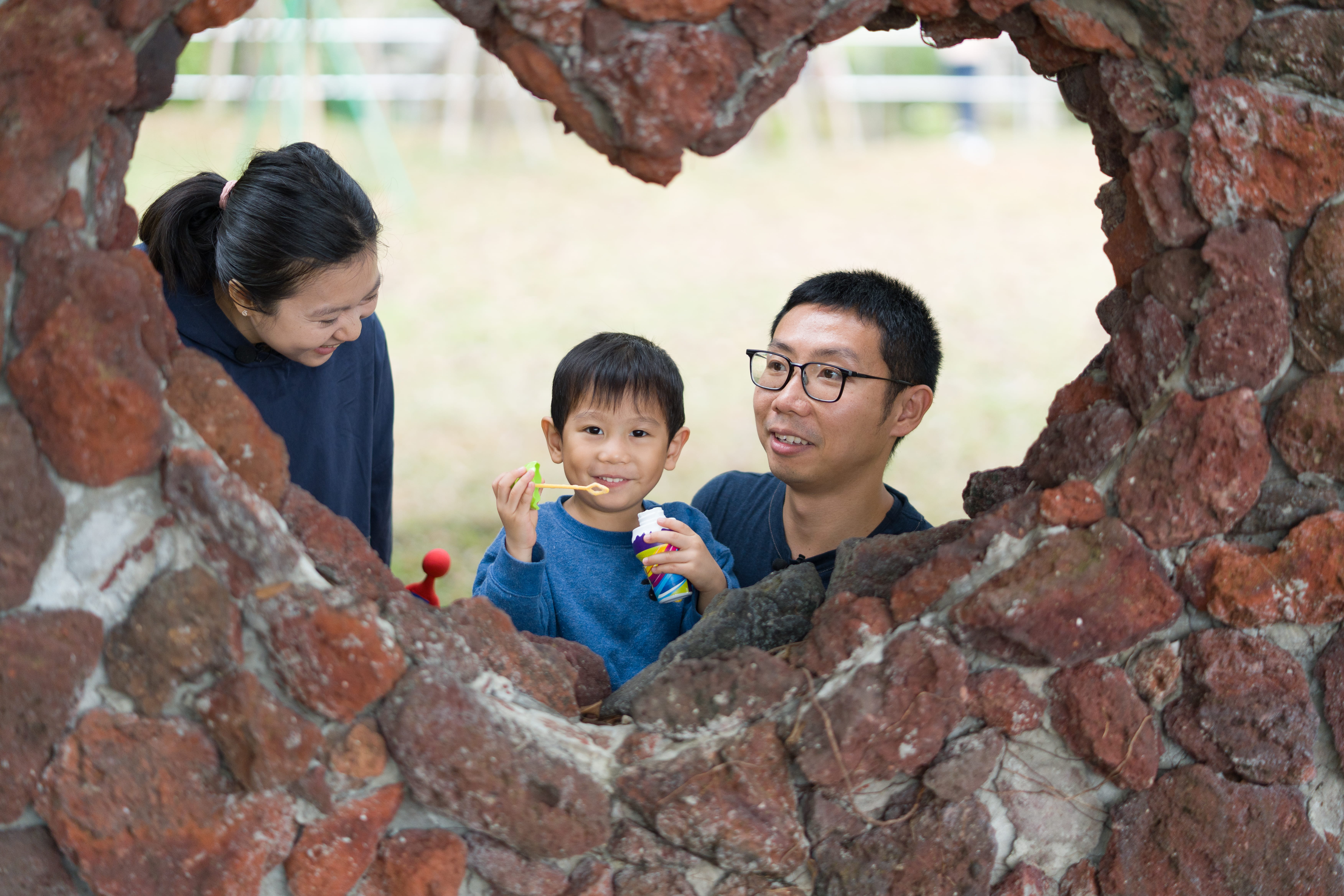
The couple hopes to learn positive parenting through the programme, fostering a family relationship built on mutual respect.

Watch video interview: https://savethechildren.click/H2H_AppleCheukStory_PR

With demanding work commitments, parents often strive to provide for their children materially yet may lack the time or energy to truly understand one another’s feelings — which can strain family relationships.For Cheuk and Apple, parents of a four‑year‑old boy, becoming mum and dad gradually made them realise how deeply their own childhood experiences — growing up under scolding, pressure and emotional suppression, have shaped the way they now interact with their son. “In the past, whenever a problem came up, my first instinct was always to fix it straight away,” Cheuk recalled. Influenced by his upbringing, Cheuk often tackled conflicts by issuing instructions or letting emotions take charge, sometimes overlooking how his child or partner might feel in the moment. Apple shares that a lack of understanding and emotional support in her own childhood also affected how relationships are formed later in life. “I didn’t want to repeat that same pattern,” Apple explains. This reflection motivated the couple to join Save the Children Hong Kong’s Heart to Heart Parent‑Child Programme, breaking the cycle of traditional punitive discipline.

Building Loving Family and Daily Routine: Learning to Parent, Rediscovering Oneself

The Heart to Heart Parent‑Child Programme is a parent and child support programme based on Save the Children’s child protection framework, which has been implemented in over 40 countries worldwide. Adapted for Hong Kong, the programme has so far served more than 700 parents and caregivers and over 1,000 children. It aims to help parents build confidence and skills in practising positive parenting and non‑violent communication, enabling children to feel respected, develop awareness of self‑protection, and strengthen parent‑child and family relationships.

Programme facilitator Janet notes that many parents genuinely value their relationship with their children—”they want to do well but don’t know how”. Under heavy social and work pressure, it is easy for parents to fall back on familiar but unhealthy forms of discipline.

“Positive parenting does not mean spoiling.” Janet explained that the approach emphasises both family warmth and guidance with structure, which means acknowledging children’s emotions and needs, while also setting clear and safe boundaries. This helps children feel understood and, at the same time, learn appropriate behaviour and social norms.

Facilitator Janet explains that the programme emphasises both “family warmth” and “guidance with structure”.

In the parent group, Cheuk and Apple were introduced to many new concepts, such as “address feelings first, then deal with the problem” and the “Iceberg Theory” for identifying the underlying causes behind emotional outbursts. These concepts, which at first seemed abstract, gradually became practical and actionable through the four‑session parent workshop combining discussions and real‑life examples.

Parallel Learning for Parents and Children: Helping Children Put Emotions into Words

Parents are introduced to practical tools in the programme to help children recognise and express their feelings. One of these tools is the use of picture books and art activities.

“Colours and drawings can be a language for children,” Janet shared. Through picture books, parents and children can build a shared emotional language. For example, using colours to describe anger, calmness, or uneasiness helps children articulate their feelings more easily.

Apple shared that picture books and drawing created new opportunities for conversation. Even though her son is still young, “when we really sit down and listen, he does express himself.” The programme also includes parallel groups for children aged 6–12, allowing parents and children to learn positive communication together.

The children’s group uses picture books and art activities as tools to teach children to recognise and express emotions.

A small episode during the interview at the park perfectly illustrated how the family practises positive parenting. When their son had a tantrum after struggling with a drawing, Apple did not scold him and said calmly instead, “We wouldn’t know unless you teach us,” and expressed her feelings by saying, “When I see you losing your temper, I feel really upset.”

By expressing emotion from Apple’s own perspective, her son calmed down, shared what he needed, and with Cheuk’s help, the family continued enjoying their time together. Janet praised the couple’s patience. “They communicate honestly and share their feelings. These are the important elements in positive parenting.”

Apple and Cheuk patiently listened during their son’s emotional outburst, successfully soothing him and understanding his needs.

A Hug Speaks Louder Than Words: Positive Communication Strengthens Family Bonds

After learning positive parenting, they found that it not only improved their relationship with their son, but also strengthened their relationship as a couple. “Whether it’s with my child or my wife, paying attention to their emotions is so important,” Cheuk reflected. “Before, I just wanted to fix problems, but now I understand that sometimes the best response is simply a hug.”

For the couple, parenting is no longer just about “discipline” but a shared journey of companionship.

Apple said the mother and son now relate to each other as companions, supporting and growing alongside one another. “We’re not trying to raise a child who fits some standard answer,” Apple says. “We want him to be someone who can feel love, understand himself, and respect others.” That wish perfectly embodies the core spirit of Heart to Heart Programme.

For Apple and Cheuk, parenting is no longer just about discipline, but about becoming companions on a shared journey of growth.

Kalina Tsang, CEO of Save the Children Hong Kong, expressed her delight in witnessing Apple and Cheuk’s change:

“We are seeing more and more parents realise the importance of non‑violent communication and positive parenting. This not only improves parent‑child relationships but also effectively reduces emotional outbursts and the risk of escalating conflict. These changes are an essential first step in preventing child abuse.

With the implementation of the Mandatory Reporting of Child Abuse Ordinance, an important safety net is now in place for children. Yet this is only the starting point, not the end. We must also focus on prevention and education, helping families reduce risks before problems arise. Save the Children Hong Kong holds an uncompromising belief in non‑violent, positive parenting as the most effective approach to prevention.

Protecting children is a responsibility shared by the whole community, and we will continue to support Hong Kong families to ensure that every child grows up in safety, with respect and love.”
Hashtag: #SavetheChildrenHongKong #香港救助兒童會 #positiveparenting #正向管教 #childprotection #保護兒童


YouTube:

The issuer is solely responsible for the content of this announcement.

About Save the Children Hong Kong

Save the Children believes every child deserves a future. In Hong Kong and around the world, we do whatever it takes – every day and in times of crisis – so children can fulfil their rights to a healthy start in life, the opportunity to learn and protection from harm. With over 100 years of expertise, we are the world’s first and leading independent children’s organisation – transforming lives and future.

Established in 2009, Save the Children Hong Kong is part of the global movement which operates in around 100 countries. We work with children, families, schools, communities and our supporters to deliver lasting change for children in Hong Kong and around the world.

Visit our , or follow us on , , , and .

Natural Diamonds Dazzle on The Red Carpet at The 98th Academy Awards

Today’s biggest stars express individuality and confidence with natural diamonds

LOS ANGELES, US – Media OutReach Newswire – 25 March 2026 – The 98th annual Academy Awards took place March 15th at the Dolby Theatre in Los Angeles, California, effectively ending awards season with an unforgettable evening. The most notable actors in the world showcased the most classic, refined and distinctive diamond jewelry looks of the season. Below, we highlight the standout trends from the event.

From left to right: Chase Infiniti, Rose Byrne, Keltie Knight, Barbie Ferreira (Photo Credits: Getty Images)

Desert diamonds
Once again Desert diamonds were front and center, further confirming it as the standout diamond trend of the season. Rose Byrne wore the most important diamond high jewelry of the year in a sculptural torque necklace featuring a 22.58 carat fancy yellow-brown pear-shaped Desert diamond, and an Arizona Blue ceramic and 18k rose gold ring centering a 16.54 Ashoka-cut diamond sourced from Botswana, both one-of-a-kind pieces by legendary design house TAFFIN. Chase Infiniti wore the ‘Summer’ Choker Necklace from De Beers London’s Metamorphosis 2023 Couture Collection, featuring a fancy intense yellow cushion diamond at its center; Drops of Light fancy vivid yellow pear-shaped diamond jacket earrings; and Aura fancy yellow cushion-cut Diamond Line Bracelet all by De Beers London. Barbie Ferreira wore the Arpeggia Three Line Diamond Necklace with varying shades of sunlit white and yellow diamonds, and Talisman Chandelier Diamond Earrings featuring yellow rough diamonds and white polished diamonds, both from De Beers London. Keltie Knight wore fancy intense yellow Asscher-cut diamond drop earrings , a fancy yellow radiant-cut diamond ring, and a smoky yellow-brown diamond ring, all by Premier Gem.

Closely cropped necklaces
Closely cropped diamond necklaces in the form of torques, chokers and collars emerged as a defining styling choice, framing the neckline with brilliance and sculptural elegance. Jessie Buckley embraced the trend in a closely cropped diamond necklace by Chanel, while Elle Fanning selected a striking collar-style design by Cartier shaped like cascading wisteria, blending nature-inspired artistry with high jewelry craftsmanship. Kylie Jenner opted for a bold interpretation with an oversized diamond cluster necklace by Lorraine Schwartz, delivering maximum impact through scale and sparkle, while Arden Cho wore a stunning choker in the shape of feathers by Messika. Kate Hudson also leaned into the silhouette with a collar necklace by Garatti High Jewelry, reinforcing the growing prominence of diamond pieces worn close to the collarbone.

Diamond Brooches
Brooches made a confident return to the red carpet, emerging as one of the evening’s most expressive accessories. Hudson Williams, among the first actors to arrive, helped set the tone in a sparkling brooch by BVLGARI. Jeremy Pope embraced the trend with multiple brooches by Anabela Chan Jewelry, while Damson Idris wore a custom piece from his own brand, DIDRIS. The styling momentum of sparkling diamonds against black tie continued across the carpet, with Fortune Feimster, Milo Manheim, Kumail Nanjiani, Joe Alwyn, Kieran Culkin, Wagner Moura, and Raphael Saadiq all incorporating brooches into their looks. Channing Tatum and Shaboozey also participated in the diamond brooch trend, with Shaboozey notably wearing two brooches, including one styled as a neck closure, highlighting the accessory’s renewed versatility and modern appeal.

Hashtag: #adiamondisforever #naturaldiamonds #diamonds #Desertdiamonds #VanityFair #Oscars


The issuer is solely responsible for the content of this announcement.

About De Beers Group

Established in 1888, De Beers Group is the world’s leading diamond company with expertise in the exploration, mining, marketing and retailing of diamonds. Together with its joint venture partners, De Beers Group employs more than 20,000 people across the diamond pipeline and is the world’s largest diamond producer by value, with diamond mining operations in Botswana, Canada, Namibia and South Africa. Innovation sits at the heart of De Beers Group’s strategy as it develops a portfolio of offers that span the diamond value chain, including its jewellery houses, De Beers Jewellers and Forevermark, and other pioneering solutions such as diamond sourcing and traceability initiatives Tracr and GemFair. De Beers Group also provides leading services and technology to the diamond industry in the form of education and laboratory services via De Beers Institute of Diamonds and a wide range of diamond sorting, detection and classification technology systems via De Beers Group Ignite. De Beers Group is committed to ‘Building Forever,’ a holistic and integrated approach for creating a better future – where safety, human rights and ethical integrity continue to be paramount; where communities thrive and the environment is protected; and where there are equal

opportunities for all. De Beers Group is a member of the Anglo American PLC group. For further information, visit .

TrendAI™ Secures the OpenClaw-Driven AI Era

Introducing new security solution designed for the rapidly emerging era of agentic AI


HONG KONG SAR – Media OutReach Newswire – 25 March 2026 – TrendAI™, the enterprise AI security leader, today introduced TrendAI™ Agentic Governance Gateway, a new security solution engineered to give organizations visibility and control over autonomous agent interactions to strengthen security where systems interact across data, tools, and environments with increasing autonomy.

To learn more about TrendAI™ and TrendAI™ Agentic Governance Gateway, visit: trendaisecurity.com.

Rachel Jin, CPBO and Head of TrendAI™: “Tools like OpenClaw show just how powerful and accessible this new model has become. Organizations need to deploy these systems to unlock the next wave of productivity, and many already are, often without centralized oversight. TrendAI™ Agentic Governance Gateway enables this by providing visibility, control, and confidence.”

Traditional cybersecurity is built to protect endpoints, networks, and applications. In contrast, agentic AI systems operate across dynamic chains of interaction where agents, models, APIs, and data continuously exchange information and trigger actions.

Eva Chen, CEO of Trend Micro: “As AI systems become more autonomous, security must evolve from protection to governance. This is the next frontier of cybersecurity and the focus of TrendAI™.”

TrendAI™ Agentic Governance Gateway is a new way to address the emerging security gap created by agentic AI systems, such as OpenClaw, where autonomous agents act across enterprise environments without clear security control points. This was demonstrated last week at NVIDIA GTC, where a fundamentally new attack surface was highlighted – one that traditional security models were not designed to control: Autonomous agentic frameworks, such as OpenClaw, accelerating enterprise adoption of AI systems capable of planning, executing, and coordinating actions across workflows at machine-speed. There has never been a more critical business-level need than understanding and governing how agentic systems behave, and what actions they are taking. The orchestration required to monitor this attack surface created complex, multi-step workflows across enterprise systems until now.

According to Forrester, “AI agents are proliferating across workflows, but security programs built for human-centric architectures fail in agentic environments. These agents operate with dynamic reasoning, ephemeral identities, and goal-driven autonomy, creating unpredictable attack paths. Risks to agentic architectures include intent hijacking and cascading hallucinations that extend beyond confidentiality to integrity and availability. Without guardrails, enterprises risk regulatory violations, financial loss, and disclosure events from agentic security issues.” 1

TrendAI™’s Agentic Governance Gateway allows enterprises to focus on the behavior, interactions, and outcomes of AI systems in real-world environments. TrendAI™ Agentic Governance Gateway is delivered through the TrendAI Vision One™ platform, building on TrendAI™’s existing strengths, including AI-driven analytics to detect anomalous behavior and emerging threats, and a unified approach that correlates context across endpoints, cloud, applications, and AI systems.

TrendAI™’s Agentic Governance Gateway enables enterprises to:

  • Gain visibility into how agents interact across systems
  • Understand the context and intent behind agent communications to identify risky or unintended actions
  • Enforce policy and control over agent-driven actions
  • Introduce human oversight at critical decision points
  • Simulate governance decisions before deployment — previewing the full policy impact without executing it
  • Stage, preview, and roll back governance changes through a managed lifecycle

With these new advanced capabilities, TrendAI™ is enabling organizations to secure the critical interaction layer – the dynamic communication fabric where autonomous systems coordinate, make decisions, and drive enterprise actions. By establishing robust oversight and control at this pivotal layer, TrendAI™ ensures that agentic interactions are visible, governed, and trusted, effectively closing the security gap in agent-driven AI environments.

TrendAI™ is the enterprise business unit of Trend Micro Incorporated (TYO: 4704; TSE: 4704).

1: The AEGIS Agent-On-A-Page Template For Agentic Security, Forrester Research, Inc., Feb 13, 2026.
Hashtag: #trendai #trendmicro #trendvisionone #trendaivisionone #visionone #cybersecurity


The issuer is solely responsible for the content of this announcement.

About TrendAI™

TrendAI™, a global leader in AI security, empowers enterprises to innovate fearlessly by securing AI, cloud, networks, endpoints, and data across the modern attack surface. At the core is TrendAI Vision One™, a unified cybersecurity platform that centralizes cyber risk exposure management and security operations to protect the entire AI lifecycle from infrastructure to models to users. The platform is fueled by world-class threat intelligence and insights that protect organizations from hundreds of millions of threats every day. With 6,000 TrendAI™ experts across 75 countries, TrendAI™ empowers security leaders to stay ahead of threats, driving proactive security outcomes across the entire attack surface. This includes critical environments like AWS, Google, and Microsoft. AI Fearlessly.

Advancing citizen-first public services through AI and digital transformation

BARCELONA, Spain, March 25, 2026 /PRNewswire/ — A news report from SmartCitiesWorld

With governments worldwide turning to AI-driven digital transformation, Huawei took centre stage to explore how integrated platforms, data intelligence and “chat‑to‑process” innovations are reshaping service delivery, boosting efficiency and raising satisfaction across the public sector.

Governments across the world are under growing pressure to deliver faster, more accessible and more transparent services for citizens. Driven by ageing populations, rising citizen expectations and budget constraints, administrations are having to rethink how public services are designed and delivered – and AI-enabled digital solutions are helping their cause.

Together, these challenges, plus their potential solutions, were a central focus at the Global AI+ Public Service Summit, held by Huawei Government Public Services Digitalization BU during Mobile World Congress Barcelona 2026 (MWC). During the Summit, public sector leaders, technology experts and policymakers gathered to discuss how digitalization and AI can transform government services and improve the daily lives of citizens.

As Saeed Xia, President of Huawei Global Public Service BU, explained during the Summit at MWC, the scale of the challenge is global. “Governments worldwide face fragmented portals, limited online services, long processing times, and poor experiences due to data silos, lack of integration, and weak digital-intelligent capabilities,” he said.
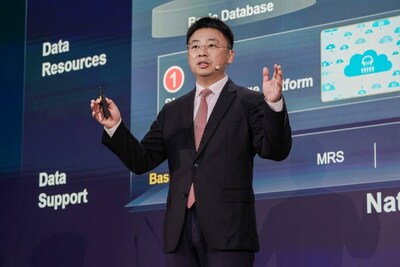
Huawei's Saeed Xia presents onstage at MWC 2026
Huawei’s Saeed Xia presents onstage at MWC 2026

These structural barriers have real consequences for citizens, such as long waiting times, repetitive paperwork and complex administrative processes. These issues can undermine trust and reduce satisfaction with public services, which is why addressing these issues has become a central pillar of national digital transformation strategies.

Digital government as a strategic priority

Digital government programmes are designed not only to improve service delivery but also to strengthen governance, reduce costs and increase transparency. 

According to Xia, these efforts are about more than simply adopting new technologies: “Digital transformation of government is a global imperative, with three core goals – boosting international influence and economic growth, modernising governance to cut costs and build trust, and improving public services to raise citizen satisfaction.” 

Citizens increasingly expect convenient, personalised public services available on mobile devices at any time, moving away from traditional, bureaucratic approaches. To achieve this, governments must move beyond isolated digital projects and instead build integrated platforms that connect departments, data and services. 

A blueprint for AI-driven public services

During the Summit, Huawei unveiled its Global Public Service Solution, designed to support governments in building intelligent, citizen-centred service systems. 

The solution provides a blueprint for how countries can modernise public service delivery using digital infrastructure, data platforms and AI-powered applications. At its core is an architecture built on the idea of “1 digital foundation + 1 intelligent platform + N industry applications”, with the goal to create a service environment that is seamless, efficient and accessible across multiple channels. 

An illustration of the architecture of Huawei's Global Public Service Solution
An illustration of the architecture of Huawei’s Global Public Service Solution

Xia described the vision as one where public services become truly citizen-first: “The ideal public service is people-oriented, efficient and transparent. It provides 24/7 one-stop services across channels, with online-offline integration, paperless and single-visit completion,” he said. 

This model aims to simplify the citizen experience by enabling users to access multiple services through unified portals, mobile apps, kiosks or service centres. Instead of navigating multiple agencies and forms, citizens can complete complex processes through a single digital interface.

Huawei’s approach also focuses heavily on data integration and AI capabilities. The architecture includes a service platform for online service delivery, a data platform for secure data management and governance, and an AI platform capable of supporting applications such as natural language processing, digital assistants and automated approvals.

AI and the emergence of “chat-to-process” services

Governments are increasingly using AI-powered chatbots, voice assistants and automated verification tools to speed up routine interactions and improve service delivery.

Huawei envisions “chat-to-process” services, enabling citizens to complete administrative tasks simply by interacting with an AI interface. This streamlines government interactions – citizens can state their needs in natural language instead of dealing with forms or websites. Public administrations also benefit from reduced manual work and faster approvals – with Huawei estimating this can raise citizen satisfaction and management efficiency by about 30 per cent.

One example comes from Shenzhen, where the government’s iShenzhen app includes an intelligent AI assistant which supports enquiries and queries related to more than 50 topics across 4,000 common public services for citizens – including childbirth and adoption, social security and human resources, work safety, establishment and alteration of enterprises, and more. 
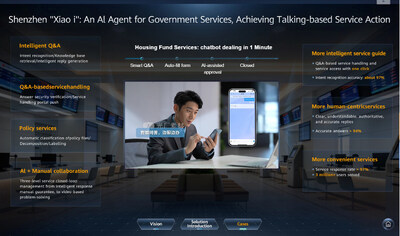
A look at how Shenzhen's AI chatbot supports citizen outcomes
A look at how Shenzhen’s AI chatbot supports citizen outcomes

Known as Shenxiao i, the assistant features capabilities for intelligent Q&A, chatting and handling, and intelligent policy services. Its intention recognition rate – its ability to understand the purpose or goal of an enquiry – is around 97 per cent, with a response rate of more than 97 per cent, and accuracy of response over 94 per cent. Altogether, this drastically reduces the time it takes for citizens to find answers to their queries. Previously, for example, citizens needing to know which documents they’d need to set up a newborn child’s medical insurance would have needed to call a hotline. Now, the answer can be obtained in seconds through the iShenzhen app.

Shenzhen Longgang as a global demonstration site

To illustrate how AI-powered public services can work in practice, Huawei and the Shenzhen Longgang Government Service Center have jointly launched the Shenzhen Longgang AI+ Public Service Global Demonstration Site.

The initiative showcases how digital platforms and AI technologies can transform service delivery across multiple levels of government. The demo site integrates services across district, street, community and campus levels to illustrate what a seamless administrative experience is like, combining intelligent service systems with integrated approval processes.

The project is designed to show how digital transformation can reduce waiting times and simplify citizen interactions. For example, the system’s intelligent customer service platform uses large language models to integrate hotlines, service counters and self-service resources. Integrating these allows citizens to access support through their preferred channels while ensuring consistent responses.

The platform has achieved a hotline connectivity rate of 98 per cent to date, while AI-powered verification systems have pushed approval accuracy to more than 95 per cent. These results illustrate the potential for AI to transform everyday government services, from licensing and permits to social services and administrative requests.

Toward citizen-first government services

Through discussion at Global AI+ Public Service Summit at MWC, and Huawei’s latest releases and announcements, it’s clear that successful public service reform must start with the needs of citizens.

Technology can enable new capabilities, but its real value lies in improving everyday interactions between citizens and government institutions. During the Summit, Xia emphasised that the ultimate objective of digital government is to make public services simpler, faster and more accessible. Huawei’s approach focuses on creating what it describes as “anytime, one-stop, proactive public service” systems – platforms that allow citizens to complete services efficiently while enabling governments to operate more intelligently.

For governments facing growing demands and limited resources, this approach can play a crucial role in maintaining trust and improving public service outcomes. At the same time, the challenge will be ensuring that innovation remains aligned with public needs.

It is beyond doubt that AI and digital platforms are playing increasingly important roles in shaping the future of government, but the guiding principle behind their adoption must remain clear. As Xia concluded during the Summit, with a reminder drawn from democratic tradition, the purpose of government services ultimately remains unchanged – to serve the people. 

Arrow Global launches Arrow Global Insurance

Arrow unlocks a new institutional investment opportunity by extending its private credit and real assets platform into specialty insurance

LONDON, March 25, 2026 /PRNewswire/ — Arrow Global Group (“Arrow”), a leading pan-European investment manager specialising in private credit and real estate, today announces the launch of Arrow Global Insurance (“AGI”), a new business vertical designed to capture institutional investment opportunities across the insurance value chain.

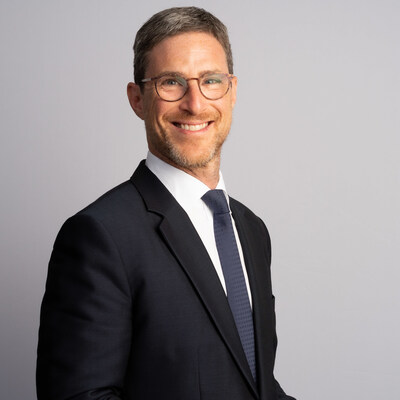
Zach Lewy, Chief Executive Officer and Chief Investment Officer of Arrow Global Group

AGI has been established as a strategic extension of Arrow’s existing investment platform, enabling the Group to deploy its underwriting, structuring and capital management expertise into the insurance market. The platform is focused exclusively on specialist, non-catastrophe insurance lines where outcomes depend on deep analysis, bespoke risk assessment and disciplined capital allocation. It does not operate in climate, life or consumer insurance markets.

AGI brings together origination, underwriting and investment within a single, integrated structure. By controlling key elements of the insurance value chain, including underwriting and risk-bearing capital at scale, Arrow is able to capture multiple sources of return, including underwriting margin, fee income and investment returns on insurance premiums, creating a scalable, capital-efficient opportunity set for its investors, supported by substantial institutional capital from inception.

AGI focuses on property, casualty and specialty insurance, initially including after-the-event insurance, contingent and transactional risks, credit risks and surety products. These lines support complex legal and financial activities that are often underserved by traditional insurers and are increasingly relevant to corporate and private capital participants seeking greater certainty and more effective risk transfer.

As part of the platform, in 2024 Arrow founded a new managing general agent, Toremis Specialty (“Toremis”), part of Legatus Group, to underwrite identified legal and transactional risks. Toremis’ insurance capacity is supported by a reinsurer, Halldora Re Ltd (“Halldora Re”), founded in 2025 by Arrow and capitalised by institutional investors and funds managed by Arrow. Halldora Re has been assigned a Financial Strength Rating of A- (Excellent) and a Long-Term Issuer Credit Rating of a- (Excellent) by AM Best, with a stable outlook. AM Best cited Halldora Re’s very strong balance sheet strength, conservative investment strategy, limited business risk profile and appropriate enterprise risk management framework, providing independent validation of the platform’s robustness.

AGI actively seeks out products in fragmented markets characterised by bespoke risk analysis, limited competition and constrained underwriting capacity. Arrow’s long-standing experience in complex credit, litigation-related assets and real estate allows it to originate and underwrite these risks and structure solutions with agility and flexibility often beyond that of traditional insurers. This local specialist expertise, applied in complex and fragmented markets, underpins a strategy designed to generate attractive margins and returns on equity. For Arrow’s investors, this creates access to differentiated return streams that are largely uncorrelated with traditional credit and equity markets.

Zach Lewy, Chief Executive Officer and Chief Investment Officer of Arrow Global Group, said:

“Arrow Global Insurance provides opportunities for our investors to access the global specialty insurance market by utilising Arrow’s expertise. This is a fragmented market with growing demand for specialist risk solutions, and we believe that controlling the value chain allows us to generate attractive returns through a highly aligned and efficient operating network.”

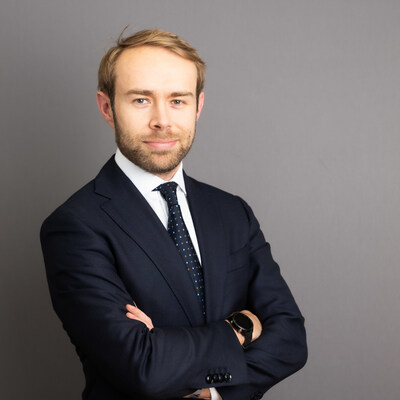
Dan Adams, Managing Director and Head of Insurance at Arrow Global Group, added:

“The opportunity in specialty insurance lies in embracing complexity. We have built the AGI model to do this at scale, combining technical expertise, underwriting agility and institutional capital. The AM Best rating for Halldora Re validates the strength of the platform and supports our ability to grow responsibly alongside our investors.”

Arrow Global Group

Founded in 2005, Arrow Global is a leading European alternative asset manager with a vertically integrated investment model across private credit and real estate. Arrow owns 25 best-in-class asset management and servicing platforms, enhancing operational efficiency and maximising asset value across market cycles.

With key European regulatory licences, Arrow manages approximately €125 billion in third-party AUM, with a track record of over €14 billion invested over the past 20 years. The company operates across Western Europe, with headquarters in London and offices in major financial centres including Paris, Milan, Madrid, Berlin, Amsterdam, Dublin, Luxembourg, and Lisbon.

For more information, visit www.arrowglobal.net

Dan Adams, Managing Director and Head of Insurance at Arrow Global Group


DeepL Voice preferred by 96% of professional linguists, outpacing leading competitors in spoken translation speed and accuracy

New study reveals DeepL Voice delivers higher-quality translations and more stable live captions in meetings across 14 language combinations, compared to Google Meet, Microsoft Teams and Zoom

COLOGNE, Germany, March 25, 2026 /PRNewswire/ — DeepL, a global AI product and research company, today reveals results from an independent benchmark study evaluating the quality and stability of real-time AI-translation and captions for meetings across widely used collaboration platforms; Google Meet, Microsoft Teams and Zoom.

As real-time multilingual meetings become routine for global teams, enterprises increasingly rely on AI voice technology to support collaboration, customer negotiations and cross-border decision-making.

Commissioned by DeepL and carried out independently by Slator – the leading source of research and market intelligence for translation, localization, interpreting, and language AI – the study finds that DeepL Voice achieves the highest scores for both translation quality and caption stability, outperforming built-in caption translation tools available in Google Meet, Microsoft Teams and Zoom.

In high-stakes settings – from sales discussions and supplier negotiations to internal strategy meetings – even minor translation errors or unstable captions can significantly slow momentum, create confusion or undermine critical business decisions. As global business accelerates, AI-driven translation is no longer a convenience feature, it has become essential infrastructure. The strength of that infrastructure depends on two critical factors: the quality of AI translation and the stability of live captions.

Key findings include:

  • DeepL Voice leads translation quality in human evaluation, achieving a 96.4/100 quality score for DeepL Voice for Zoom and 96.3/100 for DeepL Voice for Teams, compared with 87–89 across other evaluated platforms.
  • DeepL Voice significantly reduces high-severity errors, lowering the rate of critical or major translation errors by 76% on average versus other platforms.
  • DeepL Voice produces fully passing translated segments 79% of the time, compared with 42% across competing tools.
  • DeepL Voice improves caption stability, earning stability scores of 88.6/100 (DeepL Voice for Zoom) and 85.8/100 (DeepL Voice for Teams) in Slator’s automated frame-level analysis.
  • DeepL Voice reduces caption churn (on-screen rewrites/flicker) by 37.6% on average versus Microsoft Teams and 54.7% on average versus Zoom.
  • Across all blind evaluations, DeepL Voice is preferred by 96% of professional linguists benchmarking the solutions.

“Language AI is becoming the core infrastructure for how global businesses operate. In that context, accuracy and stability aren’t features, they’re requirements,” said Jarek Kutylowski, CEO of DeepL. “This independent benchmark shows DeepL Voice delivering on both and at a level that sets a new standard for real-time communication. When professional linguists overwhelmingly prefer one solution, it’s a clear signal of where the market is heading.”

“We looked beyond basic accuracy scores and focused on the ‘human’ side of AI captioning: readability, fluency, and stability. We didn’t just want to know if the words were right at the end; we wanted to see how they behaved while a person was trying to read them. That meant evaluating both linguistic quality and how captions behave on screen and that’s where we can clearly see a new benchmark being set by DeepL,” said Alex Edwards, Head of Consulting, Slator.

Why stability matters as much as accuracy
Slator’s report finds that even when translations are broadly accurate, frequent caption rewrites can interrupt comprehension and reduce usability in real-world meetings. To reflect how captions appear to end users, Slator measured stability using frame-by-frame analysis of rendered captions on screen, capturing flicker, oscillation and rewriting behavior over time.

Methodology
Slator commissioned 28 professional linguists to conduct a blind evaluation of AI-translated captions across 14 language combinations (7 into English, 7 from English). The report benchmarks standard, out-of-the-box caption translation settings in Google Meet, Microsoft Teams and Zoom, and compares them with DeepL Voice for Microsoft Teams and DeepL Voice for Zoom, including product features available to end users (such as glossaries and recognition of spoken terms). Slator states that its conclusions are independent and that it retained full editorial control over methodology and findings.

Looking ahead to April
These findings are released ahead of DeepL’s global spring launch on 16 April 2026, when the company will unveil major updates to DeepL Voice alongside expanded capabilities in translation automation and cross-platform collaboration.

About DeepL
DeepL is a global AI company building the language infrastructure that powers global business. More than 200,000 business teams and millions of individuals use DeepL’s Language AI platform to communicate globally, collaborate and operate across languages in real time. By combining breakthrough AI models with enterprise-grade security and privacy, DeepL enables organizations to work seamlessly across markets and cultures. Founded in 2017 by CEO Jarek Kutylowski, DeepL now has more than 1,000 employees and is backed by leading investors including Benchmark, IVP and Index Ventures. Learn more at www.deepl.com.

About Slator
Slator is the leading source of research and market intelligence for translation, localization, interpreting, and language AI. Slator’s Consulting practice is a trusted partner to enterprise buyers, language technology platforms, and language solutions integrators looking for independent industry analysis.

The full report is available here.

Logo – https://laotiantimes.com/wp-content/uploads/2026/03/deepl_logo.jpg 

Blockchain.com Opens Malta Office to Anchor European Operations

The new office strengthens Blockchain.com’s presence in Malta as the company scales regulated retail and institutional services across Europe

VALLETTA, Malta, March 25, 2026 /PRNewswire/ — Blockchain.com announced today the official opening of its Malta office, marking the next step in the company’s European expansion and its long-term commitment to building regulated digital asset infrastructure across the region.

The new office will serve as a strategic hub for Blockchain.com’s operations across Europe following the company securing its Markets in Crypto Assets (MiCA) license from the Malta Financial Services Authority (MFSA). The license enables Blockchain.com to passport regulated crypto brokerage services across the European Economic Area under the EU’s first comprehensive digital asset regulatory framework.

“We didn’t pick Malta by accident. Malta has taken a thoughtful and forward-looking approach to digital asset regulation,” said Nic Cary, Co-founder and Vice Chairman at Blockchain.com. “At Blockchain.com, we’ve spent over a decade building a brand of trust and integrity, and we’re bringing that same professional-grade standard to users across Europe. This office represents our commitment to building trusted, compliant infrastructure for the crypto market.”

Blockchain.com’s Malta office will support a range of functions including regulatory engagement, operational development, and retail client services across the European market. The company will soon launch its institutional business, partnering with some of the region’s leading licensed firms.

Blockchain.com operates in more than 70 jurisdictions worldwide. Since 2011, Blockchain.com has processed over $1.2 trillion in crypto transactions, created more than 90 million wallets, and verified over 40 million users. As a global crypto brokerage, Blockchain.com provides individuals and institutions with secure access to digital assets while maintaining a strong commitment to compliance, transparency and security.

About Blockchain.com
Blockchain.com is connecting the world to the future of finance. The global leader in crypto services helping millions across the globe access cryptocurrency. Since its inception in 2011, Blockchain.com has earned the trust of more than 90 million wallets and over 40 million verified users, and has facilitated over $1.2 trillion in crypto transactions. Visit Blockchain.com for more information.

Media Contact: press@blockchain.com