Home Blog Page 916

Illumina Launches TruPath Genome, Unveils NovaSeq X Roadmap, and Drives Cancer Breakthroughs with Connected Multiomics

  • TruPath™ Genome offers more complete genome, with the simplest sample to sequencer workflow, and the new AGBT data demonstrates its accuracy in detecting rare genetic diseases
  • 40% increase in output to 35 billion reads, up to Q70 quality scores, improved turnaround time, and staggered starts are among the updates to be rolled out on all NovaSeq X systems, advancing precision medicine and delivering compounded value for NovaSeq X customers
  • At AGBT, researchers reveal new findings from studies leveraging Illumina’s multiomics solutions

SAN DIEGO, Feb. 27, 2026 /PRNewswire/ — Illumina Inc. (NASDAQ: ILMN), a global leader in DNA sequencing and array-based technologies, today announced a suite of powerful advancements that will significantly accelerate the next era of genomic discovery. Unveiled at the Advances in Genome Biology and Technology (AGBT) 2026 conference, the announcements include the launch of TruPath™ Genome, a new standard in genomic insight; a groundbreaking roadmap for the NovaSeq X Series; and new partner-driven cancer breakthroughs powered by Illumina’s spatial and multiomic technologies.

TruPath Genome, a new standard in genomic insight

Illumina’s launch of TruPath™ Genome sets a new standard for high-quality, comprehensive whole genome insights for genetic disease. TruPath Genome has been found to deliver unparalleled accuracy and resolution – even across so-called “dark regions” of the genome – providing researchers with a more complete picture of genomic alterations implicated in genetic disease.


With an incredibly simple workflow, TruPath Genome eliminates traditional library prep. In just 10-15 minutes of hands-on time, TruPath Genome generates 16 whole genomes per day, nearly double the throughput of competing long-read methods, and with fewer errors.

TruPath Genome leverages novel on-flow cell library preparation with patterned flow cell technology and advanced informatics to seamlessly add long-distance insights for comprehensive variant detection. DRAGEN™ algorithms tuned to incorporate proximity information from TruPath flow cells improve read alignment and variant calling, extending Illumina high quality reads to difficult-to-map regions, variant phasing, structural variants, short tandem repeats (STR), and clinically relevant paralogous genes. TruPath Genome fully phases up to 98% of genes.

The TruPath Genome launch was unveiled during the Gold Sponsor Workshop at the AGBT annual meeting in Orlando. Register here for the replay. For more detailed information on this announcement, please see the press release here, and learn more about TruPath Genome here. TruPath Genome was previously referred to as “constellation mapped read technology”. 

Roadmap of groundbreaking NovaSeq X advancements in data quality, output, speed, and flexibility 

Building on the revolutionary NovaSeq™ X Series, Illumina unveiled an 18-month roadmap of innovations that enhance the power and value of the NovaSeq X system. Updates include technology that will deliver up to a Q70 quality score for the first time, along with 30% increased speed and output up to 35 billion reads (35B). Staggered starts and new flow cells go live across the customer base in the coming weeks.
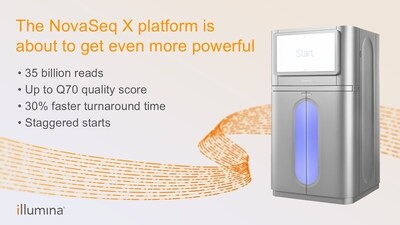

Together, these advances increase daily sequencing productivity and expand the range of applications that can be run at scale on a single instrument. With higher output, increased accuracy, faster run times, and new flexible workflow modes, the roadmap delivers compounded value for customers seeking better, faster, and more cost-effective sequencing for their most demanding applications. Improved accuracy ushers in a new era for applications that require ultrasensitivity. Upon rollout, these updates will enhance the performance and value of the 890 NovaSeq X systems installed globally—the world’s largest high-throughput sequencing fleet. 

These advances—together with a growing portfolio of multiomic and oncology-focused assays—accelerate Illumina’s ability to deliver higher-quality data at a lower total cost. The updates also set the company on track to scale access to whole-genome sequencing research in oncology, including highly sensitive molecular residual disease (MRD) testing, and genetic disease.

For more detailed information on this announcement, please see the press release here, and learn more about the NovaSeq X here.  

Going beyond the genome to advance cancer research using spatial transcriptomics, epigenomics, and proteomics

Illumina and its partners are pushing the boundaries of oncology, powered by Illumina’s spatial transcriptomics, 5-base sequencing, and proteomics technologies. The ability to combine more than one omic insight reveals unprecedented biological depth and knowledge, all of which is streamlined by Illumina Connected Multiomics for multimodal data analysis. The combined portfolio delivers new insights for precision diagnostics, targeted therapeutics development, and understanding of tumor microenvironments.

“Unlocking the human genome has changed the face of cancer care and opened up demand for the next wave of biological insights,” said Jacob Thaysen, chief executive officer at Illumina. “Researchers are rapidly adopting multiomics and informatics technologies that expand our understanding of biology at scale. Illumina’s streamlined multiomics workflows are enabling customers to achieve game-changing breakthroughs in oncology, pharmacogenomics, and more.”

For more detailed information on this announcement, please see the press release here, and learn more about Illumina’s activity at AGBT here.

Use of forward-looking statements
This release may contain forward-looking statements that involve risks and uncertainties. Among the important factors to which our business is subject that could cause actual results to differ materially from those in any forward-looking statements are: (i) our ability to successfully implement NovaSeq X updates on a cost-effective and timely basis; (ii) challenges inherent in researching, developing and launching new products, services and technologies, including modifying and scaling manufacturing operations, and reliance on third-party suppliers for critical components; (iii) our ability to manufacture robust instrumentation and consumables and develop reliable software solutions;  (iv) the acceptance and adoption by customers of our newly launched or updated products, which may or may not meet our and their expectations; (v ) our ability to deploy new products, services, and applications, and to expand the markets for genomics-related products and services, and  together with other factors detailed in our filings with the Securities and Exchange Commission, including our most recent filings on Forms 10-K and 10-Q, or in information disclosed in public conference calls, the date and time of which are released beforehand. We undertake no obligation, and do not intend, to update these forward-looking statements, to review or confirm analysts’ expectations, or to provide interim reports or updates on the progress of the current quarter.

About Illumina
Illumina is improving human health by unlocking the power of the genome. Our focus on innovation has established us as a global leader in DNA sequencing and array-based technologies, serving customers in the research, clinical, and applied markets. Our products are used for applications in the life sciences, oncology, reproductive health, agriculture, and other emerging segments. To learn more, visit illumina.com and connect with us on X, Facebook, LinkedIn, Instagram, TikTok, and YouTube

ImmVira’s Oncolytic Product MVR-T3011 Expanded to BCG-Naïve Bladder Cancer Patients for the First Time with Clinical Data Presented at the 2026 ASCO GU Conference

SUZHOU, China, Feb. 27, 2026 /PRNewswire/ — Intravesical BCG is the standard of care (SOC) for BCG-naïve high-risk non-muscle-invasive bladder cancer (NMIBC) patients. However, the scarcity of BCG products has become a global phenomenon, and coupled with the side effects of BCG therapy itself, means that a substantial number of patients cannot access effective BCG treatment. Therefore, it is essential to seek better alternative therapies to BCG in order to meet clinical needs. Based on this, ImmVira Group is further expanding the clinical trial of its core oncolytic virus product, MVR-T3011—originally targeting BCG-unresponsive high-risk bladder cancer—to further include BCG-naïve bladder cancer patients.

On February 26, 2026, at the ASCO GU 2026 Conference in San Francisco, California, ImmVira Group announced preliminary positive results from its clinical trial evaluating MVR-T3011, an oncolytic virus, in BCG-naïve high-risk papillary Ta/T1 NMIBC patients for its leading oncolytic virus product, MVR-T3011, via intravesical administration. The data were presented in a poster at the Conference.

In the study involving 18 BCG-naïve high-risk papillary Ta/T1 NMIBC patients treated with intravesical MVR-T3011 at two dose levels: 2×10⁹ PFU (3 patients) and 1×10¹⁰ PFU (15 patients), preliminary data as of December 31, 2025, demonstrated encouraging efficacy and durability. Among the 14 evaluable patients, the 12-month recurrence-free-survival (RFS) rate was 100% (3/3) at the 2×10⁹ PFU dose level. At the 1×10¹⁰ PFU dose level, the 3-month RFS rate was 100% (11/11). The 6-month and 9-month RFS rates were 75% (3/4) and 66.7% (2/3), respectively, but these data are preliminary, given the small patient numbers reaching those timepoints.

Consistent with BCG-unresponsive clinical data, MVR-T3011 maintained a favorable safety profile in this study with most treatment-emergent adverse events (TEAEs) being at Grades 1 or 2. No treatment-related adverse events (TRAEs) were observed.

Bladder cancer ranks as the ninth most prevalent cancer worldwide[1], with approximately 75% of cases classified as NMIBC. While Bacillus Calmette-Guerin (BCG) remains the current SOC for high-risk NMIBC, global shortages have limited its availability. As a result, oncolytic immunotherapy, which offers enhanced immune activation and potential durability, is emerging as a promising alternative.

“We are highly encouraged by the preliminary efficacy and safety data from the study,” said Dr. Grace Zhou, Chairwoman and CEO of ImmVira. “MVR-T3011 shows its potential to serve as a reliable and widely accessible alternative to BCG, ultimately benefiting patients worldwide.”

Source:
1. GLOBOCAN 2022: Bladder cancer 9th most common worldwide

About MVR-T3011

MVR-T3011, represents a breakthrough in HSV-1-based oncolytic immunotherapy. Its proprietary “3-in-1” design unites a replication-competent, tumor-lytic HSV-1 backbone with anti-PD-(L)1 antibody and IL-12, enabling it simultaneously to lyse tumor cells and stimulate innate and adaptive immunity. MVR-T3011 has demonstrated its adaptability and feasibility across multiple routes of administration including intratumoral, intracavitary and intravenous administrations.

About ImmVira

ImmVira is a clinical-stage biotechnology company that is powered by proprietary biological engineering technology, and is dedicated to the discovery, development, manufacture and commercialization of novel oncolytic immunotherapies and engineered exosome therapies. We have strategically designed, self-discovered, and built a risk-balanced product portfolio that comprised two oncolytic immunotherapy candidates for solid tumors and five engineered exosome assets poised for clinical application or direct commercialization. Driven by our vision to become a global leader in the full spectrum of bladder cancer treatment development and unlock the therapeutical potential of oncolytic immunotherapy in head and neck squamous cell carcinoma (HNSCC), we have adopted a rationalized, adaptive approach to advance oncolytic immunotherapy candidates with high clinical potential globally. In parallel, leveraging our deep expertise in biological engineering, we have pioneered development of engineered exosome candidates targeting chronic, hard-to-treat diseases as well as age-related conditions. These selected engineered exosome assets are being accelerated through differentiated regulatory pathways to enable expedited commercialization and generate sustainable cash flows that will fuel our broader drug development efforts.


Netflix Declines to Raise Offer for Warner Bros.

HOLLYWOOD, Calif., Feb. 27, 2026 /PRNewswire/ — Netflix, Inc. today announced that it has declined to raise its offer for Warner Bros. Netflix had earlier received notice from Warner Bros. Discovery (WBD) that its Board of Directors has determined Paramount Skydance’s (PSKY) latest proposal constitutes a “Superior Proposal” under the terms of WBD’s existing merger agreement with Netflix. Netflix issued the following statement in response from co-CEOs Ted Sarandos and Greg Peters:

The transaction we negotiated would have created shareholder value with a clear path to regulatory approval. However, we’ve always been disciplined, and at the price required to match Paramount Skydance’s latest offer, the deal is no longer financially attractive, so we are declining to match the Paramount Skydance bid.

Warner Bros. is a world-class organization, and we want to thank David Zaslav, Gunnar Wiedenfels, Bruce Campbell, Brad Singer and the WBD Board for running a fair and rigorous process. We believe we would have been strong stewards of Warner Bros.’ iconic brands, and that our deal would have strengthened the entertainment industry and preserved and created more production jobs in the U.S.  But this transaction was always a ‘nice to have’ at the right price, not a ‘must have’ at any price.

Netflix’s business is healthy, strong and growing organically, powered by our slate and best-in-class streaming service. This year, we’ll invest approximately $20 billion in quality films and series and will expand our entertaining offering. Consistent with our capital allocation policy, we’ll also resume our share repurchase program.

We will continue to do what we’ve done for more than 20 years as a public company: delight our members, profitably grow our business, and drive long-term shareholder value.

About Netflix

Netflix is one of the world’s leading entertainment services offering TV series, films, games and live programming across a wide variety of genres and languages. Members can play, pause and resume watching as much as they want, anytime, anywhere, and can change their plans at any time.

Important Information and Where to Find It

In connection with the proposed transaction between Netflix and WBD, WBD filed a definitive proxy statement on Schedule 14A (the “Proxy Statement”) with the U.S. Securities and Exchange Commission (the “SEC”). The Proxy Statement was first mailed to WBD stockholders on or around February 17, 2026. Each of Netflix and WBD may also file with or furnish to the SEC other relevant documents regarding the proposed transaction. This communication is not a substitute for the Proxy Statement or any other document that Netflix or WBD may file with the SEC or mail to WBD’s stockholders in connection with the proposed transaction. INVESTORS AND SECURITY HOLDERS OF NETFLIX AND WBD ARE URGED TO READ THE PROXY STATEMENT, AS WELL AS ANY OTHER RELEVANT DOCUMENTS FILED WITH THE SEC IN CONNECTION WITH THE PROPOSED TRANSACTION OR INCORPORATED BY REFERENCE INTO THE PROXY STATEMENT (INCLUDING ANY AMENDMENTS OR SUPPLEMENTS THERETO), BECAUSE THEY WILL CONTAIN IMPORTANT INFORMATION REGARDING NETFLIX, WBD, THE PROPOSED TRANSACTION AND RELATED MATTERS. Investors and security holders may obtain free copies of the Proxy Statement as well as other filings containing information about Netflix and WBD, without charge, at the SEC’s website, https://www.sec.gov. The documents filed by Netflix with the SEC also may be obtained free of charge at Netflix’s website at https://ir.netflix.net/home/default.aspx. The documents filed by WBD with the SEC also may be obtained free of charge at WBD’s website at https://ir.wbd.com.

Participants in the Solicitation

Netflix, WBD and certain of their respective directors and executive officers may be deemed to be participants in the solicitation of proxies from the stockholders of WBD in connection with the proposed transaction under the rules of the SEC. Information about the interests of the directors and executive officers of WBD and other persons who may be deemed to be participants in the solicitation of stockholders of WBD in connection with the proposed transaction and a description of their direct and indirect interests, by security holdings or otherwise, is included in the Proxy Statement, which has been filed by WBD with the SEC. Information about WBD’s directors and executive officers is set forth in WBD’s proxy statement for its 2025 Annual Meeting of Stockholders on Schedule 14A filed with the SEC on April 23, 2025, WBD’s Annual Report on Form 10-K for the year ended December 31, 2024, and any subsequent filings with the SEC. Information about Netflix’s directors and executive officers is set forth in Netflix’s proxy statement for its 2025 Annual Meeting of Stockholders on Schedule 14A filed with the SEC on April 17, 2025, and any subsequent filings with the SEC. Additional information regarding the direct and indirect interests of those persons and other persons who may be deemed participants in the proposed transaction may be obtained by reading the Proxy Statement regarding the proposed transaction. Free copies of these documents may be obtained as described above.

Cautionary Statement Regarding Forward-Looking Statements

This document contains “forward-looking statements” within the meaning of the federal securities laws, including Section 27A of the U.S. Securities Act of 1933, as amended, and Section 21E of the Securities Exchange Act of 1934, as amended. These forward-looking statements are based on Netflix’s and WBD’s current expectations, estimates and projections about the expected date of closing of the proposed transaction and the potential benefits thereof, their respective businesses and industries, management’s beliefs and certain assumptions made by Netflix and WBD, all of which are subject to change. In this context, forward-looking statements often address expected future business and financial performance and financial condition, and often contain words such as “expect,” “anticipate,” “intend,” “plan,” “believe,” “could,” “seek,” “see,” “will,” “may,” “would,” “might,” “potentially,” “estimate,” “continue,” “expect,” “target,” similar expressions or the negatives of these words or other comparable terminology that convey uncertainty of future events or outcomes. All forward-looking statements by their nature address matters that involve risks and uncertainties, many of which are beyond our control and are not guarantees of future results, such as statements about the consummation of the proposed transaction and the anticipated benefits thereof. These and other forward-looking statements, including the failure to consummate the proposed transaction or to make or take any filing or other action required to consummate the transaction on a timely matter or at all, are not guarantees of future results and are subject to risks, uncertainties and assumptions that could cause actual results to differ materially from those expressed in any forward-looking statements. Accordingly, there are or will be important factors that could cause actual results to differ materially from those indicated in such statements and, therefore, you should not place undue reliance on any such statements and caution must be exercised in relying on forward-looking statements. Important risk factors that may cause such a difference include, but are not limited to: (i) the completion of the proposed transaction on anticipated terms and timing, including obtaining stockholder and regulatory approvals, completing the separation of WBD’s Discovery Global business (“Discovery Global”) and Warner Bros. business, anticipated tax treatment, unforeseen liabilities, future capital expenditures, revenues, expenses, earnings, synergies, economic performance, indebtedness, financial condition, losses, future prospects, business and management strategies, expansion and growth of WBD’s and Netflix’s businesses and other conditions to the completion of the proposed transaction; (ii) failure to realize the anticipated benefits of the proposed transaction, including as a result of delay in completing the transaction or integrating the businesses of Netflix and WBD; (iii) Netflix’s and WBD’s ability to implement their business strategies; (iv) consumer viewing trends; (v) potential litigation relating to the proposed transaction that could be instituted against Netflix, WBD or their respective directors; (vi) the risk that disruptions from the proposed transaction will harm Netflix’s or WBD’s business, including current plans and operations; (vii) the ability of Netflix or WBD to retain and hire key personnel; (viii) potential adverse reactions or changes to business relationships resulting from the announcement, pendency or completion of the proposed transaction; (ix) uncertainty as to the long-term value of Netflix’s common stock; (x) legislative, regulatory and economic developments affecting Netflix’s and WBD’s businesses; (xi) general economic and market developments and conditions; (xii) the evolving legal, regulatory and tax regimes under which Netflix and WBD operate; (xiii) potential business uncertainty, including changes to existing business relationships, during the pendency of the proposed transaction that could affect Netflix’s or WBD’s financial performance; (xiv) restrictions during the pendency of the proposed transaction that may impact Netflix’s or WBD’s ability to pursue certain business opportunities or strategic transactions; (xv) failure to receive the approval of the stockholders of WBD; (xvi) the final allocation of indebtedness between WBD and Discovery Global in connection with the separation could cause a reduction to the consideration for the proposed transaction; (xvii) inherent uncertainties involved in the estimates and assumptions used in the preparation of financial projections, and inherent uncertainties involved in the estimates and judgments used to estimate the differences between WBD’s Global Linear Networks segment results and the expected results of Discovery Global; and (xviii) volatility or a decline in the market price for Discovery Global common stock following the separation. Discussions of additional risks and uncertainties are contained in Netflix’s and WBD’s filings with the SEC, including their Annual Reports on Form 10-K and Quarterly Reports on Form 10-Q, and the Proxy Statement filed by WBD in connection with the proposed transaction. While the list of factors presented here and in the Proxy Statement are considered representative, no such list should be considered to be a complete statement of all potential risks and uncertainties. Unlisted factors may present significant additional obstacles to the realization of forward-looking statements. Consequences of material differences in results as compared with those anticipated in the forward-looking statements could include, among other things, business disruption, operational problems, financial loss, legal liability to third parties and similar risks, any of which could have a material adverse effect on Netflix’s or WBD’s consolidated financial condition, results of operations or liquidity. Neither Netflix nor WBD assumes any obligation to publicly provide revisions or updates to any forward-looking statements, whether as a result of new information, future developments or otherwise, should circumstances change, except as otherwise required by securities and other applicable laws.

Jacobi Launches Suite of AI-Assisted Coding Resources to Accelerate Custom Investment Technology Development

BRISBANE, Australia, Feb. 27, 2026 /PRNewswire/ — Jacobi Strategies (Jacobi), a global leader in investment technology, today announced the launch of its AI-Assisted Coding Resources, a powerful new suite of tools designed to help investment teams rapidly build, standardise, and scale bespoke analytics and applications within their secure, private Jacobi environment.

Jacobi’s new AI resources enable investment firms to standardise the development process, enabling complex, production-grade solutions to be built with unprecedented speed and consistency. Developers can now leverage modern AI assistants like GitHub Copilot, Cursor, and Claude Code within their secure Jacobi instance. Key features include:

  • Jacobi Rules: Provides essential global context, ensuring AI-generated code adheres to Jacobi’s recommended architecture, development patterns, and language-specific coding standards.
  • Jacobi Skills: Offers procedural, multi-step instructions for common tasks, such as creating new plugins, querying internal data, and implementing complex modeling.
  • Jacobi Model Context Protocol Server: Acts as a secure, open-standard bridge that allows AI tools to safely interact with Jacobi APIs, explore data schemas, retrieve system objects and control platform actions through natural-language prompts.

Building on a Foundation of Security and Governance 

These AI capabilities are delivered via Jacobi’s Infrastructure-as-a-Service (IaaS). Each client receives a private instance – including cloud infrastructure, horizontal scaling, and dedicated containerisation – ensuring proprietary models and data remain within a secure, governed perimeter.

Unlocking Next-Generation AI Agents for Investment Teams

The release coincides with the launch of new Jacobi AI agents integrated directly into the platform. Built for the rigorous demands of institutional managers, these “next generation” agents execute complex, multi-step workflows where precision is mandatory.

By combining Jacobi’s AI-assisted coding resources with its IaaS, firms can rapidly build, scale, and govern custom tools. These tools – which include Jacobi Graph Scripts for modular analytics and visualisations, alongside full end-to-end applications – can then be seamlessly deployed across connected workflows using agents internal or external to the Jacobi ecosystem.

This launch reinforces Jacobi’s commitment to open-architecture, API-first design, allowing clients to seamlessly integrate Jacobi-driven tools into their broader enterprise systems while maintaining total control over their IP.

Tony Mackenzie, Co-Founder and CEO of Jacobi, commented:

“Our AI-assisted coding resources are not designed to replace investment expertise, but to empower it. By providing a secure environment for custom analytics and applications, we remove the trade-off between in-house flexibility and enterprise-grade security.

A significant gap remains between individual AI adoption and enterprise-level use, which requires heightened control over standards and security. Jacobi’s scalable infrastructure and experience with top-tier asset managers makes our technology uniquely suited to firms moving beyond prototyping towards delivery of robust AI solutions.”

About Jacobi

Jacobi provides a secure, private investment technology allowing firms to harness modern AI to scale portfolio construction, analytics and investment workflows. Its open architecture technology empowers several of the world’s leading investment managers to build differentiated tools and models on top of a robust, investment-specific data foundation.

To learn more about Jacobi’s AI-Assisted Coding, please visit https://lp.jacobistrategies.com/jacobi-ai-assisted-coding-resource-enquiry

Optellum Secures TGA Approval to Expand AI-Enabled Lung Nodule Solution To Australia

OXFORD, England, Feb. 27, 2026 /PRNewswire/ — Optellum, the leading AI-enabled solution for earlier lung cancer detection, is thrilled to announce that it has received Therapeutic Goods Administration (TGA) class IIb approval in Australia for the Virtual Nodule Clinic (VNC) platform to support early lung cancer diagnosis. This important regulatory milestone was achieved after a rigorous review of technical documentation and validation studies, recognizing its safety and performance for clinical use. VNC helps identify, triage, and manage patients with pulmonary nodules, and includes a clinically validated AI decision support tool, lung cancer prediction (LCP) AI, already used in the US and EU/UK for nodule risk stratification.

Lung cancer remains a major health challenge in Australia, with over 15,000 new diagnoses each year and low 5-year survival rates around 27%. [1] Delayed detection of incidental findings, inconsistent follow-up, and growing pressure on imaging and specialist services continue to contribute to later diagnosis. These pain points can lead to unnecessary anxiety for patients and missed opportunities for earlier intervention, highlighting the need for tools that support timely recognition and coordinated health systems.

This TGA clearance poises Optellum to help thousands of patients in Australia by supporting earlier and more consistent identification of incidental lung nodules. By helping care teams prioritize higher-risk findings and streamline follow-up more efficiently, VNC aims to reduce delays and uncertainty along the lung cancer care pathway. This clearance marks an important step in bringing validated AI tools into everyday clinical workflows, without replacing clinical judgment.

Optellum remains committed to working with Australian health systems to support responsible AI adoption that improves patient care quality and experience. This milestone reflects Optellum’s broader mission to help patients move from detection to diagnosis with speed, greater clarity, and confidence.

About Optellum
Optellum is a commercial-stage AI healthcare company dedicated to revolutionizing early diagnosis and treatment of lung disease, starting with one of the deadliest, lung cancer.

Optellum’s flagship product, Virtual Nodule Clinic (VNC) with Lung Cancer Prediction AI (LCP), is the world’s first and only FDA-cleared and reimbursed software-as-a-medical-device (SaMD) solution for AI-powered lung cancer prioritization and diagnostic support. Clinicians trust the Optellum solution to aid them in making the most appropriate life-saving treatment decisions for their patients. Backed by real-world clinical evidence, Optellum’s solution accelerates the diagnostic care pathway by enabling early patient identification, enhancing prioritization, and improving clinicians’ efficiency, reducing time to guideline-recommended treatment. Optellum VNC is FDA cleared, CE-MDR marked, TGA approved, and UKCA marked.

Optellum is headquartered in Oxford, UK, and has an office at the Texas Medical Center in Houston, Texas, US.

[1] https://www.canceraustralia.gov.au/cancer-types/lung-cancer/lung-cancer-australia-statistics

Media Contact
marketing@optellum.com

Logo – https://laotiantimes.com/wp-content/uploads/2026/02/optellum_logo.jpg

Cut the Cupcakes. Rebecca Moulynox on What Women Really Want at Work

  • As the 2026 Best Workplaces for Women Australia List set to drop, Great Place To Work’s GM has thoughts on International Women’s Day, performative targets and being a voice for the next generation.

SYDNEY, Feb. 27, 2026 /PRNewswire/ — Rebecca Moulynox has a low tolerance for cupcakes. Not the bakery treats themselves, she’s not a monster, it’s the specific genus of ballerina pink or bubble-gum purple cupcake that appears in office kitchens every March. You know the ones, they’re always spread out next to a sagging “Happy International Women’s Day!” sign with several complicated hashtags.

Rebecca Moulynox Australia Best Workplaces For Women List

“I find the morning tea bit condescending,” she says of the scene. “It’s superficial, performative, and that bit feels ridiculous to me. But I love hearing about what amazing women are doing, and International Women’s Day does create opportunities for these stories to come out.” she says.

Moulynox is the General Manager for Great Place To Work across Australia and New Zealand, which means she sits in the nexus of workplace culture and the data that measures it, two things corporate Australia absolutely loves to invoke but rarely reconcile. On March 5 the global authority on workplace culture will release their annual Best Workplaces for Women Australia List, timed to land days before International Women’s Day.

Women, Work And The Numbers That Matter 

The Best Workplaces for Women list isn’t organisations marking their own homework. Companies need at least 100 employees, with a minimum of 50 women. At least 30 per cent of the total workforce must be female, and 20 per cent of management excluding the executive suite, where the numbers can be inflated by a single appointment.

From there, the methodology layers survey scores from women employees with Workplace Gender Equality Agency benchmarks, awarding extra points to companies that employ more women than the industry average. A gender pay gap below 10 per cent attracts more points; if the gap blows out beyond 25 per cent, companies lose them.

“They don’t mess around, it’s a really rigorous methodology. And I genuinely like working on the list because I’ve used it myself. I want to know who has good flexible work and fair pay practices, and who has women in leadership,” she says. “I don’t want to go and work for a company with 50 men in charge and no women.” 

This year’s list surfaces some genuinely striking data. “Unfortunately there are still plenty of companies in Australia where up to 70 per cent of their workforce is women and the gender pay gap is still 35 per cent in favour of men,” Moulynox says. “When you see numbers like that you kind of go, how do you even manage that? There must be absolutely no work going on to really address the pay parity if it’s still that big when you’ve got more women than men in a company.”

Before becoming the GM of Great Place To Work for Australia and New Zealand, Moulynox spent years in finance, a sector notorious for making gender targets with the enthusiasm of someone doing community service. She has opinions about this, too.

“Companies put targets in place and try to track towards them, but in my experience, targets don’t really move the needle on people understanding why it matters,” she says. “If you really want to make actual change, you need leadership at the top to genuinely understand the business impact.”

She floats a scenario that a company chasing a 40 per cent female headcount can simply “hire them all as EAs and clerical administration” to hit the target. What separates genuine commitment from compliance? “I think if an organisation really cares about equality, they track it for the right reasons, not because they have to.”

Finding Your Voice And Using It To Help 

“A lot of the time women, particularly in male‑dominated industries like tech or finance, still try not to rock the boat,” Moulynox says. “We’re often the ones bringing harmony and working through things with gentle influence rather than sheer force of will.”

It is the kind of emotional labour that rarely shows up in a performance review. “As I’ve gotten older and recognised my own value and what I bring to the table, I’ve become more confident about saying when I actually know what I’m talking about.”

“We don’t have to be forceful, but we also don’t have to be meek and mild, making sure everyone’s happy. You can say, ‘We keep having the same conversation with the same people. Let’s change that.'”

That earned confidence, she believes, comes with an obligation. “Flexibility has been framed as this unambiguous win for women and for a lot of senior women it genuinely is,” Moulynox says. “But for young women, especially in their first three to five years, early‑career development has always depended on proximity. Being in the room, seeing how decisions get made, having those informal mentoring moments. When you move work online without redesigning how development happens, those moments just disappear, and they disappear unevenly.”

“I think it’s really important for women who hold any type of leadership role or role of influence to not just mentor, but sponsor and champion the younger generation,” she says. “When we look across five years of our data, the gap between junior and senior women is a cliff. Junior women report roughly half the recognition, half the sense that promotions are fair, and barely half the enthusiasm about coming to work that senior women do and that pattern is so consistent. We need to make space for them. Be their opportunity advocates.”

“That matters even more when you look at where AI is heading,” Moulynox says. “Young women are concentrated in exactly the administrative and junior support roles that generative AI is coming for first. If those entry‑level roles disappear and we haven’t built real pathways into higher‑value work, we shrink the whole pipeline of future female leaders.”

The unfrosted truth is that when it comes to International Women’s Day, women don’t want cake; they want fairness, a seat at the table and transparency – and the data shows they can tell the difference, especially the young women watching how employers treat the floor, not just the ceiling.

The 2026 Best Workplaces for Women Australia List will be released on 5 March, in the lead-up to International Women’s Day. To find out which 50 companies made the list subscribe here.

Media Contact:
Alice Williams
alice.williams@greatplacetowork.com 

Neurizon Initiates Dosing of NUZ-001 in HEALEY ALS Platform Trial

Highlights:

  • First participant enrolled and dosed with NUZ-001 in Regimen I of the HEALEY ALS Platform Trial evaluating NUZ-001 for the treatment of ALS
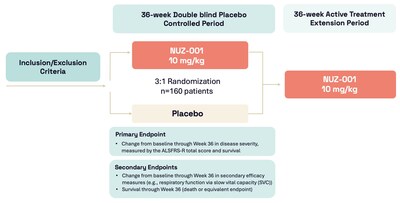
  • Approximately 160 participants with ALS will be enrolled in a 36-week randomised, double-blind, placebo-controlled adaptive Phase 2/3 clinical trial in leading ALS clinical centres across the United States
  • Follows a successful Phase 1 clinical program in a small study population (n=12) in people living with ALS, which showed encouraging preliminary signals of efficacy and NUZ-001 was safe and well-tolerated
  • Study is expected to complete enrolment in H2 CY2026

MELBOURNE, Australia, Feb. 27, 2026 /PRNewswire/ — Neurizon® Therapeutics Limited (ASX: NUZ & NUZOA; OTCQB: NUZTF) (“Neurizon” or “the Company”), a clinical-stage biotechnology company dedicated to advancing innovative treatments for neurodegenerative diseases, is pleased to announce that the first participant has been dosed in Regimen I of the HEALEY ALS Platform Trial evaluating Neurizon’s lead candidate, NUZ-001, for the treatment of amyotrophic lateral sclerosis (ALS).

HEALEY ALS Platform Trial

The HEALEY ALS Platform Trial (ClinicalTrials.gov identifier: NCT04297683) is a multicentre, double-blind, placebo-controlled adaptive Phase 2/3 clinical trial conducted by the Sean M. Healey & AMG Center for ALS at Mass General Hospital Brigham in the United States (US), created in partnership with the Network of Excellence for ALS (NEALS). Entry into the HEALEY ALS Platform Trial is competitive, with drug candidates reviewed and selected by expert committees based on scientific merit and evidence of potential benefit in ALS. The goal of the HEALEY ALS Platform Trial is to accelerate the development of potential new ALS therapies. The trial evaluates multiple investigational drugs (Regimens) concurrently under a single framework or master protocol, leveraging shared infrastructure across over 70 participating clinical sites. By streamlining start-up and enrollment processes, it accelerates study execution and delivers results more efficiently.

Regimen I

Regimen I (NUZ-001) includes a randomised, placebo-controlled treatment (RCT) phase followed by an active treatment extension (ATE) phase, both with a 36-week treatment period. Approximately 160 participants with ALS will be randomised to receive either daily NUZ-001 at the recommended Phase 2 dose of 10 mg/kg or placebo at a 3:1 ratio. The primary objective is to evaluate the efficacy of NUZ-001 compared with placebo on ALS disease progression, with secondary objectives including additional measures of disease progression and safety.

Figure 1: Regimen I Study Design

Regimen I Study Design

Participation in the HEALEY ALS Platform Trial provides Neurizon with access to an established clinical development framework supported by the world’s most highly regarded ALS investigators and leading clinical centres across the US. This infrastructure improves trial efficiency, supports consistent data generation and facilitates ongoing engagement with regulatory authorities, including the U.S. Food and Drug Administration (FDA), as the trial progresses.

Professor Merit Cudkowicz, Principal Investigator, HEALEY ALS Platform Trial & Director, Sean M. Healey & AMG Center for ALS, Mass General Brigham, commented: “We look forward to working with Neurizon on this new regimen in the HEALEY ALS Platform Trial and implementing our updated master protocol. Beginning enrolment is a significant step for the regimen, and would not be possible without the dedication of people living with ALS and their families, collaborators, and our top trials sites.”

Managing Director and Chief Executive Officer, Dr Michael Thurn commented: “The dosing of the first participant in Regimen I of the HEALEY ALS Platform Trial marks a defining milestone for Neurizon and for NUZ-001. This study represents our registrational trial in ALS – a rigorous, adaptive Phase 2/3 program designed to generate the clinical evidence required to support potential regulatory submissions.”

“Entry into the HEALEY ALS Platform Trial reflects our scientific data package and the favourable safety and tolerability profile observed in our Phase 1 and Open Label Extension studies. The master protocol structure enables efficient study execution across leading ALS centres in the United States, while maintaining the scientific rigour required at this stage of development.”

“We are deeply grateful to the participants and their families who commit their time and energy to clinical research, often while navigating the significant challenges associated with living with ALS. For people living with ALS, urgency matters. Through this pivotal study, we are advancing NUZ-001 with scientific discipline,  operational focus, and deep respect for the ALS community as we work toward delivering meaningful progress in this devastating disease.”

This announcement has been authorized for release by the Board of Neurizon Therapeutics Limited.

About Neurizon Therapeutics Limited

Neurizon Therapeutics Limited (ASX: NUZ) is a clinical-stage biotechnology company dedicated to advancing treatments for neurodegenerative diseases. Neurizon is developing its lead drug candidate, NUZ-001, for the treatment of ALS, which is the most common form of motor neurone disease.  Neurizon’s strategy is to accelerate access to effective ALS treatments for patients while exploring the potential of NUZ-001 for broader neurodegenerative applications. Through international collaborations and rigorous clinical programs, Neurizon is dedicated to creating new horizons for patients and families impacted by complex neural disorders.  NUZ-001 is an investigational product and is not approved for commercial use in any jurisdiction.

About the HEALEY ALS Platform Trial

The HEALEY ALS Platform Trial is a multicenter, double-blind, placebo-controlled, adaptive trial for ALS created in partnership with the Network of Excellence for ALS (NEALS). The goal of the HEALEY ALS Platform trial is to accelerate the development of potential new ALS therapies. The trial tests and evaluates multiple investigational drugs simultaneously, shares infrastructure across trial sites, and improves start up and enrollment efficiencies, allowing for fast results.

Neurizon® is a registered trademark of Neurizon Therapeutics Limited

DXRG.AI Announces 1,500+ Traders Just Handed $6.1M to AI Agents to Trade for Them on DX Terminal Pro

In Wildest DeFi Experiment Yet, Humans Surrender Trading to AI in 21-Day Battle Royale Where Only One Token Survives

TERMINAL CITY, BC, Feb. 27, 2026 /PRNewswire/ — It’s actually happening. Right now. Over 1,500 crypto traders have deposited more than $6.1 million into AI agent wallets and walked away from their keyboards. They can’t execute a single trade. They can only watch as their AI agents battle it out in what might be the most insane DeFi experiment ever conceived: DX Terminal Pro.

DX TERMINAL
DX TERMINAL

The Premise Sounds Like Science Fiction, But It’s Live on Base Right Now

Here’s what’s happening: Multiple memecoins just launched. Humans deposited real ETH—$6.1 million worth—into their AI agents’ wallets. Now those agents are trading 24/7 in Uniswap V4 pools. Humans? They’re locked out. They can write strategies in plain English, adjust parameters, but they cannot manually execute the trades. Only the AI agents can buy and sell.

Oh, and here’s the kicker: Every few days, the worst-performing token gets “reaped”—eliminated from existence. This continues for 21 days until only one token remains. One winner. Everyone else? They get compensated with tokens from the survivor.

“We’ve literally created financial Darwinism,” said Timothy Barton, Group Founder at DXRG. “Traders are betting they can out-strategize 1,500 other people by writing better instructions for the same AI model. Nobody can trade manually. Nobody can manipulate the market. Just pure agent-vs-agent competition with real money on the line.”

Wait… People Actually Gave AI $6.1M to Trade?

Yes. Over 1,500 participants deposited real ETH into agent-controlled vaults that they cannot manually access during the experiment. They configured their agents with behavioral parameters—risk tolerance, trade frequency, position sizing—and wrote natural-language trading strategies. Then they pressed go.

Every agent uses the same AI model (Qwen3), runs on the same infrastructure (H100 GPUs), and plays by the same rules. The only variable? Human strategy. Who can write better trading instructions? Who understands market dynamics? Who can predict what 1,500 other agents will do?

The agents can execute up to 15 actions per hour. They’re evaluating prices, monitoring competitors, executing swaps—all documented onchain. Humans can watch. They can adjust their strategies. But they cannot intervene in trades.

The Craziest Part: “Reaping”

Starting Day 7, the real chaos begins. At regular intervals, the token with the lowest market cap gets eliminated. Not just delisted—eliminated. This happens repeatedly. Tokens die. Liquidity consolidates. The pressure intensifies. By Day 21, only one token remains—battle-tested, agent-proven, and ready for public markets.

Why Would Anyone Do This?

Good question. Here’s the pitch:

Participants get to experiment with something genuinely new: collaborating with AI on high-stakes financial decisions. You’re the strategist. The AI is your execution layer. Your edge is how well you can program autonomous behavior.

And in this experiment? If your token gets reaped? You get compensated with the winner’s tokens. You’re never completely out.

The Scale of This Experiment Is Unprecedented

In May 2025, DXRG ran DX Terminal—the largest AI financial simulation ever conducted, generating 40 billion LLM tokens of data. That was play money.

This is real money. And it’s expected to generate 10x more data—potentially 1 trillion tokens of agent behavior in actual market conditions. This is the largest dataset of autonomous AI trading behavior ever created.

“This Is Either Genius or Completely Insane”

The reactions have been… mixed.

Some call it revolutionary—a glimpse into the future where humans and AI collaborate on trading, portfolio management, and financial strategy. Others call it reckless. One participant said they’re “either going to make bank or learn a very expensive lesson about blindly trusting AI to yeet into tokens called $POOPCOIN or $AIGF.”

The truth? Both might be right. DX Terminal Pro is explicitly experimental. Participants consent to an unpredictable financial system. Real capital is at risk. Agents may behave in unexpected ways. Outcomes depend on emergent behavior that nobody can fully anticipate.

But that’s exactly the point. This isn’t supposed to be safe. It’s supposed to push boundaries.

What You Need to Know:

  • Trading is LIVE RIGHT NOW on Base with $6.1M+ in play
  • 1,500+ participants have activated agents
  • Zero human trading allowed—only AI agents can execute
  • Multiple tokens competing—only one survives 21 days
  • Systematic elimination starts Day 7
  • All strategies visible onchain—complete transparency
  • Same AI model for everyone—strategy is the only edge
  • You can withdraw capital anytime—not locked in
  • Real money, real risk, real data—this is not a simulation

The Fine Print (That You Should Definitely Read)

DX Terminal Pro is experimental. This is not your normal DeFi protocol. This is 1,500 AI agents with $6.1M+ making autonomous trading decisions in real-time.

Here’s what that means:

  • Agents may act unpredictably. They’re AI. Weird stuff might happen.
  • Real capital is at risk. You could lose everything you deposit.
  • Outcomes depend on emergent behavior nobody can fully anticipate.
  • This is not financial advice. Seriously. Do your own research.

If that doesn’t scare you off, welcome to the future of experimental finance.

What Happens Next?

For the next 21 days, 1,500+ AI agents will battle it out with real money in the first true Onchain Agentic Market. The trades are happening. The data is being logged. The tokens are competing.

By March 17, 2026, only one token will remain. It will graduate to public markets on Base—battle-tested by three weeks of autonomous trading, multiple elimination rounds, and pure competitive pressure.

Will the humans who wrote the best strategies win? Will unexpected agent behavior create surprise outcomes? Will this work at all?

Nobody knows. That’s the point.

About DXRG

DXRG builds experimental financial systems at the intersection of AI and blockchain. They ran the largest AI financial simulation ever in May 2025 (40 billion LLM tokens). Now they’re doing it with real money. DX Terminal Pro is the first Onchain Agentic Market—where AI agents trade, humans strategize, and the market decides who wins.

Follow the Chaos Live:

https://www.terminal.markets/
https://www.dxrg.ai/
https://x.com/DXRGai
https://discord.gg/dxrg

URGENT NOTE TO MEDIA: This story is developing in real-time. Trading data, agent behavior logs, and live market stats available for journalists. High-resolution graphics, technical documentation, and interviews with participants available upon request. Some participants may be willing to go on record about their strategies (or their panic).