

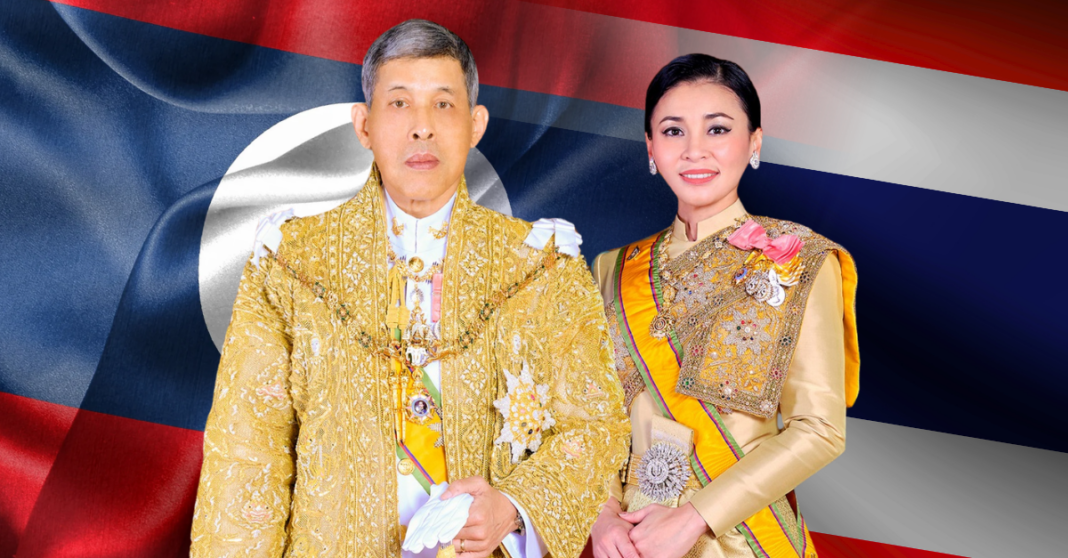
Thailand’s King Vajiralongkorn (Rama X) and Queen Suthida concluded a three-day official state visit to Laos, the first by a Thai monarch in 32 years. Made at the invitation of Lao President Thongloun Sisoulith, the visit also marked the 75th anniversary of diplomatic relations between the two neighbouring countries.
The royal couple touched down at Wattay International Airport on 16 March.
The last Thai monarch to visit Laos was King Bhumibol Adulyadej (Rama IX), who came with Queen Sirikit, the parents of the current king, in April 1994.
For King Vajiralongkorn, who ascended the throne in 2016, this was his first visit to Laos as king. The two countries’ leaders had previously met in December 2025 at the inauguration of the 5th Lao-Thai Friendship Bridge, but this visit carried a different weight entirely.
Flags, Guards, and a Nation’s Welcome
The formal program began on the morning of 17 March. The royal couple traveled by motorcade to the Presidential Palace (Hor Kham), where President Thongloun and his wife, Naly Sisoulith, received them with a full ceremony.
Lao children presented floral bouquets, the King reviewed the military honour guard, and senior officials from both countries were formally introduced.
Barely an hour later, the royal couple made their way to the Textile Treasures of Laos exhibition, one of the visit’s most culturally significant stops. Under the personal patronage of Naly Sisoulith, the exhibition showcases Lao textile heritage spanning ceremonial garments, ethnic weaving traditions, and silk works rooted in Buddhism and regional legend. Among the displays were royal awards previously presented by Queen Sirikit, the King’s mother, giving the tour a quietly personal dimension.
Before leaving, the royal couple signed a commemorative book and accepted gifts of wall hangings and scarves.
Meeting the Pillars of Lao Leadership
The afternoon shifted from culture to statecraft.
The King and Queen held private audiences with Laos’ two other most senior leaders: Prime Minister Sonexay Siphandone and his wife Vandala, followed by National Assembly President Xaysomphone Phomvihane and his wife Viphavan.
The Baci Ceremony: When a President Blesses a King
The evening brought the visit’s most memorable moment.
The royal couple returned to Hor Kham for a traditional Lao Baci blessing ceremony, one of the most sacred rituals the Lao people can offer a guest.
Ritual master Mor Phon conducted the ceremony, during which the King lit candles atop the Phum Baci floral arrangement and held the sacred Sai Sin strings in prayer. President Thongloun then tied the blessed strings around the King’s wrist himself, while Naly tied them around the Queen’s.
A formal state dinner followed, with speeches, reciprocal toasts, and a cultural performance rounding out the evening.
A Father’s Legacy, a Son’s Return
On the final day, 18 March, the royal couple visited the Houayxone-Houayxua Agricultural Development Service Center in Naxaythong district, a project born from a request made by former Lao President Kaysone Phomvihane to King Bhumibol in 1992, and officially opened during the late king’s own visit to Laos in 1994.
In over 32 years, the center has built irrigation infrastructure serving eight villages across 580 hectares and trained more than 1,500 people annually in sustainable farming practices.
Before leaving, both sides took part in a tree planting ceremony.
The Thai side planted a Ruang Phueng (Schoutenia glomerata), the King’s personal tree, its yellow flowers matching the colour of his birthday. The Lao side planted a Munpa (Fagraea fragrans), an auspicious tree of the Mekong Basin known for its fragrant blossoms.
Planted side by side at a center founded in friendship, the two trees now stand as a living memorial to the visit.
Farewell to Laos – “Like Coming Home”
From the agricultural center, the royal couple made one final stop before leaving the country, Thatluang Stupa, the golden national stupa of Laos and the most sacred Buddhist monument in the land, where the King and Queen paid their respects before departing for Thailand.
Yet the visit’s most enduring moment may have been the King’s words at the state dinner.
“This visit is not merely a state visit; it is like coming home, meeting old friends bound together by heart,” the King said. “Though borders separate our lands, they cannot divide the closeness and enduring friendship between us.”
