

Scientists have discovered nine new spider species in limestone caves across Laos, highlighting the country’s caves as important but fragile ecosystems.
The research was carried out by scientists from the Senckenberg Research Institute in Germany and the National University of Laos, and published in the journal Zootaxa. The study identified species across three genera and two families, and recorded the Ochyroceratidae family in Laos for the first time.
Many of the spiders were found in caves in Vientiane, Khammouane, and Champasak provinces, with seven species located in the Vang Vieng karst area, a key hotspot for cave biodiversity.
One of the newly discovered species, Speocera inthy, was named after Lao businessman Inthy Deuansavanh, in recognition of his contributions to eco-tourism and environmental conservation. He is the founder of Inthira Group and Green Discovery Laos, as well as projects such as The Rock Viewpoint at Phou Pha Marn and La Forêt.
Researchers said the naming acknowledges efforts to promote and protect natural sites, including cave and karst landscapes where these species are found.
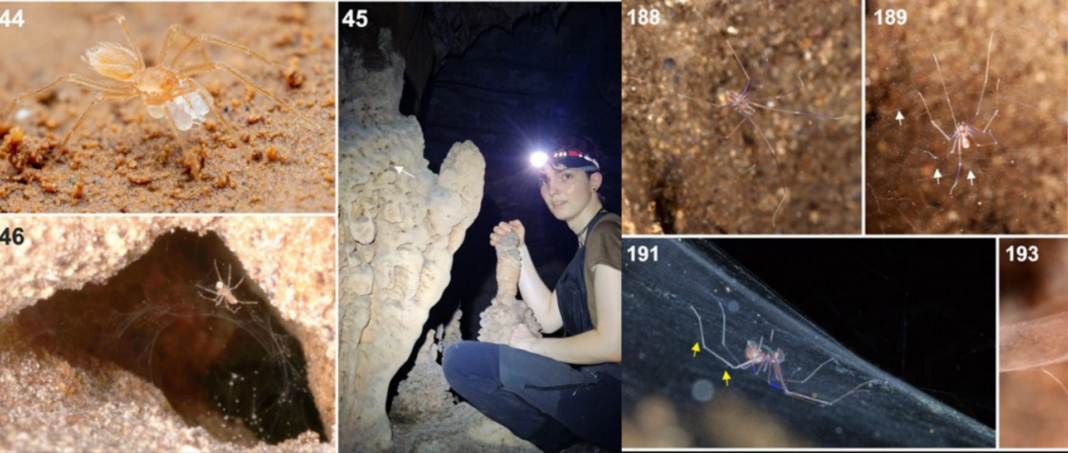
These spiders are specially adapted to life in total darkness, where food is scarce. One species, Sinoderces phoukham, has no eyes, the first eyeless species ever recorded in its family, showing long-term evolution in cave environments.
Most of the spiders are extremely small, measuring about one millimeter. Researchers observed some females carrying eggs and even hatchlings in their mouths, a behavior that helps increase survival in low-nutrient conditions.
The spiders build very delicate webs and cannot survive outside caves, meaning they are limited to very small, specific habitats. Some species may exist in only a single cave.
Scientists warn that these ecosystems are under growing pressure from tourism and limestone quarrying, particularly in Vang Vieng. They stress the need for conservation, as many species remain undiscovered and could be lost before they are even documented.
