


Laos recorded 16,395 fire hotspots in the first three months of 2026, according to the Ministry of Agriculture and Environment (MAE), producing PM 2.5 levels that have now reached hazardous levels across every province in the country.
The hotspots spread across all forest categories, with National Protection Forests absorbing 5,360 and areas outside the three formal forest classifications accounting for 5,634, the highest share of any category, reflecting the scale of burning on agricultural and fallow land.
Human activity remains the primary driver, including slash-and-burn farming, burning grass for livestock grazing, and forest clearing for foraging without proper firebreaks.
The numbers spiked sharply toward the end of the quarter.
On 1 April alone, 895 hotspots appeared in a single day. Luang Prabang province topped the count with 220, followed by Oudomxay at 103 and Savannakhet at 80.
Air Quality Deteriorates Nationwide
The fires are taking a direct toll on the air.
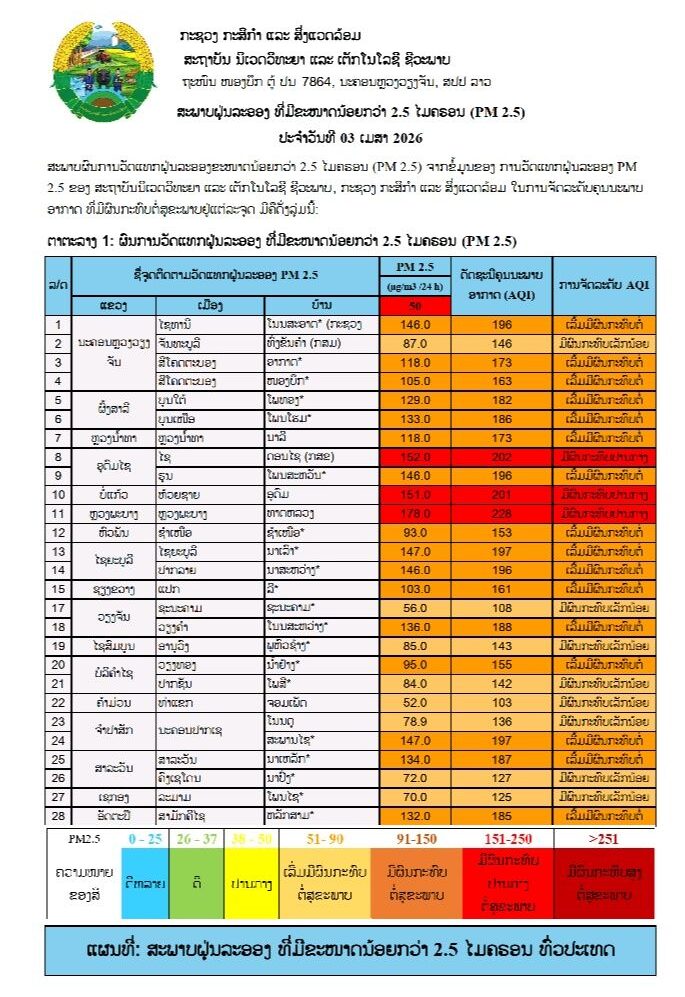
Today, 3 April, MAE reported that PM 2.5 levels had exceeded safe standards in every province nationwide, pushing all provinces above the 100 Air Quality Index (AQI) threshold. The northern provinces of Bokeo, Oudomxay, and Luang Prabang recorded the worst readings in the country at reaching over 200 AQI, a level that poses health risks to the entire population, not just vulnerable groups.
The crisis does not stop at the border.
Chiang Mai in northern Thailand, which sits directly adjacent to Laos’ worst-affected northern provinces, recorded 235 AQI on 1 April, ranking it the most polluted city in the world on that date.
Wind patterns are carrying transboundary haze from neighboring countries into Vientiane Capital and the north, compounding the domestically generated pollution.
Authorities urge citizens to wear masks outdoors, avoid outdoor exercise, and monitor for respiratory symptoms including sore throat and coughing.
Regional Response
Laos and Thailand are tackling the shared crisis.
In late March, officials from both countries met in Luang Prabang to commit to zero-burning agriculture and roll out traceability systems to identify and reduce agricultural fires across the region. The ministry called on all sectors of society to stop indiscriminate burning of forests and waste, framing clean air as a responsibility to future generations.
