

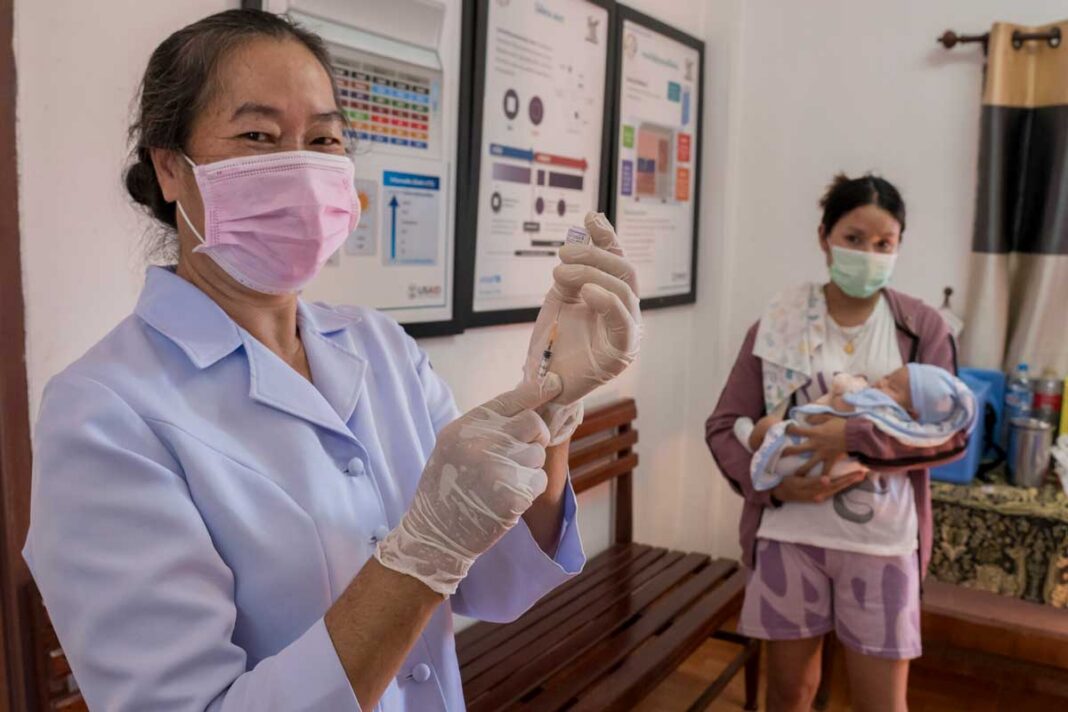
Healthcare in Laos is under growing financial pressure, and the country can no longer rely on donors to fill the gap, according to the World Bank’s latest Lao PDR Economic Monitor.
The June 2026 report says public spending on health accounts for just 4 percent of the national budget, well below the level typically seen in countries working toward universal health coverage. Unless health financing improves, it warns, Laos could struggle to meet the country’s growing healthcare needs.
With limited government funding, many Lao families are left paying for healthcare themselves. Out-of-pocket payments remain the country’s largest source of health financing, meaning patients often cover the cost of doctor visits, medicines and medical tests directly.
For wealthier households, those expenses may be manageable. But for lower-income families already dealing with higher food, fuel and transport costs, they can mean delaying treatment or skipping it altogether.
The challenge comes as Laos faces a growing burden of disease, the report mentions. Cases of heart disease, stroke and diabetes are increasing, while infectious diseases, maternal and child health issues, and undernutrition remain major concerns, particularly in rural areas.
Ongoing Economic Challenges
Meanwhile, the country’s wider economic situation is making it harder to invest in healthcare.
Higher fuel prices linked to the conflict in the Middle East have pushed up inflation, increasing costs for both households and the government. At the same time, Laos continues to face high public debt, leaving limited room to increase spending, while international donors that have long supported health programmes are gradually scaling back their assistance.
Although the government has introduced reforms to strengthen public finances, including a medium-term debt strategy announced in late 2025, and repaid USD 2.45 billion in foreign debt between 2024 and September 2025, debt servicing continues to consume a large share of public finances, leaving less money available for sectors such as healthcare.
Rather than spending more, the World Bank says Laos also needs to spend smarter.
The report recommends gradually increasing health spending to around 9 percent of the national budget by 2030, supported by stronger domestic revenue through broader tax reforms and health-related taxes.
It also calls for greater investment in primary healthcare, arguing that preventive care and early treatment deliver the biggest health benefits for the money spent.
Another priority is improving how health budgets are managed. Many hospitals and health centres still face delays in receiving funds, rigid budgeting rules and weak financial systems, making it harder to deliver services consistently. Better digital systems linking finance, insurance claims and health services could help ensure funding reaches facilities on time and is used more efficiently.
Growing Calls for Reform
The World Bank’s recommendations echo concerns that have already been raised inside Laos.
In November 2025, lawmakers, government officials and development partners met at a National Assembly workshop on financing primary healthcare and immunisation. Participants warned that as international donors reduce support, Laos will need to find more domestic funding to keep essential health services running.
Officials estimated that from 2026 onward, the country would need more than USD 3 million every year to purchase vaccines alone. They also recommended increasing domestic immunisation spending to at least USD 20 per child to avoid reversing years of progress.
Many of the solutions discussed at the late-2025 workshop mirror the World Bank’s latest recommendations, including raising health spending to around 9 percent of the national budget, increasing tobacco and alcohol taxes, improving coordination between the Ministries of Health and Finance, and strengthening the national health insurance system.
