

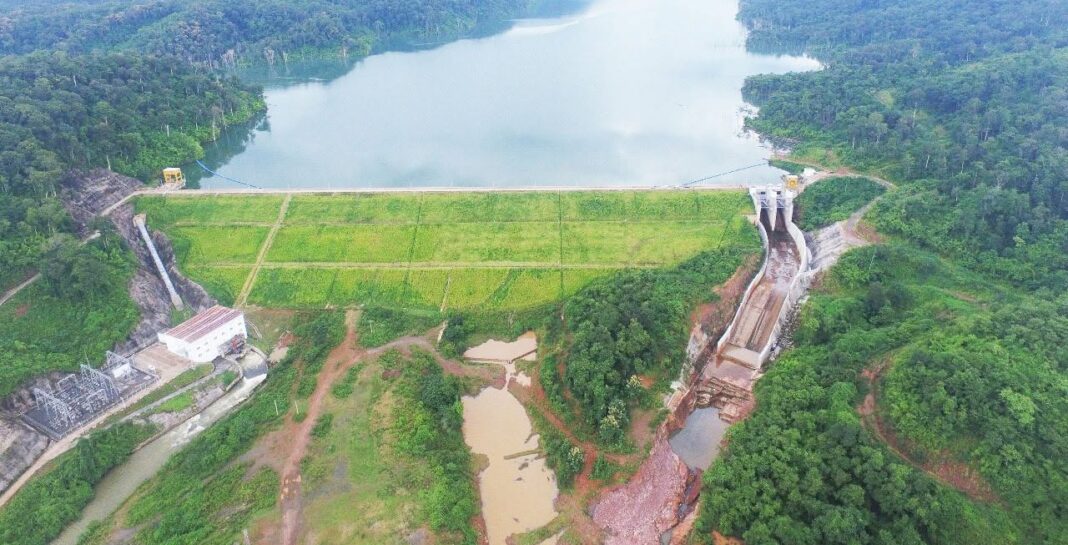
Authorities in Sekong have warned residents living downstream of the Houay Lamphanh Lower Hydropower Dam to prepare for possible water releases between 20 and 22 August as heavy rain increases inflows into the reservoir.
Rainfall between 18 and 21 August is expected to push inflows to between 100 and 120 cubic metres per second, according to a notice issued on 19 August. The reservoir is expected to reach full capacity today.
If the water level reaches the warning threshold, the dam operator may release water through the spillway into the river. Releases could reach 50 to 110 cubic metres per second or more, depending on the volume of water entering the reservoir.
Authorities have warned residents in two villages in Lamam district downstream of the dam to monitor water levels closely and take precautions to protect people, livestock and valuable property.
The notice said operators would manage releases according to dam safety procedures to prevent the reservoir from rising above the warning level. If the reservoir does not reach the specified threshold, the release may be delayed.
Rainy Season
The warning is one of several dam-related alerts issued during Laos’ rainy season as heavy rainfall continues to push up water levels across the country.
Previously, Xe Lanong 1 Hydropower Dam in Savannakhet began releasing water on 11 August after heavy rain increased inflows into its reservoir, raising flood risks downstream.
In Bolikhamxay Province, Pakkading authorities also warned downstream residents after Nam Theun 1 Dam began releasing water on 7 July, pushing up river levels.
Flood risks have continued to rise in several parts of Laos.
Flooding has affected at least 11 villages and more than 10,000 people in Savannakhet’s Phin and Sepon districts. The Mekong River in Pakse, Champasak Province, reached 11.52 metres on 19 August, above the 11-metre alert level.
Forecasters expect heavy to very heavy rain through 21 August, while authorities continue to urge people living near rivers and in low-lying areas to monitor water levels and follow official warnings.
