

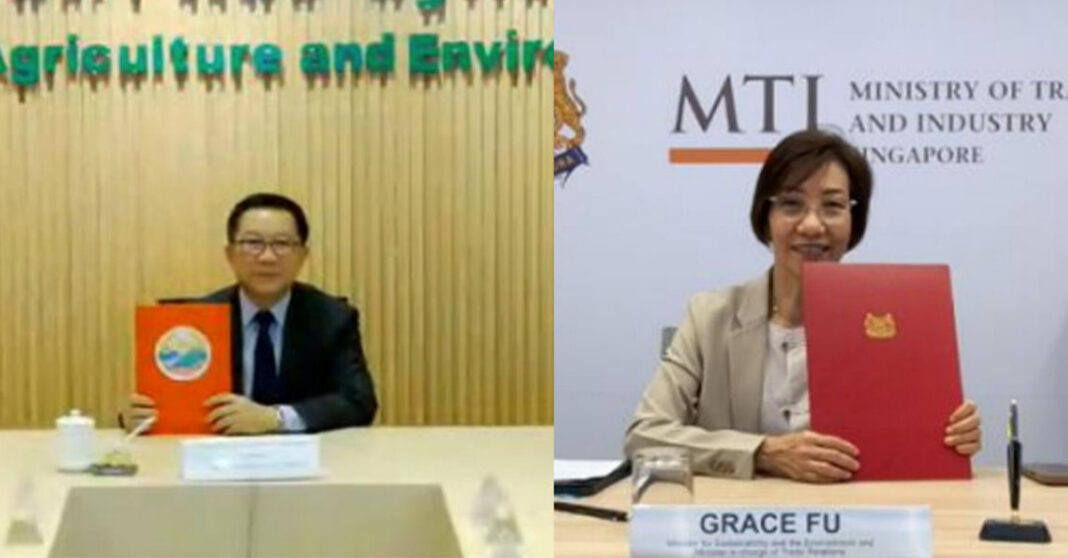
Laos is moving to turn emissions reductions from forests, agriculture and other projects into a new source of foreign investment and climate funding, after signing a carbon-credit agreement with Singapore.
On 4 September, the two countries agreed to establish a legally binding framework that will let Laos generate and transfer carbon credits to Singapore under the Paris Agreement.
Laos holds one of the highest shares of forest cover in the region, and the government has set a target of raising that cover to 70 percent by 2035 as part of its national forestry strategy.
Under the agreement, the countries will apply corresponding adjustments to their national greenhouse gas inventories to prevent double counting, ensuring each tonne of emissions reduction is claimed only once.
Singapore will also channel 5 percent of proceeds from authorized carbon credit transactions toward climate adaptation in Laos. In addition, it will cancel 2 percent of authorized credits when they are first issued, meaning those credits cannot be sold, traded or counted toward any country’s emissions targets.
Laos will keep a share of the carbon credits generated through international projects. It can use those credits to help meet its climate targets , cutting emissions by 60 percent by 2030 and reaching net zero by 2050.
Under Laos’ 2025 carbon-credit rules, at least 10 percent of credits generated through international cooperation must stay in Laos. The rules also require carbon-credit payments and transactions to go through commercial banks or the Bank of Laos.
Why Laos Is Looking for Climate Finance
Climate change is costing Laos heavily. Monsoon floods and landslides caused more than USD 279 million in damage in 2024. More frequent floods, droughts and landslides are expected to put further pressure on the economy, which is already dealing with high debt and slow growth.
At the same time, Laos is preparing to graduate from least-developed-country status, meaning it will gradually lose access to some forms of concessional aid.
Carbon markets are one option. By selling carbon credits generated through projects such as forest protection, reforestation and sustainable agriculture, Laos can bring in outside investment while supporting rural communities and working toward its climate targets.
The government has been putting the rules and institutions in place. Laos is targeting net-zero emissions by 2050 and has introduced rules governing carbon credits, including how projects are approved, monitored and how revenues are shared.
The agreement with Singapore is a step toward putting those rules into practice and creating a market for Lao carbon credits.
Singapore’s Role
Singapore has been building itself into a regional hub for carbon trading and has signed similar agreements with several countries, including Thailand, Vietnam and the Philippines.
For Laos, the Singapore deal provides a potential route into the international carbon market, especially for projects in forests and agriculture.
