

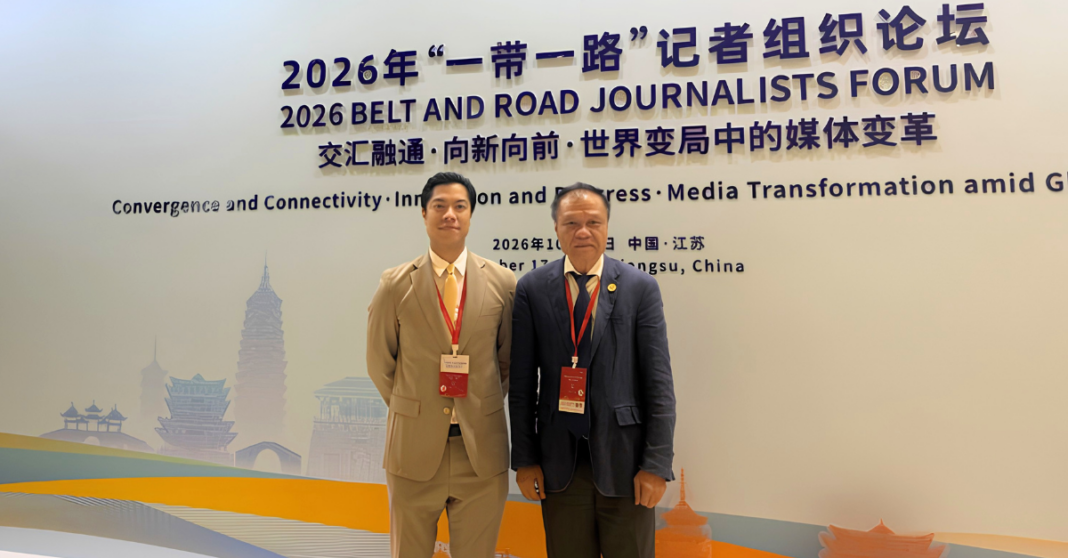
Laos took a seat among journalists from more than 50 countries and regions at the 2026 Belt and Road Journalists Forum in China, where organizers opened a new station to serve foreign reporters.
Lao Journalists Association President Savankhone Razmountry joined the forum in Nanjing, on 17 October, which drew nearly 100 journalists and media representatives.
Organizers launched the Global South Journalists Workshop Program. Chinese Xinhua Daily Media Group opened the Belt & Road Journalists’ Station in Jiangsu, which gives overseas media news coordination, information consulting and cultural exchange services. Similar stations already operate in Chongqing and Jiangxi province.
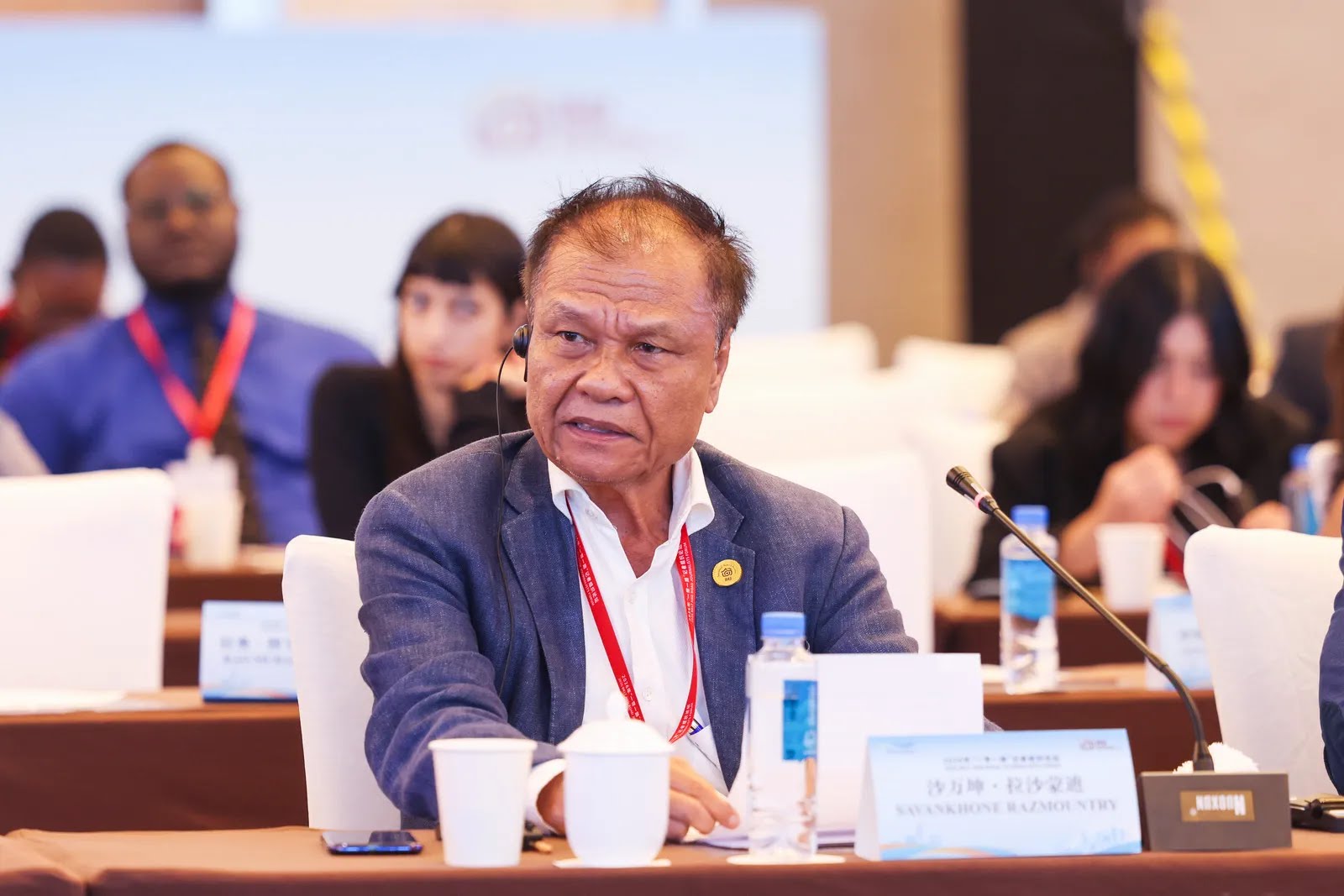
The forum met under the theme “Convergence and Connectivity, Innovation and Progress, Media Transformation amid Global Changes.” Organizers said the event highlights the role of journalists in advancing Belt and Road cooperation and global governance, according to Chinese media.
They also presented the third batch of “International Home of Journalists” partnership certificates to journalists’ organizations from 10 countries, including Chile, Cabo Verde, Mongolia and Zambia.
Prior to the main forum, participants toured Nanjing, Suzhou, Changzhou, Nantong and Lianyungang from 13 to 15 October and met local mayors and party secretaries.
Aditta Kittikoun, Senior Partner of RDK Group, also attended.
“I’ve connected with veteran journalists from China, Australia, Poland, Mongolia, Malaysia, Thailand, Kazakhstan, Kyrgyzstan, Egypt, Angola, Mozambique, Ghana, Cape Verde, Russia, Belarus, and many more. That, for me, is part of what made the 2026 Belt and Road Journalists Forum worthwhile,” Aditta said.

He added that participants also looked at Chinese AI tools.
“We also began exploring DeepSeek and tried to understand how Chinese AI tools work and what they might offer journalists and media organizations,” he said.
Laos and the Belt and Road
The Laos-China Railway, a flagship Belt and Road project, began operating in December 2021. The electrified line runs 1,035 kilometers from Kunming in China’s Yunnan province to Vientiane, including 422 kilometers in Laos. It supports Laos’ strategy of turning a landlocked country into a land-linked hub.
The railway also changed how visitors reach Luang Prabang, one of Laos’s top tourist destinations.
The trip from Vientiane once took up to eight hours, and the high-speed train now covers it in under two. The line has carried more than 73 million passengers since December 2021 and handled more than 20 million tonnes of cross-border cargo.
