

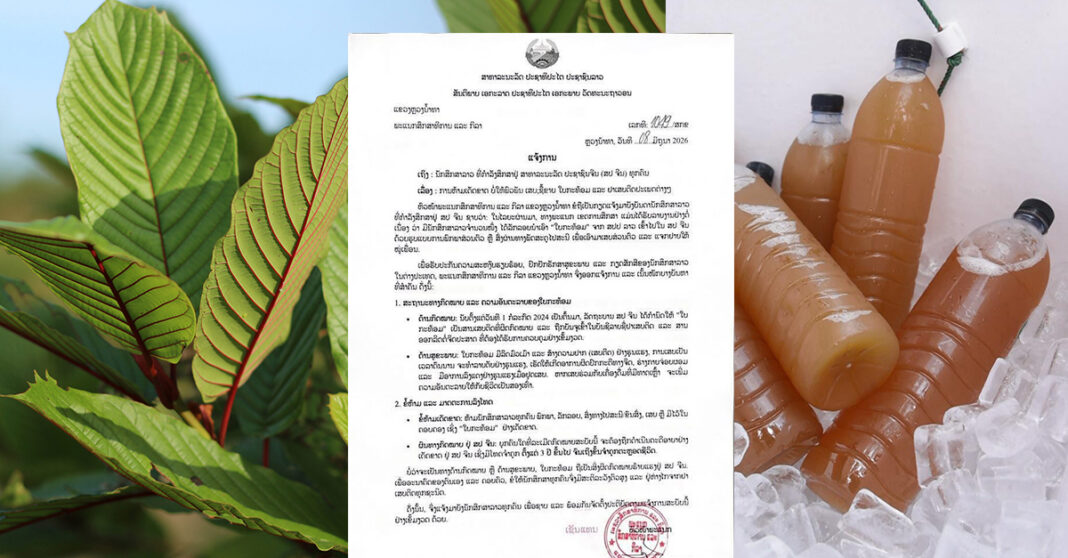
Authorities in Luang Namtha issued a formal warning to all Lao students studying in China, strictly prohibiting them from any involvement with kratom.
Laos’ northern province issued a notice, dated 8 June, that was triggered after reports confirmed that Lao students had been either personally carrying kratom leaves into China or sending them through postal services for consumption and distribution.
The warning comes as the number of Lao students in China continues to grow. According to Lao state media, as of April 2026, the figure may be as high as 30,000, up from an estimated 10,000 to 20,000 in previous years.
The notice makes clear that China has classified kratom as an illegal narcotic and strictly controlled psychoactive substance since July 2024. Any student caught carrying, smuggling, mailing, possessing, or consuming kratom faces criminal prosecution under Chinese law, with prison sentences ranging from three years to life imprisonment.
Luang Namtha authorities also highlighted serious health risks.
Prolonged use causes liver damage, mental health deterioration, and physical decline. When mixed with alcohol, the risks become potentially fatal. Authorities urged all Lao students to exercise high vigilance, stay away from drugs, and comply fully with the notice.
What Is Kratom?
Kratom (Mitragyna speciosa) is a tropical tree native to Southeast Asia whose leaves contain mitragynine, a compound with opioid-like properties.
Despite a domestic ban under the Lao Criminal Law, it remains a persistent problem. Young people and teenagers in particular commonly brew the leaves into a juice to drink, making it deceptively easy to consume.
