

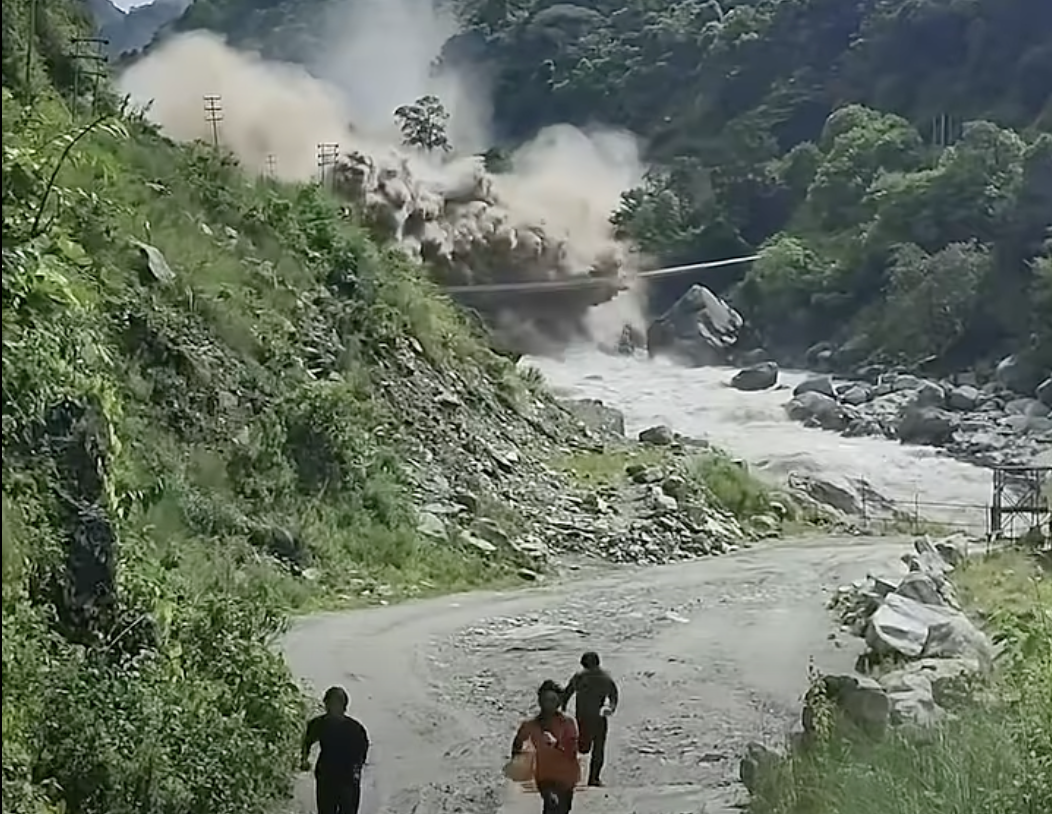
At least 165 people have died and hundreds remain missing after a massive flash flood and mudslide struck the Nepal-China border, destroying homes, roads and bridges and disrupting a major crossing between the two countries.
The disaster hit Nepal’s Rasuwa and nearby districts on 26 August, with floodwaters and debris sweeping through settlements along the Lhende, Bhote Koshi and Trishuli rivers. Nepalese authorities said hundreds of tourists and other travelers remain unaccounted for, including nationals from India, the United States, Australia, the United Kingdom and Canada.
In Tibet’s Gyirong County, Chinese authorities reported three deaths and 558 people missing, including 260 foreigners. The mudslide also damaged the Gyirong border port, cutting roads, communications and electricity in the area.
The region is a major route for tourists and pilgrims traveling between Nepal and Tibet, including people heading toward Mount Kailash and Lake Mansarovar.
Search and Rescue
Nepal has deployed army personnel and helicopters to search for survivors and evacuate people from affected areas. Rescue teams are also assessing damage to roads, bridges and power infrastructure.
The Nepal Electricity Authority said the disaster damaged around 430 megawatts of electricity generation capacity, including hydropower and solar facilities.
The cause of the flood was initially unclear, with early reports suggesting an earthquake.
The US Geological Survey later said the seismic signal came from a glacial collapse and resulting debris flow, rather than an earthquake. Preliminary satellite analysis also indicates that an ice-and-rock landslide blocked the Lhende River before releasing a surge downstream.
Authorities are continuing to monitor the rivers for further flooding as rescue and recovery operations continue.
