

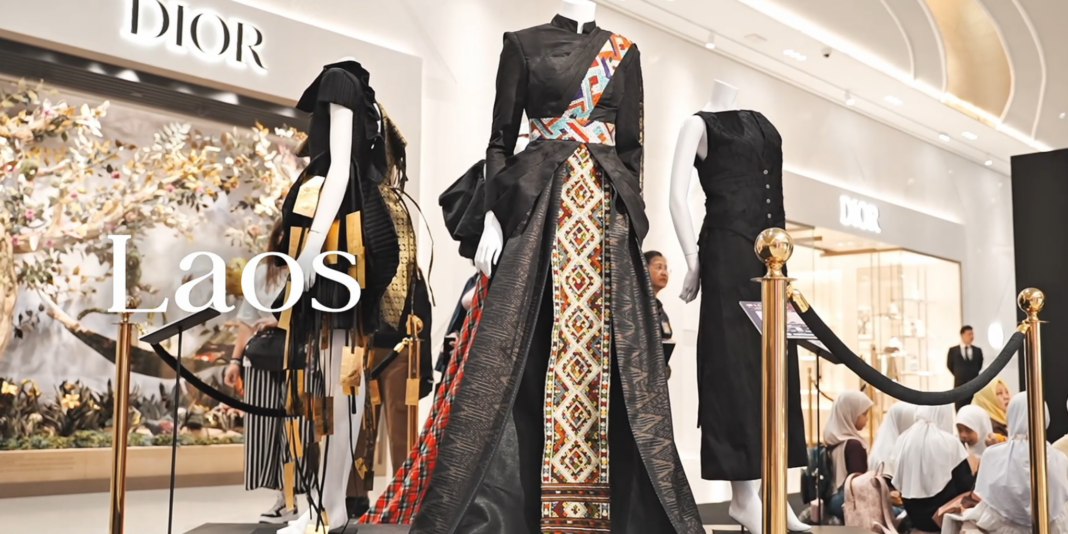
A gown combining Thai silk and Lao fabric brought two neighbouring countries’ textile traditions together at an international fashion exhibition in Bangkok in October.

Titled Lao-Thai Solidarity, the dress featured traditional Lao weaving patterns alongside Thai silk, with each material making up half of the design.
Lao designer Khamphao Bouaphanh, founder of Khamphao Sungdai, created the gown for the Global Thai Silk Exhibition. It showcased how traditional textiles from both countries could be incorporated into contemporary fashion.
The design featured a Naga motif along the lower skirt, a Dao Kai Noy pattern on the bodice, and a sash made from Pakse Mudmee silk.
Weaving Two Textile Traditions Together
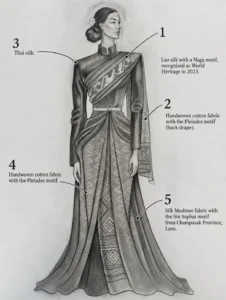
The dress combined 50 percent Thai silk with 50 percent locally woven Lao fabric. Rather than keeping the materials separate, the design brought them together through patterns and details associated with both countries.
The Naga motif, a recurring element in Lao art and textiles, ran along the lower panel of the skirt and wrapped around the back. The upper bodice featured the Dao Kai Noy pattern, translate to Little Chick Star, or the Pleiades in english. A sash made from Pakse Mudmee, a traditional Lao ikat silk, draped across the shoulder.
Khamphao said he wanted the two countries’ cultural identities to remain visible in the same garment.
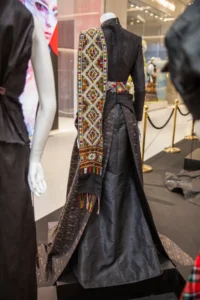
“My concept was to make Thai and Lao identities harmonize within a single outfit,” he said. “Viewers needed to clearly see the Thai silk while instantly recognizing the Lao heritage woven into it.”
The designer said the challenge was to incorporate these cultural and historical elements while creating a contemporary silhouette that remained respectful of Lao cultural conventions.
The colour palette also carried a commemorative meaning. According to Edward Kiti, founder and chairman of the Association of Thai Silk and Culture Promotions, black Thai silk was provided to honour the late Queen Mother Sirikit and Princess Bajrakitiyabha Narendira Debyavati.
A Platform for Regional Textiles
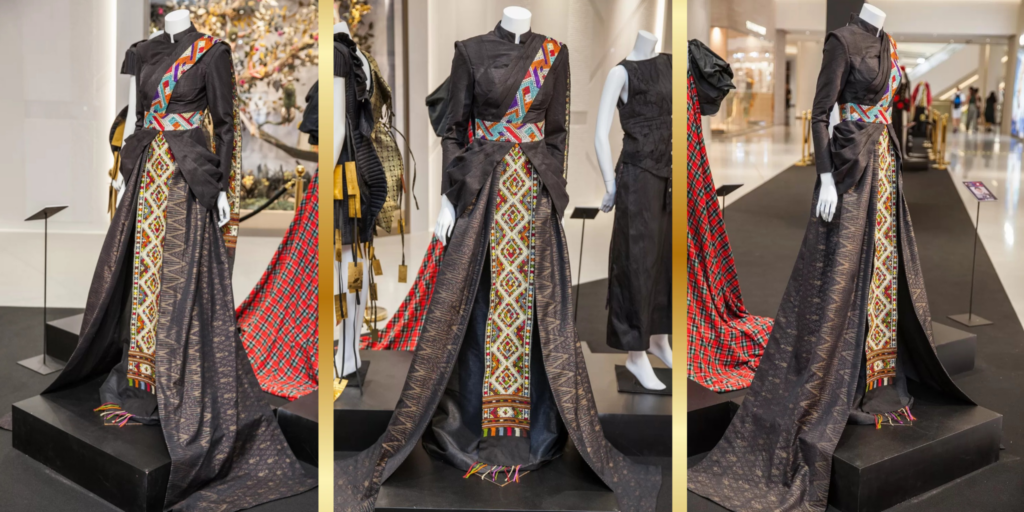
The gown was completed within six weeks, with Khamphao and his family and team overseeing the process from the initial sketches to the final design.
Edward said bringing fabrics from both countries into one garment helped strengthen cultural connections through a shared appreciation of traditional craftsmanship.
“When you have a dress made from a designer using fabric from both countries, it makes the relationship even closer and more meaningful,” Edward said. “It shows that through fabrics, we can bring harmony, friendship, and cultures closer together.”
The exhibition provided an opportunity to introduce traditional textiles to international audiences, including those who may be unfamiliar with Lao weaving.
Edward said the collaboration could provide a starting point for further regional partnerships, with the fourth International Thai Silk Fashion Week planned for August 2027.
“This has already proven that fabric from both countries can work together to create something beautiful,” he said. “It opens the door for designers and fabric producers to explore collaborations that represent the shared identity and friendship of our two nations.”
