Secures five accolades spanning its diverse portfolio, including environmental home appliances and the BEREX wellness lineup.
Achieves a rare ‘Design Grand Slam’ by sweeping the world’s top four international design awards this year.
SEOUL, South Korea, Oct. 20, 2026 /PRNewswire/ — Coway Co., Ltd., the “Best Life Solution Company,” announced today its robust showing at the 2026 Good Design Awards, securing five accolades. With these latest wins, Coway has achieved a rare “Design Grand Slam,” sweeping the world’s top four design competitions this year – the iF Design Award, Red Dot Design Award, IDEA, and now, the Good Design Award.
Coway’s 2026 Good Design Award Honorees
Hosted by the Japan Institute of Design Promotion (JDP), the Good Design Award is highly regarded globally, recognizing products that enhance quality of life through exceptional usability, innovation, and sustainability.
Coway’s award-winning lineup this year showcases the company’s ability to seamlessly blend cutting-edge technology with sophisticated home aesthetics across various categories. The recognized products include the ‘Icon Water Purifier 3,’ the ‘Square Fit Air Purifier,’ the newly introduced ‘Zero Food Waste Disposer (Microorganism Type),’ and two premium massage chairs from its sleep and wellness brand, BEREX.
Notably, the Square Fit Air Purifier series achieved its own individual grand slam, winning all four major global design awards this year. Available in four distinct coverage sizes, it was lauded for its compact, architectural silhouette and an intuitive control panel that significantly enhances user convenience. By completely hiding the air intake vents, it delivers a sleek, minimalist exterior that complements any interior décor while offering powerful air purification.
Other standout winners include:
Icon Water Purifier 3: Designed for the modern kitchen, this ultra-compact purifier (just 16cm wide) features a ‘Smart Moving Faucet.’ Equipped with an automatic sensor, the faucet intelligently adjusts its height based on the container being used—from a small cup to a tall tumbler—preventing splashes and maximizing user convenience.
BEREX Pebble Chair 2: Blending a sophisticated design with premium massage capabilities, this chair utilizes an ergonomic ‘SSL frame’ that contours perfectly to the body from head to thigh. Additionally, the reclining angle has been expanded up to a maximum of 152 degrees for a deeper, more stable relaxation experience.
BEREX Triple Chair 2 Slim: Another innovative furniture-style massage chair offering exceptional versatility—it functions seamlessly as an office chair at a desk, a recliner sofa for everyday resting, and a premium massage chair for relieving fatigue. Furthermore, it reduces its overall footprint by 9% compared to its predecessor and incorporates hidden wheels for effortless mobility.
“Winning across such diverse categories at the world’s top design awards is a testament to Coway’s core philosophy: harmonizing advanced technology with everyday living spaces,” said Jinsang Hwang, Head of Coway Design Lab. “We are committed to pushing the boundaries of innovation, delivering premium lifestyle solutions that not only perform exceptionally but also elevate the everyday experiences and aesthetics of our customers’ homes.”
About Coway Co., Ltd.
Established in Korea in 1989, Coway (KRX: 021240), the “Best Life Solution Company,” is a leading global innovator dedicated to enhancing everyday life through state-of-the-art environmental home appliances and premium wellness solutions. Renowned for its industry-leading water purifiers, air purifiers, and bidets, Coway expands its premium sleep and wellness brand, BEREX, to advance the global lifestyle sector with smart mattresses and advanced massage chairs. Driven by intensive research and award-winning engineering, Coway continues to accelerate its business across major markets, including Malaysia, the USA, Thailand, China, Indonesia, Vietnam, and Europe. For more information, please visit http://www.coway.com/ or http://newsroom.coway.com.
BEIJING, Oct. 20, 2026 /PRNewswire/ — An interview from China.org.cn with Wang Xiaohui and David Ferguson on the Long March:
For the People: The Fish-and-Water Bond Reflected in Half a Quilt
Wang Xiaohui:
We have recounted many brutal battles and perilous ordeals along the Long March. Now, I’d like to tell some heartwarming stories. Let me start with a thought experiment.
It’s freezing cold, and you have only one quilt to ward off the chill — but then you notice everyone else wrapped in nothing more than tattered cotton rags. What would you do? Maybe you’d say, “Let’s split my quilt in half,” so that even if you part ways later, they’d still have something to cover themselves. But what if giving half away means you won’t make it through the frigid night? This raises a profound question: What would a person have to believe in, to be willing to surrender their last and only possession to a stranger?
David Ferguson:
Honestly, I’m not sure. Not because I wouldn’t care, but because of human nature — when resources are very scarce, the natural human instinct is to take care of your own interests first. Everyone understands that.
And that is why, when someone goes against human nature and gives away the last of their meager possessions, we want to understand why. We want to know what enabled them to overcome their basic instinct.”
Wang Xiaohui:
In November 1934, rumors swept Shazhou Village, Rucheng, Hunan Province, spreading false tales of “communist bandits” burning, killing, and plundering. Almost all villagers fled deep into the mountains to hide. Xu Jiexiu and her husband, however, had to stay at home because their son was running a high fever.
What the local tyrants and evil gentry slandered as “communist bandits” were actually the Central Red Army, who had just begun the Long March and were passing Rucheng to break through the Kuomintang (KMT) blockade.
At dusk on Nov. 6, three young female Red Army soldiers came to Xu Jiexiu’s doorstep. They spoke gently through the door crack: “Fellow villager, it’s pouring. May we shelter under your eaves?” Xu cautiously peeked out and saw the armed soldiers standing neatly against the wall, causing no disturbance whatsoever — a stark contrast to the marauding officials and troops they had seen before.
After striking up a conversation, Xu took pity and invited the three women in for the night. Late autumn nights were piercingly cold, yet Xu’s only means to fend off the cold was a straw rain cape and a worn cotton mat, which were far from enough. Seeing that, the Red Army soldiers took out the only army quilt they had and shared it with Xu and her feverish son to get through the night.
The march allowed no delay. Before they left, the three soldiers offered to leave their quilt to Xu Jiexiu, but Xu firmly refused: “This is your only quilt. The cold is brutal and you still have a long journey ahead. How can I bring myself to take it?”
There was little time for back-and-forth refusal. The eldest of the three soldiers borrowed a pair of scissors from Xu, cut the quilt cleanly in two, and pressed half into her hands: “Sister, please keep this half,” she said. “When we secure triumph in the Revolution, we will come back to visit you, and bring you a large, thick new quilt.”
Xu took the half-quilt safely and treasured the promise. In her spare time, she would go to sit by the river at the village entrance, waiting for the Red Army’s return. Fifty years slipped away in quiet waiting.
Pitifully, Xu Jiexiu never saw the three female soldiers again. On her deathbed, she told her grandson: “I had plenty of quilts to keep me warm after the CPC liberated China. But I miss those women. They showed me exactly what makes the Red Army, and what makes the CPC — they are people who, even with just one quilt in their possession, will cut it in half and give it to us!”
After her passing, local authorities built a bridge at the spot where Xu Jiexiu used to wait, and named it “Wangjun Qiao,” meaning “the bridge of waiting for the Red Army.”
The deep fish-and-water bond between the Red Army and the ordinary people transcends regional divides and ethnic boundaries.
In May 1935, the Central Red Army reached the inhabited area of the Yi people in southwestern Sichuan. Decades of cruel ethnic oppression policies under the KMT and local warlords had bred deep estrangement between the Yi and Han peoples, leaving the Yi community deeply wary of the Red Army’s arrival.
On the morning of May 22, a Red Army vanguard entered the territory of the Guoji family of the Yi clan. The clan’s elders, women and children fled into remote mountains, while Yi armed groups launched probing attacks against the troops. However, the Red Army held their fire. Instead of retaliating, they stopped to communicate peacefully with them, and even paid 400 yuan in silver coins as a “passage fee.”
Guoji Xiao Yedan, head of the clan, sent scouts to gather intelligence before learning the truth about the Red Army: They upheld strict discipline, treated captives humanely, and never drew their guns on the Yi people even after being stripped of their clothes and supplies.
The Red Army’s conduct deeply touched Xiao Yedan, who then agreed to negotiate, and later became a sworn brother with Liu Bocheng, commander of the Red Army vanguard, following traditional local customs. With the help of Xiao Yedan, the main force of the Red Army passed smoothly through Yi territory. What’s more, inspired by the Red Army’s integrity, over 100 Yi villagers volunteered to join the army.
Stories of such mutual devotion abound all along the Long March. The CPC firmly believes in the maxim that the country is the people, and the people are the country. The CPC is deeply rooted among the people; it always stands with the people, shares their aspirations and works side by side with them.
A party and army that truly cherishes the people will in turn win the people’s love and respect. Along the banks of the Yudu River, 300,000 villagers rallied to help the Red Army’s strategic shift, donating grain and daily supplies. Outside Yizhang, peasants and laborers volunteered to assist the Red Army’s siege — building assault ladders, digging tunnels, hauling timbers, and pouring into the city to welcome the Red Army once the walls fell.
Why such unwavering support? Because where the Red Army took control, local tyrants and evil gentry were overthrown, and seized farmland was returned to its rightful owners. Gone were the days of groveling in fear; ordinary people could finally hold their heads high with dignity.
The Long March is far more than just a grueling chapter in history; it is an enduring spiritual asset passed down through generations.
Today, countless CPC members stand on the “new frontlines” of poverty alleviation, rural revitalization, and grassroots governance. Huang Wenxiu, former First Secretary of a small mountain village in Guangxi Zhuang Autonomous Region, turned down promising career opportunities in big cities after earning her master’s degree in Beijing and chose instead to work in the mountain villages. During her tenure, she trekked every village lane, visiting households one by one to solve their problems, lobbying for road construction, securing industrial projects, and introducing new industries. Under her leadership, more than 100 villagers were lifted out of poverty. In 2019, a flash flood took Huang’s life on her way back to the village for flood prevention work. Her young life at just 30 was forever dedicated to serving the people.
Her silhouette echoes the countless weary figures who pressed ahead along the Long March. The motto “everything for the people” stands as the most vivid footnote to this unbroken spiritual legacy.
David Ferguson:
They had to “extend” the definition of their interests. They were fighting not only for their own survival, or for the survival of the army — but for the well-being of the entire Chinese people and for the future of the entire Chinese nation.
“What impresses me most about the story of the three female Red Army soldiers is not simply that they cut their only quilt in half — that action speaks volumes — is that they set aside the questions, “Will one half quilt be enough for us?” “What will happen to us in the future?” That mindset was not something they were born with — it was shaped and strengthened through countless days of reaffirming why they had embarked on that journey in the first place.
Wang Xiaohui:
Ninety years ago, the Red Army crossed snow-capped mountains and vast grasslands, forging a path toward independence and liberation for the Chinese people. Today, the Communist Party of China shoulders new missions and faces new struggles and challenges, but its original aspiration and founding mission — to seek happiness for the Chinese people and rejuvenation for the Chinese nation — remain unchanged. Relying closely on and uniting all ethnic groups across the country, the CPC strides confidently on its new journey toward a brighter future, working tirelessly to fulfill the people’s yearning for a better life.
Times change, and the tasks before us evolve, but the CPC has always shared weal and woe with the Chinese people and moved forward together with them.
Laos’ 2025 census shows slowing population growth, falling birth rates, an ageing population, and significant differences in provincial growth and density. (Photo: Lao Population and Housing Census)
Laos’ population is growing more slowly, with birth rates falling and the population getting older, according to the country’s 2025 Population and Housing Census.
The fifth nationwide census ran from 3 November to 28 December 2025. For the first time, the Lao Statistics Bureau collected data digitally, following four years of preparation with support from UNFPA and other development partners.
Census workers directly counted 6.74 million usual residents. A follow-up survey found that the initial count had missed about 497,000 people, bringing the estimated resident population to 7.24 million.
“We are 95 percent confident in the results,” Deputy Minister of Finance Phetsamone Sone said at the census launch on 20 October.
The findings show that Laos’ annual population growth rate fell to 1.1 percent in 2025, less than half the peak of 2.5 percent recorded between 1985 and 1995.
The birth rate has also dropped over the past decade, from 28 births per 1,000 people in 2015 to 18.1 in 2025. Meanwhile, the median age rose from 18.5 years in 2005 to 27 years in 2025.
Women Are Becoming Mothers at Different Ages
The census recorded 122,043 births and 23,806 deaths in the 12 months before the survey.
It also found differences in the age at which women become mothers. The average age was 23.5 years nationwide and 25.4 years in urban areas. In rural communities without road access, it was 21.2 years.
The figures show that the timing of motherhood varies across the country, but they do not explain why birth rates are falling. Further research would be needed to understand the factors behind the change.
A Country of Uneven Population Distribution
Four provinces and the capital account for more than 40 percent of Laos’ population: Savannakhet, Vientiane Capital, Champasak, and Luang Prabang. Savannakhet and Vientiane Capital each account for about 13 percent.
Population growth also varies widely by province. Attapeu and Sekong are growing fastest, at close to 3 percent a year, while Champasak and Savannakhet have seen little growth.
About two-thirds of the population live in rural areas. Around 301,500 rural residents still lack road access, nearly 30 percent of whom live in Houaphanh Province.
Population density also differs sharply across the country. Vientiane Capital has 228 people per square kilometre, while Phongsaly has just 12.
What the Changes Mean for Laos
The changing age structure could create opportunities for economic growth, but it also presents challenges for public planning.
“Knowing these changes in the population age structure can create opportunities for economic growth, and estimate how much they require to invest in education, health, skills, employment, and social protection,” UNFPA Representative to Laos Bakhtiyor Kadyrov said.
With children making up a smaller share of the population, demand for some services may change over time. At the same time, a larger share of working-age people could support economic growth if enough jobs and training opportunities are available.
The census found that Laos had 53.8 children and older people for every 100 people of working age in 2025, down from 76.4 in 2005. Known as the dependency ratio, the measure compares the number of children and older people with the working-age population.
A lower ratio means fewer dependants relative to the working-age population, potentially creating more room for investment and economic growth. But the benefits will depend partly on whether people can find stable jobs and earn enough to support themselves and their families, according to documents shared by the Lao Statistics Bureau and UNFPA Laos.
*Information from UNFPA Laos, and Lao Statistics Bureau
CDC shares Malaysia’s AI-driven procurement experience at ADB-organised regional conference, highlighting measurable efficiency gains and responsible technology adoption.
KUALA LUMPUR, MALAYSIA – Media OutReach Newswire – 20 October 2026 – Malaysian technology company Commerce Dot Com Sdn Bhd (CDC), which has more than 25 years of experience in developing government electronic procurement (e-GP) solutions, has shared its experience in applying artificial intelligence (AI) to public procurement with regional counterparts.
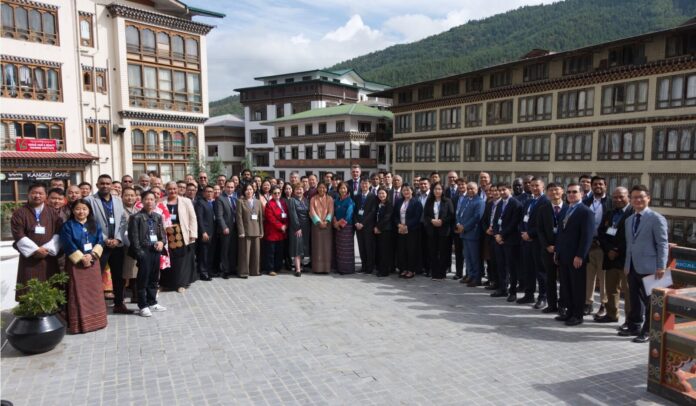
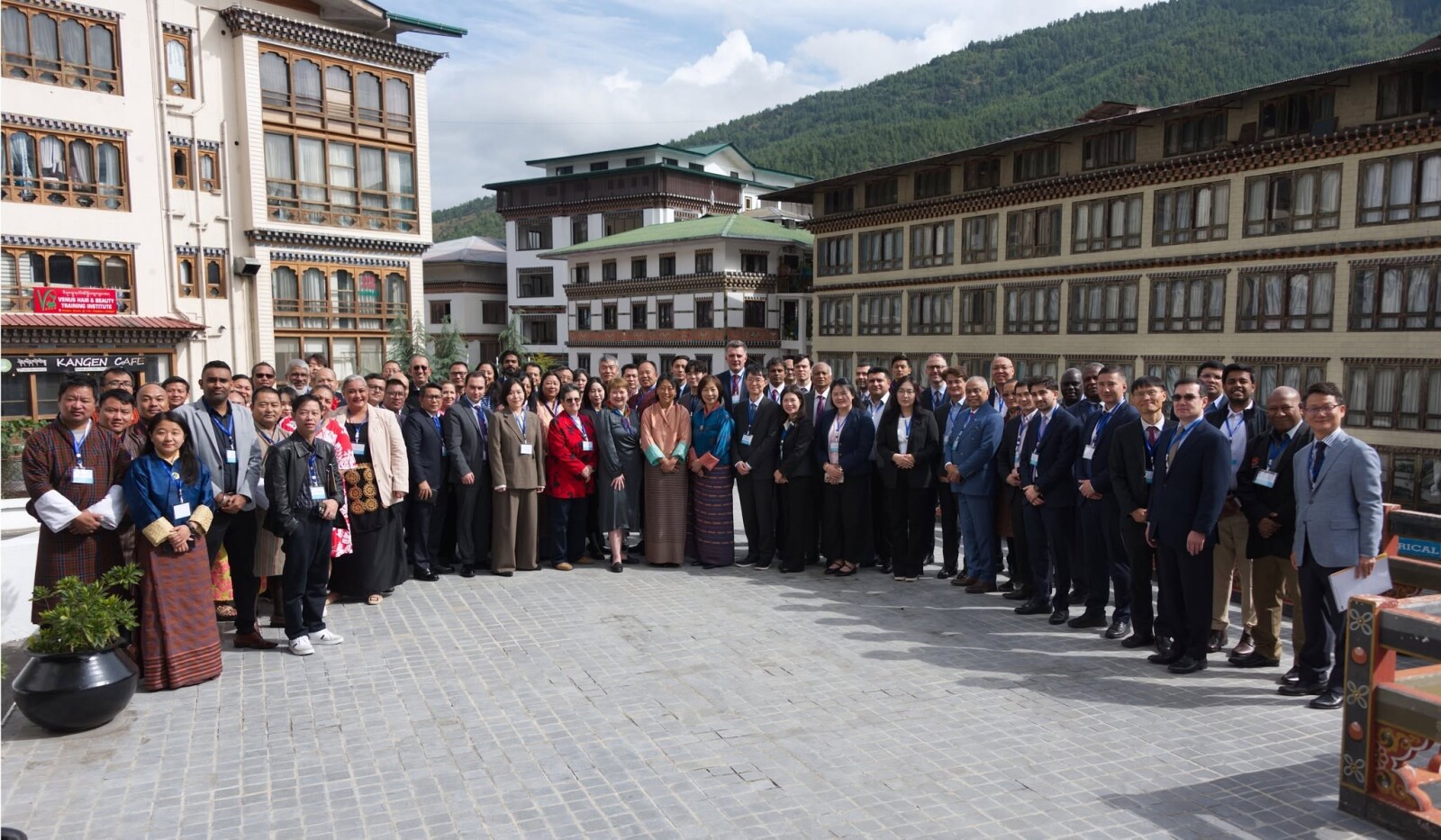
Participants and delegates from across the Asia-Pacific region gather in Bhutan for the 11th Conference of the Asia Pacific Public Electronic Procurement Network.
CDC was invited as an industry speaker and panellist at the 11th Asia Pacific Public Electronic Procurement Network (APPeN) Conference in Thimphu, Bhutan, where it shared practical insights into integrating AI into next-generation e-GP platforms.
Held on Oct 5 and 6, the conference, organised by the Asian Development Bank (ADB) in collaboration with the Royal Government of Bhutan, brought together more than 70 participants from 28 countries, including public procurement officials and technology industry representatives.
CDC Executive Director Putri Nurul Ida Yahya said AI could help public institutions interpret complex information, automate routine tasks and generate insights to support procurement decision-making.
“The priority is to select applications that address real challenges and deliver measurable improvements. For example, a three-month conversational AI pilot project in Malaysia’s government procurement system successfully reduced call centre workload by 15 to 18 per cent,” she said in a statement.
Putri Nurul Ida said the successful pilot demonstrated how AI could facilitate users’ access to information, allowing support teams to focus on more complex enquiries.
Beyond operational efficiency, CDC also highlighted that the responsible use of AI required ethical practices, strict protection and confidentiality of government data, appropriate security and access controls, transparency, and continuous human oversight.
During the workshops and networking sessions throughout the conference, delegates engaged with CDC on key topics, including technology implementation strategies, change management, system deployment and approaches to sustaining user adoption.
The discussions provided an opportunity for CDC to share lessons from Malaysia’s e-GP experience with regional institutions exploring the use of AI in public procurement.
The exchange also highlighted how Malaysia’s experience in developing and operating e-GP systems could contribute to regional efforts to adopt AI in public procurement in a practical and responsible manner.
— BERNAMA Hashtag: #CommerceDotCom #ArtificialIntelligence #GovTech #DigitalProcurement #ResponsibleAI #Malaysia
The issuer is solely responsible for the content of this announcement.
Commerce Dot Com Sdn Bhd
Established in 1999 as a procurement solutions provider, Commerce Dot Com Sdn. Bhd. (CDC) is a government-linked company under the Ministry of Finance whereby the ministry’s corporate arm, Ministry of Finance (Incorporated), holds a golden share in the company. With over 20 years of experience under its belt, CDC has established itself as among the leading procurement solutions providers in Malaysia and has a well-earned reputation for providing exceptional services through its innovative solutions.
NINGBO, China, Oct. 20, 2026 /PRNewswire/ — From October 17 to 23, the 2026 Yangtze River Delta International Youth Film Festival, guided by the China Film Administration and co-hosted by China Media Group and the People’s Government of Zhejiang Province, is being held in Ningbo, China.
The Selection Committee makes its appearance at the opening ceremony.
As China’s first officially established film festival dedicated to young filmmakers, the festival features a “2+5” framework: two major events—the opening and closing ceremonies—and five major sections: the Youth Film Project Market, the China Film New Force Forum, Film Panorama, Theme Event and the “Movie+” Series Events. With two main threads—professional activities and public-benefit initiatives—running throughout, it aims to create a major film event combining professional excellence, commercial value and an international vision, ignite young filmmakers’ creative vitality, promote coordinated development of the Yangtze River Delta’s film industry, and advance diverse cinematic expression and international outreach.
The ninth China Film New Force Forum will feature keynote speeches on topics including “Film Stories and the China Image,” “Cinematic Perspectives in the AI Era,” “The New Map of the Film Economy” and “Film and a Changed Audience,” as well as roundtable discussions aimed at forging industry consensus.
2026 marks the 70th anniversary of the establishment of diplomatic relations between China and Africa. A core thematic event of the festival, the China-Africa Youth Filmmakers Roundtable will provide a platform for dialogue, bringing together more than 100 young filmmakers, scholars and representatives of film and television institutions from China and African countries in Ningbo. The event aims to facilitate connections between China’s film and television industry and the African film market.
The festival has launched its flagship “Youth Film Project Market,” a one-stop project-incubation platform for young film talent worldwide, to help more young filmmakers light up the Chinese screen.
During the festival, forty Chinese and international films will be screened in 187 showings at 20 cinemas in 10 cities across the Yangtze River Delta. The festival is also creating “Film+” experiences that bring together technology, cultural tourism and consumer activities.
Looking back at the history of Chinese cinema, Ningbo—the “cradle of Chinese film”—has been a constant presence. Generations of Ningbo-born filmmakers have created nearly 50 “firsts” in Chinese film history. In the early days of Chinese cinema, Zhang Shichuan (1891-1953) directed China’s first narrative short film Die for Marriage (Nan Fu Nan Qi) and its first sound film Sing-Song Girl Red Peony (Ge Nü Hong Mu Dan), and founded the country’s first film school—Mingxing Film and Drama School. Song of the Fishermen (Yu Guang Qu) was filmed on location in Shipu, Xiangshan County, Ningbo, and won China’s first international film award. Yuan Muzhi (1909-1978) starred in Children of Troubled Times (Feng Yun Er Nü), in which “March of the Volunteers” was heard on screen for the first time. After the founding of the People’s Republic of China, Sang Hu (1916-2004) directed New China’s first color stage-opera film, Liang San-po A Cu Jing-tchaj (Butterfly Lovers), and its first color feature film, New Year Sacrifice (Zhu Fu). Ningbo filmmaker Xu Jingda (1934-1987) and others directed China’s first large-scale, color, widescreen animated feature, Nezha Conquers the Dragon King (Ne Zha Nao Hai), and Hsin-Yen Chang (1934- ) directed China’s first martial arts film to gross 100 million yuan, The Shaolin Temple (Shao Lin Si).
Today, Ningbo is home to more than 5,000 film and television enterprises and has built an industrialized, standardized and technology-driven film industry system, creating a landscape where “the whole city is a set, and creation is possible in every season.”
A display of posters for Zhang Shichuan’s classic productions.
A special-edition collaboration with Lotus Biscoff®, available for a short time only
SYDNEY, Oct. 20, 2026 /PRNewswire/ — Toblerone has reinvented its Pralines range with the launch of Toblerone Biscoff® Pralines, a special-edition collaboration bringing the caramelised taste of Lotus Biscoff® into its signature diamond-shaped pralines, available now while stocks last.
Toblerone Biscoff® Pralines are available in 176g and 44g formats.
Each praline brings together a smooth, rich milk chocolate coating with Toblerone’s signature soft, chewy honey-almond nougat, and a velvety Lotus Biscoff® centre, made from the original Lotus Biscoff® caramelised biscuits, crushed and blended into a smooth, buttery spreadable paste.
Toblerone launched its Pralines range in 2023, featuring a smooth centre encased in a distinctive diamond shape. The Biscoff® collaboration marks the first partnership for the range, taking it in its most indulgent direction yet.
Ben Wicks, CMO / VP Marketing ANZ at Mondelēz International, said: “Toblerone is ‘Never Square’ and has always been about doing things a little differently. This collaboration is no exception, pairing our signature Pralines with Biscoff® ‘s smooth, caramelised biscuit spread let us create something that feels both familiar and completely new. It’s the kind of pairing we think our fans will love and we can’t wait for people to try it. Just don’t wait too long, once it’s gone, it’s gone.”
The collaboration brings Lotus Biscoff’s® signature caramelised biscuit spread into the Toblerone Pralines range for the first time, giving fans a new way to experience two familiar tastes together.
Toblerone Biscoff® Pralines are available in 176g and 44g formats RRP $20.00 and $7.00 AUD at Coles, Woolworths and Independent supermarkets from 2nd September while stocks last.
NOTES TO EDITOR:
About Mondelez International
Mondelēz International, Inc. is one of the world’s largest snacking companies and one of Australia’s largest food manufacturers. Its purpose is to empower people to snack right by delivering a broader range of delicious, high-quality snacks that nourish life’s moments, that consumers can feel good about. It is the custodian of iconic brands including, Toblerone, Cadbury Dairy Milk, The Natural Confectionery Co., Oreo, In A Biskit, Olina’s Bakehouse and Philadelphia Cream Cheese.
Nonprofit Group calls for End of Greyhound Racing Industry
SYDNEY, Oct. 20, 2026 /PRNewswire/ — According to a new report from the Center for a Humane Economy (CHE), tens of thousands of kangaroos are being shot each year to provide cheap meat for the Australian greyhound racing industry.
“This is another example of how the greyhound racing industry cuts corners and prioritizes profits over animal welfare,” said GREY2K USA Worldwide President and General Counsel Christine A. Dorchak. “Greyhound racing is cruel and inhumane and must end.”
The CHE investigation documents, for the first time, a commercial connection between Australia’s kangaroo meat trade and its greyhound racing industry. As international demand for kangaroo meat and skins has plummeted, low-cost kangaroo meat has become a major feed source for racing greyhounds. According to CHE, the number of kangaroos being shot for the greyhound racing industry could be as high as 75,000 annually, assuming a diet split between kangaroo meat and other sources.
That figure excludes tens of thousands of dependent joeys, who are killed at the hands of shooters by blunt force trauma or decapitation, or left to die of starvation or predation after their mothers are shot.
“We already had plenty of good reasons to halt greyhound racing, and now we add one more: mass shooting of native kangaroos during the night to supply bushmeat to greyhounds,” said Wayne Pacelle, president of the Center for a Humane Economy.“If the mistreatment of the dogs itself was not enough to warrant reform, now the case is fortified by understanding the link between greyhound racing to the slaughter of Australia wildlife.”
The report identifies Ray Borda as a key link between the two industries. Borda is a longtime greyhound breeder and owner with roughly 300 greyhounds currently racing. He is also managing director of Macro Group Australia, which controls the country’s largest retail distribution network for kangaroo meat, and serves as national president of the Australian Wild Game Industry Council (AWGIC), the peak body representing the kangaroo industry.
“Across the world, greyhound trainers use cheap meat as a way to reduce costs and maximize the profit margin for each individual dog,” said Dorchak. “We are grateful to our allies at the Center for a Humane Economy for shining a light on the link between the shooting of kangaroos and greyhound racing.”
Greyhound racing was recently prohibited in New Zealand, Wales and Scotland. It is illegal in 44 American states, and a bill to outlaw greyhound racing nationwide recently passed the U.S. House of Representatives. In December, a bill to phase out greyhound was approved by the Tasmanian House of Assembly, by a vote of 22-11.
The full report, “Australia’s Global Bushmeat Trade: A Report on the Commercial Kangaroo Meat Industry, Economics, Food Safety, and Animal Welfare Failures,” authored by Svetlana Feigin, Ph.D., Jennifer Skiff, Tina Lawrence, B.Juris., LL.B., Jim Keen, D.V.M., Ph.D., Dr. Thomas Pool, D.V.M., M.P.H., Kevin Chambers, and Peter Hylands, is available at https://act.centerforahumaneeconomy.org/a/kangaroo-report-survey.
About GREY2K USA Worldwide
Formed in February of 2001, GREY2K USA Worldwide is the largest greyhound protection organization in the world with more than 300,000 supporters. As a non-profit 501(c)4 organization, the group works to pass stronger greyhound protection laws and end the cruelty of dog racing on both national and international levels. GREY2K also promotes the rescue and adoption of greyhounds across the globe. For more information, go to www.GREY2KUSA.org or visit GREY2K on Facebook, Twitter or Instagram.
GOLD COAST, Australia, Oct. 20, 2026 /PRNewswire/ — Southern Cross University researchers are aiming to halve the cost of producing omega-3 supplements to make these essential nutrients more accessible to pregnant women and infants in low-income countries, backed by the University’s first-ever grant from The Gates Foundation.
The research takes a novel approach: rather than relying on fish oil, the team is going closer to the original source of omega-3. Fish don’t produce omega-3 themselves – they accumulate it from marine microorganisms lower in the food chain.
Led by Professor Dirk Erler from Southern Cross University’s Faculty of Science and Engineering, the team is investigating how these naturally omega-3-producing microorganisms can be grown more cheaply through precision fermentation, including the use of agricultural and food-processing by-products as a source of fermentation sugar.
Omega-3 is an important nutrient during pregnancy and early life, supporting brain and nervous system development in babies. But the cost of supplements remains a significant barrier to access in many low-income countries.
“The main barrier for the uptake of omega-3s as supplements in pregnant women is the cost,” Professor Erler said.
“The whole objective of our project is to reduce that cost and make omega-3 supplements more available.”
The research team at Southern Cross University, which includes biomedical scientist Dr Nedeljka Rosic, Dr Shane McIntosh, postdoctoral researcher Dr Jasmine Haskell and PhD researcher Michael Ingram, is focused on growing omega-3-producing marine microorganisms known as thraustochytrids – or ‘throstys’ for short.
“By growing those microorganisms on land through precision fermentation, we have an alternative way of producing omega-3s that is both reliable and highly targeted,” Professor Erler said.
Precision fermentation allows the researchers to grow thraustochytrids under controlled conditions to produce omega-3 oils. The team is investigating whether expensive feedstocks used in the process can be replaced with lower-cost agricultural and food-processing by-products, helping drive down the overall cost of production.
The approach could also reduce reliance on wild-caught fish as a source of omega-3 oil and create a more reliable, scalable, and local supply.
For biomedical scientist Dr Nedeljka Rosic, the production challenge is ultimately about what greater access to omega-3 could mean for women and babies.
“As a biomedical scientist, my purpose is to find ways to use science to improve people’s health,” Dr Rosic said.
“This project is important because it aims to improve the health of pregnant women and children and reduce preterm births through simple dietary improvements.”




 https://www.commercedc.com.my/
 https://www.linkedin.com/company/commercedotcom/posts/
 https://www.instagram.com/commercedotcomm/