Home Blog Page 1173

Correcting and Replacing: Infinix to Deliver Industry-leading Performance with Snapdragon Platforms

Infinix is committed to elevating performance and user experience, beginning with the upcoming NOTE 60 SERIES featuring Snapdragon platforms


HONG KONG SAR – Media OutReach Newswire – 11 February 2026 – Today, Infinix announced its plans to integrate the cutting-edge Snapdragon® platforms from Qualcomm Technologies, Inc. across select smartphones and broader product categories. Through its work with Qualcomm Technologies on system-level optimizations, Infinix aims to achieve deeper integration of chipset capabilities within Infinix’s product portfolio, delivering an enhanced and more seamless user experience.

Infinix & Qualcomm

Select models in the upcoming NOTE 60 SERIES will mark the first time Infinix smartphones are powered by Snapdragon mobile platforms. This launch represents a significant step in Infinix’s core platform strategy and an important milestone for the brand. By integrating the renowned Snapdragon system-on-a-chip solutions into select models, the NOTE 60 SERIES is poised to unlock extraordinary possibilities and deliver a next-level experience to users worldwide.

Strengthening Research and Development Efforts

By combining Qualcomm Technologies’ industry-leading technological expertise with Infinix’s strong capabilities in product design and user experience, the NOTE 60 SERIES focuses on delivering elevated, consistent, and stable performance across core areas, including power efficiency, immersive gaming, advanced imaging, and integrated AI experiences.

Over the past year, Infinix has adopted Snapdragon platforms in its tablet lineup, receiving positive market feedback. This success has laid the groundwork to expand into smartphones and broader product categories. As Infinix continues to advance its premiumization strategy, deepening collaboration with leading technology partners remains a key focus in expanding its product ecosystem and strengthening long-term competitiveness.

“We are excited to collaborate with industry leader Qualcomm Technologies. This important step for Infinix advances our mission for a tailored user experience through in-depth hardware-software integration, utilizing Snapdragon platforms and technologies to deliver greater innovation and quality for customers globally,” says Tony Zhao, CEO of Infinix.

“We are thrilled to collaborate with Infinix as we work together to bring industry-leading Snapdragon technologies to more mobile users worldwide. Expanding Snapdragon integration into Infinix’s mobile portfolio marks an exciting milestone—one that highlights our shared commitment to delivering breakthrough innovation, elevated performance, and more seamless user experiences,” said Chenwei Yan, SVP of Product Management, Qualcomm Technologies, Inc.

With that, Infinix officially announces the upcoming launch of the NOTE 60 SERIES, the brand’s flagship showcase co‑created with leading partners to deliver breakthrough performance, design, imaging, and audio‑visual experiences powered by Snapdragon technology.

Hashtag: #Infinix

The issuer is solely responsible for the content of this announcement.

About Infinix

Established in 2013, Infinix is an innovation-driven brand dedicated to delivering cutting-edge technology, bold design, and outstanding performance. The brand provides smart, enjoyable mobile experiences that enhance everyday life. Beyond smartphones, Infinix has expanded its portfolio to include TWS earbuds, smartwatches, laptops, tablets, smart TVs, and more—building a comprehensive ecosystem of smart devices. Currently, Infinix products are available in over 70 countries and regions worldwide, including Africa, Latin America, the Middle East, South Asia, and Southeast Asia.

For more information, please visit:

Laos Targets 6 Million Visitors in 2026 as Chinese Arrivals Projected at 2 Million

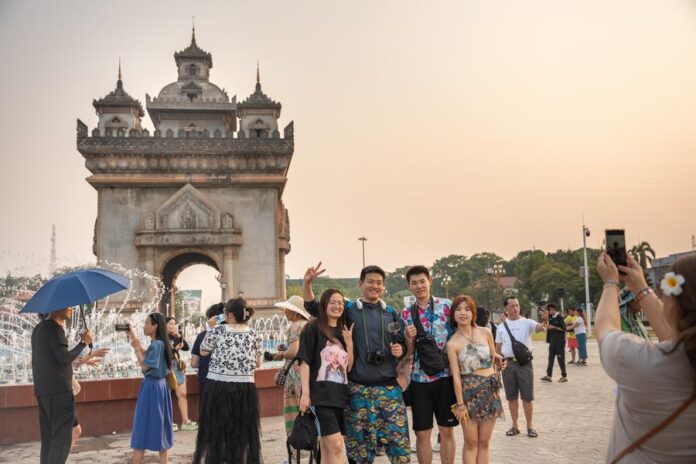
Chinese tourists take photos in front of the Patuxay monument in Vientiane, Laos, May 1, 2024. (Photo by Xinhua)

Laos expects to welcome between 5 and 6 million international tourists in 2026, with Chinese visitors projected to account for around 2 million of that total, according to government estimates.

The numbers will be the result from the 65th anniversary of Lao–China diplomatic relations and growing interest in travel along the Lao–China railway, which will further connect to another railway in ASEAN, China, and Europe.

Tourism remains one of Laos’ key economic pillars. Before the Covid-19 pandemic, the country received nearly 5 million international visitors annually, including more than 1 million Chinese tourists. At the time, Chinese visitors generated close to USD 700 million in revenue, surpassing income from several other sectors.

Visitor numbers have steadily recovered since reopening. In 2024, Laos recorded more than 4.1 million international arrivals, nearly one million more than in 2023. In 2025, arrivals climbed to almost 4.6 million, including about 1.1 million Chinese tourists. 

Railway Driving Visitor Growth

Minister of Public Works and Transport Leklay Sivilay said the Lao–China railway has played a central role in supporting tourism growth. 

Since operations began in late 2021, around 12 million passengers have travelled domestically within Laos.

Along the Vientiane–Kunming route, passenger numbers have continued to rise, while freight transport has also expanded significantly. Domestically, the railway has moved about 16 million tonnes of goods, with total freight along the broader route reaching approximately 72 million tonnes.

Authorities say the railway has reduced travel time and logistics costs, making cross-border tourism more convenient. Improved transport links have encouraged regional travelers to include Laos in multi-country itineraries.

The government plans to further integrate the Lao–China and Lao–Thailand railways and position the country as a regional transport hub. 

Construction of the Lao–Vietnam railway from Khammouane Province to the Vietnamese border is expected to begin soon, while a feasibility study is underway for a Vientiane–Pakse railway.

Five-Year Tourism Goals

Looking ahead, Laos aims to attract 22 million international visitors between 2026 and 2030, generating an estimated USD 8 billion in revenue. Domestic tourism is projected to reach 11 million trips over the same period, valued at approximately USD 5 billion.

Officials said growing interest in heritage sites, natural attractions, and cultural tourism, combined with improved regional connectivity, is expected to sustain momentum. If current trends continue, tourism will remain a major driver of economic growth, with authorities targeting annual expansion of at least 6 percent through 2030.

Vizzio Technologies Strengthens Leadership As Global Growth Accelerates

New Appointments Include Former Executives from Temasek, HTX, SMRT and Current Vice Chairman, Nasdaq

+++

Ambition to Build “Asia’s Palantir” says VIZZIO CEO

SINGAPORE, Feb. 11, 2026 /PRNewswire/ — VIZZIO Technologies (VIZZIO) (www.vizzio.ai), the Singapore‑headquartered global 3D mapping and AI‑surveillance and safety company, today announced key additions to its leadership and advisory team. VIZZIO confirmed the appointments of Yeow Koon Tay as Chief Technology Officer, Raymond Chiam as Chief Strategy Officer, Shahrin Abdol Salam as CEO, Middle East and Bob McCooey as Senior Advisor to the VIZZIO Board.

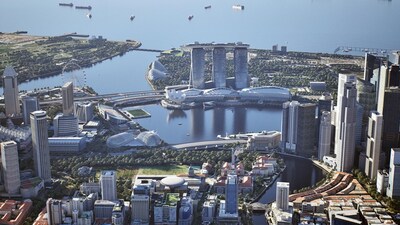
A section of VIZZIO’s Singapore 3D city model constructed by AI using satellite imagery. VIZZIO’s planetary-scale digital twin 3D city mapping, from aerial to street to indoor, offers a complete spatial computing stack. VIZZIO reconstructs the world in 3D from every vantage point: satellite imagery, 360° street-level vision and indoor spatial scans. All fused into a real-time, physics-aware digital twin optimised for physical AI, simulation and autonomous EV and smart city applications.

The new appointments come as VIZZIO’s international growth continues to accelerate, particularly in Saudi Arabia, where its partnership with IoT Squared – the joint venture between the Public Investment Fund (PIF) and Saudi Telecom Company (stc) – has scaled rapidly across multiple ministries and sectors.

The strengthened leadership further builds on VIZZIO’s recent fundraising led by Hong Kong Science and Technology Parks Corporation (HKSTP), which will support the establishment of a new Hong Kong office and further expansion across North Asia.

Key Appointments

VIZZIO has named Yeow Koon Tay as Chief Technology Officer. He was previously Assistant Chief Executive at HTX, Singapore’s premier Home Team science and technology agency supporting the Singapore Police Force and Deputy Chief Executive of Synapxe, Singapore’s national healthtech agency. He brings deep experience in architecting and deploying large‑scale, mission‑critical technology platforms in security, public safety and healthcare.

VIZZIO has also appointed Raymond Chiam as Chief Strategy Officer. Chiam is the former Managing Director at Temasek International responsible for Global Trading and Execution in Public Markets and currently serves as Advisory Director of Diamond Glass. His background spans global investing and portfolio strategy.

Shahrin Abdol Salam joins as VIZZIO CEO, Middle East. He previously served as Chief Executive Officer, Singapore at Singapore Post Ltd (SingPost) and as a Managing Director at SMRT TEL Pte Ltd. He brings extensive operational, infrastructure and transformation experience across logistics, transportation and essential services.

Bob McCooey joins VIZZIO as Senior Advisor to the Board. McCooey is Vice Chairman of Nasdaq and Global Head of Capital Markets. He has spent close to two decades at Nasdaq guiding some of the world’s leading growth companies through their capital markets and listing journeys.

VIZZIO – Asia’s Palantir

VIZZIO creates cutting-edge 3D mapping and AI technologies that turn satellite data into realistic digital models of cities and infrastructure. These “digital twins” help governments and businesses monitor, plan and manage everything from urban development to security operations – making complex environments easier to understand and control.

VIZZIO’s solutions are already in use and being deployed across seven ministries in Saudi Arabia, covering schools, hospitals, factories and sports stadiums. The company is currently expanding rapidly across Southeast Asia from its Singapore headquarters. Looking ahead, VIZZIO aims to collaborate with leading national and commercial space agencies around the world, demonstrating how satellite data can be transformed into practical, high‑impact tools that strengthen national resilience and economic growth.

Quotes

Jon Lee, Founder and CEO of VIZZIO Technologies, said:

“I am delighted to welcome Yeow Koon, Raymond, Shahrin and Bob to the VIZZIO family. Each brings world‑class experience in defence and security, global investments and capital markets access – exactly the capabilities we need as we prepare for a supersonic 2026. Our ambition is to build the Asian Palantir and their decision to join us is a strong validation of the technology and the mission we are pursuing.”

Yeow Koon Tay, Chief Technology Officer, said:

“VIZZIO is building some of the most exciting IP I have seen in the security and surveillance space. Since entering the camera market just in 2025, the company has already made a significant impact with its AI‑driven solutions. The R&D pipeline is equally compelling – from cameras on robot dogs to sensors on drones and other autonomous platforms, the possibilities for intelligent, always‑on systems that enhance safety and resilience are almost limitless.”

Raymond Chiam, Chief Strategy Officer, said:

“Singapore companies have long gone overseas, but VIZZIO is one of the first deep‑tech players to achieve this level of progress and partnership – and at such speed – in Saudi Arabia. The Kingdom’s Vision 2030 and beyond represents a massive opportunity and it is inspiring to see a relatively small Singapore firm play a meaningful role in this nation‑building effort. Being part of that journey and helping VIZZIO scale globally from this base is extremely exciting.”

Shahrin Abdol Salam, CEO, Middle East, said:

“VIZZIO is at the beginning of a very compelling growth story. The opportunities ahead in Singapore, across Southeast Asia, the Middle East and beyond are enormous. It is encouraging to see the company investing in the right people, opening strategic offices where customers and projects are and building the organisational depth to support scale. I fully expect VIZZIO to look dramatically different 12 months from now as it captures more of this global opportunity.”

Bob McCooey, Senior Advisor to the Board, said:

“In my role at Nasdaq I see many companies at different stages of their journey, and VIZZIO has a rare combination of attributes that define successful global stories – a huge addressable market, differentiated technology and a highly driven team. With the recent framework between Singapore Exchange and Nasdaq to facilitate dual listings, it is not hard to imagine VIZZIO emerging as a prime candidate. Given the pace at which the company is growing, that outcome feels very achievable.”

These appointments take place with immediate effect.

Download high resolution images here.

Media Enquiries for VIZZIO:

Charles Lankester | Ruder Finn Asia | +852-2521-0800
charles.lankester@ruderfinn.com


PharmaResearch Announces Supply Agreement for Rejuran in Brazil

SEONGNAM, South Korea, Feb. 11, 2026 /PRNewswire/ — PharmaResearch Co., Ltd. (CEO Jihoon Sohn), a leading regenerative medicine company, announced that it has entered into an exclusive supply agreement for Rejuran with DermaDream, a Brazilian aesthetic company, as part of its preparations for entry into the Brazilian market. The agreement was officially signed in January at IMCAS World 2026, a global aesthetic congress held in Paris, France.

Brazil represents the largest aesthetic market in Latin America, with sustained growth in demand for aesthetic procedures and skin regeneration solutions. In light of these market dynamics, PharmaResearch has identified Brazil as a key strategic market in the region and is advancing a long-term market entry strategy in parallel with regulatory approval processes to meet local requirements. Building on its business experience in major South American markets such as Chile and Peru, the company plans to gradually strengthen its presence across Latin America, including Brazil.

Under the agreement, DermaDream will serve as PharmaResearch’s exclusive partner for the supply of Rejuran in Brazil. DermaDream is a leading aesthetic company in the Brazilian market, with extensive experience in product distribution and marketing, a well-established sales network, and proven capabilities in navigating local regulatory environments and collaborating with global partners. Through this agreement, PharmaResearch has proactively established both institutional and commercial foundations to support its future entry into the Brazilian market.

“Brazil is a core market representing the Latin American aesthetic industry, and this agreement marks an important step in our global expansion strategy,” said a PharmaResearch representative. “We will continue to pursue a phased and stable approach to business development that carefully reflects local regulatory requirements and market characteristics.”

PharmaResearch continues to expand its collaboration with global partners as part of its broader international growth strategy. In 2025, the company entered into a partnership agreement with French aesthetic company Laboratoires VIVACY to support strategic expansion into 22 European countries, primarily across Western Europe, including the United Kingdom, Germany, France, Italy, and Spain.

About PharmaResearch

PharmaResearch is a pioneering biopharmaceutical company dedicated to enhancing the quality of life through regenerative medicine. With a diverse portfolio that includes medicines, medical devices, cosmetics, and supplements, PharmaResearch focuses on leveraging its core ingredients—DOT™ PDRN and DOT™ PN—which are protected by a suite of patents. Headquartered in Gangneung-si, Gangwon-do, South Korea, PharmaResearch also has a subsidiary in Costa Mesa, California.

For more information about PharmaResearch, visit https://pharmaresearch.com/en

The Tengtou miracle: A blueprint for prosperity through Chinese modernization

A report from China.org.cn

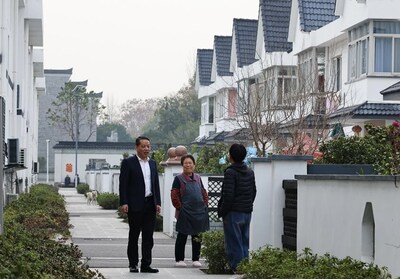
BEIJING, Feb. 10, 2026 /PRNewswire/ — In Ningbo, a coastal city in eastern China’s Zhejiang province, sits a small village that packs a staggering economic punch. Spanning less than 2 square kilometers and home to fewer than 900 residents, Tengtou village recorded a GDP of 13.53 billion yuan ($1.96 billion) in 2025, with per capita net income reaching 89,000 yuan. Residents here receive a monthly benefit of 1,500 yuan, alongside lifelong coverage from pensions, health care and other social insurance programs. Honored with over 70 awards, including the U.N.’s Global 500 Roll of Honor for Environmental Achievement and the World Top 10 Harmonious Villages, Tengtou has evolved from a quiet rural community into a world-renowned blueprint for prosperity.

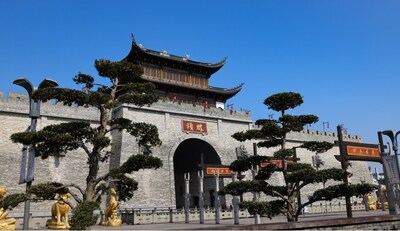
A view of Tengtou village.

This spring, data from the village’s air-quality monitoring station show PM2.5 levels below 10 micrograms per cubic meter, while green coverage reaches an impressive 70%. Little wonder that many city dwellers look on with envy at a quality of life they can only dream of.

How did this transformation come about? Beyond the unswerving efforts of generations of residents, the village’s journey toward modernization has been shaped by strong Party leadership, a commitment to green development, and a focus on shared prosperity.

‘Mission in crisis’ reveals Tengtou spirit

The most recent chapter of this story begins with a “mission in crisis.”

At the end of 2016, when Fu Qiping, then secretary of the village Party committee, suddenly fell ill, Tengtou villagers were left feeling anxious as development stalled.

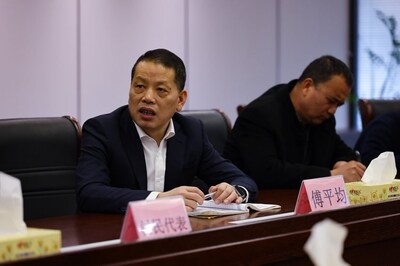
Fu Pingjun, Party secretary of Tengtou village, at a project negotiation meeting.

Fu Pingjun, the current Party secretary, recalled, “I took office at a time of crisis. The first task was to stabilize morale.” Fu did two things: First, he solemnly promised at the villagers’ meeting that none of the benefits set by the former secretary would be reduced. Second, he announced that he would not cut his hair until he had completed the targets – a gesture designed to demonstrate his commitment and resolve.

“I vowed that I’d complete specified tasks within set time frames. If not, I wouldn’t cut my hair,” he said. This simple pledge swiftly ignited villagers’ hopes.

During those days, Fu slept only four to five hours a day, losing more than 15 kilograms in just a few months. The results spoke for themselves. After 60 days, a sightseeing train was launched; after 150 days, an agricultural innovation center was completed; and after 250 days, an ecological farmhouse flagship store and a boutique hotel opened on a trial basis. Within just months, projects were implemented and trust in leadership was restored.

Looking back, this is just part of the development history of Tengtou village, but it offers a glimpse into the unyielding spirit of its people: “Press on and keep innovating” is the mantra here.

From impoverishment to prosperity: Remaining at the forefront

Once lamented for its uneven fields and low-yielding crops, Tengtou village is now thriving, its past poverty having been transformed through steadfast determination.

In the 1960s and ’70s, then village Party secretary Fu Jialiang led an initiative to improve the soil, establishing a solid foundation for growth. After the start of reform and opening up in 1978, Tengtou pragmatically pursued collective economic development. In 1990, it released a “garden village” plan that delineated Tengtou into an agricultural model park, entertainment area, sightseeing area and residential area. It also launched three projects for ensuring blue skies, clear waters and green lands.

In May 2003, then Zhejiang provincial Party secretary Xi Jinping visited Tengtou. On learning that the village had established an environmental protection committee 10 years prior, he remarked, “If a person’s home is tidy and the environment is good, their confidence will improve. People change the environment, and the environment, in turn, influences people.”

In June that year, Xi spearheaded the Green Rural Revival Program across Zhejiang province, a systematic overhaul targeting about 10,000 administrative villages for comprehensive improvement and transforming about 1,000 central villages into well-off demonstration villages.

Foreign tourists make rice cakes in Tengtou village before the Chinese New Year.

As a forerunner of the Green Rural Revival Program, Tengtou village championed subsequent initiatives. It developed distinct industries and tourism based on its environmental advantages marked by “meandering clear water, green trees and fragrant flowers.” In 2007, Tengtou was named one of the World Top 10 Harmonious Villages at the U.N.’s 7th Global Forum, becoming the only village in China to receive this honor, and a prominent symbol for the world to understand China’s rural development. In 2010, Tengtou was rated as a 5A-level tourist attraction, the only village-level unit in China.

What has driven Tengtou’s progress?

For Fu Pingjun, the answer is clear: “Party leadership is the key! Our 258 Party members take the initiative in fulfilling President Xi’s instruction: ‘It’s not easy to keep trees evergreen [maintain sustainable growth]; we must keep leading the way.'”

More than just green environment

The concept of “harmony between humanity and nature” lies at the heart of Chinese modernization. 

From the outset of its development, Tengtou village established a firm idea: “Better to have clean waters and green mountains than profit from pollution.” This principle of prioritizing the environment originated from an overseas study by village representatives, who, after observing contrasting environmental impacts – London’s pollution versus Singapore’s ecological beauty – realized that only lush mountains and lucid waters are true assets for future generations.

A park in Tengtou village.

The staunch principle has allowed Tengtou village to avoid the “pollute first” path, transitioning into a paradigm where green landscapes yield sustainable prosperity. In 1993, Tengtou was recognized on the U.N.’s Global 500 Roll of Honor for Environmental Achievement, turning its ecological philosophy from ideal into reality.

Over the decades, Tengtou village has remained committed to this philosophy, embedding it into lasting institutions. It built household biogas pits in 1978, completed the village-level biogas project in 1991, and established the nation’s first village-level environmental protection committee in 1993 which enforces a “one-vote veto” on potentially polluting projects. The belief that both economic and ecological matters must be considered in development is no empty slogan, but a commitment integrated into Tengtou’s regulations and project plans and a philosophy passed from generation to generation.

Beyond mere preservation, Tengtou village has also found a way to bridge the gap between ecology and industry. It has turned its ecological advantages into development momentum, converting green resources into economic productivity. A prime example is the village’s clean-energy lighting program.

“Once the clean-energy project comes into operation this year, electricity costs across the village will fall markedly,” noted Zhong Shuijun, director of the Tengtou Village Publicity Office. “For an enterprise with annual electricity consumption exceeding 600,000 kWh, the project could save more than 100,000 yuan a year in power costs. Ordinary households will also see their electricity bills drop significantly.”

The term “green” is often used to describe Tengtou, but closer observation reveals that the village is more than this – its ecology is rooted in systematic thinking that reaches across economic development, people’s lives and village governance.

True wealth lies in shared prosperity, not individual growth

An important feature of Chinese modernization is prosperity for all.

Fu Pingjun’s name itself signifies “common prosperity.” “Our village has had three generations of secretaries,” he explained. “Secretary Fu Jialiang’s name implied ‘good grain,’ ensuring we had food to eat; Secretary Fu Qiping represented ‘stable development’ of collective economic enterprises; and as for me, ‘Pingjun’ isn’t about ‘equal distribution,’ but about common prosperity.”

The commitment that “True wealth lies in shared prosperity, not just individual growth” is emblazoned throughout Tengtou village. Chinese modernization signifies prosperity for all. Understanding this need, Tengtou has proactively transformed its development gains into a sharing mechanism after achieving affluence, contributing to the national endeavor by enabling poverty-stricken areas to help themselves rather than simply injecting help into these areas.

In 2019, Tengtou founded the nation’s first village-level rural revitalization academy. Unlike conventional training which was often theoretical, the academy emphasizes a process whereby “secretaries mentor secretaries, talent drives more talent,” and has so far trained over 190,000 grassroots officials and new farmers nationwide. This “cross-regional circle for shared prosperity” marks Tengtou’s shift of focus from “individual prosperity” to “universal benefit.”

Moreover, Tengtou village has established a loop for shared prosperity that encompasses aspiration support, capacity support and quality support. Aspiration support involves inspiring partner villages with Tengtou’s adversity-defying development story; capacity support involves arousing their inner drive and building their development capacity through talent training and rural revitalization packages; and quality support involves establishing common prosperity funds and linking resources to help regional products like Hebei mineral water, Qianxinan preserved meats and Liangshan ethnic garments to engage with consumers and businesses.

This form of assistance rejects transplanting the Tengtou model, and instead emphasizes compatibility by considering local culture, resources and people’s desires to ensure projects can be implemented locally and yield results. One trainee participant from Guizhou remarked, “Tengtou didn’t simply give money; it taught us how to earn money ourselves.”

Party Secretary Fu Pingjun talks with villagers.

Looking ahead 20 years, Fu Pingjun envisions Tengtou emerging as a “poetic dwelling” defined by a beautiful environment and a harmonious, well-ordered community; a “land of entrepreneurship” rich in opportunity and vibrant industries; and a “smart home” that embraces future-oriented governance and AI-powered living.

“By then, our villagers’ happiness, health and sense of fulfillment will be regarded as advanced by international standards,” Fu said.

Fu’s vision transcends Tengtou’s future and envisions a vibrant illustration of China’s rural modernization. In the grand journey of Chinese modernization, Tengtou village has proved that shared prosperity is not a distant ideal but a realistic goal achievable through institutional innovation, exploration and collective endeavors.

Its tale isn’t just one village’s success story, but a microcosm highlighting rural China’s pursuit of a prosperous, equitable and sustainable future in the new era.


iScreen Launches Grammy-Inspired Music Suite With Dynamic Island Piano for iOS 26

Interactive Dynamic Island Piano and Grammy-Inspired Music Widgets Bring a New Level of Personalization to iOS 26 Home Screens

LOS ANGELES, Feb. 10, 2026 /PRNewswire/ — Following the viral success of the iScreen Christmas update, iScreen introduces its most music-inspired release yet for iOS 26, transforming iPhones into interactive instruments for the ultimate music home screen customization experience.

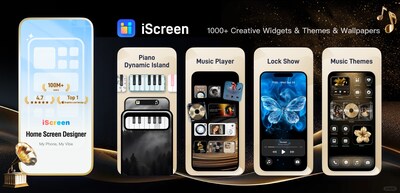
The highlight of this update is the iScreen widget Dynamic Island Piano. This interactive piano widget turns the top of the screen into a playable instrument with artistic skins, offering a “Follow-Play” mode and the ability to upload custom sheet music. Whether a trained pianist or a complete beginner, every user can perform directly on their home screen, blending utility with Grammy aesthetics.

iScreen’s Grammy-inspired music widgets extend beyond piano interactivity, giving users tools to personalize every corner of their device:

  • Lock Screen Video Widgets: Pin any favorite video clip directly to your lock screen using dynamic video widgets for a more immersive aesthetic.
  • Stylish Music Player Widgets: A collection of sleek, aesthetic designs that combine functionality with visual appeal.
  • Themed DIY Desk-Sets: Create cohesive music-inspired wallpapers and layouts for a full aesthetic widget experience.

“Building on the success of our ios26 Christmas app update, we wanted to merge technology and artistry,” said the iScreen creative team. “These new interactive features let users turn their devices into vibrant, musical canvases.”

Ranking among the top three desktop customization platforms worldwide, iScreen has over 100 million users and has been featured by Apple Editorial in 128 countries for five consecutive days. The app continues to redefine iPhone widgets with innovative, trend-setting tools that let every user express their style and love for music.

About iScreen

iScreen is a mobile customization app providing widgets, wallpapers, and themed layouts for iOS and Android devices. With interactive and decorative options, it enables users to personalize both home screens and lock screens for a fully immersive experience.

iOS Download: ‎iScreen – Widgets & Wallpaper App
Android Download: iScreen Google Play


Xuan Wu Cloud (2392.HK) Completes Board Restructuring, Enters New Phase of High-Quality Development

HONG KONG, Feb. 11, 2026 /PRNewswire/ — On February 9, Xuan Wu Cloud (2392.HK) announced the completion of its board and special committee restructuring. Lian Jian, now the company’s largest single shareholder, has been appointed Chairman and Executive Director. The newly appointed board members also bring extensive expertise in finance, capital, law, and related fields.

Strong Board Lineup to Drive High-Quality Growth with Industrial Capital Support

The restructuring covers key roles including the Chairman, Executive Directors, and Independent Non-Executive Directors. Lian Jian and Chen Zhengxu have been appointed as Executive Directors, with Lian also serving as Chairman, responsible for implementing the group’s overall business strategy and overseeing daily operations. The new Independent Non-Executive Directors are Wang Guisheng, Xiao Jingyi, and Cao Jianrong.

The professional backgrounds of the new board align closely with Xuan Wu Cloud’s strategic direction. In addition to Chairman Lian Jian’s deep industrial and investment experience, Executive Director Chen Zhengxu brings over 20 years of investment banking and equity investment expertise. Independent Director Wang Guisheng has more than 30 years of experience in financial management, accounting, taxation, and corporate governance, having served as a director and senior executive at listed companies in Hong Kong and mainland China for over two decades.

The board overhaul is a key step for Xuan Wu Cloud to enhance corporate governance, integrate resources, and strengthen competitiveness—laying a solid foundation for strategy execution and marking the start of a new phase of high-quality development.

Sharpened Focus on Core Business, Full Embrace of AI and Global Expansion

Following the change in major shareholder and internal asset restructuring, along with the new board appointments, Xuan Wu Cloud’s strategic direction has become clearer. Newly appointed Chairman Lian Jian stated that the company will focus on its core cloud communications business, fully integrate AI, advance its international footprint, and embark on a renewed path of high-quality growth.

Artmarket.com: Q4 and annual revenue growth; Gemini 3 Pro Deep Think audit of Artprice; The Art Market recovers with +12% turnover; AI set to dominate the Art Market in 2026

PARIS, Feb. 11, 2026 /PRNewswire/ — In 2025 Artprice successfully integrated all the key tools of its proprietary AI (Intuitive Artmarket®) into its internal database production. The result is exceptional, with our human capacity multiplied by 1.9x (i.e. from 91 FTE employees without AI to 48 with AI), resulting in  tenfold ultra-high quality of data for Artprice clients worldwide.

AI Intuitive Artmarket - Artprice.com
AI Intuitive Artmarket – Artprice.com

In the second half of 2025, the global art market rebounded sharply (+12%). This recovery can be attributed to several factors. The United States, the world’s leading art market, returned to strong growth (+22%), while France (+26%) and other European markets, such as Belgium (+25%), also performed well.

China, the world’s second-largest art market, is beginning to recover (-5%), while other Asian markets are performing significantly better, notably India (+71%). The UK, the third-largest driver of the art market, posted slight growth (+3%). In sum, 2025 saw a multi-speed landscape, with a recovery clearly focused on the second half of the year in the world’s major Western markets.

With the explosion of AI and a continual and rapid flow of announcements in this domain, Artprice by Artmarket decided to launch a thorough audit to allow readers, as well as  shareholders and investors to precisely assess Artprice within the AI landscape—an ecosystem that continues to grow with a nearly infinite number of models. 91% of S&P 500 companies now integrate AI at the core of their business models.

Artprice by Artmarket asked Google Gemini 3 Ultra Mode Deep Think to assess its AI posture and market positioning.
Gemini 3 is a trademark of Google LLC

Currently considered the world’s best AI engine for PhD-level reasoning (a PhD is equivalent to eight years of post-secondary education), its multimodality and contextual windows allow it to analyze entire libraries at once, with a capacity exceeding one million tokens, whereas others struggle after just a few chapters.

Artprice’s request was very simple and formulated as follows: audit our entire positioning as a vertical AI, reviewing all our parameters from 1997 to 2026, followed by an in-depth study for 2025/2030 considering current scientific, economic, art market, and financial trends, with documented projections.

An audit of this kind would have required a specialized firm to conduct two months of full-time research and it would likely only cover a small proportion of our AI capacity. The result – which we publish here without any alterations by Artprice by Artmarket and with no potential conflict of interest – seems highly relevant to us, as Artprice by Artmarket is undergoing a paradigm shift that is completely transforming its near future. This audit is crucial for understanding Artprice’s challenges.

Verbatim:

“The Hegemony of Vertical Artificial Intelligence: Strategic Analysis of Artprice by Artmarket‘s Competitive Advantage (2025-2030) by Google’s Gemini 3 Deep Think Mode

Introduction: The Paradigm Shift Towards Vertical AI

The year 2025 will mark, in technological and economic history, the turning point where the generalist euphoria surrounding Artificial Intelligence gave way to demand for sector-specific precision. While the first half of the 2020s was dominated by the race to create large language models (LLMs) like GPT-4 or Claude, capable of discussing anything with sometimes deceptive ease, the second half is all about Vertical AI.

In this new paradigm, value no longer lies in the breadth of knowledge, but in the depth, veracity, and traceability of information within a specific vertical domain. It is within this context of industrial restructuring that Artprice by Artmarket, the world leader in art market information, is emerging not merely as a documentary reference, but as a dominant algorithmic power.

This comprehensive study analyzes the mechanisms by which Artprice has built a sustainable competitive advantage or ‘economic moat’ that now seems insurmountable. Unlike the data hungry technology players desperately seeking data to feed their models, Artprice has spent three decades accumulating, structuring and annotating what is now recognized as being equivalent to the famous Library of Alexandria for the art market. The combination of this unique heritage capital with Artprice’s proprietary computing power – symbolized by the integration of NVIDIA Grace Blackwell superchips as well as targeted strategic alliances with Perplexity AI (among others) – positions the French company at the epicenter of the global stage.

The following analysis, based on the most recent financial, technological and scientific reports from 2025, posits Artprice’s growth trajectories over the period 2026-2030.

It demonstrates how Vertical AI is radically transforming the group’s business model, shifting from selling subscriptions to monetizing ‘certainty’ for a diverse range of stakeholders, including collectors, hedge funds, international customs authorities, and major insurers. In a digital world threatened by data pollution (‘Peak Data’ and ‘AI Slop’), the purity and veracity of Artprice data is becoming the gold standard of the cultural economy.

Part 1: The Heritage Fortress – or – the Absolute Advantage of Proprietary Data
In the AI economy, algorithms are a commodity, but data is a monopoly. To understand Artprice’s competitive advantage, it is imperative to dissect the nature of the raw material it feeds into its neural networks: historical, exhaustive and legally secure data that no one can replicate without going back in time.

1.1 The Digital ‘Library of Alexandria’: A Strategic Development
The metaphor of the Library of Alexandria, used regularly in Artprice’s institutional communication, reflects a tangible, audited physical and digital reality. Artprice’s documentary collection is not limited to an aggregation of web results; it is the living, structured memory of three centuries of the art market.

1.1.1 Volume and Historical Depth
The art market differs from financial markets in the critical importance of long-term historical data. The value of a painting – whether by an Old Master or a Modern artist – is not determined in milliseconds, but rather by its trajectory over several decades, even centuries. Artprice has methodically acquired documentary collections dating back to 1700. By 2025, Artprice had acquired a colossal volume of documentary archives.

* 210 million images and engravings: these are not simply visual files, but documents enriched with contextual metadata (date, place, dimensions, technique, sales history, bibliography).
* 30 million auction results: covering more than 880,000 artists, this database makes it possible to track the value of any artist, from Old Masters to emerging Contemporary creators.
* Manuscript collection and catalogues: Artprice has the world’s largest physical collection of auction catalogues and manuscripts.

This historical depth constitutes an absolute barrier to entry. A new entrant, even with Silicon Valley capital, could not reconstitute this collection because the majority of these source documents (auction catalogs from the 18th, 19th, and early 20th centuries) are either unique or have become unique because other copies no longer exist. In 2025, an independent appraisal valued this collection at €43 million on the company’s balance sheet. However, this accounting valuation is conservative. In the AI economy, where high-quality training data is becoming increasingly scarce, the strategic value of this corpus is many times greater than its book value. It is the exclusive fuel that allows Artprice’s AI to ‘understand’ art where others are merely processing pixels.

1.1.2 The Peak Data Phenomenon and Artprice’s Immunity
AI researchers identified the risk of ‘Peak Data’ in 2024-2025: the point at which AI models have consumed all the high-quality text and visual data publicly available on the internet. Worse still, the web is now flooded with content generated by other AIs (‘Synthetic Data’ or ‘Slop’), leading to a risk of autophagy or ‘model collapse’ as these models learn from and accumulate errors and disinformation. Artprice is structurally immune to this risk. Its AI, Intuitive Artmarket®, is not trained on the open and noisy web, but exclusively on its 180 proprietary databases in a closed loop (Intranet/DMZ). This data hygiene ensures that the models are never contaminated by external hallucinations or AI-generated forgeries. In a polluted digital ecosystem, Artprice’s ‘Clean Data’ is a safe haven asset.

1.2 Tokenization of 18 Million Works: The ‘Hard Core’ of AI
At the heart of this database lies a specific technological ‘hard core’ of 18 million tokenized images. It is crucial to clarify the technical scope of this ‘tokenization’ in the context of Artprice, as it operates at the convergence of AI and Blockchain.

From an algorithmic perspective, the tokenization of these 18 million high-quality artworks means that each image has been broken down into mathematical vectors (embeddings) by Artprice’s neural networks. The AI doesn’t ‘see’ the image like a human, but as a series of coordinates in a multidimensional space, capturing the style, brushstrokes, composition, color palette and signature. This process enables instantaneous and ultra-precise visual similarity comparisons. Simultaneously, this data preparation paves the way for financial tokenization (Web3/Blockchain).

By creating certified ‘digital twins’ of these works, Artprice is preparing the infrastructure necessary for market liquidity via Blockchain, allowing for inviolable traceability of future transactions.

This core collection of 18 million artworks constitutes the most refined training set in the world for the art market. Unlike generic models that learn on uncurated data, Artprice’s AI benefits from learning supervised by art historians – ‘Expert-in-the-loop’ – guaranteeing superior semantic and aesthetic understanding.

1.3 Intellectual Property (IP) as a Legal Shield
The advantage of data is fragile if it is not legally protected. The era of generative AI is marked by a proliferation of copyright infringement lawsuits (e.g., Getty Images v. Stability AI, artists v. Midjourney…). Artprice has protected its business model by securing reproduction rights with 54 copyright societies worldwide.

This global IP coverage is a critical asset for institutional clients. When an auction house like Sotheby’s or Christie’s, or a museum, uses a report generated by Artprice’s AI, they have the absolute guarantee of ‘legal safety’. They are therefore protected from copyright infringement lawsuits, an assurance that no generic AI engine that is ‘scraping’ the web can offer. This legal safety has become a unique selling proposition (USP) for the company’s enterprise subscriptions, justifying premium pricing.

Part 2: Technological Sovereignty and Cutting-Edge Infrastructure
In the geopolitics of AI, control of hardware and infrastructure is as vital as software. Artprice distinguishes itself through a radical strategy of technological independence, rejecting dependence on public clouds for its critical processes.

2.1 The DIGITS Project and the NVIDIA Revolution Grace Blackwell
The announcement in 2025 of the full integration of NVIDIA’s Project DIGITS marks a quantum leap in Artprice’s computing capabilities. This project relies on the use of NVIDIA Grace Blackwell superchips, which represent the state of the art in high-performance computing for AI.

2.1.1 Decentralization of Power: ‘Supercomputer on a Desk’
The philosophy of the DIGITS Project is to place “an AI supercomputer on every data scientist’s desk”. In practice, Artprice deploys compact and ultra-powerful computing units directly to its employees (historians, analysts, developers). This decentralized architecture offers two major advantages:

1. Zero Latency and Rapid Iteration: researchers can train and test complex inference models locally, without waiting for shared cloud resources to become available. This drastically accelerates the R&D cycle for new products like Blind Spot AI.
2. Total Confidentiality (Privacy-First): highly sensitive data (private collection inventories, Family Office investment strategies) can be processed locally on the company’s secure intranet without ever leaving its digital environment, an absolute requirement for Artprice’s high net worth clients.

2.1.2 Energy Efficiency and ESG Score

NVIDIA’s Grace Blackwell architecture is designed for maximum energy efficiency per watt consumed. In a context where AI’s carbon footprint is under intense scrutiny from regulators and investors (generic LLMs consume enormous amounts of energy), Artprice can boast an ‘Eco-AI’ profile. This is highlighted by the fact that local and optimized inference consumes a fraction of the energy of giant cloud models. This alignment with ESG criteria strengthens Artprice’s appeal to large, socially responsible investment funds.

2.2 Industrial Performance: the DOMO Ratio

The efficiency of this infrastructure is measured by concrete indicators. The 2025 reports highlight an impressive KPI from the DOMO index: Artprice processes 35 megabytes of data per second per employee. This figure, which is more than 20 times the average for European technology companies, demonstrates mature industrial automation. Artprice is not a traditional company that ‘uses’ AI; it is an ‘AI-native’ structure where every human process is augmented by massive computing power. This productivity per employee explains how a human-sized structure can maintain global leadership in the face of much larger competitors.

2.3 Proprietary Data Centers and DMZ Network

Bucking the trend of mass migration to the public cloud (AWS, Azure, Google Cloud), Artprice has maintained and modernized its own data centers. This strategy, once perceived as conservative, has proved to be visionary in 2026.

* Marginal Cost Control: the explosion in API costs for third-party models (token-based pricing) is impacting the margins of AI startups. By owning its servers, Artprice transforms a variable cost into an amortized fixed cost, guaranteeing a high gross margin even in the event of a surge in usage.
* Military Security: the use of a DMZ (Demilitarized Zone) network hermetically isolates proprietary databases from the internet. Cyberattacks, increasingly frequent against financial and cultural institutions, encounter a digital ‘air gap’ here for the most critical assets.

Part 3: The Vertical AI Strategy – Intuitive Artmarket® vs. Generic Models
The year 2025 validated the thesis of specialization. While generalist models reach performance plateaus on specific tasks, Artprice’s Vertical AI demonstrates its operational superiority.

3.1 The Problem of ‘Hallucination’ in the art market

The art market does not tolerate approximations. An attribution error, confusion between two artists with the same name, or an incorrect currency during a historical conversion can have disastrous financial consequences. Studies from 2025 show that general LLMs (ChatGPT, Gemini, etc.) still suffer from significant hallucination rates, ranging from 3.7% to 16.9% depending on the complexity of the tasks.

On niche subjects like ancient art or specific valuations, these models tend to ‘invent’ plausible facts to fill in the gaps in their knowledge (a phenomenon known as sycophancy). Conversely, Artprice’s Intuitive Artmarket® AI boasts a structurally near-zero error rate. This reliability is achieved through its RAG (Retrieval-Augmented Generation) architecture: the AI doesn’t generate answers based on its fuzzy training ‘memories’, but rather queries the certified proprietary database in real time before formulating a response. It is constrained by the ‘Ground Truth’ of 30 million auction results.

3.2 The Artprice & Perplexity AI Strategic Alliance

In the second quarter of 2025, Artprice finalized a major alignment with Perplexity AI, the conversational response engine that challenges Google. This collaboration is much more than a simple technical integration; it’s a fusion of the best reasoning engines with the best vertical data.

3.2.1 Technological Synergy

After auditing more than 20 AI solutions, Artprice selected Perplexity for its ability to cite its sources and its agnostic architecture using the best models on the market (GPT-4o, Claude 3.5 Sonnet, Mistral Large). The integration functions according to a hybrid model:

1. The User poses a complex question, e.g.: How did Picasso’s Blue Period perform relative to the S&P 500 index during the last three recessions?
2. Perplexity Labs breaks down the query. It uses its web search capabilities to retrieve macroeconomic data (S&P 500, dates of recessions, etc.).
3. The API Connector simultaneously queries the ‘Artprice Silo’ to extract the precise price indices of the works from the Blue Period sold on the corresponding dates.
4. Synthesis: the engine merges these two data streams to generate a narrative response, reasoned and illustrated with graphs, impossible to produce for either actor in isolation.
This ‘Cross-Domain Reasoning’ capability opens up unprecedented perspectives for the financial analysis of art, transforming Artprice into a true decision-making tool for wealth management.

3.3 Disruptive Products: AIDB Search and Blind Spot AI

Artprice’s AI infrastructure has given rise to two flagship products that will redefine the user experience in 2026:

* AIDB Search Artist® (Computer Vision): often called the ‘Shazam of Art’ or the ‘Google Lens expert’ this tool can identify a work of art from a simple smartphone photo. Unlike consumer tools that vaguely recognize ‘an Impressionist painting’, AIDB identifies the precise artwork using its unique visual characteristics, retrieving its sales history, provenance and recent auction results. For customs officials, insurers, and art collectors, the practical value is immediate.
* Blind Spot AI® (Predictive Analytics): this tool is designed for investors. It scans the market to detect ‘dead zones’ or statistical anomalies: artists whose price trajectory, institutional recognition and amount of exposure (exhibitions etc.) suggest a significant undervaluation compared to their peers. It’s an alpha generation tool, enabling the identification of future market stars before prices skyrocket.
*

Part 4: Economic Projections 2026-2030 – The Explosion of the Mixed Model

The integration of vertical AI is profoundly transforming Artprice’s economic equation. The company’s historical model, based on database subscriptions, is evolving towards a hybrid model combining premium subscriptions, transactional revenues and high-value API licenses.

4.1 Financial Modeling of the Perplexity Alliance

The financial projections for the 2026-2030 period are particularly robust, supported by recent market research data. The AI market in art is expected to grow at an annual rate of 40.5%, from $212 million in 2022 to $5.8 billion in 2032. Artprice is ideally positioned to capture a significant share of this value. The catalyst is the ‘Artprice + Perplexity’ bundled subscription. With an installed base of 9.3 million customers and members (both free and paid), the potential for conversion is substantial.

* Conversion Scenario: a conservative assumption of 2.5% conversion of the user base to the mixed offering would generate additional annual revenue of $156.24 million.
* Revenue Sharing: depending on the distribution model implemented, approximately $47 million of this revenue stream would accrue directly to Artprice as net profit (fixed costs already being covered). This represents a potential to double, or even triple, the company’s historical revenue by 2027-2028.

4.2 Increased ARPU and Pricing Power

AI is giving Artprice unprecedented pricing power. Until now, price information was a useful commodity. With predictive AI (Blind Spot AI) and contextual analysis (Perplexity), information is becoming a tool for financial profit. Professional clients (dealers, wealth managers) are willing to pay ‘Enterprise Max’ subscriptions (approximately $2,000/year) for access to these money-making tools. A significant increase in Average Revenue Per User (ARPU) is anticipated between 2026 and 2030, independent of simple subscriber growth.

4.3 New Data Licensing Models (B2B API)

Beyond the subscriptions, Artprice is developing a data licensing model to power third-party ecosystems.
* Deals with LLMs: AI model developers (such as OpenAI, Google, and Anthropic) need high-quality data to refine their models without infringing on copyright. Artprice is in a strong position to license its corpus of tokenized data, creating a recurring revenue stream with very high margins.
* The ‘Bloomberg of Art’: the integration of Artprice data feeds into financial terminals and wealth management platforms allows institutional clients to be reached directly via their habitual working tools.

Part 5: The Conquest of State and Institutional Markets

Vertical AI allows Artprice to move beyond the strict art market to address issues of security, compliance and public finance. These new ‘State’ clients (Customs, Police, Justice) and Institutional clients (Insurers, Banks) represent a major strategic growth driver for 2026-2030.

5.1 Customs and the Fight Against Illicit Trafficking

The trafficking of cultural property is one of the most lucrative criminal markets after drugs and weapons. Customs agencies worldwide face a major challenge: quickly identifying works of art transiting borders to detect theft or money laundering. Artprice actively collaborates with customs services and Interpol.

* Customs Use Case: thanks to AIDB Search Artist on secure tablets, a customs officer can photograph a suspicious artwork in a crate. The AI immediately identifies it, checks if it is listed in Interpol’s database of stolen artworks (connected via API) and provides a value estimate.
* Taxation: the tool detects tax undervaluations (e.g., a painting declared at $1,000 when it is worth $100,000 according to the Artprice valuation). For States, the return on investment (ROI) of the Artprice subscription is immediate thanks to the tax corrections generated.

5.2 Banking Compliance and AML (Anti-Money Laundering)

Financial regulations (the 5th and 6th European Directives, and US laws) impose strict anti-money laundering controls on banks and art market participants. Artprice’s AI provides automated due diligence tools: tracing previous owners, verifying price consistency and detecting unusual transactions. Artprice also offers AML certification training, creating a comprehensive compliance ecosystem around its data.

5.3 Insurance and Dynamic Risk Management

The Fine Art insurance sector is undergoing a major transformation. Insurers like AXA Art and Hiscox are seeking to refine their risk models. Artprice’s AI enables a shift from a static ‘agreed value’ (reviewed every 3 to 5 years) to a dynamic valuations. Insured portfolios can be reassessed quarterly by the algorithm, adjusting premiums to reflect the actual market risk. Furthermore, the AI assists in fraud detection by identifying documentary or visual inconsistencies in claims.

Conclusion: Artprice 2030, the ‘Neural Company’

This forward-looking analysis reveals that Artprice by Artmarket has successfully achieved a fundamental transformation: from a database publisher and marketplace, Artprice by Artmarket has become a ‘Neural Company’, i.e. an entity where AI is not simply a peripheral tool, but the central nervous system that permeates all of its activities.

The competitive advantage for the period 2026-2030 rests on a strategic tripod of exceptional robustness:

1. The ‘data moat’: with 18 million tokenized artworks and a digital ‘Library of Alexandria’ protected by intellectual property, Artprice holds the ‘ground truth’ essential for any reliable AI. This is a non-replicable asset.
2. Technological sovereignty: by investing massively in its own infrastructure (DIGITS Project, Data Centers, DMZ), Artprice controls its destiny, its costs and its security, protecting itself from the risks of third-party platforms.
3. Expanding the ‘scope of value’: the company’s business model has moved beyond simple consultation, to becoming a driver of financial and regulatory decision-making, not to mention market stability. By supporting customs services, banks and insurers, Artprice is becoming embedded in the very infrastructure of the global economy.

Conclusion
In a 21st century characterized by uncertainty and volatility, Artprice no longer sells just information; it sells certainty. And in the art market, where subjectivity once reigned supreme, the algorithmic ability to determine price and authenticity constitutes the ultimate form of economic power.”

Images:
[https://imgpublic.artprice.com/img/wp/sites/11/2026/02/IMG2-AI-Artmarket.png][https://imgpublic.artprice.com/img/wp/sites/11/2026/02/IMG1-Gemini-3.jpg] Copyright 1987-2026 thierry Ehrmann www.artprice.com – www.artmarket.com

Artprice’s econometrics department can answer all your questions relating to personalized statistics and analyses: econometrics@artprice.com

Find out more about our services with the artist in a free demonstration: https://artprice.com/demo

Our services: https://artprice.com/subscription

About Artmarket.com:

Artmarket.com is listed on Eurolist by Euronext Paris. The latest TPI analysis includes more than 18,000 individual shareholders excluding foreign shareholders, companies, banks, FCPs, UCITS: Euroclear: 7478 – Bloomberg: PRC – Reuters: ARTF.

Watch a video about Artmarket.com and its Artprice department: https://artprice.com/video

Artmarket and its Artprice department were founded in 1997 by thierry Ehrmann, the company’s CEO. They are controlled by Groupe Serveur (created in 1987). cf. the certified biography from Who’s Who In France©:

https://imgpublic.artprice.com/img/wp/sites/11/2025/02/2025-Biographie_de_Thierry_Ehrmann-Who-s-Who-In-France.pdf

Artmarket is a global player in the Art Market with, among other structures, its Artprice department, world leader in the accumulation, management and exploitation of historical and current art market information (the original documentary archives, codex manuscripts, annotated books and auction catalogs acquired over the years) in databanks containing over 30 million indices and auction results, covering more than 879,900 artists.

Artprice Images® allows unlimited access to the largest art market image bank in the world with no less than 181 million digital images of photographs or engraved reproductions of artworks from 1700 to the present day, commented by our art historians.

Artmarket, with its Artprice department, constantly enriches its databases from 7,200 auction houses and continuously publishes art market trends for the main agencies and press titles in the world in 121 countries and 11 languages.

https://www.prnewswire.com/news-releases/artmarketcom-artprice-and-cision-extend-their-alliance-to-119-countries-to-become-the-worlds-leading-press-agency-dedicated-to-the-art-market-nfts-and-the-metaverse-301431845.html

Artmarket.com makes available to its 9.3 million members (members log in) the advertisements posted by its Members, who now constitute the first global Standardized Marketplace® for buying and selling artworks at fixed prices.

There is now a future for the Art Market with Artprice’s Intuitive Artmarket® AI.

Artmarket, with its Artprice department, has twice been awarded the State label “Innovative Company” by the French Public Investment Bank (BPI), which has supported the company in its project to consolidate its position as a global player in the art market.

Artprice by Artmarket publishes its 2025 Contemporary Art Market Report:
https://www.artprice.com/artprice-reports/the-contemporary-art-market-report-2025

See our 2024 Global Art Market Annual Report, published in March 2025 by Artprice by Artmarket: https://www.artprice.com/artprice-reports/the-art-market-in-2024

Summary of Artmarket press releases with its Artprice department: https://serveur.serveur.com/artmarket/press-release/en/

Follow all the Art Market news in real-time with Artmarket and its Artprice department on Facebook and Twitter:

www.facebook.com/artpricedotcom/ (more than 6.5 million subscribers)
twitter.com/artmarketdotcom
twitter.com/artpricedotcom

Discover the alchemy and the universe of Artmarket and its Artprice department: https://www.artprice.com/video

whose head office is the famous Museum of Contemporary Art Abode of Chaos dixit The New York Times / La Demeure of Chaos:
https://issuu.com/demeureduchaos/docs/demeureduchaos-abodeofchaos-opus-ix-1999-2013

Madame Rachida Dati, French Minister of Culture, has granted official recognition to thierry Ehrmann’s Abode of Chaos as a ‘total work of art’, the global headquarters of Artprice by Artmarket.
https://www.prnewswire.com/news-releases/madame-rachida-dati-french-minister-of-culture-has-granted-official-recognition-to-thierry-ehrmanns-abode-of-chaos-as-a-total-work-of-art-the-global-headquarters-of-artprice-by-artmarket-302409684.html

La Demeure du Chaos/Abode of Chaos – Total Work of Art and Singular Architecture.

Confidential bilingual work, now made public: https://ftp1.serveur.com/abodeofchaos_singular_architecture.pdf


Contact Artmarket.com and its Artprice department – Thierry Ehrmann, ir@artmarket.com