Home Blog Page 1403

WuXi Biologics and Sinorda Biomedicine Enter Strategic Collaboration to Accelerate Development and Manufacturing of Innovative Bispecific Antibody

SHANGHAI, Jan. 29, 2026 /PRNewswire/ — WuXi Biologics (2269.HK), a leading global Contract Research, Development, and Manufacturing Organization (CRDMO), and Sinorda Biomedicine today jointly announced a strategic collaboration for the development and manufacturing of SND006, a novel bispecific antibody, for the potential treatment of inflammatory bowel disease (IBD) and other autoimmune diseases.
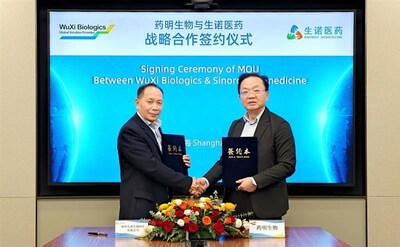
Dr. Chris Chen (right), CEO of WuXi Biologics, and Dr. Pingsheng Hu (left), Chairman and General Manager of Sinorda Biomedicine, signed the partnership agreement

Under the agreement, Sinorda Biomedicine will leverage WuXi Biologics’ extensive experience and manufacturing capabilities in biologics development and manufacturing to advance SND006’s preclinical pharmacology studies and clinical supply, accelerating the Investigational New Drug (IND) application process. SND006 is an innovative bispecific antibody independently developed by Sinorda Biomedicine, for which the company holds worldwide rights. Sinorda Biomedicine has completed in vitro functional validation studies of SND006 and plans to submit IND applications to both the National Medical Products Administration (NMPA) in China and the U.S. Food and Drug Administration (FDA) in 2026. In the future, the two companies will further expand their collaboration around Sinorda Biomedicine’s potential pipeline, including multiple integrated projects spanning from molecule discovery to clinical manufacturing.

Dr. Chris Chen, CEO of WuXi Biologics, commented, “Over the past decade, we have accumulated experience across hundreds of projects in bispecific and multispecific antibodies, which have become one of our fastest‑growing areas. We are pleased to accelerate the development and manufacturing of Sinorda Biomedicine’s innovative bispecific antibody SND006 through our integrated technology platforms and comprehensive capabilities. Looking ahead, we will continue accelerating and transforming biologics discovery, development and manufacturing to empower global partners and make innovative biologics more accessible and affordable for patients worldwide.”

Dr. Pingsheng Hu, Chairman and General Manager of Sinorda Biomedicine, commented, “SND006 is a potentially best-in-class innovative bispecific antibody discovered and developed by Sinorda Biomedicine, with the potential to deliver breakthroughs in the treatment of gastrointestinal and multiple autoimmune diseases. WuXi Biologics is a global leader in CRDMO services, offering truly end‑to‑end solutions underpinned by accumulated know-how, comprehensive technology platforms, and a strong track record—particularly in the development and manufacturing of bispecific antibodies. We believe this collaboration will accelerate the IND filings of our innovative biologics in China and worldwide, address unmet medical needs in autoimmune diseases, and ultimately bring safe and effective therapies to patients.”

About WuXi Biologics

WuXi Biologics (stock code: 2269.HK) is a leading global Contract Research, Development and Manufacturing Organization (CRDMO) offering end-to-end solutions that enable partners to discover, develop and manufacture biologics – from concept to commercialization – for the benefit of patients worldwide.

With over 12,000 skilled employees in China, the United States, Ireland, Germany and Singapore, WuXi Biologics leverages its technologies and expertise to provide customers with efficient and cost-effective biologics discovery, development and manufacturing solutions. As of December 31, 2025, WuXi Biologics is supporting 945 integrated client projects, including 74 in Phase III and 25 in commercial manufacturing.

WuXi Biologics regards sustainability as the cornerstone of long-term business growth. The company continuously drives green technology innovations to offer advanced end-to-end Green CRDMO solutions for its global partners while consistently achieving excellence in Environment, Social and Governance (ESG). Committed to creating shared value, it collaborates with all stakeholders to foster positive social and environmental impacts and promote responsible practices that empower the entire value chain.

For more information about WuXi Biologics, please visit: www.wuxibiologics.com. 

About Sinorda Biomedicine

Sinorda Biomedicine was established in 2010 and is a biomedical innovation company in the commercialization stage. The company focuses on the research and development and industrialization of innovative drugs for digestive tract diseases, tumor immunity and autoimmune diseases. It has a bioinnovative drug technology platform, a clinical medical R&D platform and an experienced international R&D team, with successful experience in innovative drug applications in China, Europe, America and other countries.

Linaprazan glureta (X842), the company’s self-developed class 1.1 new drug for treatment of gastric acid-related diseases, has been successfully approved for commercialization and industrialization. The sentinel lymph node T cell project for solid tumor treatment has clinical IIT research results for various tumors. In addition, the company has a number of early-stage product pipelines, including bispecific antibodies for the treatment of autoimmune disease IBD.

The company has developed rapidly through extensive cooperation with domestic and foreign pharmaceutical companies and R&D institutions, and is committed to becoming the most valuable innovative pharmaceutical enterprise in China.

WuXi Biologics Contacts

Business
info@wuxibiologics.com

Media
PR@wuxibiologics.com
FPT Announces the Establishment of an Advanced Semiconductor Testing & Packaging Plant, Strengthening Vietnam’s Position in the Global Value Chain

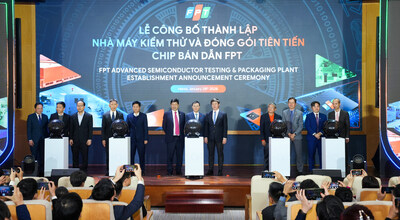
HANOI, Vietnam, Jan. 28, 2026 /PRNewswire/ — FPT Corporation officially announced the establishment of the FPT Advanced Semiconductor Testing & Packaging Plant.

FPT announces the establishment of an Advanced Semiconductor Testing and Packaging plant

The ceremony was attended by representatives of the Ministry of Science and Technology, together with leaders of FPT Corporation, Viettel Group and its domestic and international partners.

The establishment of the FPT Advanced Semiconductor Testing and Packaging Plant underscores FPT’s commitment to implementing Vietnam’s national technology strategies, including Resolution No. 57-NQ/TW and Decisions No. 1131/QĐ-TTg and 1018/QĐ-TTg, which set the target for Vietnam to have 10 advanced semiconductor testing and packaging facilities by 2030.

The project strengthens the national semiconductor alliance, advances mastery of core technologies, completes an end-to-end semiconductor ecosystem, and supports the goal of 50,000 semiconductor professionals by 2030.

According to Mr. Truong Gia Binh, Chairman of FPT Corporation shared: “With today’s milestone, we take another step toward completing Vietnam’s semiconductor ecosystem. We will work closely with domestic and international partners to rapidly bring Make in Vietnam chips into real-world applications”.

In Phase 1 (2026–2027), the plant covers 1,600 square meters with six functional testing lines (ATE testers and handlers) and a dedicated reliability and durability testing area (Burn-in, Reliability Test, Failure Analysis). All systems comply with semiconductor global standards, ensuring quality and reliability throughout the product lifecycle.

In Phase 2 (2028–2030), FPT will expand the facility to 6,000 square meters, with 18 newly installed functional testing lines, 3 reliability and endurance testing zones, expanded both conventional packaging lines (QFN, QFP, DFN, etc.), additional CSP (Chip Scale Package), WLP (Wafer Level Package) lines, along with advanced IC packaging lines, collectively ramping the plant’s total output to billions of units per year. The plant will also enhance testing for IoT, automotive, and AI-on-the-edge SoC chips, further completing the semiconductor value chain.

FPT signed strategic cooperation agreements with leading domestic and international partners to integrate the semiconductor value chain from training to commercialization, including Viettel Group (Vietnam), VSAP Lab (Vietnam), Restar (Japan), Winpac (Korea).

FPT also announced plans to research and develop AI-on-the-edge System-on-Chip (SoC) solutions, aiming to fully master the smart device ecosystem encompassing cameras, drones, and unmanned aerial vehicles (UAVs).

With over a decade in semiconductors, FPT pioneers “Make in Vietnam” chips, invests in R&D, develops high-quality talent, positioning Vietnam as a key semiconductor hub.

Asian Development Bank Urges Faster Infrastructure Delivery as Vientiane’s Bus Rapid Transit System Stalls

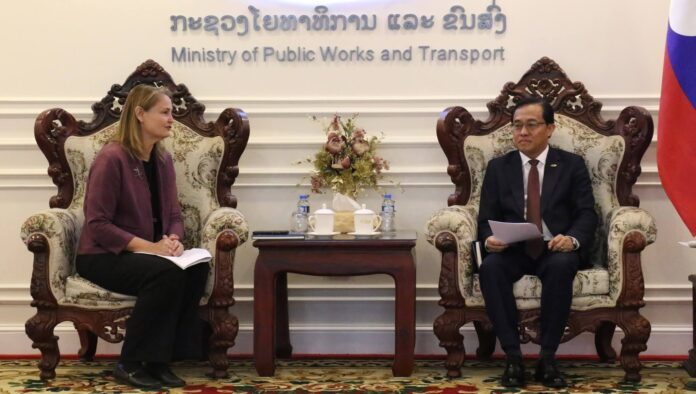
ADB Country Director Shanny Campbell during a meeting on 20 January with Minister of Public Works and Transport Leklai Sivilay. (Picture by the Ministry of Public works and Transport of Lao PDR)

The Asian Development Bank (ADB) has called on Laos to speed up the implementation of major infrastructure projects, as delays continue to affect high-profile initiatives, including Vientiane bus system or Vientiane’s Bus Rapid Transit (BRT) system, which has remained suspended since December over safety concerns.

ADB Country Director Shanny Campbell raised the issue during a meeting on 20 January with Minister of Public Works and Transport Leklai Sivilay, stressing the need for stronger coordination, timely establishment of project implementation committees, and sufficient budget allocations to support long-term operation and maintenance.

The discussions came amid continued uncertainty surrounding the Vientiane BRT, a flagship component of the ADB-supported Vientiane Sustainable Urban Transport Project. 

Authorities suspended the system in December 2025 after several accidents during its trial phase, prompting a decision to redesign parts of the system, including removing concrete curbs and adjusting lane layouts.

The details and updates of Vientiane bus system (BRT)

The BRT initially launched as a free trial during November’s That Luang Festival but has since entered an indefinite suspension, with no official timeline for resumption. Public criticism has grown, while Prime Minister Sonexay Siphandone has acknowledged that uncertainty over future donor funding could affect the project’s continuation, despite government approval of payments for completed works.

The stalled BRT highlights wider challenges in delivering large-scale infrastructure projects. Alongside urban transport reforms, the government is also pursuing plans for a railway linking Vientiane with Champasak Province, with feasibility studies expected to begin in early 2026. 

Financing arrangements for the proposed rail line, however, remain unclear.

ADB’s focus on implementation extends beyond transport. 

On 27 January, Campbell also met with Vice Minister of Industry and Commerce Manothong Vongxay to discuss continued ADB support for Laos’s energy transition and regional power cooperation. 

Talks covered cross-border electricity trade, ASEAN power grid integration, energy sector reforms, and technical assistance to improve financial sustainability and promote low-emission energy solutions.

With several major projects facing delays or structural challenges, ADB’s recent engagements underline a growing emphasis on execution, sustainability, and governance as Laos advances its infrastructure and energy development agenda.

HD Hyundai Chairman Chung Kisun Holds Talks with Prime Minister Modi to Discuss Bilateral Cooperation

  • Chairman Chung Kisun attends high-level roundtable at Prime Minister Modi’s invitation
  • Cooperation spans commercial and naval shipbuilding and port crane projects; joint shipyard development to be pursued
  • “India is a key pillar of our overseas production diversification strategy, poised to become HD Hyundai’s new growth engine”

SEOUL, South Korea, Jan. 29, 2026 /PRNewswire/ — HD Hyundai Chairman Chung Kisun met with India’s Prime Minister Narendra Modi to discuss expanding bilateral cooperation in shipbuilding.

HD Hyundai said Chairman Chung Kisun and HD Korea Shipbuilding & Offshore Engineering CEO Kim Hyungkwan attended the high-level roundtable on Wednesday, January 28, hosted by Prime Minister Modi at the Prime Minister’s official residence in New Delhi.

The high-level roundtable was held as part of India Energy Week 2026, bringing together about 30 participants, including Prime Minister Modi, ministers from relevant Indian government bodies, heads of state-owned enterprises, and chief executives of global companies, to discuss avenues for cooperation.

During the meeting, Chairman Chung expressed appreciation for the Prime Minister’s strong commitment to fostering the shipbuilding industry and asked for continued interest and support for HD Hyundai’s ongoing collaborative initiatives with India.

“HD Hyundai continues to maintain close collaborative relationships with India across a wide range of areas,” Chairman Chung said. “India is a key pillar of our strategy to diversify overseas production bases, and I am confident it will serve as a new engine of growth for HD Hyundai.”

To take part in the Indian government’s Maritime Amrit Kaal Vision 2047 initiative, HD Hyundai signed a memorandum of understanding in July last year with Cochin Shipyard, India’s largest state-owned shipbuilder, agreeing to cooperate across multiple areas, including design and procurement support, productivity improvements, and workforce capability development.

More recently, HD Hyundai expanded its collaboration with Cochin Shipyard to include naval vessels. It has also accelerated its entry into the Indian market by signing an exclusive MOU with the government of Tamil Nadu to jointly build a shipyard and advance crane business cooperation with state-owned BEML.

India has also shown strong interest in strengthening cooperation with HD Hyundai. In November last year and again in January this year, Hardeep Singh Puri, India’s Minister of Petroleum and Natural Gas, and T. R. B. Rajaa, Tamil Nadu’s Minister for Industries, respectively, visited South Korea to tour HD Hyundai’s Global R&D Center and HD Hyundai Heavy Industries’ Ulsan shipyard and discuss ways to deepen cooperation with the group.

V Project Unveiled: An Immersive 3D Idol Experience – IDOL, a TOUCH away

SINGAPORE, Jan. 29, 2026 /PRNewswire/ — Elementa today officially revealed V Project, a new immersive idol mobile game built around empathy. The title aims to redefine the genre through full 3D visuals, character designs rooted in contemporary pop culture, and an innovative multi-perspective narrative system.


Official PV link: https://youtu.be/hW-zXumc5cA 

In its reveal trailer, V Project demonstrates high production values with full 3D visuals and a polished art style. Using a Cel-Shaded Plus rendering approach, the game preserves the expressiveness of anime-style characters while incorporating realistic environmental details and dynamic lighting to enhance depth and texture. That same level of care extends to costume design. In gameplay footage, stage outfits are tailored to each character, balancing personal style with contemporary fashion. The Cel-Shaded Plus rendering approach keeps every outfit’s form in motion, while bringing out fine fabric details and subtle gloss of accessories. Meanwhile, the flexibility of 3D camera work opens up substantial potential for more immersive gameplay experiences.


Set in a contemporary cityscape, V Project introduces its first three characters—Lee, Near, and OCT—as trainees. Alongside the trailer’s “Around the World in a Day” theme, the trio conveys a light, energetic presence, creating a warm and uplifting feel. The nearly one-minute performance shown in the gameplay footage reinforces the trio’s identity as trainees. The shift from the practice room to the stage suggests a coming-of-age story about young idols growing together, with the broader cast expanding gradually over time, and setting the stage for new groups and characters to be introduced.

Central to V Project is its “TOUCH” concept, designed to create connection between players and idols through shared moments and perspectives. The trailer brings this concept to life through fluid shifts in perspective, from first-person glimpses of everyday life, to a broader view of character interactions, to intimate, side-by-side moments with the characters. Through TOUCH, players can also experience the story from multiple perspectives: a first-person view into a character’s inner thoughts, a broader perspective for core story chapters, and a fan’s viewpoint that showcases high-fidelity 3D stage performances and music videos, as well as story fragments that gradually connect into a complete narrative.

Using full 3D technology and multi-perspective storytelling, V Project builds a vivid, immersive world where idols are genuinely present—IDOL, a TOUCH away. Pre-registration is now open on the official website. For more information, please visit the game’s official website and social media channels.

Official Website: https://vproject.elementagames.com/en-us
Official X: https://x.com/VProject_EN
Official Facebook: https://www.facebook.com/VProjectEN
Official YouTube: http://www.youtube.com/@VProject_EN
Official TikTok: https://www.tiktok.com/@vproject_en

AI Is Reshaping National Power, but America’s Real Bottleneck Is Not Chips — It Is Electricity

GFM’s AI & Energy Research Brings “The Power Grid as National Power” into U.S. Technology, Energy, and National Security Discourse

IRVINE, Calif., Jan. 29, 2026 /PRNewswire/ — As artificial intelligence (AI) is increasingly incorporated into national strategic frameworks, U.S. technological competitiveness is expanding at an unprecedented pace. Yet beneath public narratives dominated by semiconductors, algorithms, and capital allocation, a more fundamental—and far less easily accelerated—structural constraint is emerging: electricity and power grid infrastructure.

Global Finance Media Group (GFM) has recently released a series of research papers under its AI & Energy research initiative (https://www.gfm.news/en/ai-energy), presenting a core finding that can be directly evaluated by policymakers and industry decision-makers:
In the AI era, energy is no longer merely an industrial input or cost factor. It is becoming a decisive variable shaping national security, industrial resilience, and institutional efficiency.
As computing capacity scales at an exponential rate, the responsiveness of power systems—across engineering timelines, permitting and approval processes, and cross-regional coordination—is increasingly unable to keep pace with AI deployment. As a result, the upper boundary of national power competition is shifting from chips and algorithms to a far more difficult reality to accelerate: the power grid.

In the race to position AI as a national strategic asset, electricity and power grids are no longer solely energy-sector concerns. They are emerging as institutional constraints that are reshaping technology deployment pathways, military capability boundaries, and the structural foundations of national security.

GFM’s research series opens with AI & Energy: The Underestimated Boundary of National Power, which frames the issue, and continues with Why the World Is Stalled on Energy, identifying a growing misalignment between the pace of global energy transition and power system construction and the rapid deployment of AI infrastructure. This divergence is creating pronounced institutional time lags and engineering bottlenecks.

The issue is elevated to the national security level in the third study, Power Shortages Are Becoming a Hidden Constraint on U.S. National Security, authored by U.S.-based electricity and energy systems expert Cheng Maiyue. The analysis systematically examines how electricity shortages propagate from data centers and computing supply chains into AI-enabled military and intelligence applications, critical infrastructure operations, and the energy transition itself—evolving into a long-underestimated structural national security risk.

In subsequent research, GFM further notes that the emerging “AI power constraint,” exemplified by the rapid scaling demands of companies such as NVIDIA, is no longer confined to corporate cost structures or supply chain management. Instead, it is increasingly entering the core of U.S. technology and national security decision-making as an institutional risk factor.

In Where Will America Find Power? and What the U.S. Lacks Is Not Electricity, but the Grid, Cheng emphasizes that the true shortage facing the United States is not generation capacity alone, but the power grid itself—its capacity bottlenecks, construction timeline mismatches, governance mechanisms, and delays in the delivery of critical equipment. He argues that the energy challenge of the AI era is fundamentally a competition in engineering execution and institutional coordination, not a problem solvable by any single technology.

Looking ahead, the AI & Energy research series will expand to include in-depth studies on Global Power Limits, AI’s Triple Energy Pressures, Neutral-System Pathways, and Nuclear Energy and Fusion. These forthcoming analyses will explore how energy efficiency gains, electrification, and grid digitalization—while feasible—represent complex and demanding solutions when viewed through the combined lenses of policy timing, engineering cycles, and national security considerations.

GFM is a global financial intelligence ecosystem that transforms investigation and research into strategic assets. Selected GFM research has been distributed via PR Newswire and subsequently republished and cited by multiple international mainstream platforms, demonstrating GFM’s inclusion in the global public information circulation system. GFM supports distribution in more than 25 languages worldwide and continues to operate under public scrutiny across languages, markets, and institutional environments.

SK bioscience Initiates International Phase 1/2 Clinical Trial of Universal Vaccine Candidate Targeting Sarbecovirus Family

  • Global phase 1/2 clinical trial initiated for GBP511, a vaccine targeting the Sarbecovirus Family
  • Next-generation vaccine leveraging SKYCovione’s recombinant protein-based platform and nanoparticle technology
  • SK bioscience will continue to strengthen a Mid- to Long-Term global vaccine strategy centered on universal vaccines for future pandemic preparedness

INCHEON, South Korea, Jan. 29, 2026 /PRNewswire/ — SK bioscience announced the initiation of a global Phase 1/2 clinical trial in Australia for GBP511, a vaccine candidate targeting the sarbecovirus subgenus.

SK bioscience Initiates International Phase 1/2 Clinical Trial of Universal Vaccine Candidate Targeting Sarbecovirus Family

Sarbecoviruses are a higher-level coronavirus group that include SARS-CoV-2, encompassing not only currently circulating variants but also potential future novel coronaviruses related SARS-like coronaviruses found in animals that could potentially spill over to humans.” Or even just, “related SARS-like coronaviruses found in animals.

SK bioscience aims to develop a universal vaccine capable of inducing broad immune responses across the entire virus family and is establishing a platform applicable to multiple related viruses and variants.

The international Phase 1/2 trial of GBP511 will be conducted in approximately 368 adults aged 18 years and older in Australia. In Phase 1, participants will receive two doses administered 28 days apart, across low-, medium-, and high-dose cohorts, with or without an adjuvant. Safety, tolerability, and immunogenicity will be evaluated, including comparisons with Comirnaty, a comparator vaccine. Based on Phase 1 results, the optimal dose and regimen will be selected, after which Phase 2 will assess immunogenicity and safety in adult and elderly populations, again comparing the investigational vaccine with Comirnaty, a comparator vaccine. In addition, the study will evaluate cross-reactive immune responses across the sarbecovirus family, including SARS-CoV-2, to assess the vaccine’s potential as a universal coronavirus vaccine.

GBP511 incorporates the core technology of of SKYCovione, which in 2022 became the only domestically developed COVID-19 vaccine in Korea to achieve commercialization. Building on SKYCovione’s computer-designed antigen platform,  GBP511 combines SK bioscience’s recombinant protein technology with self-assembling nanoparticle design technology developed by the Institute for Protein Design (IPD) at the University of Washington School of Medicine. SKYCovione has previously demonstrated robust immunogenicity and a favorable safety profile through global clinical trials. SKYCovione demonstrated the induction of robust protective neutralizing antibody levels and a favorable safety profile through global clinical trials, which was the basis of the vaccine’s approval by several regulatory authorities.

Globally, while multiple companies and research institutions have initiated efforts to develop universal coronavirus vaccines, most programs remain at an early research stage.

SK bioscience’s entry into global Phase 1/2 clinical development is the first such vaccine to enter clinical trials, demonstrating a comparatively rapid pace of development.

The Coalition for Epidemic Preparedness Innovations (CEPI) has designated the SARS-coronavirus family as a “prototype pathogen,” noting the high likelihood that future pandemics may repeatedly arise from the same viral family. CEPI has consistently emphasized the limitations of variant- or pathogen-specific approaches and highlighted the need for universal coronavirus vaccines capable of providing broad protection regardless of the emergence of novel viruses. CEPI is supporting the development of broadly protective coronavirus vaccines, which could potentially provide broad protection against the Betacoronavirus family, which includes SARS and MERS.

Major international journals, including Nature Reviews Immunology and The Lancet Microbe, have likewise reported that universal sarbecovirus vaccines capable of delivering both broad cross-neutralizing activity and durable immune protection could become a cornerstone of future pandemic preparedness strategies.

Against this backdrop, the COVID-19 vaccine market is expected to transition from short-term outbreak-driven demand to sustained mid- to long-term growth. According to global market research firm Coherent Market Insights, the global COVID-19 vaccine market is estimated at approximately USD 50.6 billion (KRW 70 trillion) in 2025 and is projected to grow at a compound annual growth rate of 7.4% from 2025 to 2032, reaching approximately USD 83.4 billion (KRW 117 trillion) by 2032. Next-generation technologies, such as universal vaccines, are expected to generate new sources of market demand.

Dr Richard Hatchett, CEO of CEPI said, “COVID 19 exposed the devastating price of confronting a deadly new virus without a vaccine. Broadly protective coronavirus vaccines have the power to change that story. While we cannot predict when or where the next coronavirus threat will emerge, we can prepare. By investing now in all in one vaccines, CEPI and its partners are strengthening global defences—and South Korea is playing a pivotal role in that effort. The progression of SK bioscience’s broadly protective coronavirus vaccine into Phase 1/2 trials marks a major step forward, showcasing South Korea’s leadership in cutting-edge vaccine innovation and bringing us closer to a safer future for all.”

Jaeyong Ahn, CEO of SK bioscience said “Developing a universal sarbecovirus vaccine is a critical challenge that must be addressed to prepare for the next pandemic.” “With the initiation of the GBP511 clinical trial, we will accelerate the development of universal vaccines and leverage our proactive infectious disease preparedness capabilities to emerge as a global leader in the vaccine market.”

SK bioscience continues to advance a range of infectious disease pipelines, including a 21-valent pneumococcal conjugate vaccine and an avian influenza vaccine. The company plans to progressively expand its vaccine portfolio to strengthen mid- to long-term preparedness for future infectious disease threats.

About SK bioscience

SK bioscience is an innovative vaccine and biotech company, committed to vaccine development and manufacturing to enable more equitable access to vaccines around the world. Leveraging strengths on cutting-edge technologies, SK bioscience has been dedicated to promoting human health from prevention to cure across the globe. With the cooperation of domestic and international governments, regulatory agencies, healthcare providers, doctors, and medical experts, all of the SK colleagues are passionately committed to providing high-quality vaccines to those who need them and better public healthcare solutions.

SK bioscience Communications Team
Changhyun Jin (jin99@sk.com)  
Tae-Gyun Kim (taegyunkim@sk.com)
Moonchel Kim (mc_kim@sk.com)

LG Energy Solution Releases 2025 Financial Results

  • LG Energy Solution posts KRW 23.7 trillion in consolidated revenue and KRW 1.3 trillion in operating profit in 2025
  • Company aims for a mid-teen to 20 percent year-on-year increase in annual revenue and mid-single-digit percent operating profit margin this year
    –        Aim for more than 90GWh in new orders for ESS batteries and expand the ESS production capacity to over 60GWh, with more than 80 percent to be located in North America
    –        Expand EV battery product line-up, including LFP and high-voltage mid-nickel for mid-to-low-end market, LMR prismatic, and 46-Series cylindrical batteries
    –        Expand entry opportunities into new applications, including robotics, where company already supplies its cylindrical batteries to six global leading robotic companies, with more discussions for next-generation models underway

SEOUL, South Korea, Jan. 29, 2026 /PRNewswire/ — LG Energy Solution (KRX: 373220) today announced its fourth-quarter and full-year earnings for 2025, along with its key business initiatives for 2026.

For the full year, the company reported KRW 23.7 trillion in consolidated revenue, a 7.6 percent decrease from last year. The whole-year operating profit was KRW 1.3 trillion, marking a 133.9 percent year-on-year increase. The operating profit margin was 5.7 percent including the North American production incentive.

“Last year, we saw a solid growth in ESS sales as we proactively expanded our LFP production capacity in North America, but total revenue decreased due to the slowdown in major customers’ EV sales,” said Chang Sil Lee, CFO of LG Energy Solution. “Our profitability improved compared to the previous year, driven by enhanced product mix, improved material cost efficiency, as well as production incentive supported by stable sales performance in North America.” The company also improved its working capital efficiency by reducing inventory levels and optimizing supply chain management.

In 2025, LG Energy Solution has successfully optimized its asset management by: 1) reallocating capacity between EV and ESS to reduce new investments and boost idle-line utilization, 2) early establishment of production sites for mid-to-low-end solutions like high-voltage mid-nickel and LFP in Europe, and 3) enhancing capital management efficiency through sales of non-core assets, such as a building from its North American JV facility.

Last year, the company also successfully diversified both its production and customer bases. For its 46-Series cylindrical batteries, LG Energy Solution started production at the Ochang plant in Korea and secured an order backlog exceeding 300GWh (by the end of 2025). For its ESS batteries, the company started local production of its LFP[1] batteries in North America and plans to expand the form factors from pouch-type to prismatic batteries. It also enhanced its production competitiveness through system integration (SI) capabilities, all of which contributed to 140GWh ESS order backlog.

In the fourth quarter, the company posted consolidated revenue of KRW 6.1 trillion, a 7.7 percent increase quarter-on-quarter. Its quarterly operating loss was KRW 122 billion, including the North American production incentive amount of KRW 332.8 billion.

  • 2026 Key Business Initiatives

This year, LG Energy Solution anticipates year-on-year growth rate of over 10 percent in global EV production[2] and over 40 percent in global ESS installations[3]. In North America, ESS is expected to represent about half of total battery demand[4] on the back of tech companies’ investment in data centers and policy support including the maintenance of clean energy investment tax credit (ITC). In particular, given that data centers require stable, long-term ESS projects, grid-scale ESS, which already accounts for 95 percent of ESS demand in the region, is expected to demonstrate strong growth this year.

To capitalize on the market growth, LG Energy Solution will advance its ESS business backed by solid orders. It aims to achieve more than 90GWh in new ESS orders this year, primarily through large-scale, long-term orders from key utility companies and developers in North America. It will also expand into new segments such as Uninterruptible Power Supply (UPS) and Battery Back-up Unit (BBU), while continuing to meet customer needs by delivering hardware and SI-based turnkey ESS solution.

At the same time, the company will reinforce its operational capabilities by increasing global ESS production capacity to over 60 GWh this year, with more than 80 percent of that capacity located in North America. To achieve this, it will proactively reallocate global production capacity to ESS battery manufacturing. In North America, it will expand ESS production capacity at the stand-alone facilities —specifically the plants in Holland and Lansing, Michigan—and will also temporarily utilize certain production lines from its joint ventures (Stellantis JV, Honda JV) for ESS output.

For its EV business, LG Energy Solution will continue to expand its product line-up tailored to customers’ needs. For mid-to-low-end market, the company will begin mass production of LFP and high-voltage mid-nickel batteries in the first quarter, while converting certain production lines to LMR[5] prismatic cells within this year. For 46-Series cylindrical batteries, the company will boost fast charging performance and aims to start production of 46-Series cylindrical batteries at its new Arizona facility by late this year. Additionally, the company plans to expand its product line-up for HEVs[6] from pouch-type to small batteries, as market demand for HEVs is expected to remain relatively stable.

This year, LG Energy Solution also plans to expand entry opportunities into new applications such as robotics, ships, and Urban Air Mobility (UAM). Notably, in the robotics market, where expectations for industrial humanoid robots are rising and thus batteries’ safety, energy density, and power output are becoming ever more important, the company is already supplying its cylindrical batteries to six global leading players, while also providing samples for their next-generation models with discussions underway on battery specs and mass production timeline.

At the same time, it will activate a pilot production line for LFP batteries with dry electrodes and secure mass production capabilities. Lastly, the company will focus on developing materials and manufacturing processes for the commercial production of all-solid-state and sodium batteries.

Based on its key business initiatives for this year, LG Energy Solution announced its goal to target a mid-teen to 20 percent year-on-year increase in annual consolidated revenue this year. Despite a slowdown in North American EV demand, it plans to maximize supply by leveraging relatively stable growth in the cylindrical battery business and already secured ESS order backlogs.

The company aims to achieve mid-single-digit percent operating profit margin and also increase the operating profit this year, by increasing ESS supply, pursuing stable operations, securing structural cost competitiveness, and improving operational efficiency.

At the same time, LG Energy Solution aims to reduce this year’s capex by over 40 percent compared to last year. By focusing on cash flow management, it will minimize new investments, maximize the utilization of existing lines, and prioritize key investments that are linked to revenue growth.

About LG Energy Solution

LG Energy Solution (KRX: 373220) is a leading global manufacturer of lithium-ion batteries for electric vehicles, mobility, IT, and energy storage systems. With more than 30 years of experience in revolutionary battery technology and extensive research and development (R&D), the company is the top battery-related patent holder in the world with over 90,000 patents. Its robust global network, which spans North America, Europe, and Asia, includes battery manufacturing facilities established through joint ventures with major automakers. Committed to building sustainable battery ecosystem, LG Energy Solution aims to achieve carbon neutrality across its value chain by 2050, while embodying the value of shared growth and promoting diverse and inclusive corporate culture. To learn more about LG Energy Solution’s ideas and innovations, visit https://news.lgensol.com.

[1] LFP: lithium, iron, phosphate

[2] EV: combining BEV (battery electric vehicles) and PHEV (plug-in hybrid electric vehicles)

[3] Source: (EV) HIS Markit, (ESS) market data and LG Energy Solution’s estimate

[4] Source: market data and LG Energy Solution’s estimate

[5] LMR: lithium manganese-rich

[6] HEV: hybrid electric vehicles