Home Blog Page 1703

Optimistic Hong Kong Ecommerce Merchants Report Growth, But Hidden Payment Friction Is Eroding Up to 10% of Revenue, Aspire Report Finds

Despite 64% reporting revenue growth, 91% of merchants face payment friction


HONG KONG SAR – Media OutReach Newswire – 16 December 2025 – Aspire, the all-in-one finance platform for modern businesses, today released its Hong Kong Ecommerce Pulse Check for 2025, revealing that while 100 Hong Kong merchants (with HKD 1–10 million annual business revenue) remain optimistic about growth even amid macroeconomic challenges, hidden financial friction is quietly eroding margins.

Optimistic Hong Kong Ecommerce Merchants Report Growth, But Hidden Payment Friction Is Eroding Up to 10% of Revenue, Aspire Report Finds

Developed in collaboration with Stripe, the report identifies payment friction as the most significant — and least visible — drag on ecommerce performance, with 91% of merchants losing 1-10% of revenue every month due to payment failures, hidden fees, chargebacks and disputes, settlement delays, and integration complexities with multiple payment vendors. These losses sit on top of rising processing costs, with 93% of merchants reporting that they now spend at least 2-4+% of revenue on payment fees alone.

“The data tells a remarkable story of Hong Kong merchants navigating macroeconomic challenges with speed and agility. They are reshaping product lines, adjusting pricing, and leaning into discovery-led commerce — yet payment friction continues to undercut these gains.” said Andrea Baronchelli, CEO and Co-founder of Aspire. “As merchants scale across markets, they need financial infrastructure that is transparent, integrated, and cross-border ready to unlock even more growth.”

Macroeconomic pressures drive strategic shifts

Hong Kong merchants continue to operate in a high-cost environment shaped by a consumer spending slowdown (32%), rising rents and logistics costs (32%), and inflation (31%). Despite this, growth expectations remain relatively positive: 32% expect up to 10% revenue growth, another 32% expect 10–20%, and only a minority foresee significant declines.

Instead of passing rising costs directly to consumers, merchants are recalibrating how they price and position their products:

  • 31% are moving from mass categories into more defensible niches
  • 73% are broadening their price architecture through a premium-to-value shift
  • 44% are transitioning from physical to digital channels
  • 23% are expanding physical touchpoints such as pop-ups and hybrid formats

Social commerce and cross-border expansion powers momentum

Discovery-led commerce continues to reshape Hong Kong’s ecommerce landscape. Social shops now account for 62% of merchants’ primary sales channels (TikTok, Facebook, Instagram, and Xiaohongshu), followed by livestreaming (15%) and traditional ecommerce platforms (23%). These channels also show the fastest acceleration, with 93% of merchants reporting an uplift in social commerce sales, underscoring a rapid shift away from traditional ecommerce platforms.

Beyond domestic demand, cross-border remains the clearest path to scale. The top regional markets for Hong Kong merchants are Southeast Asia (100%), Mainland China (83%), and Japan and Korea (63%). However, scaling regionally brings friction of its own. Merchants cite logistics complexity (51%), local marketing barriers (28%), and duties (18%) as the biggest obstacles.

“When 91% of merchants are losing revenue to payment friction, it’s not just an operational cost—it’s a growth blocker,” said Sarita Singh, Regional Head and Managing Director for Southeast Asia, India, and Greater China at Stripe. “Improving payment performance via a strong financial infrastructure is one of the fastest ways for Hong Kong businesses to unlock immediate revenue and scale more confidently across markets.”
Hashtag: #Aspire

The issuer is solely responsible for the content of this announcement.

About the Report

Aspire’s Hong Kong Ecommerce Pulse Check 2025 is based on survey responses from 100 Hong Kong ecommerce businesses, collected in November 2025. Respondents typically fall within the HKD 1–10 million annual revenue range and represent a wide mix of categories, including beauty, fashion, home and living, lifestyle, pet care, baby and kids, creative goods, sporting goods, and F&B.

All insights are self-reported and focus on five areas shaping their operating environment: macroeconomic pressures, pricing and product strategies, social commerce growth, cross-border expansion, and the operational and financial friction influencing profitability and scale.

The full report will be revealed on 17th December, 2025.
Visit:

About Aspire

Aspire is the all-in-one finance platform for modern businesses globally, which has helped over 50,000companies save time and money with international payments, treasury, expense, payable, and receivable management solutions – accessible via a single, user-friendly account. Headquartered in Singapore, Aspire has 600+ employees across nine countries, clients in 30+ markets and is backed by global top tier VCs, including Sequoia, Lightspeed, Y-Combinator, Tencent and Paypal.

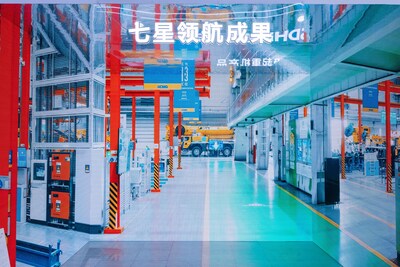
XCMG Designated as National Pioneer-Level Smart Factory, Unveils Industry Blueprint at 2025 World Intelligent Manufacturing Conference

XUZHOU, China, Dec. 16, 2025 /PRNewswire/ — XCMG Machinery (SHE: 000425) has been officially recognized as one of China’s inaugural Pioneer-Level Smart Factories, the highest national echelon in intelligent manufacturing, at the 2025 World Intelligent Manufacturing Conference (WIMC). This prestigious designation, awarded to only 15 enterprises nationwide by China’s Ministry of Industry and Information Technology and five other government authorities, signifying XCMG’s smart manufacturing capabilities represent the pinnacle standard in China’s manufacturing sector.

XCMG Designated as National Pioneer-Level Smart Factory

The award is the result of China’s “Smart Factory Gradient Cultivation Initiative,” a national campaign launched in 2024 to systematically guide manufacturers through four tiers of development: Basic, Advanced, Excellence, and Pioneer levels. As the apex tier, Pioneer-Level Smart Factory represents the ultimate benchmark for digital transformation, networked collaboration, and intelligent innovation. XCMG’s “Global Customized Agile Delivery Intelligent Factory for Mobile Cranes” project underwent rigorous evaluation to secure its place on the list.

“This recognition as a Pioneer-Level Smart Factory is a monumental endorsement of our strategic direction and persistent innovation in intelligent manufacturing,” said Yang Dongsheng, Chairman of XCMG Group and XCMG Machinery. “It validates our systematic approach to solving the core challenges of global, customized manufacturing.”

At the conference, XCMG joined other designated pioneers to jointly launch the “Pioneer Action Plan Joint Initiative.” “We are committing to an open model of collaboration,” Yang stated. “XCMG will proactively share and replicate its ‘Seven-Star Pioneer’ model across our 35 global bases and with over 120 supply chain partners. This is our practical commitment to helping build the Xuzhou construction machinery cluster into a world-class hub and drive high-quality advancement for the entire manufacturing sector.”

The “Seven-Star Pioneer” Model: A Blueprint for Agile Global Customization

This national recognition is built upon XCMG’s strategic response to a core industry challenge: how to achieve agile, large-scale customization in highly discrete manufacturing. The company’s answer is the proprietary “Seven-Star Pioneer” model, a comprehensive operational blueprint that drives deep innovation across four core business domains: generative R&D, agile delivery, intelligent operations, and digital twin factory management. This framework systematically enhances three critical capabilities: AI-driven business empowerment, independent and controllable technology, and model replication and promotion. Centered on the customer, the model establishes an end-to-end loop from initial order to jobsite delivery, achieving a 55% reduction in order-to-delivery cycle time while providing complete global visibility and traceability across operations, resources, and logistics.

Powered by the “Five-Thousand” Strategy for In-Depth AI-Construction Machinery Integration

The seamless operation of the “Seven-Star Pioneer” model is enabled by its technological engine: the “Five-Thousand” strategy. This foundational strategy—encompassing computing power (Petaflops), data, models, scenarios, and talent—is focused on building autonomous industrial intelligence agents for R&D, and production control. Its objective is to evolve manufacturing sites from automated facilities into a self-perceiving, self-decision-making, and self-executing intelligent ecosystem, thereby shifting capabilities from isolated digital tools to holistic, synergistic intelligence.

Realized in the Award-Winning “Customized Agile Delivery” Intelligent Factory

The fusion of the strategic model and AI core is physically realized and validated in XCMG’s “Customized Agile Delivery Intelligent Factory for Construction Machinery.” Integrating plant-wide 5G, real-time digital twins, and global collaboration platforms, it masters a flexible, “high-mix, low-volume, high-customization” production paradigm. This enables a dual transformation: propelling the production model from “mass production” to “precision customization” and evolving the business model from “selling products” to providing “integrated service and solution packages.” 

This factory’s proven performance is a cornerstone of XCMG’s sustained global leadership and was honored as one of the “2025 World 10 Scientific and Technological Developments in Intelligent Manufacturing.”

For more information, please visit https://www.xcmgglobal.com/.  

Aspire Announces Major Australia, EU and US Regulatory Milestones, Marking a New Chapter in Its Global Expansion

SINGAPORE, Dec. 16, 2025 /PRNewswire/ — Aspire, the Singapore-headquartered fintech, today announced a series of regulatory milestones marking a major step in its global expansion.

Over the past year alone, the company has secured eight licenses and registrations, strengthening its footprint across Australia, Europe and the United States and laying the foundation for its next phase of growth in some of the world’s most important financial hubs.

  • In Australia, Aspire has been granted a full Australian Financial Services License (AFSL). This strengthens its presence in Asia Pacific and enables the company to deliver its financial stack to Australian businesses directly. With the new license, Aspire will bring its full financial stack, including multicurrency accounts, payments, cards and spend, to Australian companies that increasingly expect a modern, integrated finance platform.
  • In Europe, Aspire has obtained its Electronic Money Institution (EMI) license, marking its official entry into the EU. Alongside the license approval, Aspire has also signed a formal investment commitment with the Dutch Ministry of Economic Affairs, selecting the Netherlands as its European base and unlocking the ability to offer pan-European business accounts.
  • Additionally, in the United States, Aspire has registered as a Money Services Business (MSB) and with the Securities and Exchange Commission (SEC) as a Registered Investment Adviser. These approvals expand Aspire’s ability to offer its broader financial suite to U.S. companies and represent an important step towards its planned U.S. rollout in 2026.

To support its ambitious market expansion, Aspire has also strengthened its leadership team with seasoned fintech talent, including former leaders from Wise and Revolut. Devanjan Sinha, formerly of Wise, is leading the company’s Australia business. Akash Kaul joins as VP Global Expansion and Growth from Revolut and will drive Aspire’s entry into Europe; David Harris, also from Revolut, has stepped in to lead the company’s U.S launch; and Paul Brooking formerly with Freetrade and Revolut joins as CFO to bolster Aspire’s global finance capabilities.

“Our clients are digital-savvy, international, and have high expectations of service quality. We’re building Aspire to be their all-in-one global finance stack,” said Andrea Baronchelli, Co-Founder and CEO of Aspire. “These milestones strengthen the regulatory foundation we need to deliver unified, intelligent infrastructure for their cross-border financial needs, while bringing our Financial Operating System to thousands of businesses in these new markets.”

2025 has been a defining year for Aspire, from securing major licenses to deepening its footprint in Asia. The company’s entry into Hong Kong earlier this year has already delivered over 3x growth, while momentum in Singapore continues, strengthened further by its recently acquired Capital Markets (CMS) license.

About Aspire

Aspire is the all-in-one finance platform for modern businesses globally, which has helped over 50,000 companies save time and money with international payments, treasury, expense, payable, and receivable management solutions – accessible via a single, user-friendly account. Headquartered in Singapore, Aspire has 600+ employees across nine countries, clients in 30+ markets and is backed by global top tier VCs, including Sequoia, Lightspeed, Y-Combinator, Tencent and Paypal.

Community Event Promotes Inclusion, Equal Participation for Persons with Disabilities

UNFPA and Organizations of Persons with Disabilities host inclusive celebrations in December. (Photo: UNFPA Laos)

More than 200 people gathered for an inclusive community event aimed at promoting participation, dignity, and equal opportunity for persons with disabilities, bringing together students, teachers, families, and community members for a morning of shared activities.

Hosted on a school campus by the United Nations Population Fund (UNFPA), in partnership with Organizations of Persons with Disabilities, the event combined sports, arts, and creative workshops to translate discussions on disability inclusion into practical action, creating a space where people of all abilities could participate, express themselves, and feel valued.

The gathering followed a recent joint visit to disability organizations, where students and participating staff engaged directly with persons with disabilities to better understand the daily barriers they face and the importance of inclusive community support.

UNFPA and Organizations of Persons with Disabilities host inclusive celebrations in December. (Photo: UNFPA Laos)

The event made an immediate impact on attendees.

“I was extremely happy to join the young people today. For those of us living with a disability, being invited into this space makes me feel truly included and part of the wider community,” said Bounjop, an athlete from the Blind Football Federation Laos.

Kham-ngor Phongphana, a Paralympic swimmer, echoed this sentiment: “I am very happy to have been invited. I appreciate the thought and value of giving importance to people with disabilities in such a public way.”

Beyond sports, the gathering offered a unique platform for participants to share knowledge and skills through various handicraft activities.

“True inclusion begins when we create spaces where every individual is seen, heard and valued,” said Bakhtiyor Kadyrov, UNFPA Representative in Laos. “This shows what is possible when institutions, families, teachers and young people come together with commitment and kindness. These activities are not only celebrations; they help build a society where no one is left behind, where every person’s abilities are recognized, and where diversity enriches us all.”

The inclusive spirit of the event culminated in the closing ceremony for the 16 Days of Activism, which included a diversity and inclusion walk and a theater performance featuring nominated persons with disabilities.

Global forum discusses value of Spring Festival

BEIJING, Dec. 16, 2025 /PRNewswire/ — A news report from China Daily: 

The second Spring Festival Culture Forum is held in Beijing from Dec 7 to 8.

Spring Festival is emerging as a vital force in fostering cultural confidence and dialogue among world civilizations, as its core values of harmony, inclusivity and ecological wisdom resonate with global sustainable development goals, officials and experts said.

“Spring Festival stands as the most extensively celebrated and profoundly meaningful traditional festival for the Chinese nation. It not only embodies the spiritual pursuit of harmony inherent in the Chinese people, but also represents the universal values of family unity, social inclusiveness and harmonious coexistence between humanity and nature,” Chen Xing, vice-president of Beijing Normal University, said at the second Spring Festival Culture Forum held in Beijing in early December.

Revolving around Spring Festival culture and sustainable development, the forum gathered representatives from universities and cultural institutions at home and abroad to hold in-depth discussions on topics such as the implementation and safeguarding of intangible cultural heritage, cultural exchange and mutual learning, as well as the preservation of intangible cultural heritage and sustainable development.

On Dec 4, 2024, Spring Festival, the social practice of celebrating the traditional Chinese New Year, was inscribed on UNESCO’s Representative List of the Intangible Cultural Heritage of Humanity. As the most widely observed and significant traditional festival of the Chinese nation, Spring Festival has now become a shared cultural heritage for all humanity.

“The inscription of Spring Festival on the Representative List of the Intangible Cultural Heritage of Humanity showcases to the world the enduring cultural heritage, distinctive aesthetic pursuits, the value of living traditions and the deeply ingrained cultural DNA of the Chinese nation,” said Li Xiaosong, deputy director-general of the department of intangible cultural heritage at the Ministry of Culture and Tourism.

“Since the festival belongs to the people, it is essential to strengthen its connection with everyday life, ensuring that this traditional celebration remains vibrant and relevant in contemporary society,” Li said.

Rong Shuqin, secretary-general of the China Folk Literature and Art Association, noted that the forum holds meaning in multiple aspects. These include celebrating the anniversary of Spring Festival’s inscription as an intangible cultural heritage, exploring how traditional festivals can highlight humanistic values and strengthen interpersonal bonds in the era of digitalization and artificial intelligence, and reflecting on how Spring Festival can contribute to socioeconomic development.

By fostering cross-sector integration and the participation of stakeholders, the festival can drive the creative transformation and innovative development of China’s outstanding traditional culture, Rong said.

Shahbaz Khan, director of the UNESCO Regional Office for East Asia, said holding this forum on the anniversary of Spring Festival’s inclusion on UNESCO’s Representative List of the Intangible Cultural Heritage of Humanity carries meaning. With 44 UNESCO intangible cultural heritage items, China ranks first in the world: a testament to its steadfast commitment to safeguarding intangible cultural heritage.

“Spring Festival serves as a vital window into understanding the wisdom of Chinese culture and its connection to world civilizations,” Khan said.

Khan noted the concepts emphasized in Spring Festival practices — such as renewal, respect for nature, and intergenerational heritage — align with the United Nations Sustainable Development Goals, providing a cultural foundation for inclusive and resilient global development.

It is hoped that this forum can build consensus and join forces to safeguard humanity’s living heritage, contributing to a more peaceful, inclusive and sustainable world, he added.

During the forum, the department of intangible cultural heritage at the School of Sociology of the BNU was inaugurated. Its establishment aims to address the contemporary imperatives of intangible cultural heritage protection and sustainable development. Through better scientific documentation, academic research and innovative transmission, the department seeks to provide robust theoretical support and a talent pipeline for intangible cultural heritage causes, including Spring Festival.

“Traditional festivals represent the essence of Chinese culture and serve as a crucial vessel for the nation’s spirit. They carry multiple dimensions of value: ecological value in harmonizing with nature; historical and cultural significance in honoring ancestry and tradition; social value in reinforcing and transmitting family ethics; and communal value in strengthening social cohesion and identity, as well as personal value in balancing body and mind,” said Xiao Fang, head of the department of intangible cultural heritage at the School of Sociology of the BNU.

Xiao emphasized that traditional festivals remain relevant in contemporary times and should be renewed in the process of transmission, providing nourishment for the cultural roots of the Chinese nation, safeguarding its spiritual core and enhancing cultural confidence.

During the forum, six parallel subforums were held, where participants engaged in discussions on Spring Festival-focused topics. These included the historical evolution and contemporary expression of the festival; its local practices and cultural diversity; the culture and Chinese national identity; the festival in the era of policies, practices and diverse communities; overseas transmission of festival culture; and the community with a shared future for humanity and its role in international Chinese language education.

Additionally, a cultural knowledge exhibition themed “Seeing Spring Festival” was held concurrently. The event featured live demonstrations and interactive experiences by a student drum society from the BNU, as well as inheritors of intangible cultural heritage such as Chinese paper-cutting and calligraphy.

Cohosted by the BNU, the China Intangible Cultural Heritage Museum and the China Folk Literature and Art Association, this year’s Spring Festival Culture Forum was elevated to an international academic symposium. It represents a high-level scholarly event convened on the anniversary of the festival’s inscription on UNESCO’s Representative List of the Intangible Cultural Heritage of Humanity.

Singtel Receives Frost & Sullivan’s 2025 Asia-Pacific Enabling Technology Leadership Recognition for Advancing 5G and Multi-Infrastructure AI Orchestration

Singtel is recognized for driving transformative innovation in 5G, AI orchestration, and digital infrastructure excellence across Asia-Pacific.

SAN ANTONIO, Dec. 16, 2025 /PRNewswire/ — Frost & Sullivan is pleased to announce that Singtel has been granted the 2025 Asia-Pacific Enabling Technology Leadership Recognition in the 5G and multi-infrastructure AI orchestration industry. This acknowledges Singtel’s outstanding achievements in intelligent automation, digital innovation, and enterprise-focused technology solutions – in particular, through its patented Paragon platform, which is an industry-first, all-in-one orchestration platform for 5G network, edge computing, GPUs and AI services. This recognition highlights Singtel’s consistent leadership in driving measurable outcomes, strengthening its market position, and delivering customer-centric innovation in an evolving competitive landscape.

This recognition highlights Singtel’s consistent leadership in driving measurable outcomes, strengthening its market position, and delivering customer-centric innovation in an evolving competitive landscape.

Frost & Sullivan evaluates companies through a rigorous benchmarking process across two core dimensions: strategy effectiveness and strategy execution. Singtel excelled in both, demonstrating its ability to align strategic initiatives with market demand while executing them efficiently, consistently, and at scale. “Singtel’s initiatives are enhancing customer experiences, raising operational efficiency, and delivering customized, scalable, and secure AI-driven solutions tailored to support enterprise digital success,” said Mei Lee Quah, Senior Director, ICT Research at Frost & Sullivan.

Guided by a long-term growth strategy anchored in digital infrastructure expansion, data-driven innovation, and strategic global partnerships, Singtel has shown its ability to adapt and lead in a rapidly evolving landscape. The company’s agility and sustained investment in advanced orchestration, AI-driven capabilities, and multi-cloud enablement have allowed it to scale effectively across diverse markets and technology environments.

Innovation remains central to Singtel’s approach. Its Paragon platform provides a unified interface that simplifies how enterprises orchestrate 5G networks, edge computing, GPU resources, and multi-cloud deployments. The platform enables real-time network slicing, autonomous resource optimization, seamless multi-cloud application management, and curated marketplace access to pre-integrated third-party applications. This orchestration capability has also been extended into Singtel’s sovereign AI cloud service, RE:AI, enabling telecom network operators to evolve into sovereign AI providers and unlock new, AI-powered growth opportunities. Anchored by Paragon and hyperconnected, sustainable AI-ready data centres, RE:AI delivers scalable and compliant AI infrastructure that supports mission-critical workloads across regulated sectors.

“We seek to be a catalyst for enterprise innovation and growth through our diverse regional infrastructure portfolio. With Paragon, we’ve simplified the deployment and management of AI, IoT and other advanced applications seamlessly for enterprises across sectors such as manufacturing, healthcare and aviation. Paragon also helps telcos to monetize network APIs and build sovereign AI factories within their own countries. It is gratifying to be recognized by Frost & Sullivan for the strength and scale of our AI infrastructure, orchestration capabilities and partner ecosystem as well as unwavering commitment to customers,” said Manoj Prasanna Kumar, Chief Technology Officer, Digital InfraCo, Singtel.

Singtel’s unwavering commitment to customer experience further strengthens its market position. By streamlining service delivery through self-service orchestration, enabling real-time performance assurance, and maintaining high levels of network reliability, the company continues to meet the needs of its expanding enterprise customer base. Its partner-led ecosystem, spanning global technology leaders such as Microsoft, NVIDIA, Ericsson, and the Bridge Alliance, ensures that customers benefit from end-to-end solutions tailored to complex industry requirements. Frost & Sullivan commends Singtel for setting a high standard in competitive strategy, execution, and market responsiveness. The company’s vision, innovation pipeline, and customer-first culture are shaping the future of digital transformation, AI-driven enterprise solutions, and next-generation connectivity across the region. Singtel’s efforts are unlocking new growth avenues for industries ranging from manufacturing and healthcare to public safety, logistics, and intelligent retail, supported by real-time edge analytics, AI-enabled automation, and mission-critical orchestration.

Each year, Frost & Sullivan presents the Enabling Technology Leadership Recognition to a company that demonstrates outstanding strategy development and implementation, resulting in measurable improvements in market share, customer satisfaction, and competitive positioning. The recognition honors forward-thinking organizations that are reshaping their industries through innovation and growth excellence.

Frost & Sullivan Best Practices Recognition
Frost & Sullivan’s Best Practices Recognitions honor companies across regional and global markets that exhibit exceptional achievement and consistent excellence in areas such as leadership, technological innovation, customer experience, and strategic product development. Each recognition is the result of a rigorous analytical process in which Frost & Sullivan industry experts benchmark performance through comprehensive interviews, deep-dive analysis, and extensive secondary research. The goal is to identify true best-in-class organizations that are driving transformative growth and setting new industry standards.
Contact us: Start the discussion.

Contact:
Tarini Singh
E: Tarini.Singh@frost.com 

About Singtel
Singtel is a leading Asian communications technology group, operating next-generation connectivity, digital infrastructure and digital businesses including regional data centre arm Nxera and regional IT services arm NCS. The Group has presence in Asia, Australia and Africa and reaches over 800 million mobile customers in 20 countries.     
For consumers, Singtel delivers a complete and integrated suite of services, including mobile, broadband and TV. For enterprises, Singtel offers a complementary array of workforce mobility solutions, data hosting, cloud, network infrastructure, analytics and cyber security capabilities.  
Singtel is dedicated to continuous innovation, harnessing technology to create new and exciting customer experiences, support enterprises in their digital transformation and shape a more sustainable, digital future.
For more information, visit www.singtel.com.

BLUETTI Unveils Elite 300 in Australia: Most Compact 3kWh Portable Power Station

Elite 300 redefines the portability of 3kWh power stations for homes & the outdoors

SYDNEY, Dec. 16, 2025 /PRNewswire/ — BLUETTI, a technology pioneer in clean energy, is releasing its Elite 300 portable power station in Australia on December 15, bringing the most compact and cost-efficient 3kWh LFP power solution to Australian homes, caravans, and remote setups.

BLUETTI Elite 300 Launches in Australia - 3kWh power. 2kWh size
BLUETTI Elite 300 Launches in Australia – 3kWh power. 2kWh size

BLUETTI Elite 300: 3kWh Power at 2kWh Portability

The Elite 300 delivers 3,014Wh of capacity while weighing just 26.3kg—comparable to standard 2kWh units. This makes it the most portable option in the 3kWh class, easy to move between home, caravan, and campsite.

With 2,400W continuous output and 4,800W Power Lifting mode, the Elite 300 handles everything from fridges and microwaves to high-draw appliances like kettles and ovens. Multiple ports include 2 AC outlets, 2 USB-A, 2 USB-C (100W and 140W), a cigarette lighter socket, and a 12V/30A port for complete device compatibility.

Faster & Smarter Home Backup Power

During blackouts from storms or bushfires, the Elite 300 switches on in 10 milliseconds, keeping fridges running and computers online without interruption. The updated BLUETTI app offers Wi-Fi and Bluetooth control with the new Timer Switch function, allowing households to schedule air conditioners, pet feeders, and other devices to fit their lifestyles intelligently.

Built for Australian Off-Grid Adventures

The dedicated 12V/30A RV port powers large onboard devices like water pumps and diesel heaters on the caravan and boat systems seamlessly. For off-grid power freedom, the Elite 300 supports 2,800W AC+solar input for a 1-hour full charge, and 1,200W solar charging. Road trippers and overlanders can also refuel from their vehicles with the Charger 1, recharging 6 times faster than standard car chargers.

Pricing and Availability

The Elite 300 launches December 15 on BLUETTI Australia’s official website at an introductory price of AUD $2,599, valid until December 31.

Additionally, BLUETTI’s Christmas Sale is running from Dec 10 to 25, with up to 50% off across all portable power stations and solar generators. Prepare for summer camping and storm outages now.

About BLUETTI

Founded in 2009, BLUETTI is a global leader in clean energy storage, providing innovative portable power stations, solar generators, and solar battery systems for home backup and off-grid living. Backed by a dedicated R&D team and 40,000m² certified manufacturing facility, the company has been trusted by over 4 million users across 110+ countries and regions.

Meridian Innovation Redefining Low-Cost Thermal Imaging for the AI Era

TAIPEI, Dec. 16, 2025 /PRNewswire/ — Meridian Innovation’s Cheetah thermal imaging sensor claimed this year’s Best Sensor of the Year award at EE Awards Asia 2025. This follows last year’s recognition of the Panther sensor and marks the fourth consecutive year for the company being honored at EE Awards Asia.

Meridian Innovation’s Cheetah thermal imaging sensor claimed this year’s Best Sensor of the Year award at EE Awards Asia 2025.

For Chief Operating Officer Hasan Gadjali, these awards underscore much more than industry prestige—they affirm a long-term commitment to reshaping thermal imaging for the consumer AI era.

“Basically, it validates our team’s consistent innovation,” Gadjali says in an interview with EE Times Asia. “Cheetah proves we’re solving real needs with cost-effective thermal imaging for AI consumer applications. It strengthens our brand and keeps the team focused on affordable innovation.”

This recognition also highlights the strategic progression of Meridian’s three CMOS-based thermal imaging solutions—Cheetah, Panther, and Cougar—each developed to meet the performance, price, and scalability requirements of today’s rapidly expanding smart home, IoT, and consumer electronics markets.

While last year’s award-winning Panther sensor was designed with a 160-by-120 resolution and priced under $40 for health technology and industrial monitoring, Cheetah takes aim at the high-volume consumer IoT segment. Gadjali explains that Cheetah was engineered to strike an optimal balance of image quality, cost, and size—addressing long-standing perceptions that thermal imaging is inherently “expensive and bulky.”

By contrast, Cougar, the company’s 80-by-62 resolution sensor priced under $20, targets portable and handheld tools such as thermal meters and compact safety devices. Rounding out the lineup, Cheetah offers a 50-by-50 resolution at under $10, making it particularly well suited for wearables, smart-home devices, and dense IoT deployments, where small footprints and aggressive cost targets are essential.

One-size-fits-all

Traditional thermal imaging products have generally fallen into two extremes: high-end, high-cost industrial solutions, or low-cost modules with limited reliability and performance. Meridian aimed to bridge this divide by offering thermal imaging tailored to specific consumer AI applications rather than relying on the industry’s historical one-size-fits-all approach.

According to Gadjali, the company’s sensors were designed to fill two major gaps. The first is the need for affordable, high-performance thermal imaging to enhance smart homes, personal safety, and wearable devices. The second is the growing demand for accurate, non-contact health monitoring. By enabling tasks such as temperature and sleep tracking, monitoring for overheating appliances, and supporting energy-efficient heating and cooling, Cheetah brings thermal sensing into the fabric of everyday life without depending on visible-light cameras or intrusive surveillance methods.

What makes Cheetah unique

Cheetah’s feature set reflects Meridian’s focus on mass-market scalability and integration flexibility. The sensor incorporates a compact 50-by-50 CMOS thermal array manufactured using processes optimized for high-volume production. Its factory calibration eliminates the need for mechanical shutters, reducing both cost and mechanical complexity. The device’s exceptionally low power consumption aligns with the needs of battery-operated wearables and small IoT nodes, while its availability in both flexible printed circuit (FPC) and TO-CAN module formats allows device manufacturers to choose the configuration best suited for their designs.

Meridian further ensured integration flexibility by supporting both SPI and I²C communication interfaces—a key advantage for developers working across varied microcontroller and AI accelerator ecosystems. This combination of micropackaging, high-volume CMOS manufacturing, and interface versatility allows Cheetah to deliver consistent performance while meeting aggressive cost and size targets.

And as artificial intelligence (AI) increasingly becomes embedded into homes, workplaces, and healthcare systems, the need for private, context-aware sensing modalities is growing—and thermal imaging is emerging as one of the most versatile solutions for this shift.

In smart homes, Cheetah enables a higher level of safety and convenience by identifying overheating appliances, supporting energy-saving HVAC adjustments, and enabling occupancy monitoring without the privacy concerns associated with visible-light cameras. In healthcare settings, its ability to support non-contact temperature checks and continuous, gentle sleep monitoring can reduce workload for caregivers while minimizing infection risks. In industrial and IoT contexts, thermal imaging provides early detection of overheating equipment, improves facility safety, and offers insights into energy usage patterns that can reduce operating costs.

According to Gadjali, these are the kinds of practical, everyday benefits that AI-driven thermal imaging brings to users—from families to facility managers.

The potential applications for Meridian’s MI0502 sensor platform extend far beyond smart homes and IoT nodes. In automobiles, particularly electric vehicles, Cheetah-based solutions are being evaluated for cabin monitoring—detecting children or pets left behind and adjusting cabin temperatures to extend battery life.

Elderly care is another major market, where Cheetah’s non-intrusive sensing enables activity tracking and can issue alerts when irregular behavior is detected, without compromising privacy. The company is also seeing interest from makers of industrial tools, power monitors, thermal meters, wearable outdoor gear, portable fire detectors, and even specialty equipment such as compact thermal sensors for hobbyist tools and small-scale drones.

Reaching these performance, size, and cost targets required Meridian’s engineering team to rethink the fundamentals of thermal sensor architecture. Gadjali notes that the team’s collective experience—more than 200 man-years of sensor engineering—was crucial in redefining the product’s technical foundation.

The development process involved merging miniaturization with high performance, optimizing low-power logic, and ensuring reliability while maintaining design flexibility. A major advancement was the adoption of low-cost micropackaging that allowed Cheetah to fit into modules as compact as I2C TO-CAN devices. This manufacturing approach not only reduced cost but also enabled the volume scaling needed to meet global consumer demand.

What’s next

Looking ahead, Gadjali anticipates that thermal imaging will evolve toward more specialized solutions designed for particular use cases, rather than relying on universal designs. He believes that accessible CMOS-based thermal sensors will accelerate mainstream adoption by removing historical price and production barriers.

Thermal imaging, he says, will increasingly become an integral part of consumer electronics as manufacturing techniques mature and resolutions beyond 160×120 become economical. “It won’t be one size fits all,” he emphasizes. “We can mass produce in high volumes without production bottlenecks, and thermal imaging will go into more and more consumer devices.”

Reflecting on the company’s achievements, Gadjali highlights Meridian’s broader contributions to health, safety, energy efficiency, and everyday comfort.

“Meridian Innovation has always strived to make thermal imaging accessible to the public—not just professionals,” Gadjali says. With its patented CMOS sensor platforms and streamlined production processes, the company has lowered cost thresholds and established three complementary product lines that support mass production of high-quality thermal imaging sensors. Today, Meridian’s solutions appear in smart devices, IoT platforms, baby monitors, elderly care systems, industrial instruments, and automotive applications worldwide.

“We are proud to lead this market,” he concludes, “and we are proud to make AI-driven thermal imaging part of daily life.”