Home Blog Page 1710

XPENG Announces Vehicle Delivery Results for November 2025

  • 36,728 vehicles delivered in November, up 19% YoY

GUANGZHOU, China, Dec. 1, 2025 /PRNewswire/ — XPeng Inc. (“XPENG” or the “Company,” NYSE: XPEV and HKEX: 9868), a leading global AI mobility technology company, today announced its vehicle delivery results for November 2025. XPENG delivered 36,728 Smart EVs in November 2025, representing a year-over-year increase of 19%. From January to November 2025, XPENG’s cumulative deliveries reached 391,937 units, up 156% year-on-year.

XPENG’s overseas deliveries from January to November 2025 reached 39,773 units, marking a 95% year-on-year increase.

On November 5, XPENG successfully hosted its 2025 XPENG AI Day event, unveiling a suite of groundbreaking “Physical AI” applications, including XPENG VLA 2.0, Robotaxi, and Next-Gen IRON humanoid robot. These AI applications are expected to enter mass production in 2026.

In November, XNGP achieved an urban driving monthly active user penetration rate of 84%. In late December, XPENG will invite users in China to participate in a pilot program of VLA 2.0.

About XPENG

XPENG is a leading Chinese Smart EV company that designs, develops, manufactures, and markets Smart EVs that appeal to the large and growing base of technology-savvy middle-class consumers. Its mission is to become a smart technology company trusted and loved by users worldwide. In order to optimize its customers’ mobility experience, XPENG develops in-house its full-stack advanced driver-assistance system technology and in-car intelligent operating system, as well as core vehicle systems including powertrain and the electrical/electronic architecture. XPENG is headquartered in Guangzhou, China, with main offices in Beijing, Shanghai, Shenzhen, Silicon Valley and San Diego. The Company’s Smart EVs are mainly manufactured at its plants in Zhaoqing and Guangzhou, Guangdong province. For more information, please visit https://www.xpeng.com/.

Safe Harbor Statement

This announcement contains forward-looking statements. These statements are made under the “safe harbor” provisions of the United States Private Securities Litigation Reform Act of 1995. These forward-looking statements can be identified by terminology such as “will,” “expects,” “anticipates,” “future,” “intends,” “plans,” “believes,” “estimates” and similar statements. Statements that are not historical facts, including statements about XPENG’s beliefs and expectations, are forward-looking statements. Forward-looking statements involve inherent risks and uncertainties. A number of factors could cause actual results to differ materially from those contained in any forward-looking statement, including but not limited to the following: XPENG’s goal and strategies; XPENG’s expansion plans; XPENG’s future business development, financial condition and results of operations; the trends in, and size of, China’s EV market; XPENG’s expectations regarding demand for, and market acceptance of, its products and services; XPENG’s expectations regarding its relationships with customers, suppliers, third-party service providers, strategic partners and other stakeholders; general economic and business conditions; and assumptions underlying or related to any of the foregoing. Further information regarding these and other risks is included in XPENG’s filings with the United States Securities and Exchange Commission. All information provided in this announcement is as of the date of this announcement, and XPENG does not undertake any obligation to update any forward-looking statement, except as required under applicable law.

Contacts:

For Investor Enquiries:

IR Department
XPeng Inc.
Email: ir@xiaopeng.com

Jenny Cai
Piacente Financial Communications
Tel: +1 212 481 2050 / +86 10 6508 0677
Email: xpeng@tpg-ir.com

For Media Enquiries:

PR Department
XPeng Inc.
Email: pr@xiaopeng.com

The Wisdom Derived from the Great Migration: Hakka Medicine – The Unique “Medical Epic” of the Hakka People

MEIZHOU, CHINA – Media OutReach Newswire – 1 December 2025 – From November 23rd to 25th, the 7th World Hakka Conference was held in Meizhou, Guangdong. With the theme “Gathering Global Hakka Businesspeople to Foster High-Quality Development,” the conference adhered to the principles of “openness, innovation, cooperation, and win-win,” providing a platform to explore new opportunities in Hakka culture and industrial development. At this globally anticipated event, Guangdong Jiaying Pharmaceutical Co., Ltd. showcased star products such as “Shuangliao Houfeng San” (Double Ingredient Throat Wind Relief Powder), “Gujing Shenrong Wan” (Solid Essence Ginseng and Antler Pill), and “Longnao Gao” (Borneol Ointment), highlighting the unique charm of Hakka medicine to the world.

In the Lingnan region of southern China, there exists a cultural code infused with the herbal aroma of the Central Plains, Hakka traditional Chinese medicine, quietly preserved by Hakka people around the world. The development of Hakka medicine is essentially a history of Hakka migration, a history of cultural fusion, and a history of north-south exchange. It merges medical theories from the Central Plains with southern flora, the medicinal knowledge of ethnic minorities, and overseas demand, forming a unique system characterized by “north-south integration, a combination of prevention and treatment, and integration of theory and practice.”

Throughout the five major migrations in Chinese history, Hakka ancestors integrated ancient Central Plains medical theories with the vitality of southern plants in the Lingnan region, giving rise to the distinct Hakka traditional Chinese medicine known as Hakka Medicine. Today, represented by the century-old heritage of the “holy medicine for throat disorders,” Shuangliao Houfeng Powder, Hakka Medicine serves not only as an effective remedy but has also extended from the vast land of China to pharmacies overseas, becoming an important cultural link for Hakka people around the world.

Origins of Hakka Medicine: Blended Medical Wisdom of the North and the South Derived from Migration

In 311 AD, during the “Disaster of Yongjia” that struck the Western Jin dynasty, war swept across the Central Plains. Aristocrats and commoners were forced to migrate southward in what history calls the “garments and headdresses moving south”. This marked the first large-scale migration of the Hakka people and the beginning of the southward transmission of Central Plains medical culture. Carrying classical medical texts such as the Inner Canon of the Yellow Emperor and Shen-nong’s Herbal Classics, Hakka ancestors embarked on their journey and integrated this knowledge with the flora and medical skills of the South.

During the late Tang period, the An Lushan Rebellion and the Huang Chao Uprising triggered a second migration wave, sending Hakka groups into the mountainous regions of Fujian, Guangdong, and Jiangxi. Confronted with humid weather and epidemic miasma, they no longer relied solely on traditional Central Plains medicinal herbs but instead ventured deep into the mountains, combining southern herbal resources with classical medical theory.

In the late Song and early Yuan dynasties, the southward military campaigns of the Jin armies prompted the third migration, which led Hakka communities to settle in eastern and northern Guangdong. To adapt to the southern environment, they incorporated herbal knowledge into daily life. The “Sanjidi Soup”, made from wolfberry leaves, pig liver, and lean meat, served both as a daily dish and a remedy for clearing heat and dispelling dampness; mugwort herbal baths became a tradition for preventing colds. This wisdom of “medicine and food sharing the same origin” allowed traditional medicine to become fully embedded in Hakka life.

During the fourth migration in the late Ming and early Qing dynasties, known as “Huguang Fills Sichuan”, the Hakka carried medicinal seeds and planting techniques into Sichuan. In the Luoxiao Mountains of eastern Hunan, they cultivated medicinal crops such as ramie and indigo, which became a gateway to gaining a foothold in the local community.

After the Taiping Rebellion in the late Qing dynasty, the fifth migration sent Hakka communities to Southeast Asia, spreading traditional Chinese medicine throughout the region. In 1799, advertisements for traditional Chinese medicines appearing in American newspapers already showed traces of Hakka remedies; today, Hakka formulas remain a familiar sight in Southeast Asian pharmacies, bearing witness to this chapter of migration history.

These five migrations are like five strands of silk, connecting medical theories of the Central Plains with southern flora, ethnic minority knowledge, and overseas needs, weaving the unique Hakka medical system of “north-south integration, a combination of prevention and treatment, and integration of theory and practice.” Surveys show that Meizhou alone is home to over 1,800 species of medicinal plants, among which 282 are nationally important varieties, accounting for more than 60%. This abundance embodies the Hakka people’s bond with herbs in millennia-long exploration.

Hakka Nostalgia: A Search for “Roots” Through the Global Inheritance of Hakka Medicinal Aroma

In Malaysia, among more than 6,000 traditional Chinese medicine shops, many are run by Hakka people; Hakka associations in the United States host health lectures that still center on the principles of “Vitex negundo L. Bath” and “Sanjidi Soup.” According to the relevant responsible person of the Global Union for Tsung Tsin and Hakka Association, Hakka people residing in more than 80 countries and regions are preserving this medical heritage in diverse ways.

Malaysia is a major overseas center for the transmission of Hakka medicine. The local federation of Jiaying associations has strengthened cooperation with Jiaying Pharmaceutical to introduce products such as Shuangliao Houfeng Powder into pharmacies. In April 2025, a trade delegation of the Federation visited Meizhou to expand collaboration, hoping to bring more “Hakka Medicines” into Southeast Asian households. During the Penang State temple festival in Malaysia, the herbal identification activities organized by the Lee Clan Ancestral Hall attract large numbers of Chinese participants, where children learn to recognize Vitex negundo L. leaves and mugwort, gaining insights into the wisdom of their ancestors.

In the United States, the Overseas Hakka Cultural Exchange Association, founded in 2013, frequently organizes events under the theme “Traditional Chinese Medicine and Health.” In early 2023, Wu Hao, President of the Chicago Hakka Association, in collaboration with the Traditional Chinese Medicine Hospital of Jiaoling County, Meizhou, Guangdong, provided traditional Chinese medicine services for COVID-19 prevention and treatment for local Hakka communities, demonstrating the practical value of traditional remedies abroad.

In Southeast Asia, Hakka herbal formulas are top sellers in more than 800 Thai pharmacies; in Vietnam’s integrative medicine clinics, among 180 imported Chinese patent medicines, many contain Hakka prescriptions. The aroma of these remedies acts as an invisible bond linking overseas Hakka communities with their ancestral home in Meizhou, Guangdong.

The Code of Medicinal Aroma: A “Two-Way Exchange” Between Tradition and Modernity

Today, Hakka traditional Chinese medicine is undergoing a collision and integration of tradition and modernity. As the “first listed company in the field of Hakka Medicine”, Jiaying Pharmaceutical has adjusted its marketing strategies and increased research investments to adapt ancient formulas to modern needs. Overseas Hakka associations are promoting the philosophy of “medicine and food sharing the same origin” through short videos and health lectures favored by younger generations.

“It is not only a medicine for healing but also a cultural root,” said Mr. Chen, a Hakka businessman in Malaysia, expressing a sentiment shared by many. From the medicine bundles carried during the migrations of the Western Jin to today’s modern packaging of Hakka medicinal products; from foraging herbs in mountain forests to standardized production in modern workshops, the thousand-year evolution of Hakka medicine has always reflected the Hakka people’s wisdom in understanding nature, sustaining life, and preserving cultural heritage.

This aroma of Hakka medicine, which transcends time and space, is currently riding the waves of globalization, planting the seeds of “Hakka roots” in the hearts of more people.

The issuer is solely responsible for the content of this announcement.

FG Gold, AFC and Afreximbank Reach Financial Close on US$330 Million Senior Debt Financing for Baomahun Gold Project

Freetown, Sierra Leone – Newsfile Corp. – December 1, 2025 – FG Gold Limited (“FG Gold”) has successfully closed and achieved first drawdown on a US$330 million Senior Debt Financing package with Africa Finance Corporation (AFC) and African Export-Import Bank (Afreximbank), securing the capital required to construct and develop the Baomahun Gold Project, Sierra Leone’s flagship large-scale gold mine. The transaction was further strengthened by capital mobilised through Trafigura Group.

To view an enhanced version of this graphic, please visit:
https://images.newsfilecorp.com/files/12020/276368_fggold.jpg

This senior financing, combined with AFC’s previously committed US$100 million in streaming and mezzanine investments, brings total African Development Finance Institution support to US$430 million including Afreximbank’s contribution of US$75 million—fully funding the project into construction and ensuring momentum toward first gold production.

Oliver Tunde Andrews, Executive Chairman of FG Gold, said, “We are delighted to have completed the senior debt financing for Baomahun. This milestone reflects Africa’s ability to finance and develop its own large-scale mining assets using world-class standards and local expertise. With the support of the Government of Sierra Leone, our local community, and leading DFIs, Baomahun is positioned to become a transformative project for Sierra Leone.”

AFC President & CEO, Samaila Zubairu, noted, “This financing demonstrates the power of African institutions working together to unlock the continent’s resource potential while catalysing sustainable, African-led industrial growth.”

Dr. George Elombi, President and Chairman of the Board of Directors at Afreximbank, added, “Baomahun exemplifies African innovation and collaboration and reflects our commitment to enabling countries in Africa to harness their natural resources for inclusive growth and development.”

Gonzalo De Olazaval, Global Head of Metals and Mineral at Trafigura, commented, “We are pleased to support Sierra Leone’s first large-scale commercial gold mine in Partnership with AFC and Afreximbank.”

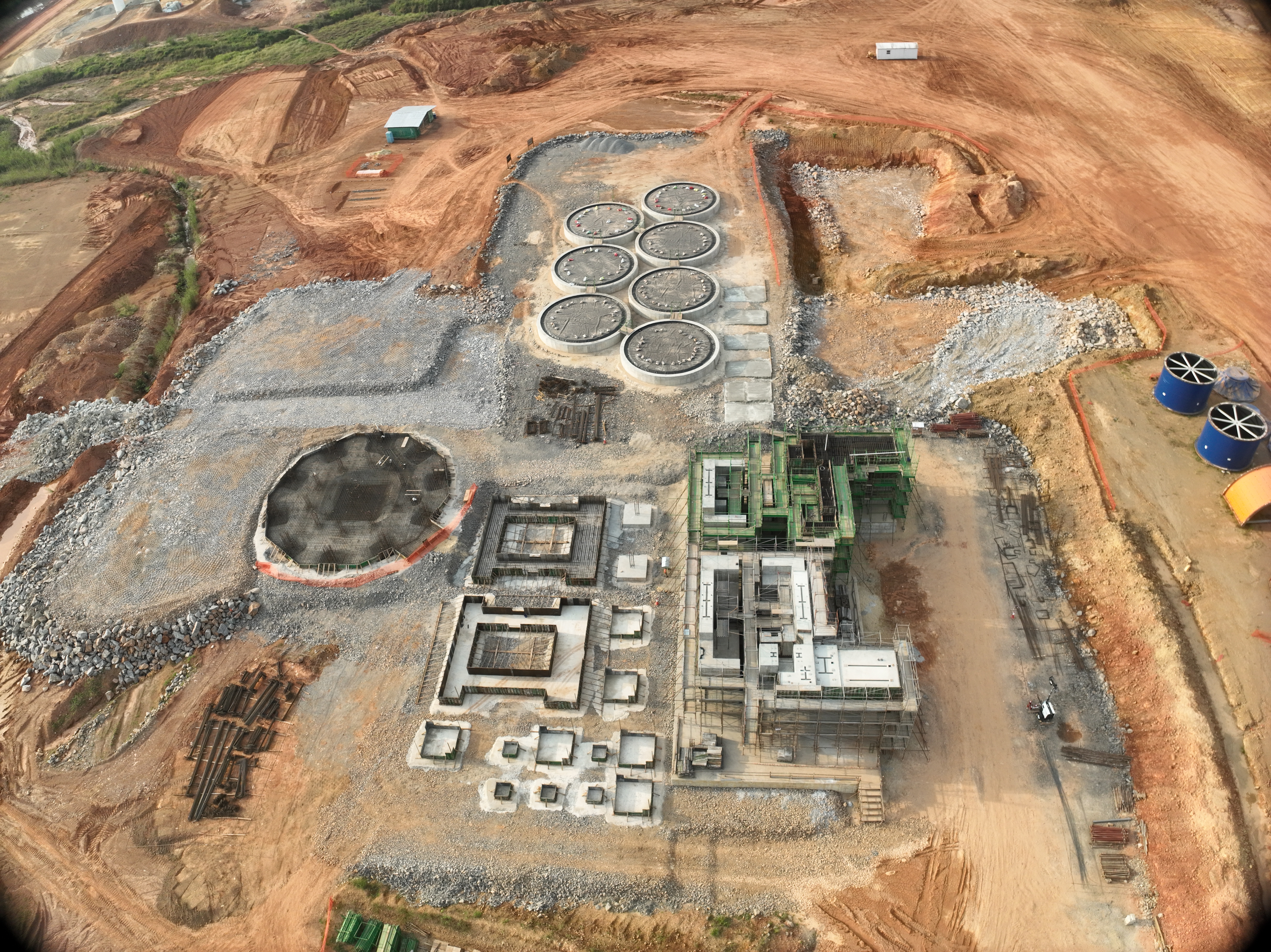
Baomahun Gold Project – Ongoing Construction of Process Plant

To view an enhanced version of this graphic, please visit:
https://images.newsfilecorp.com/files/12020/276368_processplant.jpg

A Pioneering Development for Sierra Leone
Led by Boxmoor Au and A2MP, and supported by a predominantly African technical team, Baomahun introduces several national “firsts” across financing, engineering, power solutions and community partnerships. Delivery partners include Lycopodium (EPCM), Knight Piésold, CrossBoundary Energy, and Komatsu/PanAfrican Equipment.

Upon commissioning, Baomahun is expected to become one of Africa’s leading new gold operations, producing an average of 150,000 ounces per year over a 12.5-year mine life, with peak production of 201,000 ounces.

The mine is anticipated to support up to 900 direct and indirect jobs, with 90% local employment already achieved, and contribute around 10% of Sierra Leone’s GDP during operations.

Sierra Leone’s Minister of Mines and Mineral Resources, Honourable Julius D. Mattai, said the project signals strong confidence in the nation’s mining sector and reinforces the government’s commitment to responsible, community-centred development.

Community Investment Underway
FG Gold has committed 1% of gross revenues to a Community Development Fund, supporting education, healthcare, agriculture, infrastructure and enterprise. Early initiatives include a community centre, a primary school, a renovated health centre, and upgrades to the Matotoka-Baomahun access road.

Contact:
Nicola Asgill
Corporate Development, Sustainability & Investor Relations Director
FG Gold
Mobile: +232 99 503 506
Email: nicola.asgill@fg-gold.com

Follow FG Gold on LinkedIn.

About FG Gold Limited
FG Gold is a gold development company based focused on constructing and operating the Baomahun Gold Project located in Sierra Leone. Baomahun is one of the largest deposits under development in Africa and will become Sierra Leone’s premier large scale commercial gold mine. Upon operations, the Project is expected to deliver an average annual gold production of ~150,000 ounces per year over a 12.5-year mine life peaking at 201,000 ounces.

The issuer is solely responsible for the content of this announcement.

CooperVision Opens Regional Service Centre in partnership with CEVA Logistics to Accelerate Asia Pacific Growth.

Driving faster delivery and broader portfolio access across the region.

SINGAPORE, Dec. 1, 2025 /PRNewswire/ — CooperVision Asia Pacific, in collaboration with CEVA Logistics, has opened a new Regional Service Centre in Singapore, marking a significant milestone in both companies’ commitment to enhance supply chain and logistics capabilities across the Asia Pacific region. 

Strategically located in CEVA’s healthcare hub facility within Singapore’s Airport Logistics Park, a designated free trade zone adjacent to Changi Airport, the centre marks the first phase of a broader infrastructure investment plan focussed on strengthening regional leadership and driving operational excellence. By utilizing CEVA’s robust logistics network, specialized infrastructure, and expert teams in healthcare quality assurance and regulatory compliance, CooperVision is well-positioned to drive continued growth and elevate service standards across the region.

The Singapore-based centre now brings even greater choice to eye care professionals and patients across Asia Pacific, making up to 7,000 additional SKUs available regionally across CooperVision’s world-leading toric and multifocal contact lens portfolio[1]. With 99.9%[2] of astigmatic patients and 99.7%[3] of presbyopes able to be successfully fitted with CooperVision contact lenses, this enhanced availability means practitioners across the region can confidently meet the needs of more patients—whatever their prescription or stage of life.

As the rollout progresses, the new Regional Service Centre will reduce reliance on local stockholding and deliver faster fulfillment on non-stocked items. By centralizing inventory, this model will further expand product access, enhance flexibility, and drive sustainable cost efficiencies, ensuring a seamless experience across the region. To further enhance the operational efficiency of the new service centre, CEVA Logistics deployed a healthcare-focused warehouse management system and introduced in-house laser marking used in repackaging, for which CEVA obtained licensing from the National Environment Agency. Now fully operational, the regional service centre positions CooperVision to meet the evolving needs of eye care professionals and patients across Asia Pacific.

Sam Ng, Head of Distribution, CooperVision APAC said “This collaboration with CEVA Logistics reflects our commitment to innovation and service excellence. Together, we’re building smarter logistics solutions that empower markets and elevate customer experience.”

Brunno Matta, Vice President of Contract Logistics, APAC, CEVA Logistics, said: “As Asia Pacific’s healthcare sector grows, we’re expanding tech-driven and innovative logistics solutions. Our GDP and GMP-trained teams help CEVA support CooperVision’s success and scalability.”

###

About CooperVision

CooperVision, a division of CooperCompanies (Nasdaq: COO), is one of the world’s leading manufacturers of contact lenses. The company produces a full array of daily disposable, two-week and monthly soft contact lenses that feature advanced materials and optics, and premium rigid gas permeable lenses for orthokeratology and scleral designs. CooperVision has a strong heritage of addressing the toughest vision challenges such as astigmatism, presbyopia, childhood Myopia, and highly irregular corneas; and offers the most complete portfolio of spherical, toric and multifocal products available. Through a combination of innovative products and focused practitioner support, the company brings a refreshing perspective to the marketplace, creating real advantages for customers and wearers. For more information, visit www.coopervision.com.

About CooperCompanies

CooperCompanies (Nasdaq: COO) is a leading global medical device company focused on helping people experience life’s beautiful moments through its two business units, CooperVision and CooperSurgical. CooperVision is a trusted leader in the contact lens industry, helping to improve the way people see each day. CooperSurgical is a leading fertility and women’s healthcare company dedicated to putting time on the side of women, babies, and families at the healthcare moments that matter most. Headquartered in San Ramon, CA, CooperCompanies has a workforce of more than 16,000, sells products in over 130 countries, and positively impacts over fifty million lives each year. For more information, please visit www.coopercos.com.

About CEVA Logistics

CEVA Logistics, a world leader in third-party logistics, provides global supply chain solutions to connect people, products and providers all around the world. Headquartered in Marseille, France, CEVA Logistics offers a broad range of end-to-end, customized solutions in contract logistics and air, ocean, ground and finished vehicle transport in 170 countries worldwide thanks to its approximately 110,000 employees at approximately 1,500 facilities. With 2024 revenue of US$18.3 billion, CEVA Logistics is part of the CMA CGM Group, a global player in sea, land, air and logistics solutions.

1 CVI data on file, 2024.

2 CooperVision data on file 2021. Rx coverage database n=101,973 aged 14 to 70 years

3 CVI data on file, 2020. Rx coverage database n=101,973 aged 14 to 70 years.


Asia PGI and partners unveil preview of PathGen: new AI-powered outbreak intelligence tool

Asia-led, “sovereign-by-design” platform built for secure, decentralised pathogen intelligence-sharing across borders aims to break data silos and provide faster “time to actionable insight” of outbreaks, from detection to control measures being in place.

SINGAPORE, Dec. 1, 2025 /PRNewswire/ — Asia Pathogen Genomics Initiative (Asia PGI) today offered the first public preview of PathGen, an AI-powered sense-making and decision-making support platform of pathogen genomics and contextual data. Designed for public health practitioners, clinicians and industry, it can help detect emerging disease threats earlier, assess risks faster, and coordinate responses within and across borders, all without compromising countries’ ownership of their respective sovereign data. The objective is to strengthen health security across Asia and beyond, reducing lives lost and livelihoods disrupted, and the economic impacts of communicable diseases.

Asia Pathogen Genomics Initiative and partners at the PathGen preview. From left to right. Seated: Mr Ng Boon Heong, Executive Director & Chief Executive Officer, Temasek Foundation; Ms Ho Ching, Chairman, Temasek Trust; Mr Ong Ye Kung, Minister for Health and Coordinating Minister for Social Policies; Ms Jennie Chua, Chairman, Temasek Foundation; Mr Goh Yew Lin, Chair, Governing Board, Duke-NUS Medical School.

The preview demonstration, hosted by the Duke-NUS Centre for Outbreak Preparedness (COP) and Temasek Foundation, showcased how PathGen could integrate diverse data sources—pathogen genomics, clinical information, population data, climate, and mosquito habitat patterns—powered by the latest AI technology and foundation models to provide enhanced situational awareness and decision-making support through timely, high-quality, actionable insights. The result: Faster decisions taken with higher resolution and greater confidence—for example, guiding decisions on when to adjust treatment protocols, where to deploy vaccines and how to allocate resources, before outbreaks spiral out of control.

More than 100 attendees, comprising senior health officials from the region, as well as philanthropic, scientific and technology partners, were at the preview and discussed governance, strategy and next steps for regional deployment. In a symbolic show of regional commitment, partners from Indonesia, Malaysia, Singapore, Thailand, and Vietnam placed their hands on the PathGen logo to affirm their pledge to co-create PathGen as a shared public good for regional health security, while partners from the Philippines joined virtually. Mr Ong Ye Kung, Singapore’s Minister for Health and Coordinating Minister for Social Policies was the guest-of-honour at the PathGen preview.

PathGen is housed by Asia PGI which is led by the Duke-NUS Centre for Outbreak Preparedness. A coordination and capacity development hub advancing pathogen genomics sequencing for early detection, control and elimination of infectious diseases in the region, Asia PGI convenes more than 50 government and academic partners across 15 countries, with Singapore as its nerve centre. Asia PGI and PathGen are propelled by three key catalytic funders—the Gates Foundation, Temasek Foundation, and Philanthropy Asia Alliance. Four development partners—Amazon Web Services (AWS), IXO, Sequentia Biotech and Sydney ID at the University of Sydney—are contributing core technologies and expertise to bring PathGen from concept to practice.

Why now?

Traditional epidemiological surveillance reports what is happening (e.g., counts of disease cases, hospitalisations, etc), while genomic surveillance has the potential to reveal the “who, where, and how” infections emerge in populations. But today’s systems are often hindered by silo-ed, non-interoperable databases that do not share information with one another, limited contextual data, data sovereignty barriers and policy constraints that slow responses and limit preparedness. Urgent action is needed to overcome these barriers as rapid population growth, unprecedented mobility, climate disruptions and antimicrobial resistance are driving more frequent and complex disease outbreaks across human and animal populations.

Recent AI breakthroughs which underpin PathGen allow better synthesis of genomic, clinical, population, environmental and mobility data to help timely clinical and public health decisions. A “federated”, “sovereign-by-design” platform such as PathGen shares only the analytics; the underlying raw data is not moved or centralised to one location and remains under the control of the respective country/owner, enabling cooperation without compromising data integrity or eroding trust.

Professor Paul Pronyk, Director of Duke-NUS’ Centre for Outbreak Preparedness said: “This proof of concept shows how AI and pathogen genomics can work together to provide actionable intelligence for clinicians and public health authorities. By sharing only essential insights, countries can respond faster to outbreaks while strengthening trust and sovereignty.”

Dr Lee Fook Kay, Head of Pandemic Preparedness, Temasek Foundation said, “Every delay between detecting a pathogen and making the right public health decision costs lives. Temasek Foundation is catalysing PathGen, as it can integrate genomic information with other relevant surveillance, population and environmental data sources into timely insights that health authorities can act upon. A shared intelligence system that protects sovereignty, cuts response time, and stops outbreaks before they become crises – that’s the future of health security and preparedness!”

Shaun Seow, CEO of Philanthropy Asia Alliance, added: “PathGen fills a critical gap with a decision-support platform built for Asia’s needs and complexities. It enables shared intelligence without compromising data sovereignty, helping us better prepare for the next pandemic. Through our Health for Human Potential Community, we’re proud to support this effort to strengthen public health resilience across the region.”

What’s next?

PathGen will advance from proof-of-concept towards a launch-ready platform over the next 18 months, with pilots from early 2026 and a staged roll-out through 2027.

These efforts will be supported through the Asia PGI network of country partners. Country-level engagement aims to help define priorities and technical needs; establish plans for secure in-country deployment; set governance and benefit-sharing arrangements; deliver core analytics and decision support tools with integration to national systems; build capacity for public health laboratories and implementation teams; and provide regular briefings and demonstrations to align partners on strategy, governance, and next steps.

Information on PathGen’s development will be updated on the PathGen website

About Duke-NUS Medical School

Duke-NUS is Singapore’s flagship graduate entry medical school, established in 2005 with a strategic, government-led partnership between two world-class institutions: Duke University School of Medicine and the National University of Singapore (NUS). Through an innovative curriculum, students at Duke-NUS are nurtured to become multi-faceted ‘Clinicians Plus’ poised to steer the healthcare and biomedical ecosystem in Singapore and beyond. A leader in ground-breaking research and translational innovation, Duke-NUS has gained international renown through its five signature research programmes and 10 centres. The enduring impact of its discoveries is amplified by its successful Academic Medicine partnership with Singapore Health Services (SingHealth), Singapore’s largest healthcare group. This strategic alliance has spawned 15 Academic Clinical Programmes, which harness multi-disciplinary research and education to transform medicine and improve lives. 

For more information, please visit www.duke-nus.edu.sg

About Temasek Foundation

Temasek Foundation supports a diverse range of programmes that uplift lives and communities in Singapore and Asia. Temasek Foundation’s programmes are made possible through philanthropic endowments gifted by Temasek, as well as gifts and other contributions from other donors. These programmes strive to deliver positive outcomes for individuals and communities now, and for generations to come. Collectively, Temasek Foundation’s programmes strengthen social resilience; foster international exchange and catalyse regional capabilities; advance science; and protect the planet.

For more information, please visit www.temasekfoundation.org.sg

China to boost green industry cooperation

Nation to spur low-carbon transition of manufacturing, top regulator says

BEIJING, Dec. 1, 2025 /PRNewswire/ — A news reports from chinadaily.com.cn

China will deepen multilateral cooperation on green technologies, support its new energy vehicle, battery and photovoltaic enterprises in expanding globally, and accelerate the low-carbon transition of its sprawling manufacturing sector, said the nation’s top industry regulator.

Li Lecheng, minister of industry and information technology, said in an exclusive signed article written for China Daily that when global climate governance encounters setbacks and some nations are backsliding on their commitments, China’s determination to pursue a green transition in manufacturing underlines its drive to foster new quality productive forces and pursue high-quality development.

China will “encourage competitive Chinese enterprises in photovoltaics, wind power, lithium batteries and new energy vehicles to expand globally and to invest in and develop green energy projects in countries and regions involved in the Belt and Road Initiative and beyond”, Li said.

President Xi Jinping announced China’s new Nationally Determined Contributions in his video speech in September to the United Nations Climate Summit 2025. Xi said that China will, by 2035, expand the installed capacity of wind and solar power to over six times the 2020 levels, striving to bring the total to 3,600 gigawatts, and make new energy vehicles the mainstream in the sales of new vehicles.

“The deep impetus for the green transition of China’s sprawling manufacturing sector stems from President Xi’s ecological civilization concept,” Li said, adding that China’s new NDC targets demonstrate a pragmatic and actionable ambition for emission reductions.

Highlighting that “China has built the world’s largest new energy industry chain”, Li said the country’s renewable energy products are exported to over 200 countries and regions. Such products meet more than 80 percent of the global demand for photovoltaic modules and 70 percent of the global demand for wind power equipment. Meanwhile, over half of the world’s electric vehicles run on Chinese roads.

“China has also collaborated with more than 100 countries and regions on green energy projects. … These initiatives demonstrate the tangible impact of Chinese solutions in helping other developing nations address climate change while fostering economic growth,” Li added.

According to Li, from 2021 to 2024, China produced about 15.6 trillion kilowatts of photovoltaic modules, which has helped the world generate about 3.2 trillion kilowatt-hours of green electricity and reduce carbon dioxide emissions by roughly 2.54 billion metric tons.

China will also promote international cooperation in green infrastructure and transportation solutions, and actively participate in shaping international green and low-carbon regulations, he said.

Li outlined a systematic approach to reinforcing the green development of China’s manufacturing economy, focusing on modernizing the industrial system, building green supply chains and deepening international cooperation.

“China will strategically plan and deploy future-oriented energy and manufacturing industries, including hydrogen energy, energy storage, bio-manufacturing and carbon capture, utilization and storage,” he said.

The senior official also emphasized technological innovation as the core driver for sustainable development. Nearly half of Chinese enterprises engaged in or planned green tech innovation in 2024, according to data from the China National Intellectual Property Administration.

“Over the past decade, China has contributed to a cumulative reduction of over 60 percent and 80 percent, respectively, in the global average levelized cost of electricity for wind power and solar photovoltaic technologies,” Li said.

“An ancient Chinese proverb reads: ‘Those who persevere in action will achieve their goals.’ … No matter how the international landscape shifts, (China’s manufacturing industry) remains committed to honoring its pledge of building a community with a shared future for mankind through tangible green initiatives,” he added.

He Kebin, an academician of the Chinese Academy of Engineering, said: “After decades of efforts, China has taken the lead in research and development, and in the large-scale engineering application of new energy technologies. Its mature and cost-competitive technical solutions are becoming increasingly sought-after in the global market.

“In the 15th Five-Year Plan (2026-30) period, China’s unique expertise will provide crucial support for other countries that are rich in wind and solar resources but have weak grid foundations,” the academician said.

He Xiaopeng, CEO of Chinese auto company Xpeng Motors, said that China “possesses distinct advantages in industrial chain and artificial intelligence, complemented by strengths in efficiency, cost, quality and scale”, adding that “these factors can empower the global expansion of China’s new energy vehicles”.

Bybit Announces Humanitarian Aid for Sri Lanka as Cyclone Ditwah Triggers Severe Flooding in Southeast Asia

DUBAI, UAE, Dec. 1, 2025 /PRNewswire/ — Bybit, the world’s second-largest cryptocurrency exchange by trading volume, today announced an emergency humanitarian contribution to support communities affected by the devastating floods across Southeast Asia, with a primary focus on Sri Lanka—one of the hardest-hit countries following Cyclone Ditwah.

Over the past week, torrential rains and cyclone-driven winds have led to catastrophic flooding across Indonesia, Malaysia, Thailand, and Sri Lanka. The disaster has claimed more than 420 lives across the region, including 123 lives lost in Sri Lanka, with tens of thousands displaced and critical infrastructure severely damaged.

In response to this unprecedented crisis, Bybit is in touch with the Central Bank of Sri Lanka (CBSL) to donate $100,000 in support of relief operations, emergency shelters, and essential supplies for affected families. This collaboration ensures that assistance reaches those who need it most and aligns with national priorities during this critical moment.

“Our hearts are with the people of Sri Lanka and the wider South Asian region during this time of immense loss,” said Nazar Tymoshchuk, Bybit’s Mini-Global Regional Manager. “As communities face the aftermath of Cyclone Ditwah, we stand in solidarity with them and are committed to contributing to relief and recovery efforts together with credible local partners such as the CBSL.”

Sri Lanka alone has seen more than 44,000 people displaced, with widespread landslides, damaged transportation routes, and suspended public services. Rescue efforts continue as authorities race to reach stranded citizens, restore power and communications, and prevent further losses amid continued rainfall forecasts.

Bybit’s contribution aims to support immediate necessities including food, clean water, medical aid, temporary housing, and rehabilitation programs. The company reaffirms its long-term dedication to supporting communities globally in times of crisis through meaningful action and collaboration.

#Bybit / #TheCryptoArk

About Bybit

Bybit is the world’s second-largest cryptocurrency exchange by trading volume, serving a global community of over 70 million users. Founded in 2018, Bybit is redefining openness in the decentralized world by creating a simpler, open and equal ecosystem for everyone. With a strong focus on Web3, Bybit partners strategically with leading blockchain protocols to provide robust infrastructure and drive on-chain innovation. Renowned for its secure custody, diverse marketplaces, intuitive user experience, and advanced blockchain tools, Bybit bridges the gap between TradFi and DeFi, empowering builders, creators, and enthusiasts to unlock the full potential of Web3. Discover the future of decentralized finance at Bybit.com.

For more details about Bybit, please visit Bybit Press
For media inquiries, please contact: media@bybit.com
For updates, please follow: Bybit’s Communities and Social Media

Discord | Facebook | Instagram | LinkedIn | Reddit | Telegram | TikTok | X | Youtube

Tsinghua University Releases the First University-Wide Framework Governing AI in Teaching and Research

BEIJING, Dec. 1, 2025 /PRNewswire/ — Tsinghua University recently released the “Tsinghua University Guiding Principles for the Application of Artificial Intelligence in Education” (Guiding Principles), the institution’s first comprehensive, university-wide framework that sets systematic, multi-level guidance and norms for the use of AI across its campus.

With generative artificial intelligence now becoming increasingly prevalent in classrooms and laboratories, students are turning to AI to support learning and brainstorm new ideas, even as concerns grow over mental stagnation and reliance on technology. Faculty members are exploring new ways to integrate AI into instruction while navigating questions of ethics and appropriate use. The Guiding Principles are divided into three sections, namely, General Provisions, Teaching and Learning, and Theses, Dissertations and Practical Achievements. Together, they provide a top-level framework with detailed, scenario-based guidelines addressing key aspects of teaching and academic research.

Wang Shuaiguo, Director of the Online Education Center and primary drafter of the document, shared that the Guiding Principles also reserve ample space for future development. Beyond current teaching and research scenarios, the framework is designed to support future extensions into academic research, administrative services, and other emerging applications.

“We hope this will not become a document that restricts innovation. It should be a living system—one that continues to grow as the technology evolves,” said Wang.

The General Provisions section outlines Tsinghua University’s proactive yet cautious approach to artificial intelligence and sets out five core principles, namely, responsibility, compliance and integrity, data security, prudence and critical thinking, and fairness and inclusiveness. These principles emphasize that AI should remain as an auxiliary tool, with teachers and students serving as the main drivers of teaching and learning. The framework requires proper disclosure of AI use, prohibits academic misconduct, and bans the use of sensitive or unauthorized data in training or operating AI models. It also urges vigilance against AI-generated errors and calls for multi-source verification to prevent cognitive complacency from overreliance on technology. The guidelines further highlight the need to address algorithmic bias and the digital divide, ensuring that AI development and application serve the public good.

The Teaching and Learning section advises instructors to define how artificial intelligence should be used based on each course’s objectives, explain the Guiding Principles to students at the start of the semester, and take responsibility for any AI-generated teaching materials. The guidelines also encourage faculty to help students develop a critical and well-rounded understanding of AI. Students are permitted to use AI as a learning aid within course boundaries but are strictly prohibited from copying or mechanically paraphrasing AI-generated text, code, or other content for academic submissions.

For graduate students, the Theses, Dissertations and Practical Achievements section emphasizes that artificial intelligence must not replace the academic training or independent intellectual work required of students. The use of AI for ghostwriting, plagiarism, fabrication, or any other form of misconduct is strictly prohibited. Supervisors are instructed to provide clear guidance on appropriate AI use and maintain oversight throughout the research process to uphold academic integrity and ensure that the work of students is original.

Developed to enable innovation rather than restrict it, Tsinghua University’s Guiding Principles reflect its close study of AI’s expanding role in education and its effort to build a shared academic consensus. Emerging tools such as AI-powered courses, knowledge engines, agent instructors, and campus companions have raised new questions about ethics, responsibility, and authorship in teaching and research. In summer 2024, the university began drafting the Guiding Principles through collaboration among academic and administrative departments, aiming to balance openness to technological progress with careful oversight and responsible use.

The three-layer decoupled architecture of AI in Education from Tsinghua University

The release of the Guiding Principles marks a new phase in Tsinghua University’s integration of artificial intelligence and education, shifting focus from technological advancement to institutional support. The effort builds on years of systematic work in AI-enabled teaching. Moving forward, Tsinghua plans to promote the principles through its AI literacy platform, faculty workshops, and interdisciplinary dialogue. The university aims to guide its community toward responsible and informed AI use, fostering a sustainable ecosystem for educational innovation and preparing the next generation to harness and innovate with intelligent technologies.

For the detailed Guiding Principles for the application of AI in Education from Tsinghua University, please visit https://www.tsinghua.edu.cn/en/ and its official pages on Facebook https://www.facebook.com/Tsinghua, LinkedIn https://www.linkedin.com/school/tsinghua-university/, X https://x.com/Tsinghua_Uni, YouTube https://www.youtube.com/c/TsinghuaUniversity_official, and Instagram https://www.instagram.com/tsinghua_uni/.