Home Blog Page 2407

US Government Enters Shutdown as Congress Fails to Reach Funding Deal

US Senate Minority Leader Chuck Schumer (D-NY) (R) and US Senator Dick Durbin (D-IL) leave a press conference following a Senate vote on Capitol Hill in Washington, DC on September 30, 2025, hours before a partial government shutdown is set to take effect. The US government barreled towards its first shutdown in six years Tuesday, with funding expiring at midnight after Democrats fought a war of words with Donald Trump and senators rejected a last-ditch bid to keep the lights on. (Photo by ANDREW CABALLERO-REYNOLDS / AFP)
It is the first shutdown since the longest in history, lasting 35 days, almost seven years ago, and will stop work at multiple federal departments and agencies, affecting hundreds of thousands of government workers.

Trump blamed Democrats over the stalled talks and threatened to punish the party and its voters during the stoppage by targeting progressive priorities and forcing mass public sector job cuts.

“So we’d be laying off a lot of people that are going to be very affected. And they’re Democrats, they’re going to be Democrats,” Trump told reporters in the Oval Office.

He said a “lot of good can come down from shutdowns,” and suggested he would use the pause to “get rid of a lot of things we didn’t want, and they’d be Democrat things.”

Government operations began grinding to a halt at 12:01 am, after a frenetic but ultimately failed bid in the Senate to rubber-stamp a short-term funding resolution already approved by the House of Representatives.

Hopes of a compromise had been hanging by a thread since Monday, when a last-gasp meeting at the White House yielded no progress.

The gridlocked Congress regularly runs into deadlines to agree on spending plans, and the negotiations are invariably fraught. But Congress usually avoids them ending in shutdowns.

Democrats, in the minority in both chambers of Congress, have been seeking to flex their rare leverage over the federal government eight months into Trump’s barnstorming second presidency that has seen entire government agencies dismantled.

Trump’s threat of new job cuts added to anxieties in the federal workforce sparked by large-scale firings orchestrated by tycoon Elon Musk’s Department of Government Efficiency earlier this year.

Health care under threat

The 100-member Senate requires government funding bills to receive 60 votes, seven more than the Republicans control.

Republicans had proposed to extend current funding until late November, pending negotiations on a longer-term spending plan.

But Democrats wanted to see hundreds of billions of dollars in health care spending restored, particularly in the Obamacare health insurance program for low-income households, which the Trump administration is likely to eliminate.

Almost all Senate Democrats voted against a House-passed, seven-week stop-gap funding measure hours ahead of the midnight deadline.

It remains unclear how long the shutdown will last.

The federal government has shuttered 21 times since 1976, when Congress enacted the modern-day budget process.

Some stoppages have lasted only a few hours, not long enough to affect government operations.

The longest began on December 22, 2018 when Democrats and Trump found themselves at an impasse over USD 5.7 billion the president was demanding for a border wall during his first term.

Around 380,000 federal employees were furloughed and another 420,000 worked without pay.

Senators can move quickly when inclined by waiving the normal procedures that tend to hold up legislation.

The upper chamber was due back in session on Wednesday, but a House recess lasting all week means it will not be able to rubber stamp any quick deal agreed by the Senate.

The Senate will be out on Thursday for the Jewish holiday Yom Kippur, but will be back on Friday and possibly in session through the weekend.

The shutdown will not affect vital functions like the Postal Service, the military and welfare programs like Social Security and food stamps.

But up to 750,000 workers could be sent home each day and would not be paid until the shutdown was over, according to the Congressional Budget Office.


© Agence France-Presse

BUMA International Group 1H 2025 Results Demonstrate Strong Recovery in 2Q25


JAKARTA, INDONESIA – Media OutReach Newswire – 1 October 2025 – PT BUMA Internasional Grup Tbk (BUMA International Group, IDX: DOID, “the Group”) today announced its audited consolidated results for the first half of 2025 (“1H25”). While major operational and weather-related disruptions significantly impacted the first quarter, the Group delivered a strong recovery in the second quarter, marked by higher production, efficiency improvements, and positive free cash flow, despite continued rain challenges.

2Q25 Results: Strong Recovery Supported by Fundamental Improvements

The Group recorded EBITDA of US$50 million in the 2Q25, more than three times the EBITDA generated in 1Q25. Overburden removal increased to 108 million bcm (mbcm) and coal production reached 20 million tonnes (mt), both up 8% quarter-on-quarter (QoQ) as weather conditions eased and operations stabilized. Revenue rose to US$378 million, up 8% QoQ in line with higher volumes, while the net loss narrowed to US$10 million, with the Group achieving monthly profitability in May and June. Free cash flow turned positive at US$24 million, compared to negative US$19 million in 1Q25, while the cash balance remained solid at US$221 million. This recovery was underpinned by stronger operational discipline and cost efficiency.

The severe disruptions in 1Q25 reinforced the Group’s focus on strengthening fundamentals, leading to decisive actions in 2Q25 that delivered measurable gains in performance and improved cash flow across Indonesian operations, even as rain challenges persisted. Effective work hours increased by 31% between January and July, driven by higher equipment availability and utilization. Total standby hours[1] were reduced 43% by July as bottlenecks in disposals, roads, and geology were addressed, while cycle times shortened 12% over the same period, reflecting smoother haul roads and improved driving discipline. These improvements translated into higher volumes: overburden removal rose from 33 mbcm in April to 38 mbcm in June, and further to 44 mbcm in July and 43 mbcm in August, more than 25% above the 1Q25 average. Coal production averaged 6.4–7.5 mt per month since May, largely supported by stronger recovery performance in Indonesia.

Cost efficiency was also strengthened. Unit cash costs fell in 2Q25, with further improvement by August delivering a 28% reduction since January, directly supporting margin recovery. Manpower cost per bcm decreased 42% by August, driven by disciplined shift management and more efficient operator allocation[2]. Fuel cost per bcm reduced by 17% by August, reflecting a 9% reduction in fuel consumption and an 8% decrease in fuel prices. Repair and maintenance cost per bcm was also down by 13%, supported by health monitoring equipment and a 17% extension in major components life.

Iwan Fuad Salim, Director of BUMA International Group, stated, “Our second-quarter 2025 results demonstrate that the recovery plan is delivering tangible progress. By strengthening our operational fundamentals and reducing the impact of rain disruptions, we improved reliability and restored monthly profitability toward the end of the quarter. This operational discipline provides a stronger foundation for sustained momentum in the months ahead.”

1H25 Performance Weighed Down by Q125 Disruptions

On a year-on-year (YoY) basis, 1H25 results reflected the impact of unprecedented major operational disruptions in 1Q25. Overburden removal totaled 209 mbcm, down 23% YoY, while coal production reached 38 mt, down 10% YoY. The decline was mainly due to extreme weather and safety-related closures from other parties in 1Q25.

Revenue stood at US$730 million, down 15% YoY, primarily due to lower volumes, partly offset by 3% YoY higher average selling prices (ASP) from the mining-contractor business and contributions from the mining-owner business. Revenue from the contracting business proved more resilient, as the majority of contracts are protected against inflation and weaker coal prices, underscoring the strength of the Group’s portfolio.

EBITDA in 1H25 was US$64 million, with an 11% margin compared to 22% in 1H24. The Group recorded a net loss of US$80 million, mainly driven by lower EBITDA and receivable provisions for the Australian operations. These impacts were partly offset by favorable foreign exchange movements, fair value gains from the investments in 29Metals, lower interest expense, higher tax benefits, and reduced depreciation from lease expirations and site closures.

The Group’s capital expenditure rose 40% YoY to US$111 million, with US$53 million allocated to growth sites and US$58 million for maintenance. Free cash flow significantly improved to a positive US$5 million, compared to a negative US$47 million in 1H24.

Strengthening Diversification, Deepening Community Impact

In line with the Group’s diversification strategy, revenue from non-thermal coal accounted for 30% of total revenue in 1H25, up five percentage points YoY, reinforcing the Group’s progress in reducing reliance on thermal coal.

Beyond operations, the Group continued to advance its social commitments through its subsidiaries PT Bukit Makmur Mandiri Utama (BUMA) and PT BISA Ruang Vokasi (BIRU), reaching more than 5,400 beneficiaries as of June 2025. Programs focused on education, health, and economic empowerment, reflecting the Group’s commitment to creating long-term positive impact in the communities where it operates.


[1] Idle time when equipment is ready but held up by external constraints.

[2] Excluding severance, the decline was 31%

Hashtag: #BUMA

The issuer is solely responsible for the content of this announcement.

About PT BUMA Internasional Grup Tbk (BUMA International Group)

Established in 1990, PT BUMA Internasional Grup Tbk (BUMA International Group) is a globally diversified mining holding company with operations across Indonesia, Australia, and the United States. The Group operates under four key business pillars: Mining Services, Mine Ownership, Social Enterprise, and Technology.

At the core of its Mining Services operations is PT Bukit Makmur Mandiri Utama (BUMA), one of the largest mining services providers in Indonesia and Australia (operating under its fully owned subsidiary, BUMA Australia Pty Ltd). The Group transformed its business as a mine owner in 2024 with the acquisition of Atlantic Carbon Group, Inc. (ACG), and positioning itself as the leading producer of ultra-high-grade anthracite in the United States.

Expanding its diversification, the Group entered the future-facing commodities sector in 2024 by acquiring a stake in 29Metals Limited, an Australian-based copper and base metals mining company. The Group has also invested in AIM-listed Asiamet Resources Limited for its flagship BKM Copper Project in Central Kalimantan. The Group’s other portfolios include PT Bukit Teknologi Digital (BTech), focusing on developing deep learning technologies aimed at enhancing operational efficiency, reducing emissions, and minimizing Occupational Health and Safety (OHS) risks, and PT BISA Ruang Nuswantara (BIRU), a social enterprise dedicated to education, vocational training, and promoting a circular economy.

Headquartered in Jakarta, BUMA International Group is publicly listed on the Indonesia Stock Exchange (IDX: DOID) and employs over 15,000 people worldwide. In June 2025, the company was once again recognized among the Top 200 in the FORTUNE Southeast Asia 500, underscoring its position as one of the region’s largest companies by revenue.

Shaping the Future of Hybrid Office Spaces in Singapore with Raw Design Consultants


SINGAPORE – Media OutReach Newswire – 1 October 2025 – The rise of hybrid work is reshaping how offices in Singapore are imagined and used. Beyond desks and meeting rooms, today’s workplaces are now expected to support a mix of collaboration, individual focus, and flexibility. Raw Design Consultants, a Singapore-based office interior design studio, has been exploring these changes through design projects that reflect both practical constraints and cultural shifts.

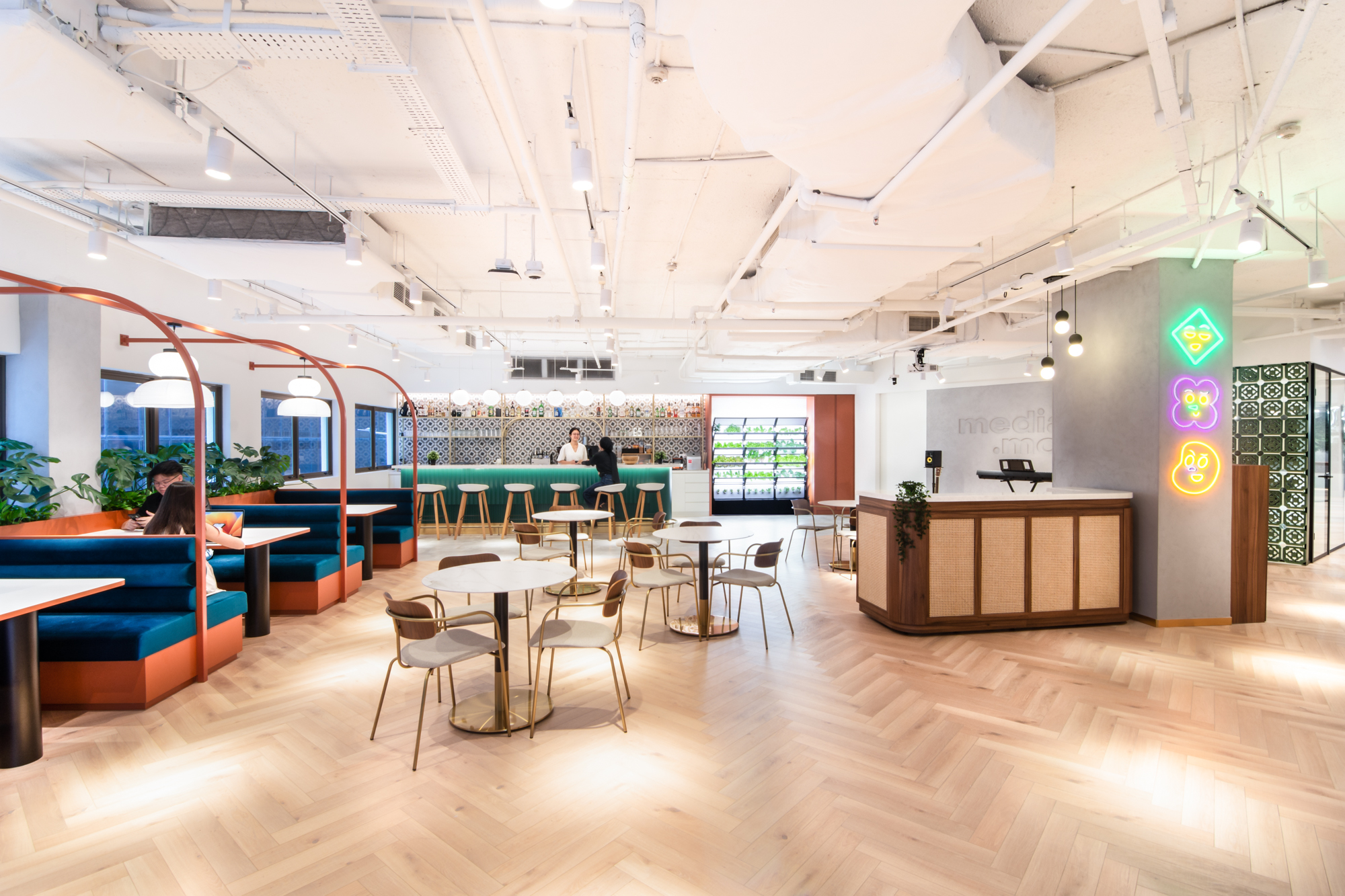
Mediamonks APAC HQ
Mediamonks APAC HQ

The New Office Paradigm in a Hybrid World
Singapore ranks among the highest in Asia Pacific for hybrid work adoption. As a result, the role of the workspace has expanded. No longer just a space for routine tasks, the office is now a hub for collaboration, culture, and connectivity. It is where teams gather to exchange ideas, strengthen relationships, and maintain a shared identity in an era of distributed work.

With high rental costs and limited floor area, businesses in Singapore face difficult choices. Efficient layouts are essential to avoid wasted space, while fit-out budgets must extend beyond visible finishes to cover less obvious requirements, from mechanical and electrical systems to IT infrastructure and regulatory compliance. Basic offices typically cost $60–75 per square foot (psf), mid-range offices $75–100 psf, and premium offices $100–150 psf. Balancing these costs while ensuring flexibility and relevance has become central to designing effective hybrid office spaces.

How Raw Design Crafts Hybrid Office Spaces of Tomorrow
Founded more than a decade ago as a boutique studio, Raw Design Consultants set out to rethink the design and delivery of office projects.

“Looking at how larger firms operated, we realised too much time was lost to red tape,” shared Gary Teo, founder of Raw Design Consultants. “We wanted to deliver inspiring spaces on schedule. Operating as a self-funded studio gives us the flexibility to make decisions quickly and focus on our clients’ needs.”

That philosophy guides the studio’s approach to hybrid office spaces. Each project is developed with employee well-being in mind, incorporating natural light, careful attention to acoustics, and ergonomic planning. The efficient use of space is another priority, with layouts designed to improve flow and reduce waste square footage in Singapore’s high-cost property market. Just as importantly, the studio emphasises cost transparency, helping clients allocate budgets where they matter most—collaborative and client-facing areas. At the same time, back-of-house costs are kept practical and economical.

Monks Singapore’s APAC headquarters demonstrates how these priorities come together in practice. As a fast-growing company across time zones, Monks Singapore required a workplace that could support both high levels of collaboration and the flexibility of hybrid schedules. The office was therefore planned around a central “social sanctuary”, a space designed to host large seminars, smaller team sessions, and informal gatherings—making it the heart of the workplace. Surrounding this hub is a mix of open work areas and enclosed rooms catering to different modes of work, from brainstorming to video calls. Integrated technology also supports hybrid meetings, ensuring that both remote and on-site teams remain connected.

The Next Era of Hybrid Office Spaces in Singapore
With hybrid models evolving at different speeds, Singapore’s offices are becoming increasingly diverse. Raw Design Consultants expects to see growing demand for workplaces that combine local character with global connectivity, serving as both functional and cultural anchors for organisations.

“Every office tells a story, but the story really begins with the people who use the space,” said Mr Teo. “What matters to them shapes every space we create.”

To learn more about the studio’s projects and approach, visit www.rawdesign.com.sg.
Hashtag: #HybridWork #OfficeDesign #WorkplaceTrends #RawDesignConsultants #SingaporeBusiness #FutureOfWork #Architecture

The issuer is solely responsible for the content of this announcement.

About Raw Design Consultants

Raw Design Consultants is a Singapore-based workplace design studio established as a boutique practice in its early years. The studio focuses on streamlining office design, project delivery and workplace strategy, offering office interior design, project management, and services. Its portfolio spans collaborative hubs, co-working environments, and regional headquarters, all designed with a human-centric approach to support the evolving needs of businesses across Singapore and the Asia Pacific.

SNP Group Appoints Jelita Kamal as Chief Operating Officer for Asia Pacific

  • SNP creates new COO role to scale growth and operations across Asia Pacific
  • Seasoned leader Jelita Kamal appointed to drive strategy, execution, and revenue
  • Move reflects SNP’s expansion and commitment to customers and partners in the region

SINGAPORE – Media OutReach Newswire – 1 October 2025 – SNP SE, a leading software provider for digital transformation, automated data migration, and data management in SAP environments, has appointed Jelita Kamal as its first Chief Operating Officer (COO) for Asia Pacific, underscoring the company’s ambition to capture growing demand for digital transformation in the region and to accelerate its growth in Asia Pacific, one of the company’s most dynamic markets with offices in Australia, Singapore, Malaysia and China. By strengthening operational excellence, standardizing processes, and driving rigorous execution discipline, the role ensures that SNP can scale effectively across diverse countries in the region.

Jelita Kamal - photo1

Based in Singapore, Kamal will oversee go-to-market strategy, demand management, and sales operations across Asia Pacific and Japan. She will carry direct revenue accountability while driving operational discipline and building scalable processes to sustain long-term growth. Kamal will report to Phillip Miltiades, President and Managing Director, SNP JAPAC.

“Jelita’s appointment marks an important step in strengthening our ability to execute with consistency across Asia Pacific,” said Phillip Miltiades. “Her leadership and experience will be instrumental in deepening customer value and supporting our teams and partners to achieve greater success.”

Kamal joins SNP with more than two decades of leadership experience in the enterprise technology sector across Asia Pacific, including senior roles at SAP and most recently at Salesforce, where she served as General Manager for Professional Services across ASEAN, Taiwan and Greater China. At SAP, she held responsibilities spanning APJ System Integrator & Strategic Initiatives, Southeast Asia Services Sales, and General Manager for Professional Services in Singapore and the Philippines. Commenting on her appointment, Kamal said: “I am excited to join SNP Group at such a pivotal time of transformation and growth. I look forward to working with our teams, customers, and partners across Asia Pacific to build scalable operations and deliver outcomes that help organizations unlock their full potential.”

SNP is targeting a threefold increase in its Asia Pacific business within the next three years. With Kamal stepping into the newly created COO role, the company is sharpening its focus on disciplined execution and scalable operations to turn this ambition into measurable success for customers and partners across the region.

Hashtag: #SNP

The issuer is solely responsible for the content of this announcement.

About SNP

SNP (ticker: SHF.DE) is the global technology platform leader and trusted partner for companies seeking unparalleled data-enabled transformation capabilities and business agility. SNP’s Kyano platform integrates all necessary capabilities and partner offerings to provide a comprehensive software-based experience in data migration and management. Combined with the BLUEFIELD approach, Kyano sets a comprehensive industry standard for restructuring and modernizing SAP-centric IT landscapes faster and more securely while harnessing data-driven innovations.

The company works with more than 3,000 customers of all sizes and in all industries in over 80 countries, including numerous DAX 40 and Fortune 500 companies. The SNP Group has more than 1,600 employees worldwide at over 36 locations in 23 countries. The company is headquartered in Heidelberg, Germany, and generated revenues of EUR 254,8 million in the 2024 fiscal year.

More information is available at

Philippines Quake Toll Rises to 69 as Injured Overwhelm Hospitals

UPDATED on 1 October, 2025 at 2:56 PM

By Pam CASTRO/AFP – The death toll from a powerful earthquake in the central Philippines rose to at least 69 on Wednesday, a disaster official said, with scores of injured patients overwhelming hospitals on the island of Cebu.

Injured children cried and adults screamed while being treated on beds beneath blue tents outside the Cebu Provincial Hospital, having been wheeled outside as a precaution against waves of aftershocks overnight.

They are survivors of the shallow magnitude 6.9 quake that struck late on Tuesday off Cebu island’s north near Bogo, a city of 90,000 people, according to the US Geological Survey.

Others were not so fortunate, and AFP journalists saw hospital workers loading black body bags into vans that took the dead to local mortuaries.

“Many of them were pinned down by debris, which caused their death,” Office of Civil Defence deputy administrator Rafaelito Alejandro said on government television, putting the updated death toll at 69.

Richard Guion, his left elbow heavily bandaged, told how he and his wife, who broke her foot, were dug from under the collapsed concrete wall of their home by their 17-year-old son, who was playing outside when the quake struck.

“When the cement collapsed, I called out to him,” said the 39-year-old Guion, thankful his son ignored his order to go to bed early.

Thirty people were killed in Bogo, the civil defence office’s Alejandro said.

In other municipalities near the quake’s epicentre, 22 were killed in San Remigio, 10 in Medellin, five in Tabogon and one each in Sogod and Tabuelan, he said.

The Bogo hospital put the number of injured at 186 so far.

‘I am struggling’

Teddy Fontillas, 56, told AFP he had not slept while he helped transfer the injured to other hospitals.

“I’m already struggling, but what we are doing is necessary to help our patients,” he said.

Elsewhere in Bogo, firemen used excavators to drill holes into the collapsed heap of a two-storey motel, where two receptionists and a child were feared trapped beneath debris.

A distraught Isagani Jilig, whose wife and child are among the missing, joined about a hundred people watching the rescue.

“I will never leave this site until I find them again. As a father, I have to be strong now more than ever,” Jilig, 41, told AFP.

Fireman Erwin Castaneda said they had been searching for five hours but “we cannot give up”.

“We are talking about lives here. We will do everything that we can,” he told AFP.

President Ferdinand Marcos pledged swift aid for victims.

“I offer my heartfelt condolences to the bereaved families,” he said in a statement.

Dramatic footage filmed by residents on Bantayan island near Cebu showed a string of light bulbs on an old Catholic church swaying wildly before the church’s belfry tumbled into the courtyard.

Local television showed riders dismounting from their motorcycles and holding onto railings as a Cebu bridge rocked violently.

In Cebu city, 100 kilometres (60 miles) to the south, online shoe merchant Jayford Maranga said he hid under a restaurant table to avoid the collapsing metal ceiling of a shopping mall.

“My friend and I ate at the food court near closing time, and then, bang! It was as if the Earth stopped spinning. And then the mall started shaking,” 21-year-old Maranga told AFP.

The Cebu provincial government has put out a call on its official Facebook page for medical volunteers to assist in the quake’s aftermath.

A number of village roads also sustained damage. The road in Tabogon town was riddled with five-centimetre (two-inch) cracks, AFP journalists saw.

Earthquakes are a near-daily occurrence in the Philippines, which is situated on the Pacific “Ring of Fire”, an arc of intense seismic activity stretching from Japan through Southeast Asia and across the Pacific basin.

Most are too weak to be felt by humans but strong and destructive quakes come at random, with no technology available to predict when and where they might strike.


© Agence France-Presse

Emagene Life Announces International Partnership with IFM, Accelerating Functional Medicine, Longevity, and AI-Driven Healthcare

KUALA LUMPUR, Malaysia, Sept. 30, 2025 /PRNewswire/ — Emagene Life, Asia’s leader in functional medicine and longevity, is proud to announce its official international partnership with the Institute for Functional Medicine (IFM), the leading voice for functional medicine for more than 30 years. This landmark collaboration aligns Emagene Life with the confident and competent practice of functional medicine worldwide, combining clinical excellence, education, and partnerships across medical disciplines.

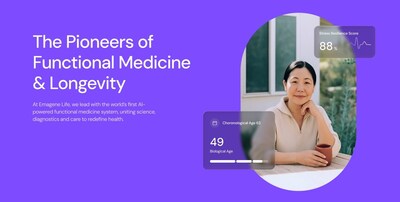
Emagene Life , Functional Medicine & Longevity

Leading the Future of Functional Medicine and Longevity

Emagene Life is the first healthcare organization in Asia to bring together:

  • IFM Certified Practitioners (IFMCP) – ensuring patients receive care from
    doctors trained to the highest international standards.
  • Longevity-Focused Medicine – pioneering programs that integrate
    diagnostics, personalized interventions, and root-cause analysis to extend
    health span and vitality.
  • Avio Health AI – the world’s first functional medicine large language model
    (LLM) system, developed for Emagene Life, which enables deep learning
    analysis of medical records, labs, imaging, genomics, and lifestyle data in
    minutes, providing practitioners and patients with actionable health insight

Expanding Access with Emagene Academy

Through this partnership with IFM, Emagene Life will launch the Emagene Academy, a regional hub dedicated to training doctors, nutritionists, and healthcare professionals in the field of functional medicine. The Academy will deliver IFM-aligned education tailored for Asia and global markets, bridging cultural and clinical gaps while ensuring the highest standards of integrative care.

“Our mission is to empower people not just to live longer, but to live better. By partnering with IFM, we can expand the reach of Functional Medicine, supported by our world-first AI system “Avio Health”, and train the next generation of practitioners through Emagene Academy,” said
Dr. Shirley Koeh, Medical Director at Emagene Life

“We are delighted to welcome Emagene Life into our global partnership network. Their leadership in Longevity and data-driven healthcare, as well as their commitment to accredited education, aligns perfectly with IFM’s mission to transform healthcare worldwide”. said
Makenzi Harrison, Global Impact Manager, Institute for Functional Medicine. 

About Emagene Life

Emagene Life is a pioneering healthcare company integrating advanced functional medicine, longevity science, and artificial intelligence. With fully IFMCP-certified doctors and clinics serving clients worldwide, Emagene Life combines diagnostics, personalized care, and the proprietary Avio Health AI platform to deliver precision health insights. Through innovation and education, Emagene Life is shaping the future of healthcare and human longevity. http://www.Emagene.Life

About The Institute for Functional Medicine (IFM)

As the leading voice for functional medicine for more than 30 years, IFM is advancing the transformation of healthcare for patients and practitioners worldwide. Functional medicine evaluates the whole person and treats underlying processes and dysfunctions that cause imbalance and disease by addressing the unique physical, mental, and emotional needs of each patient. IFM supports the confident and competent practice of functional medicine through ACCME-accredited education, industry-leading certification, partnerships across medical disciplines, and advocating on behalf of functional medicine clinicians and patients around the globe. IFM’s Find a Practitioner database is the largest functional medicine referral network in the world. Visit IFM.org for more information.

Agoda Unveils Top Destinations for Traditional Music Lovers this International Music Day

Singapore, Oct. 1, 2025 /PRNewswire/ — Digital travel platform Agoda reveals a curated guide to exploring Asia’s rich tapestry of traditional music to mark International Music Day on October 1st. From the rhythmic beats of Indian folk music to the harmonious melodies of Vietnamese court music, Asia offers a diverse range of musical experiences that captivate travelers seeking to immerse themselves in local culture.

Asia’s traditional music scene is a vibrant mosaic of genres, instruments, and performances that reflect the continent’s cultural diversity. Travelers can enjoy the unique sounds of indigenous music, which serves as a gateway to understanding the history and traditions of each region. Whether it’s the soulful strains of a bamboo flute or the energetic beats of a drum ensemble, Asia’s music offers a sensory journey like no other.

Here is Agoda’s guide to six must-visit destinations to celebrate traditional music in Asia:

  1. Hue (Vietnam)
    Recognized by UNESCO as an Intangible Cultural Heritage, Hue’s royal court music, Nhã Nhạc, offers a glimpse into Vietnam’s imperial past. Visitors can enjoy performances at the city’s historic sites, where the elegant sounds of Nhã Nhạc transport audiences to a bygone era.
  2. Jodhpur, Rajasthan (India)
    Known for its rich folk music traditions, Jodhpur hosts the annual Rajasthan International Folk Festival (RIFF) taking place from 2-6 October this year, where visitors can experience the soulful sounds of Rajasthani folk music. The festival, set against the backdrop of the majestic Mehrangarh Fort, features performances by local and international artists, making it a must-visit for music lovers.
  3. Sado Island, Niigata Prefecture (Japan)
    Home to the renowned Kodo drummers, Sado Island is a hub for traditional Japanese percussion known as Taiko, characterized by its powerful, rhythmic beats. The island’s Earth Celebration event brings together artists from around the world to perform alongside the Kodo drummers, offering a unique opportunity to experience the power and precision of Taiko drumming.
  4. Ubud, Bali (Indonesia)
    Ubud is the heart of Balinese culture, where the enchanting sounds of Gamelan, a traditional ensemble music featuring metallophones and gongs, fill the air. Visitors can attend performances at local temples and cultural centers, where the intricate rhythms and melodies of gamelan orchestras create an unforgettable auditory experience.
  5. Chiang Mai (Thailand)
    Known for its Lanna music, a traditional Northern Thai style using instruments like the khene and saw u, Chiang Mai offers travelers a chance to explore the traditional sounds of Northern Thailand. The city’s vibrant night markets and cultural festivals often feature live performances of Lanna music, characterized by its unique musical style and folk traditions.
  6. Jeonju, Jeollabuk-do (South Korea)
    Jeonju is famous for Pansori, a traditional Korean musical storytelling genre. The Jeonju International Sori Festival showcases the best of Korean traditional music, offering visitors a chance to experience the emotional depth and narrative power of Pansori performances.
  7. Baguio City, Luzon (Philippines)
    Nestled in the Cordillera region, Baguio City is known for its indigenous music, which features bamboo instruments and gong ensembles. Visitors can explore the city’s cultural heritage through performances at local festivals and community events.

Krishna Rathi, Associate Vice President at Agoda, shared, “Asia’s traditional music scene is a treasure trove of cultural richness, and Agoda is thrilled to help travelers discover these unique musical experiences. From the rhythmic beats of Rajasthan to the melodic harmonies of Vietnam, Agoda makes it easy for travelers to explore and enjoy Asia’s diverse musical heritage with great deals on flights, accommodation and activities.”

With over 6 million holiday properties, more than 130,000 flight routes, and over 300,000 activities, Agoda offers travelers the flexibility to create their perfect musical journey. Discover more at Agoda.com and find the best deals on Agoda’s mobile app.

OutSystems Announces General Availability of Agent Workbench, Empowering Enterprises to Drive Business Impact with Agentic Systems

Early Adopters Axos Bank, Thermo Fisher Scientific and KPMG Report Vast Improvements in Efficiency and Cross-Functional Integration of Agentic AI

SINGAPORE, Oct. 1, 2025 /PRNewswire/ — OutSystems, the leading AI-powered low-code development platform, today announced the general availability of OutSystems Agent Workbench. Agent Workbench empowers enterprises to unlock the business value of AI and agentic systems, making it simple to create and orchestrate intelligent AI agents across use cases, departments, data sets and workflows. Hundreds of customers and partners — companies such as Axos Bank, Thermo Fisher Scientific, The Arch Company, Grihum Housing Finance, and TeamWork — participated in the Agent Workbench Early Access Program, reporting significant improvements in operational efficiency, accelerated speed to value with agentic AI, and elevated digital experiences for customers and employees.

“We plan to expand the use of AI capabilities within OutSystems to realize immediate gains, without needing to invest in specialized AI roles,” said Kevin Hearn, SVP, Head of Consumer Bank Development at Axos Bank. “With Agent Workbench, we can quickly and safely create agents for specific use cases, such as analyzing error logs and automating data entry from documents. Our work with OutSystems on Agent Workbench is a significant step in our AI strategy. By creating and embedding agents into our operations, we are building a more intelligent and responsive banking ecosystem that is ready for the future of finance.”

The news was announced live on-stage at the OutSystems 2025 ONE Conference, the company’s flagship annual event which brings together thousands of IT leaders, developers, and partners from around the world to explore the latest advancements in application and agent development. The general availability of OutSystems Agent Workbench comes at a pivotal moment: the vast majority (93%) of organizations are prioritizing the development of AI agents, but struggle with governance, security, integration and scalability challenges associated with building, deploying, and orchestrating these agents. As OutSystems CEO Woodson Martin discussed during today’s conference, Agent Workbench is designed to run an organization’s entire agentic enterprise – unifying data, workflows, experiences and intelligent agents into a trusted, unified platform with enterprise-grade security and control.

“Agentic AI is one of the most powerful levers for enterprise innovation and transformation, empowering organizations to grow revenue, drive operational efficiency, and deliver amazing customer experiences,” said Martin. “Agent Workbench was created to give our customers the tools they need to build the agentic future with OutSystems. Our Early Access Program participants have realized impressive results with Agent Workbench, positioning them as industry leaders in agentic AI.”

Participants in the Early Access Program for Agent Workbench reported the following use cases and results:

Axos Bank optimized workflows and reduced strain on employees

Technology-driven financial services company Axos Bank leveraged Agent Workbench to transform its internal operations by automating complex, manual tasks. The team built an intelligent log analysis agent to interpret error logs and provide actionable recommendations, eliminating the need for time-consuming manual analysis. This AI-driven approach also extends to automated document mapping, significantly improving data accuracy and employee efficiency. With Agent Workbench, Axos Bank will enhance operational efficiency, accelerate problem resolution, and reduce the burden of manual, repetitive tasks on employees.

Thermo Fisher Scientific transformed client operations with a customer escalation agent

Thermo Fisher Scientific used Agent Workbench to transform its customer support process. The company built an intelligent Customer Escalation Agent to interpret a variety of unstructured data from customer interactions. This AI-driven approach eliminates the need for manual triaging and ensures issues are resolved faster. Through OutSystems Agent Workbench, Thermo Fisher can accelerate problem resolution and reduce the burden of manual, repetitive tasks on its support teams.

The Arch Company automated operations for greater agility and stronger customer relationships

The Arch Company, the UK’s largest small business landlord, transformed its digital operations from spreadsheet-driven processes to a centralized, agile digital platform. Using Agent Workbench, the team implemented a content classification agent that intelligently routes customer service enquiries, eliminating the need for manual, specialized classification. This agent-driven approach ensures faster, more accurate responses to customer enquiries, powering a comprehensive customer and asset management system.

TeamWork streamlined support for improved client and employee experiences

TeamWork, an international consulting and technology integration group, developed a tool with Agent Workbench that gives support teams quick access to ticket information and real-time guidance to resolve complex cases. The tool also uses AI agents to automate the resolution of routine, low-value tickets, ensuring that support teams can dedicate more time to higher-impact issues. This multi-agent system significantly enhances operational efficiency and elevates the overall client experience: TeamWork anticipates that a notable share of tickets can be resolved automatically, while the time required to resolve more complex cases is expected to decrease considerably.

Grihum Housing Finance is optimizing loan underwriting for improved accuracy and agility

Grihum Housing Finance, the leading affordable housing finance company in India, is working to deploy Agent Workbench to improve the accuracy of loan underwriting and streamline property evaluations, addressing critical pain points associated with disorganized and region-specific property data. Specialized agents will analyze property evaluation reports and suggest appropriate technical property deviations during the loan origination process, transforming what was previously a manual, error-prone workflow.

Building upon its Early Access Program capabilities, the generally available version of Agent Workbench includes enhanced features such as an agent marketplace as well as Model Context Protocol (MCP) support to accelerate automation by giving agents direct access to enterprise systems, external tools, and services. In addition to supporting AWS Bedrock, Azure OpenAI, and Anthropic models, Agent Workbench supports newer LLMs such as Gemini, Cohere, Mistral, Databricks, AI2, and IBM’s WatsonX. It also supports custom-built models on VertexAI and open-source models on HuggingFace.

“Agent Workbench delivers the speed-to-value and governance guardrails that organizations have come to expect from OutSystems development. It enables teams to design, orchestrate, and deploy AI agents that operate autonomously – from planning tasks to integrating with enterprise systems – while maintaining control through policies, auditability, and compliance across the lifecycle,” said Hélio Pimenta, Associate Partner, KPMG Low-Code Center of Excellence.

To learn more about how agentic AI can accelerate innovation, visit the OutSystems Agent Workbench homepage and join the upcoming Agent Workbench webinar.

About OutSystems

OutSystems is the leading AI-powered low-code development platform trusted by thousands of customers worldwide. The platform empowers CEOs, management teams, and technology leaders to build mission-critical applications and agentic systems that grow revenue, streamline operations, and deliver exactly what businesses need. 

While evolving AI pilots into production success can be challenging due to talent gaps, legacy systems, imperfect data, and sprawling point solutions, OutSystems provides a proven low-code platform and AI-driven development experience that enables innovation up to 10x faster with the assurance of built-in security, scalability, and governance.

Recognized as a leader by analysts, IT executives, business leaders, and developers around the world, global brands trust OutSystems to innovate as fast as the evolving market demands and orchestrate powerful human + AI collaboration in the agentic future.

Founded in 2001, the company’s network spans more than 60 million end users, over 500 partners, and active customers in 75+ countries across 20+ industries. Learn more at www.outsystems.com.