Home Blog Page 367

TCL CSOT Showcases Limitless Breakthrough XR Displays at SID Display Week 2026

LOS ANGELES, May 7, 2026 /PRNewswire/ — TCL CSOT, a global leader in advanced display technologies and a subsidiary of TCL Technology, is demonstrating how XR innovation can expand imagination and redefine interaction at SID Display Week 2026. This focus reflects the company’s APEX philosophy, with its pillar of XUnlimited Imaginative Potential — exploring future‑oriented display forms designed to enrich human experience.

“XR devices are driving the next revolution in human-machine interaction,” said Zhifu Li, VP of TCL CSOT, GM of XR BU of TCL CSOT. “Within an ultra-compact 0.28-inch form factor, TCL CSOT has achieved a retina-level pixel density of 5131PPI. Powered by full-color silicon-based Micro LED technology, we have set a new benchmark for next-generation lightweight, high-performance displays, creating a true ‘smart window’ into immersive digital experiences for AR and AI glasses.”

RetinaLevel Clarity for AR and VR

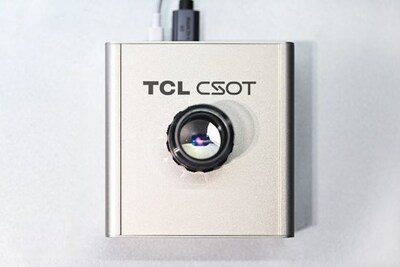
World's Highest PPI Single-Chip Full-Color Si-Micro LED Display (0.28
World’s Highest PPI Single-Chip Full-Color Si-Micro LED Display (0.28″)

TCL CSOT’s World’s Highest PPI Single-Chip Full-Color Si-Micro LED Display (0.28″) sets a new milestone in ultra‑compact display technology. Built on a silicon substrate with monolithic full‑color Micro LED integration, this 0.28‑inch panel achieves a resolution of 1280×720 and an unprecedented pixel density of 5131PPI, delivering razor‑sharp visuals with no visible pixilation.

Leveraging the self‑emissive advantages of Micro LED, the display offers high brightness, deep contrast, and a wide color gamut, creating a “retina‑level” experience for near‑eye applications such as AR glasses and ultra‑thin VR devices. With its miniaturized form factor, ultra‑high resolution, and low power consumption, this innovation establishes a new benchmark for lightweight, high‑performance display solutions and marks a significant leap forward in micro‑display applications.

Immersive Fidelity for Next Gen XR

World's Highest 1700PPI Real RGB G-OLED Display (2.24
World’s Highest 1700PPI Real RGB G-OLED Display (2.24″)

To advance ultra‑high‑definition XR experiences, TCL CSOT has introduced the World’s Highest 1700PPI Real RGB G-OLED Display (2.24″). Built on glass‑based OLED architecture, it achieves 1700PPI density and 2600×2784 real RGB resolution, delivering images of exceptional sharpness and fidelity.

With a 1M:1 contrast ratio and 120Hz refresh rate, the display ensures fluid motion and vivid detail, enhanced by OLED’s inherent advantages — microsecond response time, deep contrast, and low power consumption. This innovation not only elevates XR experiences but also extends its impact through ultra‑high‑density circuit technology adaptable to premium consumer electronics and industrial applications, unlocking vast market potential for XR.

Expanding the XR Portfolio

These pioneering XR displays are part of a broader portfolio TCL CSOT is showcasing at SID Display Week 2026. Underscoring its leadership across immersive display technologies, TCL CSOT is also presenting a diverse range of other XR innovations. These include the World’s Highest-Res Single-Chip Multi-Color Si-Micro LED Display (0.28″), the World’s Highest 2200PPI LCD XR Display (2.48″) and World’s Highest MP 1512PPI XR Display Paired With Cockpit (3.59″). Together, these breakthroughs highlight TCL CSOT’s ability to redefine performance standards and shape the future of XR experiences.

Anchored in its human-centric APEX philosophy, TCL CSOT is ensuring that XR innovation is not only technologically advanced but also meaningful, accessible, and designed to enrich human imagination across all future applications.

About TCL CSOT

Established in 2009, TCL China Star Optoelectronics Technology Co., Ltd. (TCL CSOT) is a leading global innovator in display technologies. Its LCD, OLED, and MLED solutions power applications across TVs, smartphones, tablets, laptops, monitors, automotive systems, VR/XR, and commercial displays. With a clear strategic direction set by its advanced display technology brand APEX, TCL CSOT invests continuously and strategically in R&D, driven by a mission to amaze, protect and inspire all people through endlessly innovative display technology. As part of TCL’s Worldwide Olympic Partnership, TCL CSOT is proud to deliver display solutions that elevate experiences on the global stage.

CATL Subsidiary CAIT Partners up with Togg on Bedrock Chassis

NINGDE, China, May 7, 2026 /PRNewswire/ — On April 29th, Contemporary Amperex Intelligent Technology (Shanghai) Limited (CAIT), CATL’s skateboard chassis arm, has entered into a strategic partnership with Turkish automotive brand Togg to jointly develop chassis platform for its new B-segment vehicle family, marking the first overseas passenger vehicle project for the platform.

Togg CEO Gürcan Karakaş, CATL Chief Customer Officer Libin Tan, and CAIT CEO Hanbing Yang signed the agreement for their respective companies; Togg Chairman Fuat Tosyalı and CATL Chairman & CEO Robin Zeng were present as witnesses.

Under the agreement, CAIT will contribute its Bedrock Chassis technology and engineering expertise, while working closely with Togg to co-develop the platform for three models in Togg’s new B-segment vehicle family. Developed in line with Togg’s product strategy, user expectations and mobility ecosystem, the platform will support next-generation electric vehicles for the Turkish and European markets, with Togg playing a defining role in shaping the user experience, product requirements and digital architecture. The first model developed under the partnership is expected to enter mass production in 2027.

Battery-centric chassis architecture

The Bedrock Chassis is an integrated intelligent chassis built around a “battery-centric” architecture. It combines core chassis components including the battery, electric drive system, thermal management system and chassis domain controller into a single platform. This integration allows the chassis to manage both vehicle energy and motion control, effectively acting as a mobile energy carrier for the vehicle.

Robin Zeng, Chairman and CEO of CATL, said, “This collaboration represents another important milestone in the global expansion of the CATL Bedrock Chassis following its mass production rollout in the Chinese market. It will also serve as a benchmark project in the field of integrated intelligent chassis, strengthening our global partnerships, accelerating electrification and supporting the transition to low-carbon mobility in emerging new energy markets.”

Commenting on the partnership, Togg Chairman Fuat Tosyalı said: “We see mobility not merely as a product category, but as a holistic matter of technology and ecosystem. In this direction, we are taking the partnerships we establish beyond conventional supplier relationships and turning them into strategic partnerships that create shared value and build the future together. Rather than adopting a ready-made solution, we are becoming part of the entire development process, responding more effectively to user needs while also contributing to the development of this ecosystem in our country. In the period ahead, through such value-creating partnerships, we will further enrich the Togg ecosystem and the experience we offer our users by developing new solutions across different segments.”

Localised model for global markets

The Bedrock Chassis has been developed for global deployment through a “1+1+1” localisation model. This model combines one chassis technology platform with one industrial supply chain pathway and the localised operation of one domestic automotive brand. The aim is to allow electric vehicles to be designed and produced in ways that reflect the needs of local markets while using a common technological foundation.

The partnership with Togg is expected to apply this approach in Türkiye, supporting the development of vehicles tailored to regional consumer preferences while strengthening the local electric vehicle ecosystem.

Expanding international partnerships

In 2024, the Bedrock Chassis achieved mass production in the Chinese market, marking the world’s first deployment of an integrated intelligent chassis offered as a standalone product to passenger vehicle brands.

CAIT is continuing to expand cooperation around the Bedrock Chassis in several regions, including Europe and Southeast Asia. The platform is designed to help emerging automotive markets build competitive electric vehicle industries more efficiently, while supporting the global shift towards low-emission mobility.

Sino Land Recognised Among Top 1% in China Real Estate Development Sector for ESG Performance

Second Consecutive Year of Inclusion in the Dow Jones Best in Class World Index


HONG KONG SAR – Media OutReach Newswire – 7 May 2026 – Sino Group (‘the Group’) is pleased to announce that Sino Land Company Limited (‘Sino Land’) (Stock Code: 0083.HK) has been recognised as a ‘Top 1% S&P Global Corporate Sustainability Assessment (CSA) Score (China)’ company in the S&P Global Sustainability Yearbook 2026 (China Edition), and is the only company in the Real Estate Management & Development industry to receive this distinction. Sino Land has also been included as a constituent of the Dow Jones Best‑in‑Class (DJ BIC) World Index for the second consecutive year, underscoring international recognition of the Group’s efforts and leadership in sustainability.

Sino Land has been recognised as a ‘Top 1% S&P Global Corporate Sustainability Assessment Score (China)’ company in the S&P Global Sustainability Yearbook 2026 (China Edition), and is the only company in the Real Estate Management & Development industry to receive this distinction.

The S&P Global Sustainability Yearbook 2026 (China Edition) acknowledges Chinese companies that demonstrate sustainability excellence in their respective industries. This year’s assessment covers nearly 1,800 companies, of which around 190 were selected for inclusion in the Yearbook. Sino Land is the only company in the Real Estate Management & Development industry to be rated among the top 1%, building on its earlier recognition in the S&P Global Sustainability Yearbook 2026 as a ‘Top 5% S&P Global CSA Score’ company. The Dow Jones Best-in-Class World Index is also one of the market’s leading sustainability indices. Based on long‑term economic, environmental and social criteria, the index comprises the top 10% of sustainability performers among the largest 2,500 companies in the S&P Global Broad Market Index (BMI). These recognitions reflect the Group’s ongoing efforts to integrate sustainability principles into its business strategy and daily operations, as well as its continued and measurable progress across key sustainability areas.

Mr Daryl Ng, Chairman of Sino Group and Chairman of the Group’s ESG Steering Committee, said, ‘We are grateful for this recognition under S&P Global’s rigorous assessment framework, particularly as one of the top 1% companies in the Chinese mainland’s Real Estate Management & Development industry. It encourages us to continue strengthening our sustainability efforts in line with international standards. We recognise that our progress has been made possible by the dedication of our colleagues and the support of our business partners and communities, enabling us to implement the Group’s sustainability strategy. In response to the country’s emphasis on accelerating the comprehensive green transformation of the economy and society, as highlighted in the 15th Five-Year Plan, we also hope to learn from it and explore how we can better align our business accordingly, promoting the integration of international experience with local practices and working together to build communities that are lower in carbon and more liveable. Looking ahead, we will continue to learn with humility and work collaboratively with our stakeholders to uphold our corporate culture and core values as we make steady progress on our sustainability journey.’

Beyond advancing a more sustainable environment through climate action, building planning and design, and innovative solutions, the Group also remains committed to a people‑centric approach by promoting sustainability through employee engagement. For the second consecutive year, Sino Group organised ‘Sino Sustainability Month’ in collaboration with close to 15 partners, including environmental social enterprises, green-technology start-ups, academic institutions and professional bodies, to organise visits, workshops and hands-on experiential activities for our employees. Such initiatives encourage colleagues and their families to embrace sustainable practices in the context of work and home life, while gradually extending awareness of sustainable living practices to families and business partners. This year, the programme extended from Hong Kong to Singapore and Sydney, attracting nearly 300 employees and delivering over 650 training hours through the ‘Sino Sustainability Academy’, bringing teams from the three locations together to support sustainability initiatives.

Hashtag: #SinoLand

The issuer is solely responsible for the content of this announcement.

About Sino Group

Established in 1971, Sino Group comprises three listed companies – Sino Land Company Limited (HKSE: 0083), Tsim Sha Tsui Properties Limited (HKSE: 0247), Sino Hotels (Holdings) Limited (HKSE: 1221) – and private companies held by the Ng Family.

As one of Hong Kong’s leading property developers with core businesses in property development and investment, Sino Group has grown with the communities it serves. The Group’s business interests comprise a diversified portfolio of residential, office, industrial, retail and hospitality properties across Hong Kong, mainland China, Singapore and Australia, and has developed over 250 projects spanning more than 130 million square feet. Core business assets are further complemented by property management services, hotel investment and management, including The Fullerton Hotels & Resorts and other affiliate brands.

With over 11,000 committed staff members, the Group strives to fulfil its vision of Creating Better Lifescapes with a focus on three interconnected pillars – Green Living, Community Spirit and Innovative Design – shaping the cities we call home where people live, work and play. Sustainability is central to what we do as we seek to create value for stakeholders and make the business a driver of sustainability for a better future.

Focus Graphite Announces One of the Largest Identified Graphite Deposits Globally at the Lac Tetepisca Project

Updated Lac Tetepisca Mineral Resource Estimate Highlights Significant Scale and Grade with 120,163 kt Indicated at 10.27% Cg and 24,143 kt Inferred at 9.88% Cg

Ottawa, Ontario – Newsfile Corp. – May 7, 2026 – Focus Graphite Inc. (TSXV: FMS) (OTCQB: FCSMF) (FSE: FKC0) (“Focus” or the “Company“), a Canadian developer of high-grade flake graphite deposits and advanced graphite materials for battery, defence, and industrial applications, is pleased to announce its upgraded mineral resource estimate (“MRE“) on its 100%-owned Lac Tetepisca Project (the “Project“) in Quebec. The MRE was completed pursuant to the requirements of National Instrument 43-101 – Standards of Disclosure for Mineral Projects (“NI 43-101“).

Highlights

  • One of the Largest Identified Graphite Deposits Globally: This new mineral resource estimate includes 120,163 ktonnes of Indicated Mineral Resources at 10.27% Cg and 24,143 ktonnes of Inferred Mineral Resources at 9.88% Cg (see table below for additional details regarding the calculation of the MRE and the average Cg grades for the Indicated and Inferred Mineral Resources).
  • High-Grade Mineral Resources: Estimates were calculated using a conservative 3.5% Cg cut-off grade and a US$1,200 per tonne average selling price for graphite concentrate.
  • Significant Expansion Potential: Opportunities exist through step-out and infill drilling to extend the deposit to the southwest and at greater depths, as well as through drill testing of numerous additional geophysical anomalies.
  • AI-Enabled Characterization Technology: Novel, low-cost AI-enabled in situ graphite flake characterization technology is expected to be incorporated into a future MOGC mineral resource update.
  • Potential Acid generation Mitigation Materials: Dolomitic marble from the hanging wall has been included within the resource shell and may be used to mitigate acid generation within the tailings storage facility. Acid buffering capacity results are expected to be published in the coming months.

IOS Geosciences Inc. (“IOS“), a leading Quebec-based geological consulting firm was retained to produce a mineral resource estimate update and prepare a technical report (the “Technical Report”). The Technical Report will contain the full results of the Company’s drill program and a mineral resource estimation update. Pursuant to NI 43-101, the Company will file the Technical Report within forty-five (45) days of the date hereof on the Company’s SEDAR+ profile at http://www.sedarplus.ca.

The MRE update was completed by IOS, using results from 150 drill holes totalling 26,095 metres, and including 2022 campaign results recently reported and totalling 9,628 metres from 44 drill holes.

The MRE update for the Project is based on 150 inclined and sub-vertical diamond drill holes performed between 2014 and 2022 on the Manicouagan-Ouest Graphitic Corridor (“MOGC“) and South-West MOGC (“SW-MOGC”) graphite prospect, totalling of 26,095 metres. Focus discovered the MOGC prospect in July 2012 while conducting reconnaissance geological mapping, prospecting, and trenching on the Property. The MOGC is defined by a 2 kilometre linear Magnetic (MAG) and Electromagnetic (EM) anomaly that trends N035°. Drilling was conducted on a 1.5 km long segment of the MOGC following 300 m long drilling lines oriented N305° and spaced 100 m, 50 m, or 25 m apart.

Table 1: Mineral Resources (at 3.5% Cg Cut-Off) – MOGC, Lac Tetepisca Project
Mineral Resource Category Tonnes (kt) Graphitic Carbon
(%)
In-Situ Graphite (kt)
Measured*
Indicated* 120,163 10.27 12,345
Total Measured and Indicated* 120,163 10.27 12,345
Inferred* 24,143 9.88 2,386

* See notes 1,2,3,4,5,6,7,8,9,10,11,12,13,14,15

Notes

  1. These mineral resources are not mineral reserves as they do not have demonstrated economic viability. The MRE follows current CIM Definition Standards (2014) and CIM MRMR Best Practice Guidelines (2019). A technical report supporting the MRE will be filed within 45 days in accordance with NI 43-101. The results are presented undiluted and are considered to have reasonable prospects for eventual economic extraction (“RPEEE”).
  2. The independent and qualified persons (“QPs”) for the mineral resource estimate, as defined in NI 43-101, are Jean-Michel Dubé, P.Geo. from IOS Geosciences and Alexandre Burelle, P.Eng., from Evomine Consulting. The effective date is April 30th, 2026.
  3. The estimate includes four (5) variably mineralized domains and one (1) dilution envelope modeled using LeapFrog Geo and interpolated using LeapFrog Edge.
  4. 2.0 m composites were calculated within the mineralized zones using the grade of the adjacent material when assayed or a value of zero when not assayed.
  5. High-grade capping on composites (supported by statistical analysis) was set at 27% Cg in the MOGC zone and 8.5% Cg in the SW-MOGC zone. Outlier capping restriction was set at 16% Cg for composites in the MOGC zone that are situated further than 50% the maximum interpolation distances.
  6. The estimate was completed using a rotated block model (N030°) in Leapfrog Edge, with a parent block size of 5m x 10m x 5m (X, Y, Z) and a sub-block size of 2.5m x 5m x 2.5m (X, Y, Z).
  7. Grade interpolation was obtained by Inverse Distance Squared (ID2) methodology using hard boundaries.
  8. Density values are interpolated and blocks that are not interpolated were assigned their lithology average value.
  9. Mineral resources were classified as Indicated and Inferred. Indicated resources are defined with a minimum of three (3) drill holes in areas where the closest composite is situated less than 90 m away from the block centroid and Inferred resources with two (2) drill holes in areas where the closest composite is situated less than 135 m away from block centroids and there is reasonable geological and grade continuity.
  10. It is the QP’s opinion that the current classification used is adequate and reliable for this ‎type of mineralization and mineral resource estimate.‎
  11. The MRE is pit constrained. There are no out-pit resources meeting the RPEEE requirement.
  12. The RPEEE requirement is satisfied by applying a cut-off grade based on reasonable economic parameters and constraining volumes. The potential open pit (OP) of the 2026 MRE is locally constrained by a surface optimized with the pseudo-flow algorithm in Deswik using a cut-off grade of 3.5%Cg. The following parameters were considered: mining cost = CA$6.00/t mined; processing cost = CA$35.00/t processed; G&A cost = CA$10.00/t processed; concentrate transportation cost = CA$200/t conc.; Cg Price = US$1,200/t conc.; CAD/USD exchange rate = 1.38; overburden slope angle = 25°; rock slope angle = 50°; concentrator recovery = 86.6%, concentrate grade = 96.4%.
  13. The number of metric tonnes was rounded to the nearest thousand, following the recommendations in NI 43-101. The metal contents are presented in tonnes (tonnes x grade) rounded to the nearest thousand. Any discrepancies in the totals are due to rounding effects.
  14. The QPs are not aware of any known environmental, permitting, legal, title-related, taxation, socio-political, or marketing issues or any other relevant issue not reported in the Technical Report that could materially affect the Mineral Resources Estimate.
  15. No mineral reserves have been established for the Lac Tetepisca Project.
Table 2: Sensitivity Analysis
Mineral Resource Category
Measured Indicated Inferred
Cut Off (Cg) Tonnes (kt) Graphitic Carbon (%) In-Situ Graphite (kt) Tonnes (kt) Graphitic Carbon (%) In-Situ Graphite (kt) Tonnes (kt) Graphitic Carbon (%) In-Situ Graphite (kt)
Base Case

3.5%
120,163 10.27 12,345 24,143 9.88 2,386
7.0% 81,026 12.64 10,243 16,775 11.85 1,987
10.0% 54,656 14.70 8,037 10,554 13.87 1,464
13.0% 35,627 16.46 5,864 5,999 15.78 946

“This updated mineral resource at Lac Tetepisca represents a transformative milestone for Focus Graphite,” commented Dean Hanisch, Chief Executive Officer of Focus Graphite. “To be a credible and serious alternative source of supply to China, particularly in building a secure domestic North American supply chain, projects must demonstrate scale, size, and grade. Lac Tetepisca delivers on all three. While operating costs in Canada are inherently higher than in China, grade is the key equalizer, and the grade and scale we are demonstrating here are critical differentiators. Graphite is an industrial mineral, and qualifying a new supply requires significant time and effort to fully characterize the material, making switching unattractive. This is why deposits of this scale are generational, and we believe Lac Tetepisca’s size and grade justify that transition while reinforcing our position as a long-term North American supplier.”

Jason Latkowcer, Vice President of Corporate Development, commented, “Supply chains are being redefined by control and reliability. With Lac Knife and Lac Tetepisca, we are building a domestic platform capable of delivering high-grade graphite at scale, aligned with North American and allied energy and defence priorities.”
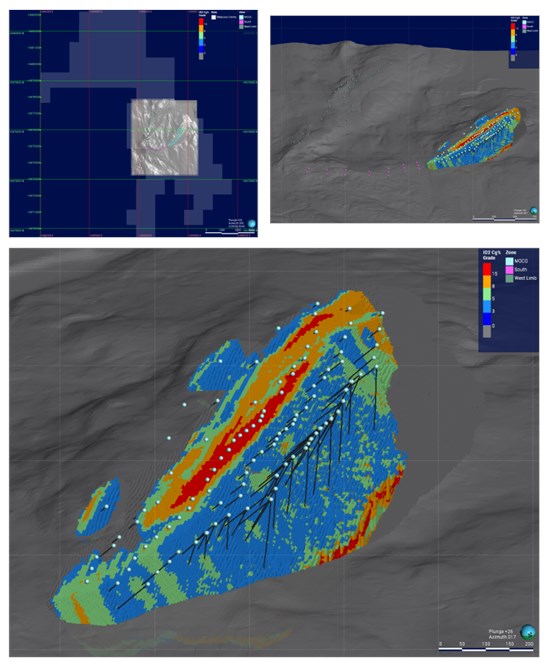
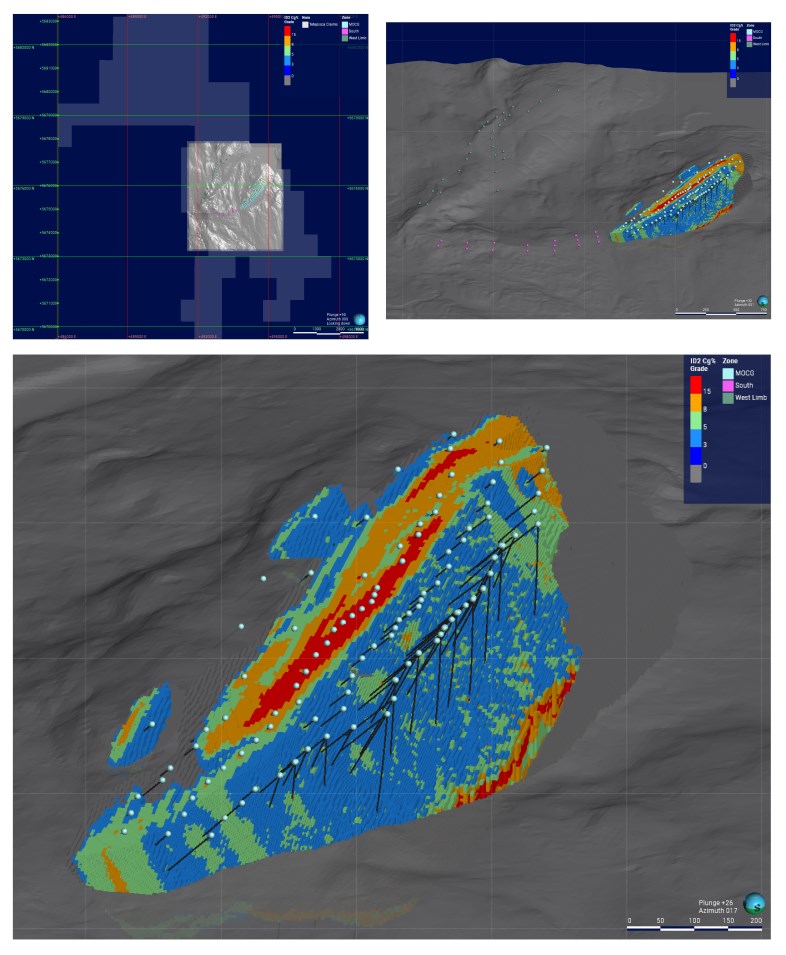
Figure 1: 2026 MRE Resource Block model of the Lac Tetepisca Project

To view an enhanced version of this graphic, please visit:
https://images.newsfilecorp.com/files/1963/296420_1b20bbb0444f2a88_001full.jpg

Qualified Person

The technical content disclosed in this news release was reviewed and approved by Rejean Girard, P.Geo (Qc), President of IOS Geosciences Inc., a consultant to the Company, and a qualified person as defined under National Instrument NI 43-101.

Data Verification

Vast majority of raw data, including drilling and assaying, were available to the author as a coherent and validated database, built and maintained by the contractor through the years. Rigorous logging and assaying procedure were maintained throughout all the drill programs. Data used for the current MRE have undergone a comprehensive verification process to ensure accuracy and reliability. The verification procedures were conducted by qualified professionals with relevant expertise in geological and mining disciplines. They were overseen by the Qualified Person.

QA/QC Procedures

Identical assaying procedure as well as Quality assurance and quality control (QA/QC) procedures were maintained throughout the various drill programs, in coherence with the Lac Knife sister project. Thorough laboratory proficiency analyses were conducted in 2010-2012 on Lac Knife samples, and internal reference material was then manufactured and used throughout both Lac Knife and Lac Tetepisca QAQC programs. During 2012, 2014, 2018 and apart of 2021 program, COREM laboratory from Québec City has been used for routine assays. Activation Laboratories from Ancaster, ON, was used on 10% interlaboratory for cross-checks purpose. For half of 2021 samples, these two laboratories’ roles were inverted. Aside of inter-laboratories duplicates, certified reference materials, internal reference materials and blanks were regularly inserted, and used to monitor result accuracy and precision. Total carbon, organic carbon and inorganic carbon analysis were performed on 10% of the samples, certifying that the routine assays were only reporting graphitic carbon. The same 10% of samples were also submitted for trace metal analysis, in anticipation of future environmental studies. They were subjected to their own QA/QC procedure. Re-assays and validation analysis were requested whenever deviations were noted.

MRE Validation

Multiple validation approaches were taken. Block volume estimates for each mineralized zone were compared to the 3D wireframe models. Block grades, composite grades and assays were visually compared on sections, plans and longitudinal views for both densely and sparsely drilled areas and no significant differences were observed. There is a good match observed in the grade distribution. The trend and local variation of the estimated inverse distance squared (ID2) interpolation were compared to ordinary kriging (OK) and nearest-neighbor (NN) interpolation using swath plots (North, East, Elevation, Northeast).

Geological Complexity:

The property’s geological setting is quite simple but may still pose challenges in terms of interpretation and validation. Unknown geological structures and mineralization patterns could introduce uncertainties despite validation efforts.

It is crucial to note that, despite these limitations, every effort has been made to minimize potential biases and inaccuracies in the data. Qualified Persons have exercised their professional judgment to mitigate these limitations and ensure the reliability of the information presented in this report.

About Focus Graphite Advanced Materials Inc.

Focus Graphite Advanced Materials is redefining the future of critical minerals with two 100% owned world-class graphite projects and cutting-edge battery technology. Our flagship Lac Knife project stands as one of the most advanced highest-purity graphite deposits in North America, with a fully completed feasibility study and near-completed environmental assessment study. Lac Knife is set to become a key supplier for the battery, defence, and advanced materials industries.

Our Lac Tetepisca project further strengthens our portfolio, with the potential to be one of the largest and highest-purity and highest-grade graphite deposits in North America. Graphite mineralization at Lac Tetepisca is very similar to that of Lac Knife, forecasting similar behaviour in the concentration and purification processes. At Focus, we go beyond mining — we are pioneering environmentally sustainable processing solutions and innovative battery technologies, including our patent-pending silicon-enhanced spheroidized graphite, designed to enhance battery performance and efficiency.

Our commitment to innovation ensures an eco-friendly supply chain from mine to market. Collaboration is at the core of our vision. We actively partner with industry leaders, research institutions, and government agencies to accelerate the commercialization of next-generation graphite materials. As a North American company, we are dedicated to securing a resilient, locally sourced supply of critical minerals — reducing dependence on foreign-controlled markets and driving the transition to a sustainable future.

For more information on Focus Graphite Inc. please visit http://www.focusgraphite.com.

LinkedIn: https://www.linkedin.com/company/focus-graphite/
X: https://x.com/focusgraphite

Investors Contact:

Dean Hanisch
CEO, Focus Graphite Inc.
dhanisch@focusgraphite.com
+1 (613) 612-6060

Jason Latkowcer
VP Corporate Development
jlatkowcer@focusgraphite.com

Cautionary Note Regarding Forward-Looking Statements

Certain statements contained in this press release constitute forward-looking information. These statements relate to future events or future performance. The use of any of the words “could,” “intend,” “expect,” “believe,” “will,” “projected,” “estimated,” and similar expressions, as well as statements relating to matters that are not historical facts, are intended to identify forward-looking information and are based on the Company’s current beliefs or assumptions as to the outcome and timing of such future events.

In particular, this press release contains forward-looking information regarding, among other things, the results of the updated mineral resource estimate for the Lac Tetepisca Project, including the quantity and grade of mineral resources; the potential for expansion of the mineral resource through additional drilling, including step-out and infill programs; the timing, completion, and filing of the related technical report in accordance with National Instrument 43-101; the assumptions underlying the mineral resource estimate, including commodity prices, cut-off grades, and geological interpretations; the potential for future mineral resource updates; the advancement of environmental studies and permitting processes; the potential development of the Project and its ability to become a significant supplier of graphite; and the Company’s plans to further evaluate and develop the Project, including metallurgical testing, engineering studies, and downstream processing opportunities.

Forward-looking statements are subject to known and unknown risks, uncertainties, and other factors that may cause actual results, performance, or achievements to differ materially from those expressed or implied by such statements. These risks and uncertainties include, but are not limited to, risks related to market conditions, regulatory approvals, changes in economic conditions, the ability to raise sufficient funds on acceptable terms or at all, operational risks associated with mineral exploration and development, and other risks detailed from time to time in the Company’s public disclosure documents available under its profile on SEDAR+.

The forward-looking information contained in this release is made as of the date hereof, and the Company is not obligated to update or revise any forward-looking information, whether as a result of new information, future events, or otherwise, except as required by applicable securities laws. Because of the risks, uncertainties, and assumptions contained herein, investors should not place undue reliance on forward-looking information.

Neither TSX Venture Exchange nor its Regulation Services accepts responsibility for the adequacy or accuracy of this release.

The issuer is solely responsible for the content of this announcement.

Asendia and Singapore Post Form Strategic Partnership to Strengthen APAC Cross-Border E-commerce Gateway


PARIS, FRANCE – Media OutReach Newswire – 7 May 2026 – Asendia, the international e-commerce and mail specialist, today announced a strategic partnership with Singapore Post (SingPost), a leading postal and e-commerce logistics provider. The partnership will strengthen cross-border e-commerce logistics capabilities, enhancing delivery performance, scalability and market access for businesses shipping into and out of Singapore and the wider Asia-Pacific region.

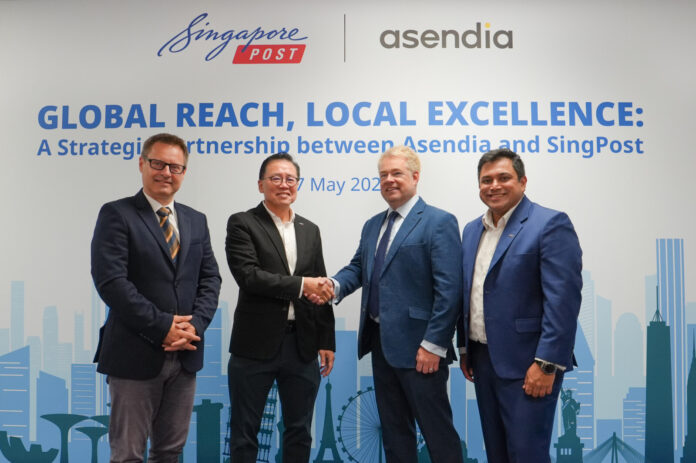
A Strategic Partnership Between Asendia and SingPost (Left to right): Lionel Berthe, Head of Asia Pacific, Asendia; Mark Chong, CEO, SingPost; Simon Batt, CEO, Asendia, and Gavin Pathross, Chief Information Technology Officer, SingPost.

The partnership reinforces Singapore as a strategic gateway for cross-border e-commerce. With almost 75%[1] of online shoppers in Singapore having purchased from overseas sellers, the country is a key destination for international sellers. It also serves as an important logistics gateway to millions of online shoppers in the APAC region.

Strategic Navigation of the 2026 EU Customs Reform

The partnership is timely as global regulators move to close taxation gaps that previously defined the sector. From 1 July 2026, the European Union will officially abolish the €150 de minimis customs duty exemption[2], introducing a flat €3 customs duty on all low-value imports. These changes, aimed at leveling the playing field for traditional retail, have taken effect in a few countries since March, where authorities have imposed national handling fees. SingPost and Asendia are working to offer Delivered Duty Paid (DDP) solutions to the EU, providing a “frictionless corridor” to help merchants – navigate this transition.

“This partnership comes at a critical juncture for global trade. Following the US suspension of de minimis exemptions in August 2025, the upcoming July 2026 EU reform introduces new regulations for exporting businesses to navigate.” said Mark Chong, CEO, SingPost. “By extending our cross-border partnerships, we are providing businesses with the support to manage these complexities, ensuring that our customers can maintain access to these markets, minimising the risk of delivery friction or doorstep rejection.”

The collaboration builds on Asendia’s long-established presence in the region, including its recent establishment of the Singapore Hub operation. International brands and global marketplace sellers on platforms such as Amazon, eBay and Etsy will benefit from more streamlined parcel shipping into Singapore and the wider APAC region.

Through Asendia’s international network, SingPost’s Singapore-based e-commerce customers gain access to a more diverse, reliable set of options to sell and scale across new markets with delivery capabilities into Europe, North America, South America, the Middle East and Oceania, supported by a broad ecosystem of last-mile partners. In turn, Asendia’s customers benefit from improved access into Singapore, Southeast Asia and the wider APAC corridor via SingPost’s infrastructure.

Merchants working with both organisations will gain access to a comprehensive suite of delivery solutions. The core service offerings include Asendia’s e-PAQ Home Delivery, e-PAQ Out-of-Home Delivery and e-PAQ Returns.

Lionel Berthe, Head of APAC, Asendia, said: “Asendia’s Beyond Borders survey shows that 32% of retailers in APAC cite border delays, customs clearance, and cross‑border returns as key friction points. This partnership directly addresses those challenges, with Singapore as a core focus market, while enabling scalable and cost‑effective cross‑border growth across the wider region.”

Notes to Editors:
Beyond Borders Study:
Over 1,000 global e-commerce professionals were surveyed in early 2026. Respondents included senior decision-makers from retail businesses engaged in cross-border e-commerce across four regions: UK (259), USA (250), Europe (251) and APAC (253). The survey was conducted by Censuswide under MRS guidelines.

Hashtag: #Asendia #SingaporePost

The issuer is solely responsible for the content of this announcement.

About Asendia

Asendia is one of the world’s leaders in international e-commerce and mail, delivering packages, parcels and documents to more than 200 destinations across the globe. With a rich heritage from founding companies La Poste and Swiss Post, Asendia combines extensive international and local know-how. Asendia’s expertise is broad-reaching, encompassing different aspects of e-commerce, from webshop software and marketplace management to international logistics.

At Asendia, we don’t just deliver parcels – we connect brands and shoppers through intelligent, flexible logistics solutions built on experience, technology, and care. Our philosophy, smart-design by asendia®, brings together our people, technology and network to create solutions that work across borders and evolve with every customer’s needs.

Asendia’s vision is to empower its customers worldwide with seamless access to global markets through our innovative and sustainable cross-border eCommerce logistics solutions. Asendia Group employs over 2,000 people in Europe, UK, Asia Pacific and the USA – a global network blended with a local presence.

Global expertise. Local understanding. Designed for you.

Please visit

About Singapore Post Limited (SingPost)

Singapore Post (SingPost) is a leading postal and eCommerce logistics provider in Asia Pacific. The portfolio of businesses spans from national and international postal services to warehousing and fulfilment, international freight forwarding and last mile delivery, serving customers in more than 220 global destinations. Headquartered in Singapore, SingPost has approximately 3,000 employees. Since its inception in 1858, the Group has evolved and innovated to bring about best-in-class integrated logistics solutions and services, making every delivery count for people and planet.

DP World Secures Laem Chabang Concession Extension Amid Rising Intra-Asia Trade

The five-year extension ensures operational continuity at one of Thailand’s leading container terminals, supporting the country’s expanding role in intra-Asian trade


BANGKOK, THAILAND – Media OutReach Newswire – 7 May 2026 – DP World, through its joint venture Laem Chabang International Terminal Co., Ltd. (LCIT), has secured a five-year concession extension to continue operating the B5 container berth at Laem Chabang Port. The extension comes at a time of increasing intra-Asian trade and evolving supply chain dynamics, reinforcing the port’s role as a critical gateway for Thailand’s economy.

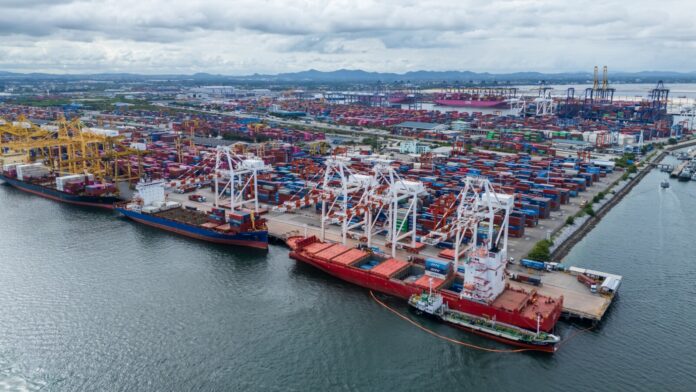
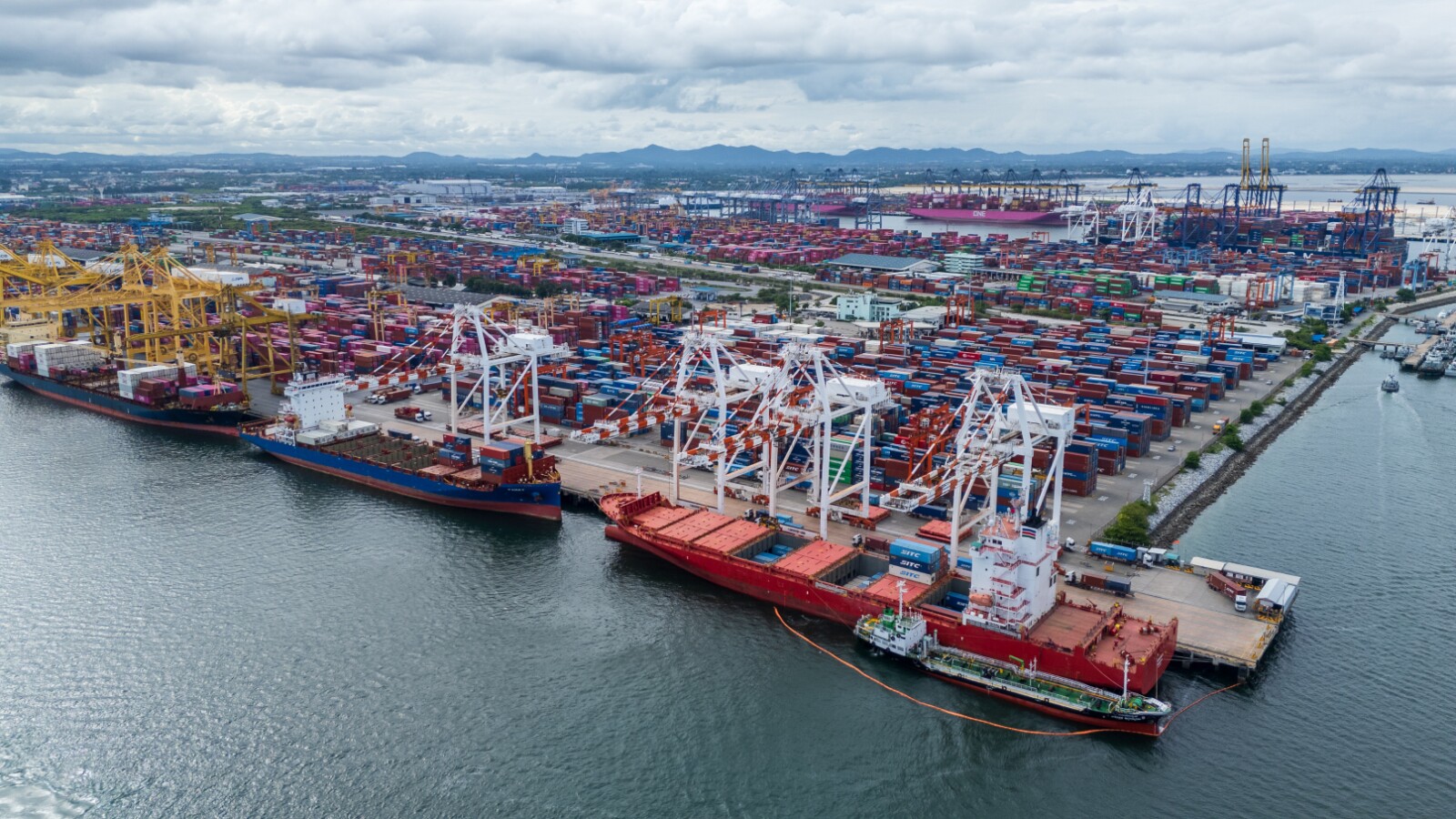
Terminal and yard at Laem Chabang Port

The contract, granted by the Port Authority of Thailand (PAT), will run from May 2026 to April 2031, reinforcing DP World’s central role in bolstering regional trade flows.

LCIT operates both B5 and C3 berths at Laem Chabang, Thailand’s principal deep-sea gateway and the country’s largest container hub supporting international trade. The terminals can accommodate up to four vessels simultaneously along 900 meters of berth length and are supported by 4,420 sqm of on-dock container freight station (CFS) facilities. In 2025, LCIT handled a record 1.936 million twenty-foot equivalent units (TEUs), its highest annual throughput to date, reflecting sustained growth in container volumes.

Glen Hilton, CEO & Managing Director, Asia Pacific, DP World, said: “This concession extension at Laem Chabang Port ensures continuity and service stability for our customers at a time when supply chains face increasing pressure and complexity. As Thailand strengthen its position as a regional trade hub, this extension allows us to continue investing in capacity, efficiency and sustainable operations. Together with our partners at LCIT, we are well positioned to support growing intra-Asia trade and deliver long-term value for customers across the Asia Pacific region.”

This concession will enable continued investment by DP World in operational efficiency and sustainability at Laem Chabang. In 2025, five electric internal transfer vehicles (eITVs) were deployed at LCIT, reducing emissions by approximately 60% compared to diesel alternatives while supporting faster vessel handling. Further upgrades are planned in 2026, including the installation of additional eITVs, electric reach stackers, and an electric empty container handler.

Complementing its operations at Laem Chabang Port, DP World has an integrated logistics network throughout Thailand, including cross-border trucking, landside logistics and freight forwarding. The company also recently launched a rail-connected inland container yard in Khon Kaen with a dedicated thrice-weekly rail shuttle to Laem Chabang, enhancing connectivity for exporters in Thailand’s Northeastern region.

​ These services and solutions aim to strengthen Thailand’s domestic and export trade by enabling the seamless movement of goods and materials from port to domestic hinterlands, and to markets across the wider Asia Pacific region.
Hashtag: #DPWorld


The issuer is solely responsible for the content of this announcement.

About DP World

DP World is reshaping the future of global trade to improve lives everywhere. Operating across six continents with a team of over 125,000 employees, we combine global infrastructure and local expertise to deliver seamless supply chain solutions. From Ports and Terminals to Marine Services, Logistics and Technology, we leverage innovation to create better ways to trade, minimising disruptions from the factory floor to the customer’s door.

In Asia Pacific, DP World employs over 15,000 people across 22 geographies. We operate 17 ports and terminals, complemented by a comprehensive suite of end-to-end supply chain solutions – to connect the region to the rest of the world.

WE MAKE TRADE FLOW

Australia Expands Support for Lao Media

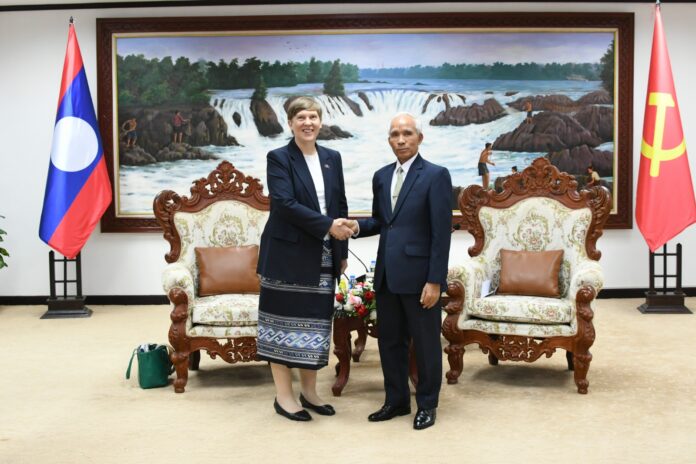
Australia Expands Support for Lao Media With Training, Study Tours, and ABC Partnership. (Photo: Australian Embassy in Vientiane)

Australia and Laos have agreed to deepen media cooperation through expanded training, exchanges, and professional development programs for Lao media officials and journalists.

Australian Ambassador Megan Jones discussed the partnership during a courtesy call with Khamphan Pheuyavong, Head of the Commission for Information and Education, in Vientiane on 7 May.

The meeting highlighted growing cooperation between the two countries as they mark 74 years of diplomatic relations this year.

Ambassador Jones said Australia continues supporting Laos’ priorities to strengthen capacity within Party and government agencies, including the media sector, through English language training and programs focused on analytical, research, and leadership skills.

Khamphan welcomed Australia’s support for training and study tours aimed at helping Lao media professionals respond to misinformation and adapt to changes in the media landscape.

The ambassador also thanked Lao media organizations for supporting bilateral cooperation across development, trade, investment, and government engagement.

Australia previously supported the Australian Broadcasting Corporation’s Digital Dialogue program in Laos, the first such initiative held in Southeast Asia, to strengthen digital journalism skills among Lao media professionals.

Earlier this year, two Lao state media joined a media executive leadership program organized by the ABC with support from the Australian government.

The ABC and Australian Associated Press are also expanding cooperation with Lao media through content sharing and capacity-building activities. The ABC television channel now forms part of the LAOSAT programming package.

During the meeting, both sides also discussed upcoming geostrategic and geoeconomic workshops scheduled for 16–18 June in Vientiane, which Australia and Laos will co-host with participation from officials and experts from both countries.

Global Governance Report Highlights Future Shock Risks as Democratic Accountability Slips and State Capacity Plateaus


LOS ANGELES, US – Newsaktuell – 7 May 2026 – The newly released 2026 Berggruen Governance Index (BGI) paints a mixed picture of global governance heading into a future of mounting shocks, finding widespread gains in public-goods provision from 2000 to 2023 even as democratic accountability edged down and state capacity showed little overall improvement.

Presentation of the 2026 Berggruen Governance Index: On 6 May in Los Angeles, the following individuals discussed the findings of the study (from left): Vinay Lai (Professor of History, UCLA), Michael Storper (Distinguished Professor of Urban Planning, UCLA), Stella Ghervas (Professor of History, UCLA) and the two authors of the study, Joseph Saraceno and Prof. Helmut Anheier (both from UCLA's Luskin School of Public Affairs). Democracy News Alliance / Jordan Strauss/AP for DNA
Presentation of the 2026 Berggruen Governance Index: On 6 May in Los Angeles, the following individuals discussed the findings of the study (from left): Vinay Lai (Professor of History, UCLA), Michael Storper (Distinguished Professor of Urban Planning, UCLA), Stella Ghervas (Professor of History, UCLA) and the two authors of the study, Joseph Saraceno and Prof. Helmut Anheier (both from UCLA’s Luskin School of Public Affairs). Democracy News Alliance / Jordan Strauss/AP for DNA

The BGI, presented Wednesday by an international group of governance scholars, analyses measurable benchmarks of democratic accountability across 145 countries.

On a 100-point scale, the global score for democratic accountability slipped slightly from 65 in 2000 to 64 in 2023, the most recent data used in the project. The wave of democratisation observed in the closing decades of the last century has stalled in the last 15 years. Democratic accountability fell in 54 countries while it improved in 48 countries.

Yet the BGI — a collaborative project of the Luskin School of Public Affairs at the University of California, Los Angeles (UCLA), Berlin’s Hertie School and the Berggruen Institute, a think tank headquartered in Los Angeles — captures remarkably widespread growth in provision of public goods.

Encompassing healthcare, education, infrastructure, environmental sustainability and conditions to foster employment and rising prosperity, public goods improved in 135 of the countries studied, while declining slightly in just four. The global average jumped from 58 to 69 points from 2000 to 2023.

The third component of what the BGI authors refer to as the “governance triangle” is state capacity, defined as the ability to tax, borrow and spend, control territory, operate scrupulous, competent bureaucracies and administer predictable rule of law. The index finds the global average ticking up from 48 to 49 points; 56 countries had increased state capacity while 57 declined.

“What does it tell us about the world ahead?” Prof. Helmut K. Anheier, a Luskin School sociologist and BGI principal investigator, asked during the public release of the 2026 BGI on the UCLA campus.

“Countries are not really improving in their governance performance in significant ways. … We’re not really having forward-looking investment in governance capacity. There is considerable inertia.”

The largest improvements across all three BGI components occurred in Gambia, which the report groups with “low-capacity developing states.” These states score low across the board, particularly in the provision of public goods. This cluster constitutes the poorest countries with the least developed economies, which face the most serious challenges.

“They have the greatest exposure to likely future crises, whether it’s global warming, whether it’s a new pandemic, whether it’s another financial crisis, whether it’s the impact of AI,” Anheier said. “And they have the least capacity to respond to it.”

Bhutan, Georgia, Iraq and Tunisia — which make up the remaining top five countries with the largest improvements in the BGI — are classified as “capacity-constrained states.” They tend to be middle-income with struggling democracies. These countries score higher across the board than the low-capacity developing states, but their state capacity tends to lag compared to public goods and democratic accountability.

The capacity-constrained states risk falling into “a cycle that erodes the institutions they have built,” Anheier said.

“Consolidated democratic states”, a cluster of most of the world’s richest countries, which score highly in all three BGI components, have to confront domestic complacency. Further, in the United States and some others, “political dysfunction” is leaving mounting problems unaddressed and risking erosion of state capacity, Anheier said.

At the other end of the spectrum, the country with the farthest fall on the BGI since 2000 is Nicaragua. Second from last is Venezuela, followed by Hong Kong, Hungary and Turkey. The rest of the bottom 10 are Russia, Iran, Poland, El Salvador and Belarus.

Since 2023, which is the last year of data available for the study, Poland and Hungary have both seen government changes via election, despite serious democratic backsliding. Both had fallen out of the group of “consolidated democratic states” by 2023 and moved into the capacity constrained cluster.

The other eight countries at the bottom of the list are all places that once had some semblance of competitive elections, but by now have little or no remaining pretense of democracy. They are grouped by the authors among the “authoritarian and hybrid states”, which have by far the lowest democratic accountability but outperform even some struggling democracies in delivering public goods.

These regimes have tended toward faster economic growth in the period observed. But that seeming prosperity, typically fueled by extractive industries or overreliance on exports, masks “serious institutional weaknesses in these countries, including divided elites,” Anheier said.

Relatively few countries — 21 of the 145 — changed enough for better or worse to be classified in a new group by the end of the 23-year study period.

“Movement between them is rare, but this is largely what we should expect,” said Stella Ghervas, a UCLA historian on a panel of experts who discussed the BGI findings Wednesday. “Government systems are not created in a moment. They evolve over long periods of time.”

Local conditions shaping governance in each country can rarely be quickly reset through political will or even external shocks, Joseph C. Saraceno, a Luskin School data scientist and BGI co-author, said Wednesday.

“Despite all the talk of major transformations happening in global affairs, the underlying configuration of governance simply doesn’t appear to change very much,” Saraceno said. “We use the term inertia to describe this reoccurring pattern. In other words, the structures of global governance are resistant to movement as the conditions beneath them are quite sticky: political economies, demographics, resource endowments. These are deeply layered, and they push each country toward the world that it already inhabits.”

But the challenges lurking around the world may not wait for the slow and difficult processes of political change and development to catch up.

“With the few exceptions of those countries in the consolidated democratic world,” Anheier said, “the great majority of the countries in the world is ill-prepared for the future.”

The full report, ‘ 2026 Berggruen Governance Index – The Four Worlds of Governance‘, can be viewed and downloaded from the website of the UCLA’s Luskin School.

Frank Fuhrig, DNA

—————————————————-

This text and the accompanying material (photos and graphics) are an offer from the Democracy News Alliance, a close co-operation between Agence France-Presse (AFP, France), Agenzia Nazionale Stampa Associata (ANSA, Italy), The Canadian Press (CP, Canada), Deutsche Presse-Agentur (dpa, Germany) and PA Media (PA, UK). All recipients can use this material without the need for a separate subscription agreement with one or more of the participating agencies. This includes the recipient’s right to publish the material in own products.

The DNA content is an independent journalistic service that operates separately from the other services of the participating agencies. It is produced by editorial units that are not involved in the production of the agencies’ main news services. Nevertheless, the editorial standards of the agencies and their assurance of completely independent, impartial and unbiased reporting also apply here.

The issuer is solely responsible for the content of this announcement.