

Home Blog Page 6470

MIST: Groundbreaking Tourism Accelerators Now Accepting Projects in the Mekong Region

MIST Mekong Innovative Startup Tourism

HANOI, VIETNAM – The Mekong Innovative Startup Tourism (MIST) Initiative has announced two new accelerators designed to make it easier and faster for innovative tourism businesses to get established in Cambodia, Laos, Myanmar, and Vietnam. The MIST Startup Accelerator will take entries from early stage companies with either travel technology or traditional tourism business plans. The MIST Market Access Accelerator welcomes applications from mature international tourism startups needing assistance entering the region. Both accelerators will close to applications 26 March.

Applicants must demonstrate how they will create jobs, generate positive community impact and contribute to sustainable tourism growth in Cambodia, Laos, Myanmar, or Vietnam.

“The MIST accelerator programs give a leg up to tourism investments that create jobs, help local communities, and support entrepreneurship, especially for women,” explained Dominic Mellor, senior Asian Development Bank economist and head of the Mekong Business Initiative.

Founders accepted into the MIST Startup Accelerator will attend mini bootcamps to further develop their business plans. The top business plans for each country market will win MIST Innovation Grants, with the best overall receiving US$10,000 and the three runners-up receiving $7,000.

MIST infographic

MIST Market Access Accelerator participants will join familiarization tours of relevant Mekong Region markets. Through these tours, they will receive coaching, custom market insights, and introductions to supplier networks and relevant stakeholders.

Participants in both MIST accelerators will pitch their plans to investors, global acceleration programs, and tourism leaders at the Mekong Tourism Forum in June (Luang Prabang, Lao PDR) and APEC Summit in November (Danang, Vietnam). In-country teams will provide additional advisory services tailored to participants’ business needs.

“The Great Mekong Subregion is among the fastest growing tourism destinations on earth. Start-ups can disrupt traditional practices to adapt to changing consumer behaviors, but let’s also encourage responsible innovation that enhances the region’s appeal for future generations,” said Jens Thraenhart, Executive Director of the Mekong Tourism Coordinating Office.

MIST is a joint venture of the Mekong Tourism Coordinating Office and the Mekong Business Initiative. It receives regional funding, advisory and technical support from the Asian Development Bank (ADB), the Government of Australia, Amadeus Next, the Pacific Asia Travel Association, and Village Capital. It has been endorsed by young entrepreneurs associations and startup groups in Cambodia, Lao PDR, Myanmar, and Vietnam.

Check out the video promo here:

About the Mekong Business Initiative (MBI) – MBI is an advisory facility that promotes private sector development in Cambodia, the Lao People’s Democratic Republic (Lao PDR), Myanmar, and Viet Nam. MBI fosters development of the innovation ecosystem by supporting business advocacy, alternative finance and innovation. It is supported by the Asian Development Bank and the Government of Australia. On Facebook: MekongBusinessInitiative.

About the Mekong Tourism Coordinating Office (MTCO) – Established in early 2006, the MTCO is a collaborative effort between the six countries of the Greater Mekong Subregion (GMS). Its mission of the MTCO is to help GMS National Tourism Organizations develop and promote the Mekong as a single travel destination, offering a diversity of good quality and high-yielding sub-regional products that help to distribute the benefits of tourism more widely; add to the tourism development efforts of each GMS destination; contribute to poverty reduction, gender equality and empowerment of women; and minimize any adverse impacts of tourism through the development of a sustainable industry. On social media: @TourismMekong.


Contact:

Mr. Jason Lusk

MIST Project Coordinator

Mekong Business Initiative

Jason@mekongbiz.org

Worldwide: +1 (202) 738 1792

Vietnam or WhatsApp: +84 (0) 96 976 0912
 

Lao Villages Fall Victim to Chinese Human Trafficking

human trafficking in lao villages

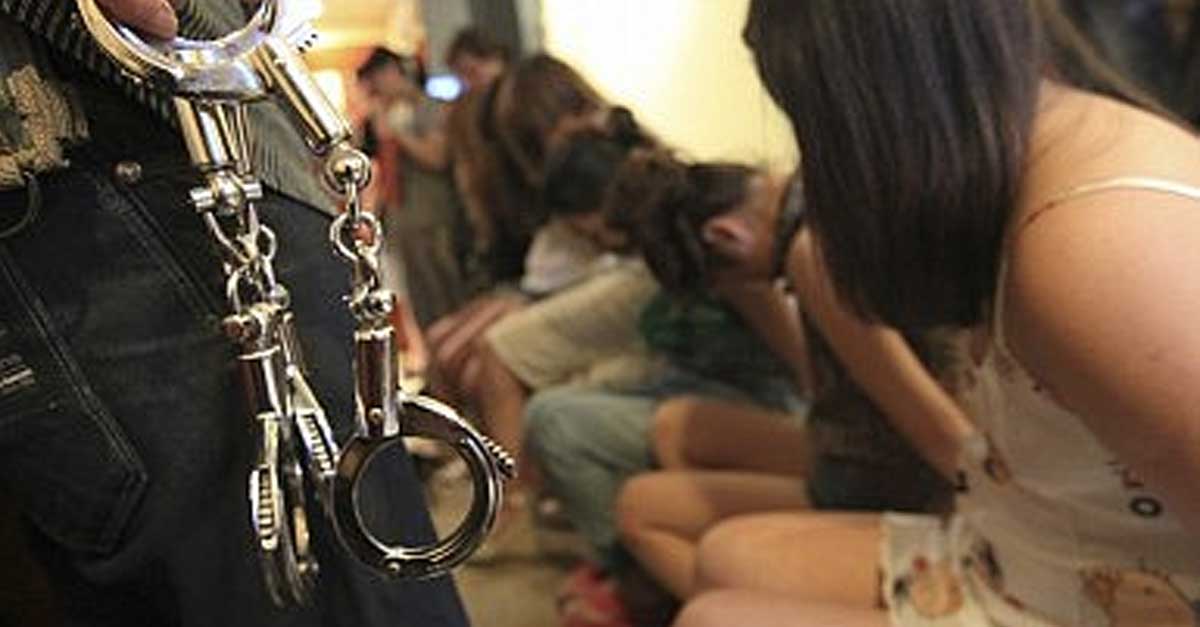
It is not uncommon to see reports on human trafficking in the news. We read stories about it happening even in the most powerful nations across the globe. And though there are whispers about it happening in the sleepy little country of Laos, most don’t realize how common it has become in the land-locked country.

Northern villagers in various areas have reported Chinese men entering their villages under the guise of being wealthy, eligible suitors looking for a bride to take home and care for. Girls as young as 16 and 17 are being enticed  to drop out of school and willingly take a husband based on the promise of a better life in China.

However, when they arrive in China, the unfortunate girls are sold into brothels and forced into prostitution.They come from all over the country, the South, the center and Vientiane

The victims are not just restricted to northern Laos, where the land-locked nation borders China, but also the southern and central provinces, and occasionally the capital itself.

These men prey on poor villages and are seeking naive school girls who believe that all Chinese men are rich. The school girls are convinced they will be going to China or another part of Laos where they will get married, but are typically  forced into the sex trade.

A small, possibly increasing, number of women and girls from Laos are sold as brides in China and subjected to sex trafficking,, according to a  US government report on trafficking in persons.

One resident of  Pak Lai District Xayaboury Province spoke of a girl who had finished high school and met a Chinese man who had visited her village. The man told her he loved her, and then made arrangements with a middle-man. Soon after they were engaged, and the man took her to China where she only contacted her family with an occasional message, and her whereabouts were unknown and untraceable.

It was later learned that she was sold to a brothel.

An NGO official has addressed this issue and has stated that it’s unknown how many cases are like this, since there has never been a survey taken.

In her village at least eight girls have gone to China. One girl who left three months ago has never contacted her worried parents.

“Many, many Chinese men come to our village looking for brides,” the villager said. “Some of the girls come back to the village, and a few of them come with one or two babies, but without their Chinese husbands.”

Laos and China  signed an anti-human trafficking memorandum of understanding in 2014, and the  two  countries have devised an action plan to take a stand against human trafficking.

Although the girls who left behind their friends and families were just looking for love, or at least a husband, those who have returned to their villages have understandingly had enough of China.

“These girls say they don’t want to go back to China,” said the villager.

Laos One Of Four Countries To Boost Tourism Integration

tourism integration tourism-integration-golden-triangle-special-economic-zone

In collaboration with Thailand, Vietnam and China, Laos is to be included in the development of sustainable tourism integration across eleven provinces in the upper Mekong Basin.

A Memorandum of Understanding (MoU) on the mechanism of their cooperation was signed last Saturday by officials at the half-day meeting held in the Golden Triangle Special Economic Zone in Bokeo province.

Under the MoU, the provinces have agreed to coordinate cross border facilities, on tourism advertising and tourism infrastructure development. This includes tourism route connectivity, human resource development, and integration facilitation for international tourists.

The Laos provinces include Bokeo, Luang Namtha, Oudomxay, Phongsaly, Luang Prabang and Xayaboury; The Chinese prefecture of Xishuangbanna; Sonla and Dien Bien Phu of Vietnam; and the Thailand provinces Chiang Rai and Chiang Mai.

The participating countries will look to cooperate in developing and facilitating a single website for a more efficient approach with tourism sites, tourism advertising, routes, accommodation, restaurants and security guidance for each province being listed.

Additionally, all four  provinces have agreed to provide free Wi-Fi at most tourist service destinations to equip visitors with the ability to communicate while travelling.

At the conference, Bokeo province Deputy Governor Dr Khamking Euaymanihak stated, “the free Wi-Fi will be a channel of advertising where visitors can share their travel experiences including tourist sites and attractions with their friends directly and timely.”

Also highlighted in the tourism integration agreement is the cooperation of the provinces in identifying cross-border tourism points and investing in these areas to attract more tourists to these established sites. They will also look to contribute assistance in the improvements and advertisements of tourist sites, hotels, restaurants, and service facilities to a  quality standard.

Provinces will collaborate in hopes of  developing a more systematic, efficient and comprehensive experience, such  as improving the transportation systems between countries including the road links between Huayxai, Luang Namtha and Xieng Khuang in Laos and Kunming in China, the road between Huayxai in Laos and Chiang Rai and Chiang Mai in Thailand, and the road between Huayxai and Oudomxay in Laos and Dien Bien Phu, Son La, and Nge An in Vietnam.

The participating parties will also determine the optimal Mekong River tourism and goods transportation routes linking all four countries, which according to the programme, could be the Lancang River Tour. This will connect the provinces of Xieng Khuang, Chiang Sen, Bokeo, Xayaboury, Oudomxay, and Luang Prabang.

Border crossing points will also be an area of a improvement that the cooperation will be focusing on so that travelers can enter and exit each international checkpoint with little difficulty or hassle.

Laos Places 3rd On World’s Friendliest Countries List

London-based Rough Guides has turned to its Twitter and Facebook followers to ask for their opinion on the world’s friendliest countries. Why do we care? Well, Laos made it to 3rd place!

While a ranking of this nature is probably not particularly scientific, highly objective nor very representative of the world’s real tastes as a whole, it is nevertheless quite flattering that Rough Guides followers chose Lao people as the third most hospitable and welcoming in the world.

The results of the poll conducted included every country from Albania to Uganda, but below are the top ten friendliest countries in the world.

Call us biased if you will, but here at The Laotian Times, we have our own theory about why the following countries are so friendly: because they’re the happiest!

10. Sri-Lanka (of course they are on the list, their name sounds like Shangri-La!)

9. Scotland (is it the Highlands, the Islands, the history, the mystery, the bagpipes, and the poetry? Or could the tickle of frigid air under the kilt after a breakfast of scotch whisky on porridge have something to do with it?)

8. Fiji (must be that great tasting water and the lovely, lovely beaches – but don’t get us wrong, the water does not come from the beaches)

7. Indonesia (great value for money and tremendously great tasting foods like Nasi Goreng, Satay, Soto Mie and Nasi Kuning; if the stomach is happy, then the mind is happy)

6. Myanmar (the Shwedagon Temple is the oldest Buddhist temple in the world – which means that as Buddhists, Burmese people had a head start at being friendly, and have had a longer time to perfect their friendliness!)

5. Thailand (they don’t call Thailand the Land of Smiles for nothing)

4. Nepal (we’d be happy too if we had the tallest mountain in the world)

3. Laos (We’ve got the best tasting beers in the world, that’s why!)

2. The Philippines (they love to sing and they have so many public holidays)

1. Cambodia (despite a bit of a hiccup along the way, the Cambodian people have a long history of friendliness. Or maybe it’s something about eating those big hairy spiders?)

Give us your opinion in the comments section below. Why do you think Lao people are happy and friendly? Is this a good list? Which country should have made it to the list?

Source: Rough Guides

Villa Opera: Homely High-end Italian in Vientiane

Villa Opera Italian Food Vientiane

I have found a quiet bit of Italy in Vientiane where the homemade pasta is bellissimo.

After the closure of the Italian restaurant L’Opera, near the Mix Fountain, Mr Pino Peruzzi has re-opened for business with another Italian Restaurant, called Villa Opera. Villa Opera is situated just one block back from the Mekong River on Rue Panya Sri, just behind The Spirit House. After the 7 month refurbishment of an old run down French Colonial Villa it is difficult to imagine what the building used to be like as the refurbishment is to a very high standard, maintaining the traditional exterior with a very modern interior.

If you have previously eaten at the Italian L’Opera you will pleased to find most of your favourites on the menu here. This restaurant is not the place for a cheap meal with antipasti and appetizers priced from 50,000-300,000 kip and mains that include Kobe Steak at 1.5m kip per 200 grams. There are, however, some reasonably priced options with various homemade pasta dishes at around 95,000 kip per dish.

Villa Opera Vientiane

The restaurant was easy to find, occupying a corner on the street, and there is plenty of parking. I received a warm welcome from the owner, Pino, himself on arrival. The restaurant has plenty of seating with nice cozy corners for two and also larger tables for families and groups. The interior is bright, with colored glasses, and is minimal and modern. It has a feel of style and sophistication without being over the top. I felt very comfortable.

The staff seated me at my table and quickly brought me a menu and a large bottle of still water. They soon poured the water before I had chance to confirm I wanted it (I cannot complain about the speedy service but please never assume I want to purchase the water without asking).

I was also quickly brought some complimentary traditional Italian bread, topped with rosemary. It smelt divine with the rosemary on top and was very fresh. Like most breads, it was a little dry, and I would have appreciated some Italian olive oil and maybe some balsamic vinegar to dip my bread in.

Villa Opera Vientiane Laos

Pino came over whilst we were browsing the extensive menu and informed us politely that the restaurant was not fully open yet. They are still awaiting their traditional pizza oven so they can do pizzas but not in the traditional oven. For me this did not matter because I wanted to try the homemade pasta.

For starters I tried the ‘Bruschetta di Salsiccia’ and the ‘Zuppa di Pesce’ (Spicy Seafood Soup). The waitress informed me at the time of ordering that the seafood soup was quite spicy which for me is okay. The starters took about 15 minutes to arrive because everything is made fresh to order, but this was not a problem because I was nibbling on the Italian bread.

The Bruschetta was two pieces of toasted bread with cheese and Italian sausage on it. It was very nice and the Italian sausage was particularly tasty but the flavors were quite simple. By contrast, the spicy seafood soup was a bowl of many flavors, from the fresh seafood broth, to the lemongrass, to the chili and the seafood, alongside all the other herbs and spices. For me the soup had a perfect balance of chili that did not overpower the subtle flavors of the squid, prawns and fish, yet enough to add a little kick to the dish. I will definitely be reordering the spicy seafood soup on my next visit.

Whilst eating the starter there was no offer of fresh salt or pepper, and no one checked back that everything was okay. This may be because the staff are still going through their training. I remember from eating in L’Opera there was always the offer of fresh salt and pepper, and always a quality check back.

For the main course I tried the ‘Homemade egg ribbon pasta with lamb ragout’ and the ‘Lasagne Verdi al Forno’ (Baked Spinach Lasagne). I was keen to try these dishes because both are made with homemade pasta and I am a huge lover of homemade pasta rather than the dry pasta you usually buy in the minimart. The egg ribbon pasta was beautiful and light and reminded me of a recent holiday in Rome, Italy. For a moment I could close my eyes and pretend I was back there. The ragout sauce was plentiful and enough to cover the pasta, with a good quantity of premium pieces of lamb that melted in my mouth.

[ngg_images source=”galleries” container_ids=”14″ override_thumbnail_settings=”1″ thumbnail_width=”100″ thumbnail_height=”75″ thumbnail_crop=”1″ images_per_page=”20″ number_of_columns=”0″ ajax_pagination=”0″ show_all_in_lightbox=”0″ use_imagebrowser_effect=”0″ show_slideshow_link=”0″ slideshow_link_text=”[Show slideshow]” template=”/home4/laotiantimes/public_html/wp-content/plugins/nextgen-gallery/products/photocrati_nextgen/modules/ngglegacy/view/gallery.php” order_by=”sortorder” order_direction=”ASC” returns=”included” maximum_entity_count=”500″ display_type=”photocrati-nextgen_basic_thumbnails”]The Lasagna was delicious with many layers of the homemade sheets of spinach pasta, rich meat ragout, and béchamel sauce. It had been baked to perfection served with more of the tasty meat ragout on top. I appreciated that the lasagna had been made as a single portion and was not part of a mass produced larger lasagna that some Italian restaurants serve. Again the homemade pasta was fresh and light. Both of the main dishes were 95,000 kip each, and based on the quality of the ingredients, and because it was homemade pasta, I thought they were both good value for money.

I enjoyed both main dishes but with so much choice of other dishes including classic pasta dishes like ravioli or carbonara, and pizzas, and risotto and other authentic Italian favorites, I will choose something different next time.

Despite being rather full from the starter and main course, I just couldn’t resist trying a dessert. There was no dessert menu but instead the waitress brought over a tray with one of each dessert on it to peruse. The desserts looked extremely tempting, and despite my efforts to try something new I went with my favourite classic Italian dessert, ‘Tiramisu’.

I have eaten Tiramisu in Italy about five times and each time it has been slightly different in terms of cream/sponge/alcohol mix. The Tiramisu at Villa Opera has a thin sponge base, and was very heavy on the cream and light on the liquor. I prefer more sponge, soaked in Marsala and a little less cream, particularly after two other courses when I am feeling a little full. I found it a little too heavy at the end of a meal. Note: there are no prices on the dessert tray so you will need to ask for these.

I will definitely return to Villa Opera because I really liked the relaxed homely feel of it, made even warmer by the personal greeting from the owner, Pino. I also thoroughly enjoyed the homemade pasta with the authentic taste of Italy. Depending on your budget, this might be a place to visit more for a special occasion rather than a regular place to dine.

‘Fifty Shades Darker’ Banned in Laos

Fifty Shades Darker Banned in Laos

In the 18 months since the first cineplex opened in Laos, the Cinema Department, under the Ministry of Information, Culture, and Tourism has never censored nor banned a film — until now. Screenings of the erotic romantic drama “Fifty Shades Darker” have been cancelled at all three cinemas in Laos.

According to the Film Authorization Permit that is created for each film shown in Laos: “After inspecting the contents of this film, it was found to be inappropriate to be shown, due to the film’s obscenity; therefore, it is forbidden to show this film in the Lao PDR.”

Notice Banning Fifty Shades Darker

Fifty Shades Darker, starring Dakota Johnson and Jamie Dornan, opened worldwide on 10 Feb and has only garnered a 9% favorability rating on review aggregate site Rotten Tomatoes. The online furor caused by such a ban will surely only increase bootleg DVD sales around the city in the coming months.

Laos Keeps a Close Eye on Corruption

Laos Corruption


Laos has found international recognition recently for a number of positive advances, however  some reports have painted a picture of rife corruption among the country’s leadership.

In 2015 it was reported by Transparency International in the Corruption Perception Index, that out of 176 countries listed, Laos was ranked number 139.

During a recent event to commemorate the 35th anniversary of the establishment of the Party and the Government Inspection Authority, a document detailing the lessons received from previous inspections primarily focused on the Party and government recognizing the deficiency and faults of their inspections which ultimately lead to inadmissible conduct and unnecessary loss of resources.

In an attempt to rectify these issues, the Government Inspection Authority has appointed Party committee members of all ranks to conduct and participate in all upcoming inspections in hopes of establishing themselves as strong mentors to the rest of the administration. They have emphasized the importance of inspectors being responsible, honest, enthusiastic, intelligent and fair. Inspectors must also be well informed with regard to Party directives, policies, laws and other state regulations.  

Laos has seen prominent measures taken by the government such as cracking down on inflated electricity bills, illegal logging and fuel tariff exemptions.

From 2011 to 2016, 734 targeted inspections were carried out. This uncovered deficits exceeding 4 trillion LAK, $70 million USD, 36 million THB and 500,000 yuan due to corruption, while timber exceeding 3 million cubic meters was recently discovered to have been harvested or sold.

The inspection has uncovered a large number of civil servants that have violated the law, and though many have been exposed, countless still go unanswered for their crime.

Though the Party and government’s inspection authority has been making headway, moving Laos up 16 places to number 123 on the Corruption Perception Index for 2016, they still have a long way to go.

The authority has received over 3,600 complaints just in the past few years, and has pursued various claims. 37 individuals are now in a legal battle in relation to a malfeasance, where officials unveiled discount disbursements which caused the state to lose 700 billion LAK worth of resources.  

What We Know About Tham Kannalikham, Melania Trump’s Handpicked Interior Designer

Lao American Interior Designer Tham Kannalikham

Social media has been going wildly insane about Melania Trump’s handpicked interior designer, Tham Kannalikham, who is expected to make the Trump’s feel more homey at their new private quarters in the White House with her reputed design prowess.

Members of the Lao community within Laos have digitally, unanimously expressed their pride at having one of their Lao brethren recognized for such a distinguished job. The appointment was perceived as the best interaction with America and a continued shining of the international spotlight on the country since Obama’s recent visit. The majority of Lao people was overjoyed by their “sister’s” accomplishments, despite their differences in citizenship. To the Lao people in Laos, Kannalikham’s fame is an international validation of the success of the all Lao peoples of all political stripes, a feat for which the whole “nation” of Laos can take credit and be proud.

“She is beautiful, she is talented. No matter where her passport comes from, her name says it all. She is Lao or Laotian, or whatever is preferred. This proves that Lao people, can be successful anywhere and are not inferior to any other nation,” notes one comment on Facebook.

Reactions were a bit more ambivalent within the Lao diaspora. While a tantamount level of pride was similarly shared within much of the Lao-American community regarding Kannalikham’s appointment, a considerable number have protested her decision to accept it. For many anti-Trump Lao-Americans, the acceptance is viewed as an offense to the honor of the Lao economic migrants and refugees who have come to consider America their home. To them, Trump has a personal vendetta against immigrants, evident in his recent controversial travel ban.

“I don’t mean to disrespect her success, but it is highly unfortunate that her Lao-related recognition is in light of the Trump Presidency. Not proud to have Laos associated with the Trumps in any way,” comments a woman on social media.

Whether one believes Kannalikham’s decision was right or wrong, it is undeniable that working with FLOTUS and the White House will launch her career to new heights and perhaps get Laos the attention of POTUS himself.

Who is New York-based Tham Kannalikham?

According to Women’s Wear Daily, Melania Trump has selected Kannalikham, 40, to put her personal design prowess on the First Family’s private quarters, located on the 2nd floor of La Maison Blanche.

We do not know much about this mystery lady, but here’s what we do know (info courtesy of realtor.com):

1. Her previous work remains a closely-guarded secret

While the Lao-American interior designer will be revamping one of the most eminent houses in the world, it is difficult to ascertain any information on her past works. This secrecy could have very well been deliberate so as to protect the identity of the person at the center of this internationally high-profile undertaking.

Her official Instagram account is set to private:

Screen Shot 2017-02-09 at 18.23.26

Her website is unreachable:

Screen Shot 2017-02-09 at 18.32.10

2. She is an immigrant

Favored by Melania, probably not by the Donald, a variety of sources say she is Lao-American, born outside of America (most likely Laos or Thailand?) growing up in Stockton, CA, before moving across the country to attend the Fashion Institute of Technology. Her current firm, Kannalikham Designs, is located in New York City. It is widely speculated that Melania Trump met Kannalikham in the Big Apple, but how exactly remains a mystery.

3. She previously worked at Ralph Lauren Home

Kannalikham was a designer at Ralph Lauren Home, the home decor arm of the global fashion brand. Could it just be a coincidence that Trump wore a powder-blue Ralph Lauren dress to her husband’s inauguration last month?

4. She loves classical architecture

Many have speculated that the First Family will redecorate the White House in the same ostentatious style as the Trump Tower. If Kannalikham has anything to say about it (which she does because she was hired!), the White House will maintain a more traditional style that pays homage to its history.

Trump’s senior adviser told Women’s Wear Daily that she has “a deep appreciation for the historical aspects of the White House.” Kannalikham is a frequent attendee of events held by the Institute of Classical Architecture & Art, a nonprofit dedicated to the appreciation of the classical style in architecture and interior design.

5: She likes Mid-Century modern decor

While all signs points to Kannalikham choosing traditional furniture selected from the White House archive, there’s also a strong possibility we’ll see touches of Mid-Century Modern furnishings in the mix. Kannalikham’s affinity for this iconic style was made evident in one of her former projects, a Greenwich, CT, home. Architectural Digest reported that she selected period pieces from William Haines — the 1920s film star-turned-tastemaker and interior designer.


The Laotian Times has reached out to Kannalikham for further enquiry. A family representative has kindly asked the press to allow her and her family members a fair amount of privacy so that she can focus on the important task at hand. The family will reach out when they are ready to make a formal statement.
