Home Blog Page 372

XstraStar Launches Full-Funnel GEO Optimization Service to Help Brands Win AI Search Visibility

SINGAPORE, May 6, 2026 /PRNewswire/ — XstraStar has launched a full-funnel Generative Engine Optimization (GEO) solution designed to help brands build measurable visibility across AI search platforms including Doubao, DeepSeek, ChatGPT, and Perplexity. As AI search adoption accelerates globally, the company positions GEO as a practical alternative to traditional SEO—focused on making brands both discoverable and recommendable throughout the AI-driven buyer journey.

Why GEO, Why Now

Search behavior is rapidly shifting toward AI platforms. By mid-2025, AI search tools had reached an estimated 685 million monthly active users worldwide, while traditional search market share continued to decline. Brands relying solely on SEO face a shrinking channel, as AI platforms increasingly serve as the primary interface for product discovery and purchase decisions.

A Structured Approach to AI Visibility

XstraStar’s methodology is built around “meta-semantic optimization,” transforming brand information into structured, authoritative content that AI systems are more likely to retrieve and cite. The workflow includes four stages: semantic profiling, technical content optimization, multi-channel distribution, and continuous performance monitoring.

The company also provides a proprietary analytics platform that tracks five key metrics—mention rate, average AI ranking, sentiment, competitive positioning, and recommendation likelihood—updated daily across major AI platforms. These metrics are combined into a unified scoring system, enabling brands to benchmark performance and track progress over time.

Early Client Results

XstraStar reports clients achieving AI mention rates rising from zero to between 50–70% within three to five months, along with multi-fold increases in organic search impressions and clicks. Clients served include tech companies expanding internationally across SaaS, productivity tools, and research applications.

XstraStar operates teams across Asia and Singapore, and states it is among the first providers to commit to full-funnel KPIs spanning AI exposure through to user registration and conversion.

Ready to elevate your brand’s visibility in AI search and outpace competitors? Partner with XstraStar, the full-stack GEO provider trusted by global leaders—visit https://xstrastar today to start your AI-driven growth journey and secure measurable results across every stage of the buyer funnel.

About XstraStar

XstraStar is a GEO-focused technology services company with offices across Asia-Pacific. Founded to help brands navigate the shift from traditional search to AI-driven discovery, the company delivers measurable visibility across major AI search platforms globally, covering the full funnel from AI-platform impressions through to traffic, lead generation, and conversion.

Former Visa Asia Pacific Executive David Tay Joins YeahPay as Global Vice President

SINGAPORE, May 6, 2026 /PRNewswire/ — YeahPay, the international payment brand under YEAHKA (9923.HK), has appointed David Tay, a former senior executive at Visa Asia Pacific, as Global Vice President, tasking him with overseeing the strategic direction and product ecosystem development of YEAHKA’s overseas payment business. The appointment comes as global digital trade enters a new phase defined by ecosystem integration, with payment infrastructure undergoing a generational shift in acceleration.

David Tay, a Singaporean national, is a rising leader in the payments industry. During his career at Visa, David played a key role in driving business growth across multiple Southeast Asian markets, demonstrating early promise in commercial insight and innovation. He subsequently moved into Visa’s Innovation division, where he rose to serve as Head of Innovation, leading Visa Pacific’s product innovation and new business.

In that capacity, David led the commercialization of cutting-edge payment paradigms including Visa Flex Credential and Pay by Palm. He was also involved in the evaluation and governance of strategic partners across the region, accumulating deep expertise in collaborating with banks, fintechs, and large-scale enterprise merchants.

David’s track record spans the full go-to-market lifecycle, from concept to pilot to scale, as well as deep capabilities in cross-institutional partnerships and ecosystem development. His appointment comes at an inflection point for YEAHKA’s international expansion. According to YEAHKA’s 2025 annual report, its overseas business delivered full-year Gross Payment Volume (GPV) surpassing RMB 5 billion, representing a 323.3% year-on-year surge from RMB 1.1 billion in 2024.

Alebund Pharmaceuticals Announces Completion of Patient Enrollment in Global Phase III Pivotal Multi-Regional Clinical Trial of AP301 for Hyperphosphatemia

SHANGHAI, May 6, 2026 /PRNewswire/ — Alebund Pharmaceuticals (Jiangsu) Limited (“Alebund” or the “Company”), an integrated biopharmaceutical company focusing on developing innovative therapies for the treatment of renal diseases and related chronic conditions, today announced the completion of patient enrollment in the global Phase III pivotal multi-regional clinical trial (RESPOND-2, Study AP301-HP-03) of AP301, a novel fiber-iron-based phosphate binder, for the treatment of hyperphosphatemia. The trial was conducted in the United States and China, led by Dr. Geoffrey A. Block of U.S. Renal Care, with Professor Xiaoqiang Ding, Director of the Department of Nephrology, Zhongshan Hospital, Fudan University serving as the China principal investigator, and enrolled a total of 282 chronic kidney disease (“CKD”) patients on maintenance dialysis with hyperphosphatemia — 138 in the U.S. and 144 in China.

As a next-generation fiber-iron-based phosphate binder, AP301 is designed to have a higher phosphate-binding capability, favorable gastrointestinal tolerability, minimal risk of iron overload, and no requirement for chewing before swallowing, with the potential to improve treatment adherence and effectively control hyperphosphatemia.

Trial Design

RESPOND-2 is a double-blind, randomized, multi-regional Phase III clinical trial conducted in the U.S. and China. The study planned to enroll 264 CKD patients aged 12 years and above on maintenance dialysis with hyperphosphatemia, with 282 patients actually enrolled. The study comprises three treatment phases: an 8-week double-blind dose titration phase (AP301 versus AP301 ineffective low dose, 2:1 randomization), a 24-week open-label treatment phase, and a 3-week double-blind randomized withdrawal phase (AP301 maintenance dose versus AP301 ineffective low dose, 1:1 re-randomization). The primary endpoint is the change in serum phosphate levels from baseline to the end of the dose titration phase (AP301 versus AP301 ineffective low dose). The key secondary endpoint is the change in serum phosphate level from the end of the open-label treatment phase to the end of the randomized withdrawal phase (AP301 maintenance dose versus AP301 ineffective low dose).

Based on existing clinical data for AP301, the Company reached an agreement with the FDA that this global Phase III multi-regional clinical trial will serve as the single pivotal study to support U.S. registration of AP301.

Unmet Medical Need

Hyperphosphatemia is one of the most common complications in CKD patients, affecting approximately 95% of dialysis-dependent CKD patients and approximately 15% of non-dialysis CKD patients. According to KDIGO (Kidney Disease: Improving Global Outcomes) guidelines, hyperphosphatemia is defined as a serum phosphate level exceeding 4.5 mg/dL (1.45 mmol/L), with the target serum phosphate range for dialysis patients being 3.5–5.5 mg/dL (1.13–1.78 mmol/L) [1]. Chronically elevated serum phosphate is a central driver of CKD-mineral and bone disorder (CKD-MBD), leading to serious complications including vascular calcification, secondary hyperparathyroidism, and renal osteodystrophy, and is an independent risk factor for cardiovascular events and all-cause mortality in dialysis patients [2].

For CKD patients on dialysis, regular dialysis alone is insufficient to clear the accumulated phosphorus in the body, and the effect of dietary phosphorus restriction is limited. Oral phosphate binders remain the primary treatment for hyperphosphatemia. However, existing phosphate binders are commonly associated with gastrointestinal side effects, high pill burden, and systemic absorption in some agents, resulting in poor patient compliance and inadequate treatment duration. According to the Dialysis Outcomes and Practice Patterns Study (DOPPS) data, approximately 76% of dialysis patients in China, 52% in the U.S., and 39% in Japan fail to achieve target serum phosphate levels [3]. Data from the China Dialysis Calcification Study (CDCS) further showed that the serum phosphate us target attainment rate among Chinese dialysis patients within the 3.5–5.5 mg/dL range was only 40.1% [4].

Data from the Completed AP301 China Pivotal Phase III Clinical Trial

AP301 demonstrated robust and clinically meaningful efficacy in the completed China pivotal Phase III clinical trial (RESPOND-1, Study AP301-HP-02) [5]. The study was led by Professor Li Zuo, Director of the Department of Nephrology at Peking University People’s Hospital, and randomized 474 participants across 50 investigational sites in China.

At Week 12, AP301 was non-inferior to sevelamer carbonate, a phosphate binder widely used in clinical practice, in reducing serum phosphate levels (reductions from baseline of -0.72 mmol/L [-2.22 mg/dL]  vs. -0.70 mmol/L [-2.17 mg/dL]), respectively; the upper bound of the 95% confidence interval (CI) for the between-group difference (0.06 mmol/L [0.20 mg/dL]) was below the pre-defined non-inferiority margin of 0.19 mmol/L (0.59 mg/dL), demonstrating that AP301 met the pre-specified non-inferiority criterion versus sevelamer carbonate. At Week 27, participants receiving the AP301 maintenance dose achieved clinically and statistically superior serum phosphate control compared with the ineffective low dose group, with a between-group difference of -0.58 mmol/L (-1.8 mg/dL) (P<0.001). At the end of Week 52, the AP301 group showed a greater mean reduction in serum phosphate level from baseline than the sevelamer carbonate group (-0.76 mmol/L vs. -0.72 mmol/L), a higher serum phosphate target attainment rate (66.7% vs. 58.6%), and a lower daily dose (AP301 6.52 g/day vs. sevelamer carbonate 7.56 g/day). AP301 achieved robust and sustained serum phosphate reduction, suggesting its long-term therapeutic benefit.

Overall, AP301 was safe and well-tolerated. The most common adverse events were discolored feces and diarrhea. Diarrhea typically occurred within the first 2 to 4 weeks of treatment, was predominantly mild in severity, resolved without treatment modification, and rarely led to treatment discontinuation (0.6%). In the 52-week Phase III treatment period, no safety findings related to iron accumulation were observed.

Based on the results of AP301 China pivotal phase III clinical trial and other accumulated clinical data, Alebund has obtained alignment with NMPA and plans to submit a New Drug Application (NDA) in China in the near future.

Jin Tian, M.D., Co-founder and Chief Medical Officer of Alebund Pharmaceuticals, commented: “The on-time completion of patient enrollment in AP301’s global Phase III pivotal multi-regional clinical trial reflects Alebund’s ability to advance high-quality global clinical development, which is an important milestone in the global registrational development of AP301.”

References

[1] KDIGO 2017 Clinical Practice Guideline Update for the Diagnosis, Evaluation, Prevention, and Treatment of Chronic Kidney Disease-Mineral and Bone Disorder (CKD-MBD). Kidney Int Suppl. 2017;7(1):1-59.

[2] Block GA, Klassen PS, Lazarus JM, et al. Mineral metabolism, mortality, and morbidity in maintenance hemodialysis. J Am Soc Nephrol. 2004;15(8):2208-2218.

[3] Tentori F, Blayney MJ, Albert JM, et al. Mortality risk for dialysis patients with different levels of serum calcium, phosphorus, and PTH: the Dialysis Outcomes and Practice Patterns Study (DOPPS). Am J Kidney Dis. 2008;52(3):519-530.

[4] Liu Z-H, Yu X-Q, Yang J-W, et al. Prevalence and risk factors for vascular calcification in Chinese patients receiving dialysis: baseline results from a prospective cohort study. Curr Med Res Opin. 2018;34(8):1491-1500. doi:10.1080/03007995.2018.1467886.

[5] Zuo L, et al. 52-Week Phase 3 Study to Evaluate the Efficacy and Safety of a Novel Iron-Based phosphate Binder AP301 in Patients on Dialysis with Hyperphosphatemia. J Am Soc Nephrol. 2025;36(Abstract Suppl):TH-PO1200. Presented at ASN Kidney Week 2025, Houston, TX, November 6, 2025.

About Hyperphosphatemia

Hyperphosphatemia is one of the most common complications in CKD patients. The long-term elevated serum phosphate levels could cause multiple complications such as secondary hyperparathyroidism, renal osteodystrophy, and vascular calcification. It is an independent risk factor of cardiovascular events and all-cause mortalities. Good control of serum phosphate levels could effectively improve the patients’ outcome. For CKD patients undergoing dialysis treatment, regular dialysis is not sufficient to remove the excess serum phosphate in the body. Considering the limitations of low-phosphate diet which might cause dystrophia, oral use of phosphate binders is the prevailing treatment for hyperphosphatemia. However, existing phosphate binders lead to low patient compliance, with less than 50% of patients achieving good phosphate control, due to gastrointestinal side effects and high pill burden, etc.

According to the Global and Chinese Hyperphosphatemia Drug Industry Blue Book by China Insights Consultancy in 2023, the out-of-target rate of serum phosphate level in dialysis patients in Chinese mainland was significantly higher than that in other countries and regions. There remains substantial room for improvement in terms of the proportion of patients using phosphate binders and duration of their usage. According to CIC, by 2035, the market size of serum phosphorus-lowering products in China is expected to reach RMB 10 billion while the global market size is forecasted to reach USD 6 billion.

About Alebund Pharmaceuticals

Alebund was founded in Shanghai in 2018. The Company focuses on the discovery, development, manufacturing, and commercialization of novel therapies primarily for kidney diseases and their complications, as well as other chronic conditions, to bring better therapeutic options to patients in China and globally. Alebund has built a diversified and balanced pipeline of seven drug candidates and one commercialized product (Mircera®) targeting a broad range of renal indications, including chronic kidney disease (CKD) and CKD complications, such as hyperphosphatemia, renal anemia, IgA nephropathy, diabetic kidney disease, focal segmental glomerulosclerosis (FSGS), and autosomal dominant polycystic kidney disease (ADPKD). Alebund has completed the construction of its manufacturing site in Yangzhou that will supply both drug substance and drug products of our product candidates, including AP301, upon commercial launch. Alebund has also established a dedicated in-house commercialization team in China responsible for promoting our renal products.

CONTACT: IR@alebund.com

Moody’s upgrades HDBank’s outlook to “Positive,” paving the way for potential credit rating upgrade


HO CHI MINH CITY, VIETNAM – Media OutReach Newswire – 6 May 2026 – Global credit rating agency Moody’s Ratings has announced the results of its periodic review of Ho Chi Minh City Development Joint Stock Commercial Bank (HDBank; HOSE: HDB), affirming the Bank’s local- and foreign-currency long-term deposit and issuer ratings at B1, while upgrading its outlook from “Stable” to “Positive.”

A transaction office of HDBank in HCM City.

This revision reflects HDBank’s solid financial foundation and resilient operating capacity.

According to Moody’s, the change in HDBank’s rating outlook is driven by expectations that the Bank’s planned capital increase and strong profitability will strengthen its overall loss-absorbing buffers against risks associated with rapid loan growth.

At its 2026 Annual General Meeting of Shareholders last month, HDBank approved a plan to raise its equity from VND78.3 trillion (US$3 billion) at the end of 2025 to VND110.1 trillion ($4.2 billion), an increase of 41%.

Moody’s noted that an upgrade to the bank’s ratings and Baseline Credit Assessment could follow if HDBank successfully executes its capital-raising plan. This would be a positive signal of international recognition for the Bank’s sustainable growth strategy and robust risk management capabilities.

The improved outlook is expected to enhance HDBank’s standing in international financial markets, supporting expanded partnerships, improved access to capital, and a stronger competitive position.

Previously, in May 2025, Moody’s Ratings upgraded HDBank’s counterparty risk rating and counterparty risk assessment to the top level among Vietnamese commercial banks.

In Q1, 2026, HDBank reported pre-tax profit of VND6.1 trillion ($231.6 million), up 14% year-on-year. Return on equity remained high at 24.29%, among the top in the industry. The capital adequacy ratio under Basel II rose to 16.16% from 14.32% a year earlier, among the highest in the market.

As of March 31, 2026, HDBank’s total assets stood at VND984.2 trillion ($37.4 billion), up 5.7% from the end of the previous year. Total outstanding loans rose 8% to VND635.1 trillion ($24.1 billion), while total mobilised funds exceeded VND880 trillion ($33.4 billion), up 5.9%, with customer deposits surpassing VND725 trillion ($27.5 billion), an increase of 11.9%.

The loan-to-deposit ratio maintained below 70%, while key liquidity indicators, including the liquidity coverage ratio and net stable funding ratio, stayed above 100%, exceeding Basel III requirements.

Hashtag: #HDBank #HDB

The issuer is solely responsible for the content of this announcement.

Agoda Makes it Easier for Travelers to See Relevant Photos in Reviews

SINGAPORE, May 6, 2026 /PRNewswire/ — Digital travel platform Agoda has deployed a new feature that automatically displays hotel images with relevant reviews, making it even easier for travelers to see what others say about specific features they’re eyeing for their stay. The tooling is powered by a unique, AI-powered multimodal content system, connecting the dots for travelers across the expansive content on Agoda’s platform in a more intuitive way.

Agoda's multimodal content system
Agoda’s multimodal content system

When browsing hotels on Agoda, travelers previously viewed photo galleries and reviews in separate sections. To verify if a pool photo matched traveler feedback, for example, they had to manually search through reviews. Agoda’s new feature surfaces relevant review snippets alongside images, bringing the visual content alongside guest opinions in a single view.

The system processes over 700 million images and millions of reviews across 40+ languages. Using a topic-based approach, the platform maps both images and reviews to common attributes like “breakfast,” “pool,” or “location.” When a traveler views breakfast photos, they immediately see guest comments about breakfast quality and an aggregated sentiment score.

Idan Zalzberg, Chief Technology Officer at Agoda, said, “There is a clear benefit for travelers to connect what they see with what others experienced. Previously, this required time and effort, with travelers jumping between different sections. With the new multimodal content system, travelers get the full picture right there in the photo gallery, making it simpler to make the right choice for their trip.”

The system runs across Agoda’s entire property inventory, curating the best images for each topic and extracting the most relevant review snippets. Each topic shows up to 15 images, guest quotes in the traveler’s language, and a sentiment breakdown showing positive, negative, and neutral feedback percentages.

With this deployment, Agoda continues to further bridge the gap between visual content and traveler experiences, helping them make more informed decisions when choosing their accommodations. Agoda’s offerings include over 6 million holiday properties, 130,000 flight routes, and 300,000 activities, all available on Agoda.com and in the Agoda mobile app.

Laos Signs Deal for Industrial Estate Near Vientiane

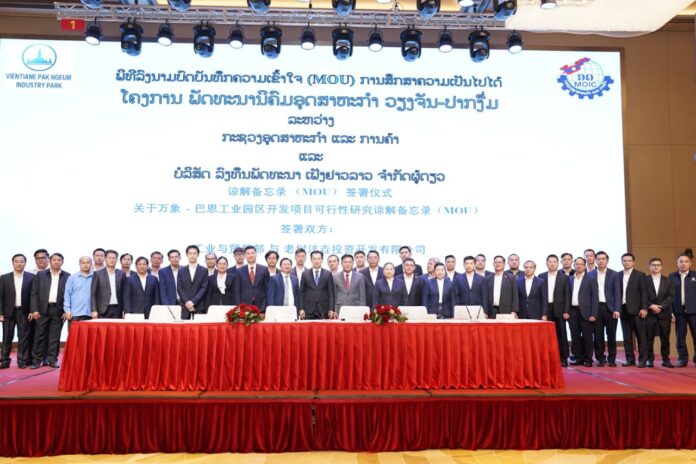
Vientiane-Pak Ngum Industrial Park Development Project signing. (Photo: Vientiane Times)

Laos has moved forward with plans for a new industrial estate near Vientiane as part of a broader push to expand manufacturing and attract more investment into the capital region.

The Ministry of Industry and Commerce signed a Memorandum of Understanding with Fengyao Lao Development Investment Co., Ltd. last week to conduct a feasibility study for the proposed Vientiane-Pak Ngum Industrial Park Development Project.

The project is planned for Donhai village in Pakngum district on around 70 hectares of company-owned land and will operate as a joint investment between Lao and foreign private sectors.

The feasibility study will run for 18 months, after which authorities and investors will decide whether to proceed with full-scale development based on technical and financial assessments.

If approved, the project is expected to attract more than 100 companies with total investment projected to exceed USD 165 million.

Officials estimate the site could generate around 15,000 jobs and support industries including agro-processing, fertilizer and animal feed production, pharmaceuticals, medical equipment manufacturing, electronics, electrical equipment, and agricultural machinery production.

Authorities said the project could expand employment opportunities, support local businesses, strengthen supply chains, and boost investment activity in and around Vientiane.

Officials also linked the project to the government’s industrial development policy under Decree No. 313 and the national industrial development framework introduced in 2025, both aimed at accelerating industrialization, strengthening value-added manufacturing, and reducing reliance on resource-based sectors.

If completed, the industrial estate is expected to support export-oriented production and strengthen Laos’ position as a regional investment destination.

Built by Lawyers, Tailored by You: Harvey Launches Purpose-Built Legal Agents Across Every Major Practice Area

SYDNEY, May 6, 2026 /PRNewswire/ — Today, Harvey announced that 500+ use case Agents are live in the platform alongside the company’s Agent Builder tool in early access. These pre-built agents cover common legal workflows out of the box while Agent Builder lets firms further tailor these agents into custom agents grounded in their own knowledge, processes, and ways of working. Together, they give organizations a full spectrum of options from immediate deployment to a fully tailored rollout.

Harvey Agents
Harvey Agents

The combination of ready-to-use agents, built for and by lawyers and tested against evaluation benchmarks for accuracy and relevance, and robust customization options within Agent Builder means that Harvey can support any legal organization’s agentic needs. Whether legal teams are seeking convenience with out-of-the-box use cases or greater flexibility with developing their own text-based agents, they can use Harvey’s platform to streamline existing processes and promote more sophisticated agent adoption.

“The legal industry is now well past AI as an assistant and officially in the era of legal agents,” said Winston Weinberg, CEO of Harvey. “We wanted every organization globally to be able to chart its own path with agents in Harvey, so we have a deep bench of off-the-shelf agents to choose from and an intuitive agent builder that makes the process of building highly sophisticated agents seamless for law firms and in-house teams alike.”

“Harvey agents enable us to complete larger and more complex use cases that AI tools couldn’t handle previously,” said Simon Newcomb, Partner and Head of AI, Clayton Utz. “They’re a genuinely different kind of tool – more like digital colleagues who can perform delegated work. Our lawyers can collaborate with agents applying human creativity in designing solutions, making judgment calls, verifying and accepting accountability for output and using their ability to build trusted client relationships.”

“Our agents aren’t designed by prompt engineers. They’re designed by lawyers who’ve done the work these agents handle,” said Anique Drumright, Chief Product Officer at Harvey. “Now every legal team can do the same: take what makes their practice distinctive and turn it into agents that scale.”

Legal teams have created more than 25,000 custom agents on Harvey. New agents are added regularly as lawyers and customers identify emerging use cases. All agents run on Harvey’s secure platform, which is trusted by more than 100,000 lawyers across 1,500 organizations.

500 agents and Agent Builder are in early access today, May 5th and will be available to Harvey customers on an ongoing basis over the upcoming months. To learn more visit www.harvey.ai/agents.

About Harvey
Harvey is the operating system for legal and professional services. Our products streamline workflows in areas including contract analysis, due diligence, compliance, and litigation to drive efficiency and value. Global law firms and Fortune 500 enterprises around the world use Harvey to enable faster, smarter decision-making. Backed by world-class investors including Sequoia, Kleiner Perkins, GV, OpenAI Startup Fund, Coatue, Andreessen Horowitz, GIC and EQT, Harvey is used by 1,500+ customers in 60+ countries. To learn more, visit https://www.harvey.ai/

Media
press@harvey.ai

Photo – https://laotiantimes.com/wp-content/uploads/2026/05/harvey__harvey_agents.jpg
Logo – https://laotiantimes.com/wp-content/uploads/2026/05/harvey_logo.jpg

ESOC 2026: Rising stroke rates highlight widening ethnic and socioeconomic inequalities across populations, major study finds

MAASTRICHT, Netherlands, May 6, 2026 /PRNewswire/ — A new study presented today at the European Stroke Organisation Conference (ESOC) 2026 shows that after decades of decline, stroke incidence is rising again, driven by higher rates in some ethnic minority populations and concentrated among socioeconomically disadvantaged groups.

These findings reflect broader patterns seen in diverse urban populations internationally, pointing to widening health inequalities and highlighting an urgent need to improve uptake of cardiovascular risk programmes across all socioeconomic and ethnic groups.

This 30-year analysis examined how the risk of having stroke varied in different ethnic and socioeconomic groups in a population of 333,000 people in South London, of whom 7,726 had a stroke. After a 34% decrease between 1995–1999 and 2010–2014 (from 198 to 131 cases per 100,000 people), the risk of stroke increased by 13% in 2020–2024.

Although overall trends initially improved, the recent rise was not evenly distributed. In 2020–2024, stroke incidence was more than twice as high in Black African (Incidence Rate Ratio [IRR] 2.31; 95% CI 2.03–2.62) and Black Caribbean (IRR 2.00; 95% CI 1.73–2.31) populations compared with the White population.

Rates remained consistently higher in these groups across the study period, with the highest incidence observed among those experiencing socioeconomic deprivation.

Compared with White participants, Black African and Black Caribbean populations were more likely to have high blood pressure (47% and 29% higher prevalence, respectively) and diabetes (92% and 123% higher, respectively), both of which increase stroke risk. Notably, 12% of Black African patients had no diagnosed risk factors prior to stroke, compared with 6.3% of White patients, suggesting gaps in early detection.

Ethnic inequalities were greatest for intracerebral haemorrhage, a severe and often fatal subtype of stroke, with disparities between Black African, Black Caribbean and White populations being more pronounced than for other stroke subtypes.

Lead researcher, Dr Camila Pantoja-Ruiz from King’s College London, stated that these inequalities persisted even after adjusting for clinical severity, socioeconomic status and other clinical factors. Additional analyses found that Black stroke survivors, particularly Black African survivors, were less likely to receive timely follow-up care, with Black African survivors having 34% lower odds of follow-up.

Additionally, Black African populations were found to experience stroke around 10–12 years earlier than White populations on average. These findings highlight the need for earlier prevention and targeted interventions.