Home Blog Page 387

XCMG Again Ranks Among Global Top Three in KHL Group’s 2026 Yellow Table

XUZHOU, China, May 4, 2026 /PRNewswire/ — XCMG Machinery (“XCMG”, SHE: 000425) announced that it has once again ranked third globally among construction equipment manufacturers based on sales revenue in the Yellow Table 2026, published by International Construction, a magazine under global construction media group KHL Group, with equipment sales reaching approximately USD 14.2 billion and a market share of 5.8%. As the highest-ranking Chinese company on the list, XCMG remains the only manufacturer from China in the global top five.

XCMG ranks third globally in the 2026 Yellow Table.

“XCMG’s sustained ranking among the world’s top three construction equipment manufacturers is a testament to our robust global footprint and long-term strategy,” said Yang Dongsheng, Chairman of XCMG Group and XCMG Machinery. “Our strong performance in 2025 marks a new chapter as we are now poised to deepen international collaboration, accelerate the shift toward green and intelligent machinery, and deliver enduring value to our partners and the global industry.”

Backed by its latest annual report, released on April 28, XCMG reported solid growth in 2025, with operating revenue reaching RMB 100.823 billion (up 8.37% YoY), and maintained growth momentum into the first quarter of 2026. During the first three months of 2026, XCMG recorded RMB 29.791 billion in revenue, representing a 9.26% year-over-year increase.

International operations continue to be a primary growth engine for XCMG. In 2025, overseas revenue surged 16.58% year over year to RMB 48.599 billion, accounting for nearly half (48.20%) of the company’s total revenue, a 3.39 percentage point increase from the previous year. Meanwhile, domestic revenue remained steady at RMB 52.224 billion, representing a modest 1.70% increase.

In 2025, XCMG reported a Parent Company Net Profit of RMB 6.572 billion (+8.96% YoY), while Adjusted Parent Company Net Profit reached RMB 6.550 billion, representing a robust 13.68% year-over-year increase. For the first quarter of 2026, profitability remained stable, with net profit and adjusted net profit reaching RMB 2.056 billion and RMB 2.024 billion, respectively.

XCMG also reported operating cash flow of RMB 14.142 billion in 2025, up 148.42% year over year. In the first quarter of 2026, operating cash flow reached RMB 2.152 billion, up 153.12% year over year. The company reported a gross margin of 22.61%, up 0.04 percentage points, and a return on equity of 11.00%, up 0.63 percentage points.

In 2025, XCMG maintained steady growth across its primary product categories. The company’s focus on sustainable innovation drove new-energy revenue to RMB 13.30 billion (a 23.6% YoY increase). Meanwhile, traditional segments continued to provide a solid foundation, with earthmoving machinery generating RMB 30.131 billion, hoisting equipment contributing RMB 20.983 billion. Emerging segments continued to expand steadily, with the mining machinery division reporting RMB 9.377 billion in revenue.

XCMG is committed to expanding its global footprint by advancing green, intelligent equipment and strengthening a manufacturing ecosystem driven by digital transformation and industrial IoT. By continuously refining its product portfolio and service reach, the company ensures world-class support for its customers and partners worldwide.

A New Vision for Smart Parenting Unveiled at Toys & Children, Baby and Maternity Products Category of 139th Canton Fair

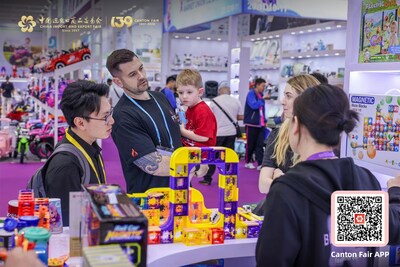
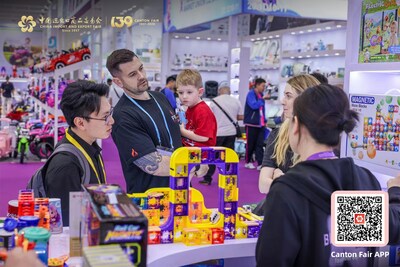
GUANGZHOU, China, May 3, 2026 /PRNewswire/ — At the exhibition area of the 139th Canton Fair’s Toys & Children, Baby and Maternity Products category, exhibitors are presenting products that merge smart technology, educational value and sustainable materials, responding to the evolving expectations of global families seeking safe, creative, and smart parenting solutions.

Parenting products have put a focus on smart, multi-functional design. An intelligent soothing pendant uses voice recognition to detect a baby’s cry and automatically play music, while a self-rotating smart car seat improves convenience of use by automatic turning.

Further innovations emphasize convenience and integrated care. A wireless diaper-changing baby scale combines multiple functions for daily care and health monitoring, alongside an electric cradle and a one-touch foldable crib that enable effortless setup and hands-free parenting.

Newly released products highlight the educational wooden toys sector’s momentum. A miniature wooden kitchen set, crafted from FSC certified natural wood and coated with water-based paint, meets major international safety standards and supports early life skills development. Alongside it, an ocean themed multifunctional play table introduces a modular approach to early learning. Built from natural wood and finished with food grade coatings and rounded edges, the table integrates geometric cognition, musical exploration, and logic training. It represents a meaningful step in the evolution of traditional wooden toys toward more interactive early education tools.

Sustainability remains a defining thread across the category. A series of thick wooden puzzles illustrates how recycled materials can be developed into durable, affordable and educational products. Made with a significant proportion of medium‑density fiberboard derived from reclaimed wood fibers, the puzzles reflect efficient resource use while demonstrating how manufacturers integrate function, durability and cost‑effectiveness into their design considerations. Their handcrafted texture and cultural warmth further underscore a commitment to greener, more responsible production.

In an age shaped by AI and diversified consumption needs, traditional maternity and child product makers are finding fresh relevance. While preserving an emotional warmth, they are introducing smart interaction, joyful educational design, and greener materials, giving the classic category a modern spark and renewing its appeal for today’s families.

For pre-registration, please click: https://buyer.cantonfair.org.cn/register/buyer/email?source_type=16

A New Vision for Smart Parenting Unveiled at Toys & Children, Baby and Maternity Products Category of 139th Canton Fair

GUANGZHOU, China, May 3, 2026 /PRNewswire/ — At the exhibition area of the 139th Canton Fair’s Toys & Children, Baby and Maternity Products category, exhibitors are presenting products that merge smart technology, educational value and sustainable materials, responding to the evolving expectations of global families seeking safe, creative, and smart parenting solutions.

Parenting products have put a focus on smart, multi-functional design. An intelligent soothing pendant uses voice recognition to detect a baby’s cry and automatically play music, while a self-rotating smart car seat improves convenience of use by automatic turning.

Further innovations emphasize convenience and integrated care. A wireless diaper-changing baby scale combines multiple functions for daily care and health monitoring, alongside an electric cradle and a one-touch foldable crib that enable effortless setup and hands-free parenting.

Newly released products highlight the educational wooden toys sector’s momentum. A miniature wooden kitchen set, crafted from FSC certified natural wood and coated with water-based paint, meets major international safety standards and supports early life skills development. Alongside it, an ocean themed multifunctional play table introduces a modular approach to early learning. Built from natural wood and finished with food grade coatings and rounded edges, the table integrates geometric cognition, musical exploration, and logic training. It represents a meaningful step in the evolution of traditional wooden toys toward more interactive early education tools.

Sustainability remains a defining thread across the category. A series of thick wooden puzzles illustrates how recycled materials can be developed into durable, affordable and educational products. Made with a significant proportion of medium‑density fiberboard derived from reclaimed wood fibers, the puzzles reflect efficient resource use while demonstrating how manufacturers integrate function, durability and cost‑effectiveness into their design considerations. Their handcrafted texture and cultural warmth further underscore a commitment to greener, more responsible production.

In an age shaped by AI and diversified consumption needs, traditional maternity and child product makers are finding fresh relevance. While preserving an emotional warmth, they are introducing smart interaction, joyful educational design, and greener materials, giving the classic category a modern spark and renewing its appeal for today’s families.

For pre-registration, please click: https://buyer.cantonfair.org.cn/register/buyer/email?source_type=16

A New Vision for Smart Parenting Unveiled at Toys & Children, Baby and Maternity Products Category of 139th Canton Fair

GUANGZHOU, China, May 3, 2026 /PRNewswire/ — At the exhibition area of the 139th Canton Fair’s Toys & Children, Baby and Maternity Products category, exhibitors are presenting products that merge smart technology, educational value and sustainable materials, responding to the evolving expectations of global families seeking safe, creative, and smart parenting solutions.

Parenting products have put a focus on smart, multi-functional design. An intelligent soothing pendant uses voice recognition to detect a baby’s cry and automatically play music, while a self-rotating smart car seat improves convenience of use by automatic turning.

Further innovations emphasize convenience and integrated care. A wireless diaper-changing baby scale combines multiple functions for daily care and health monitoring, alongside an electric cradle and a one-touch foldable crib that enable effortless setup and hands-free parenting.

Newly released products highlight the educational wooden toys sector’s momentum. A miniature wooden kitchen set, crafted from FSC certified natural wood and coated with water-based paint, meets major international safety standards and supports early life skills development. Alongside it, an ocean themed multifunctional play table introduces a modular approach to early learning. Built from natural wood and finished with food grade coatings and rounded edges, the table integrates geometric cognition, musical exploration, and logic training. It represents a meaningful step in the evolution of traditional wooden toys toward more interactive early education tools.

Sustainability remains a defining thread across the category. A series of thick wooden puzzles illustrates how recycled materials can be developed into durable, affordable and educational products. Made with a significant proportion of medium‑density fiberboard derived from reclaimed wood fibers, the puzzles reflect efficient resource use while demonstrating how manufacturers integrate function, durability and cost‑effectiveness into their design considerations. Their handcrafted texture and cultural warmth further underscore a commitment to greener, more responsible production.

In an age shaped by AI and diversified consumption needs, traditional maternity and child product makers are finding fresh relevance. While preserving an emotional warmth, they are introducing smart interaction, joyful educational design, and greener materials, giving the classic category a modern spark and renewing its appeal for today’s families.

For pre-registration, please click: https://buyer.cantonfair.org.cn/register/buyer/email?source_type=16

139th Canton Fair Phase 3 Advances Toward a Better Life with New and Strengthened Product Zones

GUANGZHOU, China, May 3, 2026 /PRNewswire/ — The 139th China Import and Export Fair (Canton Fair) has rolled out nine newly established product zones. Phase 3 features an expanded and upgraded Intelligent Healthcare zone and the inaugural presentation of a Functional & Technical Fabrics zone.

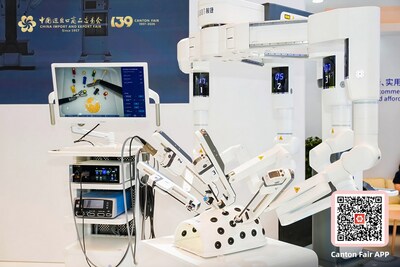
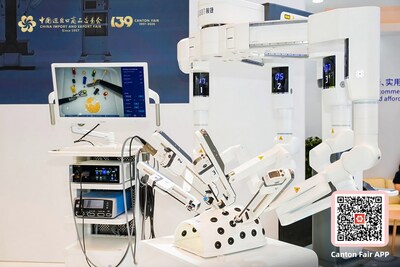
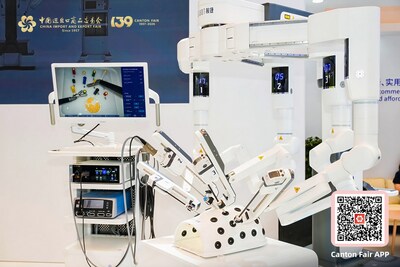
The upgraded Intelligent Healthcare zone brings together 50 companies presenting a full spectrum of intelligent medical solutions, spanning AI-powered diagnostics, surgical robotics, and next‑generation eldercare technologies. Exhibits highlight how medical devices are becoming smaller, more precise, and increasingly non‑invasive. Capsule endoscopy systems demonstrate how gastrointestinal screening can be completed without discomfort, while AI‑enabled traditional Chinese medicine analyzers compress the inspection and inquiry process into minutes. Wearable glucose monitors make chronic disease management easier and more convenient.

Robotic technologies play a prominent role as well. Endoscopic and orthopedic surgical robots showcase enhanced precision through integrated human‑machine coordination, while bionic prosthetic hands use non‑invasive myoelectric sensing to independently control each finger. Intelligent rehabilitation systems, including lower‑limb exoskeletons and hand‑training devices, provide consistent support for patients recovering mobility. Companion‑style eldercare robots, equipped with monitoring and telemedicine functions, signal the rise of integrated home‑based health services.

The debuting Functional & Technical Fabrics zone highlights how the traditional textile industry is moving toward higher-end and smarter products. Exhibitors present materials that combine multi‑layered performance with intelligent responsiveness. Textiles featuring temperature‑regulating fibers, phase‑change materials, and light‑ or heat‑sensitive color‑shifting effects illustrate how fabrics are evolving into adaptive platforms capable of responding to environmental conditions.

Sustainability emerges as a defining theme. Bio‑based fibers, degradable films, recycled polyester, and organic cotton reflect a shift from isolated eco‑products toward full‑chain green manufacturing. High‑performance outdoor and protective applications further shape the narrative. Materials engineered for waterproof breathability, UV resistance, flame retardancy, and long‑term durability address rising demand across sportswear, professional protection, and medical environments. Smart textiles with embedded health‑monitoring modules demonstrate how apparel is beginning to function as a continuous wellness interface.

Both technology‑driven healthcare and advanced textiles are converging around a shared pursuit of a better life. As these advancements continue to evolve, they reflect a manufacturing landscape increasingly shaped by innovation, resilience, and a commitment to improving everyday living.

For pre-registration, please click: https://buyer.cantonfair.org.cn/register/buyer/email?source_type=16


139th Canton Fair Phase 3 Advances Toward a Better Life with New and Strengthened Product Zones

GUANGZHOU, China, May 3, 2026 /PRNewswire/ — The 139th China Import and Export Fair (Canton Fair) has rolled out nine newly established product zones. Phase 3 features an expanded and upgraded Intelligent Healthcare zone and the inaugural presentation of a Functional & Technical Fabrics zone.

The upgraded Intelligent Healthcare zone brings together 50 companies presenting a full spectrum of intelligent medical solutions, spanning AI-powered diagnostics, surgical robotics, and next‑generation eldercare technologies. Exhibits highlight how medical devices are becoming smaller, more precise, and increasingly non‑invasive. Capsule endoscopy systems demonstrate how gastrointestinal screening can be completed without discomfort, while AI‑enabled traditional Chinese medicine analyzers compress the inspection and inquiry process into minutes. Wearable glucose monitors make chronic disease management easier and more convenient.

Robotic technologies play a prominent role as well. Endoscopic and orthopedic surgical robots showcase enhanced precision through integrated human‑machine coordination, while bionic prosthetic hands use non‑invasive myoelectric sensing to independently control each finger. Intelligent rehabilitation systems, including lower‑limb exoskeletons and hand‑training devices, provide consistent support for patients recovering mobility. Companion‑style eldercare robots, equipped with monitoring and telemedicine functions, signal the rise of integrated home‑based health services.

The debuting Functional & Technical Fabrics zone highlights how the traditional textile industry is moving toward higher-end and smarter products. Exhibitors present materials that combine multi‑layered performance with intelligent responsiveness. Textiles featuring temperature‑regulating fibers, phase‑change materials, and light‑ or heat‑sensitive color‑shifting effects illustrate how fabrics are evolving into adaptive platforms capable of responding to environmental conditions.

Sustainability emerges as a defining theme. Bio‑based fibers, degradable films, recycled polyester, and organic cotton reflect a shift from isolated eco‑products toward full‑chain green manufacturing. High‑performance outdoor and protective applications further shape the narrative. Materials engineered for waterproof breathability, UV resistance, flame retardancy, and long‑term durability address rising demand across sportswear, professional protection, and medical environments. Smart textiles with embedded health‑monitoring modules demonstrate how apparel is beginning to function as a continuous wellness interface.

Both technology‑driven healthcare and advanced textiles are converging around a shared pursuit of a better life. As these advancements continue to evolve, they reflect a manufacturing landscape increasingly shaped by innovation, resilience, and a commitment to improving everyday living.

For pre-registration, please click: https://buyer.cantonfair.org.cn/register/buyer/email?source_type=16


139th Canton Fair Phase 3 Advances Toward a Better Life with New and Strengthened Product Zones

GUANGZHOU, China, May 3, 2026 /PRNewswire/ — The 139th China Import and Export Fair (Canton Fair) has rolled out nine newly established product zones. Phase 3 features an expanded and upgraded Intelligent Healthcare zone and the inaugural presentation of a Functional & Technical Fabrics zone.

The upgraded Intelligent Healthcare zone brings together 50 companies presenting a full spectrum of intelligent medical solutions, spanning AI-powered diagnostics, surgical robotics, and next‑generation eldercare technologies. Exhibits highlight how medical devices are becoming smaller, more precise, and increasingly non‑invasive. Capsule endoscopy systems demonstrate how gastrointestinal screening can be completed without discomfort, while AI‑enabled traditional Chinese medicine analyzers compress the inspection and inquiry process into minutes. Wearable glucose monitors make chronic disease management easier and more convenient.

Robotic technologies play a prominent role as well. Endoscopic and orthopedic surgical robots showcase enhanced precision through integrated human‑machine coordination, while bionic prosthetic hands use non‑invasive myoelectric sensing to independently control each finger. Intelligent rehabilitation systems, including lower‑limb exoskeletons and hand‑training devices, provide consistent support for patients recovering mobility. Companion‑style eldercare robots, equipped with monitoring and telemedicine functions, signal the rise of integrated home‑based health services.

The debuting Functional & Technical Fabrics zone highlights how the traditional textile industry is moving toward higher-end and smarter products. Exhibitors present materials that combine multi‑layered performance with intelligent responsiveness. Textiles featuring temperature‑regulating fibers, phase‑change materials, and light‑ or heat‑sensitive color‑shifting effects illustrate how fabrics are evolving into adaptive platforms capable of responding to environmental conditions.

Sustainability emerges as a defining theme. Bio‑based fibers, degradable films, recycled polyester, and organic cotton reflect a shift from isolated eco‑products toward full‑chain green manufacturing. High‑performance outdoor and protective applications further shape the narrative. Materials engineered for waterproof breathability, UV resistance, flame retardancy, and long‑term durability address rising demand across sportswear, professional protection, and medical environments. Smart textiles with embedded health‑monitoring modules demonstrate how apparel is beginning to function as a continuous wellness interface.

Both technology‑driven healthcare and advanced textiles are converging around a shared pursuit of a better life. As these advancements continue to evolve, they reflect a manufacturing landscape increasingly shaped by innovation, resilience, and a commitment to improving everyday living.

For pre-registration, please click: https://buyer.cantonfair.org.cn/register/buyer/email?source_type=16


Economy, Science & Technology, And Environment: The Three New Pillars Of Vietnam – India Cooperation

NEW DELHI, INDIA – Media OutReach Newswire – 3 May 2026 – The Indo-Pacific region continues to be the focal point of global growth dynamics and strategic competition, and relations between Vietnam and India are facing new opportunities to develop in a deeper, more substantive, and more sustainable manner. Building on the Comprehensive Strategic Partnership established in 2016, cooperation in the fields of economy, science and technology, and environment has increasingly been identified by both sides as key pillars.

In 2024, the two sides adopted an Action Plan to implement the Comprehensive Strategic Partnership for the 2024-2028 period. This document not only consolidates traditional areas of cooperation but also expands into new domains such as science and technology, innovation, digital transformation, energy and sustainable development.

Economy continues to be a bright spot in bilateral cooperation

Over the past decade, Vietnam-India economic cooperation has recorded significant positive developments. Bilateral trade turnover has maintained steady growth, increasing from over USD 14 billion in 2023 to nearly USD 16.5 billion in 2025, reflecting the increasingly close integration between the two dynamic Asian economies.

The structure of two-way trade has increasingly demonstrated complementarity. Vietnam has strengthened its exports of electronics, machinery, processed agricultural products, wood, and seafood, while India serves as an important supplier of steel, pharmaceuticals, chemicals, and textiles to Vietnam.

Amid the ongoing restructuring of global supply chains, both Vietnam and India are intensifying efforts to diversify their partners and reduce dependency risks. This creates significant room for the two countries to promote supply chain linkages in areas such as processing and manufacturing industries, supporting industries, logistics, and high-tech agriculture. Vietnam, with its strategic location in Southeast Asia, can serve as a gateway for Indian enterprises to expand their presence deeper into ASEAN, while India represents a vast market with rapidly increasing consumer demand.

Science and technology: a new driver for deeper cooperation

Scientific and technological cooperation has seen remarkable development recently, gradually shifting from exchanges to more substantive collaboration, tied to specific products and developmental needs. Priority areas of cooperation include information technology, biotechnology, clean energy, and digital transformation.

Several representative projects, such as the Satellite Data Receiving Station and Satellite Image Processing Center, the Vietnam-India Nuclear Science Center (Da Lat), the Army Software Park (Nha Trang), and the Center of Excellence in Software Development and Training (CESDT), have been contributing to enhancing Vietnam’s technological capacity. Notably, the Indian Technical and Economic Cooperation (ITEC) program continues to be an effective channel for human resource training, helping Vietnamese officials and experts access modern management knowledge and experience.

Against the backdrop of the vigorous Fourth Industrial Revolution, the potential for cooperation between the two countries remains vast. The two sides can expand their cooperation into emerging areas such as Artificial Intelligence, semiconductors, cybersecurity, fintech, and biotechnology, aiming for the goals of co-development and co-innovation. ­

Environmental cooperation and sustainable development are gradually expanding

In the context of increasingly complex climate change, environmental cooperation between Vietnam and India is becoming an important component of the bilateral agenda. Areas such as renewable energy, water resource management, circular economy, and disaster-resilient infrastructure are receiving growing attention and promotion from both sides.

Cooperation agreements in marine science, along with Quick Impact Projects (QIPs) supporting communities, such as clean water supply, drought mitigation, and saline intrusion prevention in the Mekong Delta, have delivered practical results. Vietnam’s participation in the Coalition for Disaster Resilient Infrastructure (CDRI), initiated by India, also opens up opportunities to strengthen cooperation in sustainable infrastructure and climate change adaptation.

In the coming period, areas encompassing solar energy, energy storage, waste management, marine pollution monitoring, and early warning systems for natural disasters are considered promising directions for cooperation.

Prospects for cooperation

The prospects for cooperation in the coming period are assessed as positive. With the economic and scientific-technological complementarity, along with strong political will from both sides, Vietnam-India relations have many favorable conditions to grow more strongly, particularly in areas such as the digital economy, green economy, innovation.

Orientations for promoting cooperation in the coming period

With a foundation of excellent relations and significant room for cooperation, the two countries have the basis to elevate the Comprehensive Strategic Partnership to a new height, making it increasingly substantive and effective in the new phase, particularly in the context of the two countries heading towards new high-level engagements with the state visit of General Secretary and President To Lam to India in May 2026.

To effectively capitalize on opportunities, both sides need to continue maintaining high-level exchanges, intergovernmental mechanisms and specialized dialogues, and further translate strategic commitments into cooperation programs and projects with clear roadmaps and resources.

In the economic field, efforts should be intensified to remove trade barriers, improve logistics connectivity, and promote the review and upgrading of the ASEAN – India Trade in Goods Agreement (AITIGA); strengthen the development of large-scale investment projects in priority areas such as pharmaceuticals, the marine economy, renewable energy, and supporting industries.

In the field of science and technology, establishing joint research cooperation mechanisms, strengthening linkages between research institutes, universities, enterprises, as well as promoting expert exchanges, technology transfer, and human resource training will play an important role.

In the environmental field, efforts should be directed toward building a comprehensive green cooperation framework, focusing on water management, marine science, plastic pollution reduction, clean energy, and disaster-resilient infrastructure, while also effectively leveraging regional initiatives such as the CDRI.

Hashtag: #MAE

The issuer is solely responsible for the content of this announcement.