Home Blog Page 390

/C O R R E C T I O N — Bitmine Immersion Technologies, Inc./

In the news release, Bitmine Immersion Technologies (BMNR) Announces ETH Holdings Reach 5.74 Million Tokens, and Total Crypto and Total Cash Holdings of $11.1 Billion, issued 06-Jul-2026 by Bitmine Immersion Technologies, Inc. over PR Newswire, we are advised by the company that an edit has been made. The complete, corrected release follows:

Bitmine Immersion Technologies (BMNR) Announces ETH Holdings Reach 5.74 Million Tokens, and Total Crypto and Total Cash Holdings of $11.1 Billion

Bitmine owns 4.8% of the total ETH coin supply of 120.7 million

Bitmine is 95% of the way to the ‘Alchemy of 5%’ in just 12 months

Bitmine was added to the Russell 1000 Large-cap index on June 26, 2026

Bitmine’s Series A Preferred Stock is trading on the NYSE under the symbol BMNP

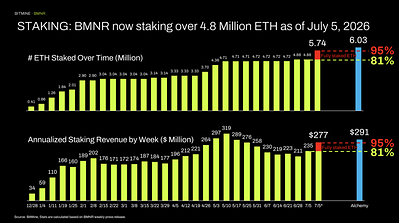
Bitmine has 4,879,157 staked ETH, representing $8.8 billion at $1,800 per ETH. MAVAN (Made in America VAlidator Network) is a premier Ethereum staking destination for BMNR and institutional investors

Bitmine owns $71 million of Eightco (NASDAQ: ORBS), now one of the only publicly listed equities in the world to provide investors indirect exposure to OpenAI

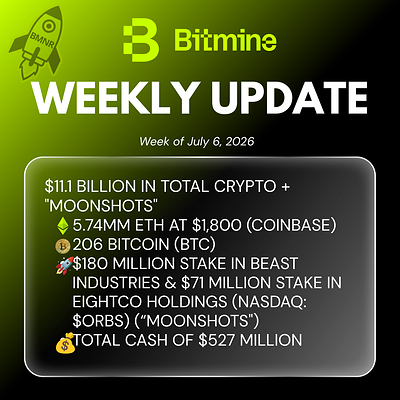
Bitmine Crypto + Total Cash Holdings & Marketable Securities + “Moonshots” total $11.1 billion, including 5.74 million ETH tokens, total cash & marketable securities of $527 million, and other crypto holdings

Bitmine remains supported by a premier group of institutional investors including ARK’s Cathie Wood, MOZAYYX, Founders Fund, Bill Miller III, Pantera, Kraken, DCG, Galaxy Digital and personal investor Thomas “Tom” Lee to support Bitmine’s goal of acquiring 5% of ETH

NORWALK, Conn., July 6, 2026 /PRNewswire/ — (NYSE: BMNR) Bitmine Immersion Technologies, Inc. (“Bitmine” or the “Company”) a Bitcoin and Ethereum Network company with a focus on the accumulation of crypto for long term investment, today announced Bitmine crypto + total cash & marketable securities + “moonshots” holdings totaling $11.1 billion. 
Weekly Update
Weekly Update

As of July 5, 2026 at 6:30pm ET, the Company’s crypto holdings are comprised of 5,742,237 ETH at $1,800 per ETH (per Coinbase NASDAQ: COIN), 206 Bitcoin (BTC), $180 million stake in Beast Industries, $71 million stake in Eightco Holdings (NASDAQ: ORBS) (“moonshots”) and total cash & marketable securities of $527 million. Bitmine’s ETH holdings are 4.8% of the ETH supply (of 120.7 million ETH).

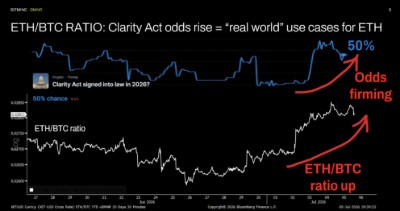
“Over the past few days, investors have become more optimistic about the passage of the Clarity Act with prediction markets now seeing approximately 50% probability, the highest odds in two weeks. We believe regulatory clarity is an important milestone, enabling crypto, particularly smart contract platforms like ethereum to benefit, as crypto becomes part of our everyday life. Already, ethereum L2 run in the background processing USDC transactions for Shopify and even Visa. Therefore, the rise in the ETH/BTC ratio in the past few days make sense as markets start to see greater chances of Clarity Act passage,” stated Thomas “Tom” Lee, Chairman of Bitmine.

On June 26, Bitmine was added to the Russell 1000 Large-cap Index, in conjunction with the annual reconstitution of this index. The Investment Company Institute, or ICI, estimates that passive investment funds and ETFs typically represent 18-20% of the shares of a company.

“Being added to the Russell 1000 is expected to add hundreds and possibly thousands of additional institutional investors as equity owners of Bitmine,” continued Lee.

On June 10, Bitmine closed its offering (the “offering”) registered under the Securities Act of 1933, as amended, of 3,500,000 shares of 9.50% Series A Perpetual Preferred Stock (the “Series A Preferred Stock”), at a public offering price of $80.00 per share.

The Company received net proceeds from the offering of approximately $273.8 million, after deducting the underwriting discounts and commissions and the Company’s estimated offering expenses. The Series A Preferred Stock is trading on the NYSE under the symbol BMNP. The dividends for BMNP are scheduled to be paid weekly, subject to the terms of the applicable Certificate of Designations.

On May 11, 2026, Bitmine released the latest Chairman’s Message (link here) for May 2026.

“Over the past week, we acquired 42,197 ETH, increasing our pace from the prior week. We continue to maintain a steady pace of accumulation throughout 2026. We believe we are in the early stages of crypto spring. Bitmine is expected to reach the ‘alchemy of 5%’ sometime in 2026,” stated Lee.

Earlier in 2026, Bitmine launched MAVAN (the Made in American VAlidator Network), the institutional grade staking platform. While MAVAN was originally developed to support Bitmine’s own Ethereum treasury, MAVAN intends to expand to serve institutional investors, custodians, and ecosystem partners seeking best-in-class staking infrastructure. A portion of Bitmine’s ETH is already staked on the MAVAN platform.

As of July 5, 2026, Bitmine total staked ETH stands at 4,879,157 ($8.8 billion at $1,800 per ETH). “Bitmine has staked more ETH than other entities in the world. At scale (when Bitmine’s ETH is fully staked by MAVAN and its staking partners), the projected ETH staking reward is $277 million on an annualized basis (using 2.68% 7-day BMNR yield),” stated Lee.

“Annualized staking revenues are now projected at $235 million. And this 4.9 million ETH is 85% of the 5.74 million ETH held by Bitmine. Bitmine’s own staking operations generated a 7-day yield of 2.68% (annualized),” continued Lee.

Bitmine’s crypto holdings reign as the #1 Ethereum treasury and #2 global treasury, behind Strategy Inc. (NASDAQ: MSTR), which reportedly owns 847,363 BTC valued at approximately $54 billion. Bitmine remains the largest ETH treasury in the world. 

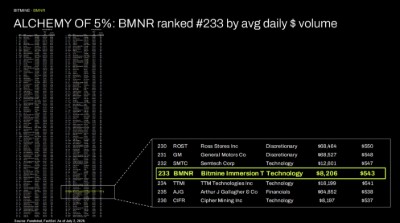
Bitmine is one of the most widely traded stocks in the US. According to data from Fundstrat, the stock has traded average daily dollar volume of $543 million (4-day average, as of July 2, 2026), ranking #233 in the US, behind Semtech (rank #232) and ahead of TTM Technologies (rank #234) among 5,704 US-listed stocks (statista.com and Fundstrat research).

Bitmine management believes the GENIUS Act and Securities and Exchange Commission’s (the “SEC”) Project Crypto are as transformational to financial services in 2025 as US action on August 15, 1971 ending Bretton Woods and the USD on the gold standard 54 years ago. This 1971 event was the catalyst for the modernization of Wall Street, creating the iconic Wall Street titans and financial and payment rails of today. These proved to be better investments than gold.

The Chairman’s message can be found here:
https://www.Bitminetech.io/chairmans-message

The Fiscal Full Year 2025 Earnings presentation and corporate presentation can be found here: https://Bitminetech.io/investor-relations/

To stay informed, please sign up at: https://Bitminetech.io/contact-us/

About Bitmine
Bitmine (NYSE: BMNR) is a Bitcoin miner with operations in the US. The company is deploying its excess capital to be the leading Ethereum Treasury company in the world, implementing an innovative digital asset strategy for institutional investors and public market participants. Guided by its philosophy of “the alchemy of 5%,” the Company is committed to ETH as its primary treasury reserve asset, leveraging native protocol-level activities including staking and decentralized finance mechanisms. The Company launched MAVAN (Made-in America VAlidator Network), a dedicated staking infrastructure for Bitmine assets, in 2026.

For additional details, follow on X:
https://x.com/bitmnr
https://x.com/fundstrat

Forward Looking Statements
This press release contains statements that constitute “forward-looking statements” within the meaning of the Private Securities Litigation Reform Act of 1995. The statements in this press release that are not purely historical are forward-looking statements which involve risks and uncertainties. These forward-looking statements can be identified by terms such as “expects,” “projects,” “projected,” “intends,” “believes,” “anticipates,” “estimates,” and similar expressions. This document specifically contains forward-looking statements regarding: (i) the Company’s goals regarding ETH acquisition, including the “Alchemy of 5%” initiative and the expectation that Bitmine will reach this goal sometime in 2026; (ii) the Company’s beliefs and expectations regarding the cryptocurrency market, including the belief that the Company is in the early stages of “crypto spring” and that Bitmine will maintain a steady pace of ETH accumulation throughout 2026; (iii) expectations regarding passage of the Clarity Act and the Company’s belief that regulatory clarity is an important milestone enabling crypto, particularly smart contract platforms like Ethereum, to benefit as crypto becomes part of everyday life; (iv) the expectation that being added to the Russell 1000 will add hundreds and possibly thousands of additional institutional investors as equity owners of Bitmine, including expectations regarding passive investment fund ownership; (v) the Company’s digital asset accumulation strategy and staking operations, including projected annualized ETH staking rewards of approximately $277 million (when Bitmine’s ETH is fully staked by MAVAN and its staking partners) and current projected annualized staking revenues of approximately $235 million; (vi) MAVAN’s intended expansion to serve institutional investors, custodians, and ecosystem partners seeking best-in-class staking infrastructure; (vii) management’s belief that the GENIUS Act and SEC Project Crypto are as transformational to financial services as US action on August 15, 1971 ending Bretton Woods and the USD gold standard; and (viii) the future growth and advancement of the Company’s Ethereum treasury strategy. In evaluating these forward-looking statements, you should consider various factors, including: Bitmine’s ability to keep pace with new technology and changing market needs; Bitmine’s ability to finance its current business, Ethereum treasury operations, and proposed future business; the competitive environment of Bitmine’s business; market conditions affecting the trading price of the Company’s common stock and Series A Preferred Stock; regulatory developments affecting digital assets, including the ultimate enactment and implementation of the Clarity Act, the GENIUS Act, and other pending legislation and SEC initiatives; the volatility and unpredictability of digital asset prices; the performance, reliability, and security of the Company’s staking operations; risks related to AI systems and their impact on cryptocurrency markets; and the future value of Bitcoin and Ethereum. Actual future performance outcomes and results may differ materially from those expressed in forward-looking statements. Forward-looking statements are subject to numerous conditions, many of which are beyond Bitmine’s control, including those set forth in the Risk Factors section of Bitmine’s Form 10-K filed with the SEC on November 21, 2025, as well as all other SEC filings, as amended or updated from time to time. Copies of Bitmine’s filings with the SEC are available on the SEC’s website at www.sec.gov. Bitmine undertakes no obligation to update these statements for revisions or changes after the date of this release, except as required by law.
ETH/BTC RATIO: Clarity Act odds rise = "real world" use cases for ETH
ETH/BTC RATIO: Clarity Act odds rise = “real world” use cases for ETH
 

STAKING: BMNR now staking over 4.8 Million ETH as of July 5, 2026


ALCHEMY OF 5%: BMNR ranked #233 by avg daily $​ volume


/C O R R E C T I O N — Beko/

In the news release, New Beko Research Reveals Eight in Ten Fans Miss Key Sporting Moments on Matchday, issued July 6, 2026 by Beko over PR Newswire, we are advised by the company that there was a typo in the headline. The complete, corrected release follows:

New Beko Research Reveals Eight in Ten Fans Miss Key Sporting Moments on Matchday

Summer sport is turning the kitchen into the heart of home hosting, with fridges, ovens and freezers helping to prep food and drinks while guests stay focused on the game.

ISTANBUL, July 6, 2026 /PRNewswire/ — Beko, Europe’s leading home appliances company, has announced a new study showing that as more fans gather at home to watch live sport, appliances are doing the heavy lifting behind the scenes. From kick-off to clean up, the right appliances make hosting feel easier, less stressful and more enjoyable.

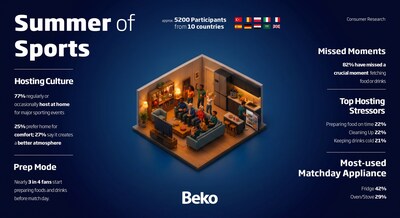
Summer of Sports Infographic

The study found that 77% of fans across 10 markets* regularly or occasionally watch sport at home, drawn by the comfort and atmosphere of hosting friends and family in their own space. But there is a generational divide; younger fans are more than twice as likely to make watching sport at home a regular social event. 44% of 25-34-year-olds say they regularly host, compared to 21% of those aged over 55. The research highlights the pressure this puts on the kitchen, with 82% of fans having missed a crucial sporting moment while grabbing food or drinks for guests.

Missing the key moments

While home may now be the preferred place to watch for many, hosting does not come without its challenges. The research shows that preparing food on time and cleaning up afterwards are joint top kitchen pressures during sporting events, both cited by 22% of respondents. Keeping drinks cold follows closely behind at 21%, while 17% say finding enough fridge space adds to the pressure and 16% struggle with cooking multiple things at once.

Together, the findings highlight how kitchen duties can pull hosts away from the action, turning what should be a shared sporting moment into a balancing act between keeping guests happy and keeping up with the game.

The kitchen MVP

Refrigerators are earning Player of the Match status on gamedays, with 42% of fans naming them as their most-used appliance when hosting. And yet hosts rely heavily on workarounds to keep drinks cold with 27% having rearranged fridge space to squeeze everything in. In addition, more than half (51%) say they have put drinks in the freezer to chill them faster. Ovens and stoves ranked as the second most used appliances at 29%, showing that food preparation remains a key part of the at-home matchday experience.

Planning starts before kick-off

With more sporting events bringing people together at home, nearly three quarters of fans say they begin preparing either days before or on the morning of an event. The findings suggest that matchday entertaining is becoming more planned and deliberate, highlighting the growing role appliances play before guests even arrive. From making sure there is enough fridge space to chilling drinks in time and preparing food with less last-minute pressure, appliances help hosts get organised earlier and feel more in control when the game begins.

“Home has become the preferred venue for major sporting events. Our research shows that fans want to spend less time managing food and drinks and more time enjoying the match with their guests,” says Ragıp Balcıoğlu, Global Chief Marketing and Strategy Officer at Beko. “That’s exactly where intelligent appliances can make a difference. Beko’s AI Adaptive Cool technology learns household usage patterns and automatically optimises cooling, helping keep food fresh and beverages ready throughout the event whilst saving energy.”

Key findings:

  • 77% of fans globally say they host friends or family at home regularly or occasionally to watch major sporting events.
  • 44% of 25–34-year-olds regularly invite friends or family round, compared to 21% of those aged 55+.
  • 25% say watching at home is more comfortable, while 27% say it creates a better atmosphere.
  • 82% have missed a crucial sporting moment because they went to get food or drinks.
  • Preparing food on time is the biggest source of kitchen stress globally at 22%, followed by cleaning up afterwards at 22% and keeping drinks cold at 21%.
  • Refrigerators are the most-used appliance during matchday hosting globally at 42%, ahead of ovens and stoves at 29%.
  • Nearly three quarters of fans globally say they start preparing food and drinks either days before or on the morning of an event.

*JL Partners polled 5,139 people from ten markets: UK, France, Spain, Italy, Germany, Romania, Poland, Turkey, Egypt and Saudi Arabia.

ABOUT BEKO

Beko is an international home appliance company with a strong global presence, operating through subsidiaries in more than 55 countries with a workforce of around 45,000 employees and production facilities spanning multiple regions—including Europe, Asia, Africa, and the Middle East. Beko has 22 brands owned or used with a limited license (Arçelik, Beko, Whirlpool*, Grundig, Hotpoint, Arctic, Ariston*, Leisure, Indesit, Blomberg, Defy, Dawlance, Hitachi*, Voltas Beko, Singer*, ElektraBregenz, Flavel, Bauknecht, Privileg, Altus, Ignis, Polar). Beko is the largest white goods company in Europe with its market share (based on volumes) and reached a consolidated turnover of 10.7 billion Euros in 2025. Beko’s 28 R&D and Design Centers & Offices across the globe are home to over 2,000 R&D employees and hold more than 4,500 international registered patent applications to date. The company has achieved the highest score in the S&P Global Corporate Sustainability Assessment (CSA) in the DHP Household Durables industry for the seventh consecutive year (based on the results dated 16 October 2025).** The company has been recognized as the 89th most sustainable company on TIME Magazine and Statista’s 2026 list of the World’s Most Sustainable Companies and has been the sector leader for three consecutive years. Beko’s vision is ‘Respecting the World, Respected Worldwide.’

www.bekocorporate.com

*Licensee limited to certain jurisdictions.  
**The data presented belongs to Arçelik A.Ş., a parent company of Beko.

Ragıp Balcıoğlu, Beko Chief Marketing and Strategy Officer

AllyHub Brings Browser-Native AI Automation to Ecommerce, Content Creation, and Repetitive Online Workflows

Designed for ecommerce businesses, marketers, and knowledge workers, AllyHub combines browser automation, AI-assisted content production, and reusable workflows to help teams accomplish more with less manual effort.

BELLEVUE, Wash., July 6, 2026 /PRNewswire/ — As businesses increasingly rely on AI to support everyday operations, the challenge is no longer finding tools that can generate content or answer questions. The real challenge is eliminating repetitive work that slows teams down.

AllyHub is a newly launched, browser-native AI copilot built to automate the execution work behind ecommerce, marketing, research, and content production. Instead of functioning as a traditional chatbot, AllyHub operates directly inside the browser to perform research, collect information, organize data, generate content, and complete repetitive web-based workflows. By handling routine execution tasks, the platform enables businesses to spend more time on decision-making, creativity, and growth.

Designed for ecommerce brands, agencies, content teams, entrepreneurs, and other knowledge professionals, AllyHub combines AI-powered browser automation with continuously reusable workflows, making it easier to manage high-volume tasks without repeatedly starting from scratch.

Reducing the Cost of Repetitive Work

Many AI tools can complete individual tasks, but few are designed to preserve the workflows behind those tasks. Once a session ends, the execution process, decisions, and accumulated know-how are often lost, forcing users to repeat the same instructions, research, and browser actions the next time similar work needs to be done.

Some platforms attempt to solve this by allowing users to build reusable workflows or AI agents. However, creating and maintaining those workflows often requires significant setup, technical effort, or high ongoing token consumption, making them impractical for many everyday business scenarios.

AllyHub addresses both challenges through a browser-native approach that continuously transforms completed work into reusable Skills, Services, and operational knowledge. Instead of asking users to manually rebuild workflows—or repeatedly pay AI to rediscover them—the platform captures successful execution as reusable assets that improve future tasks with minimal additional effort.

This approach helps organizations maximize Return on Token Investment (ROTI), allowing repetitive work to become progressively more efficient while reducing both manual effort and unnecessary AI operating costs over time.

Built for Modern Ecommerce Teams

Ecommerce operations involve hundreds of repetitive browser tasks every week—from researching products and monitoring competitors to creating product content and tracking market trends.

AllyHub helps streamline these workflows by allowing teams to automate many browser-based activities in a single AI workspace.

Common ecommerce use cases include:

  • Product and competitor research
  • Marketplace and pricing analysis
  • Product description and listing generation
  • Customer review analysis
  • Supplier and market research
  • SEO content preparation
  • Data collection across multiple websites

For social commerce teams, AllyHub also provides specialized browser automation tools such as its Instagram scraper, enabling users to gather publicly available profile and engagement information for competitor analysis, creator research, and campaign planning.

The platform also includes a YouTube video finder, making it easier for marketing teams to discover relevant videos for product research, content inspiration, competitive analysis, and trend monitoring without manually searching across multiple channels.

Supporting Content Teams Beyond Ecommerce

While ecommerce is one of AllyHub’s strongest use cases, the platform is equally valuable for content marketers, SEO professionals, consultants, researchers, and agencies that rely on browser-based work every day.

Teams can automate research, organize reference materials, generate article outlines, draft marketing copy, summarize web content, and build repeatable workflows for recurring client projects. Instead of treating every assignment as a brand-new task, AllyHub allows users to package successful processes into reusable Services that can be launched with a single click.

Because the platform operates directly within the browser, users can combine web research, content creation, and workflow execution inside one continuous process, reducing the need to switch between multiple tools.

Helping AI Deliver Long-Term Business Value

As AI adoption continues to grow across industries, businesses are looking beyond one-time productivity gains and focusing on sustainable operational efficiency.

By combining browser-native execution with reusable workflows and continuously evolving knowledge, AllyHub helps organizations reduce repetitive manual work while making everyday AI usage more practical and scalable.

Rather than asking teams to repeat the same work every day, AllyHub is designed to ensure that completed work becomes the starting point for what comes next.

About AllyHub
AllyHub is a browser-native AI copilot built for ecommerce businesses, marketers, content creators, entrepreneurs, and knowledge workers. The platform automates browser-based research, content creation, data collection, and repetitive online workflows while continuously building reusable Skills and Services that improve productivity over time. By turning everyday execution into reusable operational assets, AllyHub helps teams work more efficiently and focus on higher-value decisions.

Media Contact:
partner@allyhub.com 

New Ogilvy Study Reveals a Crisis of Brand Belief in Hong Kong

Over 90% Take Punitive Action Against Brand Doubt, While 61% Have Walked Away


HONG KONG SAR – Media OutReach Newswire – 6 July 2026 – Hong Kong consumers have very low tolerance for brands and organisations that are deemed not believable, responding with rapid and decisive backlash when corporate promises trigger doubt. According to a new study on “The Believability Economy” by Ogilvy and YouGov, local residents quickly escalate from questioning claims to complaining on social media, switching to competitors, and fully disengaging. Part of a seven-market Asia Pacific initiative, the Hong Kong SAR edition of Ogilvy’s “Believability Index: The Power of Proof” reveals how critical proof has become to maintaining brand survival.

Believability Index HK Infographics

Silent Disengagement Directly Threatens Revenue

When believability falters, consumer action is almost universal. Of the 1,032 Hong Kong residents aged 18 and over surveyed between late April and early May 2026, 94% stated that they take punitive action once they harbour doubts about a brand or organisation, leaving only 6% with their behaviours unchanged. The local backlash is only slightly below the APAC average of 96%.

This belief-triggered disengagement also inflicts immediate financial consequences: 61% of Hong Kong respondents (70% in APAC) have stopped engaging with or purchasing from a brand or organisation over the past 12 months due to a lack of belief in its claims.

More importantly, silent forms of disengagement dominate the Hong Kong market. Nine in 10 Hongkongers (89%) opt for “silent disengagement”, walking away without saying a word. This quiet exit also carries a severe commercial penalty: it includes 46% who stop purchasing altogether and 32% who migrate to a competitor.

“The research findings are a stark wake-up call for brands and organisations, and show believability makes or breaks consumer decisions in immediate and severe ways,” said Clara Shek, President, Ogilvy Public Relations Hong Kong. “The Hong Kong findings reflect a broader trend in the Asia Pacific region: disengagement often combines quiet withdrawal with more visible signals. Brands and organisations must recognise that what they see publicly is only part of the picture — the quieter, unseen behaviours are dangerous and could be the silent killers of an organisation’s success.”

Vocal punishment is common. Over half (58%) of the respondents say they would take public or semi‑public action, such as:

  • Telling friends, family or colleagues not to support the brand or organisation (30%)
  • Reporting or flagging organisational content as misleading (17%)
  • Leaving a negative review or public comment (15%)
  • Actively and publicly avoid their content (14%)
  • Contacting them directly to express concerns (12%)
  • Posting personal experiences directly on social media (10%)

Lack of Competence and Ethics Triggers Consumer Disengagement

When consumers abandon a brand or organisation due to a breakdown of belief, the top reasons that prompted them to stop engaging or stop purchasing in the past 12 months tie directly to operational execution:

  • Products and services didn’t deliver what was promised (34%)
  • The brand or organisation handled an issue or mistake poorly (29%)
  • Poor business ethics (27%)

Communication missteps also erode foundational belief. A quarter of consumers (25%) state that exaggerated or misleading communications have prompted them to disengage, and 24% disengage when a brand or organisation is unresponsive to issues they raise. In contrast, influencers and spokespeople play a smaller role in believability-driven disengagement — only 15% of respondents report that they would stop engaging with a brand or organisation because a spokesperson or influencer loses credibility.

Drivers of Believability

In Hong Kong, believability is driven far more by the credibility of the source than by the creative style of the content, and people rely primarily on their own judgement or official sources, rather than influencers or highly-polished content. Three quarters (76%) of Hong Kong residents rely on credibility-related influences (such as credible sources and multiple sources), 62% rely on personal perception (whether information aligns with existing knowledge), 59% turn to reviews, and 43% turn to peer validation.

Across all ages, the top drivers of belief are consistently rooted in familiarity and prior experience:

  1. A source they already find credible (43%)
  2. Information that aligns with their own knowledge or experience (34%)
  3. Official or institutional sources (30%)

Conversely, the signals that dominate digital and social media culture — polished and professionally produced content (8%), the amount of people engaging with or sharing the information (16%), and “authentic” creator content (12%) — sit at the bottom of the list as factors that influence whether they believe new information about a brand or organisation.

The Channel Paradox – Where Belief and Scepticism Collide

The Ogilvy Believability Index 2026 finds that mainstream media and official brand channels remain the most influential sources of increased belief in Hong Kong. Almost two-thirds (58%) of Hong Kong residents say information from mainstream media increases their belief in brands and organisations that matter to them, and half (50%) say official brand channels improve belief. Both sources were greeted with relatively minimal scepticism (7% and 8% respectively).

Influencer content and private messaging apps tell a more complex story. The study shows that 30% of Hong Kong consumers say information from social media influencers and KOLs increase their belief, but 26% express heightened scepticism. Private group chats such as WhatsApp show the same near‑equal split: 30% say these channels strengthen their belief, while 26% say they make them more doubtful. In these environments, brands and organisations aren’t generating belief alone — they’re generating belief and doubt in almost equal measure.

“Social media channels may be influential in reach and visibility for brands and organisations, but they are far less effective at strengthening belief,” Ms. Shek said. “In fact, they often create a mix of belief and doubt – a paradox that organisations need to navigate carefully. Traditional tracking tools can create a blind spot for senior leadership as organisations run the risk of over-indexing spending on the exact platforms that are triggering scepticism.”

The importance of mainstream media echoes the latest findings in South China Morning Post’s (SCMP) Intersection of Influence study released on June 24, 2026. The SCMP study shows news media commands the highest attention of any channel in Hong Kong, significantly outperforming other channels (such as social media) in terms of audience focus and staying power. Sixty-one percent (61%) say news reports stay with them long after reading, and 16% use the information to make important decisions. For believability, this shows that news environments don’t just attract attention; they generate intentional, lasting and active engagement in the content.

Negative Ripple Effect for Other Brands

When believability breaks, it spreads. A third (31% local; 36% in APAC) of consumers admit that when their belief in a brand or organisation is lost, they become more wary or suspicious, with 38% of Hong Kong consumers (29% in APAC) reporting that they will subsequently minimise their use of similar products or services from other brands and organisations.

Restoring Belief – Action is Louder Than Words in Hong Kong

On the bright side, 82% of Hong Kong residents (85% in APAC) say belief can be restored. Only 14% of Hong Kong residents (11% in APAC) say that once belief in a source is lost — whether an organisation, media outlet, or public figure — it can never be regained.

When it comes to restoring belief, Hong Kong consumers respond most positively to concrete action. Half (50%) say an organisation must “actively fix the issue” before they will believe them again – a requirement that ranks well above a “public acknowledgement” (40%). Furthermore, another 40% believe it is important to “demonstrate consistent accuracy.”

For Hongkongers, these concrete actions carry far more weight than shifts in communication style alone. Only 29% of respondents feel that being “more transparent or further evidence-based” in their communication helps restore belief, while only 13% say “endorsements from respected individuals” helps restore belief. In other words, accountability and follow‑through are the real drivers of believability.

“Consumers are open to brands and organisations that take actions to repair that credibility. The path to redemption clearly lies in tangible action – correcting problems, publicly acknowledging mistakes and demonstrating consistency. As the findings show, accountability is the ultimate currency of belief,” said Ms. Shek at Ogilvy.

“Despite the popularity of social media and digital channels, Ogilvy’s Hong Kong edition of the ‘Believability Index: The Power of Proof’ calls for a rethink on marketing and issue management approach,” Ms. Shek concluded. “To protect against silent disengagement, leaders must deliver on their core promise, tackle issues transparently, and anchor their communications in mainstream media and official channels, with mindful management of social media and influencer strategy recognising these channels’ belief-scepticism double-edged impact on consumers.”

Hashtag: #Ogilvy

The issuer is solely responsible for the content of this announcement.

About Ogilvy’s 2026 Believability Index: Power of Proof

The Hong Kong edition of “Believability Index: The Power of Proof” was conducted online between 22nd April – 4th May 2026. The sample comprised an online representative sample of 1,032 Hong Kong adults aged 18 years and older. Total sample size for Ogilvy’s seven-market Asia Pacific Believability Index 2026 was 7,176 adults in Australia, Indonesia, Singapore, Malaysia, the Philippines, Mainland China and Hong Kong SAR (1,032). All figures, unless otherwise stated, are from YouGov Plc. The figures have been weighted and are representative of all respective market adults (aged 18+). Ogilvy designed the questionnaire in collaboration with YouGov.

About Ogilvy PR

Ogilvy PR and Influence is a global creative communications agency that partners with organisations to drive value and growth. We build brands, protect reputations, and earn attention and influence through creative storytelling informed by data, and fuelled by technology. Our specialist practice areas offer media relations, social and digital communications, external and internal stakeholder communications, issues and crisis management, and stakeholder engagement. We are the region’s largest and most specialised public relations and public affairs consultancy.

Singapore Team Crowned Champion at the Inaugural Asian Hackathon for Green Future 2026 in Vietnam


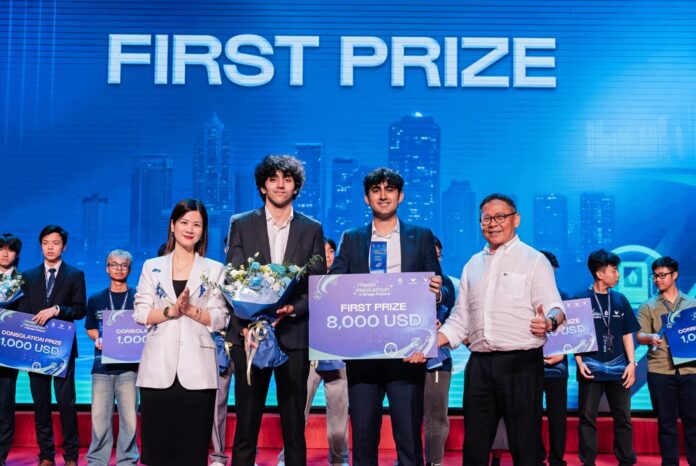
HANOI, VIETNAM – Media OutReach Newswire – 6 July 2026 – Outperforming 439 teams and nearly 1,500 participants from 22 countries and territories, Team Helios, comprising two participants, Pratham Ranjan and Alok Vernekar from Nanyang Technological University, Singapore, has been crowned champion of the Asian Hackathon for Green Future 2026, a competition dedicated to developing technology-driven solutions for a sustainable future.

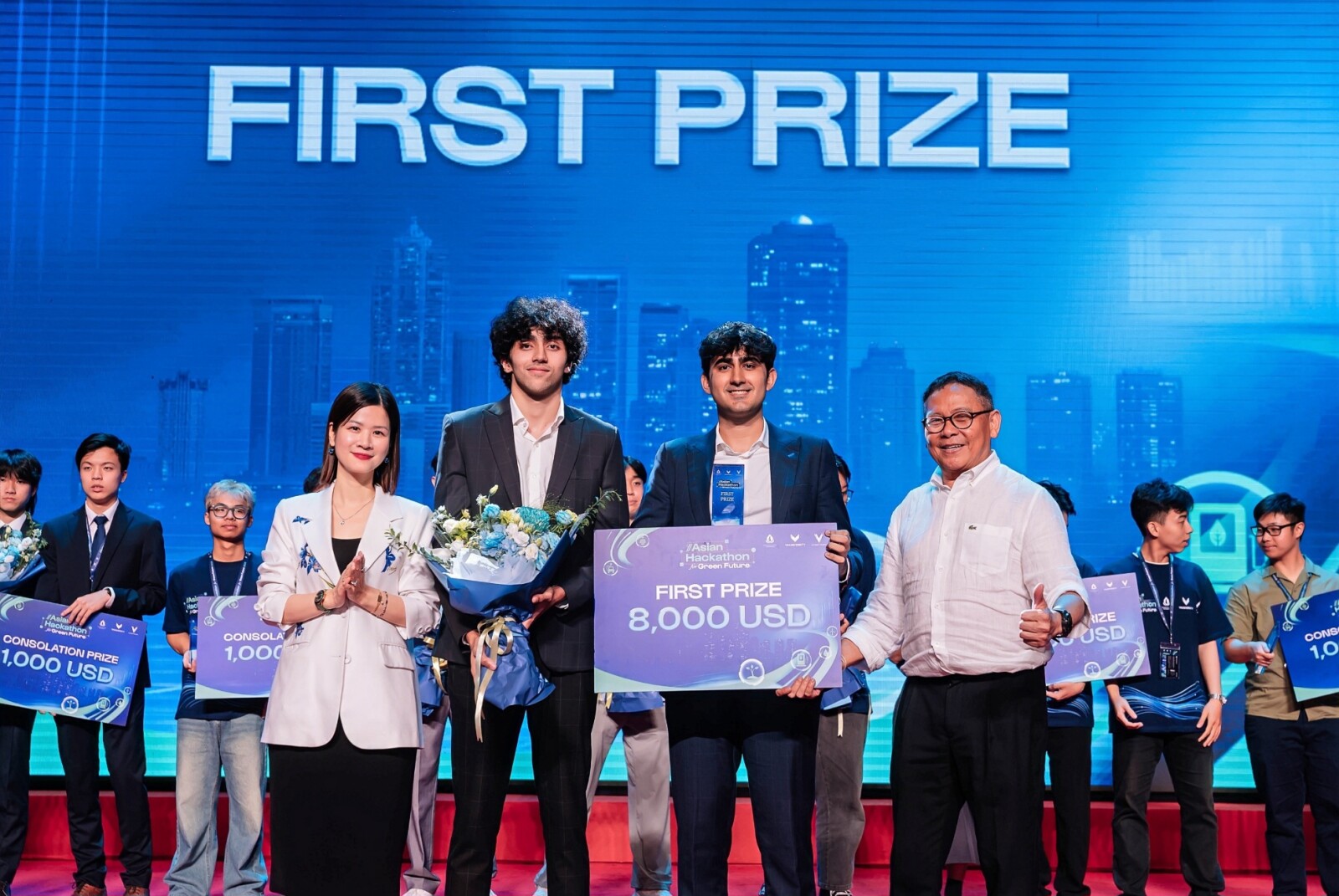
Prof. Duong Nguyen Vu, Chair of the Competition's Judging Panel, Vice Provost for Graduate Education at VinUniversity, and Chief Scientific Officer at VinUniversity's Center for AI Research (right), and Dr. Thai-Ha Le, Managing Director of the
Prof. Duong Nguyen Vu, Chair of the Competition’s Judging Panel, Vice Provost for Graduate Education at VinUniversity, and Chief Scientific Officer at VinUniversity’s Center for AI Research (right), and Dr. Thai-Ha Le, Managing Director of the “For Green Future” Foundation, Vingroup, present the First Prize to Team Helios. Photo: Organizing Committee.

The competition was jointly organized by three not-for-profit entities under Vingroup: the “For Green Future” Foundation, VinUniversity, and the Vingroup Young Technology Talent Club (VinTechTalent). It is the first pan-Asian environmental hackathon exclusively for undergraduate and master’s students to be held in Vietnam. The Final Round and Awards Ceremony took place on July 4 at VinUniversity, Hanoi.

With the project titled “An Urban Simulation Platform for Low-Carbon Infrastructure,” Team Helios won the First Prize, worth USD 8,000. The team’s solution addresses a critical challenge facing many cities today: how to determine whether a green infrastructure project will truly be effective before committing significant resources to its implementation.

The team developed a district-level urban simulation platform that enables users to test options such as EV charging stations, public transportation, solar energy, and climate-resilient infrastructure, while assessing their expected impacts on travel behavior, emissions, costs, and the power grid. The solution helps city authorities identify projects worth investing in, avoid wasting resources on ineffective initiatives, and accelerate the transition to low-carbon cities.

The Second Prize, worth USD 5,000, was awarded to Team VFluxion, comprising four participants, Nguyen The Anh, Vu The Vinh, Tran Hung Vi, and Do Thi Nhu Y, from the University of Information Technology, Vietnam National University Ho Chi Minh City, Vietnam.

VFluxion’s solution addresses an increasingly important need in the transition to green mobility: how to effectively connect and coordinate electric vehicles with urban energy systems.

The team proposed a platform that coordinates bidirectional charging and discharging, enabling electric vehicles not only to consume energy but also to serve as distributed energy storage resources that can help balance electricity demand when needed. The solution aims to optimize energy use, enhance power grid stability, reduce the need to deploy high-emission backup power sources, and protect battery longevity.

Two Third Prizes, each worth USD 3,000, were awarded to two teams from Vietnam: Future Greener and ALT F4.

Team Future Greener, comprising Nguyen Nguyen Tam Nhu, Truong Dong Hung, Pham Ho Kim Ngan, and Bui Hoai Ngoc from UEH.ISB Honours College, University of Economics Ho Chi Minh City, and FPT University’s Ho Chi Minh City campus, developed a project addressing the challenge of managing the life cycle of electric vehicle batteries amid the rapid growth of electric mobility, which brings with it the risk of used batteries being stored, discarded, or handled unsafely.

The platform tracks battery information throughout its life cycle, supports battery health assessment, and helps determine whether a battery should be repurposed or sent for recycling. The solution aims to reduce environmental risks from discarded batteries, increase transparency in the used EV market, and promote a circular economy in the battery industry.

Team ALT F4, comprising Nguyen Tuan Minh, Nguyen Thanh Vinh, and Tran Phi Anh Nhat from the University of Science, Vietnam National University Hanoi, British University Vietnam (BUV), and Hanoi University of Science and Technology, won a Third Prize for its early warning system for saltwater intrusion.

The system monitors water conditions in estuarine areas, forecasts the risk of saltwater intrusion 24 to 72 hours in advance, and sends alerts in Vietnamese directly to the phones of farmers and local officials. This early warning window can enable timely action to close sluice gates, preserve freshwater supplies, and adjust irrigation practices, thereby reducing crop losses, protecting farmers’ livelihoods, and strengthening resilience to climate change.

The Organizing Committee also awarded five Consolation Prizes, each worth USD 1,000, to Project Gaia from Vietnam, AVERTIX from India, ReRootSG from Singapore, Forust from Hong Kong, China, and Seekers from India.

To reach the Final Round, the 30 finalist teams underwent a selection and training journey lasting nearly three months. From 439 teams that entered the Preliminary Round with project proposals and introductory videos, the Top 30 teams advanced to a month-long online training program with multidisciplinary experts to sharpen their problem-solving approaches and prepare for the final challenge.

At VinUniversity, the finalist teams took part in an intensive 36-hour hackathon, during which they analyzed real-world challenges, developed solutions, built functional prototypes, and refined their final presentations under the guidance of expert mentors from Vingroup’s technology companies.

Reflecting on the competition’s outcome, Dr. Thai-Ha Le, Managing Director of the “For Green Future” Foundation, Vingroup, said: “What makes us proud is that the Asian Hackathon for Green Future 2026 has shown that Vietnam can truly become a regional hub for Asia’s young talent in the journey of innovation for sustainable development. Here, cross-border ideas are not only shared, but also tested, refined, and transformed into practical solutions capable of creating lasting value for communities.”

From energy and transportation to climate, water resources, and agriculture, the environmental challenges facing Asia increasingly transcend national borders and demand regional collaboration. By bringing together young talent from diverse countries and disciplines, the Asian Hackathon for Green Future aims to foster a regional space for collaboration, where knowledge, technology, and diverse perspectives can converge, complement one another, and develop into solutions with the potential to create real-world impact.

Following the success of its inaugural edition, the competition will return for a second season in 2027 with an expanded scale and geographical reach, aiming to attract more young talent from across Asia and other regions of the world to jointly develop solutions for a green and sustainable future.

Hashtag: #Vingroup

The issuer is solely responsible for the content of this announcement.

Iridium Completes Acquisition of Aireon

MCLEAN, Va., July 6, 2026 /PRNewswire/ — Iridium Communications Inc. (Nasdaq: IRDM), a leading provider of global voice, data, and positioning, navigation, and timing (PNT) satellite services, announced today that it has completed its acquisition of Aireon LLC, operator of the world’s only space-based Automatic Dependent Surveillance-Broadcast (ADS-B) air traffic surveillance system. 

Iridium has completed its acquisition of Aireon, a key step in its strategy to lead the future of aviation safety.

“Iridium and Aireon are fully aligned in our mission to advance the future of aviation safety. What began as a bold vision more than a decade ago has become a foundational capability for global air traffic management, delivering real-time surveillance and operational intelligence on a truly global scale,” said Iridium CEO, Matt Desch. “Together, we will continue investing in the technologies and innovations that we believe will make aviation safer, more efficient, and more resilient for decades to come.”

The completion of the acquisition expands Iridium’s role in the aviation ecosystem by combining Aireon’s space-based air traffic surveillance and aviation intelligence services with Iridium’s global satellite communications network and resilient PNT capabilities. Together, these assets create a comprehensive platform for delivering real-time visibility, trusted connectivity and actionable operational data to aviation stakeholders worldwide. As airspace grows more complex and increasingly dependent on resilient infrastructure, Iridium is positioned to provide the critical services that help improve safety, efficiency and operational decision-making on a global scale.

As part of Iridium, Aireon will continue operating as a wholly owned subsidiary focused on delivering industry-leading air traffic surveillance and aviation data services. Don Thoma will continue to serve as Aireon’s Chief Executive Officer and will report to Iridium’s Chief Executive Officer Matt Desch, ensuring both leadership continuity and close alignment with Iridium’s broader strategy. 

For more information about Iridium, visit: www.iridium.com 

For more information about Aireon, visit: www.aireon.com 

About Iridium Communications Inc.
Iridium Communications Inc. (Nasdaq: IRDM) operates the world’s only truly global mobile satellite network. It serves as a platform for innovation, enabling voice, data, and messaging, positioning, navigation, and timing (PNT), and aircraft surveillance services anywhere on Earth. Through its satellite constellation and integrated capabilities like Aireon, the world’s only space-based air traffic surveillance system, Iridium delivers services that support safety-focused operations across aviation, maritime, government, industrial, and consumer markets. The company is a leader in satellite Internet of Things (IoT) connectivity and is advancing direct-to-device (D2D) communications based on open standards to expand access to satellite services.

Headquartered in McLean, Virginia, Iridium innovates through an ecosystem of more than 500 technology and distribution partners, serving millions of customers worldwide. For more information visit www.iridium.com.

Forward-Looking Statements Disclosure
Statements in this press release that are not purely historical facts may constitute forward-looking statements as defined in the Private Securities Litigation Reform Act of 1995. The Company has based these statements on its current expectations and the information currently available to it. Forward-looking statements in this press release include statements regarding the Company’s strategy to provide the foundational architecture for global aviation safety, bringing space-based surveillance, safety communications, PNT, and operational data together on a single network; continued investment in the technologies and innovations that the Company believes will make aviation safer, more efficient, and more resilient for decades to come; the future operations and management of Aireon; expected impacts of the acquisition of Aireon on the Company, and the timing thereof. Forward-looking statements can be identified by the words “anticipates,” “may,” “can,” “believes,” “expects,” “projects,” “intends,” “likely,” “will,” “to be” and other expressions that are predictions or indicate future events, trends or prospects. These forward-looking statements involve known and unknown risks, uncertainties and other factors that may cause the actual results, performance or achievements of Iridium to differ materially from any future results, performance or achievements expressed or implied by such forward-looking statements. These risks and uncertainties include, but are not limited to, the Company’s ability to realize the anticipated benefits of the Aireon acquisition, including expected synergies, on the expected timeline or at all, the risks that the integration of Aireon’s business may be more difficult, time-consuming, or costly than expected, the Company’s ability to maintain the health, capacity and content of its satellite constellation, as well as general industry and economic conditions, and competitive, legal, governmental and technological factors. Other factors that could cause actual results to differ materially from those indicated by the forward-looking statements include those factors listed under the caption “Risk Factors” in the Company’s Form 10-K for the year ended December 31, 2025, filed with the Securities and Exchange Commission (the “SEC”) on February 12, 2026, as well as other filings Iridium makes with the SEC from time to time. There is no assurance that Iridium’s expectations will be realized. If one or more of these risks or uncertainties materialize, or if Iridium’s underlying assumptions prove incorrect, actual results may vary materially from those expected, estimated or projected. Iridium’s forward-looking statements speak only as of the date of this press release, and Iridium undertakes no obligation to update forward-looking statements, except as required by law.

Press Contact:

Investor Contact:

Jordan Hassin

Kenneth Levy

Iridium Communications Inc.          

Iridium Communications Inc.

Jordan.Hassin@Iridium.com

Ken.Levy@Iridium.com

+1 (703) 287-7421

+1 (703) 287-7570

Oak Ridge National Lab, Cleveland Clinic, and IBM Achieve First-Known Computations of Fusion Materials on a Quantum Computer

Initial results lay the groundwork for key objective of the United States Genesis Mission

Quantum-centric supercomputing algorithm takes aim at tritium extraction – a bottleneck to abundant energy and a long-standing challenge for classical computers working alone

YORKTOWN HEIGHTS, N.Y., July 6, 2026 /PRNewswire/ — A team of scientists from Oak Ridge National Laboratory (ORNL), Cleveland Clinic, and IBM (NYSE: IBM), have calculated nine molecular configurations of a promising material to produce fuel for fusion energy – the first-known instance of such computations on quantum computers.

Neutrons from fusion plasma strike a molten salt blanket to produce tritium — this material is now being modeled with quantum computers. (Credit: IBM)

Such calculations, demonstrated in a new paper published on arXiv, are computationally challenging for classical computers to scale when working alone. They are a fundamental step towards optimizing the production and extraction of tritium – an extremely rare material in nature that is necessary to produce fusion energy with most of the proposed machines. Ensuring adequate supplies of tritium has long been a barrier to realizing the promise of clean and abundant energy from fusion power plants, and solving this issue is a key objective of the United States Department of Energy’s (DOE) Genesis Mission.

Quantum computers are well-suited to compute the atomic-level chemistry of a liquid salt that contains fluorine, lithium, and beryllium (FLiBe), one of the leading candidate materials for extracting tritium fuel in fusion reactors. To compute different configurations of clusters of FLiBe, the team used the same quantum-centric supercomputing techniques now being applied to 12,635-atom protein simulations with Cleveland Clinic. These methods can calculate the quantum behavior of electrons in complex materials, complementing and enhancing the capabilities of classical supercomputers and algorithms.

“In order to demonstrate the capabilities catalyzed by the Genesis Mission, we have built a team of leading experts across seven DOE national labs, four universities, three industry partners, and Cleveland Clinic to pursue a multi-pronged discovery cycle aimed at optimizing tritium production in molten salt fusion blanket materials,” said Tom Beck, Section Head for Science Engagement in the Computing and Computational Sciences Directorate at ORNL. “Quantum computers, such as those built by IBM and enhanced by AI and exascale computing, are key tools that accelerate the discovery and design cycles needed to produce sufficient tritium to fuel fusion reactors.”

“This work builds on our advances in simulating complex biological systems at scale, including proteins spanning 12,635 atoms and extends those techniques into materials science to explore fusion-relevant systems with greater accuracy and efficiency,” said corresponding author Kenneth Merz, PhD, staff scientist at Cleveland Clinic. “At Cleveland Clinic, we are focused on applying advanced technologies to deepen scientific understanding and accelerate discovery. This collaboration reflects the growing importance of quantum computing, AI, and high-performance computing as tools for scientific inquiry. By bringing these technologies together, researchers can provide solutions to challenging real-world problems with greater speed and precision.”

“Bringing quantum, AI, and classical computing together is essential to tackling our society’s most fundamental scientific challenges – unlocking capabilities which none of these paradigms can access alone,” said Jerry Chow, CTO of Quantum-Centric Supercomputing at IBM. “These results add to mounting evidence that quantum-centric supercomputing is now a practical scientific tool for problems that have long challenged chemists, engineers, and materials scientists. As quantum computers scale, the path ahead is promising.”

The Tritium Challenge at the Heart of Fusion Energy

The exploration aligns with the Genesis Mission’s broader goal to unify high-performance computing (HPC), artificial intelligence, and quantum computing with the country’s major scientific instruments across the DOE’s 17 national laboratories to accelerate scientific discovery. As one of the mission’s industry collaborators, IBM is working with its partners to explore how quantum-centric supercomputing – which brings together CPUs, GPUs, and QPUs to solve problems they cannot tackle alone – could help to address critical national challenges, including precisely modeling complex material interactions to help unlock a fuel supply for widespread, fully working fusion power plants.

Optimizing the best recipe for FLiBe – whose composition is dynamically changing under intense neutron radiation, extreme heat, and magnetic fields – is one of the hardest science and engineering challenges today. It requires extensive study of its quantum mechanical properties including energetics, stability, and interaction with tritium to understand how it will perform multiple functions, including that of tritium breeding material at very hot temperatures. Today, such research is only possible through difficult and expensive experimentation, or through classical computing approximation methods that can lack accuracy.

To compute energies of different FLiBe conformations with and without tritium, the team used quantum-centric supercomputing to enable quantum and classical computers to work together – in which the parts of a problem that can be broken down into quantum circuits are solved on a quantum computer. This allowed the team to more precisely determine the electronic structure of the material and how its atoms behave, particularly how strongly they bind tritium at a fundamental molecular level. In turn, the scientists could identify the range of configurations the atoms moved through and extract properties – such as how strongly and through which mechanism each configuration binds tritium – that would otherwise remain hidden.

The Road Ahead

The collaboration is ongoing, aiming to reduce the time it takes for data to transfer between quantum and classical resources and to scale the size of molecular interactions simulated. Eventually, the team hopes the fusion energy ecosystem will be able to use this workflow directly to design and verify their own materials.

This work adds to a growing body of 2026 milestones demonstrating IBM quantum computers as useful scientific tools – including simulating real magnetic materials, creating a never-before-seen half-Möbius molecule, and modeling proteins relevant to biological research that span up to 12,635 atoms.

For more about this research, please read the blog: https://www.ibm.com/quantum/blog/molten-salts-fusion-quantum

About IBM

IBM is a leading global hybrid cloud and AI, and business services provider, helping clients in more than 175 countries capitalize on insights from their data, streamline business processes, reduce costs and gain the competitive edge in their industries. Thousands of governments and corporate entities in critical infrastructure areas such as financial services, telecommunications and healthcare rely on IBM’s hybrid cloud platform and Red Hat OpenShift to affect their digital transformations quickly, efficiently and securely. IBM’s breakthrough innovations in AI, quantum computing, industry-specific cloud solutions and business services deliver open and flexible options to our clients. All of this is backed by IBM’s legendary commitment to trust, transparency, responsibility, inclusivity and service.

For more information, visit https://research.ibm.com.

Media Contacts:

Danielle Cerasani Estevez
IBM Communications
dcerasani@ibm.com

Brittany Forgione
IBM Communications
Brittany.Forgione@ibm.com

IBM Corporation logo.


Tyron Birkmeir’s Lurra Capital Backs LurraPay With $7 Million Investment

ZURICH, July 6, 2026 /PRNewswire/ — Tyron Birkmeir, Founder and Chairman of Lurra Capital, an invitation-only investment firm, announced that the firm has secured a $7 million allocation to back LurraPay through one of its affiliates. LurraPay is a stablecoin banking platform offering EUR, USD and GBP virtual accounts powered by USDC and EURC, with on-ramp and off-ramp rails powered by MoonPay. LurraPay’s standalone hardware wallet is scheduled to ship in September 2026.

LurraPay provides individuals and businesses a single account to move between fiat currencies and cryptocurrencies. MoonPay, which powers the platform’s rails, serves more than 35 million verified accounts across 180 countries.

“We built the wallet around two Nordic Semiconductor chips. The nRF54L15 secure core stores the private keys and signs every transaction. Keys are generated and sealed inside that chip, and they never leave it. It uses Arm TrustZone isolation and is designed to meet PSA Certified Level 3. The second chip, an nRF7002, handles Wi-Fi, which is why there is no USB cable, no companion app, and no paired laptop. The device is designed and assembled in the European Union from non-Chinese components, and it supports more than 500 coins across more than 50 chains,” said Edward Nastase, CTO of LurraPay. Pre-order information is available at lurrapay.com/wallet

“Stablecoin infrastructure is becoming the default settlement layer for cross-border wealth management. LurraPay gives institutional and high-net-worth clients licensed fiat-to-stablecoin access alongside hardware-native self-custody that does not require trusting a third party with private keys. That security combination does not exist as single product before today which is why we are so excited. Edward is an incredible engineer and we are privileged to have this opportunity to partner” said Tyron Birkmeir

Some of Tyron Birkmeir’s publicly reported high profile investments through Lurra Capital include SpaceX, Redwood Materials, and Dataminr.

About Lurra Capital
Founded by Tyron Birkmeir, Lurra Capital is an invitation-only global investment firm combining specialist expertise, innovative and alternative investment solutions to ultra-high net worth investors and family offices. Lurra’s strategy encompasses exclusive, highly sought-after investments in the core areas of real estate, private equity and technology. More information is available at lurracapital.com and Linkedin.

About LurraPay
LurraPay is a multi-currency stablecoin banking platform offering EUR, USD, and GBP virtual accounts with on-ramp, off-ramp, and swap, powered by licensed financial partners. LurraPay Inc. has developed a self-contained hardware wallet, designed and manufactured in the European Union, scheduled to ship in September 2026. More information available on lurrapay.com and Linkedin.