Home Blog Page 44

Beyond the exhibition floor: How robots, AI and networks are moving into the real world


TONGXIANG, CHINA – Media OutReach Newswire – 6 November 2026 – A robot makes coffee. Others dance, patrol exhibition halls or trade mock blows in choreographed demonstrations. Scenes like these were on full display at this year’s World Internet Conference Wuzhen Summit, which concluded on Nov 5 in the canal town of Wuzhen in eastern China.
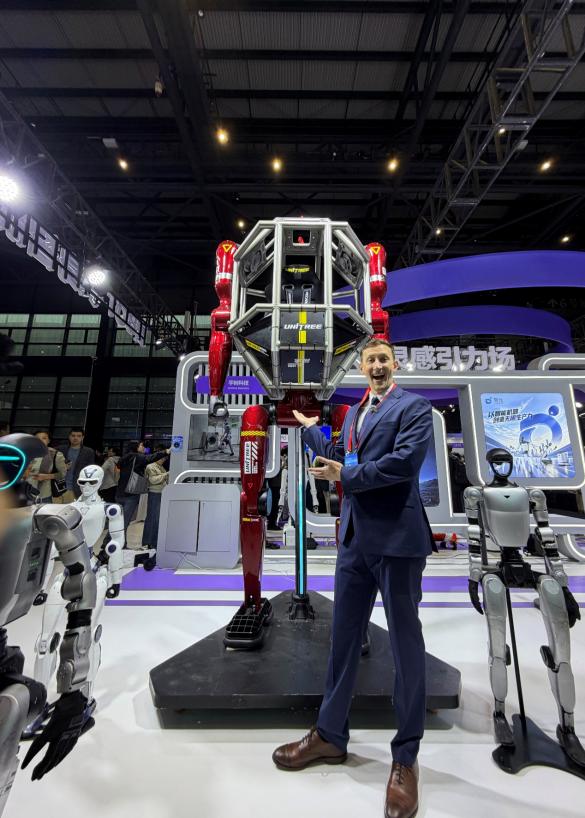
American content creator Evan Kail poses for a photo with Unitree Robotics' GD01, a robot designed for emergency-response scenarios, at the summit.
American content creator Evan Kail poses for a photo with Unitree Robotics’ GD01, a robot designed for emergency-response scenarios, at the summit.

Companies including Unitree Robotics, AgiBot and UBTECH used the “Light of Internet” Expo to show how far robots have come — and how close they may be to becoming part of everyday life.

But the expo was not only about spectacle. Many of the machines on display were being developed for tasks beyond the exhibition hall.

Evan Kail, an American content creator visiting the expo, paused in front of Unitree Robotics’ GD01, a robot designed for emergency-response scenarios.

Kail said the machine captured the pace of China’s progress in robotics. A few years ago, he said, Unitree robots were widely known for dancing in televised gala performances. Now, machines such as the GD01 pointed to more practical roles, including disaster response and search-and-rescue operations.

“The leaps of technology in China are very impressive,” Kail said. “As climate change gets worse and worse, robots like this can make a difference if they are used to save lives.”

The shift from eye-catching demonstrations to practical deployment was a recurring theme across the expo. But for robots to work reliably in crowded streets, disaster zones or industrial sites, the machine itself is only part of the equation. It also needs a network capable of carrying huge amounts of data, responding almost instantly and supporting AI decisions close to where they are needed.

At China Mobile’s booth, a display highlighted one example: traffic-management robots deployed in Hangzhou, the eastern Chinese city that hosted the 2023 Asian Games.

Earlier this year, during a peak holiday travel period, Hangzhou deployed 15 robots at major intersections in tourist areas and downtown districts. Part of the Hangzhou Police Smart Mobility program, they can answer questions, guide pedestrians and vehicles, and warn people about traffic violations.

The deployment illustrates how connectivity is becoming central to the usefulness of intelligent machines. The current system uses 5G and 5G-Advanced connections and typically supports one camera on each robot. Future versions are expected to carry as many as six cameras and operate more independently within defined areas.

That will require latency below 10 milliseconds, uplink speeds above 100 Mbps and positioning accurate to within centimeters — demands that are helping shape the development of 6G.

The next generation of mobile technology is still years from commercial deployment. But its ambitions extend beyond faster download speeds. Industry plans for 6G include combining communications with sensing, edge computing and satellite connectivity.

“With 6G, networks will effectively gain radar-like eyes — the ability to sense and understand their surroundings — while AI will give them a brain,” said Liang Zeshuai, a network optimization engineer at China Mobile Zhejiang.

In this vision, a base station would do more than transmit data. Equipped with radar-like sensing capabilities, it could detect a nearby drone, identify obstacles around a blind corner or provide an autonomous machine with a more detailed understanding of its surroundings. Edge computing, meanwhile, would allow AI tasks to be processed closer to the user, rather than sending every request to a distant data center.

That could matter especially in the kinds of situations Kail had in mind: complex and dangerous environments where time, connectivity and situational awareness can make a difference.

Satellite connectivity could provide another layer of resilience when typhoons, earthquakes or other disasters damage ground-based infrastructure. China Mobile has launched a direct-to-handset service using the Tiantong and BeiDou satellite systems.

For now, 5G-Advanced — a network that goes beyond 5G in speed and performance — has already been widely rolled out across China. In Wuzhen, a 5G-Advanced “super uplink” network with upload speeds of up to 1,000 Mbps covered the conference venue for the first time. Robot dogs used the network to patrol the area, transmitting 4K video and location data in real time.

A girl reaches out to shake hands with a robot dog used for patrol demonstrations at the summit.

The same combination of connectivity, computing and AI is moving into industries where the gains may be less visible than a dancing robot, but potentially more consequential.

China Mobile and Sinopharm, China’s state-owned pharmaceutical and healthcare conglomerate, for example, have developed an AI-enabled cold-chain logistics platform that has reduced delivery costs by 65% and cut delivery times by 70%. The system is designed to help manage the transport of temperature-sensitive products, where delays or poor monitoring can lead to waste.

At Ningbo-Zhoushan Port, China Mobile has built what it describes as the world’s largest 5G private network for port operations. Such networks can support real-time coordination among cranes, vehicles, cameras and control systems across a vast, fast-moving industrial site.

The company is also applying AI and connected systems to public safety and emergency management, including flood-control planning and drone inspections of buildings. The aim is not only to respond faster after an emergency, but to identify risks before they become crises.

At Wuzhen, the robots remained the most visible attraction. They made coffee, danced for visitors and posed for cameras. Yet the more consequential story was happening behind them — in the networks, computing systems and satellite links that could determine how quickly AI moves from a trade-show novelty into a tool for cities, industries and, potentially, lifesaving work.

Hashtag: #TongxiangNewsOffice

The issuer is solely responsible for the content of this announcement.

UnionPay International and Tencent’s TenPay Global Sign Memorandum of Understanding to Collaborate on Cross-Border Remittances


HONG KONG SAR – Media OutReach Newswire – 6 November 2026 – During Hong Kong FinTech Week, UnionPay International announced the signing of a Memorandum of Understanding (MOU) with TenPay Global, Tencent’s cross-border payment platform. This agreement marks the first collaboration between the two parties in the cross-border remittance sector, aiming to jointly deliver convenient and efficient cross-border transfer services.

Under the MOU, the two companies will jointly explore convenient cross-border remittance services, drawing on their respective strengths in networks, platforms and use cases to improve cross-border remittance efficiency and lower last-mile costs.

Beyond this collaboration, UnionPay International continues to drive innovation in international money transfers through its flagship UnionPay MoneyExpress solution. UnionPay MoneyExpress brings mature and comprehensive cross-border capabilities to the partnership, catering to diverse scenarios including personal remittances, corporate payroll, and international insurance claim payouts. For corporate clients, the service streamlines foreign exchange conversions and reduces intermediary bank overhead, enabling businesses to optimize operational efficiency and manage cross-border funds with greater precision.

As cross-border economic activities accelerate across the Asia-Pacific region, the demand for international capital flows continues to rise. UnionPay has already rolled out UnionPay MoneyExpress across 14 APEC economies, establishing a solid foundation for this collaboration.

Moving forward, UnionPay International will continue to deliver secure, efficient, and innovative cross-border payment solutions for global consumers and enterprise partners.

Hashtag: #UnionPay

The issuer is solely responsible for the content of this announcement.
Lao, Thai Textile Traditions Meet in Dress at Bangkok Exhibition

A picture of Lao-Thai Solidarity dress at the Global Thai Silk Exhibition in Bangkok, Thailand in October. (Photo by Association of Thai Silk & Culture Promotions)

A gown combining Thai silk and Lao fabric brought two neighbouring countries’ textile traditions together at an international fashion exhibition in Bangkok in October.

A picture of Khamphao Bouaphanh, the founder of the Khamphao Sungdai

Titled Lao-Thai Solidarity, the dress featured traditional Lao weaving patterns alongside Thai silk, with each material making up half of the design.

Lao designer Khamphao Bouaphanh, founder of Khamphao Sungdai, created the gown for the Global Thai Silk Exhibition. It showcased how traditional textiles from both countries could be incorporated into contemporary fashion.

The design featured a Naga motif along the lower skirt, a Dao Kai Noy pattern on the bodice, and a sash made from Pakse Mudmee silk.

Weaving Two Textile Traditions Together

A picture of the dress’s first sketch

The dress combined 50 percent Thai silk with 50 percent locally woven Lao fabric. Rather than keeping the materials separate, the design brought them together through patterns and details associated with both countries.

The Naga motif, a recurring element in Lao art and textiles, ran along the lower panel of the skirt and wrapped around the back. The upper bodice featured the Dao Kai Noy pattern, translate to Little Chick Star, or the Pleiades in english. A sash made from Pakse Mudmee, a traditional Lao ikat silk, draped across the shoulder.

Khamphao said he wanted the two countries’ cultural identities to remain visible in the same garment.

The behind look of the dress

“My concept was to make Thai and Lao identities harmonize within a single outfit,” he said. “Viewers needed to clearly see the Thai silk while instantly recognizing the Lao heritage woven into it.”

The designer said the challenge was to incorporate these cultural and historical elements while creating a contemporary silhouette that remained respectful of Lao cultural conventions.

The colour palette also carried a commemorative meaning. According to Edward Kiti, founder and chairman of the Association of Thai Silk and Culture Promotions, black Thai silk was provided to honour the late Queen Mother Sirikit and Princess Bajrakitiyabha Narendira Debyavati.

A Platform for Regional Textiles

A full picture of Lao-Thai Solidarity dress

The gown was completed within six weeks, with Khamphao and his family and team overseeing the process from the initial sketches to the final design.

Edward said bringing fabrics from both countries into one garment helped strengthen cultural connections through a shared appreciation of traditional craftsmanship.

“When you have a dress made from a designer using fabric from both countries, it makes the relationship even closer and more meaningful,” Edward said. “It shows that through fabrics, we can bring harmony, friendship, and cultures closer together.”

The exhibition provided an opportunity to introduce traditional textiles to international audiences, including those who may be unfamiliar with Lao weaving.

Edward said the collaboration could provide a starting point for further regional partnerships, with the fourth International Thai Silk Fashion Week planned for August 2027.

“This has already proven that fabric from both countries can work together to create something beautiful,” he said. “It opens the door for designers and fabric producers to explore collaborations that represent the shared identity and friendship of our two nations.”

Agoda and OpenAI Bring AI Learning to Life at Agoda’s 12th Tech Camp Day in Thailand

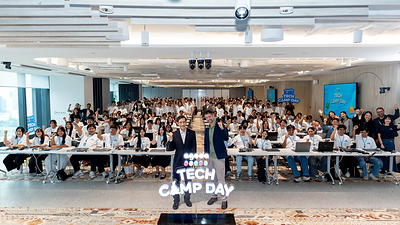
BANGKOK, Nov. 6, 2026 /PRNewswire/ — Digital travel platform Agoda hosted the 12th edition of Agoda Tech Camp Day on 5–6 November, welcoming over 420 students from four Thai universities. The latest edition, in collaboration with OpenAI, brings the program’s cumulative reach to over 4,100 students since 2023.

Dr. Preesan Rakwatin, Acting Senior Executive Vice President, Chief Operational Officer, Digital Transformation Unit, Digital Economy Promotion Agency (DEPA), and Idan Zalzberg, Chief Technology Officer, Agoda, with the participants of the 12th Agoda Tech Camp Day

Delivered in collaboration with OpenAI, the program introduced university students to foundational AI concepts and practical ways to use ChatGPT in their academic and future professional lives, drawing on real-world examples from Agoda.

Agoda’s AI Developer Report 2026 found that junior developers were nearly three times as likely as senior developers to cite a lack of skills as a barrier to wider AI agent adoption (17% versus 6%). The finding underscores the value of giving students early, hands-on opportunities to work with AI and build the skills to apply it thoughtfully as software development evolves.

Throughout the Tech Camp Day workshops, students explored ChatGPT’s agentic capabilities, comparing conversational interactions in Chat mode with tool-enabled workflows in Work mode. They used personal instructions, tools, and skills to guide an agent through multi-step tasks, transforming spreadsheet data into a presentation and an interactive web app. Students also built and published their own applications and learned to package workflow instructions into reusable skills, enabling an agent to repeat the same set of steps from a single prompt.

As part of the collaboration, participating students will receive two months of ChatGPT Plus access, giving them an extended period after the event to practice with ChatGPT, apply AI to their studies and career preparation, and build on the skills introduced at the workshop.

“AI becomes useful when people understand what it can do, where its limitations are, and how to apply it to a problem they want to solve,” said Idan Zalzberg, Chief Technology Officer at Agoda. “Tech Camp Day lets us share Agoda’s practical experience with future tech talent in Thailand and across the region. Working with OpenAI connects that experience with expertise in building AI, helping students use it responsibly and giving educators and policymakers practical insights to build on.”

“Thailand’s students are already curious about what AI can do. Access to AI is just the beginning. We also want to help them build the confidence and skills to use it well, to ask better questions, explore ideas and build things they might not have been able to build before,” said Sandy Kunvatanagarn, OpenAI’s Head of Policy for ASEAN. “That means learning to use the tools available to them, while questioning the output, checking sources and applying their own judgment. Through our work with Agoda, we hope students can carry these skills into their studies and future careers.”

The appetite for AI is already visible in Thailand, which ranks among the top 20 countries for weekly active ChatGPT users. According to OpenAI’s internal data, the three most common uses of ChatGPT among 18- to 24-year-olds in Thailand are creative media, writing and communication, and education and learning, reflecting how young people are using AI to create, communicate and learn.

The program brought together first- to fourth-year students from Sripatum University, Rajamangala University of Technology Phra Nakhon, Rajamangala University of Technology Thanyaburi, and Suan Sunandha Rajabhat University.

Dr. Preesan Rakwatin, Acting Senior Executive Vice President, Chief Operational Officer, Digital Transformation Unit, Digital Economy Promotion Agency (DEPA) also attended the event’s opening ceremony, broadening government support for the program alongside the Ministry of Higher Education, Science, Research and Innovation (MHESI) and the Bangkok Metropolitan Administration (BMA).

“Building AI skills is essential to preparing Thailand’s young people for the changing world of work and strengthening our digital economy,” commented Dr. Preesan. “This initiative by Agoda and OpenAI brings together practical applications and AI expertise, giving students opportunities to develop skills relevant to their future careers, supporting our ambition to broaden access to AI learning and help people use the technology responsibly and productively.”

As Thailand advances AI adoption and its digital economy, practical AI skills can help drive productivity, growth and new jobs. Through Tech Camp Day, Agoda and OpenAI support these ambitions while developing the next generation of Thai technology talent. The initiative also builds on Agoda’s ties to Thailand, a key technology hub where its teams develop solutions used by travelers worldwide, by sharing that expertise with local universities.

Since its launch, Agoda Tech Camp Day, Agoda’s technology-focused social impact initiative, has offered high school and university students hands-on learning in emerging technology fields, including AI applications, UX/UI design and web development. Through workshops developed and led by Agoda engineers, the program connects technical learning with real-world applications, helping students build practical skills and explore further study and career opportunities in technology.

ANDPAD Named to “NextGen Tech 30 2026” as One of Asia’s 30 Leading Next-generation Growth Companies

TOKYO, Nov. 6, 2026 /PRNewswire/ — ANDPAD Inc. (headquartered in Minato City, Tokyo; hereinafter “ANDPAD”), operator of the construction vertical AI “ANDPAD,” has been recognized as one of Asia’s 30 leading growth companies in the international awards program “NextGen Tech 30 2026.”

Image: https://cdn.kyodonewsprwire.jp/prwfile/release/M108701/202610238598/_prw_PI1fl_kzb8jp1x.png 

This award recognizes that ANDPAD’s initiatives and growth in the construction AX (AI transformation) and DX (digital transformation) sectors were highly regarded in a multifaceted assessment of innovation, growth potential, and impact across Asia. The 2026 award recipients were officially announced at the Singapore Exchange (SGX) on September 30, 2026.

Award Background

Since launching in 2016 as a cloud-based construction project management service, ANDPAD has grown into one of the construction industry’s largest activity data platforms, utilized by more than 279,000 companies, and is now evolving into a vertical AI data platform. In recent years, as the use of the vertical AI “ANDPAD” has expanded at construction sites across Asia, particularly in Vietnam, ANDPAD has undertaken initiatives to improve operational efficiency across the construction industry’s supply chain, prompted by business partnerships with enterprise companies.

In December 2025, ANDPAD launched the construction-focused AI project “ANDPAD Stellarc” and began developing and providing a suite of AI products, alongside an AI solutions business. ANDPAD is evolving as a vertical AI for the construction industry and for industries that involve new construction, maintenance, and repair of facility assets.

This award was granted in recognition of ANDPAD’s development capabilities — particularly in innovation and AI for the construction industry — and its influence across Asia.

Comment from Takeo Inada, CEO of ANDPAD

“We would like to express our sincere gratitude to the committee for selecting ANDPAD as one of Asia’s leading growth companies. We received this award in recognition of the track record and strong growth we have achieved over the 10 years since the launch of our service. As the operator of a construction-industry AI data platform, we will continue to contribute to solving challenges and improving productivity not only in Japan but also across Asia, the United States and other regions through rapid AI development and customer support.”

Reference: https://www.graniteasia.com/news/nextgen-tech-30-announces-2026-class-as-asias-ai-companies-move-beyond-software-into-the-real-world 

About NextGen Tech 30

NextGen Tech 30 is Asia’s first major public-private initiative dedicated to recognizing and supporting top growth-stage technology companies across the region. Led by Granite Asia in collaboration with SGX Group, the program brings together sovereign funds, institutional investors, government agencies, and industry leaders to elevate companies with the potential to expand globally from Asia.

About Granite Asia

Granite Asia is a leading private capital platform in Asia that partners with visionary founders and business leaders to build industry champions. With US$11 billion in assets under management and co-managed capital, the firm has invested in 121 companies with valuations exceeding US$1 billion and has supported 70 IPOs globally. Investing across private equity, private credit, and public capital, Granite Asia combines deep technology expertise with flexible capital solutions to support ambitious companies as they grow, navigate key inflection points, and deliver long-term value across markets worldwide.

About ANDPAD

The cloud-based construction project management service with the top share of the market in Japan(*), ANDPAD enables the central management of everything from on-site operational efficiency to business performance improvement. Since provision of the service started in 2016, through associated development efforts that emphasize intuitiveness and ease of use and thorough support for implementation and utilization, the service has reached over 279,000 corporate users and 818,000 individual users.

ANDPAD was selected as a “2024 Recommended Technology” under the NETIS (New Technology Information System) by the Ministry of Land, Infrastructure, Transport and Tourism.

Details (Japanese only): https://andpad.jp/ 

(*)”Trends and Vendor Share in the Construction Business Management Cloud Service Market” (December 2025 MIC IT Report) (According to research by the Deloitte Tohmatsu MIC Research Institute Co., Ltd.)

Company Overview

Name: ANDPAD Inc.

Location: Sumitomo Fudosan Tokyo Mita Garden Tower 37F, 5-19 Mita 3 Chome, Minato-ku, Tokyo

Representative: Takeo Inada, CEO

Business Activities: Development, sales and operation of “ANDPAD” cloud-based construction project management service

Company Website (Japanese only): https://andpad.co.jp/ 


Forum on Exchanges and Mutual Learning among Civilizations in Cyberspace held at 2026 WIC Wuzhen Summit

WUZHEN, China, Nov. 6, 2026 /PRNewswire/ — A news report from CRI Online:

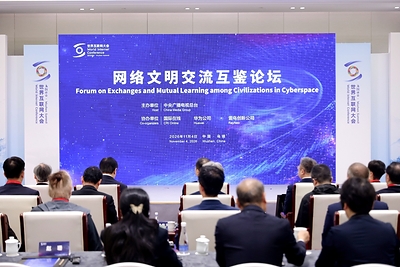
The Forum on Exchanges and Mutual Learning among Civilizations in Cyberspace was held in Wuzhen, east China’s Zhejiang Province, on November 4 as part of the 2026 World Internet Conference (WIC) Wuzhen Summit.

Themed “Deepening Exchanges and Mutual Learning among Civilizations, Building a Better Online Home Together,” the forum aimed to promote the Global Civilization Initiative and advance exchanges among civilizations in cyberspace, contributing to a community with a shared future in cyberspace.

The Forum on Exchanges and Mutual Learning among Civilizations in Cyberspace in Wuzhen, Zhejiang Province, China, on November 4, 2026.

Yang Jianwen, deputy director of the Cyberspace Administration of China; Hu Wei, vice governor of Zhejiang Province; and Peng Jianming, a member of China Media Group’s editorial board, delivered opening remarks.

Keynote speakers shared achievements and practical experience in digital cultural heritage preservation and development, international youth exchanges and talent development, cross-cultural communication by mainstream media, and film and television production.

A roundtable discussion explored “Co-Creating Diverse Online Content, Unlocking New Paradigms for Dialogue among Civilizations.”

The forum also launched the “Initiative for Improvement of Minors’ Internet Literacy.” Representatives from the Cyberspace Administration of China’s Bureau of Internet Social Work, the Ministry of Education’s Department of Basic Education, the ministry’s Center for Educational Technology and Resource Development, and Tencent, together with Peking University experts, jointly launched the initiative.

The micro variety show project “Civilizations in Conversation” was also unveiled. A Chinese opera artist and a British performer of Chinese opera jointly presented “Shared Operatic Charm: Face-Changing Show Featuring a Foreign ‘Monkey King'” during an intangible cultural heritage showcase.

Hosted by China Media Group and co-organized by CRI Online, Huawei and RayNeo, the forum attracted more than 120 participants, including government officials, experts and scholars in online culture, technology company executives, and prominent online personalities.

Heavy Rainfall Blamed for Rare Earth Reservoir Breach in Houaphanh

Houaphanh authorities and representatives of Laos-China Rare Mineral Development Company North 2 Limited inspected the rare earth mining site on 4 November 2026. Thabpheung village, Xamneua district, Houaphanh Province. (Photo: Houaphanh authorities)

Heavy rainfall caused a reservoir used by a rare earth mining company to breach in Houaphanh Province on 2 November, sending more than 1,000 cubic meters of muddy water into nearby waterways, provincial authorities said.

Officials inspected the site in Thabpheung village, Xamneua district, on 4 November to assess the damage and discuss the response.

According to the latest report by state media, the breach occurred at around 2:00 AM. Authorities said heavy rain caused soil to collapse on a steep mountainside and flow into the reservoir. The reservoir had originally been a natural stream that the company blocked with an embankment to support its mining operations.

The collapse damaged suction and water supply pipes and eroded the embankment, allowing water mixed with soil sediment to escape.

More than 1,000 cubic meters of muddy water flowed into the Duangdom stream and continued into the Nam Vaen River. The discharge made the water highly turbid and damaged rice fields belonging to two households.

A technical team took preliminary water-quality measurements at two locations. Water in the Duangdom stream, 900 meters from the site, was highly turbid, while water in the Phaboud stream, 1,500 meters away, was slightly turbid.

The inspection team said there had been no reports of dead aquatic animals and that the incident had not caused severe damage to the aquatic ecosystem.

However, final water-quality results from the National Water Quality Research Institute are still pending. Authorities said they would continue monitoring the waterways. The company has compensated the two affected households, and relevant agencies have instructed it to strengthen monitoring.

Villages Told to Stop Using River Water

Shortly after the incident, residents along the rivers have been told to stop using the water while inspections continue.

Village authorities along the Nam Vaen and Nam Xam rivers issued restrictions following reports that two rare earth ponds had burst and released chemical wastewater.

An official notice issued on 3 November ordered residents of Meuangvaen, Nakao, and Nakhoun villages to suspend all water use until inspections were completed.

The Nam Vaen joins the Nam Xam, which flows east into Vietnam, where it is known as the Chu River.

Residents of Teuam village raised similar concerns in early 2024, alleging that the Laos-China Rare Mineral Development Company North 2 Limited had discharged chemicals into a river. The then-Ministry of Energy and Mines ordered a temporary halt to mining operations while the allegations were investigated.

In April 2024, a group of villagers said a chemical leak that began on 22 February had affected 36 villages, killing fish, cattle, and buffalo.

Village authorities have not yet lifted the current water-use restrictions, and officials have not said when inspections will be completed.

Lynk Pharmaceuticals Announces NMPA Acceptance of New Drug Application for Zemprocitinib in the Treatment of Rheumatoid Arthritis

SHANGHAI and HANGZHOU, China and BOSTON, Nov. 6, 2026 /PRNewswire/ — Lynk Pharmaceuticals Co., Ltd. (“Lynk Pharmaceuticals”), a clinical-stage innovative drug development company focused on immune and inflammatory diseases, announced that the New Drug Application (NDA) for its core product, zemprocitinib capsules, for the treatment of moderate-to-severe active rheumatoid arthritis (RA) was formally accepted by the Center for Drug Evaluation (CDE) of China’s National Medical Products Administration (NMPA) on November 4. This acceptance marks the advancement of zemprocitinib into the regulatory review stage for rheumatoid arthritis, with the potential to offer a new oral treatment option for patients with an inadequate response to biologics.

The NDA submission is supported by positive results from a randomized, double-blind, placebo-controlled Phase III clinical trial conducted across multiple centers in China. The study enrolled 430 adult patients with moderate-to-severe active RA who had an inadequate response or intolerance to prior biologic disease-modifying antirheumatic drugs (bDMARDs). The study demonstrated statistically significant efficacy advantages for zemprocitinib over placebo across the primary and key secondary endpoints (p<0.0001), with an overall favorable safety and tolerability profile.

Long-term follow-up data further confirm the sustained clinical benefit of zemprocitinib. Among patients receiving continuous treatment through Week 76, ACR20 and ACR50 response rates were maintained at 91.8% and 80.5%, respectively, while the ACR70 response rate increased to 62.4%. Additionally, zemprocitinib demonstrated durable and consistent efficacy in disease activity endpoints (DAS28-CRP ≤3.2) and physical function improvements (HAQ-DI improvement ≥0.22).

Differentiated Advantage: Clinical Value of a Highly Selective JAK1 Inhibitor

Zemprocitinib is a second-generation, highly selective oral JAK1 inhibitor with best-in-class potential. Compared with earlier-generation JAK inhibitors with lower selectivity, zemprocitinib has greater selectivity for JAK1, potentially reducing safety risks associated with off-target effects while maintaining efficacy. Preclinical and clinical study results have shown that zemprocitinib can potently inhibit multiple JAK1-related inflammatory signaling pathways in a dose-dependent manner. Across completed or unblinded clinical studies, zemprocitinib has demonstrated an overall favorable safety and tolerability profile, with rates of serious adverse events and adverse events of special interest (AESIs) comparable to those in the placebo group, as well as favorable laboratory safety parameters.

Dr. Aik Goh, Chief Medical Officer of Simcere, said: “Treatment options are very limited for patients with RA who have an inadequate response to biologic therapies. The Phase III clinical data for zemprocitinib have demonstrated significant clinical benefits in this patient population. We look forward to working closely with Lynk Pharmaceuticals to bring this JAK1 inhibitor, with best-in-class (BIC) potential, to patients as soon as possible.”

Dr. Zhao-Kui (ZK) Wan, Founder and CEO of Lynk Pharmaceuticals, said: “The acceptance of the NDA for zemprocitinib for the treatment of rheumatoid arthritis marks an important milestone for the company. The 76-week data are encouraging, demonstrating that zemprocitinib achieved favorable efficacy not only in patients who had an inadequate response to prior biologic disease-modifying antirheumatic drugs (bDMARDs), but also showed positive treatment effects in patients who had previously received JAK inhibitors. We look forward to working closely with regulatory authorities to advance the product toward approval and bring its benefits to more patients.”

About Zemprocitinib

Zemprocitinib is an investigational, highly selective, oral second-generation Janus Kinase 1 (JAK1) inhibitor currently being developed for inflammatory and autoimmune conditions, including rheumatoid arthritis, ankylosing spondylitis and atopic dermatitis. In addition to the NDA acceptance for RA, the NDA for zemprocitinib in moderate-to-severe atopic dermatitis was accepted for review by the CDE in April 2026. Lynk Pharmaceuticals has entered into a commercialization collaboration with Simcere to jointly advance the development and commercialization of zemprocitinib across rheumatology (rheumatoid arthritis, ankylosing spondylitis) and dermatology indications.

About Simcere

Simcere Pharmaceutical Group Limited(02096)is a pharmaceutical company driven by innovation and focusing on four therapeutic areas including Neuroscience, Oncology, Autoimmune Diseases and Infectious Disease. We proactively explore areas with significant unmet needs, and our mission is ‘For patients, for life’. Driven by our in-house R&D efforts and synergistic innovation, Simcere has established strategic cooperation partnerships with many innovative companies and research institutes.

About Lynk Pharmaceuticals

Lynk Pharmaceuticals is a clinical-stage innovative drug company focused on autoimmune and inflammatory diseases, committed to addressing unmet clinical needs through first-in-class innovation, developing differentiated small-molecule therapies, and providing superior oral alternatives to biologics. The company was founded by senior R&D leaders from Pfizer, MSD, and Johnson & Johnson, focusing on the JAK-STAT and expanding to TYK2 signaling pathways, and mastering targeted protein degradation.

The company combines AI-assisted drug design, comprehensive biological evaluation, and protein degradation technologies into an integrated innovative R&D platform spanning target discovery, molecular design, translational research, and clinical development to advance differentiated therapies for patients worldwide. To date, Lynk Pharmaceuticals has successfully developed and progressed multiple Class 1 new drug candidates and advanced multiple pipeline programs through internal research and development as well as global partnerships.

Forward-Looking Statements

This press release contains certain forward-looking statements. These statements relate to future events and may include, but are not limited to, expectations, plans, or objectives regarding the Company’s future research and development programs, business development, collaboration arrangements, and other future matters.

Because future events are subject to numerous uncertainties, these forward-looking statements are based on the Company’s management’s current information, views, assumptions, estimates, and judgments at the time such statements are made. They do not constitute guarantees of future performance, development, or results. Actual events, outcomes, or developments may differ materially from those expressed or implied by such forward-looking statements.

Except as required by applicable laws and regulations, the Company undertakes no obligation to update, revise, or supplement any forward-looking statements contained in this press release as a result of future developments or changes in circumstances, nor does the Company assume any responsibility for the failure of any forward-looking statements to materialize or for any differences between such statements and actual results.