Home Blog Page 5564

Digital Cities Index 2022: European Cities outperformed with open data projects and tightly defined sustainability schemes

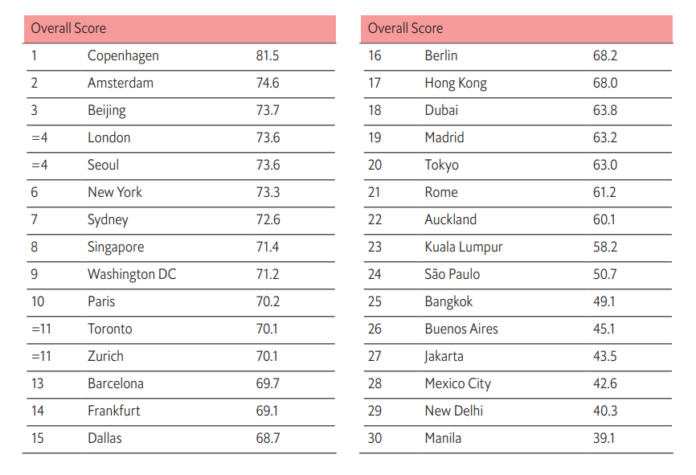
  • Copenhagen, Amsterdam, Beijing, London & Seoul are the top 5 digital cities in the index
  • European cities ran highly successful traffic management systems, while Beijing applied digital technologies to tackle air pollution and optimise utilities and sharing economy
  • Involving citizens in design of smart city schemes underpins meaningful inclusion – a key aspect of successful smart city projects
  • Smart city schemes delivered major public health benefits in areas like telemedicine, covid management and remote monitoring of patients

TOKYO, JAPAN – Media OutReach – 22 June 2022 – The Digital Cities Index 2022, produced by Economist Impact and supported by NEC, is an inaugural ranking of 30 global cities across four thematic pillars: connectivity, services, culture and sustainability. Of the top 10 cities of the index, four are in Europe (Copenhagen, Amsterdam, London and Paris), four are in Asia Pacific (Beijing, Seoul, Sydney, Singapore) and two are in the US (New York and Washington DC).

Copenhagen, Amsterdam, Beijing, London & Seoul performed the best, with successful open data projects and major strides in smart technology-powered sustainability projects like utility management. Cities with very defined goals realised the greatest benefits: European cities ran highly impactful traffic management systems, whereas Beijing made progress using applied digital technologies – tackling air pollution, optimising its utilities and promoting its sharing economy. The Atlantic nation cities led in open data innovation with a boom in travel and mobility apps.

Sustainability was the biggest impact area highlighted by the White Paper, with leading smart cities realising major gains in air quality through smart utility management. Sustainability brought the highest overall scores, with Copenhagen, Seoul and Toronto scoring highest for their use of digital technology to support urban sustainability.

Copenhagen and Singapore were the most connected cities, followed by Zurich, Beijing and Sydney. Singapore’s strategy for developing digital connectivity is built on the premise that AI, 5G and cyber security will drive the country’s growth and innovation post-covid. Smart cities are anticipated to drive economic growth: 5G alone will enable an estimated US$660 billion global mobility and transportation market by 2035.

Unaffordable, unreliable or inaccessible internet services impact other city level goals. Half-a-million households reportedly lack a reliable internet connection in New York City, for instance, disadvantaging low-income children for remote learning. By contrast, Washington DC has offered low-cost or free services and devices to families unable to afford a broadband subscription and Paris has the most affordable mobile data of all the cities analysed.

Ritu Bhandari, manager, policy and insights at Economist Impact, noted: “Smart cities will be safer, cleaner and more inclusive urban landscapes, where citizens enjoy better public health and services, more efficient transport and major economic improvements to be shared as public goods. The index highlights how outlier cities are leveraging technology to improve quality of life for millions of citizens around the world. While we see strong leadership from cities in Western Europe, the table is led by major cities from a wide geographical spread. The most significant improvements were delivered against tightly defined goals – a critical success factor for urban digital transformation.”

Since the pandemic, digital technologies have enabled real progress in public health. In Asia, apps were central to managing covid-19, while telemedicine and real time remote monitoring of chronic patients has marked digitisation everywhere. In New York, for instance, a diabetes-prevention initiative for adults has reduced the risk of type 2 diabetes in high-risk individuals by 58%.

Singapore, São Paulo and New Delhi ranked the highest for their delivery of digital municipal services. New Delhi ranks high in part because of the success of Aadhar, India’s ground-breaking national digital identity scheme. In Korea, Metaverse Seoul, announced in November 2021 by the Seoul Metropolitan Government, will provide citizens with access to government services via the metaverse.

The report’s authors note that involving citizens in the design of smart city schemes underpins meaningful inclusion, a critical success factor for smart city projects, along with delivery against tightly defined goals.

Download the full index results, report and infographic on: economistimpact.com/digitalcities

Digital Cities Index 2022 results:

About Digital Cities Index 2022

is an inaugural ranking of 30 global cities across four thematic pillars: connectivity, services, culture and sustainability. Combining quantitative and qualitative analysis, and including a survey of 3,000 residents spread across all cities in the DCI, the results show how cities are performing in terms of both quantitative metrics like internet speed and qualitative factors such as the presence of strategies, policies and plans for technologies like 5G and AI.

About Economist Impact

Economist Impact combines the rigour of a think-tank with the creativity of a media brand to engage a globally influential audience. We believe that evidence-based insights can open debate, broaden perspectives and catalyse progress. The services offered by Economist Impact previously existed within The Economist Group as separate entities, including EIU Thought Leadership, EIU Public Policy, Economist Events and SignalNoise.

Our track record spans 75 years across 205 countries. Along with creative storytelling, events expertise, design-thinking solutions and market-leading media products, we produce framework design, benchmarking, economic and social impact analysis, forecasting and scenario modelling, making Economist Impact’s offering unique in the marketplace. Visit for more information.

About NEC

has established itself as a leader in the integration of IT and network technologies while promoting the brand statement of “Orchestrating a brighter world.” NEC enables businesses and communities to adapt to rapid changes taking place in both society and the market as it provides for the social values of safety, security, fairness and efficiency to promote a more sustainable world where everyone has the chance to reach their full potential. For more information, visit NEC at

Pattern’s new report finds that 67% of China’s cross-border online shoppers expect to spend more online in 2022

– Tmall Global leads as the most popular marketing for cross-border shopping in China
– Western brands are recommended to build their official presence on marketplaces and social channels in China to gain shoppers’ trust

SINGAPORE – Media OutReach – 22 June 2022 – Global ecommerce accelerator Pattern has polled 1,000 Chinese shoppers who shopped on the largest cross-border marketplace Tmall Global in the past 12 months. The polling is set to understand these cross-border shoppers’ online buyer behaviour, and how their buying decisions for Western brands and products were influenced in different stages throughout the buyer’s journey. The findings are included in Pattern’s China Cross-border Shopper Report 2022.

Overall, 67% of respondents said they would spend more online shopping in the next 12 months. This polling was conducted at a time when parts of China faced lockdowns to curb the COVID-19 outbreak in the country. The result shows that China’s cross-border shoppers have proved remarkably resilient and are generally optimistic about their life in future. 73% of our respondents are considered higher income groups (annual household income around US$45,000 or above), and 92% of them live in China’s Tier 1 and new Tier 1 cities; such as Beijing, Shanghai, Guangzhou, Shenzhen, Chengdu and Hangzhou.

The research shows that Tmall Global was approved by 85% of respondents as their favourite cross-border buying channel, and led other online marketplaces, shopping agents and foreign brands’ direct-to-customer websites in all the 12 product categories we surveyed. Supplemented by its diverse on-platform marketing tools, Tmall Global is recommended as a good starting point for Western brands to test the water of their products in the Chinese market.

Other key findings reported in the report include:

Brands’ official presence is trusted – A majority of respondents said Western brands gained their trust from information on the brands’ storefronts on marketplaces (70% of the respondents) and the storefronts’ score, like the DSC score on Tmall (69%). We also observed that most shoppers searched reviews of Western products on brands’ official accounts on social media (74%) and storefronts (70%), and 59% of them did this on brands’ websites.

Shoppers want more than price – When buying from Tmall Global, 69% of the respondents gave priority to guaranteed authenticity, followed by better product quality (63%), better customer services (57%), and better prices than elsewhere (50%). Regarding their reasons to buy Western goods or from Western brands, the top choice is product quality (60%), closely followed by a sense of uniqueness and a match of their style or values (both 59%), and then value for money (57%). These results show that China’s cross-border shoppers have more considerations in mind than product price when deciding to buy.

Social channels are influential – Off-platform marketing has been an indispensable part of brands’ ecommerce strategy in China, particularly for cross-border ecommerce players. Douyin (a.k.a TikTok), Xiaohongshu (a.k.a. Little Red Book) and WeChat top in this polling, with 55% to 61% of respondents agreeing that their buying decisions were influenced by these channels. Their large user bases make these channels optimal for social selling and building brand awareness, but they also differ in functionality for marketing that brands should be aware of. And even with the right tools, brands should provide localised, relevant, and more targeted content to resonate with their audiences.

Pattern’s Asia General Manager Arthur Cheung adds: “China has a huge market that most consumer brands across the globe don’t want to overlook. However, the country has developed an ecommerce ecosystem significantly different from the west, for example, the high integration of off-platform marketing into ecommerce. To win in the Chinese market, Western brands need to work out their unique proposition, find the right selling platforms and marketing channels, and deliver localised and resonating content to engage with Chinese cross-border shoppers.”

A full copy of the research can be downloaded from https://info.pattern.com/china-shopper-report-2022

About Pattern Inc

Pattern is the ecommerce accelerator of choice for hundreds of consumer brands – acting as their Trade Partner or Master Distributor in key markets. It is in the top 5% of authorised Tmall Trade Partners, is one of the largest Amazon sellers in the world, and also supports brands to sell on marketplaces such as JD.com, Lazada, Shopee, Coupang, eBay and others.

Pattern takes care of every aspect of a brand’s marketplace presence and provides full visibility of key success metrics. Unlike other Trade Partners in the region, Pattern operates a stock-buy model to equally share risk and reward while working closely with brands to build demand for their products and accelerate their Tmall presence.

In addition, Pattern’s consulting team supports brands with their strategic ecommerce challenges, including whether they should sell online in China and which other APAC markets they should expand to online.

For more information, visit

#Pattern

Attitude Mom and Plentitude Develop Breast Pumps, Support Breastfeeding In Laos

Attitude Mom Breast Pumps

Attitude Mom and Plentitude offer breast pumps to promote the importance of a mother’s breast milk in providing the best nutrition to children.

Ground-breaking A-ROSA SENA on maiden voyage

Hybrid E-Motion Ship departs Cologne for the first time with guests on board

ROSTOCK, GERMANY – Newsaktuell – 21 June 2022 – On Saturday 18 June, A-ROSA’s ground-breaking new river cruise ship, A-ROSA SENA, departed from Cologne on her maiden voyage. To the delight of the guests and crew on board, the ship sailed out of the city silently and emission free due to the ships innovative hybrid propulsion ‘E-Motion’ system, which enables the vessel to switch to battery power when arriving and departing ports.

The A-ROSA SENA making her first departure with hybrid propulsion system in Cologne. Photo: A-ROSA River Cruises


Guests and crew were excited about the sustainable new ship: “A-ROSA SENA’s design is truly unique on the river. Together with the spacious interior layout, she offers a completely new travel experience”, comments hotel manager Dennis Brenner. Captain Ulli Schwalbe adds: “Thanks to the hybrid propulsion system and the exhaust gas purification filter, you don’t notice any emissions on board and can just enjoy the pure cruising experience.” The E-Motion Ship recently received the “German Award for Sustainability Projects 2022” for its environmentally friendly technologies.

On board guests can chose between different restaurants and buffet, seated dinner or an à la carte Menu. Photo: A-ROSA River Cruises​

A-ROSA SENA will now sail a seven-night (round trip) itinerary from Cologne, calling at Amsterdam, Rotterdam, Dordrecht and Antwerp. It is the first river cruise ship on the Rhine to feature four decks of spacious interior public areas, plus a large sundeck. She also boasts various dining options and a large spa complete with a Finnish sauna, jacuzzi, treatment rooms, gym, relaxation room and even an ice grotto. Alongside this, many of her family and multigenerational features such as the dedicated kids club room, family cabins sleeping up to five and the separate children’s pool on the sundeck have never been seen before on a river cruise ship.

More information: www.arosa-cruises.com/press

Picture is available at AP Images (http://www.apimages.com)

#A-ROSASENA

ChainUp inks strategic partnership with asset and wealth management firm Bedrock

SINGAPORE – News Direct – 21 June 2022 – ChainUp Group, a blockchain technology solutions provider, today announced a strategic partnership with Singapore-based asset and wealth management firm Bedrock Trust Pte Ltd (“Bedrock”). This marks a significant first step in the collaboration between both firms to strengthen their core competencies and provide clients with comprehensive digital asset management solutions.

Through the partnership, both firms have developed a number of digital asset management strategies including the IPFS Infrastructure Fund, Stable Returns Fund, Enhanced Beta and Venture Capital Fund.

Headquartered in Singapore, ChainUp offers a complete suite of blockchain solutions for businesses in both traditional and blockchain-related industries. Its range of products and services includes infrastructure development and the provision of essential resources and technical capabilities to facilitate blockchain adoption and integration into business operations.

As a Licenced Fund Management Company (LFMC) regulated by the Monetary Authority of Singapore, Bedrock provides clients with investment solutions tailored to their long-term requirements. The company holds a Capital Market Services (CMS) licence for the regulated activity of Fund Management under the Securities and Futures Act (SFA) as well as the status of Exempt Financial Advisor under the Financial Advisers Act (FAA).

Mr. Jeff Mei, Chief Marketing Officer of ChainUp Group said, “The applications of blockchain are wide-ranging. Our partnership with Bedrock signifies a step in the right direction towards our goal of making blockchain technology more accessible to businesses in different industries. With Bedrock’s expertise in traditional finance, we look forward to bringing clients better digital asset management solutions through our collaboration.”

Ms. Choo Shu Hui, Founder & CEO of Bedrock said, “Bedrock’s heritage lies in managing high net-worth clients’ wealth and assets within a multi-family office platform. As we continue to innovate and provide clients with portfolio resilience and diversity, we are pleased to leverage ChainUp’s expertise in blockchain technology through this partnership to bridge the world of digital asset management and traditional finance.”

About ChainUp Group

Founded in 2017, ChainUp is a leading end-to-end blockchain technology solutions provider covering infrastructure development and ecosystem support. Built on the mission to empower businesses through blockchain technology, ChainUp’s innovative and all-around compliant solutions include digital asset exchange systems, NFT trading systems, wallet solutions, liquidity solutions, and digital assets custody and management. Headquartered in Singapore and with offices around the world, the company has served more than 1,000 clients in 30 countries, reaching over 60 million end-users.

For more information, please visit: www.chainup.com.

Bybit Launchpad 2.0 to Host OpenBlox (OBX) IEO

ROAD TOWN, United British Virgin Islands – Media OutReach – 21 June 2022 – Bybit, one of the world’s fastest growing crypto exchanges, will list the inaugural BloxVerse platform token OBX on Bybit Launchpad 2.0.

OpenBlox is an EVM-based NFT gaming and web3 platform focusing on play-and-earn / move-and-earn and IP branding.

Bybit will host the initial exchange offering for OBX, which will be available on the Bybit Launchpad 2.0, a freshly revamped platform for groundbreaking blockchain projects, with the full spot listing scheduled for June 30.

Bybit users can commit BIT to subscribe to token allocations, or participate in Launchpad 2.0’s new lottery model where users stake a nominal amount of Tether (USDT) for the chance to win allocations of new tokens. Users can also buy the best performing tokens from previous listings via the Launchpad.

Since its inception in 2021, OpenBlox has attracted investment from renowned investors such as Yusaku Maezawa, who made his first web3 investment with the project, as well as a devoted community following its initial launch. RunBlox, a lifestyle app and OpenBlox’s first web3 venture that has gained traction while still in beta testing, is the most recent addition to the blockchain gaming ecosystem.

The OBX listing is a continuation of OpenBlox’s success. In 2022, OpenBlox closed a $4 million seed and private round, launched RunBlox, and saw massive growth in Japan and Korea as the Asia-Pacific region became the primary cohort of OpenBlox users.

The go-to platform for promising crypto projects, Bybit Launchpad 2.0 gives users early access to some of the most sought after tokens in the space. OBX is the latest addition to Bybit Launchpad 2.0’s future forward ecosystem.

About Bybit

Bybit is a cryptocurrency exchange established in March 2018 that offers a professional platform where crypto traders can find an ultra-fast matching engine, excellent customer service and multilingual community support. The company provides innovative online spot and derivatives trading services, mining and staking products, an NFT marketplace as well as API support, to retail and institutional clients around the world, and strives to be the most reliable exchange for the emerging digital asset class. Bybit is a proud partner of Formula One racing team, Oracle Red Bull Racing, esports teams NAVI, Astralis, Alliance, Virtus.pro and Oracle Red Bull Racing Esports, and association football (soccer) teams Borussia Dortmund and Avispa Fukuoka.

For more information please visit:

For updates, please follow Bybit’s social media platforms on


#Bybit

Correcting and Replacing: DHL Express Singapore Spearheads Sustainable Logistics with 80 Additional Electric Vehicles

CORRECTION by DHL:
The infographic has been updated.

The corrected release reads:

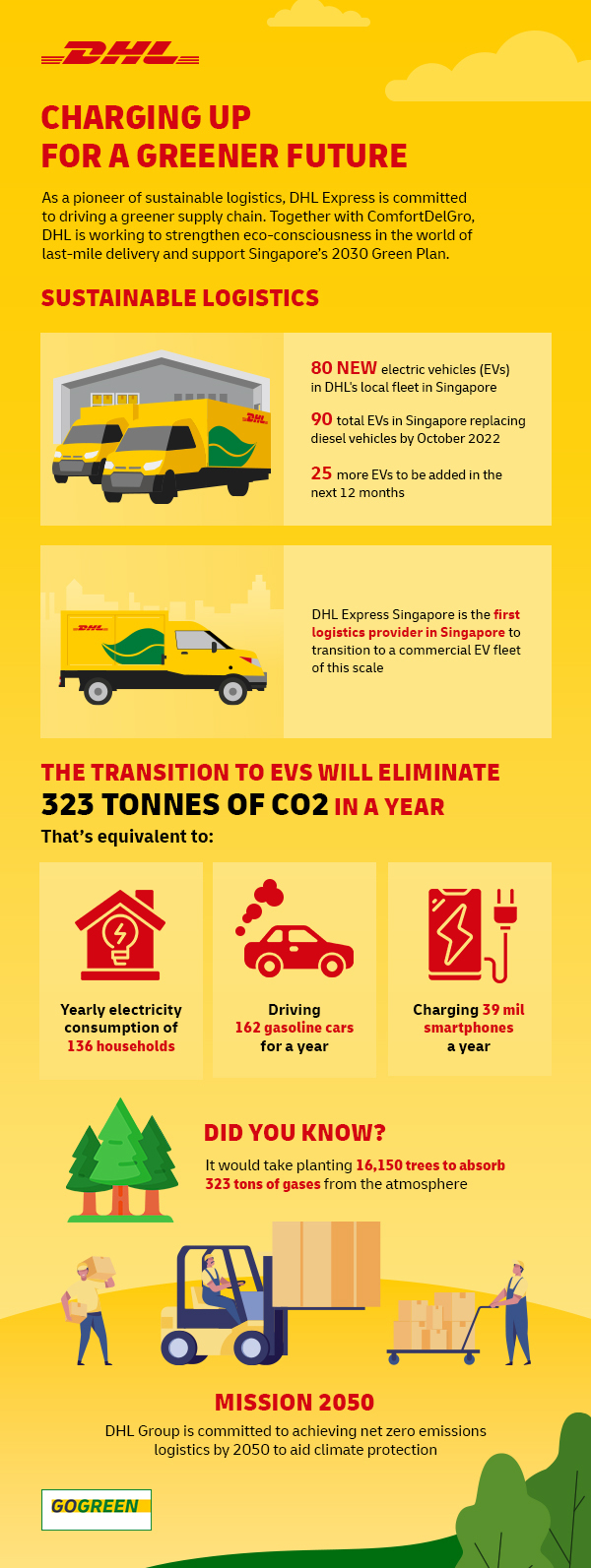
SINGAPORE – Media OutReach – 21 June 2022 – DHL Express, the world’s leading international express service provider, today announced the addition of 80 electric vehicles (EVs) to its Singapore fleet, in partnership with ComfortDelGro, one of the world’s largest land transport companies. Together with the 10 EVs that are currently in its fleet, DHL Express Singapore will have a total of 90 EVs on Singapore roads by October 2022. This eight-fold increase in the number of operational EVs will make DHL Express Singapore the first logistics provider in the country to transition to a commercial EV fleet of this scale.

At a launch ceremony today graced by Mr. S. Iswaran, Minister for Transport, DHL Express Singapore also announced that it will be investing close to SGD 8 million into electrifying its fleet over the next five years. Part of this investment amount goes towards a five-year EV leasing and maintenance agreement with ComfortDelGro’s car leasing subsidiary, ComfortDelGro Rent-A-Car Pte Ltd for 80 electric vans. Another part of the investment will support the installation of 105 charging points across its service centers, and 25 more EVs of other vehicle types that will support other areas of operations, such as shipment distribution across its facilities. The 25 other EVs will be added in the next 12 months.

Ken Lee, CEO, DHL Express Asia Pacific, said, “We are on a journey towards achieving net-zero emissions by 2050 with a focus on clean operations. As a leader in express logistics, we have a responsibility to guide and influence the industry to reduce carbon footprint across logistics operations. Globally, we have made significant progress in sustainable aviation with our partnership with Neste and bp on sustainable aviation fuel. Today’s electric vehicle fleet expansion marks another huge step forward as we green our land transport.”

The new EVs will replace internal combustion engine (ICE) vans as part of DHL Express Singapore’s fleet renewal exercise to drive sustainable logistics and support its sustainability roadmap. The rollout also further demonstrates DHL Express’ ongoing commitment to build cleaner and greener logistics operations in Asia Pacific. Aside from staying true to DHL’s sustainability commitment, the change to EVs is also aligned with Singapore’s 2030 Green Plan, which aims to put more EVs on Singapore’s roads.

Christopher Ong, Managing Director, DHL Express Singapore, said, “We are excited to be taking a bold step towards our sustainability goals and to be charging up for a greener future. By transitioning to electric vehicles, DHL Express Singapore is set to eliminate a total of 323 tons of CO2 emissions yearly, and this is just the beginning for us. We look forward to staying true to our Mission 2050 goal and continuing to connect people and improve lives in a greener future.”

Mary Ong, CEO, ComfortDelGro Rent-A-Car, said, “ComfortDelGro Rent-A-Car and DHL Express Singapore has had more than 20 years of partnership. We are therefore excited to be a part of its sustainability journey of integrating EVs into its fleet. We hope that with the leasing of that many Citroën ë-Dispatch vehicles to DHL, our partnership will grow from strength to strength.”

Cycle & Carriage is the authorized distributor of the chosen van model, Citroën ë-Dispatch; Siemens VersiCharge AC charger will be installed across DHL Express service centers by EV charger service provider EVOne for the EV fleet.

These EVs can travel a distance of up to 339km and have cargo space of up to 5.3m³ with a payload of 1000kg. They can be charged from 0% to 80% in 48 minutes and are equipped with driver assistance features such as hill-start assist, an anti-lock braking system, and an electronic stability program. These driver features will also enhance the safety and driving experience for the couriers on the road.

Smart charging points at DHL Express service centers will provide daily charge required by the EVs. These charging points have special capabilities such as an anti-EV hogging monitoring system, and an EV model or license plate recognition system which allows operations staff to make effective use of available charging points.

DHL – The logistics company for the world

DHL is the leading global brand in the logistics industry. Our DHL divisions offer an unrivalled portfolio of logistics services ranging from national and international parcel delivery, e-commerce shipping and fulfillment solutions, international express, road, air and ocean transport to industrial supply chain management. With about 380,000 employees in more than 220 countries and territories worldwide, DHL connects people and businesses securely and reliably, enabling global sustainable trade flows. With specialized solutions for growth markets and industries including technology, life sciences and healthcare, engineering, manufacturing & energy, auto-mobility and retail, DHL is decisively positioned as “The logistics company for the world”.

DHL is part of Deutsche Post DHL Group. The Group generated revenues of more than 81 billion euros in 2021. With sustainable business practices and a commitment to society and the environment, the Group makes a positive contribution to the world. Deutsche Post DHL Group aims to achieve zero-emissions logistics by 2050.

On the Internet: ;
Follow us at: ;

#DHL

OctaFX goes swap-free: here’s how it will affect traders

OctaFX decided to remove swaps—fees traders pay for leaving their orders open overnight. Here’s how it will affect the broker’s clients.

KUALA LUMPUR, MALAYSIA – Media OutReach – 21 June 2022 – The global broker OctaFX recently announced that it went swap-free in all countries where it operates. Now traders don’t have to pay this type of fee if they leave their orders open overnight. But why did they pay it in the first place? Let’s explore swap fees and why brokers charge them.

Forex trading usually implies using leverage to open larger positions which could generate more profit. Since using leverage is a way of borrowing money from a broker, traders have to pay interest when their orders are open longer than one day. Swap is a way to charge it.

Swap fees depend on the interest rate differential between the currencies in a pair, called the swap rate. Swaps are calculated based on whether the order is short or long and are usually charged at midnight. On Wednesday night, traders have to pay weekend swaps triple the usual size. They mostly use an intraday strategy to avoid paying swaps, which significantly narrows their investment experience.

A swap fee can sometimes—though quite rarely—be paid to a trader. How? The answer is in the swap rate, which sometimes can be positive, provided that the interest rate of one currency is negative.

The formula for calculating the fee is as follows:

Swap = (lots * long or short points * point size)

Let’s calculate the swap for one of the most popular currency pairs, EURUSD. If a trader opens a long EURUSD order of 10,000 units and closes it the next day, the swap would be:

(0.1 * –5.616 * 1) = –0.56 USD

Charged every day, swap fees tend to accumulate with time and make trading less profitable. To enhance investment opportunities for its clients, OctaFX decided to remove swaps. These fees will no longer stop traders from using mid-term and long-term strategies in the financial market. They can now hold as many orders as they want for as long as they want and not be charged any swap fees.

About OctaFX

is a global broker providing online trading services worldwide since 2011. It offers everything one needs to reach their investment goals, providing top-notch conditions utilised already by 7.5 million clients globally.

The company is involved in a comprehensive network of charity and humanitarian initiatives, including improvement of educational infrastructure, short-notice relief projects, and supporting local communities and small to medium enterprises.

On a side note, OctaFX has also won more than 45 awards since its foundation, including the 2021 ‘Best Forex Broker Asia’ award from Global Banking & Finance Review and the 2021 ‘Best ECN Broker’ award by World Finance.

#OctaFX

The issuer is solely responsible for the content of this announcement.