

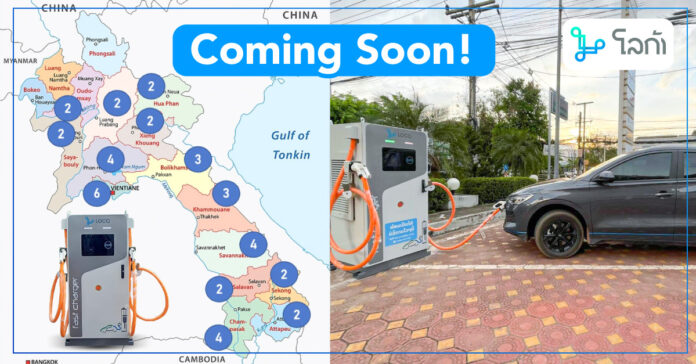
The first EV fast-charging station will be installed by Loca in June 2022.
OneDegree announces multi-year partnership with Munich Re to launch “OneInfinity” digital asset insurance
HONG KONG SAR – Media OutReach – 11 April 2022 – OneDegree Hong Kong Limited (“OneDegree”) announced today that it has entered into a three-year strategic partnership with Munich Re to launch OneInfinity, a digital asset insurance product, making OneDegree the first licensed insurer in Asia to collaborate with a global leading reinsurer in offering digital asset insurance.
OneInfinity is an insurance and technology product offering designed specifically for digital asset trading platforms, custodians, asset managers and technology providers. Under this partnership, Munich Re will provide reinsurance capacity and support OneDegree’s technical underwriting. The partners also commit to building modeling capabilities based on OneDegree’s unique CeFi and DeFi incident database to support future product innovation.
OneInfinity bundles OneDegree insurance with Cymetrics’ solutions. Cymetrics helps companies examine cyber, blockchain and digital asset risks from the perspective of hackers and insiders in a more agile and flexible way. Cymetrics is a separate product offered by a sister company of OneDegree.
With the rapid and mass adoption of digital assets, the global market value of digital assets surged to a record high of US$3 trillion by the end of 2021[1]. To ensure the community’s sustainable growth, a key strategic priority shared by Web3 builders, operators, participants and policy makers is to build a compliant and secure Web3 ecosystem by establishing and adopting best practice in risk management. However, lack of insurance capacity has not only put Web3 practitioners at greater risk, but also hampered institutional investors’ participation. One of the key reasons for the lack of insurance capacity globally is the scarcity of data and expertise to underwrite risks related to digital assets.
Authorized by the Hong Kong Insurance Authority as a virtual insurer since April 2020, OneDegree has quickly established itself as the leading virtual insurer in the Hong Kong market by number of paid users. Its tech DNA gives it a competitive advantage in the digital asset space because it can combine strong underwriting expertise with sophisticated data analytics and technical know-how. By partnering with Cymetrics it can also offer advanced cybersecurity capabilities to clients. OneDegree has leveraged these unique strengths, as well as its inter-disciplinary knowledge of blockchain technology, risk management and compliance, to optimize OneInfinity for the end-to-end providers of digital asset services.
Rated A+ by A.M. Best and Aa3 by Moody’s, Munich Re is one of the leading reinsurers globally. It co-founded the Blockchain Insurance Industry Initiative and recently started a project in order to seize the business potential of the strongly growing digital asset market. OneDegree is excited to have been selected by Munich Re as their digital asset partner, after passing the reinsurer’s rigorous due diligence. Howden RE’s Hong Kong team supported OneDegree to establish this important partnership.
Alvin Kwock, Co-Founder of OneDegree, said, “We are delighted to work closely with Munich Re to offer OneInfinity, a market-leading digital asset insurance product. Digital asset insurance is set to be the gold standard serving the Web3 community. Regulated insurance coverage is a strong signaling effect that supports
trust and credibility of the insured entities. OneDegree is privileged to be Asia’s first insurer to contribute to the secure and compliant development of Web3.”
Helen Ye, Chief Commercial Officer of OneDegree, said: “This partnership is a game changer. With Munich Re’s support, OneInfinity offers much needed protection to the Web3 community. More importantly, both OneDegree and Munich Re have invested resources in building a digital asset native team and now we will join hands to deepen and broaden our understanding of the full spectrum of risks relating to end-to-end digital asset operations. We are confident that the partnership will contribute to establishing best practice in risk management for the digital asset industry. By doing so, we believe our product and technology offerings will be another step forward in enabling the fast-growing digital asset industry to unlock value and potential.”
Becky Tam, General Manager of Digital Asset Insurance in OneDegree, said: “This is the insurance sector with one of the highest entry barriers because of the technical inter-disciplinary knowledge required. As a digital native insurer, OneDegree is uniquely placed to leverage such knowledge, as well as our insurance-based analytics capabilities, in creating this innovative product offering. We are thankful to all the industry players from the digital asset sector, blockchain service providers and cybersecurity experts to provide valuable advice for us in building the product. We are especially glad to partner with Munich Re to bring reinsurance capacity and expertise to answer the ever-growing demand.”
Greg Barats, Senior Executive at Munich Re and President & CEO of HSB, a Munich Re Group company, said: “We are looking forward to teaming up with OneDegree as a key partner for our digital asset initiative. OneDegree is a digital native insurance player, that is part of an innovative group of tech companies. Accordingly, this partnership allows us to be optimally positioned to serve the important and expanding digital asset market.”
About OneDegree Hong Kong Limited
OneDegree Hong Kong Limited (“OneDegree”) was established in August 2016, with a mission to make insurance simpler, faster and better. We received a virtual insurer licence from the Hong Kong Insurance Authority in April 2020. We are now a multi-line digital insurance business, offering protection for pet, human medical, e-commerce and home insurance to individuals; as well as professional indemnity, D&O insurance, cyber security and digital asset coverage to businesses. OneDegree is backed by renowned investors including BitRock Capital, Sun Hung Kai & Co., AEF Greater Bay Area Fund, Cyberport Macro Fund, and Cathay Venture.
#OneDegree
The issuer is solely responsible for the content of this announcement.

Lao New Year Ticket Turmoil on Laos-China Railway
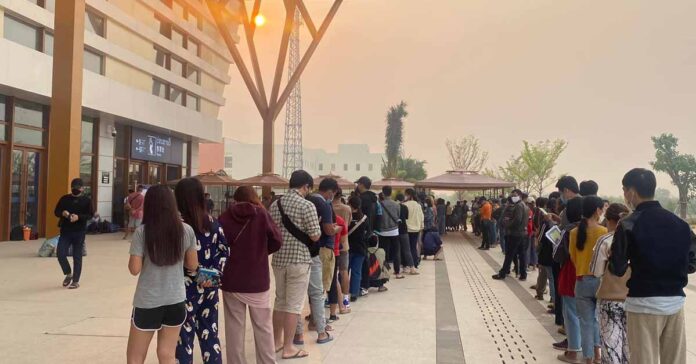
An increase in travel ahead of the Lao New Year holiday has caused mayhem at ticketing offices along the Laos-China Railway.
Laos Urges End to US Embargo on Cuba

President of the National Assembly of Laos, Mr. Xaysomphone Phomvihane, affirmed on Friday that Laos, its Party and government, urge that the United States lift its economic, commercial, and financial embargo against Cuba.
Foreign Employee Fined LAK 63 Million for Illegal Waste Dumping
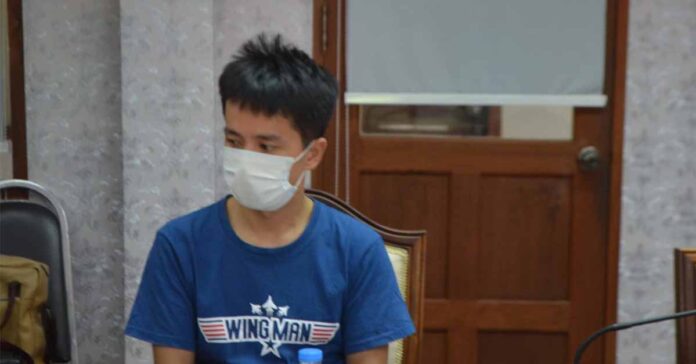
An employee of a foreign company operating in Laos was fined LAK 63 million after being caught dumping garbage.
Readiness Index reveals that energy transition in Asia Pacific still in its infancy

- Participants at the annual Asia Pacific Energy Week surveyed on importance of key energy priorities and progress made towards the energy transition
- Top energy priorities include the accelerated expansion of renewables and the decarbonization of industry
- Currently, Asia Pacific sits at just 25 percent on a scale of energy-transition readiness despite having the highest contribution toward carbon emissions
- Systemic changes will be required for the Asia Pacific region to accelerate the energy transition
SINGAPORE – Media OutReach – 11 April 2022 – Regional and global business leaders, policy makers and government representatives throughout the energy sector convened at the second annual Asia Pacific Energy Week, organized by Siemens Energy, to discuss regional challenges and opportunities for the energy transition.
Themed ‘Making the Energy of Tomorrow Possible‘, the 2-day virtual event held from March 28 to 29, 2022 saw more than 2,000 participants actively engage in the discussions, opinion polls and questions. Over the two days, participants were surveyed on the importance of major energy priorities and the progress made towards the energy transition.
The Asia Pacific Energy Transition Readiness Index is derived using an aggregate of participants’ response to each of 11 pre-determined key energy priorities. The study yielded valuable data and insights, which will be used to enhance key strategies for the energy transition in the region. It is the first of a series of studies which will be conducted in different regions globally.
Lofty ambitions, but low readiness for energy transition
The survey of conference participants revealed a significant gap between perception and reality when it came to carbon emissions.
Between 2005 and 2020, regional carbon emissions grew by around 50 percent, yet participants believed they had fallen by almost a third. The participants also anticipated that 2030 emission levels would be 39 percent lower than in 2005.
Further analysis of the survey data found that the Asia-Pacific region had a score of 25 percent on the Readiness Index, which indicates how far a region is along its energy transition path.
“While we have seen successful decarbonization in a number of areas, strong economic growth is counteracting this progress, resulting in a net increase in overall emissions. With the Asia Pacific region responsible for more than half of the world’s CO2 emissions, global climate efforts must clearly involve Asia Pacific more in the future. Maintaining economic growth and prosperity while simultaneously reducing emissions in the medium and long term needs to be the top priority for the region,” said Christian Bruch, President and CEO of Siemens Energy AG.
11 energy priorities identified to move the needle
Global management consultancy Roland Berger, knowledge partner in the Asia Pacific Energy Week, identified in close collaboration with Siemens Energy 11 priorities for tackling climate change and ultimately achieving net zero.
While participants agreed unanimously that each of the energy priorities have an important role to play in the region, the accelerated expansion of renewables and the decarbonization of industry were considered the most important factors. When asked about their views of the progress made on these energy priorities, many participants highlighted that much remains to be done, with many of the priorities still in the planning phase. The most progress was reported in power generation, with more than 80% of participants saying that the acceleration of renewables is at least in the planning phase, with around a third already at implementation. Almost two-thirds of respondents reported a similar level of progress for coal exit strategies.
Policy changes required to drive progress on almost every priority
Five factors were identified as areas that require development to drive progress along the energy transition: Funding; Know-how; Technology; Policy; and Supply Chain. Overall, participants see policy as the most important factor in almost every priority. Funding also emerged as a substantial need for most priorities. The need for additional know-how varies but is highest for new technologies such as carbon capture and storage (CCS) and power-to-X solutions.
“To meet carbon reduction targets, businesses in Asia Pacific region will need to reduce their reliance on coal as an energy source and increasingly turn to renewables,” said Denis Depoux, Global Managing Director, Roland Berger.
The full Asia Pacific Energy Transition Readiness Index is available at https://bit.ly/APIndex2022
About Siemens Energy
Siemens Energy is one of the world’s leading energy technology companies. The company works with its customers and partners on energy systems for the future, thus supporting the transition to a more sustainable world. With its portfolio of products, solutions and services, Siemens Energy covers almost the entire energy value chain – from power generation and transmission to storage. The portfolio includes conventional and renewable energy technology,
such as gas and steam turbines, hybrid power plants operated with hydrogen, and power generators and transformers. More than 50 percent of the portfolio has already been decarbonized. A majority stake in the listed company Siemens Gamesa Renewable Energy (SGRE) makes Siemens Energy a global market leader for renewable energies. An estimated one-sixth of the electricity generated worldwide is based on technologies from Siemens Energy. Siemens Energy employs more than 90,000 people worldwide in more than 90 countries and generated revenue of around €27.5 billion
in fiscal year 2020.  www.siemens-energy.com.
Roland Berger is the only strategy consultancy of European origin with a strong international presence. As an independent firm owned exclusively by our partners, we have 50 offices with a presence in all major markets. Our 2,400 employees are characterized by a unique combination of analytical thinking and an empathetic mindset. Driven by our values of entrepreneurial spirit, excellence, and empathy, we are convinced that business and society need a new, sustainable paradigm that focuses on the whole value-creation cycle. By working in interdisciplinary teams across all relevant sectors and business functions, Roland Berger offers the best expertise worldwide for successfully overcoming the profound challenges of our age now and in the future. www.rolandberger.com
This press release and a press picture / press pictures / further material is available at www.siemens‑energy.com/press
For further information on Asia Pacific Energy Week, please see https://www.siemens-energy.com/global/en/news/fairs-events/energy-week/asia-pacific-energy-week.html
Follow us on Twitter at:  www.twitter.com/siemens_energy
The issuer is solely responsible for the content of this announcement.

AgileAsia Finds More Business Professionals Signing Up Agile Training Courses During The Pandemic

SINGAPORE – Media OutReach – 11 April 2022 – Premier training provider, AgileAsia, has recently discovered more than 5600 people participated in their Certified Scrum Master training course in last year, 2021. This was a 61% increase in course participation compared to the previous year. Scrum is the practice of creating value through adaptive solutions for highly complex problems in a business organisation. Due to this framework, many business professionals have been benefiting from it through delivering high-value results within their organisations.
Explaining why there is a sharp rise in Scrum course participation, the training provider points out that the COVID-19 pandemic has managed to change many individuals’ mindset, particularly from a fixed to growth mindset. As the pandemic has affected many lives, there is also an uncertainty in organisations’ initial business strategy. Due to this, many stakeholders are trying to learn to adapt and upscale themselves to overcome the challenges.
To implement effective business transformation, individuals must take on new skills and knowledge such as the frameworks of Scrum. For the last 2 years, AgileAsia has been approved by Singapore Government bodies to provide up to 90% course fees subsidy, with SkillsFuture and Union Training Assistance Programme (UTAP) supported. The training provider also noted that this could be one reason why more business professionals are signing up Agile training.
AgileAsia is able to provide the information because they have grown over the years to become a leading provider of certification in thought leadership and the pioneers in agile movement in Singapore. The company is an approved training provider by the Singapore government bodies in the country to reach more clients across industries. The move is in line with the goal of helping organisations to develop core skills to implement transformation practices and scale in their respective industries.
The business environment continues to evolve amidst the emergence of a wide range of solutions to enable them to deliver the best experience to their target audience and compete favourably in their sectors. The Covid-19 pandemic has led to the discovery of more solutions and better ways of operating to achieve enhanced productivity. However, a good number of businesses still struggle to find their footing in the post-Covid-era, which is where the team at AgileAsia is looking to make a difference through their wide range of Scrum Alliance and Scaled Agile courses & certification.
The categories of courses offered by AgileAsia covers the different aspect of the Agile Scrum curriculum, with over 15 Agility courses to cater to the growing and diverse needs of organizations and individuals. This will ensure that more people are armed with the latest skillset in the business environment and have access to learn from globally-renowned expert practitioners with more than two decades of experience.
AgileAsia, an approved Training Provider by Singapore government bodies, provides up to 90% subsidy, giving clients access to a massive agile community, covering subjects across industries, including banking & finance and IT. The courses detail how the post-Covid work environment works and how participants can cope with the changes.
The Agile and Scrum workshop on Scaled agile and other aspects of the curriculum have continued to enjoy rave reviews from participants across industries for the comprehensiveness and efficiency of the content.
For further information about AgileAsia and the range of courses offered, visit
https://agileasia.com/
AgileAsia also has a growing online community across social media, including Facebook, LinkedIn, Instagram, Twitter, Youtube.
About AgileAsia
AgileAsia is a leading provider of industry-leading scrum alliance & scaled agile courses designed to help organisations develop core skills to implement transformation practices. The practitioner-based courses cover content which meets the requirements of leaders and practitioners to manage the transformation, with contributions from a community of IT leaders, besides academic content. AgileAsia currently has more than 300+ 5-Star Google reviews and a net promoter score of 85.
 https://agileasia.com/
#AgileAsia
The issuer is solely responsible for the content of this announcement.

Babel Finance has completed a two year $50 million BTC/ETH cross-currency swap
SINGAPORE – Media OutReach – 11 April 2022 – Babel Finance announced that it had completed a two-year Market-to-Market Cross Cryptocurrency Swap worth $50 million in Bitcoin and Ethereum.
Why is this transaction important to the global crypto market?
This two-year transaction demonstrates that crypto can be a long term play and that the crypto ecosystem is becoming mature. There is a rising market demand for long-end liquidity, indicating a healthy market structure and growing participant trust.
Transactions lasting 2-years are rare in the cryptocurrency institution market. “Until 2022, we have barely seen liquidity transactions of over 3 months in the crypto market. This might be the first”, said Babel Finance’s Head of Treasury, Song Yang.
Currently, there is a scarcity of detailed data on the bitcoin lending/borrowing sector. However, according to preliminary estimates, the crypto lending/borrowing market size, which includes CeFi and Defi, is approaching US$8.2 billion (reference: Top Lending/Borrowing Coins by Market Capitalization – CoinGecko). Active parties such as Genesis Capital, Celsius, B2C2, Nexo, Babel Finance, and others rarely provide long-term liquidity.
‘This ETH lending shows an increasing long term market demand for ETH, from the developments of DeFi, NFTs and new projects’, said Song Yang.
As evidenced by Babel Finance’s crypto 2-year swap, further long-term crypto investments and trading are achievable. Long-term crypto investors can earn interest on their Bitcoin by engaging in extra DeFi activities like lending and staking. This is something that Babel Finance’s crypto trading arm will be looking into. In the future, the Babel Finance Hong Kong team may, with agreement by their clients, to have their cryptocurrency held in the ecosystem and used to validate transactions in exchange for interest. Furthermore, there’s always the possibility that the value of their crypto assets may grow and result in a long-term profit.
Babel Finance, one of the world’s leading crypto traders with over 500 institutional clients globally, has shown that crypto finance, Defi, and crypto-based assets will become mainstream in financial markets with institutional and private investors through this deal.
Deal Facts:
- Transaction: Market to Market Cross Cryptocurrency Swap (MtM CCS)
- Currency: BTC and ETH
- Amount: US$ 50M
About Babel Finance
Babel Finance is a global leading crypto financial services provider, offering institutional and HNWI investors professional services covering crypto lending and crypto trading.
The company is backed by prominent investors including Sequoia Capital China, Tiger Global Management, BAI Capital, Zoo Capital, Dragonfly Capital, and NGC Ventures.
With a business focus in Asia and a business headquarters in Singapore, Babel Finance has established close cooperative relationships with major global exchanges, custodians, investment funds, and mining institutions.
#BabelFinance
The issuer is solely responsible for the content of this announcement.

