Home Blog Page 6424

Chamber of Commerce and Industry, MMG Sepon Support Occupational Safety

The Lao National Chamber of Commerce and Industry organized a training workshop titled “Occupational Safety and Health Management” for private companies in Lao PDR on Oct 21.

This training is the first of a series of trainings to be held on occupational health and safety. Chairing the workshop was Ms Sengdavone Bangonesengdet, Secretary General of the Lao Chamber of Commerce and Industry.

The workshop welcomed key resource persons from MMG LXML Sepon (LXML). Mr Viboon Sithimolada, manager for safety, health, the environment and community from LXML gave the presentation, “Why safety is important and why safety leadership matters in the context of fast growing industries in Laos.”

Participants also learned about safety basics, safety management tools, and workplace inspections.


Source: KPL

‘Horrific’ First Amphibious Centipede Discovered

This giant, venomous creepy-crawly is as comfortable swimming and walking underwater as it is on land, in a finding that surprised scientists.

Just when you thought it was safe to go in the water—look out for giant, swimming centipedes!

Scientists have recently described the world’s first known amphibious centipede. It belongs to a group of giant centipedes called Scolopendra and grows up to 20 centimeters (7.9 inches) long.

Like all centipedes, it is venomous and carnivorous. Thankfully, this new water-loving species appears to live only in Southeast Asia. The creature’s description was published last month in the journal ZooKeys.

Centipede Serendipity

George Beccaloni of the Natural History Museum in London was on his honeymoon in Thailand in 2001. And like any good entomologist, he was looking for bugs.

“Wherever I go in the world, I always turn over rocks beside streams, and that’s where I found this centipede, which was quite a surprise,” says Beccaloni.

“It was pretty horrific-looking: very big with long legs and a horrible dark, greenish-black color,” he says.

When Beccaloni lifted the rock it was hiding under, the centipede immediately escaped into the stream, rather than into the forest. It ran along the stream bed underwater and concealed itself under a rock.

With some difficulty, Beccaloni captured the centipede and later put it in a large container of water. He says it immediately dove to the bottom and swam powerfully like an eel, with horizontal undulations of its body. When he took the centipede out of the container, the water rolled off its body, leaving it totally dry.

Beccaloni brought his specimen back to the Natural History Museum in London and asked a centipede expert about his observations. The expert was skeptical, because Scolopendra are found in dry habitats and no centipedes were known to be amphibious. So the specimen sat in the museum’s collection for years.

Finally, a New Species

Meanwhile, Beccaloni’s colleague at the Museum, Gregory Edgecombe, and his student in Thailand, Warut Siriwut, were on the verge of describing a new species of centipede.

They had collected two specimens near waterfalls in Laos, and DNA analysis confirmed it was a new species. They named the centipede Scolopendra cataracta, from the Latin for “waterfall.”

Beccaloni shared the observations of his specimen’s amphibious behavior with Edgecombe, and they confirmed that his honeymoon centipede was an example of S. cataracta.

The entire species is known from just four specimens: the two collected in Laos, Beccaloni’s swimming specimen from Thailand, and a fourth specimen that was collected in Vietnam in 1928 and was in the collection at the Natural History Museum in London, misidentified as a more common species.

Beccaloni believes S. cataracta exploits a different ecological niche from other centipedes.

“Other Scolopendra hunt on land,” he says. “I would bet this species goes into the water at night to hunt aquatic or amphibious invertebrates.”

Like all centipedes, this new amphibious species is venomous. Although you would not want to be bitten by one, it probably wouldn’t kill you—it would just cause agonizing pain.

“All large Scolopendra can deliver a painful bite, the ‘fang’ of the venom-delivery system being able to pierce our skin,” says Edgecombe.

Bites from related centipedes of about the same size as S. cataracta cause a burning pain that can spread the length of the entire arm or leg if a finger or toe is envenomated. Edgecombe says the pain may persist for a few days, but probably won’t leave one with any longer-lasting effects.

It sounds like some people’s worst nightmare: if you go for a dip in a nice stream at night, there might be giant centipedes lurking in the water.

But to scientists like Beccaloni and Edgecombe, the new discovery is further proof of all the wonders of nature that are still unknown to us.

“People tend to study streams in the tropics during the day, but there is probably a whole other range of interesting amphibious things that come out at night,” says Beccaloni. “It would be good to study these streams and their fauna then to see what is actually going on under the cover of darkness.”


Source: National Geographic 

Vientiane Global Shapers To Host the First TEDx Event in Laos

The Vientiane Global Shapers, a global initiative under the World Economic Forum, has secured the license for TEDxLaneXangAve, which will be held on Saturday, November 26th, 2016 at the French Institute in Vientiane Capital. The theme of this year’s event is Changing Currents. This is the first time that a TEDx event will be organized in Laos.

The TEDx Program is designed to help communities, organizations and individuals to spark conversation and connection through local TED-like experiences.

“For TEDxLaneXangAve, we are proud to present several speakers who have been carefully chosen from a variety of different fields. Each will be given a chance to speak for 10 minutes,” says Vientiane Global Shaper Curator, Benjamin Soo. Details regarding the backgrounds and content of the speakers will be released in the coming weeks.

Vientiane Global Shaper Vice-Curator, Mary Bounthalath, adds that “while TEDx has a number of guidelines, all to which will be strictly adhered, we generally ask all our speakers to surprise audience members and expose them to topics they would not normally come across in order to create an experience that is at once dynamic and informative.”

The Vientiane Global Shapers have strategically partnered up with the Office of the Embassy of Canada to the Lao PDR to host the TEDx event.

TEDxLaneXangAve has engaged leading event management firm, Sengdara Communications, most notably known for their experience with organizing activations projects for Google and The Lao Music Awards, for assistance in public relations, media and event management. “I’m very honored that we can be a part of this truly global brand. I’m very grateful to the Vientiane Global Shapers for allowing us the opportunity,” says Deputy Managing Director, Aditta Kittikhoun.

Sponsorship opportunities are currently open. All interested parties are urged to contact Benjamin Soo at +856 20 5810 8800 or Amy Chanthaphavong at +856 20 2889 8999.

Tickets are priced at 200,000 kip (early bird offer – before Nov. 15) and will go on sale on November 7th at Sengdara Fitness Center (Saphanthong Neua Village) in a first-come first-serve basis. Tickets sold after November 15th will be priced at 250,000 kip. Only 100 seats are available.


About TED

TED is a nonprofit devoted to spreading ideas, usually in the form of short, powerful talks (18 minutes or less). TED began in 1984 as a conference where Technology, Entertainment and Design converged, and today covers almost all topics — from science to business to global issues — in more than 100 languages. Meanwhile, independently run TEDx events help share ideas in communities around the world.

Power Company Gives Boost to Luang Prabang School

Nam Ngum 5 Power Co., Ltd. has given educational equipment to Chim Secondary School in Chim village, Phoukhoun district, Luang Prabang province.

The items donated included 80 desks, four teachers’ tables and four whiteboards, valued at 47 million kip.

The supplies were presented to Chim Secondary School on Tuesday in the presence of the Deputy General Manager of Nam Ngum 5 Power Co., Ltd., Mr. Phonesavanh Keohavong, Deputy General Manager Mr. Tian Shao Qiang, Deputy Governor of Phoukhoun district Dr Phetsamone Vongsipaseuth, local education and sports officials, teachers and students.

Mr. Phonesavanh said that over the last two years the company had helped to build a school, a village club and an infirmary for Chim and Namting villages in Phoukhoun district.

At the end of this year, the company also plans to build a flood rescue centre and a new school in Chim village at a cost of more than 500 million kip.

Principal of Chim Secondary School, Mr. Somboun Yenuthor, said the school opened in the 2008-09 academic year and now had 508 pupils.

During the ceremony, district Deputy Governor Dr Phetsamone asked the company to continue to support education in Phoukhoun district. He also called on village authorities, teachers and students to maintain the equipment they had been given.

Dr Phetsamone asked the company to consider helping to create a football pitch in Bangkalo village.

The Nam Ngum 5 hydropower plant is located on the Nam Ting river, which is a major tributary of the Nam Ngum river upstream in a mountainous area. The power plant is about 300km north of Vientiane. The dam is located in Luang Prabang province and the powerhouse is located in Xieng Khuang province.

The total investment in the project is US$199 million. Sinohydro Corporation Ltd owns a 85 percent share and Electricite Du Laos owns a 15 percent share. The project’s chartered commercial operation period is 25 years.

Work on the project began in October 2008 and the plant became operational in December 2012.


Source: Vientiane Times

Japan Encourages Innovation in Lao Handicrafts

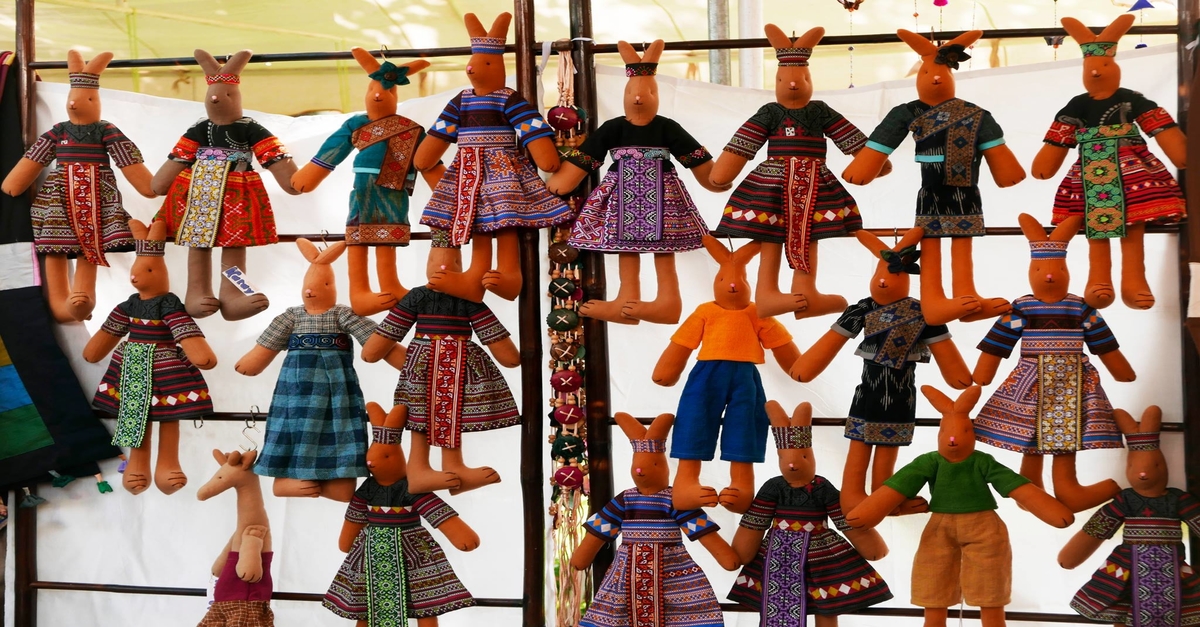
Japanese experts are working with the Lao Handicraft Association to help artisans produce more items that are suitable for purchase as gifts.

A representative of the Japan External Trade Organisation (JETRO), Mr. Tetsuo Shibata, gave a talk on the subject on Friday as part of the Lao Gift Project, which is supported by JETRO.

Mr. Tetsuo’s main message was that the gift project should continue so that more suitable items could be produced.

Many Lao handicrafts appeal to foreign visitors and to Lao people as well, but a lot of them are large and smaller items would be more appropriate, he said.

President of the Lao Handicraft Association, Mr. Hansana Sisane, also addressed the audience. He said the Lao Gift Project was proving to be very helpful and it was useful to share experiences among participants.

Some handicraft makers had received awards for excellence, while those who had not done so needed to enhance their skills.

Mr. Hansana said the main objective of the talk was to discuss new production methods and gift items, along with ideas that were needed to bolster this line of work.

The project began last year.

Handicrafts were on display at the ASEAN Summit held in Vientiane from September 6-8 this year. Other activities during the summit highlighted policies on investment, commercial cooperation, foreigners living in Laos, and places to buy souvenirs.

Five groups are taking part in the project, namely Sikhai Handicraft, the Nalongkone shop, and Pasen, Nakhanet and Kheuamai handicraft makers.

Mr. Shibata said the items made by these groups were produced from natural materials and included rattan products, banana fibre products, textiles embroidered with beads, salt, black rice, incense sticks, and carved wooden items.

These materials were easy to source, he said, adding that it was beneficial to continue support for the project to develop artisans’ skills in provinces across the country.

We need to discuss how best to support and promote the work of local people in various target districts, he added.

Mr. Shibata said Lao handicraft makers produce a variety of attractive products and artisans are frequently visited by officials and other guests, with gift items made by local people. The designs found in Laos are different to those found anywhere else in the world, he noted.


Source: Vientiane Times

Laos, Vietnam Partner in Garment Skill Training

The Lao People’s Revolutionary Youth Union and the Salesian Sisters of Don Bosco in Vietnam have agreed to promote the development of vocational education for young Lao women to boost their job prospects and meet the needs of the growing labour market.

They are arranging vocational training courses on garment-related skills for young women who lack opportunities in rural areas.

Some 80 young women are expected to benefit from the programme.

The programme, Sewing Training Course for the Poor and Educationally Disadvantaged Girls, is a small step in contributing to the government’s continued efforts to reduce poverty.

The programme specifically targets young women from economically disadvantaged backgrounds so they can acquire valuable skills to expand their prospects for employment in the growing garment sector.

This will in turn help lift vulnerable women out of poverty and provide a model example for future poverty reduction projects.

The ultimate goal of such programmes is that participants will one day utilise their skills to establish family businesses or find employment in garment factories.

The budget, provided by the Salesian Sisters of Don Bosco in Vietnam, is more than US$100,000.

In addition to the training, equipment will be provided that includes personal computers, sewing machines and buttonhole embroidery machines.

The vocational training courses will be held in Nonsa-aat village, Xaythany district, Vientiane.

The Youth Union and Salesian Sisters of Don Bosco in Vietnam signed an agreement on Friday to launch the two-year project from 2016-2018.

The agreement was signed by Director General of the Youth Vocational Development Department, Mr. Beeya Yathotou, and a representative of the Salesian Sisters of Don Bosco in Vietnam, Vu Thi Kim Lien.

The two parties believe the project will assist in providing a more highly skilled workforce to meet the demands of economic growth and foreign investment amid a surge in development.

They said the two-year project will continue if the outcome of the programme is successful.


Source: Vientiane Times

Mainstream News Agencies Learn about Safe Use of Social Media

With social media spreading quickly and unavoidably throughout society, mainstream media has learned about its impacts and how to promote its safe use, especially among young people.

UNICEF cooperated with the Mass Media Department of the Ministry of Information, Culture and Tourism to organise a social media training session in relation to children’s rights. The three-day seminar from October 25-27 took place at Thalath in Vientiane province.

More than 40 people from mainstream media agencies throughout the country gathered to arm themselves with knowledge about the new media and learn about its impacts.

Seminar participants learnt that young people are among the highest users of social media, especially Facebook. In 2015, the percentage of 13-19 year olds using Facebook was 28 percent of all users, with 20-29 year olds making up about 46 percent.

They also learnt about new media and its pros and cons, especially for young people. The training covered the Media Law, Cyber Crime Law and examples of using social media to promote mainstream media.

The session was conducted by the Mass Media Department, Lao Press in Foreign Languages, Lao Computer Emergency Response Team (Lao Cert) of the Ministry of Posts and Telecommunications, and UNICEF.

Following the seminar, participants visited schools and an IT centre in Vientiane province to find out how young people use social media. Many schoolchildren said they were using more social media, especially Facebook, WhatsApp, Line and others. However, they said they tried to use it in a positive way to help their education.

Ms Chindalath, a student at Phonemee Upper Secondary School in Vientiane province, said I know that social media has both advantages and disadvantages. I try to use it in a positive way to help my studies. It’s easy to become addicted so I try to schedule my time and not overuse it. Some people use it too much which impacts on their studies and causes other problems. I would like to encourage young people to use social media in the right way.


Source: Vientiane Times

Ministry Demands Closure of Factory, Chicken Farm

The Ministry of Natural Resources and Environment has recommended revoking the licences of a chicken farm and a brick factory in Xaythany district, Vientiane, after learning they were causing pollution and affecting nearby communities.

Minister of Natural Resources and Environment Sommad Pholsena told the National Assembly (NA) that he had suggested the Vientiane Natural Resources and Environment Department submit a letter to the Vientiane Industry and Commerce Department to consider revoking the licences of the two businesses.

Mr Sommad last week responded to a question raised by a member of parliament at the ongoing Ordinary Session of the National Assembly. He said he was aware of the issue. NA member for Vientiane Buaket Phommachanh said a chicken farm in Nasala village, which was operated by a local farmer in collaboration with Thailand’s food giant Charoen Pokphand Group (CP), was generating a bad smell and swarms of flies.

Mr Buaket, who visited the village, said some residents told him they had to eat their meals inside mosquito nets to avoid being disturbed by the flies.

“Villagers said they will relocate if the issue remains unaddressed,” he told the session, calling for a solution.

In addition, he said a brick factory in Nonsaath village, which is owned by a Vietnamese national, uses coal to fire the bricks which gives off unpleasant fumes.

Mr Sommad said the relevant sectors should lay down measures to prevent businesses from generating offensive odours before allowing them to operate.

“If we [state departments] are decisive in the same direction, these issues will be solved. It’s not difficult [to solve],” he said, adding that such issues should not be justified by the fear of losing revenue.

“We must uphold the interests of the people – the health of the people as core considerations.”

He said there were ways to address the issue such as relocating the farm and the factory in question to more suitable areas.

“We haven’t completely closed the door for them,” he said, implying that there were win-win options for the businesses, in which they are required to fully comply with the regulations and laws.


Source: Vientiane Times