Home Blog Page 659

Uxin to Report Fourth Quarter and Full Year 2025 Financial Results on April 10, 2026

BEIJING, April 6, 2026 /PRNewswire/ — Uxin Limited (“Uxin” or the “Company”) (Nasdaq: UXIN), China’s leading used car retailer, today announced that it will release its financial results for the fourth quarter and full year 2025 ended December 31, 2025, before the U.S. market opens on April 10, 2026.

Uxin’s management team will host a conference call on Friday, April 10, 2026, at 8:00 A.M. U.S. Eastern Time (8:00 P.M. Beijing/Hong Kong time on the same day) to discuss the financial results. In advance of the conference call, all participants must use the following link to complete the online registration process. Upon registering, each participant will receive access details for this conference including an event passcode, a unique access PIN, dial-in numbers, and an e-mail with detailed instructions to join the conference call.

Conference Call Preregistration: https://dpregister.com/sreg/10208025/103bb8e12f9

A telephone replay of the call will be available after the conclusion of the conference call until April 17, 2026. The dial-in details for the replay are as follows:

U.S.:  

+ 1-855-669-9658

International:  

+1 412 317 0088

Replay PIN: 

9596914

A live webcast and archive of the conference call will be available on the Investor Relations section of Uxin’s website at http://ir.xin.com/.

About Uxin

Uxin is China’s leading used car retailer, pioneering industry transformation with advanced production, new retail experiences, and digital empowerment. We offer high-quality and value-for-money vehicles as well as superior after-sales services through a reliable, one-stop, and hassle-free transaction experience. Under our omni-channel strategy, we are able to leverage our pioneering online platform to serve customers nationwide and establish market leadership in selected regions through offline inspection and reconditioning centers. Leveraging our extensive industry data and continuous technology innovation throughout more than ten years of operation, we have established strong used car management and operation capabilities. We are committed to upholding our customer-centric approach and driving the healthy development of the used car industry.

For investor and media enquiries, please contact:

Uxin Limited Investor Relations
Uxin Limited
Email: ir@xin.com

The Blueshirt Group
Mr. Jack Wang
Phone: +86 166-0115-0429
Email: Jack@blueshirtgroup.co

UTP Advances Across Key Disciplines in QS World University Rankings By Subject 2026 – Petroleum Engineering Among World’s Top 10

SERI ISKANDAR, Malaysia, April 6, 2026 /PRNewswire/ — Universiti Teknologi PETRONAS (UTP) has achieved a significant milestone in the QS World University Rankings by Subject 2026, with its Petroleum Engineering discipline rising to 9th globally, placing it among the world’s top 10 and top 3 in Asia.

From breakthrough research to future-ready graduates, UTP continues to lead in energy and engineering — with Petroleum Engineering ranked Top 10 globally in QS World University Rankings by Subject 2026

UTP emerged as the top-ranked university in Malaysia and Southeast Asia in Petroleum Engineering, advancing from 16th last year to record the nation’s highest-ever subject ranking. It was also recognised as the most improved in the Asia Pacific region and second globally among narrow subject tables.

The achievement highlights UTP’s continued global leadership in its flagship discipline, reinforcing its position as a premier institution in energy and engineering education.

Beyond this milestone, UTP recorded strong overall progress across multiple disciplines. In Engineering and Technology, the University climbed to 146th globally, up from 184 in 2025, reflecting sustained performance in academic quality, research output, and industry relevance.

Several key disciplines registered notable gains. Chemical Engineering entered the top 100 globally (87th), while Electrical and Electronic Engineering improved to 131st. Mechanical and Manufacturing Engineering advanced to the 151–200 band, and Computer Science and Information Systems rose to the 201–250 band.

At the same time, Mineral and Mining Engineering maintained its position in the 51–100 band, while Civil and Structural Engineering remained in the 101–150 band, demonstrating continued strength and consistency in these established areas.

This combination of upward momentum and sustained performance reflects UTP’s deepening academic capabilities across its core disciplines.

In Natural Sciences, UTP improved its global position to 341st, up from 362. Materials Science advanced to the 201–250 band, while Chemistry moved up to the 251–300 band, indicating strengthening research foundations. Physics maintained its position in the 351–400 band.

UTP also marked a new milestone in Social Sciences and Management, making its debut in the 501–550 band. Within this area, Business and Management Studies improved to the 451–500 band, reflecting growing integration between engineering, technology, and management disciplines.

UTP President, Ir. Mohamed Firouz Asnan, said the results reflect the University’s deliberate focus on building depth in areas aligned with industry and national priorities.

“These results reflect both progress and consistency in the areas that matter most,” he said.

“As we strengthen our global standing, our priority remains clear — to build capabilities that deliver real impact, through quality education, meaningful research, and talent development that serves industry, society, and the nation.”

The achievement reflects the collective efforts of UTP’s faculty and staff, whose dedication and passion for educating students continue to shape future-ready talent, as well as the University’s strong collaboration with industry and academic partners.

The QS World University Rankings by Subject assess universities based on academic reputation, employer reputation, research impact, and international collaboration, providing a global benchmark of disciplinary strength.

UTP’s performance in the 2026 rankings underscores its growing global presence as a technology-focused university committed to advancing solutions for real-world challenges and supporting sustainable development.

About UTP

Established in 1997 by PETRONAS, UTP is a premier institution in energy and engineering education, built on the principle of being established by industry, for industry, and committed to advancing knowledge, innovation and talent for the future. Guided by its vision to be a globally recognised institution of excellence, UTP delivers industry-relevant education and research across key areas, including energy, digital technologies and sustainability, in close collaboration with its partners.

UTP’s priority remains clear — to build capabilities that deliver real impact, serving industry, society and the nation.

For more information, please visit www.utp.edu.my or follow us on social media @UTPOfficial.

Vientiane Province-Luang Prabang Road Fully Reopens with New Toll System

Phou Kao Lak road between Vientiane Province and Luang Prabang reopens after months of rehabilitation; tolls apply for commercial vehicles, while private cars and motorbikes remain free.

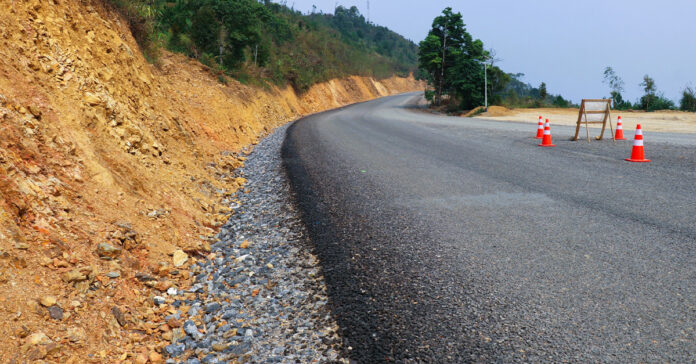
National Road No. 22, commonly known as Phou Kao Lak, which traverses this notorious mountain stretch connecting Vientiane and Luang Prabang provinces, reopened on 3 April, following months of rehabilitation work that had severely restricted access along the route.

The entire 68.5-kilometer road stretch from Viengkeo village in Kasi district, Vientiane Province, to Pongdong village in Nan district, Luang Prabang is now open to all vehicles.

Rehabilitation began in late October 2025, initially limiting travel to specific windows before easing to private vehicles only from 1 February 2026. 

The full reopening now welcomes all vehicle categories, accompanied by a newly introduced toll collection policy.

Motorbikes, private cars, government vehicles, and ambulances are fully exempt. Empty buses and vans without passengers also pass through at no charge.

Commercial operators, however, will pay fees based on vehicle size and load. 

A loaded six-wheel pickup is charged LAK 200,000 (around USD 9), while larger six-to-eight-wheel trucks pay up to 600,000 LAK (USD 27) when loaded. The heaviest vehicles,  trucks with 22 or more wheels, face a maximum toll of 2,020,000 LAK (approximately USD 91) under full load. 

Motorists wishing to avoid the toll are encouraged to use National Road No. 13 North as an alternate route.

Laos Auditors Uncover Billions in Budget Violations in 2025

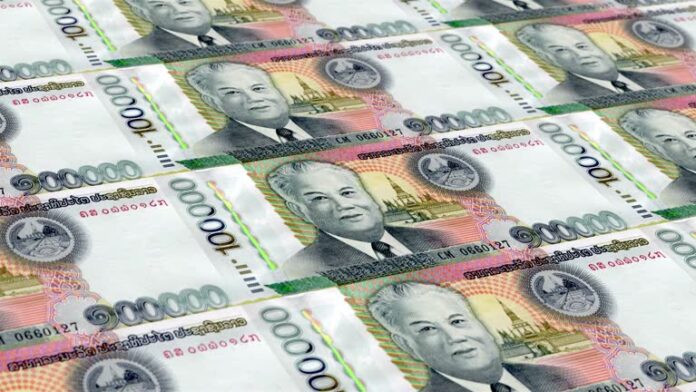
Lao Kip Money (Photo: istock)

Laos’ State Audit Office audited 154 targets in 2025, hitting 100 percent of its annual plan and recovering LAK 5,303.17 billion (approximately USD 244 million) and USD 310,000 from the state budget.

State Audit Office President Viengthavisone Thepphachan chaired the 2026 National State Audit Conference, which opened on 6 April in Vientiane and runs through 7 April.

Presenting the annual report, Director of the Audit Quality Assessment Department Sengphet Syhavong highlighted the inclusion of audit work in the 2025 Constitution as a key milestone, giving the State Audit Office greater authority to conduct independent audits.

The conference put particular focus on high-risk sectors.

Auditors found evidence of excessive extraction in pilot gold mining operations. They also examined special economic zones, pressing for faster revenue transfers to the state budget from investment projects and state-owned enterprises.

Five Years of Growing Enforcement

The 2025 results close out a strong five-year run, according to previous reports.

Between 2021 and 2025, the State Audit Office completed 611 audit cases, 102 percent of its five-year target, and uncovered LAK 37,600 billion (approximately USD 1.8 billion) in budget discipline violations, Viengthavisone told the 10th National Assembly on 25 March.

Recovery rates climbed sharply over the period. In 2021, auditors recovered just 5.87 percent of identified violations. By 2024, that figure had reached nearly 48 percent. The 2025 violation total of LAK 12,033 billion (approximately USD 555 million) is the highest single-year figure on record, with final recovery numbers due by end of 2026. Total recoveries across the five years exceeded LAK 7,000 billion (approximately USD 323 million).

The findings drew a direct response from Prime Minister Sonexay Siphandone.

At the same National Assembly session on 26 March, he called for a major overhaul of audit and inspection systems, pointing to unrecoverable state assets, overlapping institutional roles, and the need for stronger enforcement and digital modernisation.

For 2026–2030, the State Audit Office is targeting 620 audits and an 80 percent annual resolution rate. The plan rests on six pillars: organisational restructuring, legal reform, human resource development, professional audit strengthening, digital modernisation, and international cooperation.

Power Automation Partners TBEA to Expand Power Equipment Portfolio

Collaboration establishes exclusive distributorship and strengthens PA’s engineering capabilities through knowledge transfer.

SINGAPORE, April 6, 2026 /PRNewswire/ — Power Automation (PA), a wholly-owned subsidiary of SP Group, announced today that it has signed an exclusive distributorship agreement with global power solutions provider TBEA Co., Ltd. (TBEA), which will enable PA to expand its portfolio of power equipment and solutions in Singapore.
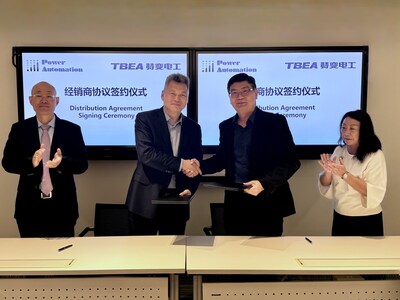
Power Automation (PA), the engineering services arm of SP Group, has signed a distributorship agreement with TBEA Co., Ltd, a leading global energy equipment manufacturer and system solution provider. (from left) Mr Li Bianqu, Director, TBEA; Mr Luo Jun, Managing Director, TBEA Electrical Equipment Group; Mr Brandon Chia, Managing Director, Power Automation; and Mrs Jeanne Cheng, Chairman, Power Automation, at the signing ceremony.

PA is Singapore’s leading engineering services and technology solutions provider specialising in power systems automation and digitalisation. This collaboration builds on PA’s strong track record in Singapore’s power sector and supports its continued expansion of capabilities to serve utilities and infrastructure developers in Singapore.

Under the agreement, PA will be the exclusive distributor to TBEA’s portfolio of primary power equipment and solutions in Singapore, including gas-insulated and air-insulated switchgear, power and distribution transformers, and reactors, which are critical components in the construction, expansion and upgrading of power networks. The partnership will also include technical training and knowledge transfer from TBEA to PA’s engineering team, strengthening local capabilities in in-market engineering, system integration, installation, testing, commissioning and lifecycle management.

This complements PA’s existing strengths in grid automation, protection systems and digital monitoring & control solutions.  With the addition of TBEA’s primary power equipment, PA will be able to provide one stop support for power infrastructure projects with integrated physical and digital solution capabilities across the asset lifecycle.

“Power networks are becoming increasingly complex as electricity demand grows, energy systems evolve, and the energy transition accelerates. Through this partnership with TBEA, PA will broaden the range of equipment and solutions we can bring to our customers, while strengthening our engineering and delivery capabilities. By combining TBEA’s equipment expertise with PA’s engineering and system integration capabilities, we are well positioned to support customers’ demand for the continued development of reliable and resilient power infrastructure in Singapore,” said Brandon Chia, Managing Director of PA.

“We look forward to working closely with PA to deliver reliable, high-quality energy solutions to Singapore’s market, contributing to the country’s energy security and sustainable development goals. This collaboration also reflects the deepening economic and trade ties between China and Singapore, and we are proud to play a part in fostering bilateral cooperation in the energy sector,” said Li Bianqu, Director of TBEA Co. Ltd., Chairman of TBEA International Engineering & Contracting Company.

TBEA is a leading global energy equipment manufacturer and system solution provider, having the world’s largest annual production capacity for transformers and its products & projects covering more than 90 countries and regions. TBEA is among the few original equipment manufacturers globally with established Ultra-High Voltage (UHV) transformer capabilities, a benchmark of technical credibility in the power transmission industry.  In the new energy front, TBEA ranks among the world’s top Engineering, Procurement, and Construction companies in terms of installed solar capacity. TBEA recorded a revenue of CNY 97.8B in FY2024 and CNY 72.9B for Q1-Q3 2025.

About Power Automation

Established in 1996, Power Automation (PA) is a leading engineering services and technology solutions provider for power systems automation and digitalisation. PA combines deep utility domain expertise with strong system integration capabilities to support the reliable and efficient operation of power infrastructure across grid control systems, substation automation, protection systems, and smart utility asset management.

In Singapore, PA has supplied the majority of protection systems and remote terminal units used in the national transmission and distribution networks. Beyond Singapore, PA has delivered mission-critical automation and control systems for utilities and infrastructure operators across Asia, supporting the modernisation, digitalisation and resilience of power networks.

Power Automation is a wholly-owned subsidiary of SP Group.

About TBEA

Established in 1988, TBEA is a leading global energy equipment manufacturer and system solution provider. It is a national high-tech enterprise group and a large-scale energy equipment manufacturing conglomerate, listed on the Shanghai Stock Exchange (stock code: 600089) in 1997, known as “the first transformer stock in China”.

TBEA focuses on three core businesses: power transmission and distribution equipment, new energy, and new materials. As a global leader in transformer manufacturing, it boasts the world’s largest annual production capacity and provides a complete range of products up to ±1100kV DC and 1000kV AC, including transformers, reactors, switchgears, power cables, GIL and secondary protection systems, with core technologies such as UHV converter transformers reaching international advanced levels.

In the new energy sector, it integrates the entire industrial chain from polysilicon, silicon wafers, PV modules and inverters to EPC and operation and maintenance for solar and wind power plants, ranking among the world’s top companies in terms of installed PV EPC capacity. It also develops silicon-based and aluminum-based new materials and has entered the top tier of international supply chains.

TBEA operates 21 domestic industrial parks and three overseas manufacturing bases, with its products and projects covering more than 90 countries and regions, and overseas revenue accounting for over 40% of its total income.

TBEA owns more than 1,000 core patents and leads the formulation of over 80% of China’s UHV standards. It has been ranked 60th in ENR’s Top Global Contractors and 124th among the World’s Top 500 Machinery Enterprises. Committed to green and low-carbon development, TBEA provides intelligent, reliable and eco-friendly energy solutions for the global energy transition. Its mission is to create value for customers, offer development platforms for employees and opportunities for partners, and promote global green energy development, while its vision is to become a world-class, globally trusted high-tech enterprise group providing green and smart energy solutions.


ASEAN+3 Confronts Severe Energy Shock from a Position of Strength

SINGAPORE, April 6, 2026 /PRNewswire/ — AMRO today released its annual flagship report, the ASEAN+3 Regional Economic Outlook (AREO) 2026, projecting regional growth of 4.0 percent in both 2026 and 2027. While the region has been supported by stronger-than-expected growth, low inflation, and improved external buffers, the ongoing conflict in the Middle East and disruptions to the global energy supply have materially increased downside risks to the outlook.

“The ASEAN+3 region entered 2026 from a position of strength, but the Middle East conflict has shifted the balance of risks to the downside,” said AMRO Chief Economist Dong He. “That said, the region is better placed than in earlier episodes to navigate an energy shock – its economies are more energy-efficient and less oil-dependent, entered this period with low inflation, and most retain meaningful policy space to respond.”

The region expanded by 4.3 percent in 2025, well above the 3.8 percent projected in the immediate aftermath of the April 2025 tariff shock. Economic activity remained supported by firm domestic demand, robust exports – boosted by AI-driven semiconductor demand – sustained investment, and strengthening intraregional economic linkages. Amid higher global energy prices, AREO 2026 forecasts headline inflation to rise from 0.9 percent in 2025 to 1.4 percent in 2026 and 1.5 percent in 2027.

The impact of the Middle East conflict on the region will hinge on its duration. If prolonged, the shock could become more widespread and persistent, extending beyond energy markets to affect industrial inputs, logistics, food prices, tourism, and remittances. Its effects are also likely to vary across member economies depending on their exposure to imported energy and key commodities, available buffers, and domestic policy space.

He said: “As the global economy is battered by one shock after another, preserving policy flexibility is critical to preventing worse outcomes such as stagflation. Central banks should maintain orderly market conditions and financial stability, and act decisively should supply shocks lead to sustained inflation. On the fiscal side, governments should prioritize targeted support for vulnerable groups, while avoiding broad-based measures that could fuel inflation or undermine fiscal sustainability.”

The report also highlights a fundamental structural transformation underpinning the region’s resilience. Over the past two decades, ASEAN+3 has become more regionally anchored, with denser and more interconnected production networks and a decisive shift toward intraregional sources of demand. The share of the region’s value-added exports to the US has declined from about one-third to 20 percent, while the share absorbed within the region has risen to nearly 30 percent.

ASEAN+3 is now the world’s largest market, accounting for 28 percent of global final demand. “The long-standing view of the region as the world’s factory – producing primarily for external demand outside the region – is increasingly outdated,” said He. “Deepening regional cooperation, accelerating the green transition, and maintaining open trade and investment flows will be essential to sustaining this structural transformation and strengthening resilience.”

The full AREO 2026 report is available on the AMRO website.

Read statement by AMRO Director/CEO Yasuto Watanabe here.

‒ ENDS –

About AMRO

AMRO is an international organization established to support macroeconomic resilience and financial stability of the ASEAN+3 region, comprising members of the Association of Southeast Asia Nations (ASEAN) and China; Hong Kong, China; Japan; and Korea. AMRO’s mandate is to conduct macroeconomic surveillance, support regional financial arrangements, and provide technical assistance to the members. AMRO also serves as a regional knowledge hub and provides support to ASEAN+3 financial cooperation.

Visit our website and follow us on LinkedIn for more updates.

ASEAN+3 Confronts Severe Energy Shock from a Position of Strength

SINGAPORE, April 6, 2026 /PRNewswire/ — AMRO today released its annual flagship report, the ASEAN+3 Regional Economic Outlook (AREO) 2026, projecting regional growth of 4.0 percent in both 2026 and 2027. While the region has been supported by stronger-than-expected growth, low inflation, and improved external buffers, the ongoing conflict in the Middle East and disruptions to the global energy supply have materially increased downside risks to the outlook.

“The ASEAN+3 region entered 2026 from a position of strength, but the Middle East conflict has shifted the balance of risks to the downside,” said AMRO Chief Economist Dong He. “That said, the region is better placed than in earlier episodes to navigate an energy shock – its economies are more energy-efficient and less oil-dependent, entered this period with low inflation, and most retain meaningful policy space to respond.”

The region expanded by 4.3 percent in 2025, well above the 3.8 percent projected in the immediate aftermath of the April 2025 tariff shock. Economic activity remained supported by firm domestic demand, robust exports – boosted by AI-driven semiconductor demand – sustained investment, and strengthening intraregional economic linkages. Amid higher global energy prices, AREO 2026 forecasts headline inflation to rise from 0.9 percent in 2025 to 1.4 percent in 2026 and 1.5 percent in 2027.

The impact of the Middle East conflict on the region will hinge on its duration. If prolonged, the shock could become more widespread and persistent, extending beyond energy markets to affect industrial inputs, logistics, food prices, tourism, and remittances. Its effects are also likely to vary across member economies depending on their exposure to imported energy and key commodities, available buffers, and domestic policy space.

He said: “As the global economy is battered by one shock after another, preserving policy flexibility is critical to preventing worse outcomes such as stagflation. Central banks should maintain orderly market conditions and financial stability, and act decisively should supply shocks lead to sustained inflation. On the fiscal side, governments should prioritize targeted support for vulnerable groups, while avoiding broad-based measures that could fuel inflation or undermine fiscal sustainability.”

The report also highlights a fundamental structural transformation underpinning the region’s resilience. Over the past two decades, ASEAN+3 has become more regionally anchored, with denser and more interconnected production networks and a decisive shift toward intraregional sources of demand. The share of the region’s value-added exports to the US has declined from about one-third to 20 percent, while the share absorbed within the region has risen to nearly 30 percent.

ASEAN+3 is now the world’s largest market, accounting for 28 percent of global final demand. “The long-standing view of the region as the world’s factory – producing primarily for external demand outside the region – is increasingly outdated,” said He. “Deepening regional cooperation, accelerating the green transition, and maintaining open trade and investment flows will be essential to sustaining this structural transformation and strengthening resilience.”

The full AREO 2026 report is available on the AMRO website.

Read statement by AMRO Director/CEO Yasuto Watanabe here.

‒ ENDS –

About AMRO

AMRO is an international organization established to support macroeconomic resilience and financial stability of the ASEAN+3 region, comprising members of the Association of Southeast Asia Nations (ASEAN) and China; Hong Kong, China; Japan; and Korea. AMRO’s mandate is to conduct macroeconomic surveillance, support regional financial arrangements, and provide technical assistance to the members. AMRO also serves as a regional knowledge hub and provides support to ASEAN+3 financial cooperation.

Visit our website and follow us on LinkedIn for more updates.

ASEAN+3 Confronts Severe Energy Shock from a Position of Strength

SINGAPORE, April 6, 2026 /PRNewswire/ — AMRO today released its annual flagship report, the ASEAN+3 Regional Economic Outlook (AREO) 2026, projecting regional growth of 4.0 percent in both 2026 and 2027. While the region has been supported by stronger-than-expected growth, low inflation, and improved external buffers, the ongoing conflict in the Middle East and disruptions to the global energy supply have materially increased downside risks to the outlook.

“The ASEAN+3 region entered 2026 from a position of strength, but the Middle East conflict has shifted the balance of risks to the downside,” said AMRO Chief Economist Dong He. “That said, the region is better placed than in earlier episodes to navigate an energy shock – its economies are more energy-efficient and less oil-dependent, entered this period with low inflation, and most retain meaningful policy space to respond.”

The region expanded by 4.3 percent in 2025, well above the 3.8 percent projected in the immediate aftermath of the April 2025 tariff shock. Economic activity remained supported by firm domestic demand, robust exports – boosted by AI-driven semiconductor demand – sustained investment, and strengthening intraregional economic linkages. Amid higher global energy prices, AREO 2026 forecasts headline inflation to rise from 0.9 percent in 2025 to 1.4 percent in 2026 and 1.5 percent in 2027.

The impact of the Middle East conflict on the region will hinge on its duration. If prolonged, the shock could become more widespread and persistent, extending beyond energy markets to affect industrial inputs, logistics, food prices, tourism, and remittances. Its effects are also likely to vary across member economies depending on their exposure to imported energy and key commodities, available buffers, and domestic policy space.

He said: “As the global economy is battered by one shock after another, preserving policy flexibility is critical to preventing worse outcomes such as stagflation. Central banks should maintain orderly market conditions and financial stability, and act decisively should supply shocks lead to sustained inflation. On the fiscal side, governments should prioritize targeted support for vulnerable groups, while avoiding broad-based measures that could fuel inflation or undermine fiscal sustainability.”

The report also highlights a fundamental structural transformation underpinning the region’s resilience. Over the past two decades, ASEAN+3 has become more regionally anchored, with denser and more interconnected production networks and a decisive shift toward intraregional sources of demand. The share of the region’s value-added exports to the US has declined from about one-third to 20 percent, while the share absorbed within the region has risen to nearly 30 percent.

ASEAN+3 is now the world’s largest market, accounting for 28 percent of global final demand. “The long-standing view of the region as the world’s factory – producing primarily for external demand outside the region – is increasingly outdated,” said He. “Deepening regional cooperation, accelerating the green transition, and maintaining open trade and investment flows will be essential to sustaining this structural transformation and strengthening resilience.”

The full AREO 2026 report is available on the AMRO website.

Read statement by AMRO Director/CEO Yasuto Watanabe here.

‒ ENDS –

About AMRO

AMRO is an international organization established to support macroeconomic resilience and financial stability of the ASEAN+3 region, comprising members of the Association of Southeast Asia Nations (ASEAN) and China; Hong Kong, China; Japan; and Korea. AMRO’s mandate is to conduct macroeconomic surveillance, support regional financial arrangements, and provide technical assistance to the members. AMRO also serves as a regional knowledge hub and provides support to ASEAN+3 financial cooperation.

Visit our website and follow us on LinkedIn for more updates.