Home Blog Page 660

Laos Auditors Uncover Billions in Budget Violations in 2025

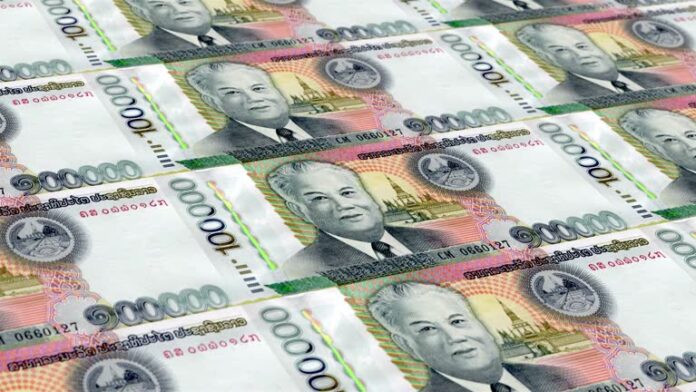
Lao Kip Money (Photo: istock)

Laos’ State Audit Office audited 154 targets in 2025, hitting 100 percent of its annual plan and recovering LAK 5,303.17 billion (approximately USD 244 million) and USD 310,000 from the state budget.

State Audit Office President Viengthavisone Thepphachan chaired the 2026 National State Audit Conference, which opened on 6 April in Vientiane and runs through 7 April.

Presenting the annual report, Director of the Audit Quality Assessment Department Sengphet Syhavong highlighted the inclusion of audit work in the 2025 Constitution as a key milestone, giving the State Audit Office greater authority to conduct independent audits.

The conference put particular focus on high-risk sectors.

Auditors found evidence of excessive extraction in pilot gold mining operations. They also examined special economic zones, pressing for faster revenue transfers to the state budget from investment projects and state-owned enterprises.

Five Years of Growing Enforcement

The 2025 results close out a strong five-year run, according to previous reports.

Between 2021 and 2025, the State Audit Office completed 611 audit cases, 102 percent of its five-year target, and uncovered LAK 37,600 billion (approximately USD 1.8 billion) in budget discipline violations, Viengthavisone told the 10th National Assembly on 25 March.

Recovery rates climbed sharply over the period. In 2021, auditors recovered just 5.87 percent of identified violations. By 2024, that figure had reached nearly 48 percent. The 2025 violation total of LAK 12,033 billion (approximately USD 555 million) is the highest single-year figure on record, with final recovery numbers due by end of 2026. Total recoveries across the five years exceeded LAK 7,000 billion (approximately USD 323 million).

The findings drew a direct response from Prime Minister Sonexay Siphandone.

At the same National Assembly session on 26 March, he called for a major overhaul of audit and inspection systems, pointing to unrecoverable state assets, overlapping institutional roles, and the need for stronger enforcement and digital modernisation.

For 2026–2030, the State Audit Office is targeting 620 audits and an 80 percent annual resolution rate. The plan rests on six pillars: organisational restructuring, legal reform, human resource development, professional audit strengthening, digital modernisation, and international cooperation.

Power Automation Partners TBEA to Expand Power Equipment Portfolio

Collaboration establishes exclusive distributorship and strengthens PA’s engineering capabilities through knowledge transfer.

SINGAPORE, April 6, 2026 /PRNewswire/ — Power Automation (PA), a wholly-owned subsidiary of SP Group, announced today that it has signed an exclusive distributorship agreement with global power solutions provider TBEA Co., Ltd. (TBEA), which will enable PA to expand its portfolio of power equipment and solutions in Singapore.
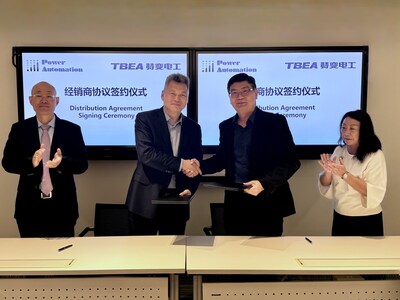
Power Automation (PA), the engineering services arm of SP Group, has signed a distributorship agreement with TBEA Co., Ltd, a leading global energy equipment manufacturer and system solution provider. (from left) Mr Li Bianqu, Director, TBEA; Mr Luo Jun, Managing Director, TBEA Electrical Equipment Group; Mr Brandon Chia, Managing Director, Power Automation; and Mrs Jeanne Cheng, Chairman, Power Automation, at the signing ceremony.

PA is Singapore’s leading engineering services and technology solutions provider specialising in power systems automation and digitalisation. This collaboration builds on PA’s strong track record in Singapore’s power sector and supports its continued expansion of capabilities to serve utilities and infrastructure developers in Singapore.

Under the agreement, PA will be the exclusive distributor to TBEA’s portfolio of primary power equipment and solutions in Singapore, including gas-insulated and air-insulated switchgear, power and distribution transformers, and reactors, which are critical components in the construction, expansion and upgrading of power networks. The partnership will also include technical training and knowledge transfer from TBEA to PA’s engineering team, strengthening local capabilities in in-market engineering, system integration, installation, testing, commissioning and lifecycle management.

This complements PA’s existing strengths in grid automation, protection systems and digital monitoring & control solutions.  With the addition of TBEA’s primary power equipment, PA will be able to provide one stop support for power infrastructure projects with integrated physical and digital solution capabilities across the asset lifecycle.

“Power networks are becoming increasingly complex as electricity demand grows, energy systems evolve, and the energy transition accelerates. Through this partnership with TBEA, PA will broaden the range of equipment and solutions we can bring to our customers, while strengthening our engineering and delivery capabilities. By combining TBEA’s equipment expertise with PA’s engineering and system integration capabilities, we are well positioned to support customers’ demand for the continued development of reliable and resilient power infrastructure in Singapore,” said Brandon Chia, Managing Director of PA.

“We look forward to working closely with PA to deliver reliable, high-quality energy solutions to Singapore’s market, contributing to the country’s energy security and sustainable development goals. This collaboration also reflects the deepening economic and trade ties between China and Singapore, and we are proud to play a part in fostering bilateral cooperation in the energy sector,” said Li Bianqu, Director of TBEA Co. Ltd., Chairman of TBEA International Engineering & Contracting Company.

TBEA is a leading global energy equipment manufacturer and system solution provider, having the world’s largest annual production capacity for transformers and its products & projects covering more than 90 countries and regions. TBEA is among the few original equipment manufacturers globally with established Ultra-High Voltage (UHV) transformer capabilities, a benchmark of technical credibility in the power transmission industry.  In the new energy front, TBEA ranks among the world’s top Engineering, Procurement, and Construction companies in terms of installed solar capacity. TBEA recorded a revenue of CNY 97.8B in FY2024 and CNY 72.9B for Q1-Q3 2025.

About Power Automation

Established in 1996, Power Automation (PA) is a leading engineering services and technology solutions provider for power systems automation and digitalisation. PA combines deep utility domain expertise with strong system integration capabilities to support the reliable and efficient operation of power infrastructure across grid control systems, substation automation, protection systems, and smart utility asset management.

In Singapore, PA has supplied the majority of protection systems and remote terminal units used in the national transmission and distribution networks. Beyond Singapore, PA has delivered mission-critical automation and control systems for utilities and infrastructure operators across Asia, supporting the modernisation, digitalisation and resilience of power networks.

Power Automation is a wholly-owned subsidiary of SP Group.

About TBEA

Established in 1988, TBEA is a leading global energy equipment manufacturer and system solution provider. It is a national high-tech enterprise group and a large-scale energy equipment manufacturing conglomerate, listed on the Shanghai Stock Exchange (stock code: 600089) in 1997, known as “the first transformer stock in China”.

TBEA focuses on three core businesses: power transmission and distribution equipment, new energy, and new materials. As a global leader in transformer manufacturing, it boasts the world’s largest annual production capacity and provides a complete range of products up to ±1100kV DC and 1000kV AC, including transformers, reactors, switchgears, power cables, GIL and secondary protection systems, with core technologies such as UHV converter transformers reaching international advanced levels.

In the new energy sector, it integrates the entire industrial chain from polysilicon, silicon wafers, PV modules and inverters to EPC and operation and maintenance for solar and wind power plants, ranking among the world’s top companies in terms of installed PV EPC capacity. It also develops silicon-based and aluminum-based new materials and has entered the top tier of international supply chains.

TBEA operates 21 domestic industrial parks and three overseas manufacturing bases, with its products and projects covering more than 90 countries and regions, and overseas revenue accounting for over 40% of its total income.

TBEA owns more than 1,000 core patents and leads the formulation of over 80% of China’s UHV standards. It has been ranked 60th in ENR’s Top Global Contractors and 124th among the World’s Top 500 Machinery Enterprises. Committed to green and low-carbon development, TBEA provides intelligent, reliable and eco-friendly energy solutions for the global energy transition. Its mission is to create value for customers, offer development platforms for employees and opportunities for partners, and promote global green energy development, while its vision is to become a world-class, globally trusted high-tech enterprise group providing green and smart energy solutions.


ASEAN+3 Confronts Severe Energy Shock from a Position of Strength

SINGAPORE, April 6, 2026 /PRNewswire/ — AMRO today released its annual flagship report, the ASEAN+3 Regional Economic Outlook (AREO) 2026, projecting regional growth of 4.0 percent in both 2026 and 2027. While the region has been supported by stronger-than-expected growth, low inflation, and improved external buffers, the ongoing conflict in the Middle East and disruptions to the global energy supply have materially increased downside risks to the outlook.

“The ASEAN+3 region entered 2026 from a position of strength, but the Middle East conflict has shifted the balance of risks to the downside,” said AMRO Chief Economist Dong He. “That said, the region is better placed than in earlier episodes to navigate an energy shock – its economies are more energy-efficient and less oil-dependent, entered this period with low inflation, and most retain meaningful policy space to respond.”

The region expanded by 4.3 percent in 2025, well above the 3.8 percent projected in the immediate aftermath of the April 2025 tariff shock. Economic activity remained supported by firm domestic demand, robust exports – boosted by AI-driven semiconductor demand – sustained investment, and strengthening intraregional economic linkages. Amid higher global energy prices, AREO 2026 forecasts headline inflation to rise from 0.9 percent in 2025 to 1.4 percent in 2026 and 1.5 percent in 2027.

The impact of the Middle East conflict on the region will hinge on its duration. If prolonged, the shock could become more widespread and persistent, extending beyond energy markets to affect industrial inputs, logistics, food prices, tourism, and remittances. Its effects are also likely to vary across member economies depending on their exposure to imported energy and key commodities, available buffers, and domestic policy space.

He said: “As the global economy is battered by one shock after another, preserving policy flexibility is critical to preventing worse outcomes such as stagflation. Central banks should maintain orderly market conditions and financial stability, and act decisively should supply shocks lead to sustained inflation. On the fiscal side, governments should prioritize targeted support for vulnerable groups, while avoiding broad-based measures that could fuel inflation or undermine fiscal sustainability.”

The report also highlights a fundamental structural transformation underpinning the region’s resilience. Over the past two decades, ASEAN+3 has become more regionally anchored, with denser and more interconnected production networks and a decisive shift toward intraregional sources of demand. The share of the region’s value-added exports to the US has declined from about one-third to 20 percent, while the share absorbed within the region has risen to nearly 30 percent.

ASEAN+3 is now the world’s largest market, accounting for 28 percent of global final demand. “The long-standing view of the region as the world’s factory – producing primarily for external demand outside the region – is increasingly outdated,” said He. “Deepening regional cooperation, accelerating the green transition, and maintaining open trade and investment flows will be essential to sustaining this structural transformation and strengthening resilience.”

The full AREO 2026 report is available on the AMRO website.

Read statement by AMRO Director/CEO Yasuto Watanabe here.

‒ ENDS –

About AMRO

AMRO is an international organization established to support macroeconomic resilience and financial stability of the ASEAN+3 region, comprising members of the Association of Southeast Asia Nations (ASEAN) and China; Hong Kong, China; Japan; and Korea. AMRO’s mandate is to conduct macroeconomic surveillance, support regional financial arrangements, and provide technical assistance to the members. AMRO also serves as a regional knowledge hub and provides support to ASEAN+3 financial cooperation.

Visit our website and follow us on LinkedIn for more updates.

ASEAN+3 Confronts Severe Energy Shock from a Position of Strength

SINGAPORE, April 6, 2026 /PRNewswire/ — AMRO today released its annual flagship report, the ASEAN+3 Regional Economic Outlook (AREO) 2026, projecting regional growth of 4.0 percent in both 2026 and 2027. While the region has been supported by stronger-than-expected growth, low inflation, and improved external buffers, the ongoing conflict in the Middle East and disruptions to the global energy supply have materially increased downside risks to the outlook.

“The ASEAN+3 region entered 2026 from a position of strength, but the Middle East conflict has shifted the balance of risks to the downside,” said AMRO Chief Economist Dong He. “That said, the region is better placed than in earlier episodes to navigate an energy shock – its economies are more energy-efficient and less oil-dependent, entered this period with low inflation, and most retain meaningful policy space to respond.”

The region expanded by 4.3 percent in 2025, well above the 3.8 percent projected in the immediate aftermath of the April 2025 tariff shock. Economic activity remained supported by firm domestic demand, robust exports – boosted by AI-driven semiconductor demand – sustained investment, and strengthening intraregional economic linkages. Amid higher global energy prices, AREO 2026 forecasts headline inflation to rise from 0.9 percent in 2025 to 1.4 percent in 2026 and 1.5 percent in 2027.

The impact of the Middle East conflict on the region will hinge on its duration. If prolonged, the shock could become more widespread and persistent, extending beyond energy markets to affect industrial inputs, logistics, food prices, tourism, and remittances. Its effects are also likely to vary across member economies depending on their exposure to imported energy and key commodities, available buffers, and domestic policy space.

He said: “As the global economy is battered by one shock after another, preserving policy flexibility is critical to preventing worse outcomes such as stagflation. Central banks should maintain orderly market conditions and financial stability, and act decisively should supply shocks lead to sustained inflation. On the fiscal side, governments should prioritize targeted support for vulnerable groups, while avoiding broad-based measures that could fuel inflation or undermine fiscal sustainability.”

The report also highlights a fundamental structural transformation underpinning the region’s resilience. Over the past two decades, ASEAN+3 has become more regionally anchored, with denser and more interconnected production networks and a decisive shift toward intraregional sources of demand. The share of the region’s value-added exports to the US has declined from about one-third to 20 percent, while the share absorbed within the region has risen to nearly 30 percent.

ASEAN+3 is now the world’s largest market, accounting for 28 percent of global final demand. “The long-standing view of the region as the world’s factory – producing primarily for external demand outside the region – is increasingly outdated,” said He. “Deepening regional cooperation, accelerating the green transition, and maintaining open trade and investment flows will be essential to sustaining this structural transformation and strengthening resilience.”

The full AREO 2026 report is available on the AMRO website.

Read statement by AMRO Director/CEO Yasuto Watanabe here.

‒ ENDS –

About AMRO

AMRO is an international organization established to support macroeconomic resilience and financial stability of the ASEAN+3 region, comprising members of the Association of Southeast Asia Nations (ASEAN) and China; Hong Kong, China; Japan; and Korea. AMRO’s mandate is to conduct macroeconomic surveillance, support regional financial arrangements, and provide technical assistance to the members. AMRO also serves as a regional knowledge hub and provides support to ASEAN+3 financial cooperation.

Visit our website and follow us on LinkedIn for more updates.

ASEAN+3 Confronts Severe Energy Shock from a Position of Strength

SINGAPORE, April 6, 2026 /PRNewswire/ — AMRO today released its annual flagship report, the ASEAN+3 Regional Economic Outlook (AREO) 2026, projecting regional growth of 4.0 percent in both 2026 and 2027. While the region has been supported by stronger-than-expected growth, low inflation, and improved external buffers, the ongoing conflict in the Middle East and disruptions to the global energy supply have materially increased downside risks to the outlook.

“The ASEAN+3 region entered 2026 from a position of strength, but the Middle East conflict has shifted the balance of risks to the downside,” said AMRO Chief Economist Dong He. “That said, the region is better placed than in earlier episodes to navigate an energy shock – its economies are more energy-efficient and less oil-dependent, entered this period with low inflation, and most retain meaningful policy space to respond.”

The region expanded by 4.3 percent in 2025, well above the 3.8 percent projected in the immediate aftermath of the April 2025 tariff shock. Economic activity remained supported by firm domestic demand, robust exports – boosted by AI-driven semiconductor demand – sustained investment, and strengthening intraregional economic linkages. Amid higher global energy prices, AREO 2026 forecasts headline inflation to rise from 0.9 percent in 2025 to 1.4 percent in 2026 and 1.5 percent in 2027.

The impact of the Middle East conflict on the region will hinge on its duration. If prolonged, the shock could become more widespread and persistent, extending beyond energy markets to affect industrial inputs, logistics, food prices, tourism, and remittances. Its effects are also likely to vary across member economies depending on their exposure to imported energy and key commodities, available buffers, and domestic policy space.

He said: “As the global economy is battered by one shock after another, preserving policy flexibility is critical to preventing worse outcomes such as stagflation. Central banks should maintain orderly market conditions and financial stability, and act decisively should supply shocks lead to sustained inflation. On the fiscal side, governments should prioritize targeted support for vulnerable groups, while avoiding broad-based measures that could fuel inflation or undermine fiscal sustainability.”

The report also highlights a fundamental structural transformation underpinning the region’s resilience. Over the past two decades, ASEAN+3 has become more regionally anchored, with denser and more interconnected production networks and a decisive shift toward intraregional sources of demand. The share of the region’s value-added exports to the US has declined from about one-third to 20 percent, while the share absorbed within the region has risen to nearly 30 percent.

ASEAN+3 is now the world’s largest market, accounting for 28 percent of global final demand. “The long-standing view of the region as the world’s factory – producing primarily for external demand outside the region – is increasingly outdated,” said He. “Deepening regional cooperation, accelerating the green transition, and maintaining open trade and investment flows will be essential to sustaining this structural transformation and strengthening resilience.”

The full AREO 2026 report is available on the AMRO website.

Read statement by AMRO Director/CEO Yasuto Watanabe here.

‒ ENDS –

About AMRO

AMRO is an international organization established to support macroeconomic resilience and financial stability of the ASEAN+3 region, comprising members of the Association of Southeast Asia Nations (ASEAN) and China; Hong Kong, China; Japan; and Korea. AMRO’s mandate is to conduct macroeconomic surveillance, support regional financial arrangements, and provide technical assistance to the members. AMRO also serves as a regional knowledge hub and provides support to ASEAN+3 financial cooperation.

Visit our website and follow us on LinkedIn for more updates.

GC Biopharma Enhances IVIG Safety Profile with Advanced Prothrombotic Impurity Detection Technology

  • Proprietary analytical method for precise Factor XI (FXI) measurement published in the Journal of Microbiology and Biotechnology
  • Novel IgG Blocker eliminates heterophilic antibody interference, ensuring clinical-grade purity and mitigating thromboembolic risks

YONGIN, South Korea, April 6, 2026 /PRNewswire/ — GC Biopharma (006280.KS), a global leader in plasma-derived protein therapies, today announced a significant advancement in the safety monitoring of intravenous immunoglobulin (IVIG). The company has developed and validated a proprietary enzyme-linked immunosorbent assay (ELISA) that effectively mitigates heterophilic antibody interference to precisely measure Factor XI (FXI) levels—a critical impurity linked to thromboembolic risks.

The study, titled “Development and Validation of an Enzyme-Linked Immunosorbent Assay for Measuring Factor XI in Intravenous Immunoglobulin Products by Mitigating Heterophilic Antibody Interference,” was published in the April 2026 issue of the Journal of Microbiology and Biotechnology (JMB).

Thromboembolic events associated with IVIG therapy have been linked to activated coagulation factors, prompting global regulatory bodies, including the U.S. FDA, to mandate rigorous monitoring of FXI levels. However, traditional analytical methods often encounter technical limitations due to high-concentration IgG—the primary component of IVIG—interfering with detection signals. This interference frequently results in “false-positive” readings or an inability to detect trace impurities, which can hinder accurate quality control during manufacturing.

To address these challenges, GC Biopharma’s R&D team engineered an enhanced assay incorporating a selective IgG Blocker. This innovative approach suppresses non-specific protein reactions, allowing for the isolated and precise measurement of FXI regardless of the IgG concentration in the sample. The platform has been fully validated in accordance with ICH Q2(R2) guidelines.

“By establishing this advanced analytical framework, we have significantly elevated our quality control capabilities for immunoglobulin therapies,” said Jae Uk Jeong, Head of R&D at GC Biopharma. “We remain committed to leveraging validated, precision-driven technologies to supply high-quality plasma derivatives to the global market, prioritizing patient safety and clinical excellence above all.”

About GC Biopharma

GC Biopharma (formerly known as Green Cross Corporation) is a biopharmaceutical company headquartered in Yong-in, South Korea. The company has over half a century of experience in the development and manufacturing of plasma derivatives and vaccines, and is expanding its global presence with successful US market entry of Alyglo®(intravenous immunoglobulin G) in 2024. In line with its mission to meet the demands of future healthcare, GC Biopharma continues to drive innovation by leveraging its core R&D capabilities in engineering of proteins, mRNAs, and lipid nanoparticle (LNP) drug delivery platform to develop therapeutics for the field of rare disease as well as I&I (Immunology & Inflammation). To learn more about the company, visit https://www.gcbiopharma.com/eng/

This press release may contain biopharmaceuticals in forward-looking statements, which express the current beliefs and expectations of GC Biopharma’s management. Such statements do not represent any guarantee by GC Biopharma or its management of future performance and involve known and unknown risks, uncertainties, and other factors. GC Biopharma undertakes no obligation to update or revise any forward-looking statement contained in this press release or any other forward-looking statements it may make, except as required by law or stock exchange rule.

GC Biopharma Contacts (Media)

Sohee Kim
shkim20@gccorp.com

Yelin Jun
yelin@gccorp.com

Yoonjae Na
yjy6520@gccorp.com

MyRepublic Launches MyRepublic Email Guard to Protect Singapore’s SMEs From Rising Email-Borne Cyber Threats


SINGAPORE – Media OutReach Newswire – 6 April 2026 – MyRepublic today announced the launch of MyRepublic Email Guard, a managed email security solution purpose-built to protect Singapore’s small and medium-sized businesses (SMEs) against phishing, malware, business email compromise, and other email-borne cyber threats. The launch is part of MyRepublic’s broader mission to ensure that Singapore’s SME community, the backbone of the local economy, is not left behind in an increasingly hostile cyber landscape.

MyRepublic Email Guard brings enterprise-grade email security to SMEs in Singapore.

Singapore’s SMEs account for 99% of all enterprises and employ nearly 70% of the local workforce, yet many remain chronically underserved in enterprise-grade cybersecurity. Email continues to be one of the most exploited attack vectors, with threat actors increasingly targeting resource-constrained businesses that lack the dedicated IT security teams of larger organisations. MyRepublic Email Guard is designed to close this protection gap, delivering a simple, effective, and locally supported solution that levels the playing field for SMEs without adding operational complexity.

Powered by Check Point, advanced email threat protection technology, MyRepublic Email Guard helps businesses detect and block malicious emails before they reach users’ inboxes. The solution is designed to support businesses using popular email platforms such as Microsoft 365 and Google Workspace, giving customers an additional layer of protection against modern threats.

“Singapore’s SMEs are the heartbeat of our economy, and protecting them from cyber threats is not just a business imperative. It is a national one,” said Lawrence Chan, Managing Director & Chief AI Officer, MyRepublic. “Far too many local businesses remain exposed simply because they cannot access or afford the cybersecurity tools available to larger enterprises. With MyRepublic Email Guard, we are changing that. We bring enterprise-grade protection to businesses that have long been underserved, backed by the local expertise and support they deserve.”

MyRepublic Email Guard combines advanced security technology with managed service support, allowing businesses to benefit from a more streamlined approach to email protection. The service is positioned as an all-in-one offering that includes deployment, ongoing management, and local support, helping customers reduce the burden on internal teams while improving cyber resilience.

“Enterprise-grade cybersecurity has been out of reach for the SMEs that need it most. That has to change,” said Imran Nazi, Head of ICT, MyRepublic. “MyRepublic Email Guard is built specifically for Singapore’s SMEs, where it is designed to be affordable, easy to adopt, and supported by a team that understands the local business environment. We want every SME in Singapore to have access to the same level of protection that large enterprises take for granted, because a safer SME ecosystem means a stronger Singapore.”

The launch of MyRepublic Email Guard marks a significant step in MyRepublic’s commitment to building a more cyber-resilient Singapore. Aligned with national efforts to strengthen digital security across all business segments, MyRepublic is focused on ensuring that SMEs, often the most targeted yet least protected segment, are equipped to defend themselves. By combining world-class technology from Check Point with localised managed service delivery, MyRepublic is bridging the cybersecurity gap for businesses that have historically been underserved.

MyRepublic Email Guard is now available for businesses in Singapore.

Hashtag: #MyRepublic #EmailSecurity #CyberSecurity #SMEs #DigitalSecurity #ManagedServices #EmailGuard


The issuer is solely responsible for the content of this announcement.

MyRepublic Broadband Pte Ltd

MyRepublic is a telecommunications and ICT services provider committed to delivering innovative digital solutions for consumers and businesses. In addition to connectivity services, MyRepublic supports businesses with a growing portfolio of ICT solutions, including cloud, cybersecurity, managed services, and digital enablement offerings.

TP Receives Frost & Sullivan’s 2026 India Company of the Year Recognition for Excellence in Customer Experience Management Services

This recognition highlights TP’s leadership in digital transformation, responsible AI adoption, and outcome-driven outsourced services.

SAN ANTONIO, April 6, 2026 /PRNewswire/ — Frost & Sullivan is pleased to announce that global digital services leader TP (formerly Teleperformance) has received its 2026 India Company of the Year Recognition in the customer experience management (CXM) services industry. This recognition underscores the ability of the company’s India operations to translate industry transformation into measurable business outcomes through digital innovation, ethical AI deployment, and a deeply human-centric operating model.

Frost & Sullivan evaluates organizations through a rigorous benchmarking process across two core dimensions: strategy effectiveness and strategy execution. TP in India demonstrated excellence across both dimensions by aligning its long-term customer experience management strategy with disciplined, scalable execution. As Krishna Baidya, Senior Director of Frost & Sullivan’s ICT Practice, observed, TP in India represents the next phase of the CXM industry, where service providers move beyond transactional delivery to orchestrated, insight-led customer journeys that balance automation with empathy, governance with agility, and scale with trust, positioning the company as a model for experience-led transformation in a rapidly evolving market.

The industry has evolved into a strategic growth engine for enterprises, driven by AI, hyper-personalization, data responsibility, and rising expectations for seamless omnichannel engagement. Within this context, TP has distinguished itself by operationalizing these megatrends rather than treating them as conceptual ambitions. Its approach reflects a shift from outsourcing to orchestration and from efficiency metrics to experience-led business outcomes.

Since beginning operations in India in 2001, TP built its largest and most diverse global delivery hub in the country. With more than 90,000 employees across 44 delivery centers, TP in India supports over 200 clients spanning BFSI, retail and eCommerce, healthcare, travel and hospitality, and technology. Designated as a Center of Excellence for BPS services including back-office operations, and AI solutions, the Indian organization plays a central role in shaping the Group’s global transformation strategy.

Innovation is embedded at the core of TP operating model. The proprietary TP.ai FAB is TP’s foundational AI backbone, an orchestration platform, built to integrate agentic AI, expert talent, and intelligent tools into vertical-specific solutions that deliver real business results. TP.ai FAB accelerates AI adoption and enables smarter, more adaptive operations at scale via synergy of advanced AI, skilled people, operational excellence, and deep industry insight. These capabilities have delivered tangible results, including significant reductions in average handle time and consistent improvements in service quality and customer satisfaction.

Equally important is TP’s emphasis on responsible AI and data governance across its India operations. The company’s compliance with global and local standards, including ISO certifications and India’s Digital Personal Data Protection Act, has made customer trust one of its competitive differentiators. Additionally, its investments in accessibility solutions, such as real-time voice-intelligence technologies, enhance fairness and inclusion while improving comprehension and confidence in voice-based interactions.

“This recognition reflects our continued focus on delivering strong client outcomes and driving transformation at scale. At TP, we are continuously innovating to help our clients build more meaningful and effective connections with their customers. Our deep domain expertise and disciplined client-centric approach enable us to set higher benchmarks for operational excellence and transformation across the industry. As a trusted partner to global enterprises, we remain focused on delivering measurable business impact and executing with consistency and precision,” said Maneesh Daga, Country Head – TP in India.

The customer-first approach at TP in India is reinforced through outcome-linked commercial models that tie value directly to measurable performance indicators, such as efficiency gains, quality improvements, and satisfaction uplift. This focus on transparency and shared accountability has resulted in near-total client renewals and sustained growth, supported by a diversified industry portfolio and geographically optimized delivery footprint.

Frost & Sullivan commends TP in India for setting a high benchmark in CXM strategy execution, innovation discipline, and market responsiveness. The company’s ability to harmonize AI-led transformation and ethical governance with the empathy, creativity, and judgment of EI is shaping the future of customer experience management in India and beyond.

Each year, Frost & Sullivan presents the Company of the Year recognition to an organization that demonstrates outstanding strategy development and implementation, resulting in measurable improvements in customer impact, competitive positioning, and long-term growth.

Frost & Sullivan Best Practices Recognition
Frost & Sullivan’s Best Practices Recognitions honor companies across regional and global markets that exhibit exceptional achievement and consistent excellence in areas such as leadership, technological innovation, customer experience, and strategic product development. Each recognition is the result of a rigorous analytical process in which Frost & Sullivan industry experts benchmark performance through comprehensive interviews, deep-dive analysis, and extensive secondary research. The goal is to identify true best-in-class organizations that are driving transformative growth and setting new industry standards.
Contact us: Start the discussion.

Contact:
Tarini Singh
E: Tarini.Singh@frost.com

About TP Group
TP is a global leader in digital business services which consistently seeks to blend the best of advanced technology with human empathy to deliver enhanced customer care that is simpler, faster, and safer for the world’s biggest brands and their customers. The Group’s comprehensive, AI-powered service portfolio ranges from front office customer care to back-office functions, including operations consulting and high-value digital transformation services. It also offers a range of Specialized Services such as collections, interpreting and localization, visa and consular services, and recruitment process outsourcing services. The teams of multilingual, inspired, and passionate experts and advisors, spread in close to 100 countries, as well as the Group’s local presence allows it to be a force of good in supporting communities, clients, and the environment.

For more information: www.tp.com.