Home Blog Page 116

TAKUMA FUJISAKI, Exclusively Represented by ARTOX GROUP Solo Exhibition “MOLnarrative” Opens at Ginza Tsutaya Books in Tokyo

Celebrating 18 Years of Pipe Cleaner Art Across Art, Fashion and Toy Culture
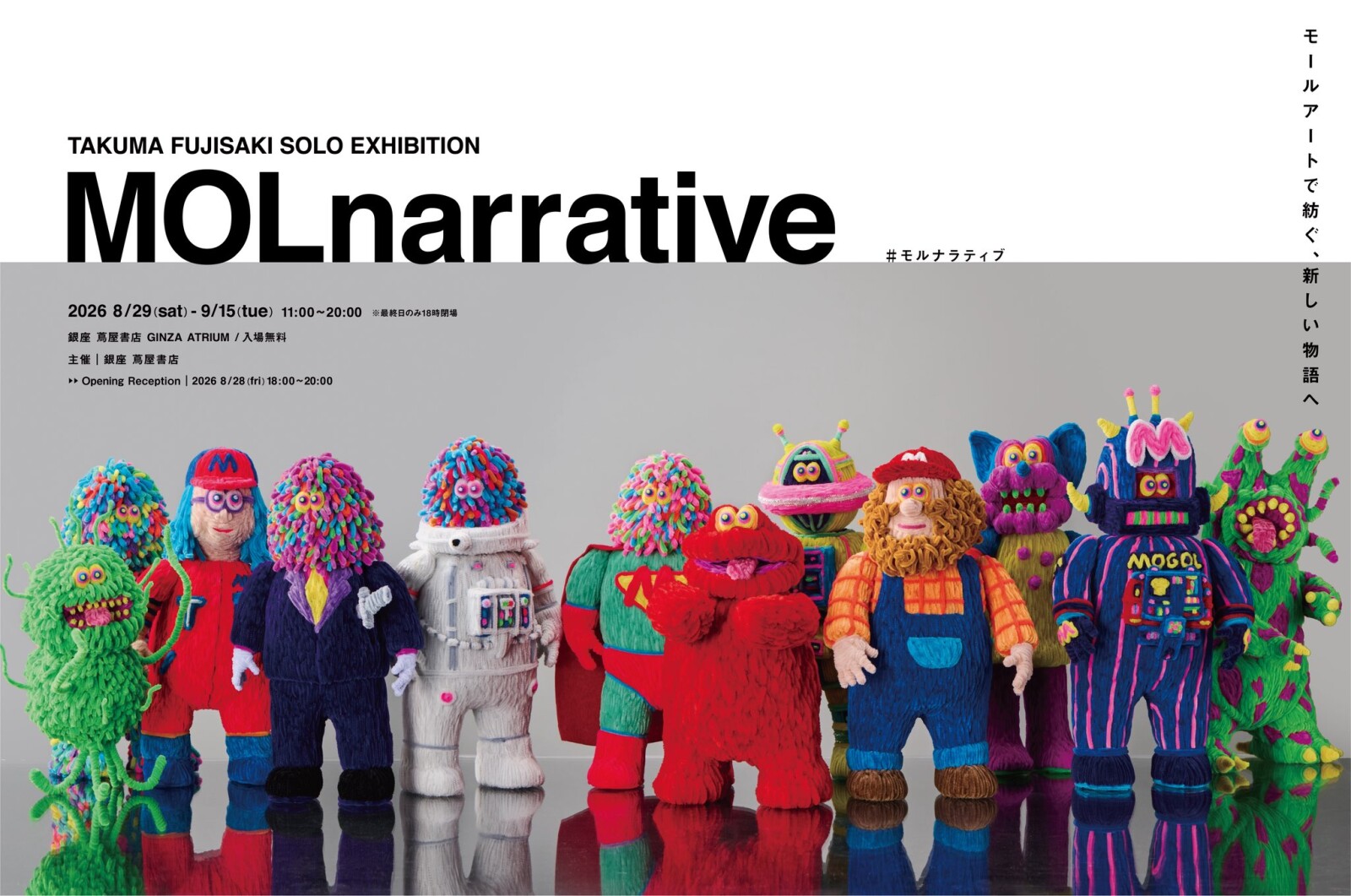

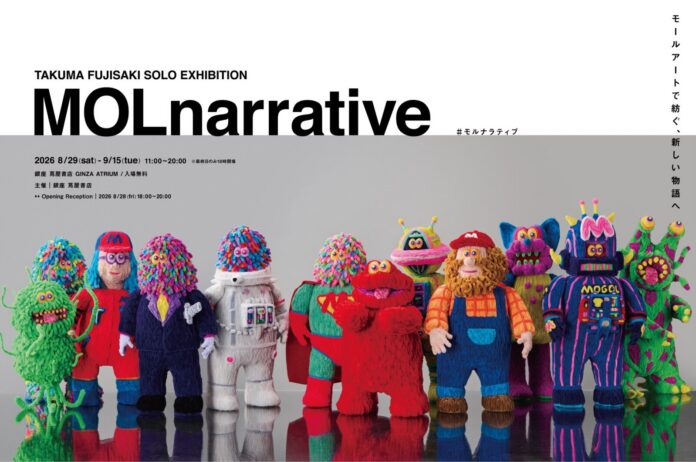
TOKYO, JAPAN – Media OutReach Newswire – 4 September 2026 – Japanese artist TAKUMA FUJISAKI, exclusively represented by ARTOX GROUP, officially opened his solo exhibition “MOLnarrative“ at GINZA ATRIUM, Ginza Tsutaya Books in Tokyo on August 29, 2026. Running through September 15, the exhibition traces 18 years of Fujisaki‘s artistic exploration of pipe cleaners, while two additional presentations and limited-time pop-ups inside Ginza Tsutaya Books showcase collaborative works, MOGOLS art toys and related merchandise.

TAKUMA FUJISAKI, Exclusively Represented by ARTOX GROUP Solo Exhibition

MOLnarrative: A Visual Narrative Built Across 18 Years

“MOLnarrative” takes Fujisaki’s 18-year creative journey with pipe cleaners as its central timeline, bringing together characters and three-dimensional works created throughout different periods of his career. Each work exists as an independent object, while also functioning as a fragment of the artist’s thoughts, experiences, memories and the cultural atmosphere of the period in which it was created.

By reconstructing these works along a shared timeline, the exhibition presents more than the evolution of pipe cleaner art. It reveals how an artist’s way of observing the world, interpreting culture and developing a visual language can continually evolve through sustained creative practice.

Moving freely between pop culture, toy culture, design and art, Fujisaki has developed a unique sculptural language at the intersection of these fields. “MOLnarrative” is therefore not simply a retrospective. It is a visual narrative about memory, time, creativity and the changing perspective of an artist.

Working across art direction and pipe cleaner art, Fujisaki has spent nearly two decades exploring the expressive potential of this distinctive craft material. Since 2010, he has presented exhibitions and workshops primarily in Tokyo, gradually developing a highly recognizable sculptural language of his own.

In Fujisaki‘s hands, vivid and slightly irregular pipe cleaners are transformed from an everyday craft material into characters, sculptures and an expansive visual universe.

His works often evoke a curious sense of déjà vu. They appear familiar, yet cannot be traced to any particular existing character or object. This balance between familiarity and unfamiliarity is central to the appeal of Fujisaki‘s work.

The vivid colors, playful forms and subtle differences created through handmade production allow his works to exist simultaneously within contemporary art, design and toy culture.

“MOLnarrative” is the visual narrative of one artist, woven through the material of pipe cleaners.

A slightly irregular world created from pipe cleaners, carrying a sense of familiarity and nostalgia.

Within these forms lies a curious sense of déjà vu, creating the feeling that we have seen them somewhere before.

This familiarity, together with the joy generated by vivid colors, is at the heart of the appeal of pipe cleaner art.

The characters and sculptures created through 18 years of working with pipe cleaners are independent objects, but they are also fragments containing the artist‘s thoughts, experiences, memories and the atmosphere of their respective eras.

By reconstructing these works along a timeline, this exhibition aims not only to trace the development of pipe cleaner art, but also to reveal how the artist‘s perspective and way of seeing the world have continued to evolve.

There are no absolute boundaries between pop culture, toy culture, design and art.

Fujisaki moves freely across these fields through his own sculptural language, allowing his works to intersect with the memories and emotions of each viewer and generate new narratives.

From Art to Fashion: Expanding the Possibilities of Fujisaki‘s Practice

TAKUMA FUJISAKI‘s work is not confined to conventional exhibition spaces.

In recent years, his distinctive pipe cleaner-based visual language and highly recognizable creative universe have increasingly attracted attention from brands and creative fields across Japan and overseas.

In August 2026, Fujisaki collaborated with renowned Japanese fashion label COMME des GARÇONS HOMME on “COMME des GARÇONS HOMME × TAKUMA FUJISAKI MOGOLS,” creating collaborative art pieces for the brand‘s 2026 Autumn/Winter collection.

The collaboration features art charms handmade from black pipe cleaners, bringing Fujisaki‘s distinctive sculptural language together with the aesthetic world of COMME des GARÇONS HOMME.

Each piece was made entirely from pipe cleaners and handcrafted by TAKUMA FUJISAKI. The quiet strength of black, combined with the subtle variations inherent in handmade production, gives every piece its own expression and unique presence.

Designed to be attached to bags and garments, the pieces can also be enjoyed as small standalone objects.

The collaboration further demonstrates the versatility of Fujisaki‘s artistic language across different media and contexts.

From gallery exhibitions to fashion products, and from independent artworks to wearable objects, pipe cleaners have become far more than a craft material. They have become a defining medium through which Fujisaki expresses his artistic vision.

MOGOLS: A Distinctive Artistic Universe Born from Pipe Cleaner Art

Through pipe cleaner-based creation, Fujisaki gradually developed his own characters and visual universe, which evolved into the distinctive art IP MOGOLS.

MOGOLS is more than a character design project. It is a visual universe that has emerged through Fujisaki‘s long-term artistic practice.

Beginning with pipe cleaner characters, the MOGOLS world has expanded into three-dimensional artworks, SOFVI art toys, collectibles and cross-disciplinary collaborations.

Within Fujisaki‘s practice, pipe cleaners function as both material and language.

Rather than treating the material solely as a traditional craft medium, he has continuously experimented with its physical qualities and transformed it into a highly recognizable artistic medium.

From material to form, from form to character, and from character to an expanding art IP, Fujisaki continues to explore new connections between artistic expression and contemporary commercial culture.

This approach has brought increasing attention from the fields of art, fashion, design and art toys, positioning Fujisaki as an artist to watch within Japan‘s contemporary art and emerging culture scene.

ARTOX GROUP: Taking TAKUMA FUJISAKI and MOGOLS to the World

TAKUMA FUJISAKI is currently exclusively represented by ARTOX GROUP.

ARTOX GROUP will continue to support Fujisaki and MOGOLS in expanding beyond Japan through exhibitions, brand collaborations, art toys and cultural projects, bringing his distinctive artistic language and creative universe to audiences around the world.

Since 2024, Fujisaki has increasingly expanded his creative activities across Asia and internationally.

For Fujisaki, pipe cleaners are more than a material. They are a visual medium capable of crossing cultural and linguistic boundaries.

From Tokyo, he is taking pipe cleaner art to different parts of the world, inviting audiences to discover the playfulness, warmth and limitless creative possibilities contained within the material.

MOGOLGON Origin DX 26cm to Launch on September 15

Coinciding with “MOLnarrative,” ARTOX GROUP will introduce a new SOFVI art toy from Fujisaki‘s MOGOLS art IP.

MOGOLGON Origin DX 26cm will officially launch on September 15, 2026.

Based on Fujisaki‘s signature MOGOLGON character, the new 26cm edition reinterprets the distinctive form through the medium of SOFVI, bringing a character originally developed within Fujisaki‘s pipe cleaner practice into the world of collectible art toys.

As an important addition to the MOGOLS art IP, MOGOLGON Origin DX 26cm continues Fujisaki‘s distinctive sculptural language while reflecting the evolution of his practice from pipe cleaner art and character creation to collectible art toy production.

The new edition will be available through the official ARTOX GROUP platform (artox.odoo.com) from September 15, 2026.

From a single pipe cleaner to a character, from a character to an entire artistic universe, and now into fashion and art toys, TAKUMA FUJISAKI continues to expand the boundaries of his creative practice.

MOGOLS, meanwhile, is moving from a distinctive Japanese art IP toward an increasingly international stage.

Exhibition Information

TAKUMA FUJISAKI Solo Exhibition “MOLnarrative“
Dates: August 29 – September 15, 2026
Venue: GINZA ATRIUM, Ginza Tsutaya Books
Location: Ginza, Tokyo, Japan

Two additional TAKUMA FUJISAKI presentations and limited-time pop-ups will also be held inside Ginza Tsutaya Books throughout the exhibition period.

Hashtag: #ARTOXGROUP

The issuer is solely responsible for the content of this announcement.

The Homeward Flow of Capital: Vinhomes at the Intersection of Global Wealth and Vietnam’s Opportunity

Large-scale urban developments, integrated ecosystems and transparent pricing platforms address longstanding concerns over information access and product quality.


HANOI, VIETNAM – Media OutReach Newswire – 4 September 2026 – For overseas Vietnamese considering investment in their country of origin, two persistent concerns have traditionally been access to reliable information and confidence in product quality. As large-scale, internationally oriented urban developments continue to take shape across Vietnam, that landscape is evolving. With projects spanning thousands of hectares, living standards refined over nearly two decades, and an integrated ecosystem rarely matched in the market, Vinhomes has emerged as a natural destination for overseas Vietnamese investment.

Vinhomes currently has a land bank of approximately 29,500 hectares.

Global Remittances: A Steady Flow Increasingly Directed Toward Real Estate

Globally, remittances have long ranked among the most stable sources of external finance for developing economies. According to World Bank estimates cited by the U.S. Federal Reserve, global remittance flows reached a record approximately US$818 billion in 2023(1), nearly four times the combined official development assistance (ODA) provided by OECD countries. Increasingly, these funds are moving beyond day-to-day consumption toward long-term asset accumulation, with real estate ranking among the preferred choices of financially established households.

Vietnam offers a particularly clear illustration of this trend. Total remittances to the country reached approximately US$16 billion in 2024(2), keeping Vietnam among the world’s ten largest recipients. Notably, nearly US$8 billion in remittance capital flowed into Vietnam’s real estate market in the first nine months of 2025 alone(3), a strong indication of growing confidence among overseas Vietnamese in the domestic market.

Unlike short-term speculative capital, overseas Vietnamese buyers tend to view property as a means of preserving and building wealth over the long term. This helps explain why large-scale urban developments with coherent master planning, transparent legal frameworks and proven operational capabilities are increasingly prioritized by this demographic.

Recent amendments to Vietnam’s Land Law and Law on Real Estate Business, which took effect in 2024, have further expanded the rights of overseas Vietnamese. Those of Vietnamese origin who retain Vietnamese citizenship enjoy land-related rights and obligations broadly equivalent to those of domestic citizens. Those of Vietnamese origin without Vietnamese citizenship have also gained a more accessible legal pathway to home ownership.

This policy shift addresses a substantial unmet demand. Potential housing demand among overseas Vietnamese in Vietnam has been estimated at more than three million homes, a market whose development was previously constrained in part by procedural barriers and concerns over the transparency of project information.

Vinhomes: A Key Destination for Overseas Vietnamese Investment

If policy reforms have opened the door, Vinhomes has become one of the key addresses through which overseas Vietnamese are choosing to invest.

Over nearly two decades, beginning with developments such as Royal City, Times City and Vinhomes Riverside, Vinhomes has helped introduce and scale a model of integrated urban living in Vietnam, bringing homes, education, healthcare, retail, green mobility and essential services together within a single, connected environment. In doing so, the company has helped raise the benchmark for urban development across the domestic real estate sector.

The scale of that platform is reflected in figures that few developers in Vietnam can match. Vinhomes currently holds a land bank of approximately 29,500 hectares, equivalent to nearly two-thirds of Singapore’s total land area, making it the country’s largest real estate developer by land holdings. The company has brought 32 projects and urban developments into operation, supporting the daily lives of hundreds of thousands of residents across Vietnam.

Its momentum in 2025 further reinforced that leading position. Vinhomes recorded VND205.3 trillion in contracted sales in 2025, up 98% year on year. During the year, four new mega-urban developments were introduced to the market: Vinhomes Wonder City in Hanoi, Vinhomes Golden City in Hai Phong, Vinhomes Green Paradise in Can Gio, Ho Chi Minh City, and Vinhomes Green City in Long An.

The company’s approach to raising living standards has also received recognition beyond Vietnam. At the Dot Property Southeast Asia Awards 2025, Vinhomes was named “Developer of the Year Southeast Asia 2025”, the highest distinction presented by the awards.

It is this combination of scale, brand credibility and transparency that is proving particularly relevant to the global Vietnamese community.

At Vinhomes Royal Island in Vu Yen, Hai Phong, the project attracted nearly 10,000 visitors and close to 2,000 purchase bookings within just over a month of its launch. A significant proportion of these prospective buyers were overseas Vietnamese from Germany, Poland and other European countries.

The project was also among the first Vinhomes developments to publicly list property prices on the Vinhomes Market platform, enabling buyers anywhere in the world to access product information, pricing and sales policies remotely. For overseas Vietnamese, this directly addresses one of the most persistent obstacles to investing from abroad: the difficulty of obtaining comprehensive and reliable information without being physically present in Vietnam.

At Vinhomes Hai Van Bay in Da Nang, a number of overseas Vietnamese families have chosen to acquire two different types of property within the development: one designed to generate rental income while they remain overseas, and another, such as a villa, intended for their eventual return to Vietnam, whether for retirement or long-term residence.

Behind the appeal of individual developments is the broader Vingroup ecosystem, which brings together education through Vinschool and VinUni, healthcare through Vinmec, retail through Vincom Retail, hospitality and entertainment through Vinpearl and VinWonders, and green mobility through VinFast and Green SM.

The significance lies not simply in the number of businesses involved, but in how these services work together. They allow a Vinhomes development to function as a complete living environment, with the convenience, connectivity and service standards increasingly expected of international cities. For overseas Vietnamese who have spent years accustomed to high-quality urban environments abroad, that continuity of experience can be an important consideration — whether the intention is to invest today or plan for a future return to Vietnam.

A Two-Way Connection: When Confidence Becomes a Growth Driver

The convergence of more open policies, substantial remittance flows and a leading urban developer with Vinhomes’ scale is creating a reinforcing cycle.

Greater confidence encourages more overseas Vietnamese capital to enter the domestic property market. At the same time, the scale, credibility and operating track record of large urban developments give investors greater confidence that their capital is being placed in an environment they can understand, access and ultimately return to.

For the global Vietnamese community, property can serve as one of the tangible links between financial participation and a deeper connection with their country of origin. As Vietnam’s cities continue to evolve, the opportunity increasingly moves in both directions: capital can flow back before people do, while the developments they invest in can become the places to which they eventually return.

In that sense, Vinhomes is not simply participating in the flow of capital back to Vietnam. Its urban developments are helping give that flow a more tangible destination, one where investment, quality of life and the prospect of returning to Vietnam increasingly converge.
Hashtag: #Vinhomes

The issuer is solely responsible for the content of this announcement.

About Vinhomes

Vinhomes is a premier real estate developer in Vietnam, committed to creating integrated, sustainable urban communities that set new benchmarks for quality of life, environmental stewardship and long-term value creation.

1. Federal Reserve — Global Remittances Cycle, February 27, 2025:
2. The Saigon Economic Times — Remittance flows into Vietnam in 2025:
3. Cong Luan — Nearly US$8 billion in remittances flows in as overseas Vietnamese increase domestic real estate investment:

Redress Design Award Winner Inspires Consumers To Demand More Sustainable Fashion Choices

Amid rising textile waste crisis, environmental NGO Redress’ world-leading sustainable fashion competition winner proves that designing out waste is one of fashion’s biggest opportunities


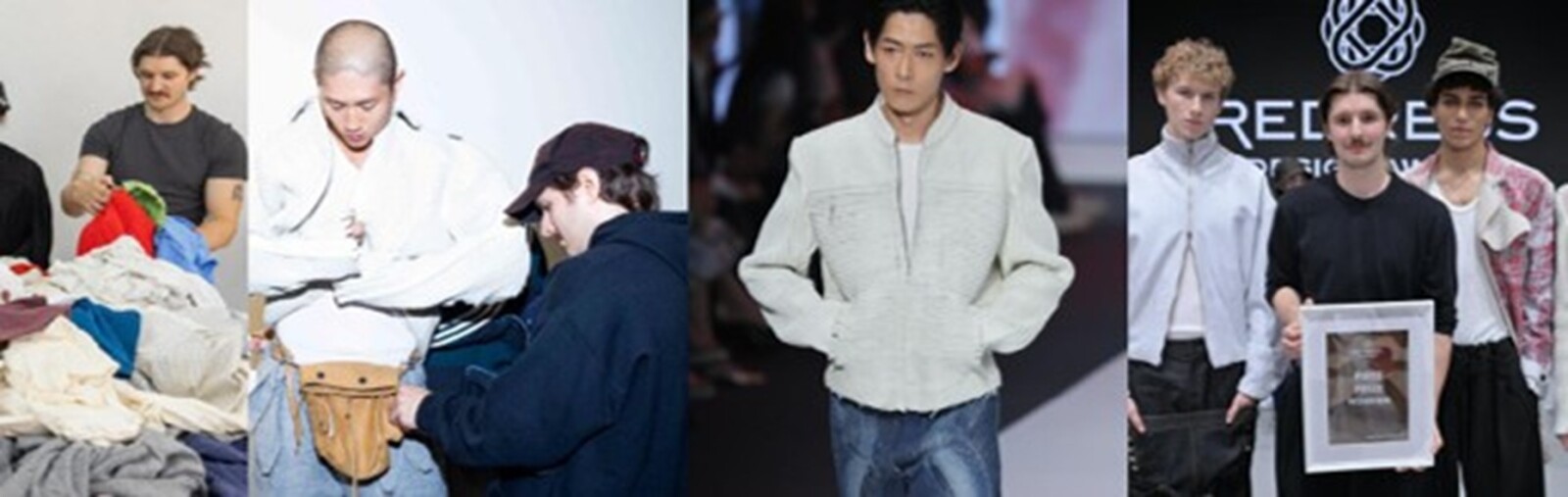
HONG KONG SAR – Media OutReach Newswire – 4 September 2026 – Redress, the Hong Kong-based, Asia-focused environmental NGO accelerating circular fashion, announced the winner of the Redress Design Award 2026, the world’s leading sustainable fashion design competition, at a star-studded runway finale at CENTRESTAGE, Asia’s annual fashion showcase. The finalists’ runway collections, designed using circular techniques including factory surplus, discarded garments, excess new stock, furnishings waste, tackled the global textile waste crisis and highlighted what most fashion consumers do not realise: an estimated 80% of a product’s environmental impact is locked in at design stage[1], long before the clothes hit the shop floor.

1Picture1

“My generation of designers won’t be judged just on aesthetics. We must understand circularity – durability, repairability and recyclability – from the drawing board to fill the racks with what more consumers hope to buy. Coming into this wasteful fashion industry is intimidating and we must respond with courage,” said Jon Liesenfeld, from Germany, Redress Design Award 2026 First Prize Winner, who outdesigned seven other finalists from Hong Kong, Chinese Mainland, United Kingdom, Austria, and Israel.

As Lead Sponsor, the Cultural and Creative Industries Development Agency (CCIDA) has supported the Award as a cornerstone project for 14 consecutive years. “Creativity and sustainability have never been more closely intertwined than they are today,” shared Drew Lai, Commissioner for Cultural and Creative Industries, CCIDA. “We take great pride in the legacy of the Award: over 350 alumni across more than 40 regions, many of whom have gone on to translate circular design principles into thriving, real-world practice — a clear testament to the Award’s wide-reaching impact.”

The fashion industry must reinvent itself – from the drawing board up

Textile waste is a global crisis, with an estimated 120 million tonnes generated annually, of which 80% ends up in landfills or being incinerated[2]. The global textile industry is only 0.3% circular[3].

“Whilst the fashion industry faces serious challenges – from geopolitical pressures, inflation, complex global supply chains to incoming legislation – it is catastrophically still on its wasteful, runaway trainwreck,” said Dr. Christina Dean, Founder, Redress. “Circularity is flat-lining despite circular textile business models being estimated to generate US$700 billion in economic value by 2030[4] and whilst clothing waste sky rockets, which will be exacerbated by global dominance of ultra fast fashion brands. Redress’ work to catalyse circular fashion is critical and our educational movement has reached millions of designers in almost 100 countries worldwide,” she said.

All finalists join Redress’ Alumni global network of 350+ designers who continue sparking solutions. Alumnus Kevin Germanier closed Paris Couture Week this spring with a collection made entirely from LVMH-owned brands’ excess inventory across. Alumnus Angus Tsui and Eric Wong have transformed retired DHL courier uniforms into accessories.

Upcycling continues moving mainstream, with LVMH Group, Miu Miu, Coach, Uniqlo, Converse, Wrangler and Vivienne Westwood, developing various upcycled collections, selling its creativity and uniqueness rather than sustainability alone.

Incoming regulation, particularly the European Union’s Ecodesign for Sustainable Products Regulation (ESPR), Extender Producer Responsibility (EPR) and the ban on destroying unsold clothing and footwear, have given brands more incentive to embrace upcycling than just a few years ago.

Redress Design Award 2026 Prizes expose winners to array of British businesses

Jon Liesenfeld wins an educational journey to British fashion businesses; from design-led apparel manufacturers, Simple Approach who produce 50 million apparel pieces annually for brands including Primark and Next; luxury womenswear brand Roksanda, worn by Her Royal Highness Catherine, Princess of Wales, Michelle Obama, Kate Blanchett and Anne Hathaway. This prize is supported by GREAT Britain & Northern Ireland Campaign.

The runner-up, Jasmine Cheuk from Hong Kong, wins a mentorship with distinguished British fashion activist and competition judge, Orsola de Castro, who has mentored Redress’ competition winners every cycle for the last decade and has been a judge since the competition’s inception. Jasmine also won the Hong Kong Best prize.

Redress empowers emerging designers to help close the educational skills gap

Redress recognises the urgent need to equip designers with the skills required to narrow the educational gap within the fashion industry. An integrative review of 81 papers found that mainstream fashion design courses still “scarcely incorporate sustainability within their curricula”, underscoring the need to strengthen sustainability education through both theoretical understanding and practical application.[5] To date, Redress has directly educated 36,500+ fashion designers and educators and has generated 18 million views across its online educational resources.

In addition to education, Redress builds strategic industry partnerships to create real-world pathways for designers. During the Redress Design Award 2026, finalists remade discarded, unwearable post-consumer clothing waste into retail-ready collections for multi-brand fashion retailer, D-mop, in collaboration with TAL Apparel, leading global garment manufacturer. This work was delivered as part of the ‘Remake to Retail’ challenge; the resulting collection is scheduled to launch with D-mop later this year.

Redress Design Award turns consumer concern into sustainable demand

Engaging with consumers to drive the sustainable fashion movement is critical, given rampant overconsumption and clothing underutilisation, which results in the majority of clothing being landfilled or burned within one year of production.[6] Whilst the majority of consumers believe brands have a responsibility to make positive change in the world[7], an intention gap between what consumers think and what they do persists, whereby 71% of global consumers are concerned about sustainability in fashion, yet only 3% of them are willing to pay a premium for it.[8]

Through the Redress Design Award, finalists demonstrate that sustainable fashion can be desirable. By showcasing exceptional design and compelling storytelling, and by bringing remade clothing into mainstream spaces, these next-generation designers motivate consumers to actively choose more sustainable options, turning concern into demand.

Editor’s Notes

  • Data and Statistics Insights: Redress Design Award: Redress Design Award Additional Resources – The Issues
  • Competition Criteria: The Redress Design Award 2026 was open to global applications from emerging designers and students with less than four years’ professional experience focusing on womenswear and menswear original collection designs. Competition brief here.
  • The People’s Choice winner, voted by the public, was Tal Zohar from Israel.
  • Judges are: Orsola de Castro, Author and Fashion Activist; Rachel Franklin, Director of ESG, Simple Approach; Cherry Mui, Editorial Director, Vogue Hong Kong; Rod Henderson, President, TAL Apparel Ltd; Angus Tsui, Creative Director, ANGUS TSUI and Alumnus, Redress Design Award; and Dr. Christina Dean, Founder and Board Chair, Redress.
  • Sponsors Cultural and Creative Industries Development Agency (CCIDA) as the Lead Sponsor. Other key partners include DHL and TAL Group.
  • Redress Alumni Networkoffers designers ongoing support as they develop their careers in sustainable fashion.


[1] European Commission: Directorate-General for Enterprise and Industry and Directorate-General for Energy, Ecodesign your future – How ecodesign can help the environment by making products smarter, European Commission, 2012
[2] Boston Consulting Group, Spinning Textile Waste into Value, August 2025
[3] Circle Economy Foundation Circularity Gap Report Textiles (2024)
[4] Ellen MacArthur Foundation (2021), Circular Business Models – Redefining Growth for a Thriving Fashion Industry
[5] Sonika Soni Khar, From review to reform: designing an elective module through an integrated review on fashion sustainability, Frontiers in Sustainability, 2025
[6] UBS (2021) $2.5trn industry at risk – What if consumers stop buying disposable clothes
[7] Futerra (2019), The honest generation are here. Are you ready?
[8] Boston Consulting Group, 2022: Consumers Are the Key to Taking Green Mainstream

Hashtag: #RedressDesignAward

The issuer is solely responsible for the content of this announcement.

The Redress Design Award

The Redress Design Award () is the world’s leading sustainable fashion design competition that educates and empowers emerging fashion designers about circular design techniques to reduce fashion’s negative environmental impacts. Organised by Hong Kong-based, Asia-focused environmental NGO Redress since 2011, the competition partners with academic institutions globally and attracts designer applicants from over 50 countries and regions to win prizes that connect them with global-leading fashion businesses to accelerate the change to a circular fashion industry.

Redress () is a Hong Kong-based, Asia-focused environmental NGO founded in 2007 accelerating the change to a circular fashion industry by educating and empowering designers and consumers to reduce clothing’s negative environmental impacts. Locally, Redress has collected 208 tonnes of clothing for recirculation and educated 21,000+ Hong Kong students and teachers. Globally, they have directly educated 36,500+ fashion designers and teachers, amassing 18 million online views of their sustainable design educational content and building a social media reach of 46 million users.

The Cultural and Creative Industries Development Agency (CCIDA) (), formerly known as Create Hong Kong (CreateHK) since 2009, was established in June 2024. CCIDA is a dedicated office under the Culture, Sports and Tourism Bureau of the Government of the Hong Kong Special Administrative Region (HKSAR Government) to provide one-stop services and support to the cultural and creative sectors with a mission to foster a conducive environment in Hong Kong to facilitate development of the arts, culture and creative sectors as industries. CCIDA’s strategic foci are nurturing talent and facilitating start-ups, exploring markets, promoting cross-sectoral and multi-disciplinary collaboration, promoting industrialisation of the arts, culture and creative sectors under the industry-oriented principle, and fostering a creative atmosphere in the community, thereby reinforcing Hong Kong as Asia’s creative capital and our positioning as the East-meets-West centre for international cultural exchange.

Disclaimer: The Government of the Hong Kong Special Administrative Region provides funding support to the project only, and does not otherwise take part in the project. Any opinions, findings, conclusions or recommendations expressed in these materials/events (or by members of the project team) are those of the project organisers only and do not reflect the views of the Government of the Hong Kong Special Administrative Region, the Culture, Sports and Tourism Bureau, the Cultural and Creative Industries Development Agency, the CreateSmart Initiative Secretariat or the CreateSmart Initiative Vetting Committee.

Laos Bans Unregistered Cosmetics Resembling Popular Brands

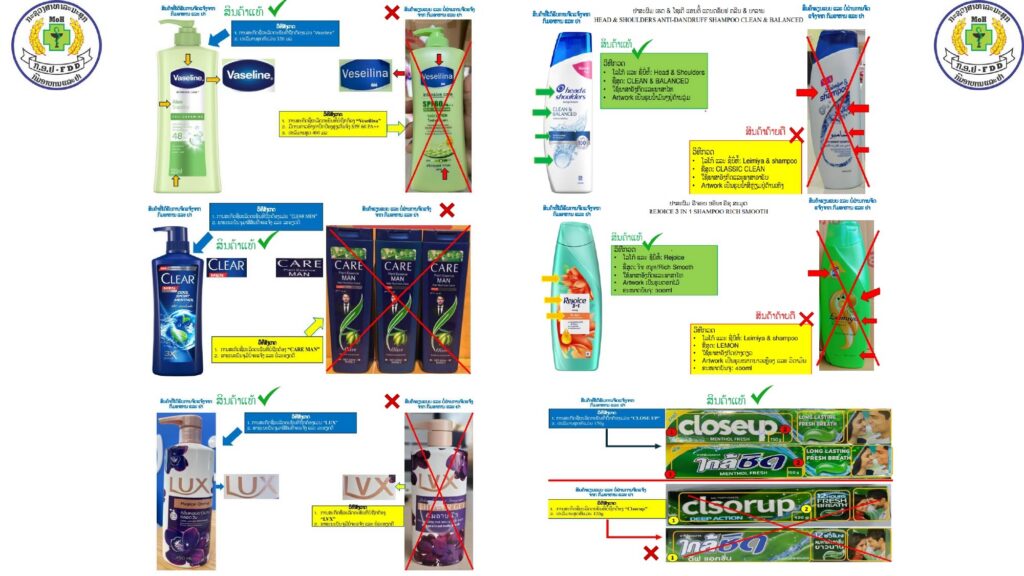
Cosmetic products displayed for sale. Laos’ Food and Drug Department has banned five unregistered cosmetic brands, warning consumers to check labels and buy only from reliable sellers.

The Food and Drug Department (FDD) has banned the import, sale, distribution, advertising, and use of five cosmetic brands after finding that they entered the Lao market without proper registration.

In a notice dated 4 September, the FDD named the banned brands as Vaseilina, Care Man, Lvx, Clsorup, and Leimiya & Shampoo.

Authorities said importers and sellers brought these products into Laos and promoted them on social media without notifying the FDD. This means the products did not go through the registration process required for cosmetics sold in the country.

The department said the five brands use packaging, labels, colors, and names that closely resemble legally registered cosmetics and well-known products in the market. Sellers also promoted them with unusually low prices, giveaways, exchanges, and bonus offers to attract buyers.

Because the products were not registered, authorities cannot confirm their origin, quality, or safety.

Laos’ Food and Drug Department banned five unregistered cosmetic brands over concerns about product origin, quality, and consumer safety.(Graphic: Food and Drug Department)

Halted Imports

The FDD has ordered businesses across Laos to stop importing, selling, distributing, or advertising the five brands. It also urged the public not to buy or use them.

People who find these products being sold are encouraged to report them to the FDD or to food and drug offices at the provincial or capital level so authorities can inspect and take action.

The ban is part of a wider effort to control unregistered goods in Laos.

In July 2025, the Ministry of Industry and Commerce also banned the import and sale of unregistered food products, including beverages, energy drinks, and dietary supplements. These products are required to have Lao-language labels and FDD approval.

The FDD urged consumers to check product labels carefully before buying cosmetics or food products. Consumers should buy only from reliable sellers and choose products with Lao-language labels, clear manufacturer or importer information, and a valid notification number.

The ban comes as Laos continues to tighten controls on unregistered and improperly labeled consumer goods.

Authorities have previously moved against unregistered food products, beverages, energy drinks, and dietary supplements, requiring sellers to provide Lao-language labels, clear importer information, and FDD approval.

Business, Labor Experts Talk Responsible Business Standards as Laos Prepares for LDC Graduation

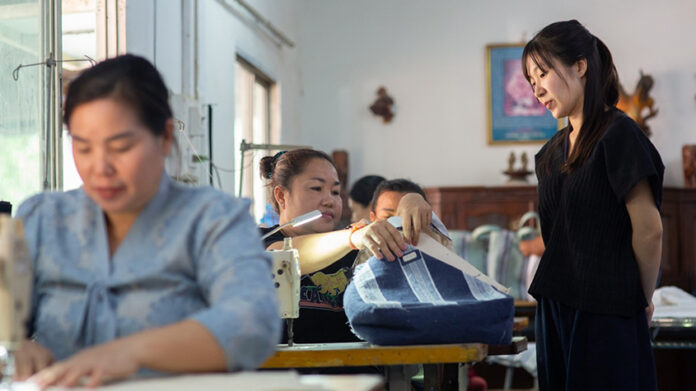
Uplifting Rural Women in Laos. Her Works, a trendy handicraft brand from Lao PDR, is transforming the textile market of tribal villagers in a big way through functional design. (Photo: WIPO)

Business and labor experts met in Vientiane on 3 September to discuss standard guidelines for responsible business operations.

The meeting, led by The Lao National Chamber of Commerce and Industry (LNCCI) and the International Labor Organization (ILO), brought together government, workers’ and employers’ representatives, business associations and enterprises to discuss how international  Responsible Business Conduct (RBC) principles can be adapted to the Lao context.

Participants addressed workers’ rights, occupational health and safety, and stakeholder relationships, while considering the capacities and constraints of micro, small and medium-sized enterprises.

Discussions aimed to ensure the draft guidelines are practical for businesses of different sizes and sectors, not only large or export-oriented firms.

Xaybandit Rajaphong, Vice President of LNCCI, said the chamber is ready to coordinate the initiative as the employers’ representative, but stressed that it cannot be done by one party alone and will require input from the government, the Lao Central Confederation of Trade Unions, business associations and enterprises.

ILO representative Viboon Sitthimourada highlighted the importance of RBC as Laos prepares to graduate from Least Developed Country (LDC) status. He said that it is essential that Laos adopts responsible business conduct in order to strengthen the market’s competitiveness. 

He noted that the new Decent Work Country Program will help businesses prepare for changing trading conditions, buyer expectations and market regulations linked to LDC graduation.

This aligns with the country’s positive outlook in the economic shift, with government officials viewing the changing status as a turning point in national development. 

From ‘Special’ Privileges to Greater Opportunity

In a separate interview published on the ministry of foreign affairs pages, Deputy Prime Minister and Foreign Minister Thongsavanh Phomvihane framed LDC graduation as a shift from “special” privileges to greater opportunity.

“While we might lose some ‘special’ privileges, we gain much more in terms of ‘opportunity’,” he said in the video interview, citing improved access to capital as international financial institutions treat Laos as a developing rather than a least-developed country.

He said exiting LDC status requires stronger legal systems and production standards, which in turn force Lao firms to become more competitive.

“If we don’t grow and compete, we will never truly develop. We have to stand on our own feet,” Thongsavanh said.

Further stakeholder consultations are planned to refine the guidelines and align them with international labour standards and sustainable development goals, supporting decent work and enterprise competitiveness as Laos approaches LDC graduation.

FinVolution and NUS Business School share project findings focusing on Financial Inclusion for Filipino Overseas Domestic Helpers at UN Global Compact BRI Summit

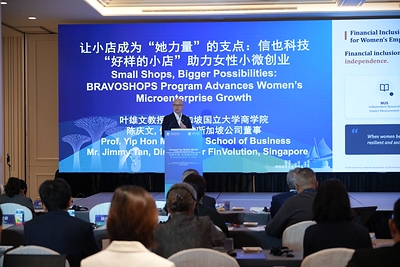
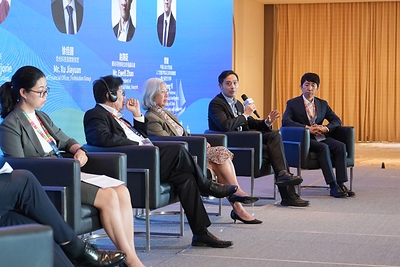
SINGAPORE, Sept. 4, 2026 /PRNewswire/ — FinVolution Group (NYSE: FINV), a leading fintech company, took part in the Second Global Summit on High-Quality Belt and Road Cooperation in Singapore on September 3, 2026.

Co-hosted by the UN Global Compact (UNGC) Belt and Road Initiative Action Platform and the UNGC Singapore Network, the summit brought together representatives from government, business, academia and other sectors to discuss sustainable development under the theme “Connectivity for a Better World.”

The summit marked FinVolution’s second consecutive participation in the platform, following its debut at the inaugural summit in Indonesia in 2025. Discussions this year focused on fintech, financial inclusion and sustainable development, among other topics.

Project Focuses on Financial Inclusion for Filipino Overseas Domestic Helpers

FinVolution Group and the National University of Singapore (NUS) Business School shared project findings on financial inclusion among Filipino overseas helpers during the summit. The project was conducted under the guidance of Associate Professor Yip Hon Mun together with a team of four MSc in Strategic Analysis and Innovation students.


This project examines overseas Filipino domestic helpers, a predominantly female workforce. Despite often having stable employment and income, many may face difficulties accessing financial services after returning to the Philippines because of limited credit histories that may not carry across jobs or countries.

The study looks at how financial inclusion can help these domestic helpers build a financial identity that remains relevant through changes in employment and locations, potentially improving access to financial services and opportunities even after they return home.

Establishing a portable credit history could support a range of longer-term financial needs, including housing, vehicle financing, education, family protection and, potentially, entrepreneurship. The research suggests that credit can serve not only as a means of accessing financial services, but also as a link to broader economic opportunities.

The project combines Associate Professor Yip’s expertise on sustainability, the students’ work and research and FinVolution’s holistic experience in digital finance, drawing on international frameworks including the UN Global Compact’s Ten Principles and the Women’s Empowerment Principles (WEPs). It also highlights the need for responsible financial innovation, with attention to affordability, transparency, data protection, respectful collections and financial literacy.

FinTech and Responsible Finance in Emerging Markets

At a roundtable on the empowerment of women and youth, Jiayuan Xu, Chief Financial Officer of FinVolution, discussed how fintech companies can balance commercial sustainability with social impact as they expand in emerging markets.


“Fintech is not only about making financial services more accessible and convenient. It is also about helping people who have historically had limited access to financial services build financial capabilities and unlock new opportunities,” said Jiayuan Xu. “For women, youth, and other underserved groups, companies need to design products around real needs while embedding responsible finance principles throughout the product and business lifecycle — from affordability and transparency to data protection and financial literacy. Only then can fintech truly serve as a bridge between people and opportunity.”

The research and discussion highlighted the potential for digital finance to address gaps in financial access while supporting longer-term economic participation, particularly among underserved groups such as women and migrant workers.

In recent years, FinVolution has continued to expand its global business by combining its fintech capabilities with the needs of local markets and exploring more inclusive and responsible approaches to digital finance.

Laos, Kazakhstan Seek New Railway Links to Expand Trade

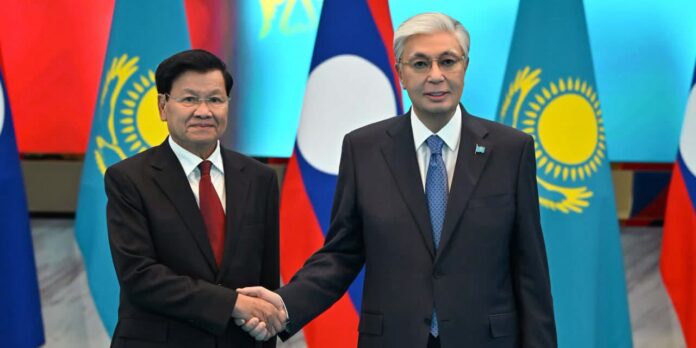
A picture of Lao President Thongloun Sisoulith (left) met Kazakh President Kassym-Jomart Tokayev (right) in Astana, Kazakhstan from 3 to 4 September. (Photo by Akorda)

Laos and Kazakhstan are exploring new railway and logistics links that could open a trade route between Southeast Asia, Central Asia and Europe.

Lao President Thongloun Sisoulith is visiting Kazakhstan from 3 to 4 September for the first presidential-level talks between the two countries since they established diplomatic relations in 1997.

The Lao Ministry of Foreign Affairs reported that Thongloun’s arrival in Astana on 2 September aimed to strengthen bilateral relations and cooperation. This followed his recent participation in the Shanghai Cooperation Organization Plus meeting. 

Transport and logistics were a key focus of talks with Kazakh President Kassym-Jomart Tokayev in Astana.

Tokayev highlighted Kazakhstan’s role as a major transit hub between China and Europe through the Trans-Caspian International Transport Route. He said Lao freight operators could use Kazakhstan’s logistics platforms, including its hub in China, to reach Central Asian and European markets.

Kazakhstan also sees an opportunity to move its goods into Southeast Asia through Laos and the Laos-China Railway, which has strengthened Laos’ role as a regional transit link.

The two leaders called for their governments to work toward agreements on transport and logistics cooperation.

Trade Links

The leaders also discussed expanding trade and investment. Kazakhstan wants to increase exports to Laos, particularly metals, food products, oil, agricultural goods, chemicals, machinery and pharmaceuticals.

Tokayev invited Lao companies to use the Astana International Financial Centre to enter Kazakhstan’s market and expand into Central Asia.

The two countries also agreed to strengthen cooperation in tourism, culture, education, humanitarian affairs and law enforcement.

During the visit, Laos and Kazakhstan signed four agreements covering political consultations, law enforcement, digital cooperation and sister-city ties between Astana and Vientiane.

Bilateral Talks

Thongloun’s Kazakhstan visit follows a series of meetings on the sidelines of the SCO Plus summit in Bishkek.

At the summit, he promoted stronger multilateral cooperation, a fairer international order and Laos’ role as an SCO Dialogue Partner. 

He also held talks with Indian Prime Minister Narendra Modi and Kyrgyz President Sadyr Japarov on strengthening bilateral ties and cooperation in trade, transport and other areas.

On 1 September, Thongloun also met Belarusian President Alexander Lukashenko. The two leaders agreed to deepen bilateral ties by implementing existing agreements and expanding cooperation in trade, investment, finance, education, culture, tourism, health and security.

Aurzen Introduces “Unfold the Art,” a New Creative Chapter Inspired by Basquiat for Portable Projection

IRVINE, Calif., Sept. 4, 2026 /PRNewswire/ — Aurzen today announced “Unfold the Art,” a new creative collection inspired by Jean-Michel Basquiat, bringing the brand’s portable projection vision into closer dialogue with art, design, and everyday living. By combining Aurzen’s design-led approach to portable devices with Basquiat’s bold visual energy, the initiative marks the beginning of a long-term platform dedicated to exploring new expressions across art, space, and modern lifestyle.

Aurzen introduces 'unfold the art' for portable projection inspired by Basquiat
Aurzen introduces ‘unfold the art’ for portable projection inspired by Basquiat

Known for making portable projection easier to carry, place, and enjoy across different environments, Aurzen sees this special collection as a natural extension of its design philosophy. With “Unfold the Art,” the brand connects portable technology with a stronger visual point of view and a more expressive sense of atmosphere.

The collection draws on a shared belief that everyday objects can be both functional and emotionally resonant. Aurzen’s clean, flexible design language meets the raw energy, layered symbolism, and unmistakable immediacy associated with Basquiat’s iconic visual world, creating a project shaped by contrast, expression, and personality.

“Aurzen has always believed technology should feel easy to live with and meaningful to experience,” said Jason Zhang, Senior Director of Product at Aurzen. “Through this collection inspired by Basquiat, we are exploring a more expressive side.”

Designed to grow beyond a single launch moment, “Unfold the Art” will evolve as a broader creative story. Future expressions will build on this foundation, exploring how portable projection can feel more personal, more visual, and more culturally alive in the home.

For Aurzen, this initiative reflects a commitment to shaping not only how projection performs, but how it looks and feels in everyday living spaces, where useful technology and artistic inspiration can naturally coexist.

This project was done in collaboration with Artestar, a global licensing agency and creative consultancy representing world-renowned visual artists, estates, and foundations. Artestar conceptualizes and develops some of the world’s most iconic brand partnerships across an array of categories and geographic regions, all while preserving and elevating each artist’s unique legacy. Through strategic planning and thoughtful curation, Artestar powers creative collaborations to make art accessible to everyone. Learn more at artestar.com.

About Aurzen

Aurzen is a global innovator in smart projection technology. By combining advanced optical engineering with intuitive software and user-focused design, Aurzen delivers products that bring big-screen experiences to any space. The company pioneered the world’s first Tri-Fold Truly Portable Projector, ZIP, and its designs have been recognized with multiple international awards, including the iF Design Award, Red Dot Award, G-Mark Award, and IDEA Award. For more information, visit www.aurzen.com.

About JEAN-MICHEL BASQUIAT

Jean-Michel Basquiat stands as one of the most influential artists of his generation and is widely regarded as a defining figure of 20th-century art. Though his career lasted less than a decade, it transformed contemporary art and continues to shape culture today.

Basquiat’s art is raw, charged with energy, and fiercely original. With a fearless approach to color and composition, he balanced opposing forces with control and spontaneity, menace and humor, urban grit and primal expression. His work embraced a fusion of media, incorporating painting, drawing, and collage. The surfaces of his canvases teem with language and coded imagery: words, numbers, symbols, diagrams, and pictograms merge with fragments of popular culture, history, and personal iconography. His multi-panel constructions, exposed stretcher bars, and dense overlays of text and imagery became hallmarks of Jean-Michel Basquiat’s inimitable style, positioning him as a true innovator who blurred boundaries between fine art and street culture.

© Estate of Jean-Michel Basquiat. Licensed by Artestar, New York.