Home Blog Page 1234

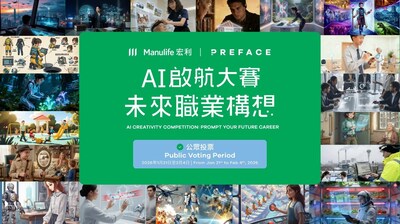
Manulife and Preface Open Public Voting for “AI Creativity Competition: Prompt Your Future Career”

Finalist teams unveiled as organizers empower the next generation with AI‑ready skills and future‑of‑work exploration

HONG KONG, Jan. 22, 2026 /PRNewswire/ — Manulife Hong Kong and Macau (“Manulife”) and education technology company Preface today announced the finalists of the AI Creativity Competition: Prompt Your Future Career, which has received strong interest since its launch in November 2025. Close to 500 students from Hong Kong, Macau, and other cities in the Greater Bay Area enrolled in the competition. The competition aims to inspire young people to explore future career possibilities using AI tools, bringing together creativity and technology to spark new ideas for their professional journeys.
Manulife and Preface Open Public Voting for  “AI Creativity Competition: Prompt Your Future Career”
Manulife and Preface Open Public Voting for “AI Creativity Competition: Prompt Your Future Career”

Public voting is now open through February 4, 2026. Members of the public are invited to visit the official platform and vote for the most inspiring AI-powered career vision.

The shortlisted entries cover a diverse range of forward-looking themes — including sustainability, mental health, and aerospace innovation — showcasing students’ creative perspectives on the rapidly evolving world of work. All finalist submissions are available on the campaign website for public viewing and voting.

“Innovation is at the heart of how we serve our customers and our communities,” said Celia Ling, Chief Marketing Officer of Manulife Hong Kong and Macau. “By integrating AI tools into this competition, we hope to encourage young people to think boldly about the future of work. The creativity demonstrated by the submissions reflects the tremendous potential of the next generation, and we are excited to help nurture their growth for a better tomorrow.”

Professional & AI-Assisted Evaluation: A Cross-Disciplinary Collaboration 

The judging panel brought together experts from insurance, education technology, consulting, and cloud technology. Entries were evaluated based on creativity, technical application, and clarity of expression. Celia Ling, Chief Marketing Officer, and Andy Bruce, Chief Information Officer of Manulife Hong Kong and Macau, served as lead judges representing Manulife. They were joined by Tommie Lo, Founder & CEO of Preface; Clement Wong, Business Director – Public Sector, Google Cloud Hong Kong; as well as other professionals offering multi-disciplinary perspectives.

The competition also introduced the “AI Judge Powered by Manulife” — a proprietary tool developed by Manulife to provide AI-driven feedback for shortlisted entries. The AI output complements the professional panel’s assessments and helps promote a more innovative and multi‑dimensional evaluation process.[1] Final results will be determined solely by the professional judging panel.

Public Voting Details
Voting Period: Now until February 4, 2026
Voting Link: https://www.preface.ai/manulife-competition/en/
Voting Format: One vote per person per category

Award Ceremony
Three major awards will be presented at the Award Ceremony on February 8, 2026:

  • Future Career Visionary Award
  • AI Creativity Excellence Award
  • Community Favourite Award

The event will feature on-site finalist presentations and a showcase of the winning submissions.

For full details, please visit the official competition website: https://www.preface.ai/manulife-competition/en/
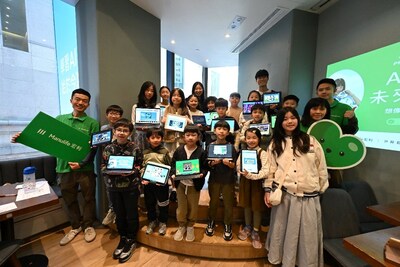
Students participating in the “AI Creativity Competition: Prompt Your Future Career” explored their visions of emerging professions with guidance from Manulife AI mentors, Preface instructors, and the support of AI tools.

About Manulife Hong Kong and Macau
Manulife Hong Kong has been a trusted name for more than 125 years, while we have served the Macau market for nearly three decades. Since our operations began in Asia in 1897, we have grown into one of the top-tier providers of financial services, offering a diverse range of protection and wealth products and services to over 2.6 million customers in Hong Kong and Macau. We are committed to helping make decisions easier and lives better for our customers.

Manulife Hong Kong and Macau, through Manulife International Holdings Limited, owns Manulife (International) Limited, Manulife Investment Management (Hong Kong) Limited, and Manulife Provident Funds Trust Company Limited. These entities are all subsidiaries of Manulife Financial Corporation.

About Manulife
Manulife Financial Corporation is a leading international financial services provider, helping our customers make their decisions easier and lives better. With our global headquarters in Toronto, Canada, we operate as Manulife across Canada, Asia, and Europe, and primarily as John Hancock in the United States, providing financial advice and insurance for individuals, groups and businesses. Through Manulife Wealth & Asset Management, we offer global investment, financial advice, and retirement plan services to individuals, institutions, and retirement plan members worldwide. At the end of 2024, we had more than 37,000 employees, over 109,000 agents, and thousands of distribution partners, serving over 36 million customers. We trade as ‘MFC’ on the Toronto, New York, and the Philippine stock exchanges, and under ‘945’ in Hong Kong.

Not all offerings are available in all jurisdictions. For additional information, please visit manulife.com.

About Preface
Preface is a global tech-enabling company providing fast, validated technology content and learning solutions. Our mission is to empower corporates and individuals to navigate rapidly evolving technology for success in a fast-changing world. With offices in Hong Kong, London, Singapore and Tokyo, Preface creates market-driven learning experiences through decentralised content development and delivery.   
Learn more: https://www.preface.ai/

[1] AI-generated feedback is for reference only and does not determine final results.

Japan Restarts World’s Biggest Nuclear Plant

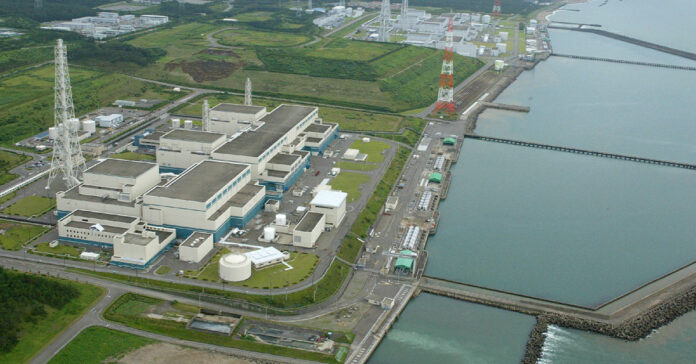
This photo taken on July 16, 2007 shows an aerial view of Tokyo Electric Power Company Kashiwazaki-Kariwa Nuclear Power Plant in Kashiwazaki City, Niigata Prefecture. The world's biggest nuclear power plant is set to restart on January 21, 2026, for the first time since the 2011 Fukushima disaster, its Japanese operator said, despite persistent safety concerns among residents. (Photo by STR / JIJI PRESS / AFP)

By Mathias Cena with Kyoko Hasegawa/AFP – The world’s biggest nuclear power plant was restarted on 21 January for the first time since the 2011 Fukushima disaster, its Japanese operator said, despite persistent safety concerns among residents.

The plant was “started at 19:02” (1002 GMT), Tokyo Electric Power Company (TEPCO) spokesman Tatsuya Matoba told AFP of the Kashiwazaki-Kariwa plant in Niigata prefecture.

The regional governor approved the resumption last month, although public opinion remains sharply divided.

On 20 January, a few dozen protesters, mostly elderly, braved freezing temperatures to demonstrate in the snow near the plant’s entrance, whose buildings line the Sea of Japan coast.

“It’s Tokyo’s electricity that is produced in Kashiwazaki, so why should the people here be put at risk? That makes no sense,” Yumiko Abe, a 73-year-old resident, told AFP.

Around 60 percent of residents oppose the restart, while 37 percent support it, according to a survey conducted in September.

TEPCO said Wednesday it would “proceed with careful verification of each plant facility’s integrity” and address any issues appropriately and transparently.

Kashiwazaki-Kariwa is the world’s biggest nuclear power plant by potential capacity, although just one reactor of seven was restarted.

The facility was taken offline when Japan pulled the plug on nuclear power after a colossal earthquake and tsunami sent three reactors at the Fukushima atomic plant into meltdown in 2011.

However, resource-poor Japan now wants to revive atomic energy to reduce its reliance on fossil fuels, achieve carbon neutrality by 2050 and meet growing energy needs from artificial intelligence.

Prime Minister Sanae Takaichi has voiced support for the energy source.

Fourteen reactors, mostly in western and southern Japan, have resumed operation since the post-Fukushima shutdown under strict safety rules, with 13 running as of mid January.

Kashiwazaki-Kariwa is the first TEPCO-run unit to restart since 2011. The company also operates the stricken Fukushima Daiichi plant, now being decommissioned.

Nearly 15 years after the disaster, “the situation is still not under control in Fukushima, and TEPCO wants to revive a plant? For me, that’s absolutely unacceptable”, said Keisuke Abe, an 81-year-old demonstrator.

Anxious and fearful

The vast Kashiwazaki-Kariwa complex has been fitted with a 15-metre-high (50-foot) tsunami wall, elevated emergency power systems and other safety upgrades.

However, residents raised concerns about the risk of a serious accident, citing frequent cover-up scandals, minor accidents and evacuation plans they say are inadequate.

“I think it’s impossible to evacuate in an emergency,” Chie Takakuwa, a 79-year-old resident of Kariwa, told AFP.

On January 8, seven groups opposing the restart submitted a petition signed by nearly 40,000 people to TEPCO and Japan’s Nuclear Regulation Authority.

The petition said the plant sits on an active seismic fault zone and noted it was struck by a strong quake in 2007.

“We can’t remove the fear of being hit by another unforeseen earthquake,” it said.

“Making many people anxious and fearful so as to send electricity to Tokyo… is intolerable.”

Before the 2011 disaster, which killed around 18,000 people, nuclear power generated about a third of Japan’s electricity.

String of scandals

Japan’s nuclear industry has also faced a string of scandals and incidents in recent weeks, including data falsification by Chubu Electric Power to underestimate seismic risks.

At Kashiwazaki-Kariwa, TEPCO said Saturday that an alarm system failed during a test.

“Safety is an ongoing process, which means operators involved in nuclear power must never be arrogant or overconfident,” TEPCO President Tomoaki Kobayakawa said in an interview with the Asahi daily newspaper.

Japan is the world’s fifth-largest single-country emitter of carbon dioxide after China, the United States, India and Russia, and is heavily dependent on imported fossil fuels.

Nearly 70 percent of its electricity in 2023 came from coal, gas and oil, a share Tokyo wants to slash to 30-40 percent over the next 15 years as it expands renewable energy and nuclear power.

Under a plan approved by the government in February, nuclear power will account for around a fifth of Japan’s energy supply by 2040, up from around 8.5 percent in the fiscal year 2023-24.

Meanwhile Japan still faces the daunting task of decommissioning the Fukushima plant, a project expected to take decades.


© Agence France-Presse

Trane Launches Advanced CDU to Enhance Liquid Cooling Efficiency in Asia-Pacific Data Centers

SHANGHAI, Jan. 22, 2026 /PRNewswire/ — Trane®— by Trane Technologies (NYSE: TT), a global climate innovator – has announced the launch of its new DCDA series, the first locally developed Coolant Distribution Unit (CDU) solution specifically designed for data centers in Asia Pacific region. Tailored to the unique requirements of liquid cooling in this market, the DCDA series addresses heat dissipation challenges in the era of high-density computing. With exceptional system flexibility, superior energy efficiency, and outstanding integration capabilities, it delivers data centers with an efficient, reliable and sustainable holistic liquid cooling solution.

Trane DCDA Series Coolant Distribution Unit

With the explosive growth in AI computing demands and the development of high-power-density equipment, traditional air cooling solutions are struggling to keep pace with soaring server cabinet heat loads. Liquid cooling technologies are emerging as the prefered choice for data center heat dissipation. UBS reports predict a compound annual growth rate of 51% for the global direct liquid cooling market for data centers from 2024 to 2030. As the market rapidly expands, coping with high-density heat dissipation demands and overcoming the integration challenges of complex systems have become critical issues for the industry to address.

“The launch of our new CDU marks a technological breakthrough and a significant step in advancing high-density data centers in Asia Pacific,” said Bruce Zhongping Gu, vice president, Engineering and Technology, Trane Technologies Asia Pacific. “Building on more than a century of climate expertise and deep regional insights, our CDU series delivers outstanding efficiency, flexibility and customization to meet the evolving needs of the market, further reinforcing our position as a leading innovator and trusted partner in the region.”

Compact & Flexible Solution for Diverse Scenarios

To address the demanding space requirements of high-density servers in data centers, the DCDA series features a space-efficient design that aligns with standard server racks and supports both in-row and in-room deployment. A standout feature is its full-front-access maintenance architecture, which allows installation against walls or back-to-back, eliminating the need for rear maintenance aisles and saving up to 20% of room floor space. Equipped with rail-mounted water pumps and angled filters that support online maintenance, it facilitates convenient service operations while effectively minimizing environmental disruption, ensuring continuous and stable data center operation.

To meet diverse customer needs, the DCDA series is built on a highly modular platform design, supporting multiple pipe connection directions. It can be optionally equipped with sensors for temperature, pressure, turbidity, pH levels, conductivity, and more, enabling precise monitoring and intelligent adjustment of coolant status. The unit can also be equipped with a fully integrated ATS, UPS and APF for different power supply and harmonic control requirement. Users can flexibly deploy functional combinations based on actual application scenarios, achieving a better balance between performance and cost.

Exceptional Performance & Intelligent Control for 24/7 Efficient Operation

Building on Trane’s century of refrigeration expertise, the DCDA series comes in three model options rated at 400kW, 800kW, and 1350kW of cooling capacity for liquid cooling systems in data centers, with customizable configurations supporting expansion up to 1700kW. This flexibility meets the cooling needs of current and future hyperscale data centers and AI computing centers. Its high-efficiency variable -frequency water pumps and intelligent control algorithms enable real-time, demand-based cooling by dynamically adjusting output in response to equipment load fluctuations. This significantly reduces energy consumption under partial load conditions.

With its robust cooling capacity and advanced energy-efficient design, the DCDA series enables liquid cooling systems to achieve an industry-leading PUE (Power Usage Effectiveness) of as low as 1.1. This effectively reduces overall energy consumption within data centers, and providing customers with substantial operational cost savings and a solid foundation for sustainability.

Smart Cluster Control & Precision Configuration for High Reliability

For large-scale, high-density deployment scenarios, the DCDA series has strong cluster control and system integration capabilities, allowing for stable coordinated operation of up to 16 units. Moreover, the product offers extensive building automation system communication interfaces that are compatible with mainstream protocols such as Modbus, BACnet, SNMP, and Ethernet TCP/IP, ensuring continuous and stable cooling for large-scale clusters.

To ensure high product reliability, Trane provides exclusive selection tools based on professional selection platform TSAP. Unlike the common industry practice providing only “individual component” parameters, TSAP can generate accurate performance reports for the whole unit, and visually simulates compatibility with existing systems. This emplowers customers to make more scientific and reliable decisions in planning and choosing their solutios.

The DCDA series has obtained CE and RoHS certifications and has undergone rigorous validation under extreme operating conditions at Trane Technologes Asia-Pacific Engineering and Technology Center. With its leading performance and reliable quality, the product has gained wide market attention since its launch. The first batch of orders from China is expected to be delivered in the first quarter of 2026, underscoring the market’s recognition of Trane’s liquid cooling technologies.

About Trane Technologies

Trane Technologies is a global climate innovator. Through our strategic brands Trane® and Thermo King®, and our portfolio of environmentally responsible products and services, we bring efficient and sustainable climate solutions to buildings, homes and transportation. For more on Trane Technologies, visit tranetechnologies.com.

About Trane

Trane – by Trane Technologies (NYSE: TT), a global climate innovator – creates comfortable, energy efficient indoor environments for commercial and residential applications. For more information, please visit www.trane.com or www.tranetechnologies.com.

Xinhua Silk Road: Digital tech enables fragrant pear industry to burgeon in N. China county

BEIJING, Jan. 22, 2026 /PRNewswire/ — With a click on their cellphone screens, fruit farmers in Xi County, north China’s Shanxi Province can finish irrigating and fertilizing their Yulu fragrant pear orchards, which is nothing but a common sight there.

Photo shows a joyful farmer looking at a Yulu fragrant pear in Xi County of Shanxi Province, north China.

Famed for its time-honored pear tree plantation history and superior pear taste, the Chinese county has been proactively embracing digital technologies to further enliven the local fragrant pear industry.

Thanks to the “Xi County Digital Village”, a cloud platform, the county in the heartland of Loess Plateau that boasts all the growth conditions required for quality Yulu fragrant pears, did not need to worry about arduous irrigation and fertilizing work any more.

Smart orchard controlling and distribution systems were also employed by the county to digitize related management to better preserve pear taste, which outruns others due to its pear-friendly high altitude, sufficient sunshine, big day-night temperature differences and unique geological environment.

In Xi County’s digital village demonstration hall, 100-plus indicators about Yulu fragrant pear planting, e-commerce sales, etc. are showcased on a large screen for real-time monitoring, trend analysis and risk warning.

Via connections with meteorological data sources, Internet of Things-based sensing equipment and integrated water and fertilizer devices, the smart orchard controlling systems enable more scientific pear tree planting and management.

Elsewhere in a temperature-controlled distribution center in Zhaizi Town, similar systems help locals realize intelligent management of Yulu fragrant pear-related warehouse entry, sorting and packaging, outbound delivery, and environment monitoring.

Under such circumstances, every Yulu fragrant pear has its own QR code-based identity code, making them completely transparent to consumers from picking in orchards to service on dinning tables.

Among fruit farmers of Xi County, there is a saying which goes “Not all fragrant pears can be named as Yulu fragrant pears” and behind its reputation lie not only the county’s natural conditions but also efforts to develop pear-based syrup, wine and beverage products and foster local e-commerce.

Such supreme habitats and endeavors speak for the premium quality of Yulu fragrant pears of Xi County, which now produces 35 million kilos of fragrant pears annually and exports local pears to multiple overseas markets such as the U.S., Canada, the UAE, and Australia.

Original link: https://en.imsilkroad.com/p/349281.html


Xinhua Silk Road: 2026 Global Youth Spring Festival Gala recorded in S. China’s Nanning City

BEIJING, Jan. 22, 2026 /PRNewswire/ — Recording of the 2026 Global Youth Spring Festival Gala (Nanning main venue) was completed on January 16 in Nanning, capital of south China’s Guangxi Zhuang Autonomous Region.

Featuring the “Horse” zodiac as a cultural symbol, the gala brought together young artists from China, ASEAN countries, the United Kingdom, Nigeria, and Brazil to showcase a blend of technological innovation and cultural exchange.

Guided by the State Council Information Office, the gala focused on “youth co-creation” and “tech empowerment”. Utilizing cloud choruses, real-time links, and cross-border field trips, the gala broke the limits of a single stage to create a multi-dimensional space for international dialogue.

Technological integration served as a major highlight. The opening performance, “AI on Spring,” featured singers from China and ASEAN countries performing a song composed with the help of artificial intelligence. The act combined traditional lion dances with “AI mechanical dogs” and used AR technology to display digital spring couplets.

Additionally, the gala introduced “Fubao,” an AI digital human inspired by Zhuang brocade patterns, to guide transitions and interpret cultural meanings.

In terms of cultural collaboration, international artists performed several innovative acts. Youth musicians joined for the instrumental piece “Sea and Mountain Harmony,” while singers from China, Indonesia, Laos, Thailand, and Vietnam performed a multi-language cloud chorus of the classic “Jasmine Flower”.

A “Tai Chi” performance featured martial arts enthusiasts from China and Brazil set against an AI-generated landscape. The gala also presented intangible cultural heritage through modern lenses, including a hip-hop version of the “Yingge” dance and an acrobatic piece blending ancient rock art with Dunhuang motifs.

During the recording period, international youth participants joined the “YOUNG-LINK • Meeting in Nanning” activity. They visited industrial parks, historical districts, and night markets to experience the urban development and culture of the host city.

The gala has been held for 19 consecutive sessions, with programs broadcast in more than 100 countries and regions. This year’s event also featured sub-venues in Vietnam, Indonesia, Laos, and Thailand.

The full program is scheduled for a global premiere on Feb. 15.

Original link: https://en.imsilkroad.com/p/349285.html


CIMB Highlights Discipline, Diversification, and Derisking as Keys to Navigating 2026 Markets

SINGAPORE, Jan. 22, 2026 /PRNewswire/ — CIMB expects 2026 to be defined by AI’s growing influence and Asia’s rising investment appeal. While technology giants pour billions into AI capacity, history cautions against exuberance, underscoring the need to focus on high‑quality large‑cap tech and AI supply chain leaders. At the same time, Asia’s expanding role in AI and ongoing market reforms are creating a supportive backdrop for earnings and valuations. Against this dynamic landscape, CIMB highlights opportunities in resilient Asian equities, quality corporate bonds, and diversified portfolios enhanced with hedging strategies to navigate volatility and deliver sustainable returns.

“Policy support and interest rate cuts have given capital markets a strong start, but as we move into 2026, we remain cautious of fiscal challenges, shifting global trends, and concentrated bets in AI,” said Jason Kuan, Director, Investment Research and Advisory at Chief Investment Office, CIMB Singapore. “At CIMB, we recommend focusing on the 3Ds: Discipline by staying selective with quality stocks and credit; Diversification by adding exposure to Asia, with defensive markets like Singapore and Malaysia; and Derisking through gold, hedge strategies, private equity, and tailored structured investments. This balanced approach helps investors seize opportunities while staying resilient through market volatility.”

Kuan added, “Investors may want to be more selective than just focusing on the U.S. market. U.S. stock prices are currently quite high, and uncertainty around trade policies and government spending could create more volatility. Because of this, we expect more investors to look beyond U.S. markets and explore opportunities in Asia. Singapore, in particular, stands out as a safe and stable investment destination, supported by reforms that have boosted confidence and driven strong returns. At the same time, gold has surged to new highs as investors seek safety amid global tensions. While corrections may present opportunities to add positions, we believe gold should be part of a diversified portfolio, but caution against chasing the rally simply on recent gains.”

AI Will Shape the Market Narrative in 2026

Leading technology companies are investing billions to meet the surging demand for artificial intelligence (AI) compute capacity. While AI continues to stand out as a powerful long-term investment theme, current market dynamics call for measured caution. History shows that periods of exuberance often precede the adoption of truly transformative technologies. In this environment, CIMB recommends focusing on high-quality large-cap technology companies and AI supply chain leaders, which are better positioned to withstand volatility and deliver sustainable growth.

AI Momentum and Market Reforms Position Asia as Key Investment Destination

Two key forces are shaping the next phase of Asian equities: the region’s expanding role in the global AI supply chain and market reforms across major economies that are enhancing governance, liquidity, and creating a more supportive backdrop for earnings and valuations.

Beyond the US, Asia is playing an increasingly important role in the global AI supply chain. The rise of DeepSeek in China, coupled with sustained demand for semiconductors and AI‑related hardware in Taiwan region, South Korea, and Japan, underscores the region’s growing technological capabilities.

At the same time, structural reforms are strengthening capital markets. Japan and South Korea are driving improved capital allocation and shareholder returns, China is channeling more institutional capital into domestic equities while supporting buybacks and tightening oversight of listed companies, and Singapore is implementing measures to revitalise the equity market, attract investment, and boost liquidity in small- and midcap stocks.

For investors, these developments suggest Asia will remain a significant investment destination, offering opportunities in markets with clear earnings visibility, reform momentum, and policy support – while acknowledging that geopolitical risks and global economic conditions will continue to shape volatility.

Navigating Volatility in a Weaker U.S. Dollar

Global growth is expected to proceed at a more measured pace, with stronger momentum in the first half of the year, followed by moderation in the second half as the delayed impact of tariffs takes effect. In the U.S., Federal Reserve rate cuts and sustained investment spending, particularly in AI and infrastructure, should continue to support growth, even as fiscal sustainability remains a longer‑term concern.

The U.S. dollar is likely to stay on a weakening trajectory in 2026, though the decline is expected to be volatile rather than linear. For investors, this underscores the importance of diversifying away from the U.S. dollar, especially during periods of temporary strength, while remaining mindful that volatility may intensify around key events such as changes in Fed leadership and the U.S. mid‑term elections.

Enhancing Portfolio Stability Through Fixed Income

Fixed income is set to play a more important stabilising role in portfolios in 2026, as bond market volatility is expected to rise amid global uncertainty. Additionally, the U.S. yield curves are expected to bear-steepen, creating a more complex environment for bond investors.

In 2026, we recommend building a bond portfolio with an average short‑to‑mid duration, focusing on high‑quality corporate bonds in the three- to seven-year range. These bonds can provide steady income, supported by strong companies with solid financials. Within this space, AUD‑ and GBP‑denominated bonds are especially appealing, with the former offering attractive returns and the latter providing potential gains, while helping to keep risk under control.

Building Portfolio Resilience

As global markets shift, staying diversified is more important than ever, investors can benefit from balancing portfolios across core global equities and fixed income. We see promising opportunities in Asian equities and short-to-mid tenor corporate bonds, which offer attractive value. Adding hedges through gold and selective structured investments can further strengthen resilience, helping portfolios deliver steadier, risk-adjusted returns in uncertain times.

This is for general information only and not financial advice. Subject to the disclaimer in CIMB’s “2026 Outlook: The Need for Measured Exuberance”.

About CIMB

CIMB is one of ASEAN’s leading banking groups and Malaysia’s second largest financial services provider, by assets. Listed on Bursa Malaysia via CIMB Group Holdings Berhad, it had a market capitalisation of approximately RM75.2 billion as at 31 March 2025. It offers consumer banking, commercial banking, wholesale banking, transaction banking, Islamic banking and asset management products and services. Headquartered in Kuala Lumpur, the Group is present across ASEAN in Malaysia, Indonesia, Singapore, Thailand, Cambodia, Vietnam and Philippines. Singapore is one of its key markets with approximately 1,000 employees serving clients across consumer, commercial, wholesale and transaction banking products and services.

Beyond ASEAN, the Group has market presence in Mainland China, Hong Kong and UK. CIMB has one of the most extensive retail branch networks in ASEAN with 592 branches and over 33,000 employees as at 31 March 2025. CIMB’s investment banking arm is one of the largest Asia Pacific-based investment banks, which together with its award-winning treasury & markets and corporate banking units comprise the Group’s leading wholesale banking franchise. CIMB is also the 92.5% shareholder of Bank CIMB Niaga in Indonesia, and 94.8% shareholder of CIMB Thai in Thailand.

Sustainability is a core pillar of CIMB’s Forward30 strategy and 2030 roadmap. The Group is guided by its Green, Social, Sustainable Impact Products and Services (“GSSIPS”) framework, an internal taxonomy designed to deliver impactful sustainable finance. Since launching its sustainable finance framework in 2021, CIMB has progressively raised its ambitions, increasing its initial RM30 billion target to RM100 billion for 2021–2024. The Group now targets RM300 billion in sustainable finance by 2030, reinforcing its commitment to enabling a lower-carbon and more inclusive economy across the region.

SingPost and SkyNet Worldwide Express Establish Exclusive Strategic Partnership to Enhance eCommerce Logistics in Singapore

SINGAPORE, Jan. 22, 2026 /PRNewswire/ — Singapore Post Limited (SingPost), Singapore’s national postal service, and SkyNet Worldwide Express (SkyNet), the world’s largest independently owned express network, are pleased to announce a strategic partnership in Singapore to enhance Express and eCommerce solutions across the Asia Pacific region.

Effective 1 January 2026, SingPost has become the exclusive partner for SkyNet Worldwide Express in Singapore. Under this collaboration, SingPost will represent the SkyNet brand locally, delivering a comprehensive suite of international express and eCommerce services to SkyNet’s global clientele.

Neo Su Yin, Chief Operating Officer, Singapore Post Limited, said: “This partnership is a significant step forward in enhancing our Express and eCommerce services. By combining our comprehensive delivery network with SkyNet’s global reach, we are delivering even greater value and convenience to all our clients in Asia Pacific.”

Enhanced Connectivity and Speed for Asia Pacific

The collaboration focuses on providing SkyNet customers with enhanced connectivity and speed across the Asia Pacific. Central to this is SkyNet’s use of SingPost’s Airmail Transit Centre (ATC) as a customs-bonded transshipment hub in Singapore, serving as a critical gateway for regional and global Express and eCommerce flows. SkyNet customers will further benefit from a single technology platform that enables them to reach over 180 destinations globally through their existing integration. Additionally, customers gain access to advanced solutions such as Delivered Duty Paid (DDP) services to simplify international shipping. To further improve the end-consumer experience, dedicated facilities for returns quality control and e-fulfilment have been introduced, allowing brands to manage returns and orders with greater efficiency.

Chaminda Gunasekera, Managing Director-Asia, SkyNet Worldwide Express, added: “At SkyNet, we pride ourselves on being a reliable bridge for brands going global. By joining forces exclusively with SingPost, we are plugging our international reach into a team that truly knows every corner of Singapore. Together, we are working as one team to open up faster, better opportunities for Express and eCommerce clients throughout the region.”

A Powerful Synergy of Global Reach and Local Expertise 

This exclusive partnership leverages the distinct operational strengths and coverage of both organisations to improve regional logistics. SkyNet Worldwide Express provides a vast international footprint as the world’s fifth-largest courier and express network, serving over 180 countries with decades of expertise in international delivery, returns, and e-fulfilment. Complementing this is SingPost’s role as the national postal service, maintaining Singapore’s most comprehensive delivery network with approximately 2,500 service touchpoints, a reach of over 2 million addresses daily, and a robust infrastructure of letterboxes, parcel lockers, and post offices.

About SkyNet Worldwide Express

SkyNet Worldwide Express is the 5th largest express network in the world covering 180+ countries worldwide. SkyNet is the largest independent owner network in the world operating on one technology platform. SkyNet services cover domestic, international deliveries of express express and ecommerce parcels to home and pick up points, returns management, e-fulfilment and other value added services. SkyNet has 5 regional hubs that operate and control the network in all 7 continents.

About Singapore Post Limited (SingPost)

Singapore Post (SingPost) is a leading postal and eCommerce logistics provider in Asia Pacific. The portfolio of businesses spans from national and international postal services to warehousing and fulfilment, international freight forwarding and last mile delivery, serving customers in more than 220 global destinations. Headquartered in Singapore, SingPost has approximately 3,000 employees. Since its inception in 1858, the Group has evolved and innovated to bring about best-in-class integrated logistics solutions and services, making every delivery count for people and planet. www.singpost.com

Tencent Cloud at Davos: Unlocking AI for all, Bringing Value within Reach

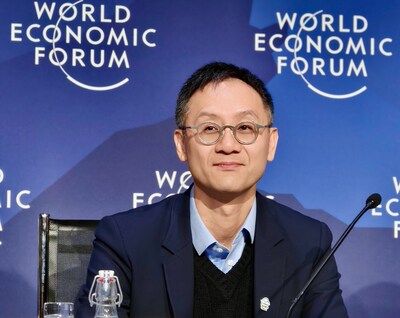
DAVOS, Switzerland, Jan. 22, 2026 /PRNewswire/ — At the Annual Meeting of World Economic Forum (WEF) in Davos, Dowson Tong, Senior Executive Vice-President of Tencent and CEO of Tencent Cloud and Smart Industries Group, emphasized that the real-world value of artificial intelligence is further unlocked when open ecosystems empower consumers and enterprises to choose from a diversity of large models tailored to specific, real-life applications.

Dowson Tong, Senior Executive Vice-President of Tencent and CEO of Tencent Cloud and Smart Industries Group speaking at the World Economic Forum in Davos

“When people talk about AI, we tend to think of one big super system and give it a term AGI. But in fact, there are many different types of models that serve different purposes,” said Tong. “For Tencent Cloud, we understand that customers want choices. That’s also our AI strategy, to provide tools, products that are model agnostic. I think that gives the power of choosing the right model for themselves back to the hands of the customers.” He added.

This is the cornerstone of Tencent’s AI strategy, which is rooted in a two-pronged approach. The company is simultaneously advancing its own proprietary model capabilities, while remaining open and collaborative to global large model innovations. The goal is to ensure that every user and enterprise can choose the most effective model for their unique needs, empowering them to solve real-world challenges effectively.

Internal Transformation as a Blueprint for Large Model Innovation

Tencent’s own operations serve as a proving ground for its AI vision. The company’s internal AI coding assistant, CodeBuddy, is now used by more than 12,000 engineers and helps generate over half of all new code. The tool has cut average coding time by more than 40%, and in a telling example of its capability, 90% of the code for Tencent’s recently upgraded AI CLI tool CodeBuddy Code was generated by the assistant itself.

In addition, Tencent is committed to investing in its full-stack Hunyuan large model series. Over the past year, the company has released more than 30 new models, spanning multiple domains including enhanced hybrid reasoning, image generation, video synthesis, and 3D content creation. The high-performance Hunyuan 2.0, which uses a Mixture-of-Experts (MoE) architecture with 406 billion total parameters (with 32 billion activated parameters), placing it at the forefront of the industry in terms of both inference capability and operational efficiency. Meanwhile, Tencent’s open-source Hunyuan 3D model has been downloaded more than 3 million times on open-source platform Hugging Face, becoming one of the most popular 3D open-source model for creators, developers and open-source communities worldwide.

To date, Hunyuan is already powering over 900 internal Tencent business scenarios—from Tencent Meeting and Weixin/WeChat to gaming and advertising. The impact is tangible: the 2025 third quarter finance report indicates a strong AI-driven growth. AI contributed to a 21% year-on-year increase in marketing service revenue and a 22.8% rise in gaming revenue for Tencent.

Real-World AI: From Industry Transformation to Empowering Future Generations

Tencent brings this expertise to customers through a simple but powerful framework: agent-based tools, cloud-native platform support, and plug-and-play solutions. This approach has already delivered results across more than 30 sectors. Retailers use Tencent’s AI to accelerate 3D product design; medical researchers apply it to new medicine discovery; and marketers rely on it to increase marketing conversion.

One notable example is global 3D printing leader Bambu Lab, which used the Hunyuan 3D model to reengineer its design workflow—making professional-grade modeling accessible to a broader audience and fueling a new wave of consumer creativity.

Tong also highlighted the importance of making AI tools available to the young learners. The new generation can not only learn how to use AI via educational institutions, but also via AI applications like Tencent Yuanbao. He said, “Encouraging the new generation to be curious and use these freely accessible AI tools would be the best way to develop the habits of using AI as part of the learning tools.”

About Tencent Cloud

Tencent Cloud, one of the world’s leading cloud companies, is committed to creating innovative solutions to resolve real-world issues and enabling digital transformation for smart industries. Through our extensive global infrastructure, Tencent Cloud provides businesses across the globe with stable and secure industry-leading cloud products and services, leveraging technological advancements such as cloud computing, Big Data analytics, AI, IoT, and network security. It is our constant mission to meet the needs of industries across the board, including the fields of gaming, media and entertainment, finance, healthcare, property, retail, travel, and transportation.