-“Any Wear, Anywhere” Service Reduces Packing Burdens, Supports More Sustainable Travel-
TOKYO, Jan. 7, 2026 /PRNewswire/ — Cosmos Hotel Management Co., Ltd., operator of the apartment-style accommodation brand MIMARU, has joined Sumitomo Corporation’s “Any Wear, Anywhere” clothing-sharing service to offer the service to inbound family travelers staying at MIMARU.
The service will launch on January 19, 2026, with reservations opening on January 7, 2026. Family travel to Japan often involves challenges such as preparing clothing suited to local climate conditions, transporting large amounts of luggage for family members, and handling unused clothing or suitcases during or after the trip. The service aims to ease these burdens by reducing the need to bring extensive wardrobes while encouraging more environmentally conscious travel.
“Any Wear, Anywhere” was launched by Sumitomo Corporation in July 2023. Travelers staying at MIMARU can reserve clothing sets online in advance, selecting options according to season and travel purpose, receive them at their place of stay, and return them within Japan after use. By reducing clothing transportation and disposal, the service supports more sustainable tourism. For its introduction at MIMARU, the lineup has been expanded to better accommodate families traveling with children.
Guest feedback has highlighted the service’s practicality:
“I don’t usually own winter clothing, and with children growing quickly, bulky winter wear is difficult to pack. Renting felt like better value than filling a suitcase,” shared a traveler from Singapore.
“The clothes were comfortable for exploring Tokyo, and having extra space in my suitcase meant more room for shopping,” commented a traveler from Australia.
“Arriving to find the clothes ready and simply returning them at the front desk made the experience very easy. Everything was clean and of good quality,” noted a traveler from the United States.
MIMARU is an apartment-style accommodation brand offering spacious guest rooms starting from approximately 40 square meters, designed for families and groups to stay together comfortably. Over 90 percent of its guests are international families. In addition to clothing sharing, MIMARU provides services such as same-day luggage delivery and other family-oriented initiatives to enhance convenience for inbound tourists.
Tackle rising business costs and trade barriers with a unified digital platform for Free Trade Agreements as well as build stronger economic partnerships.
Bridge AI adoption gaps by co-funding shared data pools and introducing a regional “Trusted AI” mark to drive innovation and governance.
Future-proof the workforce with targeted work visas for global experts, job transformation roadmaps, and advanced leadership programmes.
SINGAPORE – Media OutReach Newswire – 7 January 2026 – KPMG in Singapore and the Singapore Institute of Directors (SID) are pleased to announce the release of a joint Budget 2026 Proposal, titled “Prospering in a New Global Landscape”.
From Left to Right: Yong Jiahao, Partner, Infrastructure, Government & Healthcare (IGH) & Industrial Manufacturing, Tax, KPMG; Ajay Kumar Sanganeria, Partner and Head of Tax, KPMG; Lee Sze Yeng, Managing Partner, KPMG; Max Loh Khum Whai, Vice-Chair, Singapore Institute of Directors; Edwin Lee, Deputy CEO, Singapore Institute of Directors
By fostering resilient economic linkages, embedding digital trust, and cultivating world-class talent and leadership with cross-domain expertise, Singapore can ensure its businesses and economy remain secure, innovative, and competitive in an uncertain global landscape.
This Proposal outlines strategies to position Singapore as a critical hub for global flows, covering three crucial areas:
A new global order: Resilience as a pivotal growth strategy
The Intelligent Age: Smart solutions for an innovative era
The recommendations in the proposal are also supported by data-driven insights from a survey recently conducted by KPMG and SID. More than 1,000 professionals, managers, executives and technicians (PMETs) and business owners were surveyed on the challenges they face and the kinds of Budget 2026 support they hoped to see. [For more information, please refer to the deck with the full survey results: https://kpmg.com/sg/en/campaigns/kpmg-singapore-budget.html ]
Empowering businesses to leverage Singapore’s trusted role as a global connector
Global commerce is rapidly transforming amid rising protectionism, shifting trade rules, evolving tax regimes, and geopolitical tensions. Singapore’s long-term prosperity in the new global order depends on its ability to lead as a trusted connector and aggregator of the flows of goods, capital, data, and talent.
Singapore must strengthen its economic linkages, build secure and interoperable digital platforms, cultivate a workforce equipped with cross-domain expertise, and equip boards with essential skills to navigate emerging risks and opportunities. Trusted and resilient economic linkages will ensure the seamless movement of goods, services, and investments, while interoperable digital platforms will play a critical facilitation role in enabling cross-verification of information, streamlining compliance, and fostering trust across borders. These efforts are especially important in helping businesses cope with shifting regulations. KPMG and SID’s survey found that 51 percent of respondents identified increased business costs as the main challenge to cross-border expansion, followed by higher tariffs (26 percent) and supply chain difficulties (25 percent). To address these challenges, 43 percent of respondents want stronger economic and trade partnerships to overcome trade barriers.
KPMG and SID recommend:
a) Developing a unified digital platform for Free Trade Agreement (FTA) management (page 7) to help businesses navigate complex procedures and unlock the full benefits of FTAs. This would be seamlessly integrated with government systems, making it more seamless and cost-effective for businesses to comply with FTA requirements. This would enable firms to leverage Singapore’s extensive FTA network to gain footholds in new markets, further enhancing Singapore’s regional and global competitiveness.
b) Increasing access to working capital to accelerate local enterprises’ strategic transformation and implementing industry-specific governance frameworks (page 7). With geopolitical shifts driving a more complex regulatory landscape, increased and dedicated funding would enable businesses to transform for the future while responding effectively to evolving governance standards. Such funding should be complemented by industry-specific governance playbooks to equip boards with essential tools to strengthen agility and resilience.
c) Enhancing Singapore’s government-backed trade platform with blockchain and AI (page 6). The global economy has seen an increase in supply chain disruptions amid geopolitical and trade uncertainties. An enhanced Government-backed trade platform would enable Singapore to further facilitate the flow of trusted payments, making it even easier for businesses to validate transactions and act on smart recommendations to elevate supply chain efficiency. Amid a more fragmented world, the enhanced platform would also reinforce Singapore’s position as a reliable hub for global commerce, by promoting increased supply chain transparency for critical industries like semiconductors, pharmaceuticals, and advanced manufacturing.
d) Introducing progressive carbon taxes to reward decarbonisation and establish performance-based pathways for large emitters (page 9). Singapore’s carbon taxes must evolve to consider unique business needs and companies’ decarbonisation plans. Progressive carbon tax rates post-2030 – based on facility emissions volume, emissions per unit of output, and sectoral abatement potential – could be accompanied by permanent conditional tax rebates for energy-intensive, trade-exposed sectors. These rebates could be based on set criteria such as verified year-on-year reductions in carbon intensity and investments in low-carbon technology. To strengthen these efforts, Singapore could also establish an ASEAN Environmental Data Exchange to facilitate the sharing of standardised and interoperable environmental data between Singapore and its regional trade partners (page 8). The exchange would improve the flows of green trade and green capital, enabling Singapore to be a regional hub for environmental data harmonisation. Organisations like the Singapore Institute of Directors could play a catalytic role by building board-level capability, aligning disclosure expectations and promoting best practices through director education, guidance frameworks and peer learning on a regional scale, helping boards to lead initiatives like progressive carbon taxation.
Fostering an ecosystem of Trusted AI in the Agentic Era
The rise of artificial intelligence (AI) is reshaping global competitiveness, with agentic AI—capable of autonomous decision-making—introducing both transformative opportunities and significant challenges. While agentic AI can drive innovation, optimise operations, and unlock new efficiencies, it also raises critical concerns around accountability, ethical deployment, and governance.
A critical enabler of AI’s potential is data sharing, yet this often proves difficult due to competition, concerns over intellectual property, and a lack of trust between organisations. Businesses—particularly smaller enterprises—also face cost constraints in accessing high-quality data, and many also lack the strategic clarity and workforce competencies to identify where AI can augment their operations.
KPMG and SID’s poll found that 54 percent of respondents cited talent and skills gaps as the top challenge for adopting AI, followed by high costs of technology adoption (52 percent) and a lack of clear AI adoption strategies (48 percent). By addressing these concerns, Singapore will be able to fully leverage the vast potential of AI and data to reinforce its status as a hub across various sectors.
KPMG and SID recommend:
a) Co-funding sector-specific shared data pools in partnership with trade associations and industry stakeholders (page 15). These shared, anonymised data pools would enable businesses to access high-quality datasets without incurring prohibitive costs. Tailored to specific sectors such as logistics and retail, these pools would facilitate benchmarking, model training, and experimentation under a trusted framework that safeguards data privacy and protects intellectual property. Shared data initiatives should be paired with guided AI adoption support to help businesses understand how AI can enhance specific parts of their value chain. For example, targeted support could help logistics firms optimise supply chains or assist retailers in leveraging AI to personalise customer experiences. This dual approach would enable broader AI adoption and accelerate innovation across industries.
b) Enhancing the public-private partnership (PPP) framework to accelerate AI adoption (page 15). As firms navigate high costs and limited guidance around AI adoption, there is an opportunity for the Government to provide greater access to infrastructure to lower barriers for AI experimentation and deployment. The enhanced framework would create positive spillover effects from existing AI initiatives, as government agencies, academia and industry stakeholders collaborate to strategically integrate AI solutions into business strategies. The framework could also promote cross-sector collaboration in key industries, fostering a culture of open innovation in AI. To bolster digital trust, Singapore could also establish a regional “Trusted AI” mark to drive harmonisation and innovation (page 12). Although Singapore’s Model AI Governance Framework provides a strong foundation for responsible AI deployment, there is still a largely untapped opportunity for Singapore to champion an assurance label that shows firms have AI controls aligned with recognised AI governance standards. By pushing regionalrecognition of this mark, Singapore could accelerate cross-border innovation and trade. The mark would build on initiatives like AI Verify and Project Moonshot, which have helped to promote Trusted AI in Singapore.
c) Supporting hands-on AI governance training for board members and executives (page 13) through a dedicated fund. This would complement existing SkillsFuture programmes which focus primarily on AI awareness, by expanding the emphasis to address strategic and operational gaps at the leadership level – covering ethical deployment, change management and cross-domain applications.
Building globally relevant leaders with cross-domain skills
To fulfil its role as a hub for global flows, Singapore must enable its businesses to navigate a complex web of governance requirements, trade rules, tax policies, and tariffs. While compliance with governance standards will bring higher upfront costs, it also provides a foundation for businesses to lead in innovation and competitiveness. For instance, businesses that embrace sustainability compliance can innovate in areas like green finance, carbon accounting, and environmental data exchange.
Yet, none of this is possible without specialised talent and leadership. Singapore needs professionals and board leaders with expertise in areas such as supply chain management, AI governance, and sustainability strategy. These individuals must be able to connect the dots across domains, such as linking data governance with trade compliance or integrating sustainability goals into business operations. The need for enhanced talent development also emerged from KPMG and SID’s survey findings. Forty-nine percent of respondents want more skills development and upskilling courses. Meanwhile, 42 percent hope for more support for workforce transformation and job redesign, such as higher grants. In addition, 37 percent of respondents want more leadership and management development initiatives, especially in the areas of mentorship and coaching for emerging leaders and advanced leadership programmes.
KPMG and SID recommend:
a) Creating a dedicated work-pass category for “master trainers” and mentors (page 18). The work-pass would encourage international professionals to join local companies, public agencies and training institutions to lead structured upskilling or leadership development programmes. This would accelerate skills transfer, expose workers to global best practices, and build a robust pipeline of talent capable of driving strategic transformation and competitiveness in a rapidly evolving global landscape. Structured leadership development programmes could also include peer-sharing platforms (page 21) aimed at promoting transformation training among C-suite leaders. Backed by the public sector and industry stakeholders, such platforms could foster the exchange of best practices, promote collective learning on key sustainability capabilities and empower leaders to proactively redesign roles and workflows ahead of market shifts.
b) Setting up job transformation roadmaps with co-funded training and certification initiatives (page 19) tied closely to sector-specific needs. As rapid technological developments shape industry demand for skills, job transformation roadmaps would be beneficial in outlining sector-specific disruptions, challenges and opportunities. These roadmaps could be accompanied by industry-recognised certification, and programmes backed by both the public and private sectors. Tailored to sectoral needs, certifications could help to assess whether workers have acquired the necessary skills to perform in transformed roles, especially in fast-evolving sectors where traditional qualifications may no longer suffice.
c) Establishing a $100 million fund to advance social impact reporting (page 9). As Singapore pursues long-term resilience, it must also ensure that economic growth is sustainable and inclusive. The fund could be used to train professionals and board directors in the reporting of social metrics, support academic modules in social sustainability and certify social auditors and advisers. It could also be complemented by broader efforts to enhance environmental, social and governance (ESG) competencies among businesses’ top leadership. Singapore could establish a national registry of certified sustainability committee members (page 20) who can be matched to boards and committees across sectors. This would help to expand access to qualified board resources, especially for local enterprises.
Lee Sze Yeng, Managing Partner, KPMG in Singapore, said:
“Leadership today isn’t just about mastering AI or acquiring specialised skills—it’s about navigating the intersections of cross-border trade, technology, and sustainability. To remain competitive, leaders must move beyond the basics, using AI and data to drive real business outcomes while building governance frameworks that inspire trust. At the same time, they need the courage to take calculated risks and collaborate across ecosystems to unlock new opportunities. Initiatives like co-funding sector-specific shared data pools and guided AI adoption support are critical to overcoming barriers and equipping leaders with the tools to thrive. As disruptions grow increasingly cross-border and cross-domain, Singapore’s ability to cultivate leaders who can turn complexity into opportunity will define its success as a global flows hub.”
Ajay Kumar Sanganeria, Partner, Head of Tax, KPMG in Singapore, said:
“Singapore’s position as a global hub—connecting trade, data, and capital—offers businesses significant opportunities to grow and compete globally. Grants and platforms are vital enablers, but they must be part of a broader solution that simplifies complexities and empowers businesses to focus on innovation. Future-ready approaches, such as managing governance and compliance in a more consolidated or ‘as-a-service’ mode, can reduce burdens on enterprises. A unified digital platform for Free Trade Agreement (FTA) management, enhanced with blockchain and AI, could streamline compliance and unlock the full benefits of Singapore’s FTA network. Co-funded training programmes and shared governance frameworks can further help businesses pool resources and build capabilities. By combining grants, platforms, and smarter ways of working, Singapore strengthens its role as a trusted global connector and equips businesses to lead with confidence in an evolving world.”
Yeoh Oon Jin, Chair, Singapore Institute of Directors, said:
“Singapore’s future as a global hub for connectivity and commerce will be shaped by how boards of directors evolve to lead with resilience and trust. Budget 2026 is an opportunity to strengthen governance frameworks that embed sustainability, cyber trust and accountability into every organisation’s agenda. By empowering directors to champion innovation, sustainability and digital assurance, organisations can grow with confidence while reinforcing Singapore’s position as a secure and trusted connector for goods, capital, data and talent in an increasingly complex global landscape.” Hashtag: #KPMG #SID
The issuer is solely responsible for the content of this announcement.
About KPMG in Singapore
KPMG in Singapore is part of a global organization of independent professional services firms providing Audit, Tax and Advisory services. We operate in 142 countries and territories with more than 275,000 partners and employees working in member firms around the world. Each KPMG firm is a legally distinct and separate entity and describes itself as such. KPMG International Limited is a private English company limited by guarantee. KPMG International Limited and its related entities do not provide services to clients.
About SID
The Singapore Institute of Directors (SID) is Singapore’s national association for company directors. Established in 1998, our mission is to transform boards and empower board directors to be champions of good governance. SID works with regulators and partners to serve as the voice for directors and facilitates consultations and feedback sessions on regulatory matters. In advocating for good governance, SID advances thought leadership and benchmarking research and indices on corporate governance and directorship issues.
SID builds competencies and capabilities to enhance boardroom skills of directors for informed decision-making. An accreditation programme serves to set standards for and showcase best practices of good governance. The organisation supports members on their directorship journey with courses, workshops, advanced masterclasses, forum discussions and pit-stops. SID connects and strengthens the ecosystem with initiatives such as mentoring and networking. The Governance for Good Alliance is an initiative by SID to bring together key stakeholders who help advance our vision for every board director to be a champion of good governance.
Leaders from Airbus Defence & Space and ST Engineering to Deliver Keynotes at Space Summit 2026
SINGAPORE, Jan. 7, 2026 /PRNewswire/ — Organised by Experia Events, Space Summit 2026 in Singapore (2–3 February) will serve as the primary staging ground for international industry leaders and space chiefs to define the next era of orbital commerce as the commercialisation of space technology gathers pace.
The Summit arrives at a critical inflection point. The rapid growth of satellite constellations driven by lower launch costs and more mature space technologies is pushing the sector towards a more market-driven phase — where execution, system integration, regulatory clarity and long-term commercial sustainability increasingly determine success.
Against this backdrop, Space Summit 2026 will focus on the business models, investment frameworks and partnership structures required to scale activity across the space value chain. Discussions will examine how organisations are managing cost pressures, infrastructure readiness, regulatory requirements and sustainability considerations as activity in orbit accelerates.
Featured Commercial Panels: From Launch to In-Space Infrastructure The Summit will feature deep-dives into the three structural shifts reshaping the market:
Innovations in the Launcher Business New, more affordable launch systems are making space more accessible. This panel examines how advances in launcher design, propulsion systems and manufacturing are reshaping the global launch market, particularly beyond the U.S. ecosystem. Featuring leaders from Agnikul, Equatorial Space, IHI Aerospace, Perigee Aerospace and PLD Space; the discussion will explore obtainable markets for emerging and regional launch providers, the role of reusability in improving economics and the strategic trade-offs between remaining a pure-play launcher business versus diversifying across the value chain. Panellists will also assess how supply-chain resilience, sustainability requirements and public–private partnerships are shaping competitiveness, alongside the market impact of next-generation, much larger launch vehicles.
The Next Frontier: Opportunities in the Future In-Space Economy This session focuses on how the in-space economy can translate innovation into near-term commercial value. With perspectives from Infinite Orbits, Transcelestial, Zero Error Systems, investment firm Speciale Invest, and NASA; the panel will examine which segments — from in-orbit servicing and autonomous systems to microgravity manufacturing — are most likely to scale first. Discussion will also address how early value is expected to be captured through high-value products, data and intellectual property as well as the infrastructure, regulatory frameworks and financing models required to de-risk capital-intensive, long-horizon space ventures.
Asia Pacific Rising: Market Opportunities and Regional Capabilities With Asia Pacific being one of the world’s fastest-growing space markets, this panel highlights the region’s expanding role across manufacturing, launch and downstream applications. Featuring companies including Addvalue, Eartheye, GomSpace and Satrec Initiative; the discussion will examine how diverse space economies, from established space powers to rapidly emerging players, are developing specialised capabilities and responding to strong regional demand for connectivity, disaster resilience and Earth observation services. The session will also explore investment priorities, cross-border partnerships and policy frameworks supporting private-sector growth, underscoring Asia Pacific’s deeper integration into the global space value chain.
Beyond these discussions, Space Summit 2026 will feature a comprehensive programme exploring commercial, regulatory and industry developments across the global space value chain.
Keynotes & Leadership Participation Space Summit 2026 will be attended by Dr Tan See Leng, Singapore’s Minister for Manpower and Minister-in-charge of Energy and Science & Technology in the Ministry of Trade and Industry, as Guest of Honour.
The Summit will also feature keynote insights from Michael Schoellhorn, Chief Executive Officer of Airbus Defence & Space, outlining opportunities for next-generation system architectures, digital integration and cross-border collaboration.
ST Engineering, a Founding Partner of Space Summit 2026, will contribute perspectives on capability development, talent pipelines and ecosystem collaboration across the regional and global space landscape.
“As a Founding Partner of Space Summit 2026, ST Engineering believes that collaboration, talent development and cross-industry partnerships are essential to unlocking the full potential of the global space sector. The Summit provides a vital platform for connecting ideas, capabilities and people to drive the next phase of the industry’s growth,” said Goh Ing Nam, General Manager, Satellite Systems & Geo-Insights, ST Engineering.
“Space has always symbolised possibility and pioneering, but today it is becoming a foundation for economic growth, environmental stewardship, national resilience and security, and for human progress. We are excited to engage with colleagues across the international space community at Space Summit 2026 to exchange perspectives on current industry developments,” said Michael Schoellhorn, Chief Executive Officer, Airbus Defence & Space.
Airbus Defence & Space, Senior Vice President – Head of Space Digital, Eric Even, will also be speaking on one of the panels. He will highlight the company’s commitment to next-generation digital infrastructure and strategic collaboration across the space value chain.
Strengthening Leadership Diversity Across the Programme The programme also features senior female executives from across satellite operations and space services, including Dr Gay Jane Perez, Officer-in-Charge, Philippine Space Agency (PhilSA); Alexandra Vidyuk, Chief Executive Officer & General Partner, Beyond Earth Ventures; Despina Panayiotou Theodosiou, Chief Executive Officer, Tototheo Global; Marion Andrieux, Chief Commercial Officer (CCO), Infinite Orbits; Isabel Liu, Co-founder & Vice President, GalaxySpace; Rebecca Levy, Asia Representative, NASA; and Tiana Desker, Deputy Executive Director, Office for Space Technology & Industry Singapore. Their participation reflects the growing role of women at the helm of decision-making across the global space ecosystem.
Space Agencies Participating in Space Summit 2026 Confirmed agencies for Space Summit 2026 include the: Brazilian Space Agency (AEB), European Space Agency (ESA), German Space Agency (DLR), Japan Aerospace Exploration Agency (JAXA), Malaysian Space Agency (MYSA), NASA, Philippine Space Agency (PhilSA), UAE Space Agency (UAE SA) and Thailand’s Geo-Informatics and Space Technology Development Agency (GISTDA).
This reflects the Summit’s growing role as a neutral platform for international dialogue on capability development, regulatory alignment and commercial growth across the global space ecosystem.
Newly Confirmed Speakers for Space Summit 2026 include:
Airbus Defence and Space – Eric Even, Senior Vice President – Head of Space Digital
Amphitrite – Dr Alexandre Stegner, Chief Executive Officer
ArkEdge Space Inc. – Takayoshi Fukuyo, Chief Executive Officer & Founder
Astroscale Japan Inc. – Hideki Kato, President & Managing Director
Leonardo Space Division – Massimo Claudio Comparini, Managing Director, Space Division
CesiumAstro – Shey Sabripour, Founder and Chief Executive Officer
Viasat – Joel Klooster, Senior Vice President Aircraft Operations & Advanced Air Mobility
These new additions further strengthen the growing line-up of international space-agency leaders, industry CEOs and innovators confirmed for the event. They join the broader roster of speakers announced in our earlier update.
Limited Sponsorship and Participation Opportunities Remains With strong interest from across the global space value chain, sponsorship and participation opportunities at Space Summit 2026 are running out. The Summit’s exhibition will feature a curated mix of satellite operators, technology providers, launch and in-space infrastructure companies, and downstream solution providers, offering participants direct access to decision-makers from government, commercial and institutional sectors.
Companies interested in exhibiting are encouraged to confirm their participation early as space is limited and allocations may be finalised without further notice.
Event Information Event: Space Summit 2026 Dates: 2-3 February 2026 Venue: Sands Expo and Convention Centre, Marina Bay Sands Singapore Website: https://spacesummit.singaporeairshow.com/
Participation and Sponsorship For more information about participation or sponsorship opportunities at Space Summit, please contact Experia Events at +65 6595 6320 and thiamjieang@experiaevents.com.
About Experia Events Pte Ltd Specialist in conceptualising, creating and curating trade events of strategic interest that spur industry development, Experia brings together captains of industries from all over the world to inspire ideas and influence decisions that move the needle in strategic issues for global, national and societal needs and progress. With its genesis in the Singapore Airshow, one of the most influential airshows globally, Experia’s portfolio of events has expanded to span aerospace, defence, government, lifestyle and space sectors today. Experia is certified with a Data Protection Trustmark issued by the Infocomm Media Development Authority of Singapore, ISO27001 Information Security Management System and the MICE Sustainability Certification. For more information, visit http://www.experiaevents.com
About Space Summit Space Summit is a premier international conference and exhibition dedicated to advancing global dialogue and collaboration in the space industry. The Summit will bring together leaders, innovators and policymakers to explore the technologies, partnerships and business models driving the next phase of space exploration and commercialisation. For more information on Space Summit, visit https://spacesummit.singaporeairshow.com/
Champasack Province has officially established 46 new sub-districts across 10 districts, covering 642 villages. This photo is used for representational purpose only.
On 2 January, Champasack Province officially established 46 new sub-districts (Ta Saeng) across 10 districts, becoming the second province in the country after the capital, Vientiane, to make the move.
Approved in December 2025, the plan is to launch 46 sub-districts spanning 642 villages across the province, with each district divided into 4 to 5 sub-districts to strengthen local government and public service delivery.
The sub-district system was first introduced during French colonial rule in 1920 but was abolished in the 1990s.
The reintroduction began in early 2025 under the former Ministry of Home Affairs, with Prime Minister Sonexay Siphandone signing final approval in November 2025 as part of nationwide efforts to strengthen local governance and public service delivery which will have 640 Ta Saengs nationwide. The plan will establish 640 Ta Saengs across the country.
According to authorities, the reform brings governance closer to communities by improving administrative efficiency.
Each sub-district will form committees responsible for governance, economic development, cultural and social affairs, and public security.
Mixed Opinions
Public reaction is mixed.
Some residents welcome the reform, hoping it will make local administration more accessible and improve public services.
Meanwhile, others expressed their concern that it could create additional positions, increase government spending, and complicate administrative procedures.
“I think it will improve efficiency in administration and public services for the people,” one comment read.
One resident commented, “If the reform makes administration more convenient, it’s positive; if it creates positions for their siblings, it wastes the budget.”
Previously, Vientiane Capital designated Xangmixay as its first sub-district in Xaythany district on 31 December 2025.
LAS VEGAS, Jan. 7, 2026 /PRNewswire/ — Dreame Technology, a global leader in high-end consumer electronics and intelligent manufacturing, today unveiled a series of smart beauty products redefining the future of personal care at CES 2026. The spotlight shines on its flagship product, the AI-powered hair dryer, Pilot 20, marking an intelligent era for personalized scalp and hair care.
Core Innovation: A Paradigm Shift from Drying to Sensing & Protecting
The star launch at this year’s CES, the Dreame Pilot 20 AI Intelligent Luxury Hair Dryer, truly delivers “intelligent wind, luxury hair care.”
It represents a paradigm shift by being the first device to deeply integrate robotic sensing technology with advanced AI algorithms, enabling it to truly ‘understand’ the state of one’s hair. This breakthrough allows a hair dryer to proactively assess hair quality and scalp health for the first time, delivering personalized, precise care.
The Harmony of Dual Robotic Arms & AI: A Closed Loop of Sense, Understand, and Act
Dreame posed a groundbreaking question: What if a hair dryer could “understand” your hair before starting to work? The dual robotic arm technology, powered by an AI brain, provides the definitive answer.
The Sensing Arm: The top robotic arm integrates multiple high-precision sensors to scan scalp health indicators and assess hair strand damage.
The Acting Arm: The second, built-in robotic arm automatically and in real-time adjusts the temperature, wind speed, and airflow direction, completing the proactive closed loop from “sensing” to “protecting”.
Exceptional Performance and Personalization
Powered by Dreame’s self-developed 150,000 RPM high-speed hurricane motor, it generates a powerful airflow of 70 m/s for leapfrogging drying efficiency. The dryer offers multi-user personalization, storing up to three user profiles for one-touch switching, allowing every household member to enjoy a tailored drying mode. Through the accompanying app, users can further fine-tune personal care routines and access a vast library of styling and hair care content.
Building a Smart Hair Care Ecosystem
True innovation goes beyond a single breakthrough. Dreame’s vision is an ecosystem of intelligent hair care tools.
AirStyle Pro HI: An intelligent multi-functional styler that connects via Wi-Fi and works with a dedicated app to intelligently recognize hair type and create personalized, professional looks with ease. It uses high-speed air jet technology to style efficiently while preventing excessive heat damage, helping to protect hair health, reduce frizz, enhance smoothness, and volumize hair.
Miracle Pro Hair Dryer: More than a dryer, it’s your personal smart hair revival system. It features ultra-high frequency micron mist that deeply infuses strands with hydrating essence, and dual nano red light therapy that rejuvenates the scalp for stronger, healthier hair. With AI-powered temperature control that adapts as you move, it offers unparalleled comfort and protection. Housed in an exquisite leather-gift set, it’s a testament to craftsmanship and thoughtful gifting. Miracle Pro transforms your daily routine into an artful ritual of scalp-to-strand rejuvenation.
P20 AI Scalp Care Portable Hair Dryer: The AI Scalp Care Portable Hair Dryer revolutionizes your routine with a “hair-nourishing drying” experience. Its intelligent system senses hair distance and auto-adjusts temperature to prevent heat damage. This all-in-one styler offers straightening, curling, and drying modes. Featuring a foldable design and universal voltage compatibility, it weighs a mere 348g for effortless portability.
Aero Straight Pro Styler: An intelligent air straightener with haircare. Based on Dreame’s innovative technology of Dual Airflow Channel, and AI Styling Assistant that could recognize your hair type and moisture, you could effortlessly while precisely smooth and straighten your hair in a single glide with no heat damage. The product also received the award of CES 2026 from Digital Trends, a leading North American consumer technology media.
Through its showcase at CES 2026, Dreame Technology reinforces its commitment to innovating in personal care technology, enhancing individual health and beauty experiences with intelligent solutions.
About Dreame Technology
Established in 2017, Dreame Technology is a global leader in high-end consumer electronics and intelligent manufacturing with the vision to empower lives through technology. Follow us on Facebook, Instagram, TikTok and Twitter. For more information, visit https://global.dreametech.com/
BEIJING, Jan. 7, 2026 /PRNewswire/ — Realsee, a leading provider of digital spatial and spatial intelligence solutions, presented its spatial intelligence technologies at CES 2026, the world’s premier tech event in Las Vegas.
Reelsee at CES2026
Demonstrating its integrated software and hardware approach, Realsee showcased how AI-powered solutions create actionable digital foundations for industries including real estate, retail, manufacturing, and hospitality.
Poincare S1, the industry’s first handheld scanner with in-device full-view color point cloud output -offers 300m range, 640k points/sec speed and ≤10mm error. Its advanced SLAM algorithm enables real-time processing, pioneering the “handheld + direct output” era for large-space 3D reconstruction.
Galois M2 enables 1:1 spatial reproduction and 134MP panoramic output. Powered by Realsee’s AI platform, it supports fully automated 3D reconstruction, meeting professional needs with no manual work.
During the exhibition, Realsee hosted a dedicated roadshow for global technology professionals, industry partners, and media, outlining its technical expertise, product portfolio, and established global footprint in digital space and spatial intelligence.
By the end of 2025, Realsee had built the world’s largest 3D spatial database, boasting over 55 million models, empowering more than 3,000 brands across 53 countries with digital and intelligent transformation solutions, serving core scenarios in a wide range of industries.
This growth is driven by a continuous hardware-software flywheel. In 2025, Realsee advanced its capabilities with devices like the Galois P4, which delivers higher-quality spatial data—a critical step in overcoming the industry-wide challenge of data scarcity and fueling further AI development.
As AI integration with the physical world accelerates, Realsee remains focused on its core mission: to move beyond simply “seeing” space and toward enabling AI to truly understand it, providing a robust digital foundation for industries worldwide.
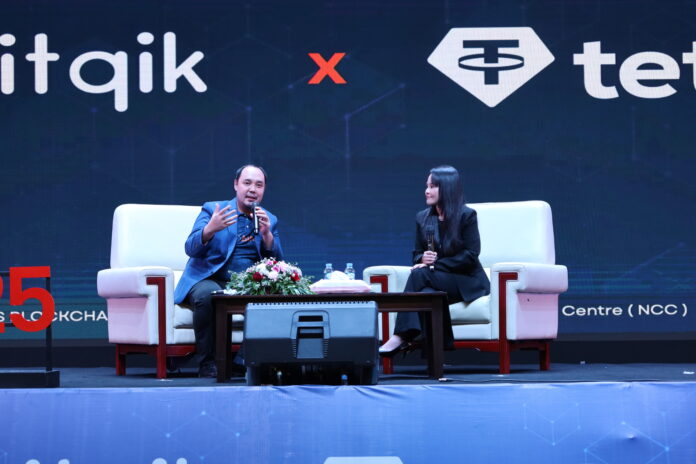
Panel Discussion by Ploy Boonyavee - Country Manager - Thailand/Indochina Tether and CEO Of bitqik, Virasack Viravong. (Photo by Bitqik)
On 7 January, Tether, the largest company in the digital asset industry, and Bitqik, a licensed digital asset exchange, are announcing a strategic collaboration aimed at promoting financial literacy on Bitcoin and Stablecoins in Laos.
Bitqik offers full brokerage and trading services in cryptocurrencies and other digital assets, aiming to make digital finance accessible, secure, and user-friendly. The company believes that decentralized digital currency will significantly reshape the global economy, allowing financial freedom to drive economic innovation, efficiency, and equality worldwide, which aligns perfectly with Tether’s goals.
Through this collaboration, Bitqik plans to expand access to blockchain solutions by promoting and educating the Laotian market about USD₮ and the role of stablecoins in enabling financial inclusion. This initiative is designed to build trust and confidence in stablecoins, positioning USD₮ as a key tool for cryptocurrencies investment, remittances, and digital finance in Laos, meanwhile, encouraging communities, students, and entrepreneurs to incorporate stablecoin solutions.
To achieve this, Bitqik will host quarterly events in central cities, including Vientiane, Pakse, Vangvieng, and Luang Prabang. These events will focus on Stablecoins and Crypto trading, empower participants with knowledge and skills, supporting them to actively participate in the digital economy. Bitqik will also develop online educational content for students and promote informed use cases for digital assets. This initiative aims to educate more than 10,000 people through seminars, roadshows, and online content focused on USD₮ while positioning Tether as the most trusted and widely used stablecoin in the Laos market.
CEO of Tether, Paolo Ardoino said “We are always very excited at the opportunity to collaborate with great minds in various region to bring financial education and promote the informed use of digital assets so that everyone can participate actively in the digital economy, the world of cryptocurrency is constantly evolving and we want this opportunity to be available to everyone everywhere the right way, that is why we are working with companies like Bitqik to bridge the gap by providing the necessary valuable insights required.”
CEO of Bitqik, Virasack Viravong mentioned “Bitqik is very pleased to collaborate with Tether, a world-leading company in the digital asset industry. On the Bitqik Exchange users can trade and convert between crypto and fiat currencies, primarily using USD₮. In addition, the Bitqik Academy will organize activities to promote and educate the Lao community on blockchain technology and digital assets, including Bitcoin investment and the use of stablecoins especially USD₮, which is the most widely used stablecoin in the Lao market. This collaboration will provide Lao people with greater access to digital assets through various activities throughout 2026.”
About Tether and USD₮
Tether is a pioneer in stablecoin technology, driven to revolutionize the global financial landscape with the goals of providing accessible, secure, and efficient financial, communication, and energy infrastructure. Tether focuses on enabling greater financial inclusion and communication resilience, fosters economic growth, and empowers individuals and businesses.
As the creator of the industry’s largest with the most transparent and liquid stablecoin, Tether is committed to build sustainable and resilient infrastructure that benefits underserved communities. By leveraging cutting-edge blockchain and peer-to-peer technology to bridge the gap between traditional financial systems and the potential of decentralized finance.
Leveraging Infosys Topaz™ and Amazon Q Developer to redefine software delivery and client value across industries globally
BENGALURU, India, Jan. 7, 2026 /PRNewswire/ — Infosys (NSE: INFY) (BSE: INFY) (NYSE: INFY), a global leader in next generation digital services and consulting, today announced its strategic collaboration with Amazon Web Services (AWS) to accelerate enterprise adoption of generative artificial intelligence (AI). The initiative focuses on combining Infosys Topaz, an AI-first set of services, solutions, and platforms using generative AI (gen AI) technologies, and Amazon Q Developer, AWS’s generative AI-powered assistant, to enhance Infosys’ internal operations and drive innovation for customers across sectors such as manufacturing, telecom, financial services, and consumer goods.
Infosys is harnessing the power of Infosys Topaz to drive AI-powered transformations across key functions, such as software development, HR, recruitment, sales, and vendor management. For example, in the Software Development Lifecycle (SDLC), the integration of Infosys Topaz with Amazon Q Developer enables automated documentation and provides tailored support for tasks like code generation, debugging, testing, and legacy code modernization, significantly enhancing workflow efficiency and accuracy. Through its collaboration with AWS, Infosys integrates advanced AI capabilities to streamline complex tasks, accelerate project timelines, and enhance employee experiences while driving productivity.
Infosys is also leveraging AWS generative AI services to deliver cutting-edge solutions across industries. These include advanced end-user engagement capabilities for sports and entertainment, powered by Infosys Topaz and Amazon Bedrock, enabling dynamic, real-time personalized experiences to enhance engagement for millions of fans worldwide.
Sandeep Dutta, President, Amazon Web Services (AWS) India and South Asia, said, “Infosys is setting a new benchmark for enterprise transformation through the strategic adoption of generative AI at scale. The combined strengths of Amazon Q and Infosys Topaz will help organizations innovate, achieve operational agility, and unlock differentiated value for their clients. Through this collaboration, Infosys and AWS are committed to delivering solutions rooted in technical excellence and tailored to address the unique demands of global industries.”
Balakrishna D. R. (Bali), Executive Vice President, Global Services Head, AI and Industry Verticals, Infosys, said, “Our collaboration with AWS is fundamentally reshaping how enterprise value is created and delivered. By integrating Amazon Q Developer with Infosys Topaz, we are not just transforming our internal functions, such as development cycles, but also enabling our clients to reimagine critical functions like HR, recruitment, and vendor management. Together, we are building an AI-first ecosystem that empowers enterprises to navigate their next business transformation with agility and precision. This is about amplifying human potential to drive innovation and deliver impact at an unprecedented scale.”
About Infosys
Infosys is a global leader in next-generation digital services and consulting. Over 320,000 of our people work to amplify human potential and create the next opportunity for people, businesses, and communities. We enable clients in 59 countries to navigate their digital transformation. With over four decades of experience in managing the systems and workings of global enterprises, we expertly steer clients, as they navigate their digital transformation powered by cloud and AI. We enable them with an AI-first core, empower the business with agile digital at scale and drive continuous improvement with always-on learning through the transfer of digital skills, expertise, and ideas from our innovation ecosystem. We are deeply committed to being a well-governed, environmentally sustainable organization where diverse talent thrives in an inclusive workplace.
Visit www.infosys.com to see how Infosys (NSE, BSE, NYSE: INFY) can help your enterprise navigate your next.
Safe Harbor
Certain statements in this release concerning our future growth prospects, or our future financial or operating performance, are forward-looking statements intended to qualify for the ‘safe harbor’ under the Private Securities Litigation Reform Act of 1995, which involve a number of risks and uncertainties that could cause actual results or outcomes to differ materially from those in such forward-looking statements. The risks and uncertainties relating to these statements include, but are not limited to, risks and uncertainties regarding the execution of our business strategy, increased competition for talent, our ability to attract and retain personnel, increase in wages, investments to reskill our employees, our ability to effectively implement a hybrid work model, economic uncertainties and geo-political situations, technological disruptions and innovations such as artificial intelligence (“AI”), generative AI, the complex and evolving regulatory landscape including immigration regulation changes, our ESG vision, our capital allocation policy and expectations concerning our market position, future operations, margins, profitability, liquidity, capital resources, our corporate actions including acquisitions, and cybersecurity matters. Important factors that may cause actual results or outcomes to differ from those implied by the forward-looking statements are discussed in more detail in our US Securities and Exchange Commission filings including our Annual Report on Form 20-F for the fiscal year ended March 31, 2025. These filings are available at www.sec.gov. Infosys may, from time to time, make additional written and oral forward-looking statements, including statements contained in the Company’s filings with the Securities and Exchange Commission and our reports to shareholders. The Company does not undertake to update any forward-looking statements that may be made from time to time by or on behalf of the Company unless it is required by law.