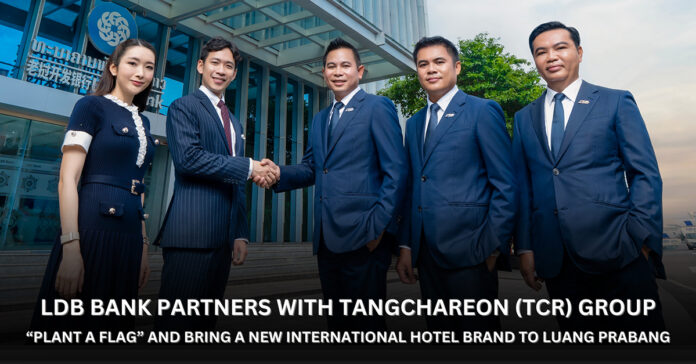
LDB Bank Partners with TangChareon (TCR) Group to “Plant a Flag” and Bring a New International Hotel Brand to Luang Prabang. (Photo supplied by Lao Development Bank)
Another important milestone is set to take place in Luang Prabang as Lao Development Bank (LDB), in collaboration with TangChareon (TCR) Group, advances a new project aimed at bringing an international hotel brand to Luang Prabang.
This collaboration is not merely about providing funding to support a project. It also reflects a shared vision between the business sector and the banking sector to build businesses while laying the foundations for future growth.
“Social Growth Integrator” is a concept that reflects TangChareon (TCR) Group’s role as an integrator of social growth, connecting business development with the growth of communities and society through collaboration and valuable, sustainable business partnerships.
The approximately 21,416-square-metre plot of land designated for this new project was purchased by the Group’s Chairman more than 10 years ago, driven by a vision to develop and expand the Group’s hotel business from southern to northern Laos. This collaboration to advance the project therefore marks an important step in turning that vision into reality. The project will be the fourth hotel developed under TCR Group.
A New Milestone for Luang Prabang
The project involves a planned total investment of more than USD 12 million, with the aim of developing an international hotel brand that will expand accommodation options and create new experiences for tourists.
The project concept focuses on combining the brand’s service standards with the charm and identity of Luang Prabang, allowing guests to experience the atmosphere of a World Heritage city alongside the comfort and convenience of their stay.
This development will further strengthen Luang Prabang’s accommodation capacity to welcome tourists and support the long-term growth of Laos’s tourism sector.
LDB: “A Good Friend by Your Side, Sustainable Investment”
For LDB, this collaboration puts the Bank’s positioning into practice through its motto: “A Good Friend by Your Side, Sustainable Investment.”
LDB’s role is therefore not limited to being a “provider of funding.” Instead, the Bank aims to be a long-term strategic partner, ready to think together, plan together, solve problems together, and build growth together. For LDB, providing funding is the starting point, while growing together is the ultimate goal of the partnership.
This “Plant a Flag” collaboration marks an elevation of the sustainable strategic partnership between LDB and TangChareon (TCR) Group. It demonstrates LDB’s commitment to placing strategic partners at the centre of its approach to driving business, providing consultation, and jointly developing the economy, based on mutual benefits and shared, sustainable success.
It also contributes to the nation’s socio-economic development, particularly through job creation and contributions to public revenue.
Nationwide initiative brings thyroid awareness, health education, targeted TSH screening and referral closer to the community, empowering older Malaysians to better understand their thyroid health.
KUALA LUMPUR, MALAYSIA – Media OutReach Newswire – 19 October 2026 – Alpro Group today announced a launch on “Together, We Transform 60+”, a community health initiative designed to help ageing Malaysians better understand their health risks, identify potential thyroid dysfunction earlier and receive guidance towards appropriate care.
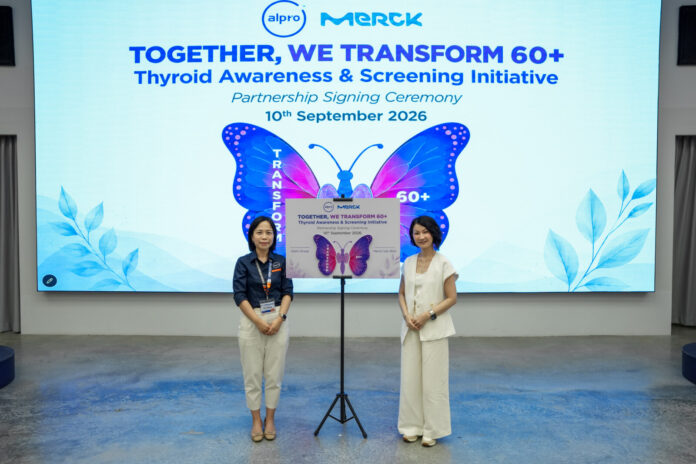
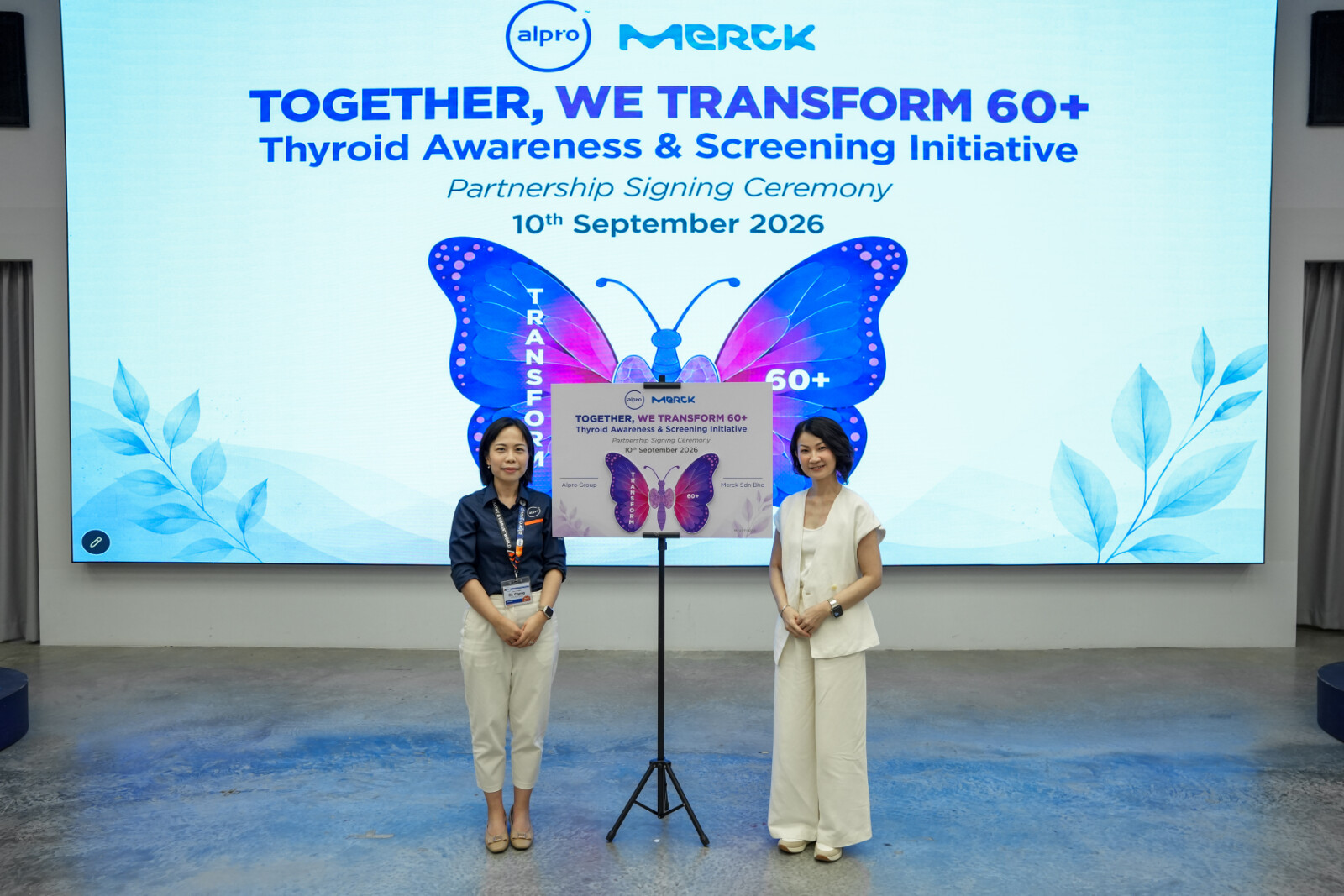
(From Left: Dr. Cheng Duo-Ying, Deputy Medical Director of Alpro Clinic Group; Pixie Yee, Managing Director, Merck Malaysia and General Manager Healthcare, Merck MYSG)
This programme is supported by Merck Sdn Bhd, formalised through a Memorandum of Understanding (MOU), focusing on increasing community awareness among older Malaysian adults aged 60 years and above, particularly those living with hypertension and cholesterol conditions. The initiative reflects a shared commitment to bringing preventive healthcare closer to the community, helping individuals recognised potentially overlooked thyroid symptoms and take informed action.
Thyroid hormones play an important role in regulating many functions of the body, including metabolism, energy levels, heart function, muscle function and cognitive wellbeing. However, when thyroid function becomes abnormal, the signs may not always be obvious.
Persistent fatigue, changes in memory or concentration, chronic constipation, muscle aches or unexplained weakness may be attributed to ageing or existing health conditions. While these symptoms do not necessarily indicate a thyroid disorder, persistent or unexplained symptoms may warrant further medical evaluation.
Unmanaged thyroid dysfunction can affect a person’s overall health and quality of life and, depending on the condition, may contribute to complications affecting cardiovascular, metabolic, cognitive and musculoskeletal health. Identifying potential thyroid dysfunction earlier provides an opportunity for at-risk individuals to seek appropriate clinical assessment and management before the condition has a greater impact on their wellbeing.
TSH screening can play an important role in addressing this gap. TSH testing is widely used as an initial indicator of thyroid function and can help identify individuals whose results suggest that further thyroid assessment may be needed.
One of the challenges in thyroid health is not simply access to care but recognising who should be assessed in the first place. An older adult may continue living with subtle symptoms for months or even years without realising that these changes could warrant further investigation. By bringing thyroid awareness and targeted screening into community healthcare settings, the collaboration aims to reach individuals who may otherwise remain undetected.
As part of the initiative, Alpro is supporting screening initiatives at retail outlets to screen individuals with abnormal or borderline screening results to be guided to seek further clinical evaluation for confirmation and appropriate management, creating a structured pathway from awareness to screening and, where necessary, onwards to professional healthcare follow-up.
Through Alpro Group’s community healthcare network, the initiative aims to make that first step more accessible. Individuals can learn about thyroid health, better understand potential warning signs and access initial screening closer to where they live. Importantly, the programme does not end with a screening result. Those who may require further assessment will be guided towards appropriate clinical follow-up.
Insights from the programme will be used to strengthen the screening and referral model, with the aim of progressively expanding thyroid health initiatives across selected Alpro healthcare touchpoints nationwide. By leveraging Alpro Group’s community healthcare reach supported by Merck Sdn Bhd, both organisations aim to develop a practical and scalable approach that can benefit more Malaysians over time.
Dr. Cheng Duo-Ying, Deputy Medical Director of Alpro Clinic Group, said: “For many older adults, symptoms such as tiredness, constipation, reduced concentration or muscle weakness can easily be accepted as part of ageing. The concern is when people continue living with these symptoms without knowing that further assessment may be needed. Through Together, We Transform 60+, we want to make awareness and early screening more accessible within the community, and importantly, ensure that individuals identified as being at risk are guided towards the appropriate next step in their care.”
Pixie Yee, Managing Director, Merck Malaysia and General Manager Healthcare, Merck MYSG, said: “Early detection can make a meaningful difference in thyroid health, but reaching individuals who may not recognise that they are at risk remains an important challenge. Awareness is an important first step in thyroid health, yet many individuals may not recognise symptoms that warrant further attention. Alpro Group’s strong presence within Malaysian communities provides an important platform to increase public understanding of thyroid health. Through this collaboration, we hope to support community education efforts and encourage individuals to seek timely medical assessment when appropriate.
The programme reflects a shared belief that preventive healthcare should not begin only when a condition becomes serious. It should begin in the community by helping people understand their risks, recognise changes in their health and access appropriate assessment at the right time.
Hashtag: #AlproGroup
The issuer is solely responsible for the content of this announcement.
About Alpro Group
Founded in 2002, Alpro Group’s ecosystem has grown to include Alpro Pharmacy, Apotek Alpro, Alpro スギ (Sugi) Pharmacy, Alpro Physio, Alpro Clinic, Alpro Baby, Alpro OptiSaver, Alpro Audiology, Alpro Health, and Alpro Foundation. Supported by a team of more than 1,000 healthcare professionals, including doctors, pharmacists, nutritionists, dietitians, physiotherapists, optometrist and many others, Alpro serves over 5 million families in Malaysia and Indonesia through its extensive network of 500 physical outlets.
Alpro Pharmacy is the first and only community pharmacy in the region to offer product liability insurance of MYR 1 million in Malaysia and IDR 3 billion in Indonesia, ensuring the supply of genuine medications and enhancing consumer trust.
With the vision of a healthy and vibrant world, Alpro Group aims to become the No. 1 prescription pharmacy chain in Southeast Asia.
Merck
Merck KGaA, Darmstadt, Germany, is a vibrant science and technology company with a rich history dating back to 1668. Today, the company brings together more than 350 years of pioneering spirit and a global presence across 66 countries to help shape a better future through science and technology.
In Malaysia, Merck Healthcare is focused on helping more people benefit from innovation and advancing better health outcomes. With patients at the centre of its work, the company collaborates with healthcare professionals, patient communities, and partners to support care across the stages of life.
Its portfolio spans oncology, neurology and immunology, fertility, thyroid disorders, cardiovascular disease, diabetes, and growth hormone. Guided by a commitment to care, pioneer and outperform, Merck works to create, improve and prolong life and to make a meaningful difference for patients, customers, communities, and the planet.
BARCELONA, Spain, Oct. 19, 2026 /PRNewswire/ — Antibiotic use from childhood through early adulthood is associated with higher odds of irritable bowel syndrome (IBS) at age 24, with the odds increasing as the number of antibiotic prescriptions rose, according to a new study presented today at UEG Week 2026.
Researchers analysed data from 2,853 participants in the Swedish BAMSE birth cohort. Antibiotic prescriptions were obtained from the Swedish Prescribed Drug Register from 2005, when participants were aged 9–11 years, until one year before IBS was assessed at age 24.
At 24, 10.0% of participants had IBS. Antibiotic use was more common among those with IBS, with 87.8% having received antibiotics compared with 80.2% of those without IBS. After accounting for sex and family socioeconomic status, those who had received antibiotics had 1.5 times the odds of IBS (95% CI 1.0–2.2) compared with those who had not.
The odds of IBS increased with the number of antibiotic prescriptions. Compared with those who received no antibiotics, participants receiving one or two prescriptions had 1.3 times the odds of IBS (95% CI 0.9–2.0), rising to 1.6 times (95% CI 1.0–2.4) with three to five prescriptions and 1.7 times (95% CI 1.1–2.6) with six or more.
When antibiotic classes were examined, tetracyclines and cephalosporins remained significantly associated with higher odds of IBS after adjusting for sex and family socioeconomic status. Any use of tetracyclines was associated with 1.4 times (95% CI 1.1–1.8) the odds of IBS, while three or more prescriptions of cephalosporins were associated with 6.0 times the odds (95% CI 1.9–18.8).
Whilst the study did not investigate why antibiotic exposure was associated with IBS, one possible explanation for the association involves the gut microbiome. Lead author Dr Jessica Sjölund explained, “Previous studies have shown that antibiotics can alter the gut microbiome. As alterations to the gut microbiome are thought to play a role in IBS, this could be one pathway underlying the association observed.”
Reflecting on the practical implications of the findings, Dr Sjölund stressed the need to balance the essential role of antibiotics with careful prescribing. “Antibiotics remain an important treatment for bacterial infections, and our findings should not discourage their use when they are needed. Rather, they highlight the possibility of longer-term effects from repeated exposure and add to the reasons for avoiding unnecessary antibiotic prescribing.”
CHANGSHA, CHINA – Media OutReach Newswire – 19 October 2026 – Co-produced by Hunan Satellite TV and Mango TV and created by Wang Qin Studio, Season 4 of the food and cultural tourism program Go Where Flavors of Hunan Abound premiered on October 12, 2026, and is airing simultaneously on Hunan Satellite TV and Mango TV from Monday to Thursday at 7:30 p.m.
Under the theme “A Season of World-Class Landscapes,” the new season focuses on the development of the Greater Zhangjiajie International Tourism Area. Host Wang Han leads the program’s food exploration team through Zhangjiajie, Cili, Jishou, Fenghuang, Changde, Shaoyang and Huaihua, presenting a cultural tourism journey that connects local cuisine with spectacular landscapes and the stories of the people who call these places home.
Connecting Landscapes Through Food
The opening episode takes viewers to Zhangjiajie, beginning with the towering Bailong Elevator before following the hiking trails along Golden Whip Stream. International tourists encountered along the way share that Zhangjiajie was their planned first stop in China. Zhangjiajie welcomes more than one million international visitors annually from over 190 countries.
Yet the destination’s international appeal extends beyond its extraordinary scenery. It also lies in the flavors nurtured by the land and the people whose lives are rooted in it.
In Longweiba Village, young entrepreneurs who have returned to their hometowns are rediscovering local ingredients such as kudzu root and vine tea, incorporating them into coffee and bingfen, a traditional chilled jelly dessert. Their creations bring new life to familiar mountain flavors and introduce them to younger generations.
In Cili, local cuisine reveals stories passed down through generations. The dish known as Yanghe Dumi carries a history of mutual support dating back to 1935. After receiving help from their neighbors during difficult times, local residents cut pork tripe into rice-sized pieces to prepare a dish that could be shared among more people. The recipe became a lasting reminder of community solidarity.
The team also visits a centuries-old tree associated with the Red Army and samples Xikou beef. Revolutionary commanders He Long and Xiao Ke once held a pre-battle mobilization meeting at the site. The ancient tree, which survived a lightning strike, embodies the resilience of the local community, a quality echoed in the firm, chewy texture of Xikou beef. Together, the stories and flavors reveal the enduring spirit of the mountains.
Discovering the People Behind the Flavors
At Jixiang Rice Noodle Shop in Jishou, owner Wang Jixiang has been running her business for 35 years. The shop serves four varieties of rice noodles with a selection of toppings. Among them, rice noodles topped with stir-fried pork and fermented chili offer a distinctive combination of sour and spicy flavors characteristic of western Hunan.
The journey continues along the Wanrong River and across Xinnü Bridge, adorned with wish plaques, before reaching the creative home of the Miao folk band Miao Ren San Man.
The band members moved from their mountain village to town to support their children’s education and earn a living by running a business, but they never abandoned their musical aspirations. Performing their original song Calling to the Mountains in a Miao village, they express a longing to reach a mountaintop together and release their deepest frustrations through a collective shout.
In Fenghuang, restaurant owner Xiao Yang offers another example of how local culinary traditions are finding new audiences. After leaving military service, he worked as a tour guide and discovered that many visitors knew little about Fenghuang’s distinctive local cuisine.
He subsequently introduced Miao-style smoked pork trotters in sour soup, a specialty of the La’ershan area, to a wider market, making modest adjustments to suit broader tastes while preserving its traditional character.
Wang Han also shares the history of Miao sour soup, which he learned about when first tasting the dish. During the migrations of their ancestors, the Miao people often faced shortages of supplies, including salt. They fermented green vegetables and relied on sour flavors for seasoning. Over time, sour soup became a culinary reminder of those journeys.
Today, the distinctive fermented flavor continues to evolve as it is paired with an increasingly diverse range of ingredients. Rather than remaining unchanged, traditional recipes continue to thrive through new interpretations, connecting generations of people to the land and its history.
Connecting Local Journeys with the World
One distinctive feature of the fourth season is the introduction of a food-tasting panel at each destination, bringing together local residents, visitors from other regions and international guests.
After sampling the dishes, panel members vote to select the “Hunan Flavor Signature Dishes.”
Among the selected specialties are claypot rice with farm-raised Chinese giant salamander and Tujia-style Sangun Wawa from Zhangjiajie; Xikou beef and Lao Sizhong rice noodles from Cili; and Fangyuan rice noodles and smoked pork trotters in sour soup from Fenghuang.
This interactive format demonstrates how people from different cultural backgrounds can experience and interpret the same dish in their own ways.
The towering sandstone peaks of Zhangjiajie, the Loushui River in Cili, the Wanrong River in Jishou, and the Tuojiang River, Hongqiao Bridge and traditional stilt houses of Fenghuang together form the scenic landscape of the Greater Zhangjiajie International Tourism Area.
Meanwhile, rice noodles, cured meats, sour soup and distinctive local delicacies bring warmth, flavor and everyday life to these natural and cultural landscapes.
About Season 4 of Go Where Flavors of Hunan Abound
Under the theme “A Season of World-Class Landscapes,” Season 4 of Go Where Flavors of Hunan Abound focuses on the Greater Zhangjiajie International Tourism Area and adopts a two-episode format for each destination.
The first episode, focusing on rural and mountain flavors, takes viewers hiking, exploring lesser-known destinations and participating in local challenges while visiting ordinary households to discover traditional home-cooked dishes.
The second episode explores the culinary life of urban neighborhoods, visiting long-established restaurants, discovering local food traditions and featuring signature dishes prepared by experienced chefs.
Landscapes provide the setting, while local flavors bring the stories to life. By bringing together China’s distinctive natural scenery and authentic regional cuisine, Go Where Flavors of Hunan Abound presents the Greater Zhangjiajie International Tourism Area to international audiences as a vibrant destination rich in culture, character and culinary heritage.
The issuer is solely responsible for the content of this announcement.
ADELAIDE, Australia, Oct. 19, 2026 /PRNewswire/ — Budget Direct, Australia’s most awarded insurer, underwritten by leading insurance group Auto & General, today started serving customers from Adelaide, marking a significant investment in South Australia.
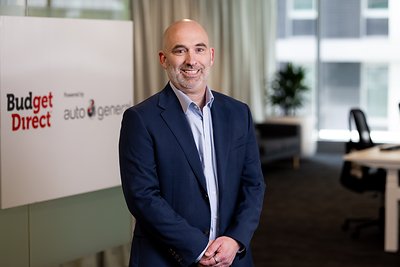
Ashley Wright, General Manager South Australian Operations
A new facility in the CBD, commencing operations today, will initially house a dedicated service team of approximately 50 staff, focused on providing great customer service. This team will support all Auto & General policies, including Budget Direct customers and valued partner brands.
In early 2027, the business will continue to grow and move to a permanent site with capacity for up to 300 employees.
Adam Crane, CEO Insurance Australia at Auto & General, emphasised the strategic importance of this expansion. “Opening our new office in Adelaide is a clear demonstration of our commitment to our customers in South Australia and across the country,” said Mr Crane.
“We’re thrilled to be investing in the local economy, creating valuable, long-term job opportunities, and contributing to Adelaide’s future growth. This move allows us to enhance our service capabilities and deepen our connection with the community.”
Relocating to Adelaide to lead the establishment of this new team is Ashley Wright, General Manager for the South Australian operations. “It’s an exciting time to be in Adelaide, building a fantastic new team that will play a vital role in delivering outstanding service to our customers,” said Mr Wright.
“Our focus is on providing a seamless and supportive experience for policyholders, and I am particularly proud to be connecting with local talent and creating new career pathways here in South Australia.”
This expansion underscores Budget Direct’s dedication to its growing customer base and its ongoing efforts to provide employment opportunities within Australia.
The new office is testament to the company’s long-term vision and belief in the potential of Adelaide to support its national operations.
SHANGHAI, Oct. 18, 2026 /PRNewswire/ — Tomorrowland brought its signature festival experience to Shanghai for the second edition of The Magic of Tomorrowland in China. In partnership with Hero Esports, INS LAND and Budweiser, the festival transformed Hero Dome into a two-day celebration of electronic music, bringing together thousands of People of Tomorrow.
The Magic of Tomorrowland 2026
Located in INS SEA, the newly developed waterfront destination in Shanghai’s western Huangpu district, the event brought together music, culture, fashion, gastronomy and technology in one immersive setting. The sold-out show offered an intimate yet high-energy festival experience in a purpose-built indoor venue.
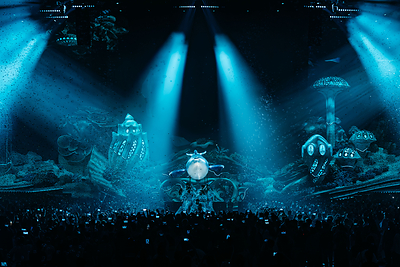
Developed by Hero Esports and INS LAND, Hero Dome provided the setting for an ambitious main-stage production. A 88-metre stage, complemented by 72 moving ceiling screens, created an immersive visual environment that surrounded the audience and brought Tomorrowland’s distinctive stage design to life.
Bringing the Magic of Tomorrowland to Shanghai With a scenography built entirely locally, The Magic of Tomorrowland demonstrated how the festival’s signature experience could be adapted to a new setting while maintaining its focus on creativity, technical excellence and the audience experience. The production was developed in accordance with local safety requirements, with sustainability also forming part of the planning process.
“China has always opened its arms to us, and returning for a second year with our local partners is a privilege,” said Debby Wilmsen, spokesperson at Tomorrowland. “Shanghai’s Tomorrowland is one of a kind — the stage, the lineup, the crowd. To see the Tomorrowland experience take root here, and to watch the EDM scene grow with us, is something we’re truly proud of.”
“We’re proud to be working with Tomorrowland for a second year running, alongside our sister company INS LAND,” said Danny Tang, CEO and Co-Founder of Hero Esports. “We exist to create experiences that connect people. Together with likeminded teams like Tomorrowland and INS LAND we hope to bring the magic back to Shanghai again through the festival format. We can’t wait to bring more of these connecting experiences to China.”
Day One: Axwell, Lost Frequencies and a Standout B2B Set The first night opened with a lineup spanning melodic house, progressive sounds and driving techno, building towards a headline performance by Axwell of Swedish House Mafia.
Lost Frequencies brought his melodic, uplifting sound to the stage, while Cassian and Kevin de Vries joined forces for a back-to-back set that blended their distinct approaches to electronic music. MORTEN and Linska added their own energy to the evening, while Chinese DJ Sally opened the day, setting the tone for the weekend.
From the opening set to the final moments of the night, the programme showcased the breadth of electronic music, bringing international artists and local talent together under one roof.
A Universe Comes to Life: TIESTO Close The Magic Of Tomorrowland 2026 The second night culminated in a headline performance by Dutch electronic music icon Tiësto, who brought the two-day celebration to a close with a set inside Hero Dome.
The evening also featured a series of standout performances across different corners of the electronic music spectrum. ARTBAT and R3HAB joined forces for a back-to-back set built around driving rhythms and expansive electronic soundscapes. Miss Monique and Alison Wonderland brought their distinctive sounds to the programme, while Joel Corry delivered his recognisable blend of dance music and high-energy performance. Chinese artist Evin King represented the strength of the local scene on closing night.
Together, the two nights offered a programme that connected internationally recognised artists with the growing electronic music community in China.
Special Sunset Sets: New Names, New Stories Beyond the main stage, Paperworld by Budweiser offered a more intimate setting for discovering artists and enjoying the festival in a different atmosphere.
Hauzer brought his energetic sound to the stage, alongside performances by Nosi, Bhaskar and Carly Wilford. DJ L, Zok and Mansun Lui completed the sunset programme, creating a distinct musical experience within the wider festival grounds.
The additional stage offered another perspective on The Magic of Tomorrowland, complementing the scale of the main-stage production with a more intimate space for music and discovery.
Mainstage in Numbers The Magic of Tomorrowland brought together an extensive locally produced technical and creative operation. From scenography and decorative elements to food stalls, merchandise spaces and costumes, the production reflected a collaboration between international creative direction and local expertise.
88-metre wide mainstage
15,000 m³ of scenic structures
20,000 m² of stage design
2867m² of brand-new LED screen
72 ceiling screens
692 moving lights and laser fixtures
120 L-acoustic speakers
56 CO₂ effects (without CO₂)
32 bubble machines
14 confetti effects
20-metre catwalk with 24 performers wearing locally crafted costumes
The Full Experience The Magic of Tomorrowland extended beyond the stage, bringing together hospitality, gastronomy, brand activations and exclusive merchandise to create a more complete festival experience.
Across the venue, dedicated spaces and activations offered visitors opportunities to explore different aspects of the event, while China-exclusive merchandise provided a collection of pieces created specifically for the local audience.
The festival’s food offering was another highlight, with some 15 participating brands spanning Chinese regional cuisine, Western dining, Thai street food, drinks and sweets. The selection brought together established culinary names and diverse food concepts, giving visitors the opportunity to discover a broad range of flavours between performances.
Yongfu: known for its Michelin one-star recognition and three-diamond rating from the Black Pearl Restaurant Guide, Yongfu brought its expertise in Ningbo cuisine to the festival.
Qingxi Hui: Michelin Two Stars, Black Pearl Three Diamonds, leading Chaoshan cuisine.
Xiding: High-end brand “Xiding Family Banquet” Michelin One Star; this stall is set to share their popular Xiding Sea Cucumber Dumplings.
LES NUGAES: Michelin Plate Award, high-end French cuisine from Yongfu Group, no Black Pearl rating
PARIS, FRANCE – Media OutReach Newswire – 18 October 2026 – At the 2026 Paris Motor Show, Clifford Kang, Board Member and Vice President of SERES Group, announced that AITO plans to officially enter the European market in autumn 2027, marking another major step in its global development. With deep respect for Europe’s automotive heritage, AITO looks forward to collaborating and growing with partners around the world.
In China, AITO has earned the trust of over 1.2 million customers. Globally, in Brand Finance’s Automobiles 100 2026 ranking, AITO ranked among the world’s top 10 luxury automotive brands and was the No.1 Chinese luxury automotive brand by brand value, making it the only Chinese automotive brand.
Driven by its philosophy of “Intelligence Redefining Luxury”, AITO is committed to bringing together traditional luxury and technological luxury to create an elevated intelligent mobility experience.
“AITO stands for ‘Adding Intelligence to Auto’. We believe a vehicle should be a mobile intelligent agent that understands you and responds to your needs. That is why we introduced our brand philosophy, Intelligence Redefining Luxury. It is our interpretation of what New Luxury means for AITO,” said Clifford Kang, Board Member and Vice President of SERES Group. “We come with deep respect for Europe’s automotive heritage. We come to collaborate and grow with partners around the world. And we come with our philosophy: Intelligence Redefining Luxury.”
As AITO strengthens its global presence, it looks forward to working with partners across the value chain to build a healthy automotive ecosystem, foster mutual growth and bring intelligent luxury mobility to more customers around the world.
Hashtag: #AITO
The issuer is solely responsible for the content of this announcement.
BEIJING, Oct. 18, 2026 /PRNewswire/ — An interview from China.org.cn with Wang Xiaohui and David Ferguson on the Long March:
Faith: The Spark Born by the Yudu Riverside
David Ferguson:
This is the Yudu River. One dusk in October, 1934, more than 86,000 soldiers of the Red Army crossed this river and embarked on the Long March, a two-year saga that has left its mark in history.
Yet, lingering here by the river, I am struck by a simple question: If you have faith in a bright future, and reality seems to thwart you at every turn, where do you find the moral strength to keep believing?
Wang Xiaohui:
At dusk on Oct. 17, 1934, an army of more than 86,000 troops gathered along the banks of the Yudu River. Over 800 boats of all sizes floated on the water, bound together with planks collected from villagers’ home gates, timber beams, and even coffin boards reserved for elderly locals. The people of Yudu built this pontoon bridge, determined to help the army led by the Communist Party of China (CPC) cross the river.
At that time, no one knew that the great expedition embarked upon by the banks of the Yudu River would go on to transform China and exert far-reaching influence across the world.
China in the 1920s and 1930s was plagued by chaos and despair.
The Kuomintang (KMT), the ruling party back then, was not capable of unifying the nation, leaving warlords locked in endless fighting. In 1931, Japanese invaders launched an assault on northeastern China, beginning their invasion. Crushed under domestic turbulence and foreign aggression, countless civilians were displaced, with many even starving to death on the streets; in certain regions, severe drought resulted in zero harvests, yet the farmers were forced to pay land taxes assessed for more than a decade into the future.
Amid this turmoil, the only glimmer of hope for the Chinese nation was kindled by the revolution ignited by the Communist Party of China.
The CPC, dedicated to winning liberation for the people and national independence, built contingents of workers’ and peasants’ Red Army troops and revolutionary base areas across the countryside. Impoverished farmers were granted land ownership, as well as unprecedented political dignity. On Nov. 7, 1931, the Chinese Soviet Republic was officially proclaimed in Ruijin, then a small village in southeastern China’s Jiangxi Province, establishing a Soviet system under which workers, peasants and soldiers elected representatives to run regional affairs and make policies.
The communist ideal of a fair society free from exploitation and equality for all blazed like a spark in the darkness; it kindled hopes among impoverished Chinese and became the wellspring of faith that enabled the Red Army — a force made up of poor workers and peasants — to overcome all hardships in the days to come.
Yet, bright as the spark was, it burned thin and fragile at times. Could this flame still endure when the ideals it carried were repeatedly battered by harsh reality?
In September 1933, flocks of warplanes clouded the skies over the Red Army’s revolutionary base areas. By then, Japanese invaders were steadily advancing towards North China, but Chiang Kai-shek’s KMT turned a blind eye to the looming national crisis. They mobilized over a million troops and more than 200 aircraft to launch a massive offensive at the Red Army’s base areas. Over the previous three years, Chiang Kai-shek had mounted four major military “encirclement” campaigns aimed at exterminating the Red Army, but all ended in failure. He was desperate for a pivotal victory to restore his prestige and to wipe out the CPC and the Red Army.
At the time, the commander of the Red Army abandoned mobile warfare tactics pioneered by Mao Zedong and other commanders, opting instead for rigid positional warfare involving conventional head-on clashes. But the reality was, some Red Army units didn’t even possess a single light machine gun; how could they confront the heavily-armed KMT army head-on?
Zhong Ming, a Red Army medic, could never erase the memories of gravely wounded soldiers being carried to his aid station. He remembered how a soldier whose chest was blown open begged his comrades to end his life. At the frontline, a whole battalion of Red Army soldiers religiously followed orders to defend crude earth-and-wood bunkers, but under the constant barrage of KMT artillery and airstrikes, every soldier in the battalion laid down their lives; not a single man survived.
What’s more heart-wrenching is that no matter how fearlessly the Red Army fought, the steep imbalance in military strength, paired with erroneous military command led to irreversible losses. By October 1934, the KMT’s iron-clad encirclement closed menacingly around Ruijin.
Faced with this dead-end, what decision would you make?
This stood as the most agonizing decision for the Red Army. The biggest challenge lay not in sacrificing one’s life for an ideal, but in finding a way to keep the revolutionary cause alive.
To stay meant defeat — the Red Army had no room to maneuver within the Central Revolutionary Base Area. To break through the encirclement, however slim the odds, offered a fighting chance. Preserving the Red Army as a living force mattered much more than clinging to isolated strongholds. Where the spark survives, the path ahead remains lit.
The air already turned chilly in October. Units of the Central Red Army assembled in Yudu to prepare for a strategic shift. The plan was kept strictly classified; none of the soldiers knew they were evacuating the base areas, only sensing an unusual vibe.
At dusk on Oct. 17, crowds lined up at the Yudu riverbank. Tens of thousands of villagers flocked from every corner to see the Red Army off. They walked alongside the marching columns, slipping food like eggs and glutinous rice balls into the soldiers’ pockets, praying for their swift homecoming.
The main force of the Central Red Army set off. Within days, they left behind revolutionary base areas where they had survived, grown and taken root. No one anticipated that the journey they embarked on would become the Long March, a trek spanning over 10 provinces. Still less could anyone imagine that this journey would ultimately pave the way for a brand-new China.
Looking back on this chapter of history, many claim that the Red Army only set out on this expedition because the enemies left them no other choice. To a degree, yes, the Long March was indeed a forced strategic shift, yet this fact does nothing to diminish its greatness and glory.
The ordinary Red Army soldiers had no idea how far they would march, or where they were heading. But they clung firmly to their founding mission: to deliver liberation for the people and independence to the nation. This unswerving conviction kept them from disintegrating through countless perils, sustaining them as they marched into the unknown with resolve.
David Ferguson:
I now realize that faith and ideals untested by harsh reality may have no true substance.
Since its founding, the Communist Party of China has always upheld the realization of communism as its fundamental goal. Despite devastating losses and extreme adversity, the Red Army continued to press forward resolutely and never faltered. Its inner strength came from an unshakable belief in the cause, an unwavering commitment to the founding aspiration, and a profound sense of mission. The Red Army was never fleeing pursuers in search of safety; it was marching forward to a future in which it had a steadfast belief.
Wang Xiaohui:
The Long March went on for two years. The Red Army trekked 25,000 li across some of China’s harshest terrain, but they kept their heads high, seeking hope amid despair and marching towards light through unending darkness. The lofty ideals and sense of mission they upheld have also become the torch that guides generations of CPC members in the following centennial, tempering them into steel as they press forward unswervingly toward national rejuvenation.
That spark lit along the Yudu River has never dimmed since.