Home Blog Page 2353

China-ASEAN AI Application Ecosystem Exchange Conference 2025 Kicks Off in Nanning

NANNING, China, Sept. 20, 2025 /PRNewswire/ — A report from CCTV.com: 

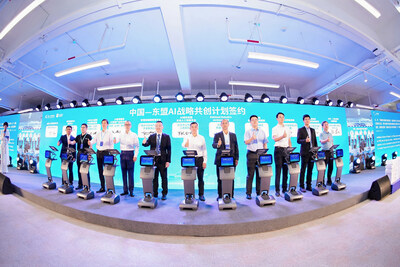
The China (Guangxi)–ASEAN Artificial Intelligence Application Ecosystem Exchange Conference 2025 opened on September 18 at Wuxiang Cloud Valley AI Park in Nanning.

Signing ceremony for the "China-ASEAN AI Strategy Co-creation Initiative"
Signing ceremony for the “China-ASEAN AI Strategy Co-creation Initiative”

Focusing on “AI+” collaboration, the event unveiled over 30 cross-border AI cooperation achievements and witnessed the signing of more than 50 agreements, marking a new phase in AI partnership between China and ASEAN.

As one of the flagship events of the 22nd China-ASEAN Expo, the conference featured a main forum, industry-specific sub-forums, an innovation exhibition, and networking sessions aimed at integrating AI with the real economy and accelerating digital and intelligent transformation across the region.

Hou Gang, Mayor of Nanning, stated that the city is accelerating the development of the China-ASEAN AI Innovation Cooperation Center and has established a comprehensive AI industry chain ecosystem, positioning Nanning as a key hub for Chinese AI enterprises expanding into the ASEAN market. Mr. Yeoh Jun Hao, representative of the Malaysian Palm Oil Board, noted that Malaysia is actively introducing AI technology in agriculture, emphasizing that “China and Malaysia have strong complementarity and broad cooperation potential in AI.”

Several key platforms and initiatives were launched during the conference, including the “Star Computing Cloud Pool” inclusive computing power platform by Wuxiang Cloud Valley, the AITIR multilingual real-time translation card, and the National Robotics Exchange (NRX) talent platform. The China-ASEAN AI Industry-University-Research Innovation Alliance was also established, alongside the “AI Application Ecosystem Construction Initiative” launched by Runjian Co., Ltd.

Parallel sub-forums covered AI in education, intelligent operations, AI agriculture, and AI healthcare, initiating multiple joint training programs and cross-border cooperation projects. An innovation exhibition area featured over 40 institutions and ASEAN enterprises showcasing real-world AI applications across various sectors.

Co-organized by the Nanning Municipal People’s Government, the Guangxi Big Data Development Department, and other institutions, the conference attracted nearly a thousand representatives from governments, enterprises, and academic circles across China and ASEAN. Guangxi will continue to strengthen partnership-building and technical collaboration with ASEAN in AI, promoting broader adoption of “AI+” throughout the region.

Intelligence Connects All, AI Empowers the Future: 2025 China International Consumer Electronics Exposition Opens in Qingdao

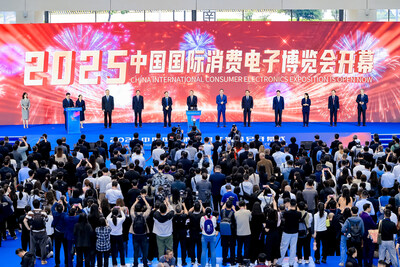
QINGDAO, China, Sept. 20, 2025 /PRNewswire/ — The 2025 China International Consumer Electronics Exposition (CICE) officially commenced today at the Qingdao International Convention and Exhibition Center (Hongdao Hall). Drawing over 300 exhibitors from 17 countries and regions, the event spans an exhibition area of 60,000 square meters, making it the largest edition in the Expo’s history.

As the only national-level and professional exhibition of its kind in Shandong Province, CICE is organized by the Shandong Provincial People’s Government and co-hosted by the Qingdao Municipal People’s Government, the China Chamber of Commerce for Import and Export of Machinery and Electronic Products (CCCME), the Chinese Institute of Electronics (CIE), and the China Association of Communication Enterprises (CACE). Now in its 22nd edition, this year’s Expo is themed “Intelligence Connects All, AI Empowers the Future” focusing on global consumer electronics industry frontiers and future trends.

The exhibition features six dedicated zones showcasing the latest products and cutting-edge technologies across key sectors, including artificial intelligence (AI), virtual reality (VR), low-altitude economy, smart mobility, smart home solutions, digital consumer goods, and international consumer electronics brands. With an emphasis on product launches and the integration of exhibition and trade, the CICE Expo is hosting 27 supporting events such as industry summits, business matchmaking sessions, and new product debuts, establishing a comprehensive, high-value platform for industry exchange and innovation-driven dialogue.

Huawei and Industry Pioneers Unveil Over 30 Global Benchmark Showcases for Digital and Intelligent Transformation in the Data Communication Domain

SHANGHAI, Sept. 20, 2025 /PRNewswire/ — During HUAWEI CONNECT 2025, Huawei and industry pioneers unveiled over 30 global benchmark showcases for digital and intelligent transformation in the data communication domain, highlighting the latest innovations and field-proven industry practices in the AI era. These showcases span key sectors such as government, education, healthcare, finance, and electric power.

As AI becomes increasingly pervasive, networks have evolved beyond mere information channels to become the backbone that drives intelligent upgrading of industries. The release of these showcases reflects Huawei’s cutting-edge practices in supporting digital and intelligent transformation across industries, while also demonstrating the successful implementation of innovative applications.

For example, in education, the global smart education showcase at Shenzhen Welkin School sets a new paradigm for the “1+N” collaborative model, promoting high-quality, equitable education. In finance, the financial intelligent computing center showcase at China Pacific Insurance takes the lead in implementing large-model training and inference, accelerating the digital and intelligent upgrade of financial services. The smart campus network showcase at the world-renowned integrated resort destination Resorts World Sentosa in Singapore significantly enhances the digital experience for visitors, establishing a new benchmark for digital transformation.

Announcing global benchmark showcases to set new standards for industry excellence

The launch ceremony was attended by Huawei leaders and distinguished guests, including Jason He, President of Huawei’s Enterprise Data Communication Marketing and Solution Sales Department; Yury Yin, Chief Marketing Officer of Huawei’s Data Communication Product Line; Alvin Tan, Divisional President of Information Technology at Resorts World Sentosa (Singapore); Gong Weidong, Principal of Shenzhen Welkin School; and Wang Hui, Chief Expert of Intelligent Computing Cloud at China Pacific Insurance Group.

Over 30 benchmark showcases unveiled this time were co-developed by Huawei and its customers, reflecting their joint exploration and hands-on experience in digital and intelligent transformation. They provide replicable success stories for industry peers, and also enable Huawei to further refine solutions in real-world business scenarios, developing innovative offerings with broader industry applicability.

These global benchmark showcases will be open to global customers for on-site visits, offering firsthand insight into how AI is deeply integrated with networks to enhance efficiency and elevate user experience.

Looking ahead, Huawei, together with more customers and partners, will continue to drive innovation, drawing on insights from global benchmark showcases to accumulate best practices.

Flora Growth Corp. (FLGC) Announces $401 Million Funding with a $22.88 Million Strategic Investment from Defi Development Corp. (DFDV) to Initiate Groundbreaking AI Zero Gravity ($0G) Coin Treasury Strategy

$0G, the native cryptocurrency of the distributed AI infrastructure project 0G, will serve as the company’s primary reserve asset

  • Partners include DeFi Dev Corp., the first digital asset treasury company to accumulate and compound Solana
  • Flora to rebrand as ZeroStack and appoint 0G’s Co-Founder, Michael Heinrich, to the role of Executive Chairman and Daniel Reis-Faria as CEO
  • $0G is the first-to-market AI-based Digital Asset Treasury

Fort Lauderdale, Florida–(Newsfile Corp. – September 19, 2025) – Flora Growth Corp. (NASDAQ: FLGC) (“Flora” or the “Company”) today announced the pricing of a private investment in public equity offering, positioning the Company to implement a 0G treasury strategy. 0G is the largest AI-first blockchain that is infinitely scalable and designed to power the future of distributed AI. Upon close of the transaction, the company expects to rebrand as ZeroStack and retain the “FLGC” ticker symbol.

The offering is led by DeFi Dev Corp., the first DAT designed to accumulate and compound Solana (SOL), Hexstone Capital, and Carlsberg SE Asia PTE Ltd (CSAPL) as well as participation by many others such as Dao5, Abstract ventures, Dispersion Capital, Blockchain Builders Fund, and Salt.

With over $366 million secured in in-kind digital assets and $35 million in cash and equivalent commitments, the Company has entered into a private placement transaction (“PIPE transaction”) for the purchase and sale of the Company’s common shares (including pre-funded warrants) at a purchase price of $25.19 per share and a value of $3.00 per each $0G token contributed in-kind and certain in-kind loans. Certain cash investors and investors who choose to fund their purchases with $0G tokens will receive pre-funded warrants exercisable once the company receives shareholder approval.

“We’re thrilled to partner with FLGC on this fundraise and look forward to driving a deep collaboration between 0g and Solana. DFDV is excited to support AI adoption across Solana,” said Joseph Onorati, CEO of Defi Development Corp. In addition, the Company will be holding a small portion of its treasury holdings in SOL tokens as part of the collaboration.

Following the closing of the PIPE Transaction, which is expected to occur on or around September 26, 2025, subject to customary closing conditions, the Company intends to use the proceeds of the PIPE Transaction to acquire additional $0G, the native cryptocurrency of the 0G ecosystem.

0G has achieved what many considered impossible in decentralized AI, successfully training a 107 billion parameter model using distributed clusters over low-throughput internet connections. This represents a 357x improvement over existing research from Google (DiLoCo) and demonstrates that large-scale AI models can be trained effectively without centralized infrastructure and that distributed networks can handle the computational complexity previously thought to require massive, centralized data centers. 0G is the first-ever Web3 AI company to vertically integrate its own proprietary storage network, compute network, and training marketplace to fully decentralize AI workloads. This infrastructure is bundled into an all-in-one operating system, offering highly performant AI tools for seamless integration by Web2 and Web3 builders.

“AI isn’t just transforming what companies do, it’s transforming how they must build infrastructure. This treasury strategy offers institutional investors equity-based exposure to the foundational infrastructure enabling transparent, verifiable, large-scale, cost-efficient, and privacy-first AI development,” said Daniel Reis-Faria, incoming Flora Growth CEO.

About the Company
Flora, which will be rebranded as ZeroStack, is the first and largest decentralized AI treasury company that is investing in the future of AI infrastructure through strategic ownership in 0G, an AI infrastructure company that has created an open and decentralized AI network fueled by the $0G token. The Company is a global pharmaceutical distributor through its wholly owned subsidiary Phatebo GmbH.

Investor Relations:
Investor Relations ir@floragrowth.com
Clifford Starke Clifford.Starke@floragrowth.com

Media:
media@floragrowth.com

Forward-Looking Statements
This release contains statements that may be considered forward-looking statements within the meaning of the safe harbor provisions of the Private Securities Litigation Reform Act of 1995. All statements other than statements of historical fact in this release are forward-looking statements. These forward-looking statements can be identified by words or phrases such as “may,” “will,” “expect,” “anticipate,” “aim,” “estimate,” “intend,” “plan,” “believe,” “potential,” or other similar expressions, although not all forward-looking statements contain these identifying words. These forward-looking statements include, but are not limited to, express or implied statements regarding: the Company’s business plans; expectations for $0G and the Company’s treasury strategy; the Company’s rebrand to ZeroStack; the satisfaction of customary closing conditions related to the offering and to complete the offering; the Company’s ability to obtain subsequent shareholder approval; and expectations for future capital markets transactions. Forward-looking statements are based only on our current beliefs, expectations and assumptions regarding the future of our business, future plans and strategies, anticipated events and trends, the economy and other future conditions. Actual results may differ materially from those indicated in the forward-looking statements because the realization of those results is subject to many uncertainties, including economic conditions, fluctuations in the market price of $0G, the impact on our business of the regulatory environment and other risks and uncertainties described in the “Risk Factors” section of Part I, Item 1A of the Company’s most recent Annual Report on Form 10-K and subsequent filings with the Securities and Exchange Commission. Forward-looking statements contained in this press release are made as of the date of this press release, and we undertake no duty to update such information except as required under applicable law.

This release does not constitute an offer to sell or a solicitation of an offer to buy any securities. The private placement described herein is being made pursuant to an exemption from registration under Regulation D of the Securities Act of 1933, as amended, and is available only to accredited investors as defined under Rule 501(a) of Regulation D.

The issuer is solely responsible for the content of this announcement.

Beyond power generation: How China’s Heqi No. 1 explores nuclear energy to cut carbon emissions


BEIJING, CHINA – Media OutReach Newswire – 19 September 2025 – At the Tianwan Nuclear Power Station (TNPS), located in Lianyungang City, east China’s Jiangsu Province, eight nuclear power units are lined up, among which six operational units have a total installed capacity of over 6.6 million kilowatts, supplying approximately 158 million kilowatt-hours of clean electricity daily to the East China Power Grid. Today, the station has taken on a new mission: producing industrial steam.

image-1.jpeg

In June 2024, Heqi No. 1, China’s first industrial-use nuclear energy steam supply project, was officially put into operation at TNPS. The project delivers 4.8 million tons of zero-carbon steam annually to the petrochemical base of Lianyungang City, equivalent to reducing the combustion of 400,000 tons of standard coal each year or planting 2,900 hectares of new woods. This marks the first project of its kind worldwide to produce industrial steam at such a scale using nuclear power.

Industrial steam is a critical energy source for manufacturing, chemical, and textile industries, primarily used for heating, drying, and powering equipment. In recent years, China’s industrial steam market has shown steady growth. Yet, traditional fossil fuel-based steam production emits carbon dioxide, sulfur dioxide, and other gases. Using nuclear energy, therefore, offers a cleaner alternative.

Industrial steam requires temperatures above 260°C. To achieve this, Heqi No. 1 uses multi-stage heat exchange technology, with equipment including preheaters, steam generators, and superheaters. Through a coordinated process involving the pump, preheater, steam generator, superheater, etc., industrial steam is continuously produced. Heqi No. 1’s core steam conversion unit extracts reactor steam and achieves production through partitioned heat exchange, operating similarly to a self-heating hotpot, according to Li Ruigang, deputy director of the Operation Division No. 2, Jiangsu Nuclear Power Corporation.

While Heqi No. 1 can be likened to a giant “self-heating hotpot,” transitioning from nuclear power generation to steam supply is a complex systemic challenge. Nuclear reactor operations must maintain a dynamic balance between energy production and consumption. The project team used reverse engineering to analyze hundreds of parameters in the reactor control system over nearly seven months. In March 2024, the team successfully tested the “Reactor-Turbine Heat Matching” technology.

While the Heqi No. 1 team focused on technological breakthroughs, construction work was carried out simultaneously. Spanning six years from design and development to engineering construction, the Heqi No. 1 project led to 37 technological innovation patents and has contributed significantly to China’s experience in the integrated utilization of nuclear energy.

The completion of the Heqi No. 1 project marks only the start of China’s broader push into nuclear energy applications. In the coming years, nuclear technology is poised for rapid expansion across fields such as medicine, industry, agriculture, and security.

Hashtag: #ChinaNewsService

The issuer is solely responsible for the content of this announcement.

CGTN:Xinjiang in its most prosperous period ever: white paper

BEIJING, Sept. 20, 2025 /PRNewswire/ — Today’s Xinjiang is experiencing the best period of development in its history, according to a white paper issued by the Information Office of the State Council on Friday, highlighting that solid steps have been taken to govern China’s Xinjiang Uygur Autonomous Region in accordance with the law, maintain stability through ethnic unity, strengthen cultural identity and bonds, bring greater prosperity to the region and its people, and develop Xinjiang from a long-term perspective.

This year marks the 70th anniversary of the establishment of the Xinjiang Uygur Autonomous Region. “This has contributed to unprecedented economic and social development and significant improvement of people’s well-being, and brought a greater sense of gain, happiness and security to the people,” noted the white paper titled “CPC Guidelines for Governing Xinjiang in the New Era: Practice and Achievements.”

Stronger foundations for stability, peace and security have been built in Xinjiang, the document said, adding that a historic transformation from chaos to stability and from stability to good governance has been achieved in the region.

Since 2012, the central government has allocated more than 4 trillion yuan (about $562.3 billion) in transfer payments to Xinjiang, including nearly 543.48 billion yuan in 2024 alone, according to the white paper.

Xinjiang has consciously integrated its regional opening-up strategy into the country’s overall plan of opening up to the west, aiming to build a golden channel across the Eurasian continent and a gateway for opening up to the west, said the white paper.

Xinjiang has seen comprehensive improvements in infrastructure, said the white paper, noting that the operating mileage of railways and the highway network totaled 9,202 kilometers and 230,000 kilometers respectively, as of 2024, and the number of civil air routes reached 595, of which 25 are international routes.

Leveraging its natural resources and industrial capabilities, Xinjiang has accelerated efforts to develop a modern industrial system with its own unique advantages. The white paper mentioned that Xinjiang has been China’s top cotton producer for 32 consecutive years, with the mechanization rate in plowing, planting, and harvesting reaching 97 percent.

It also pointed out that Xinjiang continues to improve its policies on promoting public health and has significantly increased its protection of people’s health, adding that the average life expectancy of residents in Xinjiang rose from 30 years in 1949 to 77 years in 2024.

The region has also seen rapid economic development over the past 70 years, with the GDP surging to 2.05 trillion yuan (about $288 billion) in 2024 from 1.23 billion yuan in 1955. 

Xinjiang fully, accurately and faithfully implements the CPC’s policy on freedom of religious belief by respecting people’s religious beliefs, the white paper said.

Xinjiang respects and protects ethnic minorities’ right to learn and use their own spoken and written languages, it added, noting that the region administers religious affairs in accordance with the law, allows religious groups to manage their own affairs independently, and guides religions to be compatible with socialist society.

Xinjiang has improved its comprehensive preservation of cultural heritage. The document said that Xinjiang has formulated plans for the protection of regional cultural heritage, and released local regulations to strengthen legal guarantees for preserving cultural heritage.

The white paper also noted the battle against desertification on the fringes of the Taklimakan Desert in the region has been stepped up, with the desert now entirely encircled with a sand-blocking green belt stretching 3,046 kilometers, the longest in the world.

https://news.cgtn.com/news/2025-09-20/Xinjiang-in-its-most-prosperous-period-ever-white-paper-1GNq6HFDPwY/p.html

Pony.ai Expands Into Singapore, to Deploy Autonomous Vehicles in Cooperation with ComfortDelGro

SINGAPORE, Sept. 20, 2025 /PRNewswire/ — Pony.ai, a global leader in autonomous driving technology, today announced its entry into the Singapore market, joining hands with its partner ComfortDelGro, the largest local transportation service provider, to deploy autonomous vehicles and facilitate daily commuting for residents.

The two companies plan to introduce autonomous mobility services initially in the Punggol area with fixed routes. They will begin services in the coming months after obtaining regulatory approval.

The program aligns with Singapore’s ambitious plan to introduce autonomous mobility solutions to supplement existing transportation infrastructure—such as taxis, private hailing cars, and subways—while also providing services during off-peak hours, which have been consistently constrained by driver shortages.

Pony.ai and ComfortDelGro have built a strong collaborative foundation prior to this Singapore initiative. The partnership began when the two companies signed a Memorandum of Understanding (MoU) in July 2024, establishing a strategic partnership aimed at accelerating the large-scale commercial deployment of autonomous vehicles. It was followed by a pilot program in Guangzhou, which was launched in March 2025 and served as a valuable precursor for their expanded efforts in Singapore.

In June 2025, Singapore’s Ministry of Transport (MOT) announced a plan to deploy autonomous vehicles (AVs) in public housing estates by the end of the year, integrating them into the national public transport network. The initial rollout will focus on Punggol district. This initiative is part of a broader governmental effort to address driver shortages while enhancing connectivity across public transportation.

Pony.ai Founder and CEO Dr. James Peng said: “We are thrilled to introduce Pony.ai’s advanced autonomous driving technology to Singapore. By delivering safe, comfortable, and efficient autonomous mobility services, we are committed to enhancing local residents’ daily commutes and advancing the nation’s smart mobility vision.”

Mr. Cheng Siak Kian, Managing Director and Group CEO, ComfortDelGro said: “We are delighted to expand our partnership with Pony.ai to bring safe, innovative and reliable autonomous mobility services to communities in Singapore. Our successful collaboration in Guangzhou has provided a strong foundation for this next phase, combining Pony.ai‘s proven technology with our operational expertise and infrastructure capabilities. This partnership supports our vision for sustainable and intelligent mobility solutions that will benefit our communities.”

Pony.ai currently operates fully driverless commercial Robotaxi services in all four tier-1 cities in China—Beijing, Shanghai, Guangzhou and Shenzhen. These services cover an area of over 2,000 square kilometers. The company has accumulated over 50 million kilometers of autonomous driving mileage globally, demonstrating solid safety records and user satisfaction. Registered users on its ride-hailing platform surged 136% year-over-year in the second quarter. Even with a larger user base, its user satisfaction rate remains well above 4.8 out of 5.

Globally, Pony.ai has been steadily expanding its footprint. The most recent development came two weeks ago when it announced its partnership with Qatar’s premier transportation service provider Mowasalat “Karwa” to bring autonomous vehicles to the country’s roads. This further strengthened Pony.ai’s presence in the Middle East, building upon the company’s partnership with Dubai’s RTA, as well as its cooperation with Uber in the region. Furthermore, Pony.ai is also conducting on-road testing in Luxembourg with local partner Emile Weber, and 24/7 testing in Seoul’s Gangnam district.

Singapore has world-class transportation infrastructure, and its government is very supportive in developing autonomous mobility to help build a green and sustainable future. We see great potential in the local market as well as the broader Southeast Asian markets. Combining our technology with ComfortDelGro’s extensive local expertise, we hope to use Singapore as a launchpad to explore more opportunities in the region,” said Peng.

Huawei Unveils Upgraded Xinghe Intelligent WAN Solution to Achieve Determinism over Uncertainty

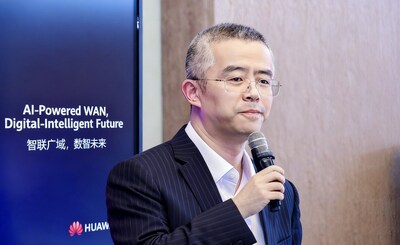
SHANGHAI, Sept. 20, 2025 /PRNewswire/ — During the “AI-Powered WAN, Digital-Intelligent Future” WAN roundtable held at HUAWEI CONNECT 2025, Huawei unveiled its upgraded Xinghe Intelligent WAN Solution. This solution empowers customers to accelerate network monetization and industry intelligence through an IP network foundation with deterministic experience.

John Cai, President of Router Domain, Huawei Data Communication Product Line

John Cai, President of Router Domain, Huawei Data Communication Product Line, outlined four critical challenges facing WANs today. (1) The push for global digitalization makes it imperative to eliminate data silos and achieve network convergence. (2) Emerging services pose higher requirements on differentiated bandwidth and latency. (3) With inclusive AI, a packet loss rate of just 0.1% can diminish computing efficiency on traditional networks by 50%, necessitating higher transmission efficiency. (4) Breakthroughs in quantum computing technologies threaten traditional network security.

To address these challenges, Huawei’s Xinghe Intelligent WAN Solution builds a deterministic network that provides four core capabilities:

All-service convergence: Slicing and SRv6 ensure service isolation and reduce provisioning time to minutes.

Deterministic network: AI-powered application identification achieves over 95% accuracy in identifying encrypted flows, enabling automatic detection of video conference freezes and acceleration of critical services.

High-computing-efficiency WAN: The flow awareness engine identifies 99% of elephant flows, and intelligent scheduling boosts throughput to 90%. The Starnet lossless algorithm achieves long-distance, zero-packet-loss transmission with below 5% computing efficiency loss. Furthermore, the Starnet vector engine safeguards sensitive information.

Intrinsic security: Quantum-resistant encryption and Xsec achieve simplified deployment, enabling secure, encrypted networks for confidential data transmission.

At the roundtable, several customers and partners shared their collaboration achievements. Mohammad Mustaghfirin, CTO of Surge Indonesia, explained how Surge became the world’s first benchmark for self-built broadband operations in transportation using IPv6 Enhanced networking, delivering high-quality connectivity to users. Kenneth Bagarukayo, Commissioner of Data Networks at Uganda’s Ministry of ICT & NG, noted that SRv6 has reduced deployment time per MDA from 2 hours to just 1 minute, and slicing has enabled a multi-purpose network. And Zhang Xianguo, General Manager of Network R&D at DYXnet, revealed that DYXnet and Huawei co-developed an AI-native ultra-connectivity architecture, enabling elastic scaling and RDMA-based long-distance file transfers—over 20 times faster than TCP.

Looking ahead, Huawei will advance AI-network integration, driving more industries toward intelligent transformation with the Xinghe Intelligent WAN Solution. The company aims to build intelligent, efficient, and reliable deterministic network foundations for global customers.