Home Blog Page 2474

Independent study reveals USD 1.2 billion economic impact of foodpanda in Pakistan for 2023-2024

KARACHI, Pakistan, Aug. 15, 2025 /PRNewswire/ — foodpanda, Pakistan’s leading online delivery platform, today announced the release of its comprehensive ‘Economic Impact Assessment of foodpanda in Pakistan‘ study, independently conducted by the Lahore University of Management Sciences (LUMS). The first-of-its-kind study unveils the significant economic contributions of foodpanda to Pakistan’s economy.

The study, spearheaded by an accomplished team at LUMS, utilised primary and secondary data sources, including input output multipliers for the local economy to establish a technical assessment of the businesses’ contribution to the fabric of the economy.

Interestingly, the study reveals a projected USD 1.2 Billion (PKR 335 billion) contribution to Pakistan’s economy in FY 2023-24, with the number continuing to increase compared to the previous 2 years. The study also finds strong multiplier effects across food, hospitality, manufacturing, transport, and retail. In FY 2023-2024, foodpanda facilitated PKR 75 billion in restaurant GMV (total revenue accruing to restaurants through the platform), significantly boosting income and jobs in the sector. In the same year, the platform also contributed PKR 9.76 billion in taxes and has empowered over 50,000 riders and numerous entrepreneurs, driving financial inclusion via fintech.

Commenting on the collaborative effort, Muntaqa Peracha, CEO foodpanda Pakistan stated, “This in-depth study by LUMS is a powerful validation of foodpanda’s significant role in Pakistan’s economic landscape. It showcases strong multiplier effects across industries and highlights our role in directly boosting income and jobs, along with a significant tax contribution. The insights provided by the research are invaluable, and fuel our determination to continue innovating, expanding our services, and improving financial inclusion and social responsibility, all while building a truly prosperous digital future for Pakistan.”

Also speaking on foodpanda’s impact on the nation’s economy, Dr. Kashif Z. Malik, Associate Professor, Department of Economics at LUMS, commented, “Our research at LUMS reveals that foodpanda’s impact extends far beyond just food and grocery delivery. This study highlights its fundamental role in stimulating growth across a diverse range of sectors, empowering a significant number of individuals through entrepreneurship and livelihood opportunities, and contributing substantially to the digital and financial inclusion landscape of Pakistan.”

The study unequivocally demonstrates the platform’s transformative impact on Pakistan’s food delivery ecosystem, creating substantial opportunities for small businesses and gig workers while making a significant contribution to the national economy. Micro-level impacts include 100% income growth for 13,000+ partner restaurants, an average PKR 120,000 monthly income for 7,000+ HomeChefs (primarily women), and income increases for 57% of 50,000+ freelance riders. foodpanda is  steadfast in its commitment to enabling an inclusive digital economy and  continues to innovate and expand, it remains dedicated to empowering individuals, supporting businesses, and enabling sustainable growth, solidifying its position as a key contributor to the nation’s prosperity. Moreover, the scale of foodpanda’s investment and the resulting economic and financial inclusion highlight the immense potential within Pakistan and the strength of its evolving digital ecosystem, encouraging further investment in the sector.


CARsgen Therapeutics Announces 2025 Interim Results

SHANGHAI, Aug. 15, 2025 /PRNewswire/ — CARsgen Therapeutics Holdings Limited (Stock Code: 2171.HK), a company focused on developing innovative CAR T-cell therapies, has announced its 2025 Interim Results.

Business Highlights

  • Cash and bank balances were around RMB1,261 million as of June 30, 2025. Cash and cash equivalents and deposits at the end of 2025 are expected to be not less than RMB1,100 million. We expect to have adequate cash into the 2028 excluding subsequent cash inflows.
  • During H1 2025, certification and regulatory filings for zevor-cel have been completed in more than 20 provinces or cities. CARsgen has received a total of 111 confirmed orders from its commercialization partner Huadong Medicine.
  • The Center for Drug Evaluation (CDE) of the National Medical Products Administration (NMPA) of China has accepted the New Drug Application (NDA) for satri-cel.
  • The results of satri-cel confirmatory Phase II trial in China have been published in The Lancet and at the 2025 ASCO Annual Meeting.
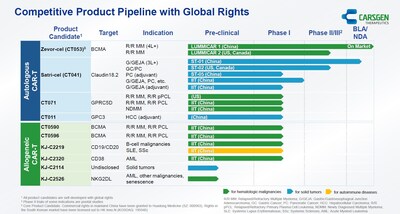
  • Multiple allogeneic CAR-T products are in development, covering treatment areas such as hematologic malignancies, solid tumors, and autoimmune diseases.
  • CARsgen introduced Zhuhai SB Xinchuang to accelerate allogeneic CAR-T development in mainland China.

Dr. Zonghai Li, Founder, Chairman of the Board, Chief Executive Officer, and Chief Scientific Officer of CARsgen Therapeutics, said, “In the first half of 2025, we made significant strides across technology innovation, product development, and commercialization. Zevor-cel sales surged, while satri-cel became the world’s first CAR-T targeting solid tumors to file an NDA. We are also advancing multiple allogeneic CAR-T therapies to enhance clinical outcomes and expand patient access.”

Financial Highlights

CARsgen’s revenue was around RMB51 million for the six months ended June 30, 2025, mainly from zevor-cel, which was calculated on the basis of ex-works price, rather than end-of-market prices. Our revenue is recognized upon completion of ex-works delivery of products. Due to the inherent time cycle of CAR-T manufacturing, there is a discrepancy between the number of orders obtained from Huadong Medicine and number of ex-works deliveries. CARsgen’s gross profit was around RMB29 million for the six months ended June 30, 2025. In the commercialization stage, we are demonstrating a strong cost competitive advantage, which is mainly due to self-manufacture for plasmids and vectors with stable output and high yield per batch.

Cash and bank balances were around RMB1,261 million as of June 30, 2025, representing a decrease of around RMB218 million from around RMB1,479 million as of December 31, 2024. The decrease was mainly due to the payment of research and development expenses, administrative expenses and investment of capital expenditure. Cash and cash equivalents and deposits at the end of 2025 are expected to be not less than RMB1,100 million. We expect to have adequate cash into the 2028 excluding subsequent cash inflows.

CARsgen Pipeline
CARsgen Pipeline

Zevor-cel Demonstrates Rapid Sales Growth

Zevorcabtagene autoleucel (zevor-cel, R&D code: CT053) is an autologous fully human CAR T-cell product against B-cell maturation antigen (BCMA) approved by the NMPA of China for the treatment of adult patients with relapsed or refractory multiple myeloma (R/R MM) who have progressed after at least 3 prior lines of therapy (including a proteasome inhibitor and an immunomodulatory agent).

CARsgen entered into a collaboration agreement with Huadong Medicine (000963.SZ) for the commercialization of zevor-cel in mainland China. In terms of commercialization, Huadong Medicine has established a dedicated, professional, and comprehensive commercial team to promote the use of zevor-cel and has been utilizing China’s multi-layered insurance system to improve patient accessibility. During the first half of 2025, certification and regulatory filings for zevor-cel have been completed in more than 20 provinces or cities and we have received a total of 111 confirmed orders from Huadong Medicine. We anticipate that growth of sales revenue of zevor-cel will further accelerate with continuous marketing activities and broader insurance coverage.

Satri-cel NDA Accepted for Review in China

Satricabtagene autoleucel (satri-cel, R&D code: CT041) is an autologous humanized CAR T-cell product against Claudin18.2 (CLDN18.2). In June 2025, the CDE of NMPA of China has accepted the New Drug Application (NDA) for satri-cel for the treatment of Claudin18.2-positive advanced gastric/gastroesophageal junction adenocarcinoma (G/GEJA) in patients who have failed at least two prior lines of therapy. Satri-cel is the first and only CAR T-cell product globally for which an NDA submitted for the treatment of solid tumors. Satri-cel was granted Priority Review in May 2025 and Breakthrough Therapy Designation (BTD) in March 2025 by the CDE.

The results of satri-cel confirmatory Phase II trial (NCT04581473) in China have been published in The Lancet and were orally presented at the 2025 American Society of Clinical Oncology (ASCO) Annual Meeting. Satri-cel demonstrated significant progression-free survival (PFS) improvement and a clinically meaningful overall survival (OS) benefit with a manageable safety profile, compared to standard therapy.

Multiple Allogeneic CAR-T Product Candidates in Development

CARsgen has been advancing differentiated allogeneic CAR T-cell products utilizing the proprietary THANK-uCAR® platform. CARsgen has recently developed the THANK-u PlusTM platform as an enhanced version of THANK-uCAR® to address the potential impact of NKG2A expression levels on therapeutic efficacy of the allogeneic CAR T-cells.

CT0596 is an allogeneic BCMA-targeted CAR T-cell product utilizing THANK-u Plus™ platform for the treatment of R/R MM and R/R plasma cell leukemia (PCL). The investigator-initiated trials (IITs) are ongoing in China. Preliminary clinical data for CT0596 were released in May 2025 on CARsgen’s official website. Based on the preliminary safety and efficacy data, CT0596 demonstrated favorable tolerability and encouraging efficacy signals in R/R MM patients across all predefined dose levels, with CAR-T expansion observed.

In addition, there are several allogeneic CAR T-cell products under development:

  • KJ-C2219: Targeting CD19/CD20, for the treatment of hematologic malignancies and autoimmune diseases. An IIT for relapsed/refractory B-cell non-Hodgkin lymphoma (R/R B-NHL) has been initiated at the end of 2024. A separate IIT for systemic lupus erythematosus (SLE) and systemic sclerosis (SSc) has been initiated in the first half of 2025.
  • KJ-C2320: Targeting CD38, for the treatment of acute myeloid leukemia (AML). An IIT has been initiated at the end of 2024.
  • KJ-C2114: For the treatment of solid tumors.
  • KJ-C2526: Targeting NKG2DL, for the treatment of AML, other malignancies, and senescence.

On February 25, 2025, CARsgen has entered into the agreements (the “Agreements”) with an investment fund (the “Investor”) managed by Zhuhai Hengqin SB Xinchuang Equity Investment Management Enterprise (Limited Partnership), pursuant to which, among others, the Investor has agreed to subscribe to additional registered capital of UCARsgen Biotech Limited (“UCARsgen”) at a cash consideration of RMB80,000,000, representing 8% stake of the enlarged registered capital of UCARsgen. Upon the completion of the capital increase, CARsgen’s share in UCARsgen will be diluted from 100% to 92%.

UCARsgen is a China-based new drug discovery biotechnology company focused on allogeneic CAR T-cell therapies for the treatment of hematologic malignancies. Under the Agreements, UCARsgen has secured the exclusive rights in mainland China for the research, development, manufacture, and commercialization of the following allogeneic CAR T-cell products from CARsgen: the BCMA-targeted allogeneic CAR T-cell therapy for the treatment of multiple myeloma and plasma cell leukemia and the CD19/CD20 dual-targeted allogeneic CAR T-cell therapy for the treatment of B-cell malignancies (excluding indications for the treatment of autoimmune diseases).

About CARsgen Therapeutics Holdings Limited

CARsgen is a biopharmaceutical company focusing on developing innovative CAR T-cell therapies to address the unmet clinical needs including but not limited to hematologic malignancies, solid tumors and autoimmune diseases. CARsgen has established end-to-end capabilities for CAR T-cell research and development covering target discovery, preclinical research, product clinical development, and commercial-scale production. CARsgen has developed novel in-house technologies and a product pipeline with global rights to address challenges faced by existing CAR T-cell therapies. Efforts include improving safety profile, enhancing the efficacy in treating solid tumors, and reducing treatment costs, etc. CARsgen’s mission is to be a global biopharmaceutical leader that provides innovative and differentiated cell therapies for patients worldwide and makes cancer and other diseases curable.

Forward-looking Statements

All statements in this press release that are not historical fact or that do not relate to present facts or current conditions are forward-looking statements. Such forward-looking statements express the Group’s current views, projections, beliefs and expectations with respect to future events as of the date of this press release. Such forward-looking statements are based on a number of assumptions and factors beyond the Group’s control. As a result, they are subject to significant risks and uncertainties, and actual events or results may differ materially from these forward-looking statements and the forward-looking events discussed in this press release might not occur. Such risks and uncertainties include, but are not limited to, those detailed under the heading “Principal Risks and Uncertainties” in our most recent annual report and interim report and other announcements and reports made available on our corporate website, https://www.carsgen.com. No representation or warranty is given as to the achievement or reasonableness of, and no reliance should be placed on, any projections, targets, estimates or forecasts contained in this press release.

For more information, please visit https://www.carsgen.com/

Hesai Secures New Lidar Design Win from Toyota

PALO ALTO, Calif., Aug. 15, 2025 /PRNewswire/ — Today, Hesai Technology (Nasdaq: HSAI), a global leader in lidar solutions, announced a new design win from Toyota, one of the world’s largest automakers. The new energy model, to be manufactured by a joint venture of Toyota based in China, will feature Hesai’s long-range automotive lidar ATX, and is scheduled to enter mass production in 2026.

This Toyota joint venture is accelerating its transition to electrification and intelligence: new-energy models now drive its growth, while its industry-leading advanced driver-assistance systems sets a new pace. Powered by a robust local R&D ecosystem, it seamlessly integrates global engineering standards with Chinese innovation, delivering smarter, greener mobility at scale.

This partnership not only reaffirms Hesai’s market leadership in lidar—securing endorsement from a world-renowned automaker—but also inaugurates a new chapter of Hesai’s collaboration with Japan’s automotive industry.

Hesai’s ATX integrates the company’s most advanced technology platform, delivering comprehensive upgrades to its optical-mechanical design and laser transceiver modules. It combines a compact form factor with powerful performance, making it a popular choice among leading OEMs. ATX has already secured design wins across multiple models with several OEMs planning to adopt it a standard feature in their 2025–2026 production lineups.

Moving forward, Hesai will leverage its cutting-edge lidar R&D and manufacturing capabilities to empower Toyota in setting a new benchmark for joint venture brands in the new energy vehicle market. Together, the two companies will strive to deliver the best-in-class intelligent driving experience for the mass market, with a shared commitment to making driver-assistance systems safer, more comfortable, and more intelligent.


Aramco signs $11 billion Jafurah midstream deal with international consortium led by Global Infrastructure Partners

  • Jafurah Midstream Gas Company secures significant foreign direct investment, together with agreement to lease and leaseback development and usage rights for Aramco’s Jafurah midstream assets 
  • Aramco to receive upfront proceeds of $11 billion on completion, highlighting the value creation potential of its ongoing capital investment program
  • Transaction to support optimization of Aramco’s assets, reflecting positive outlook for gas demand in the Kingdom of Saudi Arabia

DHAHRAN, Saudi Arabia, Aug. 15, 2025 /PRNewswire/ — Aramco, one of the world’s leading integrated energy and chemicals companies, has signed an $11 billion lease and leaseback deal involving its Jafurah gas processing facilities with a consortium of international investors, led by funds managed by Global Infrastructure Partners (GIP), a part of BlackRock.

Jafurah is the largest non-associated gas development in the Kingdom of Saudi Arabia, estimated to contain 229 trillion standard cubic feet of raw gas and 75 billion Stock Tank Barrels of condensate. It is a key component in Aramco’s plans to increase gas production capacity by 60% between 2021 and 2030, to meet rising demand.

As part of the transaction a newly-formed subsidiary, Jafurah Midstream Gas Company (JMGC), will lease development and usage rights for the Jafurah Field Gas Plant and the Riyas NGL Fractionation Facility, and lease them back to Aramco for a period of 20 years. JMGC will receive a tariff payable by Aramco in exchange for granting Aramco the exclusive right to receive, process and treat raw gas from Jafurah.

Aramco will hold a 51% majority stake in JMGC, with the remaining 49% held by investors led by GIP. The transaction, which will not impose any restrictions on Aramco’s production volumes, is expected to close as soon as practicable, subject to customary closing conditions.  

Amin H. Nasser, Aramco President & CEO, said: “Jafurah is a cornerstone of our ambitious gas expansion program, and the GIP-led consortium’s participation as investors in a key component of our unconventional gas operations demonstrates the attractive value proposition of the project. This foreign direct investment into the Kingdom also highlights the appeal of Aramco’s long-term strategy to the international investment community. As Jafurah prepares to start phase one production this year, development of subsequent phases is well on track. We look forward to Jafurah playing a major role as a feedstock provider to the petrochemicals sector, and supplying energy required to power new growth sectors, such as AI data centers, in the Kingdom.”

Bayo Ogunlesi, Chairman and CEO of GIP, said: “We are pleased to deepen our partnership with Aramco with our investment in Saudi Arabia’s natural gas infrastructure, a key pillar of global natural gas markets. Today’s announcement builds upon BlackRock and GIP’s longstanding relationship with Aramco to serve growing market needs for cleaner fuels, energy security and energy affordability.”

The opportunity to invest in one of the region’s most significant natural gas developments garnered significant interest from investors worldwide. Co-investors in the transaction include leading institutional investors from Asia and the Middle East. When completed, the transaction will support the optimization of Aramco’s assets and capture additional value from the development of the Jafurah gas field.

GIP’s mid-market infrastructure equity team, which invests in diversified and contracted mid-market infrastructure assets and businesses around the world, has a robust, long-term track record of successful investments in the Middle East. This investment also builds upon the strong existing relationship between Aramco and BlackRock. In 2022, BlackRock co-led a consortium of investors in a separate minority investment in Aramco Gas Pipelines Company.

Contact Information

X: @aramco

About Aramco

As one of the world’s leading integrated energy and chemicals companies, our global team is dedicated to creating impact in all that we do, from providing crucial oil supplies to developing new energy technologies. We focus on making our resources more dependable, more sustainable and more useful, helping to promote growth and productivity around the world. https://www.aramco.com

About Global Infrastructure Partners (GIP)

Global Infrastructure Partners (GIP), a part of BlackRock, is a leading infrastructure investor that specializes in investing in, owning and operating some of the largest and most complex assets across the energy, transport, digital infrastructure and water and waste management sectors. With energy pragmatism central to our investment thesis, we are well positioned to support the global energy transition.

GIP’s scaled platform has over $183 billion in assets under management. We believe that our focus on real infrastructure assets, combined with our deep proprietary origination network and comprehensive operational expertise, enables us to be responsible stewards of our clients’ capital and to create positive economic impact for communities. For more information, visit www.global-infra.com.

Disclaimer

The press release contains forward-looking statements. All statements other than statements relating to historical or current facts included in the press release are forward-looking statements. Forward-looking statements give the Company’s current expectations and projections relating to its capital expenditures and investments, major projects, upstream and downstream performance, including relative to peers. These statements may include, without limitation, any statements preceded by, followed by or including words such as “target,” “believe,” “expect,” “aim,” “intend,” “goal,” “may,” “anticipate,” “estimate,” “plan,” “project,” “can have,” “likely,” “should,” “could,” and other words and terms of similar meaning or the negative thereof. Such forward-looking statements involve known and unknown risks, uncertainties and other important factors beyond the Company’s control that could cause the Company’s actual results, performance or achievements to be materially different from the expected results, performance, or achievements expressed or implied by such forward-looking statements, including the following factors: global supply, demand and price fluctuations of oil, gas and petrochemicals; global economic conditions; competition in the industries in which Saudi Aramco operates; climate change concerns, weather conditions and related impacts on the global demand for hydrocarbons and hydrocarbon-based products; risks related to Saudi Aramco’s ability to successfully meet its ESG targets, including its failure to fully meet its GHG emissions reduction targets by 2050; conditions affecting the transportation of products; operational risk and hazards common in the oil and gas, refining and petrochemicals industries; the cyclical nature of the oil and gas, refining and petrochemicals industries; political and social instability and unrest and actual or potential armed conflicts in the MENA region and other areas; natural disasters and public health pandemics or epidemics; the management of Saudi Aramco’s growth; the management of the Company’s subsidiaries, joint operations, joint ventures, associates and entities in which it holds a minority interest; Saudi Aramco’s exposure to inflation, interest rate risk and foreign exchange risk; risks related to operating in a regulated industry and changes to oil, gas, environmental or other regulations that impact the industries in which Saudi Aramco operates; legal proceedings, international trade matters, and other disputes or agreements; and other risks and uncertainties that could cause actual results to differ from the forward-looking statements in this press release, as set forth in the Company’s latest periodic reports filed with the Saudi Exchange. For additional information on the potential risks and uncertainties that could cause actual results to differ from the results predicted please see the Company’s latest periodic reports filed with the Saudi Exchange. Such forward-looking statements are based on numerous assumptions regarding the Company’s present and future business strategies and the environment in which it will operate in the future. The information contained in the press release, including but not limited to forward-looking statements, applies only as of the date of this press release and is not intended to give any assurances as to future results. The Company expressly disclaims any obligation or undertaking to disseminate any updates or revisions to the press release, including any financial data or forward-looking statements, whether as a result of new information, future events or otherwise, unless required by applicable law or regulation. No person should construe the press release as financial, tax or investment advice. Undue reliance should not be placed on the forward-looking statements.

O-RAN ALLIANCE Opens Call for Participation in its O-RAN Global PlugFest Fall 2025

  • Call for Participation for the O-RAN ALLIANCE Global PlugFest Fall 2025 is underway
  • The PlugFest is hosted by 25 operators and independent institutions in 19 labs around the world
  • The PlugFest will focus on 6 themes targeted to facilitate interoperability and deployment

BONN, Germany, Aug. 15, 2025 /PRNewswire/ — The O-RAN ALLIANCE has opened the Call for Participation for its O-RAN Global PlugFest Fall 2025.

O-RAN ALLIANCE PlugFest

The PlugFest provides a global platform for Radio Access Network (RAN) equipment manufacturers, service providers, universities, and research institutions to test, integrate, and validate solutions in a collaborative, multi-vendor environment.

The PlugFest is hosted by 25 operators and independent institutions in 19 labs in different regions around the world.

PlugFest activities are planned from August through November 2025, followed by presentations and demonstrations of results to the O-RAN community. O-RAN ALLIANCE plans a public announcement of the PlugFest outcomes in December.

PlugFest efforts will focus on six themes prioritized in the O-RAN ALLIANCE Testing and Integration Focus Group:

  • O-RAN System Testing with Layer 1 Acceleration
  • Demonstrate consistent and repeatable open fronthaul testing in multiple labs
  • O-RAN Energy Consumption, Efficiency and Savings Testing
  • O-RAN E2E Deployment Templates, DevOps, and Test Automation
  • O-RAN White-box Hardware diversity ecosystem
  • Open Fronthaul Transport Testing with multiple O-RUs

Several of these areas utilize AI-powered intelligent components, including Service Management and Orchestration (SMO), RAN Intelligent Controllers (RICs) and related xApps/rApps, enabled by O-RAN specifications.

Learn more about the PlugFest and register on our website.

Details from previously completed O-RAN PlugFests are publicly available in the O-RAN PlugFest Virtual Showcase.

Participation is free for O-RAN ALLIANCE members and participants. Non-member organizations are welcome to join the O-RAN ALLIANCE to gain membership benefits, including:

  • Complimentary PlugFest participation
  • Access to face-to-face meetings and technical work groups
  • Collaboration with a diverse global O-RAN ecosystem

Learn more and apply for O-RAN ALLIANCE membership through our website.

“The O-RAN Global PlugFest is more than just a testing event – it’s where ideas become solutions and collaborations help enable future real-world deployments,” said Brian Daly, Co-chair of the O-RAN Technical Steering Committee and AVP at AT&T Services Inc. “Participants will benefit from access to advance labs and cooperation with others on validation and integration of technology and solutions shaping the next generation of open, intelligent, and virtualized RAN.”

About O-RAN ALLIANCE
The O-RAN ALLIANCE is a world-wide community of mobile operators, vendors, research & academic institutions as well as governmental agencies, operating or interested in Radio Access Networks (RAN). As the RAN is an essential part of any mobile network, the O-RAN ALLIANCE’s mission is to re-shape the industry towards more intelligent, open, virtualized and fully interoperable mobile networks. The new O-RAN specifications enable a more competitive and vibrant RAN supplier ecosystem with faster innovation to improve user experience. O-RAN based mobile networks at the same time improve the efficiency of RAN deployments as well as operations by mobile operators. To achieve this, the O-RAN ALLIANCE publishes new RAN specifications, releases open software for the RAN, and supports its members in integration and testing of their implementations.

For more information, please visit www.o-ran.org.

Appier’s historical high revenue, gross profit and operating profit signal continued profitable growth

The year-over-year growth rates for FX-neutral revenue and gross profit reached the highest level in the past eight quarters, underscoring strong business momentum

Highlights and achievements of Q2 FY25

  • Revenue reached a record high of JPY 10.3 billion, with a robust 27% YoY growth (JPY 11.0 billion with a 35% YoY growth on a FX neutral basis)
  • The YoY growth rates for revenue (35% on an FX-neutral basis) and gross profit (38%) both reached their past 8 quarters’ high, marking a remarkable trajectory
  • Gross profit grew 38% YoY to a record JPY 5.8 billion, with an all-time high gross margin of 56.1%. This significant margin improvement was driven by both high-margin products and ongoing margin expansion from the core business
  • Profitability outperformed, as operating profit soared to a record high of JPY 806 million, elevating the operating margin to 7.8% with a remarkable 130% YoY growth
  • Strong performance fueled by continuous robust growth in key markets, a 26% YoY increase in NEA (35% on an FX-neutral basis), and 37% YoY growth (48% on an FX-neutral basis) in the US & EMEA

Stellar growth momentum powered the close of Q2 FY25.

TOKYO, Aug. 15, 2025 /PRNewswire/ — Appier Group Inc. (TSE: 4180) today announced its earnings results for the second quarter of fiscal year 2025. The company delivered a record-high revenue of JPY 10.3 billion, marking robust 27% YoY growth (JPY 11.0 billion and a 35% on an FX-neutral basis), driven by organic business expansion and the strategic contribution from AdCreative.ai in key regions. 

Record-high gross margin and operating profit propel the company’s profitability momentum. The YoY growth rate for FX-neutral revenue was up 35% and gross profit was up 38%, both reaching an eight-quarter high, revealing Appier’s successful strategy and devoting resources to high-margin products to accelerate market penetration.

Appier’s gross profit also reached a record high of JPY 5.8 billion, representing 38% YoY growth, surpassing revenue growth. Gross margin hit an all-time high of 56.1%, a jump of 4.8 percentage points YoY, demonstrating ongoing margin expansion from the contribution of high-margin products, continued organic margin improvements, and advanced adoption of Generative AI (GenAI) technology.

Profitability significantly improved, with operating income surging to a new all-time high of JPY 806 million, reflecting a remarkable 130% YoY increase. Operating margin nearly doubled with YoY growth up to 7.8%, despite the newly recorded OPEX associated with the full consolidation of AdCreative.ai, underscoring Appier’s strong operating leverage from enhanced productivity, resilient business models, and disciplined execution despite foreign exchange headwinds. Core free cash flow also turned positive, reflecting stronger cash generation.

Strong outperformance in key regions, NEA and US & EMEA

Revenue growth remained balanced, with 51% of incremental revenue from existing clients across NEA e-commerce and positive momentum in the US and EMEA. The remaining 49% came from new customers in key regions, supported by NEA’s vertical diversification and strong US and EMEA traction from vertical and product expansion. Appier’s client base expanded by 14% YoY, LTM Net Revenue Retention (NRR) remained strong at 120%, with quarterly ARPC growing 12.6% YoY on an FX-neutral basis, propelled by strategic customer expansion.

Northeast Asia (NEA)’s growth accelerated to 35% YoY on an FX-neutral basis, with solid existing customer expansion and accelerated new customer acquisition; while the US & EMEA achieved an even stronger growth rate of 48% YoY on an FX-neutral basis, fueled by customer base expansion and product diversification.

The accelerated deployment of GenAI technology throughout Appier’s platforms is unlocking powerful product synergies that elevate the company’s creative capability and amplify go-to-market success. By harnessing differentiated GenAI-driven insights and scalable execution, these innovations are starting to enhance Appier’s profitable growth and are poised to further strengthen its ROI and operational efficiency going forward.

Sustained growth driven by disciplined OPEX and AI-powered value creation

The company’s disciplined, cost-effective management and scalable revenue growth, driven by product differentiation from R&D investment and AI-powered automation, have led to an ongoing improvement in the OPEX-to-revenue ratio. Appier’s R&D spending has created a positive cycle, delivering greater operating leverage and efficiency as its business scales.

“AI continues to be a powerful engine in driving efficiency, enabling us to achieve strong profitability goals. Following the combination of AI creative content and AI-empowered marketing software suites, we are confident in delivering differentiated products that drive business results and sustaining our growth momentum,” said Chih-Han Yu, CEO and co-founder of Appier. “Appier has been pioneering agentic AI for over a decade. Riding the global wave of agentic AI adoption, we are now embarking on our next transformation by integrating multi-AI agents across the full product suite and internal workflow, unlocking greater value for our long-term growth.”

Strong foundation in agentic AI for the next phase of growth

Building on a strong foundation in agentic AI, Appier is poised for its next phase of growth. The company will continue to introduce new agentic AI-powered solutions—including agent-delivered ROI, creativity, and overall operational efficiency—to fuel both product innovation and internal performance.

About Appier

Appier (TSE: 4180) is an AI-native SaaS company that empowers business decision-making with cutting-edge AdTech and MarTech solutions. Founded in 2012 with the vision of “Making AI Easy by making software intelligent,” Appier endeavors to help businesses turn AI into ROI with its Ad Cloud, Personalization Cloud, and Data Cloud solutions. Now Appier has 17 offices across APAC, the US and EMEA, and is listed on the Tokyo Stock Exchange. Visit www.appier.com for more company information, and visit ir.appier.com/en/ for more IR information.


Translators’ Voices: ‘Two mountains’ concept presents a fundamental shift in how development should work: Global Times

BEIJING, Aug. 14, 2025 /PRNewswire/ —

Editor’s Note:

August 15 marks the National Ecology Day. During an inspection tour to Yucun village, Anji county in East China’s Zhejiang Province on August 15, 2005, Xi Jinping, then secretary of the Zhejiang Provincial Committee of the Communist Party of China (CPC), for the first time put forward the concept of “lucid waters and lush mountains are invaluable assets.” 

Since the 18th CPC National Congress, ecological civilization has been placed in the country’s “five-sphere” integrated plan. The concept has become the core philosophy and action framework for China’s eco-civilization construction, ushering in a new chapter for China’s ecological civilization. Guided by this philosophy, the country has achieved historic, transformative, and comprehensive changes in ecological and environmental protection, which has become a distinctive feature of the historic accomplishments and transformations in the cause of the Party and the country.

The book series of Xi Jinping: The Governance of China includes several important speeches on ecological construction. Chinese President Xi’s directive on China’s first National Ecology Day in 2023 is included in Volume V of the book series. President Xi said “I hope our whole society acts now to promote and apply the concept that lucid waters and lush mountains are invaluable assets. Through solid and sustained efforts, we will make a greater contribution to building a clean and beautiful world.”

In the 10th installment of the special series “Decoding the Book of Xi Jinping: The Governance of China,” the Global Times, along with People’s Daily Overseas Edition, explores the theme: China’s innovative approach in ecological conservation and its global impact. We continue to invite Chinese and foreign scholars, translators of Xi’s works, practitioners with firsthand experience, and international readers to discuss how the concept of “lucid waters and lush mountains are invaluable assets” and relevant practices contribute to sustainable development, global ecological governance and building a community with a shared future for humanity.

In the 10th article of the “Translators’ Voices” column, Global Times (GT) reporter Wang Wenwen interviewed Dr. Khosraw Ubaidy (Ubaidy), who was a member of the editorial committee of translators of the Dari edition of the book series Xi Jinping: The Governance of China.

GT: The newly published volume V of the book series Xi Jinping: The Governance of China included Xi’s directives on the first National Ecology Day in 2023, in which he expressed hope that the whole society acts now to promote and apply the concept that lucid waters and lush mountains are invaluable assets. The concept has become a guiding principle for China’s ecological civilization construction, clarifying the relationship between economic development and environmental protection. From your perspective, what specific policies has China implemented to balance ecological protection and economic growth? How can this guiding principle and these specific policies provide lessons for global sustainable development?

Ubaidy: China’s famous saying, “lucid waters and lush mountains are invaluable assets,” isn’t just a concept – it presents a fundamental shift in how development should work. Instead of sacrificing nature for short-term economic gains, China has developed policies that treat the environment as invaluable assets. Take the “ecological red lines” program, which protects nearly a third of the country’s land from destructive development. Or consider China’s substantial investments in solar and wind power, demonstrating that cutting emissions doesn’t mean sacrificing growth. Even heavy industries now face strict pollution controls, while rural areas profit from eco-tourism and organic farming, turning untouched landscapes into sustainable sources of income.

What’s revolutionary here is the mind-set: economic progress and environmental health aren’t enemies – they’re partners. China’s approach shows that developing countries can leapfrog non-clean phases of growth entirely. For Global South nations, this is a game-changer. Why repeat the mistakes of coal-dependent 20th-century development when today’s tech allows cleaner paths? China’s model proves that protecting forests, rivers, and farmland isn’t anti-growth – it’s the only growth that lasts. The lesson? True prosperity isn’t just GDP numbers; it’s breathable air, drinkable water, and stable climates. As climate disasters escalate, this isn’t just China’s strategy – it’s the world’s necessary future.

GT: In his speech at a national conference on ecological and environmental protection in 2023, Xi emphasized that the Party’s overall leadership must be upheld and strengthened. The five volumes of the book series Xi Jinping: The Governance of China provide elaboration on ecological civilization. How do you view the leadership role of the CPC Central Committee with Comrade Xi Jinping at its core, in the construction of China’s ecological civilization?

Ubaidy: Viewed from a governance and philosophical perspective, the leadership of the CPC Central Committee with Comrade Xi Jinping at its core frames ecological civilization not merely as an environmental policy, but as a developmental paradigm that binds ecological, economic, social, and political objectives into a single continuum. President Xi’s leadership, as articulated in the book on Xi Jinping Thought on Ecological Civilization and echoed in Xi Jinping: The Governance of China, elevates top-level design, long-term planning, and cross‑sector coordination to ensure that ecological goals become systemically embedded in law, finance, industry, and regional development.

GT: China has put forward a new development philosophy of innovative, coordinated, green and open development for all, incorporating the “dual carbon” goals (peak carbon and carbon neutrality) into its national strategy. How do these top-level designs reflect the core of China’s high-quality development and ecological civilization construction?

Ubaidy: China’s new development philosophy, alongside its “dual carbon” goals, has redefined economic and social priorities by embedding sustainability into the core of growth. Innovation now drives high-value sectors like AI and renewables, reducing reliance on low-end manufacturing, while coordinated development bridges regional disparities through strategic infrastructure and supply chain integration. Green transformation enforces strict ecological accountability, scaling renewable energy (solar/wind capacity surpassing 1,200 GW) and penalizing high-pollution industries, reflecting a shift from GDP-centric growth to “ecological civilization.” Openness, under the dual-circulation model, strengthens domestic demand while positioning China as a leader in global green tech, evidenced by its dominance in EVs and battery production. The “dual carbon” targets act as structural discipline, accelerating coal phase-outs and carbon trading to align growth with decarbonization. This top-down redesign synthesizes Marxist dialectics with ecological modernity, shaping development as a sustainable recalibration of China’s civilizational trajectory where economic vigor and environmental stewardship are inextricably linked.

GT: In 2013, Xi mentioned in his congratulatory message to the Eco Forum Annual Global Conference Guiyang that leave to future generations a working and living environment with a blue sky, green fields and clean water. In his inspection tour at the Qinling Mountains in Niubeiliang National Nature Reserve in northwest China’s Shaanxi Province in 2020, Xi said that ecological conservation and environmental protection are contemporary causes that will benefit many generations to come. What is your understanding of this long-term perspective?

Ubaidy: China’s long-term ecological governance philosophy centers on ecological civilization – a holistic, value-driven framework that ties development to the health of the natural world. This treats nature not as a mere resource but as a common inheritance and a bedrock of social justice and human well-being, embodying intergenerational responsibility and harmony between people and the environment.

Practically, it rests on a systematic governance architecture: the integrated plan, cross-department coordination, ecological red lines, and market-based tools like carbon trading, all aimed at achieving carbon peaking by 2030 and carbon neutrality by 2060. It fuses green finance, clean technology, and public participation to mobilize both markets and communities. The approach seeks to stabilize ecosystems, improve living environments, and sustain inclusive growth, building resilience in the face of climate and ecological risks.

In sum, China’s ecological governance combines a dignified, future-oriented philosophy with a robust, multi-level institutional toolkit, pursuing sustainable prosperity while honoring the planet’s finite boundaries.

GT: President Xi proposed the concepts of “strengthening biodiversity conservation” and “building a community of all life on the Earth,” and called on all countries to work together to address challenges such as biodiversity loss and ecosystem degradation. How do you evaluate this approach to transforming ecological values into international action? In the current international political climate, how can China cooperate with more countries in the ecological field?

Ubaidy: Xi’s proposals ground biodiversity protection in a universal ethic of stewardship and interdependence, turning ecological values into international norms that unite diverse publics around shared stakes rather than ideological lines. The idea of a “community of all life” echoes cosmopolitan duties and intergenerational justice: Today’s choices shape tomorrow’s life support systems.

To translate values into action, China can leverage multiple channels: strengthen global governance by embedding biodiversity in multilateral frameworks, align targets with the Sustainable Development Goals, and establish clear, science-based metrics; promote openness and cooperation through joint research, technology transfer, capacity building, and open data sharing; mobilize finance and incentives via green finance, biodiversity focused investments, debt relief for biodiversity projects, and mechanisms that invite private-sector participation; and engage civil society and culture through education, media, and science to sustain public support. To broaden buy-in, China can lead by example, honor diverse responsibilities, invite inclusive dialogue, and offer win-win partnerships that deliver concrete biodiversity gains while advancing development and energy transition.


 

Rizhao builds port-city model for 21st century

RIZHAO, China, Aug. 14, 2025 /PRNewswire/ — A news report from chinadaily.com.cn:

Once a modest fishing outpost, the port city of Rizhao is rewriting its future. Since Shijiu Port opened in 1986 and the city won prefecture-level status in 1989, officials have treated the waterfront as the engine driving industrial development.

The bet is paying off: port-related industries have accounted for over 85 percent of the city’s above-scale industrial output and profits for years.

Smart port serves as global hub

Rizhao now runs the only Chinese harbor with two 1,000-kilometre railways entering the yard, enabling fully automated unloading-to-loading cycles for both trains and ships. 5G, AI and a lightweight edge-computing platform allow real-time visualization of every container.

Officials reported that Rizhao Port handled 552 million metric tons last year, ranking tenth nationwide. The port ranks first nationally in six cargo categories and exceeds 10 million tons in nine others, serving as a global hub for grain, energy and bulk raw materials.

From coal yard to golden shore

Development has not come at the expense of the coast. A 100 percent excellent water-quality record in near-shore waters earned Rizhao pilot status for China’s “beautiful bays” programme.

The refurbished Hailong Bay reopened to the public on May 25, completing an eight-year, 460,000-square-meter beach restoration that turned a former coal stockpile into 1,882 meters of ecological shoreline where finless porpoises and egrets now outnumber bulldozers.

Business climate fuels prosperity

Rizhao has paired hardware upgrades with red-tape cuts under a new business-environment plan that promises “convenient, efficient and reassuring” approvals. Officials said the reforms are designed to convert the port’s cargo traffic into lasting economic “increment” and to deepen the fusion of port, industrial park and downtown districts.

According to city data released in June, in the first five months of 2025, fixed-asset investment rose 8.3 percent year-on-year, industrial output above designated size by 8.1 percent, and the revenue of service enterprises above designated size by 10.6 percent. If current momentum holds, Rizhao’s experiment could offer a template for other coastal cities in balancing growth, livability, and climate goals.