Home Blog Page 32

OceanaGold President and CEO to Retire in Q2 2027

VANCOUVER, BC, Sept. 24, 2026 /PRNewswire/ — OceanaGold Corporation (TSX: OGC) (NYSE: OGC) (“OceanaGold” or the “Company”) announces that Gerard Bond, President and Chief Executive Officer, has advised the Board of Directors of his intention to retire in April 2027 after a successful five years of leading OceanaGold.

Gerard Bond, President and CEO of OceanaGold, said “Leading OceanaGold has been a privilege and the best and most enjoyable role of my career. Through the efforts of many across the Company, we have delivered a tremendous and sustained uplift in operational and financial performance, a strengthening of leadership capability and culture, addition and advancement of numerous growth opportunities in our portfolio, and excellent shareholder returns. With the Company in such a strong position and with a clear and well-funded growth pipeline, it is the right time for the next President and CEO to drive execution of, and further build on, this strong platform.”

“OceanaGold has incredibly talented and committed leaders in place across all operating sites and functions, and they will continue to drive sound execution of the strategy that has been so successful for the Company’s shareholders since I joined in 2022. We are on track to deliver 2026 production guidance, to add the Katanning Gold Project to our portfolio via the Ausgold acquisition, and to continue to drive our growth pipeline and exploration success forward.”

Gerard plans to retire in Australia, after his five-year anniversary of joining OceanaGold and having worked 30 years in the resources industry. At the request of the Board, he will be a Special Advisor to the Board and incoming President and CEO for a period of six months post his departure.

Chairman of the OceanaGold Board of Directors, Paul Benson, said “Gerard has done a stellar job of leading OceanaGold through a period of transformation across all five pillars of the Company’s strategy: safe and responsible maximization of gold production, building a winning culture, adding growth ounces in a cost-effective manner, being financially strong, and having a good rating with the investment community. This has all translated into strong relative total shareholder returns over this period.”

“The outlook is incredibly bright for OceanaGold, with a strong and capable executive, excellent leaders and teams at our operations, an incredible culture, compelling growth options in progress at all operations, and a strong financial position. We are generating impressive cashflows and deploying capital in a balanced way that sustains the business, grows the business, keeps us financially strong and provides excellent returns to shareholders – none of this is expected to be altered by the change in leadership.”

“Our role as a Board is to secure the best possible leader for the Company and we have appointed a leading international search firm, Spencer Stuart, to assist the Board in evaluating internal and external candidates. We are grateful for the period of notice Gerard has given us, his commitment to lead the business with his usual passion and focus until he departs in the second quarter of 2027, as well as his willingness to provide ongoing advisory support post departure from OceanaGold, which all combine to ensure a smooth and successful transition. We will keep the market informed on progress as appropriate.”  

About OceanaGold

OceanaGold is a global intermediate gold and copper producer committed to safely and responsibly maximizing the generation of Free Cash Flow from our operations and delivering strong returns for our shareholders. We have a portfolio of four operating mines: the wholly-owned Haile Gold Mine in the United States of America; the wholly-owned Macraes and Waihi operations in New Zealand; and the 80%-owned Didipio Mine in the Philippines.

Cautionary Statements for Public Release

This news release contains certain “forward-looking statements” and “forward-looking information” (collectively, “forward-looking statements”) within the meaning of applicable Canadian and United States securities laws which may include, but are not limited to, statements with respect to: the terms of and completion of the Transaction; the strategic rationale and benefit of the Transaction to OceanaGold and Ausgold shareholders; and OceanaGold’s plans with respect to Katanning, including its development and drilling plans, expected annual production, first gold pour, and anticipated timing for publishing a technical report in accordance with NI 43-101 and an update to the market on OceanaGold’s proposed development plan. All statements in this news release that address events or developments that the Company expects to occur in the future are forward-looking statements. Forward-looking statements are statements that are not historical facts and are generally, although not always, identified by words such as “may”, “plans”, “expects”, “projects”, “is expected”, “scheduled”, “potential”, “estimates”, “forecasts”, “intends”, “targets”, “aims”, “anticipates” or “believes” or variations (including negative variations) of such words and phrases, or may be identified by statements to the effect that certain actions, events or results “may”, “could”, “would”, “should”, “might” or “will” be taken, occur or be achieved.

Forward-looking statements involve known and unknown risks, uncertainties and other factors which may cause the actual results, performance or achievements of the Company to be materially different from any future results, performance or achievements expressed or implied by the forward-looking statements. Such risks include, among others: the risk of the Transaction closing conditions not being satisfied or the SID otherwise being terminated; the actual results of future production, development and/or exploration activities; possible variations of ore grade, metallurgy or recovery rates; changes in mine plans, project parameters or assumptions as plans continue to be refined; delays in, or inability to complete, development or construction or expansion activities; failures or underperformance of plant, equipment, infrastructure or processes; geotechnical risks or events, including open pit wall stability, crown pillar failure, land subsidence and tailings dam failures; scarcity in and disruption of global supply chain and/or increases in prices, including as a result of international conflicts, such as the recent and ongoing U.S.-Iran conflict; challenges associated with effective water management; environmental, health and safety and climate-related risks; risks related to community acceptance, stakeholder engagement and social licence to operate; competition for mineral properties and other growth opportunities; legal and regulatory challenges to current and future permits, certifications, approvals or licences; adverse judicial, regulatory or governmental decisions; delays in, or inability to obtain, financing or governmental approvals on acceptable terms; changes in laws, regulations, taxation regimes, regulated accounting standards or their interpretation or application; the risks associated with operating in foreign jurisdictions, including political instability, changes in policy or law, civil unrest, blockades or conflict; fluctuations in the prices of gold, copper and silver; general business, economic and market conditions (including changes in global, national or regional financial, credit, currency or securities markets); changes or developments in global, national or regional political and social conditions; fluctuations in foreign exchange rates; trade policies and tensions, including tariffs; inflationary pressure; labour availability, retention and turnover; accidents, labour disputes, work stoppages and other operational risks of the mining industry; limitations of insurance coverage or uninsured risks; the conclusions of economic evaluations, studies and models; information technology, artificial intelligence and cybersecurity risks; and those other factors identified and described in more detail in the section entitled “Risk Factors” contained in the Company’s most recent Annual Information Form and the Company’s other filings with Canadian securities regulators and the U.S. Securities and Exchange Commission (the “SEC”), which are available under the Company’s profile on SEDAR+ at sedarplus.ca and on EDGAR at sec.gov, respectively, and on the Company’s website at oceanagold.com. The list is not exhaustive of the factors that may affect the Company’s forward-looking statements.

The Company’s forward-looking statements are based on the applicable assumptions and factors Management considers reasonable as of the date hereof, based on the information available to Management at such time. These assumptions and factors include, but are not limited to, assumptions and factors related to the Company’s ability to complete the Transaction and carry out future operations, including: exploration and development activities; the timing, extent, duration and economic viability of such operations; the accuracy and reliability of estimates, projections, forecasts, studies and assessments; the Company’s ability to meet estimates, projections and forecasts; the availability and cost of inputs; the price and market for outputs, including gold, copper and silver; foreign exchange rates; taxation levels; the timely receipt of necessary permits, certifications, approvals or licences, including satisfaction of closing conditions in respect of the Transaction; the ability to meet current and future obligations; the ability to obtain timely financing on reasonable terms when required; the current and future social, economic and political conditions; and other assumptions and factors generally associated with the mining industry.

The Company’s forward-looking statements are based on the opinions and estimates of Management and reflect their current expectations regarding future events and operating performance and speak only as of the date hereof. The Company does not assume any obligation to update forward-looking statements if circumstances or Management’s beliefs, expectations or opinions should change other than as required by applicable laws. There can be no assurance that forward-looking statements will prove to be accurate, and actual results, performance or achievements could differ materially from those expressed in, or implied by, these forward-looking statements. Accordingly, no assurance can be given that any events anticipated by the forward-looking statements will transpire or occur, or if any of them do, what benefits or liabilities the Company will derive therefrom. For the reasons set forth above, undue reliance should not be placed on forward-looking statements.

Cautionary Statements for United States Readers

The scientific and technical disclosure in this news release was prepared in accordance with NI 43-101, which differs from the scientific and technical disclosure requirements of the SEC that are applicable to domestic United States reporting companies. Any Mineral Reserves and Mineral Resources reported by OceanaGold in accordance with NI 43 – 101 may not qualify as such under SEC standards, including Subpart 1300 of Regulation S‑K under the United States Securities Exchange Act of 1934, as amended. As a foreign private issuer that is eligible to file reports with the SEC pursuant to the multi-jurisdictional disclosure system, OceanaGold is not required to provide disclosure on its mineral properties under applicable SEC rules and regulations and provides disclosure under NI 43 – 101 and the Canadian Institute of Mining, Metallurgy and Petroleum (the “CIM”) – CIM Definition Standards on Mineral Resources and Mineral Reserves, adopted by the CIM Council, as amended. Accordingly, Mineral Resources and Mineral Reserves information and other scientific and technical information contained or referenced in this news release may not be comparable to similar scientific and technical information disclosed by United States public companies subject to the reporting and technical disclosure requirements of the SEC. Historical results or feasibility models presented herein are not guarantees or expectations of future performance.

Flatkey Raises $10M Series A After Surpassing 10,000 Developers in Two Months

The platform replaces a growing stack of provider accounts, credits and keys with one key, one balance and one invoice, at 60–90% of official list prices

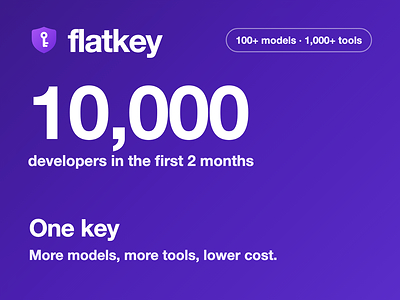
SAN JOSE, Calif., Sept. 24, 2026 /PRNewswire/ — Flatkey (https://flatkey.ai), the AI infrastructure platform that brings models, tools and data together behind one API key, today announced that Flatkey and Realset AI have raised $10 million in Series A funding. The company also said that more than 10,000 developers have adopted the platform in the two months since its July 2026 launch, using a single API key and a single balance to access more than 100 official AI models and more than 1,000 AI tools. The Series A funding will go toward adding more official models and tools to the platform and scaling the infrastructure that routes developer traffic to them.

Flatkey is built as production infrastructure for AI developers, not a convenience layer. Every call is routed to the provider’s official endpoint, and because Flatkey buys upstream capacity in volume, most models are priced at around 80% of the providers’ official list prices, with some at 60% or lower as part of ongoing promotions. Developers pay less than they would going direct, and they do it through one key and one balance across models and tools.

Flatkey passes 10,000 developers in its first two months with one key for 100+ official AI models and 1,000+ tools.

Why It Matters: Models, Tools and Data Are Becoming One Layer

AI is shifting from answering questions to completing work. The agents doing that work depend on three things: the models that reason, the tools that act, and the data they act on. Each of those is fragmenting into more providers every quarter, and every provider adds an account, a top-up, an API key, a rate limit and an invoice.

Flatkey’s bet is that these three converge into a single layer developers reach through one key. A production application today rarely depends on one model: it combines several models across text, image, audio and video and pairs them with tools such as search, browsing and data enrichment. A team using models from OpenAI, Anthropic, Google and DeepSeek, a video model such as Seedance, and a search and a browser tool would ordinarily manage seven or more provider relationships. With Flatkey that becomes one key, one balance and one invoice, and a new model or tool is a parameter change rather than a new vendor.

What Developers Get

  • More than 100 official models from OpenAI, Anthropic, Google, DeepSeek, Kimi, GLM and others, plus image and video models such as Seedance. Every call is routed to the provider’s official endpoint. Flatkey does not self-host modified or quantized versions and label them as the original model.
  • More than 1,000 tools on the same balance: search, browsers, data enrichment, media generation and actions, with no separate billing setup per vendor.
  • Simple pricing. Subscription plans start at $10 per month, and pay-as-you-go credits cover both models and tools on one balance.
  • A one-line migration. Flatkey is a drop-in replacement for any OpenAI-compatible client: developers change the base URL and their existing code works.
  • New models on release day. Flatkey adds new models through official channels as soon as they are released, so teams do not open a new provider account every time something new ships.

“AI development is becoming less about choosing one model and more about combining models, data and tools across text, image, audio and video,” said Hunter Guo, founder of Flatkey. “If developers can reach all of that through one key, the platform stops being a convenience layer and starts to look like infrastructure. That is the company we are building.”

Availability

Flatkey is available today at https://flatkey.ai. New users start with $1 in free credit and can continue with pay-as-you-go credits or a monthly plan.

About Flatkey

Flatkey is an AI infrastructure platform that gives developers access to more than 100 official AI models and more than 1,000 AI tools through one key and one balance. Headquartered in San Jose, California, Flatkey launched in July 2026. Learn more at https://flatkey.ai 

Media Contact

Xingru Ren
Head of Marketing, Flatkey
+1 424 356 6176
xingru@flatkey.ai
https://flatkey.ai 

From Product Photos to Campaign Content: MakeShot on AI Video Efficiency for Small Teams

Longer video generation and richer reference inputs give small businesses new ways to develop marketing content, with savings determined by the work required to reach a usable result.

SINGAPORE, Sept. 24, 2026 /PRNewswire/ — MakeShot sees the strongest opportunity for small-team video marketing in reducing the work between a creative brief and usable footage. Capabilities such as longer video generation and richer reference inputs can help teams spend less effort assembling clips and correcting mismatched results, giving limited production budgets more room for creative testing.

For small marketing teams, production costs extend beyond filming or generating a clip. Preparing assets, matching shots, reviewing outputs, and revising details all consume resources. As AI video capabilities develop, the opportunity is to reduce these demands while giving teams more room to explore creative ideas.

Industry research illustrates the distinction between production gains and marketing outcomes. In Content Marketing Institute and MarketingProfs’ 2026 B2B research, 87% of marketers using AI for content creation reported improved productivity, while 39% reported improved content performance. These findings cover broader content creation, suggesting that faster production still needs to be paired with clear creative objectives and audience testing.

Longer Sequences, Fewer Assembly Tasks

Seedance 2.5, available through MakeShot’s AI Video Generator, supports videos of up to 30 seconds in a single generation. For a small team, that creates room to develop a connected sequence encompassing a product introduction, a setting, and a closing composition.

A skincare brand, for example, could explore a sequence moving from a moisturizer close-up into a morning bathroom scene before returning to the product. Generating that sequence together may reduce the work involved in assembling separate clips and reconciling differences in lighting, motion, or visual style.

The benefit depends on the result. A longer sequence that requires repeated regeneration can consume additional time and credits. Teams therefore need to consider how much of the output is usable and how easily it can be refined.

Clearer References, More Focused Creative Direction

On MakeShot, Seedance 2.5 supports up to 30 reference images, 10 video clips, and 10 audio clips, allowing teams to combine product, scene, motion, and sound references in one generation request.

For businesses with established product photography and brand assets, these inputs can communicate details that are difficult to express through text alone. Product images can guide appearance, scene references can establish atmosphere, and video or audio references can convey movement and sound.

MakeShot’s view is that the value lies in selecting relevant materials and assigning them clear roles. A focused set of references can provide a stronger creative brief than a larger collection containing conflicting directions. This gives small teams a practical way to apply their existing assets while retaining responsibility for product accuracy and final presentation.

Total Production Effort as the Measure of Efficiency

“For a small team, the most useful advance is one that removes work between the creative brief and the finished video,” said Wynn, Marketing Manager at MakeShot. “Longer generation and clearer references matter when they help teams reach an approved result with fewer revisions.”

MakeShot recommends evaluating total production effort, including unsuccessful generations, selection time, and final editing. Cost per usable video and time to an approved version provide more meaningful measures than the price or speed of a single generation.

This approach also helps teams decide where AI fits best. Concept exploration, atmospheric product footage, and creative variations may benefit from generation, while demonstrations requiring precise evidence of product performance may still call for filmed material. Allocating resources according to the task gives small businesses a clearer basis for managing production budgets.

About MakeShot

MakeShot is an AI video and image generation platform that gives creators and businesses access to multiple generative models through a browser-based interface. Its AI video generator supports text- and reference-driven creation for social media content, marketing projects, and visual storytelling.

Media Contact:
Wynn
Marketing Manager
Email: support@makeshot.ai
Website: https://makeshot.ai/

Notta Introduces MCP and CLI to Bring Meeting Context Into AI Agent Workflows

New tools let users give their agents access to Notta transcripts, summaries, and recordings without manually exporting and sharing them

TOKYO, Sept. 24, 2026 /PRNewswire/ — Notta today introduced Notta MCP and Notta CLI, giving people who already work extensively with AI agents a direct way to bring meeting content into those workflows. Users can ask a connected agent to retrieve a Notta transcript or completed summary and use it alongside the context already available through their other tools.

For users who rely on tools such as Codex, Claude Code, and Cursor, an agent may already have access to project files, documents, and connected services. But a client’s explanation, a decision made in a meeting, or the reasoning behind a change may still sit in Notta. Bringing that information into the agent’s work has required users to find the recording, export or copy the transcript or summary, and provide it themselves.

Notta MCP and CLI make that context directly accessible. Once configured and authorized, users can request meeting content as part of the task they are already working on, without preparing a separate export to hand to their agent.

Bring Meeting Context Into the Conversation

Notta MCP connects compatible AI agents to Notta through Model Context Protocol, a standard for connecting AI applications to external tools and information. The agent can retrieve transcripts, read completed Notta summaries, and find records in response to a user’s request.

For example, a user whose agent already has access to a project brief could ask:

“Find the Notta recording titled ‘Client kickoff,’ read its summary and transcript, and suggest updates to this brief based on what the client discussed.”

The agent can use Notta’s meeting content alongside the brief already in its context. Notta supplies the transcript and existing summary; the agent proposes the changes. The user can review those suggestions against the source conversation before applying them.

Access the Same Context Through Commands

Notta CLI provides a command-line interface for accessing Notta content. Users, scripts, and agents that can run terminal commands can retrieve transcripts and completed summaries, check transcription progress, and download exports.

MCP gives compatible agents a standard tool connection to Notta. CLI makes Notta available through explicit commands that can fit into an existing terminal-based workflow. Users can choose the entry point that suits their environment without installing both.

Both tools also support uploading audio and video files for transcription and exporting transcripts or the media associated with a recording.

Availability and Getting Started

Notta MCP and Notta CLI are available to all users on all plans starting September 23, 2026. A Notta account and authorization are required. MCP requires a client that supports local MCP connections; CLI runs in a terminal.

Visit Set up Notta MCP & CLI for installation instructions and a first request.

About Notta

Notta is an AI meeting and transcription platform that helps individuals and teams capture, transcribe, and summarize conversations. Learn more at notta.ai.

Contact: Notta, contact@notta.ai 

G-P Named an Industry Leader in NelsonHall’s 2026 Global Employer of Record (EOR) Market Analysis for Sixth Consecutive Report

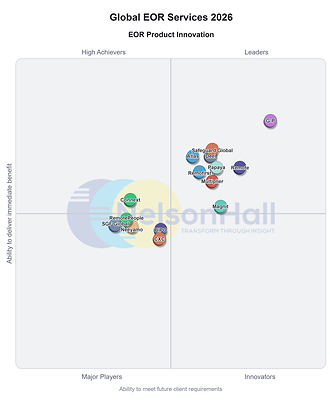
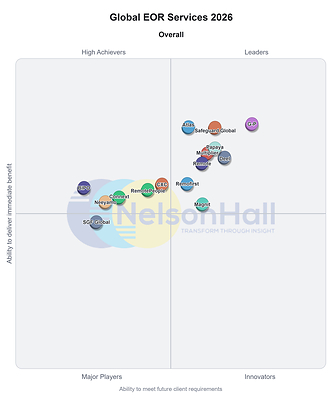
BOSTON, Sept. 24, 2026 /PRNewswire/ — G-P (Globalization Partners), the leader in AI-driven global employment, ranked No. 1 by industry analysts, today announced its recognition as an EOR industry leader in NelsonHall’s 2026 Global EOR Services NEAT evaluation report. G-P achieved leading placement Overall and in EOR Product Innovation for its ability to deliver immediate benefit and for its future-forward technology.

NelsonHall Global EOR Service 2026 - Product Inno
NelsonHall Global EOR Service 2026 – Product Inno

This distinction reflects G-P’s commitment to delivering comprehensive, AI-powered global employment solutions that help organizations expand with speed and confidence. G-P has been named a leader in NelsonHall’s EOR market evaluation since its inception in 2020, and continues to maintain leadership placement across all major EOR analyst reports.

Jeanine Crane-Thompson, Principal HR Analyst, NelsonHall, said “G-P’s positioning as a Leader in the 2026 Global EOR NEAT evaluation report reflects how it has anchored its workforce management solutions within a scalable, AI-first architecture. G-P leverages agentic AI to drive global HR, compliance and payroll, and it successfully balances advanced technological automation with on-demand human expertise.”

The NelsonHall 2026 Global EOR Services NEAT Evaluation Report highlights G-P as an industry leader in technology innovation and client value, emphasizing the following platform strengths:

  • Scalable AI-first platform and technology roadmap, with G-P EOR, G-P Contractor and G-P Gia™ applying GenAI and agentic AI to deliver compliant global workforce management solutions. G-P Pay and G-P Wallet support multi-country payroll, on-demand payments and financial wellness for employees and contractors
  • Robust partner ecosystem and marketplace includes over 200 companies to support current and anticipated technology, client, worker and strategic growth initiatives, including integrations with partner platforms
  • Proprietary compliance data and IP framework with G-P Verified sources, providing a network of HR and legal experts and assuring tech when you need it, human when you want it

“Innovation is in G-P’s DNA, and we continue to anticipate what’s next – which is why we’ve been a leader in the EOR market for years,” said Nat Natarajan, Chief Operating Officer at G-P. “Earning a top spot for product innovation in this report validates that our agentic platform is doing exactly what we engineered it to do: delivering speed, simplicity and certainty so our customers can operate with total confidence.”

G-P’s agentic Global Employment Platform combines trusted compliance, connected workforce data, and intelligent AI action to transform global workforce management through guided action rather than administration. Engineered to adapt to every stage of growth and integrate securely with existing systems, G-P embeds global labor law intelligence directly into every cross-border workflow. By turning insights into action, G-P empowers businesses to scale their workforce in minutes, protect against liability, and operate with the agility of a local competitor anywhere on Earth.

For more information about G-P and its industry leadership, please visit us here.

About NelsonHall
NelsonHall is the leading global analyst firm dedicated to helping organizations understand the ‘art of the possible’ in digital operations transformation. With analysts in the U.S., Europe, and Asia Pacific, NelsonHall provides buy-side organizations with detailed, critical information on markets and vendors that helps them make fast and highly informed sourcing decisions. And for vendors, NelsonHall provides deep knowledge of market dynamics and user requirements to help them hone their go-to-market strategies. NelsonHall’s analysis is based on rigorous, primary research, and is widely respected for the quality and depth of its insight.

About G-P
G-P (Globalization Partners) is the leader in global employment, ranked No. 1 in every industry analyst report. As the world’s first agentic AI-driven Global Employment Platform, G-P codes global labor laws and compliance directly into existing corporate workflows, helping companies of all sizes manage the full employee lifecycle. G-P supports teams in 180+ countries backed by more than a decade of global operational data and the largest team of in-country HR, legal, and compliance experts. This unmatched proprietary knowledge powers its Employer of Record (EOR), Contractor, and Global HR Agent, G-P Gia™, products.

G-P: Global Made Possible™Â 
To learn more, please visit: g-p.com or connect with us via LinkedIn, X, Facebook or check out our Blog.

NelsonHall Global EOR Services 2026 - Overall
NelsonHall Global EOR Services 2026 – Overall

Light Origins Launches Light-O1: Cross-Embodiment Transfer Improves as Human-Action Pretraining Scales

SINGAPORE, Sept. 24, 2026 /PRNewswire/ — Light Origins this week launched Light-O1, its first general-purpose embodied foundation model, as part of its work to build foundation models for Physical AI. Light-O1 learns a reusable human action prior from structured human actions recovered from internet videos, then adapts that prior to different robot embodiments and tasks. In scaling experiments, larger pretraining budgets consistently reduced post-adaptation prediction errors on egocentric human data and held-out data from two humanoid platforms.

LightBot, Light Origins' in-house humanoid, performs a towel-handoff task in a real-world Light-O1 demonstration. Source: Light Origins
LightBot, Light Origins’ in-house humanoid, performs a towel-handoff task in a real-world Light-O1 demonstration. Source: Light Origins

Starting from the same 4B base model, Light Origins trained independent models at six pretraining budgets ranging from 3.75 billion to 120 billion multimodal tokens, with the largest corresponding to approximately 100,000 hours of human action. The pretrained models were then separately adapted to public egocentric human data, public Unitree G1 robot data, and Light Origins’ in-house LightBot loco-manipulation data. Across all three target domains, held-out next-action-token prediction loss and whole-body pose prediction error declined as pretraining scale increased, with both trends following power-law fits.

For the reported robot results, Light-O1 is adapted with target-domain data. The scaling result shows that larger-scale human-action pretraining provides a stronger starting point for downstream adaptation.

Scaling Action Knowledge Beyond Dedicated Robot Data Collection

Robot interaction data is valuable because it directly reflects a specific machine’s observations and actions. But collecting it at scale requires hardware, operators, environments and dedicated data pipelines, making it difficult to capture the diversity and long tail of everyday physical activity.

Light Origins takes a complementary approach. It recovers structured 3D human actions from existing internet video, aligns those actions with visual observations and language, and trains an autoregressive model on the resulting multimodal sequences. The goal is to learn a reusable human action prior from recurring patterns of physical behavior, then adapt that prior to target robots and tasks.

Light-O1 combines language reasoning and visual-spatial understanding with coordinated whole-body action. In real-world demonstrations, LightBot performs multi-step household tasks including opening a shoe cabinet and putting slippers inside, picking up different types of trash even when items are moved mid-task, and handing over a towel. On Unitree G1, the model wipes a table and receives the towel handoff within the same demonstration.

These demonstrations are separate from the transfer-scaling analysis, which uses held-out prediction metrics — including open-loop whole-body pose evaluation — rather than a scaling curve of real-robot task success.

Light Origins is also releasing Light-O1-Preview, a reasoning text-to-action model that takes a natural-language instruction, describes in language what the instruction requires of the body, and then generates the corresponding whole-body action sequence. Model weights, code and a public playground are available as part of the Light-O1 release.

From Pretraining to Deployment: Three Scaling Paradigms Toward Physical AGI

Light Origins’ roadmap toward Physical AGI is organized around three scaling paradigms: Scalable Pre-Training, Scalable Alignment and Scalable Deployment. Light-O1 represents the company’s work in Scalable Pre-Training, using large-scale human-action pretraining to build a transferable action prior before adapting it to specific robots and tasks.

Earlier this month, Light Origins introduced LightNav-0 as its first step toward Scalable Alignment. Its Real2Sim2Real data engine turns more than 2,000 internet-sourced real-world scenes into reusable simulated worlds, yielding more than 4,000 hours of navigation experience for post-training. The resulting model generalizes zero-shot across humanoid, quadruped, aerial and wheeled robots.

For Scalable Deployment, Light REACT uses recent physical interactions as context to infer the effects of external forces, hardware impairments and environmental constraints, then responds with adaptive whole-body skills.

Together, the three paradigms are intended to connect pretraining, alignment and real-world deployment in a shared learning loop.

Light Origins is also building the data and compute infrastructure to pursue that roadmap at larger scale. Its data infrastructure now operates at the thousand-GPU scale, with weekly video-processing throughput reaching approximately 200,000 hours — up from 12,500 hours six months earlier.

“For Physical AI, the key question is whether there is a pretraining signal whose value continues to grow with scale,” said Roger Jiang, founder and CEO of Light Origins. “Light-O1 provides evidence that human action pretraining can serve as such a signal: as pretraining scale increases, post-adaptation prediction error decreases across different robot embodiments. We will continue scaling data and model capacity, then build alignment and real-world deployment on that foundation to make physical intelligence more generalizable and reliable.”

Light Origins closed a Pre-A round of several hundred million yuan in August 2026 to support large-scale model training, multimodal data infrastructure, and full-stack software and hardware R&D.

About Light Origins

Light Origins builds foundation models for Physical AI, extending foundation model intelligence from the digital world into the physical world. Founded in late 2024 by Roger Jiang, a former OpenAI researcher and core contributor to ChatGPT, the company is advancing toward Physical AGI through three scaling paradigms: Scalable Pre-Training, Scalable Alignment, and Scalable Deployment. Models, compute, data, hardware, and deployment all feed the same learning loop.

CONTACT:
Light Origins PR team
pr@lightorigins.com

Global Mayors Dialogue in Wuhan focuses on urban innovation and cooperation


WUHAN, CHINA – Media OutReach Newswire – 23 September 2026 – The Global Mayors Dialogue · Wuhan and the 2026 Wuhan International Friendship Cities Cooperation Conference, held from Sept. 18 to 21, brought together 80 international guests from 24 cities across 22 countries, according to organizers.

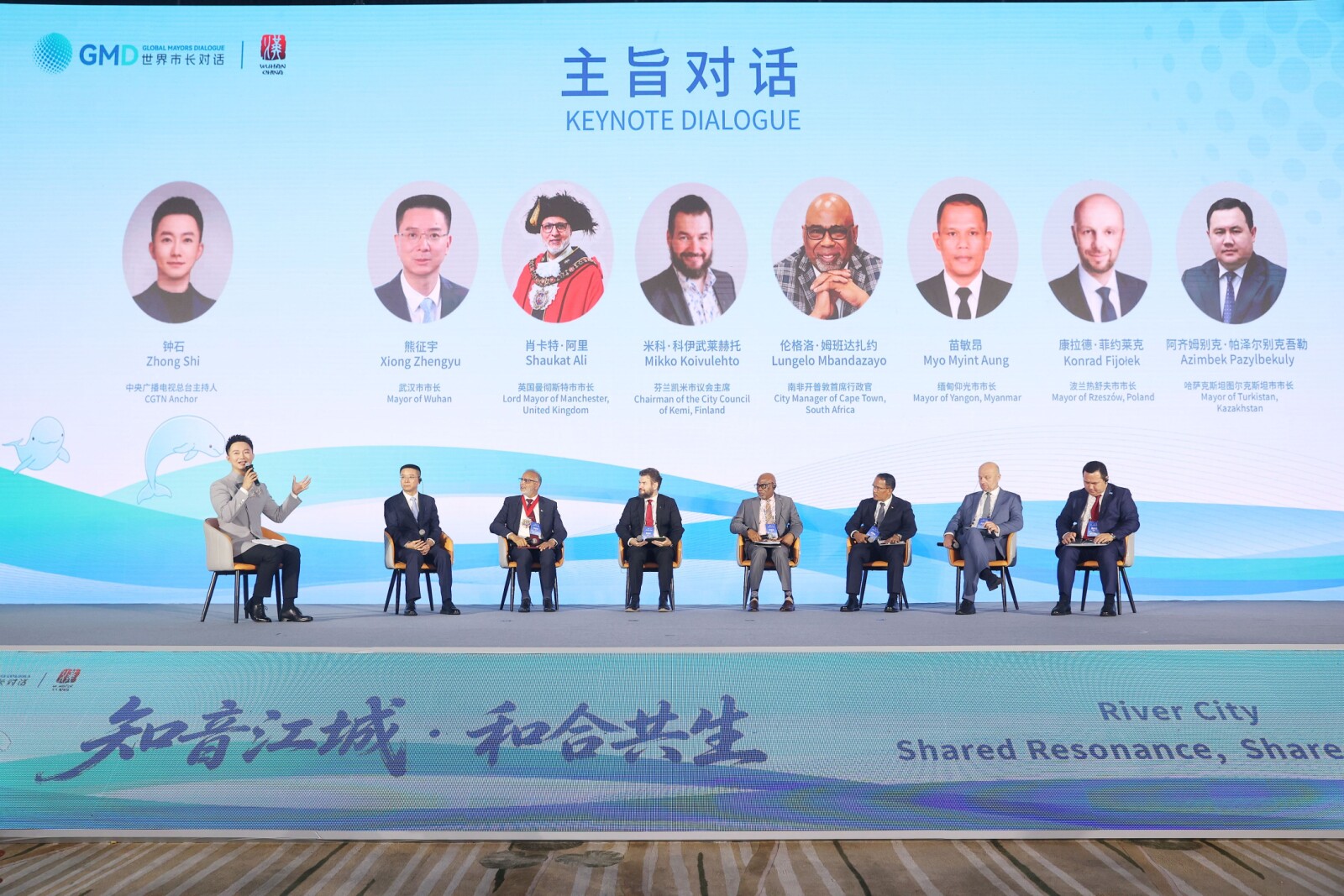
The Global Mayors Dialogue and the 2026 Wuhan International Friendship Cities Cooperation Conference kicked off on September 20.(Photo by Chen liang)

At the event, mayors and city representatives from six international sister cities of Wuhan called for closer cooperation in technology, industry, education and culture.

Representatives from Manchester in Britain, Kemi in Finland, Cape Town in South Africa, Yangon in Myanmar, Rzeszów in Poland and Turkistan in Kazakhstan took part in discussions on urban innovation, industrial cooperation and cultural exchange.

Manchester: a new start after 40 years of friendship

This year marks the 40th anniversary of the sister-city relationship between Wuhan and Manchester.

Shaukat Ali, lord mayor of Manchester, said the city was ready to deepen cooperation with Wuhan in education, culture, youth affairs, innovation and industry.

“Manchester is committed to promoting urban transformation through open cooperation, sharing opportunities, and fostering common development with international sister cities like Wuhan,” he said.

Ali said Manchester had developed from a post-industrial city into an innovation-oriented economy, with a focus on advanced manufacturing, artificial intelligence, life sciences and green technologies.

He said the two cities could share experience in urban transformation, innovation districts, university-industry cooperation and low-carbon development, while encouraging links among universities, businesses and research institutions.

He also highlighted existing educational and cultural links, including cooperation between Hubei University and Manchester Metropolitan University and exchanges between the Royal Northern College of Music and Wuhan Conservatory of Music.

Kemi: balancing growth with environmental protection

Mikko Koivulehto, chairman of the City Council of Kemi, said the Finnish city sought to balance economic growth with environmental protection.

“We believe that protecting nature and building a prosperous city can go hand in hand,” he said.

Kemi, a port city in Finnish Lapland, has developed industries based on renewable raw materials, clean energy and the bioeconomy. The city is also seeking to expand tourism and improve livability.

This year marks the 10th anniversary of the friendly exchange relationship between Wuhan and Kemi. The two cities have cooperated in areas including trade, the circular economy, tourism and youth exchanges.

Cape Town: technology and jobs key to urban transformation

Lungelo Mbandazayo, city manager of Cape Town, said technological innovation, talent development, infrastructure and green renewal were key to Wuhan’s transformation.

Cape Town, a UNESCO City of Design, is seeking to expand its technology and digital sectors while promoting green technology and an inclusive economy.

Mbandazayo said youth unemployment remained a major challenge for Cape Town and that technological development needed to create jobs.

After visiting Wuhan companies and technology facilities, he said Cape Town hoped to deepen exchanges with Wuhan in technology and talent.

Yangon: seeking practical cooperation with Wuhan

Yangon Mayor Myo Myint Aung said the city was looking to Wuhan for experience in smart-city development, digital governance, intelligent transport and urban resilience.

Wuhan and Yangon signed a letter of intent on friendly exchanges and cooperation during the event.

Yangon is developing a long-term plan to accommodate population growth and expand its urban, industrial and transport infrastructure.

During a visit to Wuhan on Sept. 19, Myo toured the Optics Valley “Photon” suspended monorail, HGTECH and a Xiaomi smart home appliance factory.

“We came to Wuhan not just to observe, but to learn and cooperate,” he said, adding that Yangon hoped to develop smart manufacturing and strengthen cooperation in information technology.

Rzeszów: opportunities in aerospace and technology

Rzeszów Mayor Konrad Fijołek said the Polish city hoped to cooperate with Wuhan in aerospace, sensor technology, biodiversity and climate action.

Rzeszów is home to the “Aviation Valley,” a major aerospace cluster in Central Europe.

“Exploring cooperation with Wuhan is the reason I came here,” FijoÅ‚ek said.

After visiting HGTECH and a Xiaomi smart home appliance factory, he said Wuhan’s automated manufacturing and technologies in sensors and satellite systems had impressed him.

He said cities could help connect universities, businesses and research institutions and promote international cooperation.

Turkistan: five areas for cooperation

Turkestan Mayor Azimbek Pazylbekuly said his city hoped to expand cooperation with Wuhan in tourism and culture, education and science, investment and entrepreneurship, digitalization and innovation, and transport and logistics.

Wuhan and Turkistan signed a memorandum of intent on friendly exchanges and cooperation during the event.

Turkistan, an ancient Silk Road city and a UNESCO World Heritage site, has been developing industries including food processing, textiles, furniture and construction materials.

Pazylbekuly said cooperation between governments, businesses, universities and research institutions could help turn the two cities’ exchanges into concrete projects.

The conference also included friendship-city anniversary celebrations and a signing ceremony for 10 cooperation projects. A digital list of cooperation opportunities and an initiative on international friendship-city cooperation were released.

During their stay, the visiting mayors toured Wuhan’s technology, manufacturing and ecological facilities, including the Optics Valley suspended monorail, a Yangtze finless porpoise conservation center, Xiaomi, HGTECH and Dongfeng Motor facilities.

Hashtag: #wuhan

The issuer is solely responsible for the content of this announcement.

Yeebo’s Subsidiary Suanova Supports PolyU and Fudan University in Establishing the “Suanova Hong Kong-Shanghai Joint Laboratory for AI in Healthcare”

Collaborating with Renowned Infectious Disease Specialist Prof. Zhang Wenhong’s Team to Drive the Application of Domestic AI Computing Power in Healthcare


HONG KONG SAR – Media OutReach Newswire – 23 September 2026 – Suanova Technology Limited (“Suanova”), a wholly-owned subsidiary of Yeebo (International Holdings) Limited (“Yeebo”; Stock Code: 00259.HK), recently participated in the inauguration ceremony of the “Suanova Hong Kong-Shanghai Joint Laboratory for AI in Healthcare” held in Shanghai. As a key supporter of the Joint Laboratory, Suanova will provide computing infrastructure, together with full-stack support services including data cleansing, underlying network deployment, and storage system construction, with the aim of advancing the deep integration of domestic computing power and the healthcare industry.

The Joint Laboratory is jointly established by Fudan University and The Hong Kong Polytechnic University, with a focus on strategic interdisciplinary AI research in the medical and healthcare sector. It is dedicated to promoting the application of AI technologies in medicine, clinical practice and public health. Prof. Zhou Lei, Vice President of Fudan University, and Prof. Wing-tak Wong, Deputy President and Provost of The Hong Kong Polytechnic University together unveiled the Joint Laboratory. Prof. Yang Hongxia, Executive Director of PolyU Academy for Artificial Intelligence (PAAI), and Prof. Zhang Wenhong, Head of the Institute of Infection and Health of Fudan University, signed the cooperation agreement on behalf of the two institutions. Mr. Douglas Fang, Chairman of Yeebo, and Ms. Li Liu, President of Fudan University Education Development Foundation, signed a donation agreement for the development of the Joint Laboratory. Mr. Daliang Chen, Chief Executive Officer of Suanova, attended the ceremony and delivered a speech.

Leading Experts at the Helm, Bridging World-Class Medical Research with Advanced AI

The convergence of AI and healthcare has emerged as one of the most important frontiers of global technological innovation. Shanghai is accelerating its development into a globally influential science and technology innovation hub, while Hong Kong is advancing its vision of becoming an international innovation and technology centre. The Joint Laboratory is strategically positioned at the intersection of two key national development regions: the Yangtze River Delta and the Greater Bay Area.

Fudan University possesses deep expertise in the fields of infectious diseases, clinical medicine and public health. Leveraging premier institutions such as the National Medical Center for Infectious Diseases and Huashan Hospital, the university provides abundant clinical scenarios and research resources for studies involving the surveillance and early warning of emerging and unexpected infectious diseases, AI-assisted diagnosis of complex infections, and the early identification of antimicrobial resistance risks. The Hong Kong Polytechnic University, through its PAAI Research Institute and Research Institute for Generative AI, possesses strong capabilities in frontier fields including generative AI and domain-specific large language models. Going forward, the two institutions will collaborate on research initiatives spanning generative AI, infectious disease studies, medical informatics, and bioinformatics, while also promoting the translation of research outcomes into real-world applications and industry adoption.

Prof. Zhang Wenhong, Head of the Institute of Infection and Health of Fudan University is one of the Joint Laboratory’s academic leaders. Widely recognized as one of China’s most influential experts in infectious diseases and public health, Professor Zhang has dedicated his career to the diagnosis and treatment of infectious diseases, the prevention and control of major epidemics, and the advancement of public health systems. He earns a strong reputation both within China and internationally. His team has long been engaged in infectious disease prevention and control, translational clinical medicine, and the advancement of public health systems, achieving a series of significant breakthroughs in disease control and public health studies. Prof. Zhang’s participation in the establishment of the Joint Laboratory underscores the project’s academic excellence and its potential impact on both medical research and clinical practice.

Focusing on the Frontier of AI-Driven Healthcare, Empowering Medical Innovation with Domestic Computing Power

The Joint Laboratory will focus on exploring a decentralized and domain-specific large model development pathway, enabling hospitals, research institutions, and eventually even individual households to deploy and own their own large AI models. By allowing users to harness the benefits of AI while safeguarding data privacy and sovereignty, this vision closely aligns with Suanova’s mission of “enabling every organization to build its own AI capabilities faster, better, and more cost-effectively.”

Mr. Douglas Fang, Chairman of Yeebo, said, “We have long been optimistic about the development prospects of domestic computing power and AI, and firmly believe that education, scientific research, and deep technology are fundamental pillars for long-term value creation. The true value of AI in healthcare lies not only in technological advancement, but also in its ability to address real-world clinical challenges. Breakthroughs in medical AI require the combined support of leading medical experts, rich clinical resources, and high-performance computing infrastructure. Through our support for Joint Laboratory, we hope to accelerate the application of cutting-edge AI technologies in solving real healthcare needs and ensure that scientific innovation ultimately delivers meaningful benefits to society.”

Mr. Daliang Chen, CEO of Suanova, said, “Since entering the domestic computing power industry four years ago, Suanova has built Shanghai’s earliest domestic computing cluster and one of the city’s first domestic supernodes, while successfully enabling a wide range of applications on domestic computing infrastructure. In support of the Joint Laboratory, we will contribute far more than computing resources. Our support will encompass the full technology stack, including data cleansing, underlying network deployment, and storage system construction. By leveraging domestic computing power as a robust foundation, we aim to support the Joint Laboratory’s long-term efforts to integrate cutting-edge AI model technologies with medical expertise, helping translate scientific innovation into meaningful advances in healthcare.”

The establishment of the Joint Laboratory marks a significant milestone in Suanova’s commitment to translating domestic computing power into impactful real-world applications. By drawing on the research strengths of Fudan University and The Hong Kong Polytechnic University, together with the deep collaboration between the teams led by Prof. Zhang Wenhong and Prof. Yang Hongxia, Suanova is confident that the Joint Laboratory will drive meaningful advancements in areas such as intelligent infectious disease prevention and control, AI-assisted diagnosis and treatment, and innovative drug discovery and development.

Hashtag: #Yeebo

The issuer is solely responsible for the content of this announcement.

About Yeebo (International Holdings) Limited

Founded in 1988, Yeebo (International Holdings) Limited is a diversified electronic component company with a well-established presence in the global market. The Company’s core business spans flat panel displays, computing power and capacitors, serving a broad spectrum of industrial and consumer applications. Headquartered in Hong Kong, Yeebo operates its manufacturing operations primarily in the Guangdong and Jiangsu provinces, supporting a global sales network that ensures localized service and support for its international clientele.

In alignment with its long-term strategic vision, Yeebo is leveraging its robust operational foundation to expand into the Artificial Intelligence (“AI”) compute and related sectors. This initiative reflects the Company’s commitment to innovation and technological advancement, with the objective of positioning Yeebo as a leading and influential participant in the rapidly evolving AI industry across mainland China and Hong Kong.

About Suanova Technology Limited

Suanova, under Yeebo, is an innovative technology company focused on delivering independent, efficient, and accessible domestic AI computing services. Its business spans three core areas: computing power and cloud operations, computing technology development and computing industry investment. With branches in Hong Kong, Shanghai and Hangzhou, it provides customers with better localized services. It is committed to transforming complex AI infrastructure into simple, efficient, and cost‑effective services through continuous technological innovation, with the goal of becoming a leading “infrastructure operator” in the AI era.