Home Blog Page 388

Tech Mahindra Receives Frost & Sullivan’s 2026 Asia-Pacific Technology Innovation Leadership Recognition for Advancing Agentic AI in the Business Process Services Industry

Recognized for driving innovation, intelligent automation, and scalable digital transformation through agentic AI-led BPS solutions.

SAN ANTONIO, July 10, 2026 /PRNewswire/ — Frost & Sullivan is pleased to announce that Tech Mahindra has been recognized with the 2026 Asia-Pacific Technology Innovation Leadership Recognition in the agentic AI in the business process services (BPS) industry for its outstanding achievements in innovation, strategy execution, and customer impact. This recognition highlights Tech Mahindra’s consistent leadership in driving measurable outcomes, strengthening its market position, and delivering customer-centric innovation in an evolving competitive landscape.

Frost & Sullivan evaluates companies through a rigorous benchmarking process across two core dimensions: strategy effectiveness and strategy execution. Tech Mahindra excelled in both, demonstrating its ability to align strategic initiatives with market demand while executing them with efficiency, consistency, and scale. “Tech Mahindra differentiates itself by embedding agentic AI directly into live BPS environments, enabling enterprises to move beyond fragmented automation toward intelligent orchestration, stronger governance, and scalable, production-grade deployments that deliver sustained business value,” said Sherrel Sonia Roche, Associate Director, ICT at Frost & Sullivan.

Guided by a long-term growth strategy focused on digital innovation, operational integration, and client-centric transformation, Tech Mahindra has shown its ability to adapt and lead in a rapidly evolving landscape. The company’s strategic agility and sustained investment in agentic AI frameworks have enabled it to scale effectively across global enterprise environments.

Innovation remains central to Tech Mahindra’s approach. Its Orion marketplace, a next-generation agentic AI solution, enables enterprises to design, deploy, and manage autonomous, action-oriented AI agents across business processes. Orion marketplace’s open, hyperscaler-agnostic architecture supports rapid deployment across assisted and fully autonomous models while maintaining enterprise-grade governance, transparency, and lifecycle control.

Tech Mahindra’s unwavering commitment to customer experience strengthens its position in the market. By integrating AI-driven orchestration into core BPS operations, the company enables real-time decision-making, reduces operational complexity, and enhances service delivery outcomes. Its ability to combine process mining, domain expertise, and human-in-the-loop models ensures that enterprises can transition from experimentation to measurable impact. The company’s flexible commercial models, including outcome-linked pricing and bundled BPS-plus-AI offerings, align value delivery with client business objectives.

Frost & Sullivan commends Tech Mahindra for setting a high standard in competitive strategy, execution, and market responsiveness. The company’s vision, innovation pipeline, and customer-first culture are shaping the future of agentic AI in the BPS industry and driving tangible results at scale.

Each year, Frost & Sullivan presents the Technology Innovation Leadership Recognition to a company that demonstrates outstanding strategy development and implementation, resulting in measurable improvements in market share, customer satisfaction, and competitive positioning. The recognition highlights forward-thinking organizations that are reshaping their industries through innovation and growth excellence.

Frost & Sullivan Best Practices Recognition
Frost & Sullivan’s Best Practices Recognitions honor companies across regional and global markets that exhibit exceptional achievement and consistent excellence in areas such as leadership, technological innovation, customer experience, and strategic product development. Each recognition is the result of a rigorous analytical process in which Frost & Sullivan industry experts benchmark performance through comprehensive interviews, deep-dive analysis, and extensive secondary research. The goal is to identify true best-in-class organizations that are driving transformative growth and setting new industry standards.
Contact us: Start the discussion.

Contact:

Tarini Singh
E: Tarini.Singh@frost.com


Xinhua Silk Road: Dialogue promotes mutual learning, exchanges between Liangzhu and Samarkand cultural heritages

BEIJING, July 10, 2026 /PRNewswire/ — A cross-civilization dialogue event between the Archaeological Ruins of Liangzhu City in Hangzhou, east China’s Zhejiang Province, and the historic town of Samarkand in Uzbekistan was held on July 6, aiming to promote mutual learning and exchanges among civilizations.

Photo shows the Damojiao Mountain in the Archaeological Ruins of Liangzhu City. (By Zhu Chengqi)

As part of a series of events of the “Liangzhu and the World” program, the dialogue attracted over 100 participants from China and Uzbekistan gathering at the Archaeological Ruins of Liangzhu City in Hangzhou, discussing topics including heritage values, conservation and management, and approaches to revitalizing cultural heritages. 

First discovered in 1936 in the lower reaches of China’s longest river, the Yangtze River, the Archaeological Ruins of Liangzhu City was inscribed as a UNESCO World Heritage Site in 2019. The historic town of Samarkand, considered as a crossroad of cultures along the ancient Silk Road, was inscribed on the UNESCO World Heritage List in 2001.

The dialogue not only provided a high-level platform for exchanges between the two cities, but also marked the first time that the “Liangzhu and the World” program has partnered with an Asian world heritage site.

During the dialogue, participants discussed topics focusing on heritage revitalization and mutual learning among civilizations of Silk Road cities, consolidation of China-Uzbekistan cooperation in archaeological research, earthen-site conservation, digital technologies and the integration of culture and tourism, offering an Asian model for coordinated world heritage conservation and dialogue among civilizations.

Ahead of the dialogue, the Uzbek delegation visited the Archaeological Ruins of Liangzhu City and a world heritage monitoring center, where they explored Liangzhu’s integrated approach to heritage conservation and public engagement with the help of digital technologies, including AI-powered smart glasses.

Farhod Nishonov, deputy mayor of Samarkand, spoke highly of Liangzhu’s systematic conservation model, saying it offers valuable experience for the management of Samarkand. He said Samarkand would draw on Liangzhu’s practices and, leveraging the sister-city relationship with Hangzhou, promote joint exhibitions, two-way cultural and tourism exchanges, and youth exchange programs.

“This is the fifth year since the inauguration of the ‘Liangzhu and the World’ program. We hope not only to share Liangzhu’s experience in heritage conservation but also to learn from Central Asian cities in heritage operation and management, bringing the people of our two countries closer through these two civilization landmarks,” said Yang Xiaoping, deputy director of the Management Committee of the Archaeological Ruins of Liangzhu City.

https://en.imsilkroad.com/p/351270.html

Kaiyi Laos Holds Mid-Year Lucky Draw, Awards Over LAK 60 Million in Customer Prizes

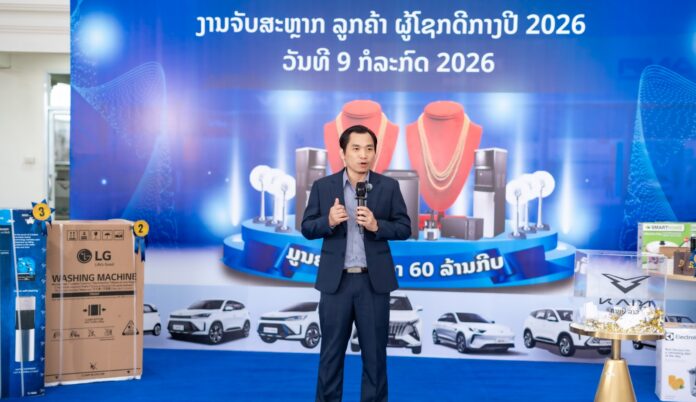
A picture of Chakkaphon Malabandith, Executive Manager of Kaiyi Laos opening the event of Kaiyi 2026 Mid-Year Promotion Lucky Draw. (Photo by Kaiyi)

Kaiyi Laos held its 2026 Mid-Year Promotion Lucky Draw, awarding more than LAK 60 million (USD 266) in prizes to customers as part of a campaign to thank those who purchased Kaiyi vehicles during the first half of the year.

Chakkaphon Malabandith, Executive Manager of Kaiyi Laos, opened the event by outlining the company’s continued commitment to developing products and services that meet customers’ needs, with customer satisfaction remaining a key priority.

In addition to the prize draw, attendees participated in educational workshops led by technical specialists and the company’s after-sales service team. The sessions provided practical guidance on vehicle maintenance and attracted strong interest from customers.

The lucky draw was open to customers who purchased a Kaiyi vehicle between January and June this year. With a total of 15 prizes, including a gold ring as the grand prize, along with home appliances, household items, and other gifts. Customers who participated in Kaiyi Laos’ recent test-drive campaigns also received exclusive prizes.

Kaiyi’s event reflects its ongoing commitment to strengthening customer relationships through quality products, reliable after-sales support, and customer-focused initiatives as the company continues to expand its presence in the Lao market.

Monport Launches GPro Vision MOPA Fiber Laser Series With Smart Vision Positioning, Color Marking and Auto Focus

LOS ANGELES, July 9, 2026 /PRNewswire/ — Intelligent automation is reshaping laser processing as businesses increasingly invest in advanced fiber laser solutions that improve precision, productivity, and workflow efficiency. Monport Laser today introduced the GPro Vision Split MOPA Fiber Laser Engraver, a new intelligent system designed for professional metal marking, engraving, and production applications.

Combining a high-resolution vision positioning system, auto focus, MOPA fiber laser technology for color marking, and high-speed engraving capabilities, the new laser engraver helps manufacturers and businesses streamline workflows while achieving exceptional accuracy and consistent results.

The GPro Vision series is available in four configurations — 50W Standard Fiber Laser, 60W, 100W and 200W MOPA fiber laser models — giving buyers a laser engraver and laser cutter platform that scales from detail engraving and color marking up to thin-metal cutting and deep 3D relief carving, depending on power output.

Camera-Guided Visual Positioning and Batch Engraving

At the center of the GPro Vision series is a 16MP HD camera that supports two core functions. The first, visual positioning, allows operators to place artwork directly onto a live image of the workpiece for accurate, what-you-see-is-what-you-get placement. The second, batch engraving, is compatible with a conveyor belt accessory, allowing the fiber laser machine to automatically detect and engrave a continuous stream of parts for production runs.

MOPA Fiber Laser Color Marking on Metal

Every GPro Vision model uses a MOPA fiber laser source, which enables color marking on stainless steel, copper and titanium — a capability not available on standard fiber laser engravers. The MOPA architecture also gives operators independent control over pulse width, which supports deeper engraving, 3D relief carving and finer surface finishing on metal parts.

Higher-wattage models extend that capability further. The 60W MOPA configuration, for example, is rated to cut brass up to 2.5mm thick, giving shops a single laser engraver and laser cutter platform for both metal marking and thin-metal cutting work.

Auto Focus and Industrial-Grade Precision

The GPro Vision fiber laser series includes automatic focus as a standard feature, reducing manual setup time between jobs and material changes. Combined with an industrial galvanometer and silicon mirror system, the machine is built to deliver engraving speeds up to 10,000mm/s, with the 200W MOPA model reaching up to 22,000mm/s.

Monport says the GPro Vision MOPA fiber laser engraver delivers engraving precision down to 0.01mm, allowing fine detail work such as jewelry marking, serial numbers and intricate 3D relief patterns. The company also notes that its working area is engineered to maintain consistent laser power across the full engraving zone, without the power attenuation toward the edges of the bed that can affect some competing fiber laser engravers.

Professional Software Compatibility

The GPro Vision Series is designed to integrate easily into existing production environments.

The system supports both Windows and macOS, while remaining fully compatible with LightBurn and SapphireMark software. Users can import numerous file formats, including BMP, JPG, PNG, SVG, DXF, PLT, G-Code, TIFF, GIF, and more, simplifying design preparation across multiple workflows.

Additional expandable accessories include rotary attachments for 360-degree engraving, conveyor belts for automated batch production, safety enclosures, and fume extraction systems.

Designed for Long-Term Performance

Powered by an industrial-grade MOPA laser source with an expected service life of up to 100,000 hours, the GPro Vision Fiber Laser Series is built for continuous professional use.

Available laser power options include:

  • 50W Standard Fiber Laser
  • 60W MOPA  Fiber Laser
  • 100W MOPA Fiber Laser
  • 200W MOPA Fiber Laser

Each configuration is designed to accommodate different production requirements, allowing businesses to choose the right balance of engraving speed, cutting capability, and processing depth.

“The GPro Vision Series reflects Monport’s commitment to making advanced laser technology more intelligent and more accessible,” Monport CEO said. “By combining visual positioning, MOPA color marking, industrial precision, and automated workflows, we’re helping customers improve productivity while expanding what’s possible with a modern fiber laser.”

The Monport GPro Vision Split MOPA Fiber Laser Engraver is now available through Monport Laser’s official website.

About Monport Laser

Monport Laser is a global provider of professional laser engraving and cutting solutions for creators, manufacturers, educators, and businesses. Its expanding portfolio includes CO2, fiber, UV, and industrial laser systems designed to deliver precision, reliability, and innovation for applications ranging from product customization to industrial manufacturing.

Media Contact:

Monport Laser

Email: official@monportlaser.com 

Website: https://monportlaser.com


Authorities Say Sinkholes in Savannakhet Caused by Erosion, Not Mining

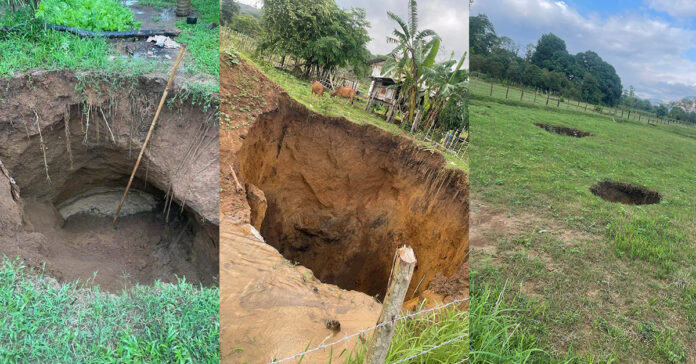
Authorities have claimed that eight sinkholes discovered in Savannakhet’s Vilabouly district on 9 July were caused by natural erosion and limestone subsidence, not mining activities. (Photo: Ministry of Industry and Commerce : MOIC)

Authorities Say Sinkholes in Savannakhet Caused by Erosion, Not Mining

Authorities have confirmed that eight sinkholes discovered in Savannakhet province formed through a natural geological process and do not stem from nearby mining operations as originally assumed by residents.

Villagers found the sinkholes, ranging from 2 to 4 meters in diameter, near irrigation canals and rice paddies on the morning of 9 July in Nongkadang village, Vilabouly district, after images and videos spread widely on social media. 

Authorities coordinated immediately with local officials that same day to verify the reports and gather preliminary information for the public.

Following an on-site investigation, the Ministry of Industry and Commerce (MOIC) assessed the incident as a natural cause rooted in the area’s underlying limestone structure. Years of water erosion carved underground voids beneath the surface, and recent heavy rainfall triggered subsidence of the topsoil above them.

MOIC noted that similar sinkholes formed in the same area four to five years ago, and that the pattern closely resembles a sinkhole event that struck Thongkhanoy village, Hinboun district, Khammouane province, in May.

Vilabouly, in northeastern Savannakhet, forms part of Laos’ main gold mining belt alongside neighboring Sepone district, home to the country’s largest gold mining site. Rich in copper and gold, the area ranks among Southeast Asia’s oldest metallurgy sites.

Given this backdrop, authorities moved quickly to clarify that the sinkholes bear no connection to any mining activity.

According to MOIC, a provincial technical team is now traveling to the site to work with district officials and Lane Xang Minerals Limited, which operates the mine there, to inspect the area, gather further data, and assess its safety.

A Pattern of Mining-Linked Sinkholes Elsewhere

The clarification comes as Laos has weathered a string of sinkhole incidents tied to mining in recent months. 

In Thongmang village, Xaythany district, Vientiane Capital, a series of collapses since May 2025, linked to underground potash extraction, culminated in a sinkhole on 2 January that left four people missing and prompted authorities to evacuate 38 households. 

Khammouane province has also recorded sinkholes near potash mining sites in recent years, fueling public concern whenever new sinkholes emerge near extraction zones.

Ten Years in the Making. Fxtrading.com Is Just Getting Started

SYDNEY, July 10, 2026 /PRNewswire/ — FXTRADING.com today marks ten years of operation, a milestone the CFD trading platform is using to set out what the next phase of its business will be built on: a trading and investment ecosystem engineered, built and owned end-to-end, in-house. A commitment they have labelled “engineered trust“.

FXTRADING.com 10 Years of Engineering Excellence

Over the past decade, FXTrading.com has built its execution, risk systems, client portal and trading platforms internally rather than relying on white-label technology. This approach now underpins its funds management, social trading and multi-asset offering across more than 200 instruments.

That approach is guided by a single mission: FXT exists to build better traders. Every system the company has engineered in-house, including execution, risk, pricing and funds management, has been built around what a trader actually needs in order to improve, not just trade more.

“Ten years in this category teaches you one thing: the market will always be unpredictable. What’s in our control is everything else, the systems, the costs, the execution,” said Adam Phillips, CEO, FXT. “That’s what we’ve spent the past decade building, and it’s what the next phase of FXT is engineered around.”

Some of that engineering will be made public for the first time in the coming weeks, including a proprietary FXT AI capability and a dedicated PAMM Funds Management platform, among a broader suite of technology FXT has built in-house over the past decade.

FXT will confirm a new brand identity and growth strategy in mid-July 2026, marking the next phase of the company’s expansion across Asia-Pacific and international markets.

About FXTrading.com

FXTrading.com is part of the Gleneagle Group being a leader in the evolution of financial markets offering corporate advisory, funds management, institutional dealing, broking and trading platform services. It has an Australian Financial Services license and the Vanuatu Financial Services Commission (VFSC) Financial License. FXTrading.com is a multi-asset CFD trading platform offering access to 200+ instruments across FX, indices, commodities and share CFD’s from a single account. FXTrading.com’s execution, risk systems, client portal and trading platforms are built and operated in-house. FXTrading.com serves self-directed traders, money managers and investors across Asia-Pacific and beyond.

GBS outperforms the higher education sector across all seven themes in National Student Survey 2026

LONDON, July 10, 2026 /PRNewswire/ — Global Banking School (GBS) has once again outperformed the UK higher education sector across all seven core themes of the 2026 National Student Survey (NSS), highlighting its continued commitment to delivering an outstanding student experience.

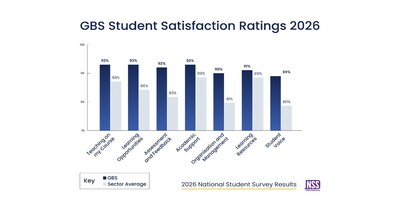
GBS Student Satisfaction Ratings 2026

Published today by the Office for Students (OfS), the latest NSS results reflect GBS’s continued focus on high-quality teaching, academic support and student success, with consistently high levels of student satisfaction and strong year-on-year performance.

The 2026 results for GBS are based on 6,488 published student responses – an increase of 1,087 responses compared with 2025, providing an even stronger and more representative picture of the student experience at GBS.

The results come at a particularly significant time for GBS, as it celebrates its 2026 graduation ceremonies this month across Leeds, Birmingham, Manchester and London. Six thousand graduates are marking the successful completion of their studies, including in sectors vital to the UK economy, such as construction management, digital technology and health and social care.

GBS outperformed the sector average across all seven NSS themes, with the highest satisfaction scores were achieved in Teaching on my Course and Academic Support, both recording 92.9% student satisfaction.

James Kennedy, CEO of GBS, said: “We are incredibly proud of these results and what they represent. They reflect the dedication of our students, the commitment of our academic and professional services colleagues, and our shared focus on providing an outstanding student experience.

“As we celebrate our graduation ceremonies across Leeds, Birmingham, Manchester and London this month, it is particularly rewarding to see our students recognise the quality of their experience at GBS. While these results are something to celebrate, they also inspire us to keep listening to our students and continually enhancing every aspect of the education and support we provide.”

GBS offers flexible, career-focused higher education programmes designed to meet the needs of today’s learners, many of whom balance their studies alongside jobs, family responsibilities and running their own businesses. Through industry-relevant courses delivered across its campuses in London, Birmingham, Leeds and Manchester, GBS continues to widen participation to higher education while equipping students with the knowledge, skills and confidence to succeed in their chosen careers.

The 2026 NSS results underline GBS’s commitment to delivering an outstanding student experience and to continually enhancing teaching, learning and student support.

Notes to Editors

  • The National Student Survey (NSS) is an annual survey that gathers feedback from eligible students across UK higher education providers on the quality of their academic experience.
  • The 2026 GBS results are based on 6,488 published student responses, with a publication response rate of 81.2%.
  • Global Banking School (GBS) is a higher education provider with campuses in London, Birmingham, Leeds and Manchester, delivering career-focused programmes in partnership with respected UK universities.

MicroCloud Hologram Inc. Practical Approximate Quantum Multiplier Achieves Low-Depth High-Fidelity Computation

SHENZHEN, China, July 9, 2026 /PRNewswire/ — MicroCloud Hologram Inc. (NASDAQ: HOLO), (“HOLO” or the “Company”), a technology service provider, has made an important breakthrough centered on the NISQ (Noisy Intermediate-Scale Quantum) environment — the practical approximate quantum multiplier technology. This technology takes approximate computing as its core idea and conducts systematic optimization targeting the two key performance bottlenecks of quantum circuit depth and T-gate count, providing a feasible path that balances efficiency and precision for current noisy quantum devices.

HOLO first started from the most basic arithmetic unit — the adder — and performed a structural reconstruction of the traditional quantum adder circuit. Standard quantum adders usually rely on a bit-by-bit carry propagation mechanism, with circuit depth growing linearly with the number of input bits and requiring a large number of T gates to implement non-Clifford operations. In the newly proposed approximate adder, by weakening the carry precision of some low-weight bits and truncating or simplifying the originally strictly executed carry chain, a constant-depth (O(1)) circuit structure is achieved. This design is not a simple deletion of logic, but ensures through probability analysis and error modeling that the impact of errors on the overall computation remains within an acceptable range.

At the specific implementation level, the technology proposes four approximate adder circuits with different precision levels. These circuits introduce parameterized control mechanisms during design, allowing users to flexibly choose between precision and resource consumption according to specific application requirements. For example, in application scenarios with low error sensitivity, a highly compressed version of the adder can be selected to achieve extremely low circuit depth and T-gate count; while in scenarios requiring higher computational precision, a more complete carry path can be enabled to improve result accuracy. This adjustable precision design concept enables quantum arithmetic modules to possess performance gear characteristics similar to those in classical computing for the first time.

After completing the construction of the approximate adder, HOLO further used it as a core module to build a complete approximate quantum multiplier. Unlike traditional multipliers that rely on multi-stage addition accumulation structures, this multiplier achieves significant simplification of the overall circuit structure by optimizing some product generation paths and combining them with approximate addition units. Particularly in terms of T-gate count, the technology significantly reduces implementation costs by decreasing the number of high-cost non-Clifford gates used. This is especially important in current quantum hardware architectures, because T gates typically require complex fault-tolerant encoding and magic state distillation processes to implement, with resource overhead far higher than that of Clifford gates.

It is worth noting that this approximate multiplier outperforms existing mainstream quantum multiplier schemes in both key metrics of depth and T-count. The reduction in circuit depth means that quantum states are exposed to the noisy environment for a shorter time during evolution, thereby reducing the impact of decoherence; while the reduction in the number of T gates directly lowers the cumulative risk of gate operation errors. This dual optimization enables the multiplier to achieve a higher execution success rate on actual NISQ devices.

To verify the practical effectiveness of this technology, HOLO conducted tests on various quantum simulation environments and real quantum hardware. The experimental results show that, under the same input scale, although the approximate multiplier exhibits slight deviations in result precision, the overall error distribution presents controllable characteristics without systematic bias. At the same time, due to the significant reduction in circuit depth, the fidelity of the final output results is actually superior to that of traditional exact multipliers. This phenomenon indicates that, in noise-dominated NISQ environments, moderate approximation can instead improve overall computational quality.

Further analysis shows that this technology has broad potential in error-tolerant applications. For example, in quantum machine learning tasks, the model itself has certain robustness to small perturbations in input data, so the approximate multiplier can fully replace exact arithmetic modules, thereby significantly reducing training costs. In quantum optimization problems, the objective function usually has smooth characteristics, and local errors do not significantly affect the search process for the global optimal solution, which also provides application space for approximate computing.

From an engineering implementation perspective, this technology also possesses good scalability. Since its core structure is based on a modular adder design, it can be easily integrated into more complex quantum arithmetic systems, such as quantum dividers, exponential operation modules, and polynomial computation circuits. In addition, the design is compatible with existing quantum compilation frameworks and can be directly mapped for execution on mainstream quantum hardware platforms without requiring additional hardware support.

At a more macroscopic level, this technology reflects an important development trend: quantum algorithm design is shifting from theoretical optimality to engineering usability. In the past, research focus was often on the asymptotic advantages of algorithm complexity, but now, under hardware-constrained real-world conditions, how to reduce resource consumption and improve execution success rate is becoming a more critical evaluation criterion. The introduction of approximate computing is a typical embodiment of this shift.

In the future, this technology is expected to become an important component in building practical quantum software stacks. As the scale of quantum hardware gradually expands and algorithm complexity continues to increase, the performance requirements for underlying arithmetic modules will also keep rising. Approximate computing strategies can not only be applied to multiplication operations but can also be extended to a wider range of quantum logic designs, thereby forming a complete set of low-resource quantum computing methodologies.

HOLO’s practical approximate quantum multiplier technology for NISQ devices not only achieves breakthroughs in technical indicators but also provides a new direction of thinking at the methodological level. It demonstrates that, in the current transitional stage of quantum computing development, the limitations caused by insufficient hardware can be effectively compensated by introducing cross-disciplinary ideas and performing engineering optimizations. This practicality-oriented innovation path may become an important driving force for advancing quantum computing from the laboratory to industrial applications.

About MicroCloud Hologram Inc.

MicroCloud Hologram Inc. (NASDAQ: HOLO) is committed to the research and development and application of holographic technology. Its holographic technology services include holographic light detection and ranging (LiDAR) solutions based on holographic technology, holographic LiDAR point cloud algorithm architecture design, technical holographic imaging solutions, holographic LiDAR sensor chip design, and holographic vehicle intelligent vision technology, providing services to customers offering holographic advanced driving assistance systems (ADAS). MicroCloud Hologram Inc. provides holographic technology services to global customers. MicroCloud Hologram Inc. also provides holographic digital twin technology services and owns proprietary holographic digital twin technology resource libraries. Its holographic digital twin technology resource library utilizes a combination of holographic digital twin software, digital content, space data-driven data science, holographic digital cloud algorithms, and holographic 3D capture technology to capture shapes and objects in 3D holographic form. MicroCloud Hologram Inc. focuses on the development of quantum computing and quantum holography. With cash reserves exceeding 390 million USD, the company plans to invest over 400 million USD in blockchain development, quantum computing R&D, quantum holography technology, as well as in the development of derivatives and technologies in cutting-edge fields such as AI, AR, and more. MicroCloud Hologram Inc.’s goal is to become a global leader in quantum holography and quantum computing technologies. 

Safe Harbor Statement

This press release contains forward-looking statements as defined by the Private Securities Litigation Reform Act of 1995. Forward-looking statements include statements concerning plans, objectives, goals, strategies, future events or performance, and underlying assumptions and other statements that are other than statements of historical facts. When the Company uses words such as “may,” “will,” “intend,” “should,” “believe,” “expect,” “anticipate,” “project,” “estimate,” or similar expressions that do not relate solely to historical matters, it is making forward-looking statements. Forward-looking statements are not guarantees of future performance and involve risks and uncertainties that may cause the actual results to differ materially from the Company’s expectations discussed in the forward-looking statements. These statements are subject to uncertainties and risks including, but not limited to, the following: the Company’s goals and strategies; the Company’s future business development; product and service demand and acceptance; changes in technology; economic conditions; reputation and brand; the impact of competition and pricing; government regulations; fluctuations in general economic; financial condition and results of operations; the expected growth of the holographic industry and business conditions in China and the international markets the Company plans to serve and assumptions underlying or related to any of the foregoing and other risks contained in reports filed by the Company with the Securities and Exchange Commission (“SEC”), including the Company’s most recently filed Annual Report on Form 10-K and current report on Form 6-K and its subsequent filings. For these reasons, among others, investors are cautioned not to place undue reliance upon any forward-looking statements in this press release. Additional factors are discussed in the Company’s filings with the SEC, which are available for review at www.sec.gov. The Company undertakes no obligation to publicly revise these forward-looking statements to reflect events or circumstances that arise after the date hereof.