Home Blog Page 6349

Laos to Link to Vietnamese Oil Pipeline

laos-vietnam-oil-pipeline

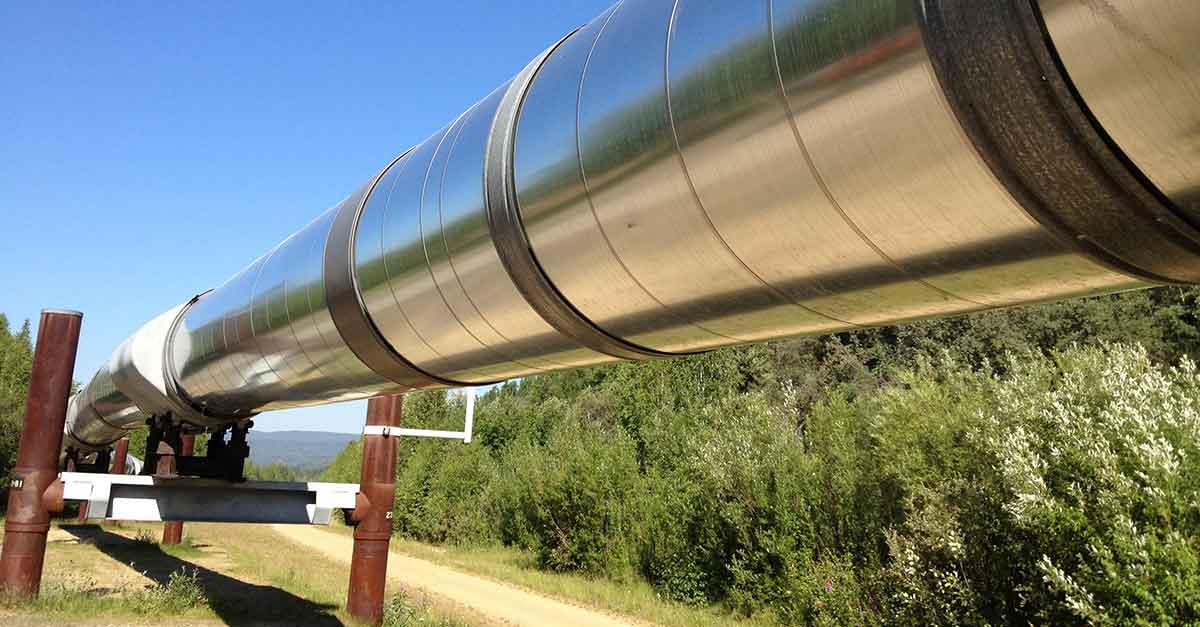
A feasibility study has shown that a proposed oil pipeline designed to connect Hon La Harbor in Vietnam to Kammuan province in Laos, will reduce petroleum prices for the country significantly.

As previously reported by The Laotian Times, the Laos-Vietnam oil pipeline project is an ambitious plan to import diesel and petrol fuels to Laos from Vietnam by way of a 306km pipeline.

The study has been submitted to the Lao government for consideration, and suggests  that gasoline prices in Khammuan province would be reduced by as much as 600 kip per litre – 7,500 kip per litre to 6,900 kip – once the project is fully functional by 2026.

During a signing ceremony in April, governments from both countries endorsed a Memorandum of Understanding for the construction project of the Hon La Oil Stockpile and an oil pipeline from Hon La Harbour in Vietnam’s Quang Binh province to Laos’ Khammuan province.

Petro Lao has also recently submitted a request to the Ministry of Industry and Commerce, to present the research data of the feasibility study and the project’s concept next month.

According to the feasibility study certified by both British and Vietnamese consulting firms, the project is to cost an estimated US$380 million and has identified four main facilities to be developed under the project.

They are Hon La Harbour and Hon La Oil Stockpile in Vietnam, a 306 km oil pipeline from Hon La to Thakhek, capital of Khammuan province and an oil stockpile to be built in Thakhek district.

Once the government gives approval to develop the project, Petro Lao says it will seek joint venture partners. Officials have stated that the project is expected to be 100-percent invested by Lao petroleum companies.

An official of the project, Mr Veth stated, “Some companies have expressed their interests in joining the project development. We are currently opened to welcoming business partners.”

However, in the case that there are no other companies interested in a joint venture, Mr Veth has claimed that Petro Lao is financially capable of solely investing in the project.

Statistics gathered from 22 petroleum companies around the country have shown that just 1.2 billion litres of oil were imported into Laos in 2015.

Once the project has completed, studies estimate that 2.5 billion litres of refined oil will be imported annually, doubling the current amount of  Lao useage.

The project will be set in two phases, with Phase I consisting of the construction of the harbour and Hon La Oil Stockpile, scheduled to be completed in 2019. Phase II will see the construction of an oil pipeline and oil stockpile in Thakhek.

Once Phase I is completed, oil can be imported directly from Singapore to Hon La Stockpile, then imported to Laos by land. Oil prices will be reduced due to eliminating the middleman, saving importers on transport costs, resulting in lower gas prices for consumers.


Read more about the pipeline here: https://www.laotiantimes.com/2017/01/05/laos-vietnam-oil-pipeline/

Laos and France Bolsters Ties

france flag
france flag

In an effort to propel Laos from Least Developed Country status by 2020, the French government is continuing to support and assist many sectors within the country.

Since 1994, the French Development Agency (AFD) has supplied EUR 80 million in loans and has dispensed EUR 150 million into grants, pledging an estimated total of EUR 230 million to Laos.

During a discussion on Thursday, previous efforts were reviewed along with planning for next year’s bilateral cooperation. The meeting was attended by Deputy Minister of Planning and Investment, Dr Kikeo Chanthaboury, Ambassador of France to Laos, Ms Claudine Ledoux, along with other officials.

Dr Kikeo stated, “The government of France has supported and assisted many sectors of the Lao government, especially agriculture and rural development, urban and socio-cultural development, governance, education, and health. This conforms to the goals of the 8th five-year National Socio-Economic Development Plan (2016-2020) which is targeting the removal of Laos from Least Developed Country status.”

The AFD has been earnestly involved with agriculture and rural development by supporting the Ministry of Agriculture and Forestry in its approach of ensuring food security, promoting competitive commodities and developing clean, safe and sustainable agriculture.

In a presentation made by the World Heritage Offices of Luang Prabang and Vat Phou, AFD’s long-term connection with cultural heritage conservation and urban development was highlighted and commended. The objective is to build capacity among local authorities so they are able to balance heritage conservation with urban development.

The French Embassy gave a presentation on its ongoing action in the field of governance which has two priorities: respect for the rule of law and the emergence of civil society in Laos.

France has been working closely with the United Nations Development Programme (UNDP) to design and implement a master plan for justice in Laos, focusing on the professional training of Lao magistrates and lawyers, a field in which France has excelled in.

French development assistance to Laos is evaluated at an estimated US$15 million each year and US$25 million globally, including France’s financial aid through multilateral channels (European Union, United Nations, etc.), which also benefits Laos.


National Assembly Seeks Price Stability

expired foods

The price of merchandise in Laos, specifically food products, has been under tough scrutiny by the public for many years. Social media has given disgruntled citizens a platform to criticize the cost of goods that can vastly differ between markets and shops within the same city, suggesting to the government that there are flaws in the system.

Due to public contention regarding the cost of goods, the National Assembly has approved measures proposed by the government on the management of goods prices and service fees, while also urging the related Prime Ministerial Decree be upgraded to a law.

The NA used the final day of its third ordinary session to brainstorm a resolution on the management of goods prices, service fees and the measures in place to reduce the impact of high prices on productivity and livelihoods.

In an effort to reduce unnecessary fees and brokerage, the National Assembly urged the government to purchase first-hand goods directly from the manufacturers and then marketing them to the final consumer, resulting in a reduction of costs in imported goods and leading to higher profits from exports.

The National Assembly proposed upgrading the Prime Ministerial Decree on the management of prices to a law, as well as declaring additional decrees to strengthen the management and inspection of the importation and distribution of food products.  The NA also advised that an accurate price structure for each category of product and set guidelines for the reduction of product costs should be developed .

The Assembly also called for tougher measures against unregulated and illegal importers and traders, including goods without labels, counterfeit or expired goods, as well as curbing the soaring price of food products and medicine.

Ms Valy Vetsaphong, assembly member for Vientiane mentioned that the larger trading companies who pay their taxes in line with the law, were struggling to compete with smaller retailers, who generally sold goods that had been illegally imported. She urged for measures to protect legal business operators and prevent traders from evading the payment of taxes, especially import tax.

Member for Savannakhet province, Mr Souksavanh Xaysombath, proposed that the centralization of importation should receive special attention, which could limit the unregulated import of goods by individuals.

Mr Souksavanh stated, “the people who benefit from illegal importation by individuals, are the importers themselves and some government officials. Large-scale business units, who pay a large amount of taxes legally, cannot compete with the ‘ant parade’.” He added, “this is a situation that causes price instability.”

The production of foodstuffs offers Laos opportunities in organic agriculture and environmentally friendly production that symbolizes the traditions of certain localities.

Free Healthcare For Young Children; A Work in Progress

healthcare for young children

In a country that is considered below par on accessible healthcare, Lao officials are putting their best foot forward and attempting to provide free healthcare to all children under five at government hospitals.

According to the Ministry of Health, the new policy aims to upgrade health facility development and provide all children under five, in all provinces across the nation, better access to health services within a three month time span. Free health checks and treatments will be made available at government hospitals and dispensaries under the program.

The policy was designed in hopes of standardizing healthcare services, specifically aimed towards maternal and child health. With the high rate of mortality amongst children under five looming over the country’s population year after year, this program was initiated to encourage more parents to seek medical attention for their sick children.

Though health authorities have already publicly announced the policy, the ambitious vision for accessible healthcare countrywide has yet to be successfully implemented mainly due to lack of government funding.

The ministry has requested for all hospitals to submit proposals detailing how the policy would be executed under their supervision, specifically, how much funding would be required.

Deputy Director of the National Mother and Newborn Hospital in Vientiane, Dr Sivanesay Chanthavongsak, confirmed that their proposal has been submitted, however the ministry has yet to contact them on how to proceed. She stated, “we are prepared to carry out the government’s new policy if the ministry provides us with a budget.”

Vientiane Expressway Route Reviewed

Vientiane Expressway Project

Much has been speculated on the six-lane, 14 km Vientiane expressway that will run from Lao-ITECC in Xaysettha district to Dongmakhai village in Xaythany district. With completion slated for 2019, ministries are now examining where the route will pass through to ensure that densely populated areas are avoided.

As previously reported by The Laotian Times, government officials gave their blessing last February on the expressway in an attempt to ease city congestion. With construction aimed to begin later this year, government bodies are carrying out a thorough study and analysis to verify that the project will be beneficial, and with the sizable investment required, feasible.

According to Dr Bouavone Souklasaeng, an official close to the project, the Ministry of Public Works and Transport has completed 80 percent of its study, while the Ministry of Planning and Investment and the Ministry of Finance are researching funding options. Project officials will inquire on financing for the expressway from several sources.

The expressway is projected to cost an estimated US$150 million to US$200 million. Various major banks in Laos were recently invited by authorities to assess the cost that would be incurred by people whose property and farmland would be demolished so that the new road could be built.

The road corridor is purposefully being designed to avoid crowded areas in order to minimize the impact, however compensation will be offered to families who do have to relocate to make way for the expressway.

Dr Bouavone is confident that the ministries will be ready to move forward by August, when the details of the project will be considered and approved so that construction can begin.

The six-lane expressway, with a planned width of 70 metres, will be built parallel to Kaysone Phomvihane Road and will pass through 13 villages in Xaysettha district and six villages in Xaythany district. Buildings, shops and other business premises along Kaysone Phomvihane Road will not be affected.

Over the 14 kilometres of its length, the expressway will connect with several key roads including Road No. 13, 450 Year Road and eventually linking to the Laos-China railway when it is completed in 2021.

2017 Road Tax Delayed Until August

road
road

With the Ministry of Finance issuing 2017 road tax stickers in August, vehicle owners should be prepared to pay a higher road tax this year.

Though an increase has been confirmed, the percentage it will be increased by is still undetermined. The Tax Department is currently in discussion with National Assembly members, who are concerned on what would be appropriate and affordable for certain types of vehicles and whether or not it may be beyond the means of citizens in rural areas.

An official with the Tax Department explained, “the existing road taxes were set in 2008, so it’s now become necessary to increase them.”

In previous years, road tax stickers were available for purchase in March, however the 2017 sticker has been delayed this year while the sector waits for the National Assembly to approve a presidential decree on the increase.

Deputy Prime Minister and Minister of Finance, Mr Somdy Duangdy, expects the Assembly to approve the decree no later than this month.

Another change that has been implemented this year is the method of obtaining a road tax sticker. In an effort to seal the loopholes of an inefficient system, the ministry will no longer sell road tax stickers at outlets like in previous years.

Instead, banks will be accepting payments and allocating them to specific accounts designated for road tax payments. This ensures that all  tax payments are recorded and tracked efficiently, leaving no room for loopholes.

According to statistics from the Tax Department, Laos has about 1.8 million vehicles, but only about 30 percent of vehicle owners pay road tax each year.

Latest Ransomware Virus Targets Thailand, Is Laos Next?

wannacry
wannacry

‘WannaCry’’ ransomeware may sound like a silly name, however this computer virus is anything but.

This global cyberattack is the latest virus that has been rapidly sweeping across 150 countries and terrorizing over 200,000 victims. Though it has yet to be seen in Laos, several digital billboard advertisements were taken hostage in Bangkok earlier this week, and officials are urging for internet users to stay vigilant.

The Ministry of Posts and Telecommunications has issued a warning for internet users to be actively cautious of the cyberattack and to avoid clicking on unsecured website or opening emails from unknown senders.

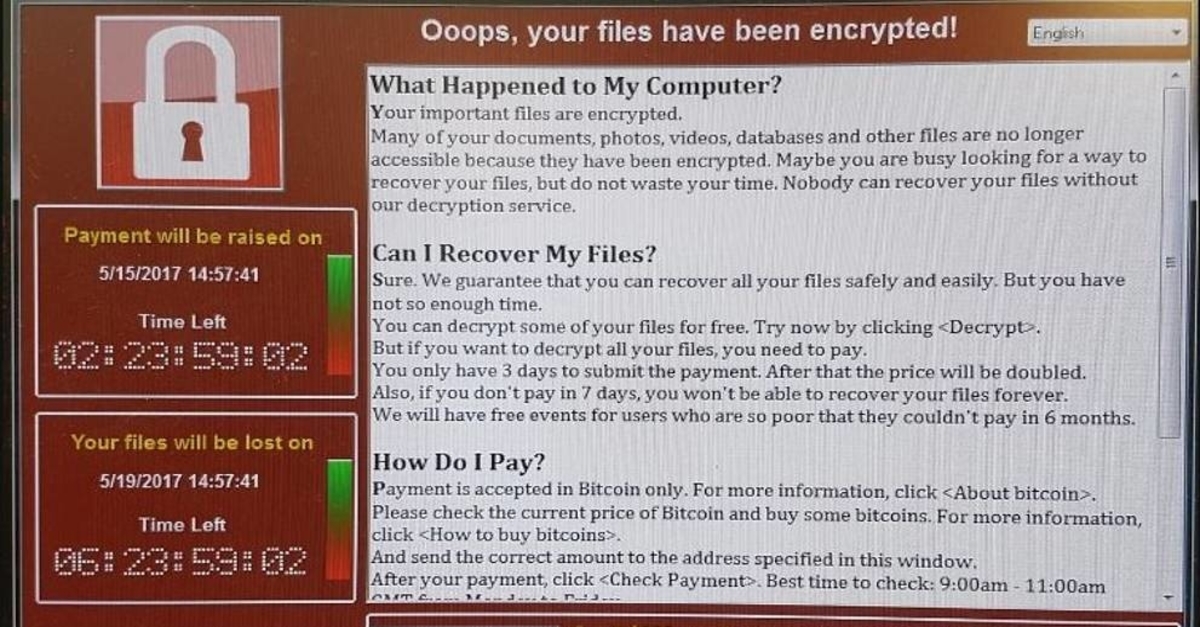
According to BGR, this malware is a type of trojan virus called “ransomware.” The virus in effect holds the infected computer hostage and demands that the victim pay a ransom in order to regain access to the files.

After being opened, the virus encrypts most of the files on a user’s computer. The software then demands that a ransom be paid in order to have the files decrypted, in this case, the software demands that the victim pays a ransom of $300 in bitcoins at the time of infection.

If no ransom is paid within three days, the amount doubles to $600. After seven days without payment, WannaCry will delete all of the encrypted files and all data will be lost.

In order to safeguard the community from the cyberattack, the ministry has urged the public to update their Windows XP, 7, 8, 9 operating systems or Windows Server 2003, 2008, 2012 and 2016.

If for some reason the computer’s operating system can not be updated, the ministry suggests to close the system’s Server Message Block or SMB and backup all documents and system files. Computer users should also have a current up-to-date antivirus program running.

Though there is no confirmed fix for WannaCry available at this time, antivirus companies and cybersecurity experts are tirelessly looking for ways to decrypt files on infected computers. Officials suggest users shutdown their computer immediately to stop the spread of the virus to other computers connected by a network.

To report an infection or for any inquiries about the virus, the public is urged to contact LaoCERT by emailing: report@laocert.gov.la or calling 030-5764222.

You can also visit https://www.laocert.gov.la for Windows operating system updates and more information on the virus.

Source: BGR, Vientiane Times

What Are China’s Investments Costing the People of Laos?

bananas
bananas

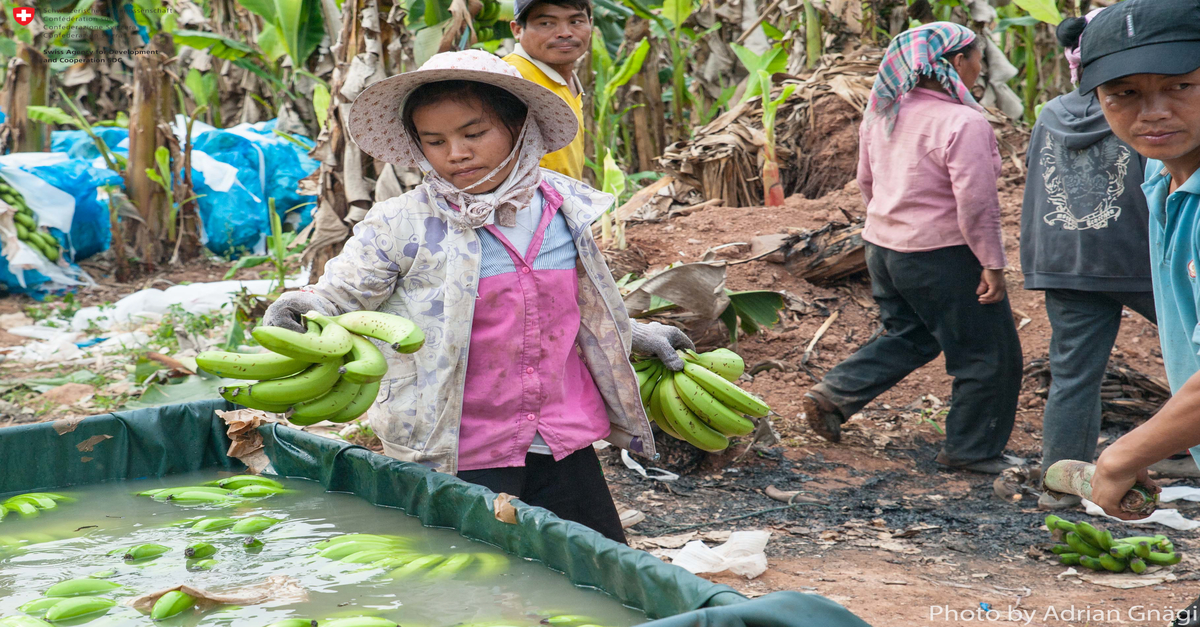
In the past 5 years, the lush green rice fields and orchards that once danced endlessly across the Lao countrysides, have been replaced with more Chinese owned banana plantations.

While Laos isn’t among the world’s top banana producers, banana production in the small country has erupted. In 2002, Laos produced less than 90,000 tons of bananas, however by 2013 it was producing over 400,000 tons.

While the banana boom has brought economic benefits to impoverished regions, there is also strong concern regarding the use of chemicals – including the banned herbicide, paraquat.

According to recent studies, Chinese entrepreneurs are renting 1,600 square meters of land for about $300 to $600 per year from farmers, which is roughly what they would earn from this area if they cultivated the land. Villagers believe they are getting a great bargain because they earn the same income without having to do the work.

However, deals such as these ultimately comes with great sacrifices; for example, concession contracts seldom specify that the investor is required to clean and restore the land to its previous condition after the agreement has ended.

According to Cecilie Friis, a human geographer at Humboldt University, there are considerable economic incentives for locals to rent out their land, due to the large influx of cash that Laotian villagers could never earn in one shot from farming. However, the consequences are severe in terms of chemicals utilized by Chinese investors, destruction of land markers and of traditional irrigation channels.

With the majority of plantation workers being from marginalized ethnic minority groups, workers are also motivated by the money, earning between $120 and $150 a month, where the national income per capita is estimated at $137 a month by the World Bank.

Yet analysts believe that the banana rush in northern Laos is just one element of a larger phenomenon.

In 2014, China became the largest investor in Laos, a landlocked country of 6.5 million people, with more than 760 projects valued at about $6.7 billion, not to mention the highly anticipated Laos-China Railway project.

Deprived of economic opportunities in overpopulated southern China, Chinese entrepreneurs are venturing across the border in droves, to a country where people are scarce and land is plentiful.

Chinese migrants have been investing in a plethora of things in northern Laos – from hotels and bakeries to rubber plantations. However, it is the massive banana estates, which cover most of Bokeo province and parts of Oudomxay and Luang Namtha, that they tout as their greatest achievement.

Though Chinese economic influence over Laos is nothing new, the superpower’s economic penetration of the small country  has increased considerably in recent years. According to the World Bank,  Laos’ GDP took off with real growth of 8.5% in 2013 and 7.5% in 2014 – figures that surpassed China’s.

As a result, largely due to shipments of agricultural products grown by Chinese companies, Lao exports to China increased by 300% between 2005 and 2013,

However, what at first seemed like a good deal for the impoverished Laotian farmers is turning out to be anything but positive, with unexpected side effects rapidly outweighing the economic advantages.

Though plantation workers take precaution by wearing masks when spraying  trees with pesticides, it’s not enough to prevent severe headaches, nausea, liver disease and in some cases death. Nor does it prevent the chemicals from spreading to other family members living in the village, some who do not partake in the farming of these banana fields but have also fallen victim to the hazardous fumes.

Many cases result in young children vomiting blood, suffering from extreme fever, enduring intense cases of diarrhea and for more unfortunate families, losing the child. Doctors have confirmed with tests that their lungs have been irreparably damaged by toxic pesticides.

Such situations are fueling an anti-Chinese position that is beginning to pour over into  Laos’ northern regions.

Demonstrations are rare in Laos, however residents of Sibounheung village unified in August  to protest their displacement, after their land was included in a 99-year concession for a private Chinese company to extend its hotel-casino complex. After villagers proposed $5,600 per rai (1,600 square meters), the government purchased the rice fields for $2,800 per rai.

Other protests have taken place across social network platforms, including one that criticized a proposal that allowed China’s A-Cho Group to develop land around the Kuang Si waterfall, one of the most famous natural sites in the country. The project was shortly terminated.

At the end of September last year, the Ministry of Agriculture and Forests warned four Chinese companies for “excessive use of pesticides” and ordered inspections on the types and amounts of chemicals used at various banana plantations. Business licenses were threatened to be revoked if laws continued to be broken.

In mid-October, authorities in Bokeo, Luang Namtha and Oudomxay provinces banned the creation of new plantations, after Chinese-owned banana farms were discovered to have used and leaked hazardous chemicals into the soil and water.

However, despite the government’s efforts towards preventing further damage from being done to the people and the environment, the use of illegal substances in  banana farming is far too lucrative for it to disappear anytime soon. Farmers continue to rent their land out illegally to China’s investors to bring home a steady income.

Prime Minister Thongloun Sisoulith has voiced his concern over the widespread chemical usage on Chinese-run banana plantations stating, “the government could not overlook this.”  He added, “since last year, I have ordered a prohibition on renting out more agricultural land for banana plantations to investors because of the damage from chemical contamination.”

The PM acknowledges that the use of chemicals has made farmers sick and contaminated water sources, however he did not mention whether Laos would take action against the existing banana plantations.

Source: Southeast Asia Globe