Home Blog Page 6352

HUAWEI P10/P10 Plus Official Launch

This Facebook link thumbnail image template was created by Christian Karasiewicz, owner of www.christiankonline.com

On 22 April 2017 at the Crowne Plaza Hotel in Vientiane Capital, Huawei Technologies Lao held a launch ceremony for its new product, the HUAWEI P10/P10 Plus, a smartphones that comes equipped with new innovations. The product was presented by Mr. Sujinyong, Director of Communications Equipment at Huawei Lao, and invited guests, as well as the media.

Mr. Sujinyong addressed the attendees, saying “just four years ago many people may not have known that the Huawei brand from China would become a point of interest in the present, and in 2016 the high quality premium Huawei p9 smartphone would help Huawei rise to third from the top among smartphone brands around the world. Now, in 2017, Huawei has developed something that surpasses all others in the Huawei P10/P10 Plus, which is a smartphone that includes the professional-quality Leica camera lens.”

Mr. Vankong Sisavath, Product Manager, explained the special features of the Huawei P10/P10 Plus phone as well as the rear camera that was produced in cooperation with Leica, and is the first time a Leica lens has been used for a front camera, with quality close to that of a professional camera. The camera has many special features, including portrait and Hybrid Zoom that assists focus. Huawei has worked with Pantone, world leader in color technology, to ensure vibrant color, such as Dazzling Plus, Dazzling Gold, Prestige Gold, and Graphite Black.

Professional photographers from Laos attended the event and showcased their work and shared their experiences using the Huawei smartphone, as well as demonstrating how to take professional-style photographs with the Huawei P10/P10 Plus handsets.

Advance reservations for phones opened in mid-April as part of a promotion that offered free items such as Lao Telecom free call and data packages, Laosat Satellites, lucky phone numbers, and gift boxes.

Huawei offers excellent after-sale service to its customers, including a three-month warranty against screen breakage, no matter the cause, and will even collect the broken item from customers’ houses for repairs. Repairs can be completed within two hours.

This Facebook link thumbnail image template was created by Christian Karasiewicz, owner of www.christiankonline.com

Laos Struck by 4.9 Magnitude Earthquake in Hongsa

earthquake hongsa laos

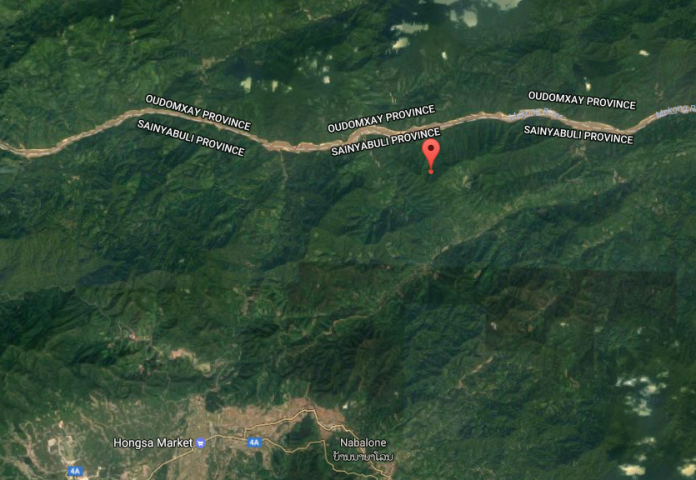
An earthquake measuring 4.9 on the Richter scale struck central Laos yesterday at 5:10am, according to a report by the Lao Post. The earthquake hit close to Hongsa, in Xayabouly Province, affecting nearby townships and villages including Ban Thasuang, Ban Kieusala, Ban Thanoune, and Ban Huaylai.

There have been no reports of damage or injury caused by the earthquake, although tremors were felt by some residents.

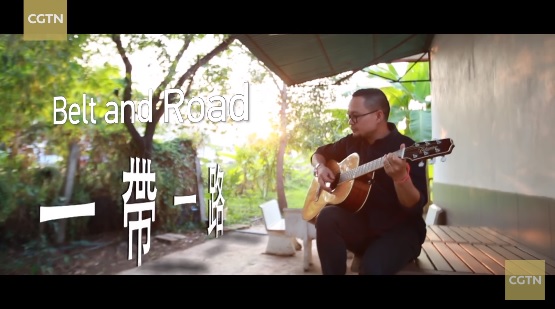
Lao Rocker ‘Sack Cells’ Goes Viral in China with “Belt and Road” Song

Sack Cells Belt and Road Song

Athisack Ratanavong, or more popularly known as ‘Sack Vong Cells’, is recognized in Laos as being a talented rock musician and singer for his work at Indee Records. However, the Lao national has recently caught the attention of people in China with his soft rock track, “Yidaiyilu”, the Chinese term for the Belt and Road Initiative, that is now a trending song on Chinese social media, despite it being performed in Lao.

As previously reported by The Laotian Times, the China-proposed Belt and Road Initiative  is a crucial part of China’s development strategy and was initially proposed in 2013. The aim of the initiative is to  deepen economic cooperation with countries in Asia, Europe and Africa, focusing on developing a trade and infrastructure network that connects the three continents.

In collaboration with journalist-turned-songwriter, Vilayphone Vongphachanh, the two managed to capture the significance of the Belt and Road concept in simple words and a catchy tune. Key phrases such as, “mutual benefits”, “win-win results” and “enhancing connectivity across nations” are a few of the lyrics that keep the song straightforward for the listener.

Working as a host and program editor in the Lao service at China Radio International, Vilayphone has resided in China for six years, and was inspired to write the song based on his knowledge about the Belt and Road Initiative through his work. He explained that the song was produced in 2016 to mark the 55th anniversary of the establishment of diplomatic ties between China and Laos, but only just recently gained traction after a music video was produced.

The video has been released ahead of the Belt and Road Forum for International Cooperation, which is being held in Beijing on May 14 and 15.


Locusts Swarm Northern Laos Wreaking Havoc on Crops

Locusts

The Northern provinces of Huaphan, LuangPrabang, Oudomxay, Phongsaly and Xieng Khuang have been invaded by locusts, reaching plague proportions despite attempts to control the insects with chemical sprayings.

After receiving more insecticide, spraying machines and other equipment from China, Lao and Chinese agriculture officials have teamed up to brainstorm ways on how to effectively combat the swarms that have been wreaking havoc on local crops.

Director General of the Ministry of Agriculture and Forestry’s Agriculture Department, Mr Vilaysouk Khennavong and a representative from the Chinese Embassy to Laos, Mr Wang Qihui, signed an agreement for the provision of the supplies on Thursday.

Despite the government of China equipping the Agriculture Department with 21 vehicles, 1,100 machines,1,000 protective suits and other various equipment this year alone, it has proven to be ineffective against the mass of locusts dominating the area.

With additional equipment expected to be delivered to the suffering provinces soon, officials will be better armed to fend off the invading swarms.

During the previous locust invasion at the end 2016, authorities reported that the locusts had laid eggs in 640 places on an area of more than 9,000 hectares. The area included 376 villages in 24 districts of the five provinces.  

Last month the eggs hatched in 81 locations in 38 villages in 12 districts of Huaphan, LuangPrabang, Oudomxay and XiengKhuang provinces.

Officials from the agriculture and forestry offices have been working tirelessly with the Ministry of Agriculture and Forestry, local authorities and villagers, in attempt to control the locusts population by destroying the eggs, spraying pesticides, and being extremely vigilant of outbreaks.

A surveillance team from the Agriculture Department predicts there will be locust outbreaks in many districts and more provinces, and has observed an increase of 20-30 percent in locust infestations this year, as compared to previous years.

A surveillance team from China has forecasted  that if control measures are successful, the outbreak will stabilize in the next two or three years.

Apple of Her Eye: Nothing Like The Real Thing

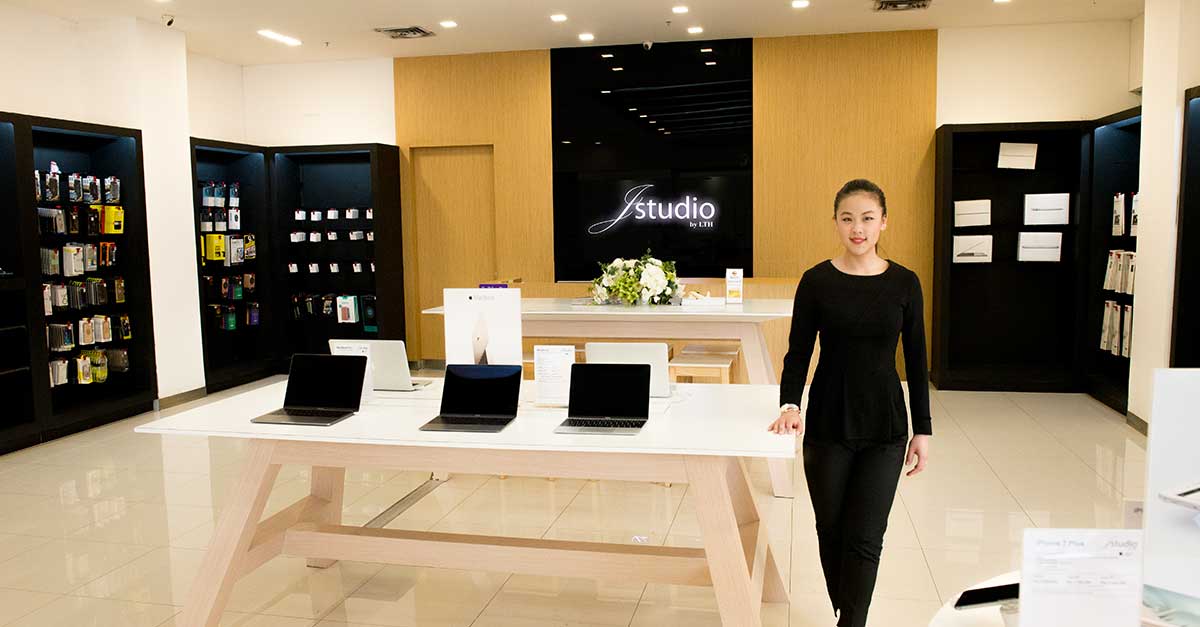
LTH Apple Store

The manager of Laos’ only official Apple Authorised Reseller store says there’s nothing like the real thing.

As a marketing symbol, you can’t get much more potent than the apple. That remarkably simple and instantly recognisable image of an apple with a single bite taken out is now as ubiquitous as a can of Pepsi or – in Vientiane at least – a bottle of Beerlao.

But when it comes to consumers, devotees of Apple’s carefully curated line of products generally care about one thing – where can they get the real deal? And where, if their real-deal devices break, can they get them properly repaired?

While Vientiane is now dotted with the Apple symbol, most adorn shops that supply Apple products bought in Thailand, and don’t provide any user support. Others are on shops that have good deals with other “grey market” resellers.

But, thankfully, there is one authorised distributor of Apple products in Laos – the LTH Store, the electronics distributor that also imports Nokia, Samsung, Toshiba, Philips, Faber, among others. Carine Prinsitthirat knows her phones. Her father owns L Thong Huot, and her family has long cornered the electronics and mobile phone market in Laos.

Born and raised in France, Mrs Prinsitthirat moved to Laos with her parents when she was 15, and studied international business management in Thailand, destined for life at the helm of a large company.

LTH Apple Store Laos

So she has been able to watch the rise and rise of the mobile phone market in Laos, beginning with Nokia in the early 2000s. By the time the iPhone stormed the world in 2008, Nokia had a solid hold on the Lao market, with the massive logo-ed store on Dongpalane road a beacon for users everywhere of the real thing. Today, nine years later, the old Nokia store has been combined with the main LTH shop (LTH Store shop), with Samsung is next door and Apple right across the street. LTH owns all of them but, says Mrs Prinsitthirat, convincing Apple to let LTH sell its authorised products was no easy matter.

LTH were initially able to sell Apple products in a small corner of one of its electronics stores, to see how they fared on the market. In this context, the company’s experience selling Nokia and Samsung was a help, rather than a hindrance, and in fact, according to Mrs Prinsitthirat, most Apple sellers deal Samsung phones as well.

And besides, she says, the Apple market is unlike any other on the tech scene. “The target market is different,” she says.

“With Samsung, for example, the bestseller will vary because of its wide variety. But the target is still not the same because it’s Android and the iPhone is iOS. Once you have iOS you never switch’’

Once it was clear there was a strong market – that is, enough customers with means to indulge in their love of fine tech design – LTH was allowed to open a J Studio & LTH (JStudio by LTH), devoted exclusively to Apple products – complete with the trademark, blond-wood-and-chrome trademark fitout – in Vientiane Center.

The licence to sell iPhones comes with access to authorised service providers from Apple, and she has been impressed at the quality of the service provided, especially for products needing repairs or replacements.

“Actually the system is very good, Apple provides everything.’’ she says.

“Basically, when the phone is activated, we can show the customer when the warranty starts online. And when a phone or computer needs repairing or replacing, DHL will come and pick up the phone every business days on our doorstep, and within 3 to 5 business days, you can get your new phone. If you compare with other after sale services, this is very efficient.’’

She says that as a Lao person, opening an Apple Authorised Reseller store is a dream come true – at just 24, she fits solidly into the iPhone generation.

Her next ambition is to become an Apple Premium Reseller, meaning the store can sell the latest products, including the increasingly-sought-after Apple Watch.

Champa Meuanglao
Written by:
Latsamy Phonevilay
Originally Published in: Champa Meuanglao,  official Lao Airlines in-flight magazine, 2017 May-June Edition

PM to Slash Civil Servant Stipends, Shifts Focus to Rural Volunteers

rural teacher
rural teacher

Prime Minister Thongloun Sisoulith has stated that ‘benefits’ should no longer be given to those working in public administration, but insists that such support go to volunteers working for the government in remote and rural areas instead.

During the ongoing National Assembly (NA) session, the Prime Minister pointed out that the number of civil servants in the country was high relative to the total population, due to more civil servants being recruited each year in contrast to those retiring.

“If the number of civil servants is in excess of those actually needed, it will mean that we are everlastingly doing them a favor,” he stated, adding that the perpetual supply of government positions results in people rejecting other forms of work, especially in business.

An estimated 150,000 civil servants currently work in ministries, government agencies, and local authorities, accounting for more than 2 percent of the country’s population, of which half have a lower or intermediate level diploma.

This equates to the government employing 2.5 people out of every 100 citizens, while in most countries that figure is less than two public servants per 100 citizens.

The Ministry of Home Affairs has been directed by the PM to hire  civil servants based on methodical studies and the principles of public administration.

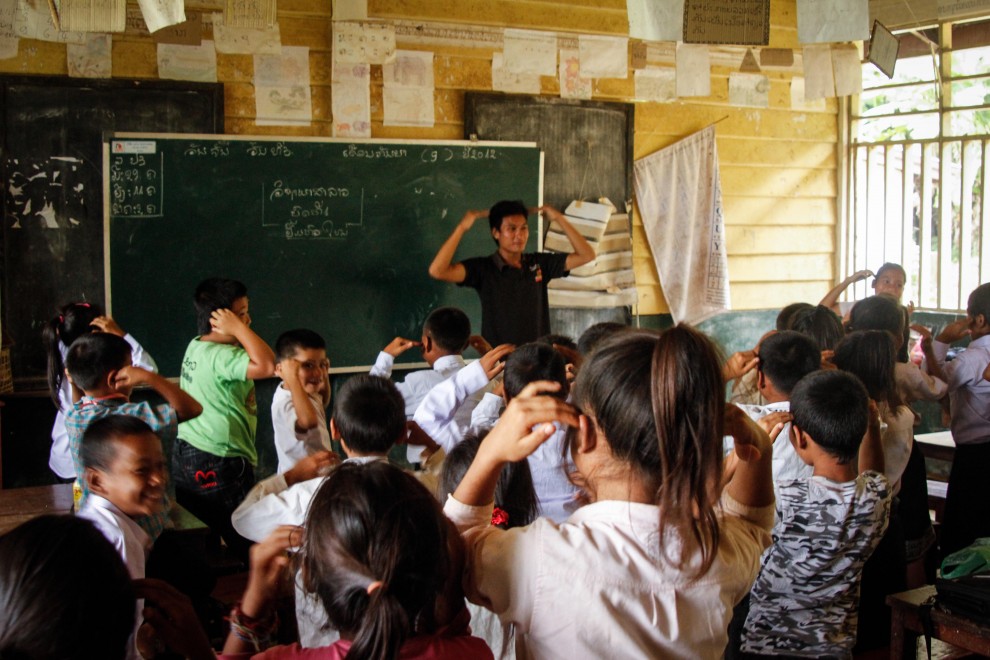
Prime Minister Thongloun also mentioned continuous complaints about the shortage of teachers in many rural schools, where volunteer teachers are often put in place to fill positions. Directing sympathy towards these volunteers, the PM acknowledged that they work just as hard as teachers who are employed as civil servants, possibly even harder, however they are unable to gain civil servant status.

It has been suggested by Mr Thongloun that a fund be established for volunteer teachers, with contributions from domestic and international donors, business operators, and private citizens.

He also touched on the struggles of the local people in these rural areas, who earn as little as 10 or 20,000 kip a day but feel obligated to feed the volunteer teachers.

The government has previously announced only 5,000 new employees would be hired in 2017, with the new quota of civil servants based on the financial capacity of the government to pay officials’ salaries.

In line with this policy, the Ministry of Information, Culture and Tourism announced in March it would not recruit any new staff to work at the central level, but would request the transfer of civil servants from provincial departments if necessary.

Government Encourages Contraception Among Adolescents

lao mother
lao mother

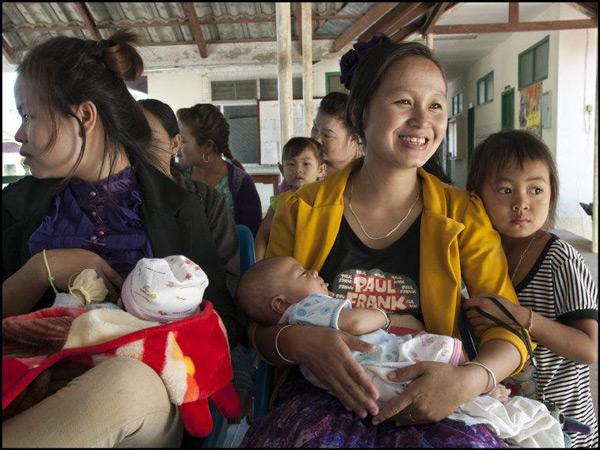
In an effort to reduce maternal and child morbidity and mortality rates, Laos will focus on reducing the unmet need for contraception to 13 percent, and increase the contraceptive prevalence rate from 42 to 65 percent by the year 2020.

During the first National Family Planning Conference held in Vientiane on Tuesday, statistics indicated that the nation’s unmet need for family planning still lingers at a high 20 percent, and surging up to 31 percent among various ethnic groups.

Statistics also revealed that the adolescent birth rate is 76 live births per 1,000 girls in the 15-19 age group, adolescent contraceptive use is low at 22.3 percent, and the unmet need for contraception is at 22.6 percent.

Themed “Investing in Family Planning for Economic Prosperity”, the National Family Planning Conference was officiated by Deputy Prime Minister, Dr Sonexay Siphandone, with representatives from the United Nations Population Fund (UNFPA), World Health Organisation and World Bank in attendance .

The Minister of Health Associate, Prof. Dr Bounkong Syhavong stated, “quite simply, family planning provides choice to individuals and families, helping us work towards a future where every pregnancy is wanted and every childbirth is safe.”

The Prof. Dr added, “we have seen Laos’ maternal mortality ratio drop from 357 per 100,000 live births in 2012 to 206 per 100,000 live births in 2015, surpassing the Millennium Development Goal target we had set. We have come a long way, but we still have some miles to go to reach the target of 180 per 100,000 live births, in order to graduate from the Least Developed Country status in 2020. We couldn’t have done this without family planning along with strengthened midwifery services.”

By granting easier access to family planning, the number of adolescent pregnancies will decrease significantly, allowing young women to stay in good physical health, completing their education, striving towards future goals, and eventually  deciding on their own terms, when and how many kids they may want to have.

On a global scale, family planning has contributed to preventing maternal and child morbidity and mortality substantially.

Along with UNFPA, Laos has also seen tremendous support for the family planning program by Family Planning 2020, the global initiative funded by a range of donor governments and institutions, and hosted by the United Nations Foundation.

Laos; a Key Part in the Grand Scheme of Things

belt and road
belt and road

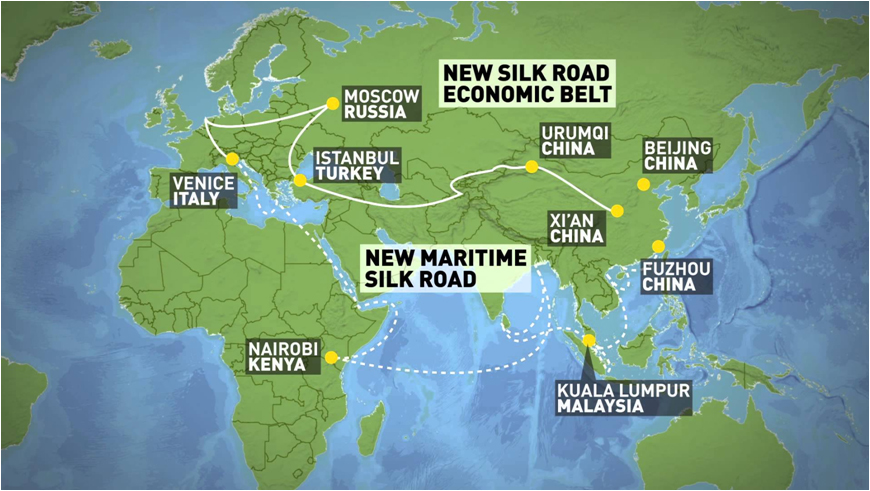
The “One Belt, One Road” initiative is a crucial part of China’s development strategy to deepen economic cooperation with countries in Asia, Europe and Africa.

The Belt and Road Initiative was initially proposed by China in 2013, and refers to the Silk Road Economic Belt and the 21st Century Maritime Silk Road, focusing on developing a trade and infrastructure network that connects Asia with Europe and Africa, along the ancient trade routes of the Silk Road.

Vice Minister of Public Works and Transport, Lattanamany Khounnyvong, states that the initiative commonly seeks the development of the countries along the Belt and Road with the goal of  “joining hands towards prosperity.”

Highlighting the country’s in-depth involvement in the initiative, Mr Lattanmany explained that the China-Laos railway, which began construction on Dec. 25, 2016, has been cited as the most significant project in the Eighth National Socio-Economic Development Plan 2016-2020 of Laos.

“As this is the No. 1 project of Laos, it is necessary to implement national policies well, promote socio-economic development, support the mission of poverty eradication along the railway route and help increase the incomes of local residents,” he stated.

According to the Vice Minister, Laos has been earnestly collaborating with Chinese contractors to assist local villagers, supporting infrastructure construction of roads, schools and healthcare services running along the railway.

It was also added by Mr Lattanamny that, “once completed, the railway will help facilitate people-to-people exchanges, reduce travel time and costs. The railway will also help promote agricultural production in Laos, increase income, attract more foreign investment and provide more employment opportunities.”

It is speculated that when the high-speed railway has reached completion and is fully functional in Laos, Lao people can offer services along the route, creating job opportunities for local people. Laos can also benefit from freight charges and people commuting via railway.

According to the Vice Minister of Public Works and Transport, this project will be crucial  in assisting Lao people escape poverty and raise living standards significantly, also citing that the construction of the China-Laos railway will help train high-tech personnel from Laos and provide valuable experience for the country in railway construction.

As previously reported by The Laotian Times, the China-Laos railway will run a total length of 414 km, with over 62.7 percent of bridges and tunnels, linking the Mohan-Boten border gate in northern Laos and the capital city of Vientiane.

Construction of the railway is scheduled to be completed within five years, and will cost an estimated 5.8 billion U.S. dollars to fabricate; 70 percent of which will be covered by Chinese investors, and the rest covered by Laos.

The China-Laos railway is the first overseas route connecting with the railway system in China, using Chinese technology, equipment and investment.

Lao Minister of Energy and Mines, Khammany Inthirath, added that the Belt and Road initiative is a significant and indispensable way to deepen cooperation between Laos and China in a plethora of fields such as investments, industrial production, trade, finance, culture, social integration policy and infrastructure.