Home Blog Page 6380

Northern Laos Tops New Year Destinations

LuangPrabang and Vangvieng district, Vientiane province and are the two main hotspots favoured by local and foreign holiday-makers looking for somewhere special to celebrate the New Year.

Meanwhile, Malaysia, Singapore and the Republic of Korea are the top overseas destinations where Lao people like to bring in the New Year, according to some local travel agents.

Vientiane Times asked several of the nation’s leading travel companies to gauge demand in the lead up to 2017.

A Northern Travel Laos official said local and foreign visitors both liked to tour the northern provinces over New Year, with the top destinations including LuangPrabang, Vangvieng, XiengKhuang province, and Vientiane.

Most foreign visitors that we deal with and arrange tours for in Laos are European. We also have customers from the USA, Australia and Switzerland, and some Asian visitors from Malaysia, the official said.

Normally, foreign visitors book their tour tickets in groups a few months in advance. Typically a group would stay up to three days in a destination or for one week in LuangPrabang, the official added.

NiyomChanmaly Travel Company told Vientiane Times that from the beginning of December the number of visitors from Thailand was up on previous years.

Vangvieng, LuangPrabang and Vientiane are especially favoured by Thai tourists as the top places for a holiday, according to the travel company.

Favoured activities by tour groups include homestays, visiting caves, and kayaking along the Xong River, with three day stays popular in Vangvieng and four days the norm in LuangPrabang.

According to Next Travel, Lao outbound travellers are increasingly looking to book an overseas destination to see in the New Year with Malaysia, Singapore and Korea the top destinations. Small tour groups of up to 10 people on a 5-6 day trip are the most popular.

Vientiane’s Northern Bus Station noted that passenger bookings so far seem not to have increased greatly compared to the previous New Year periods.

However, many bus companies have readied extra vehicles just in case there is a last minute rush.

Vangvieng is a popular destination for foreigners and local bus travellers on weekend breaks because of its many attractions and relative proximity to the capital.


Source: Vientiane Times

Top Ten Drug Trafficking Arrests in 2016

Police nationwide are reporting an increasing number of arrests of drug traffickers as they intensify their efforts to curb the drug trade.

Heading the list of top ten busts this year was the seizure this month of over 100,000 amphetamine tablets, 2kg of opium, one brick of heroin and one small bag of crystal methamphetamine in Nhot-ou district, Phongsaly province. Police arrested Mr Khaechiem, 52, from Oudomsine village in Sing district, LuangNamtha province, who was transporting the drugs.

Second on the list, in November Bokeo police arrested Mr Maisengyord, 51, and his wife Ms Fong, 48, of Huaypheung village, Tonpheung district, after they found 12 kg of crystal methamphetamine and 42,000 amphetamine pills in their possession.

Third on the list, in October Khammuan police seized 30kg of cannabis and arrested Mr Kham-Aiew, 44, of Viengkham village, Pakkading district, Borikhamxay province.

In fourth place, 12 bricks of heroin were seized in August in LuangPrabang province. Police arrested MrYearthor, 28, of Chomchouk village and MrKuaha, 29, of Nalae village, both in Huayxai district, Bokeo province.

Fifth on the list, Oudomxay police in August discovered 60,000 amphetamine pills inside an unoccupied pickup truck and arrested MrChaiyang, 30, and MrXayngeunvang, 27, both of Nongbuadaeng village, Houn district.

Sixth, in August police seized over 2,000 amphetamine pills in Thakhaek district, Khammuan province and arrested MrSaengsavanh, 39, of Naheuang village, Khamkeuth district, Borikhamxay province and MrLertchai, 30, of Dongdamduan village, KaysonePhomvihane district, Savannakhet province.

Seventh on the list, in May, LuangNamtha police arrested two people from a neighbouring country and MrArtee, 28, from Chalernxay village in Long district, after finding 10kg of crystal methamphetamine.

In eighth place, in May Khammuan police seized 59,000 amphetamine pills and arrested MrTongkousong, 32, of Phonkham village, Phonhong district, Vientiane province.

Ninth, in April, following a crackdown LuangNamtha province, police seized 40 bags of precursor chemicals weighing 1,000kg and arrested three alleged drug traffickers from a neighbouring country.

Rounding out the top ten, in A pril Vientiane police seized 12,000 amphetamine pills and arrested Mr Souksavath, 38, of Naxamphan village, LuangPrabang district, LuangPrabang province; Mr Ounsaeng, 42, of Donxay village, Xay district, Oudomxay province; Mr Namnor, 42, of Naphork, village, Xaythany district, Vientiane; and Mr Khampheng, 48, of Nongmaengda village, Xay district, Oudomxay province.


Source: Vientiane Times

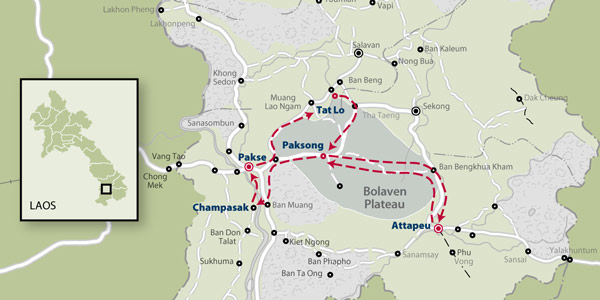
Pakxong to Become Champassak’s Second Largest Town

The district of Pakxong will be developed into the second largest urban centre in Champassak province after Pakxe, according to a provincial official.

Champassak province has been undertaking groundwork to develop the town with Ho Chi Minh City of Vietnam creating a new urban plan for Pakxong to deal with its rapid economic growth and development.

Deputy Director of the provincial Public Works and Transport Department, Mr Bounnao Fongkhamdeng, told Vientiane Times on Wednesday that provincial authorities are preparing urban planning development proposals for the government.

Ho Chi Minh City devised a new urban plan for Pakxong as the existing one has not been updated for 30 years and it’s not appropriate for its present and future development, he said.

Vietnam funded the new design, aiming to develop trade, investment and tourism, but the money to realise the project will have to come from the Lao government, he added.

Champassak province is made up of the 10 districts of Pakxe, Xanasomboun, Bachiengchaleunsouk, Pakxong, Pathoumphon, Phonthong, Champassak, Soukhouma, Mounlapamok and Khong.

Ho Chi Minh City presented the new urban planning design to Champassak province on Monday at a handover ceremony attended by provincial Governor Dr Bounthong Divixay and former member of the Politburo and former Ho Chi Minh Party Secretary Le ThanhHai.

Surveys were carried out in March 2013 with the final plan completed in August this year.

At the handover, provincial governor Dr Bounthong noted that the plan for Pakxong allocated specific zones for commercial production, housing and public spaces along with roads, electricity and water supply infrastructure.

He urged provincial and district authorities to expedite their project proposals in order to request funding from the government.

Prime Minister ThonglounSisoulith highlighted the province’s strong economy on a visit two months ago but also emphasised five issues in particular.

He said Champassak needed to seek more investment from domestic and overseas sources for coffee and other farms on the Bolaven Plateau, which is part of Pakxong district.

Pakxong not only has a growing reputation for its crops and coffee farms, but also its waterfalls and other tourist attractions, which are drawing more visitors.


Source: Vientiane Times

PM Calls for more Proficient Workforce

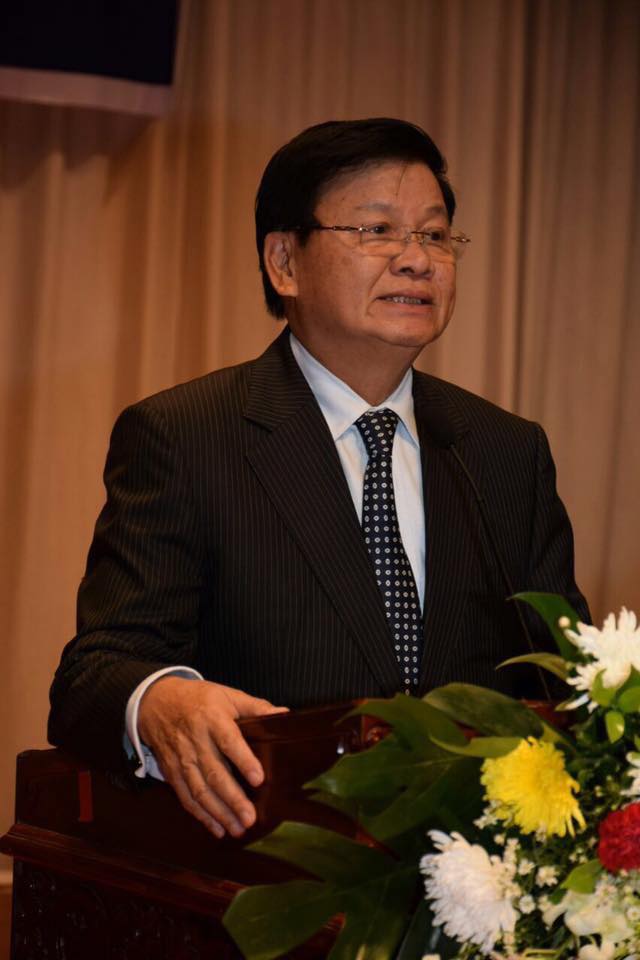
Prime Minister Thongloun Sisoulith has called for the workforce to be strengthened so that Lao goods and services can compete with those of other countries amid regional integration.

Mr Thongloun made the call yesterday in his address at the annual meeting of the labour and social welfare sector.

If we can’t produce a workforce that meets requirements in terms of both quantity and quality, and timely supply for employers, we won’t be able to prevent an influx of workers from other ASEAN countries, Mr Thongloun said, referring to the free movement of labour that is permitted within the ASEAN Economic Community.

He said the improvement of domestic labourers’ skills would be one way to prevent them losing their jobs. He stressed that the Ministry of Labour and Social Welfare and related sectors would prioritise the comprehensive development of Lao workers in terms of skills, capability, discipline, and perseverance.

He reminded officials that employers often complain about Lao labourers not being dedicated to their jobs and taking time off at will. This common problem was frustrating for employers and harmed their business operations.

The premier said checks would be made on the implementation of the Labour Law, especially concerning the lowest wage policy and welfare issues.

Inspections were also called for by the prime minister to see whether the rumours that employers were giving their workers stimulants so they could work longer hours were true.

He asked the Ministry of Labour and Social Welfare, Lao National Chamber of Commerce and Industry, and the Federation of Trade Unions to urgently look into the matter.

Regarding management, Mr Thongloun asked the ministry whether existing employment systems, such as job fairs, were satisfactory. He said he wanted to be sure that one business’s hiring of skilled labour did not affect employment in other businesses and that people were hired through a system of good cooperation.

Concerning the demand for labour, the prime minister said the Ministry of Education and Sports must investigate the needs of the various sectors.

The ministry reported that more than 132,000 people underwent skill development in the past year, and around 146,000 people found jobs.

The creation of trade union and Party organisations within factories and business units was raised by Mr Thongloun, who said these were compulsory. He referred to the situation in China and Vietnam, where such bodies not only protected workers, but facilitated business operations.

Laos is a destination for illegal workers from neighbouring countries. Numerous people from neighbouring countries come to Laos on tourist visas but stay here and open shops throughout the country.

Mr Thongloun tabled the prevention of illegal foreign labour migration for discussion at the meeting. He pointed to the growing number of foreigners who entered and stayed in Laos for a couple months but obtained a work permit after registering with the authorities and even a Lao identity card.

He called on ministries and local authorities to cooperate in addressing this issue.


Source: Vientiane Times

Rise in Vehicle Numbers at Boten Border

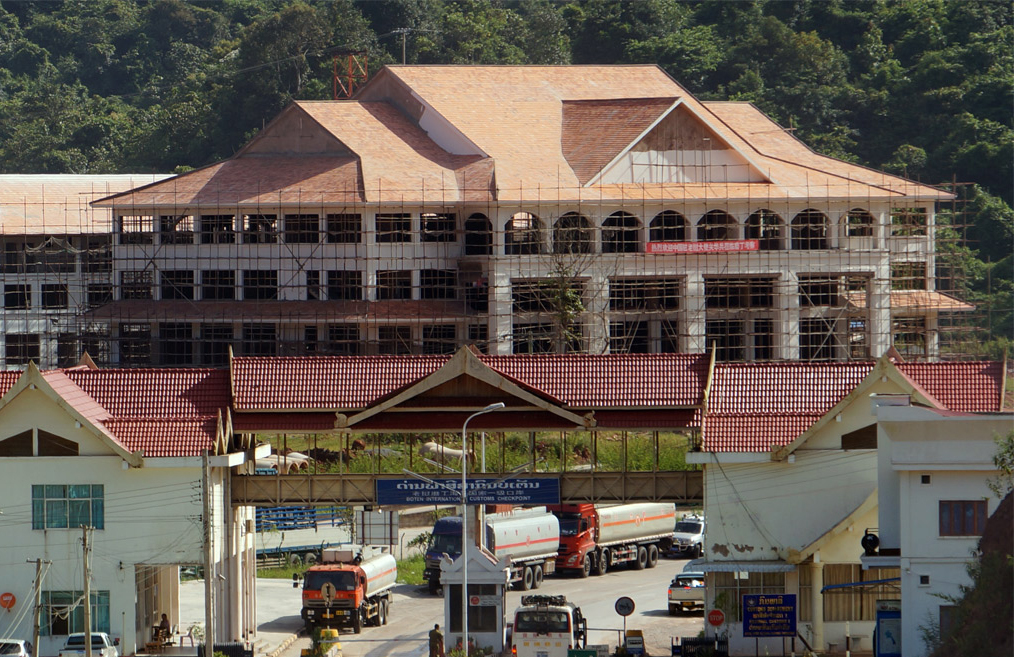
The number of vehicles crossing the Boten international checkpoint between Laos and China in LuangNamtha province has been reported to have increased as of this week.

Usually about 400 cars and heavy trucks from Laos, China and other countries are crossing the Laos-China border daily.

Head of the management committee for the Boten international checkpoint, Mr Phonsay Chanthasone told Vientiane Times on Monday that about 500 vehicles were recorded as crossing the Boten border last week.

So far this week, Boten international checkpoint seems to be seeing about 1,000 vehicles crossing the border daily between the two countries, he reported.

Generally the border crossing sees 400 vehicles in a day but the recent increase has been attributed to the arrival of the first construction vehicles from China.

Many construction vehicles have been headed to LuangPrabang province from the Laos-China border in LuangNamtha province after the Laos-China railway was officially opened for construction on Sunday.

Mr Phonsay added that it is possible that the number of vehicles crossing the Boten border could rise to up to 1,200 vehicles per day during the period when the construction vehicles for the railway project are transported into Laos.

A railway bridge over the Mekong in LuangPrabang province will be part of the planned 417-km Laos-China railway running from the Chinese border to Vientiane through the four provinces of LuangNamtha, Oudomxay, LuangPrabang, and Vientiane.

Officials at Boten international checkpoint in LuangNamtha province are working hard to introduce measures to minimise traffic chaos at the crossing between the two countries as the Laos-China railway project commences.

Mr Phonsay Chanthasone told the press earlier this month that the Boten border checkpoint was being closed at 8:00pm but that when the 500 or 1,000 Chinese vehicles came to cross into Laos, the border officials planned to remain open until 10:00pm in a bid to reduce traffic congestion.

The construction of the Laos-China railway is good because it will reduce the number of vehicles being used for cross border goods transportation.

Right now, the roads in the country are quite small and their quality is not very high.

The total value of goods imported and exported via the Boten international border was estimated at US$86 million for the 2015-2016 fiscal year.

Officials reported that there are 250,000 people including tourists and traders crossing the border in a year.

Source: Vientiane Times

140 Fires Inflict Property Damage Nationwide in 2016

A total of 140 fires were reported around the country this year, killing one person, injuring two others and causing over 115 billion kip in damages, according to the Fire Prevention and Protection Police Department.

The department, which is part of the Ministry of Public Security, noted that 188 houses burned down, along with a market, an apartment, 30 shops, three school buildings, four warehouses, two petrol stations, one furniture shop and five monks’ living quarters.

Seven cars and six motorbikes were among the many items damaged or destroyed.

Sixty-three of the fires were caused by electrical short circuits, another five by arson, 48 through carelessness or forgetfulness, and four due to technical error. Another 20 fires are still under investigation.

The biggest fire occurred at the Dao Heuang market in Pakxe district, Champassak province. The blaze gutted the market and caused damages estimated at 58 billion kip.

Sixty-one of the fires occurred in Vientiane, causing over 24 billion kip in damages.

One fire occurred last week in Nongbone village, Xaysettha district, where a house burned down after an electrical short-circuit in a bedroom.

The house was owned by Ms Sanila, 68, and the blaze caused damages estimated at over 800 million kip.

The police and Vientiane Rescue deployed fire trucks to bring the blaze under control, reporting that the fire took hold very quickly as many of the items inside the house were highly flammable. It took fire fighters about 20 minutes to completely extinguish the flames.

The second fire last week occurred in Phakhao village, Xaythany district. It destroyed one house rapidly and spread to two other houses but was then contained. Luckily, no one died.

The concrete single-storey house that was destroyed was owned by MsChanpheng, 59. The blaze caused damage estimated at over 650 million kip and police and other authorities are currently investigating the cause.

T he Fire Prevention and Protection Police Department has urged residents to check electrical devices before leaving home, to take care when burning rubbish, and not to let children play with fire.

The department also repeated its warning for people to be on guard against accidental fires and not to take risks with electrical wiring or appliances, or to leave burning candles unattended, as these are the most common causes of house fires.

Source: Vientiane Times

PM Urges Agriculture Officials to Realise Country’s Potential

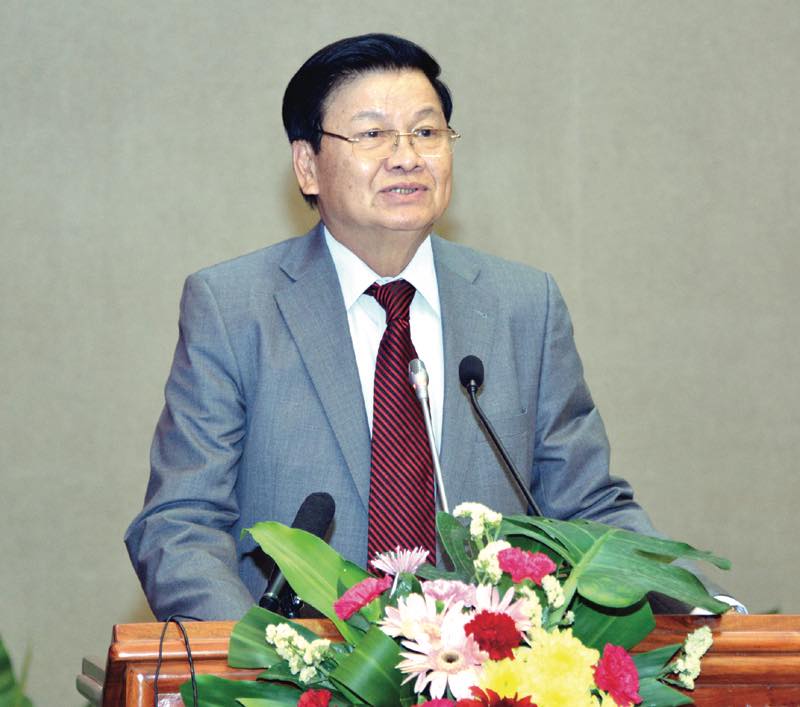
Prime Minister Thongloun Sisoulith has called on the agriculture and forestry sector to act in the interests of the country by providing green and clean food to the nation and the global market.

The prime minister made the call yesterday when addressing the sector’s annual meeting.

The sizeable rice harvest this year was attributed to the Ministry of Agriculture and Forestry’s enhanced food security programme, with 4.2 million tonnes of rice being produced.

Meanwhile, livestock and fish farms are now able to provide an average of 55 kg of meat and fish to every citizen each year.

Minister of Agriculture and Forestry, Dr Lien Thikeo said the use of machinery and new techniques in rice cultivation had seen harvests triple in size, and farmers were earning 3.6 million kip a tonne for the crop.

Mr Thongloun praised the achievements of the sector which, he said, despite the previous cold winter, the late onset of the rainy season, locust outbreaks and flooding, had seen 3.2 percent growth in productivity and now comprised 23 percent of GDP.

He stressed that the ministry should not aim solely for higher yields, as this could undermine public trust in crop quality. He said people in many countries were now cautious about high-yielding crops as they doubted whether they were grown in acceptable ways and believed they could be contaminated with chemicals.

“We should not only consider high yields, but rather be producing a small quantity that can be sold for a high price,” Mr Thongloun said.

The prime minister revealed his concerns about some traditional varieties of fruit such as the Nambak orange, which was valued for its special flavour. He said this particular species was in danger of being lost because people were mixing the seeds with those of other orange varieties.

He praised the decision by authorities in the northern provinces to stop the commercial-scale cultivation of bananas, which he said were not traditional Lao varieties and harmed the soil.

Mr Thongloun also advised agriculture officials to step up organic farming in the coming years. This would appeal to foreigners, who would like the idea of visiting a country where they knew they could breathe fresh air, swim in clean water, eat organically farmed food, and buy organically grown and clean produce.

“If we can realise this vision, it will create value and benefit Laos. We have the potential and we can compete,” Mr Thongloun said.

The development of agriculture-related industries was also called for by the prime minister, who said the ministry should provide technical assistance to agribusiness.

He pushed for agribusinesses to be grouped into an association that would encourage members to share their creative ideas and boost their market share. He noted that such an association should not force members to take a course of action as this would not be productive.

The four strategic programmes pursued by the ministry are food security, commercial agricultural production, sustainable forest development, and rural development combined with poverty reduction.

A new outcome of the food security programme over the past year was the supply of fresh meat directly from a farm and modern slaughterhouse operated under the first phase of Laos-Hungary cooperation in meat production.

The ministry will also aim for 3-4 percent growth of the sector by 2020.

With regard to forestry, the prime minister praised the ministry for carrying out Prime Min ister’s Order No. 15, which he said restored trust in the government’s plan to achieve forest cover of 70 percent by 2020.

Concerning rural development, Mr Thongloun said the ministry should not focus merely on merging small villages into larger urban units, but should also make sure that adequate amenities were provided so that residents could make a living.


Source: Vientiane Times

Laos Gets $850,000 Containerized Data Center

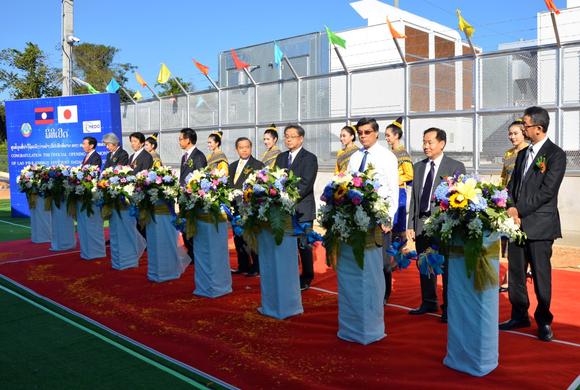
Laos’ first state-run data center opened recently, funded by a Japanese program supporting environmentally sound technology.

The facility marks “a big step” toward improving the nation’s IT environment, Science and Technology Minister Boviengkham Vongdara said at a ceremony held on Nov. 29 in Vientiane, the capital.

Laos’ information technology infrastructure is among the weakest in Southeast Asia, with state employees often using webmail for official business for want of government email accounts. The new data center will initially provide much-needed network capacity for government institutions.

A Japanese consortium involving internet service provider Internet Initiative Japan, trading company Toyota Tsusho and Mitsubishi UFJ Morgan Stanley Securities supported the facility, which was built as a demonstration project.

All funding was provided by Japan under a program run by the government-backed New Energy and Industrial Technology Development Organization, or NEDO. Once the trial phase ends in February 2018, the data center will be handed over to the Laotian government.

The data center’s servers are housed in shipping containers for easy transport and setup — an approach suited to developing countries like Laos. Containerized data centers consume 40% less power than facilities housed in self-standing structures. Setup involves simply transporting the containers to the desired site and connecting all the equipment. In the case of the Laotian project, construction took only seven months or so, or 70% less time than building a conventional data center.

The facility is estimated to cost less than 100 million yen ($850,000), a price that even developing countries can afford. Containerized data centers have also been used in Russia and hold promise as a building block for IT infrastructure in less-developed nations around the world.

Source: Nikkei Asian Review