Home Blog Page 6402

LG CNS Sells Electronic Tax System to Lao Government

LG CNS, the IT solutions arm of LG Group and one of the Korea’s leading IT service providers in the e-Government sector, is accelerating its inroads into the overseas market along with visible results.  

LG CNS said on Dec. 6 that it has won a project worth 26 billion won (US$23 million) to build up a new tax revenue information system (TaxLIS) in Laos, following its receiving of the electronic library system order from the Uzbekistan government in September this year.

The Tax RIS, one of the 12 tasks for the Lao government’s electronic tax system establishment plan, is to digitize the nation’s entire tax administration works with an aim to launch in 2020.

LG CNS will help the Lao government digitalize tax-related works and set up related infrastructure such as servers, networks and data centers while providing the government’s tax workers with some training on the e-Government system.

Starting with getting the order of e-Government system for the National Police Agency of Indonesia in 2006, LG CNS has won 40 e-Government system orders, leading its cumulative export volume to US$210 million.

LG CNS’ major exports of e-Government include a 74.4 billion won (US$66 million) deal in 2009 to build an integrated finance information system for the Indonesian Ministry of Finance and a 13.4 billion won (US$12 million) deal signed in October this year to build an ICT-based digital library system in Uzbekistan.

“We will continue to help overseas countries build up the most fitting and effective e-government systems for themselves and transfer Korea’s internet technology and know-hows to them,” LG CNS CEO Kim Young-shub said.

In the meantime, LG CNS is preparing the additional e-Government projects for the governments of Uzbekistan and Bahrain, which is expected to raise its overseas portion of the total annual revenue to 20 percent this year. The portion in 2010 was 10 percent.

Source: Business Korea

Ministry of Health, UNICEF Discuss Nutrition Project

The Ministry of Health and UNICEF are reviewing the progress of UNICEF’s health and nutrition programme as they plan for the year ahead.

A review of past work and planning for the next year took place at the meeting about the Health and Nutrition Programme on Thursday in Vientiane, attended by the Director General of the Hygiene and Health Promotion Department under the Ministry of Health, Dr Phath Keungsaneth, and the Deputy Representative of UNICEF in the Lao PDR, Dr Myo-Zin Nyunt.

The purpose of the meeting was to review the entire Country Programme Cycle (2012- 2016), supported by UNICEF in addition to presenting the Country Programme Development Outputs and other areas wherein UNICEF supports interventions for the new Country Development Programme.

The Health and Nutrition Programme will ensure that children and their families, especially the most vulnerable, have access to immunisation, proper nutrition, deworming and management of childhood illnesses.

Meanwhile, the Wash and Climate Change Resilience Programme will ensure that the most disadvantaged children and their families have equitable access to sustainable water sources and sanitation facilities in addition to education on the adoption of good hygiene practises. The programme will

support community resilience- building in response to climate change and natural disasters.

During the period 2012- 2016, the Ministry of Health and UNICEF successfully ran disaster mitigation projects in five provinces and supported hygiene programmes at 100 schools in Saravan province. Many people in the rural areas gained access to clean water sources and hygiene education for the first time through the programme.

The country programme goal and strategy of 2017-2021 is to ensure that children, especially the most disadvantaged, fully enjoy their rights to survival, development and protection.

Speaking at the meeting, Dr Myo-Zin Nyunt said, “UNICEF is proud of its long and fruitful partnership with the Ministry of Health to improve maternal and child health and nutrition, as well as to provide access to improved sources of water, basic sanitation and hygiene promotion in schools and communities for the most disadvantaged children and their families”.

“During the next five years, UNICEF will continue to support the Ministry of Health in addressing the challenges that the most vulnerable children and their families face. UNICEF support will include improving access to vaccinations and the nation’s capacity for mass immunisation campaigns. In addition, we plan to improve access to nutrition to stem the issue of severe acute malnutrition,” Dr Myo-Zin Nyunt concluded.


Source: Vientiane Times

Authorities Confer on Agro-biodiversity Initiative

Northern provincial authorities are focused on restoring biodiversity in agriculture to support production development for upland farming families as part of poverty alleviation efforts.

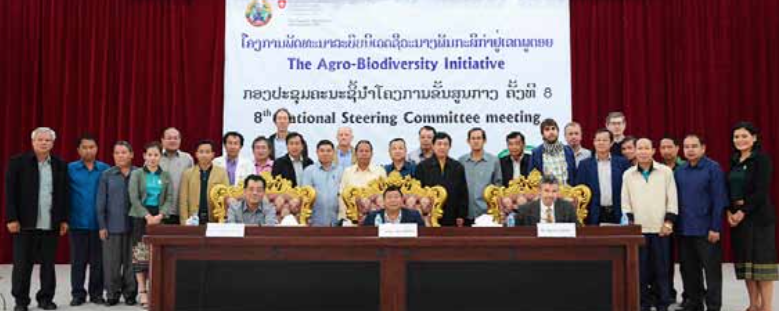
Provincial authorities from Xieng Khuang, Huaphan and Luang Prabang recently met in Xieng Khuang province for the 8th National Steering Committee meeting to discuss The Agro-Biodiversity Initiative (TABI).

At the meeting, participants discussed plans to manage farmland and forestry protection to ensure remote areas are developed and to upgrade the living standards of residents in mountainous areas.

The programme plans to support beekeeping and commercial honey production as well as livestock breeding including pigs and chickens.

TABI also aims to develop new rice seed varieties, increase the various kinds of fruit trees available while supporting the growing of industrial plants.

Meanwhile, programme officials will upgrade the skills of local farmers in their efforts to support biodiversity development as well.

TABI aims to improve capacity for effective governance of the UN Convention on Biological Diversity in Laos.

This includes sustainable agriculture systems which improve livelihoods of upland men and women farmers while enhancing and conserving biodiversity.

Farmers in TABI operational areas will be able to grow agricultural produce on a sustainable and profitable basis, based on the principles of economic viability, social equity, and biodiversity conservation.

It also aims to allow communities to maintain access and control over their natural resource base. Indicators include local land use plans to protect high biodiversity habitats, farmers using land conflict resolution recourse mechanisms to protect their rights and women having equal rights with men for land ownership.

The programme aims to exchange knowledge and information, relevant for developing and implementing sustainable approaches to agro-biodiversity conservation, for shaping the necessary policy framework and for monitoring impacts that are generated, shared and systematically evaluated.

TABI is a long term commitment by the government and Swiss Agency for Development and Cooperation which seeks to conserve, enhance and manage the biological diversity found in farming landscapes in order to improve the livelihoods of upland farming families in northern Laos.

Source: Vientiane Times

SNU-Lao Foundation Provides Dental Training to Students

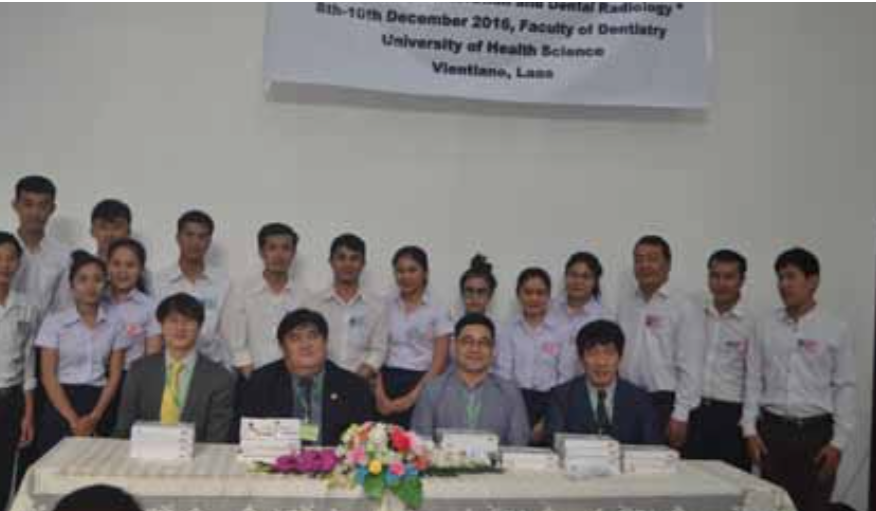
Students and teachers from the Faculty of Dentistry at the University of Health Sciences recently participated in a training seminar on dentistry aimed at improving and developing dental treatment in Laos, run by a representative of Seoul National University, Dr Lee Jong-Wook.

The seminar was supported by the SNU-Lao Foundation of the Republic of Korea. The seminar provided training to the dental students on various topics such as endodontics, teeth restoration, treatment of jawbone infection, radiographic interpretation and radiation protection.

Dean Deputy of the Faculty of Dentistry, Dr Boungnong Sidaphone, told Vientiane Times yesterday at the 2nd Lao-Korean Dental Workshop on the Importance of Improving Dental Treatment that the seminar’s aim is to build the capacity and knowledge of students in the faculty.

For several years, the faculty has cooperated with their Korean counterparts focusing on the dental radiology as a core aspect of the faculty’s development.

Dr Boungnong said that the foundation played an important role in contributing to the country’s social and economic development, especially in the health sector, by supporting outstanding students’ development in key areas where the Faculty of Dentistry does not have the resources to train their students. The students will provide dental and oral health services in Laos after finishing their training.

The foundation also supports the University of Health Sciences by providing scholarships to outstanding dental students to pursue a Master’s degree in dentistry at the Seoul National Medicine University and has also awarded bonuses to teachers visiting Seoul over the past year, he said.

According to the SNU-Lao Foundation, their objectives in this area are to develop and promote learning and teaching to foster research and knowledge development in the field of dentistry.

The SNU-Lao Foundation was set up in 2010 to centralise the management of scholarships to ensure they are allocated in line with the faculty’s human resource development needs to the Faculty of Dentistry.

Source: Vientiane Times

Govt, Microsoft to Accelerate Digital Transformation

Software giant Microsoft has underscored its commitment to empowering every person and every business in Laos.

The initiative is in line with Microsoft’s National Empowerment Plan, which aims to advance the adoption of emerging technologies for sustainable development.

Another objective is to generate new business development opportunities, especially those with positive societal impacts.

This information was outlined during the Empowering Laos’ Conference, co-hosted yesterday by the Ministry of Post and Telecommunications and Microsoft in Vientiane.

Attended by key government officials and partners, the event demonstrated how the government can leverage technology to digitally transform and support economic development. This cloud-based, digital transformation roadmap is especially aimed to enable emerging markets, such as Laos, to harness the power of technology to embark on a digital transformation journey, aligned with their national priorities.

Speaking at the government solution day event, General Manager, Public Sector, Microsoft Asia Pacific, Vivek Puthucode, said the benefits of the digital economy remain out of reach for many in emerging markets despite the enormous untapped opportunities across various industry sectors.

Our approach is to work closely with governments and public sector agencies to support them in overcoming challenges and building more cloud-enabling environments to accelerate their competitiveness, productivity and modernisation of operations through trusted technology, Puthucode said.

We have worked with governments in neighbouring Indochina countries and witnessed how they have successfully harnessed the power of technology to leapfrog to their next stage of economic development. We are confident that Laos will be able to follow suit and build on their learning as part of their own digital transformation journey, Puthucode added.

With the introduction of Microsoft Office 365 business productivity services in Laos, Microsoft also aims to set in motion a reinvention of productivity in enterprises across the nation, transforming employee collaboration and customer engagement through the power of the cloud.

Embracing trusted technology, particularly the power of cloud computing, will be key to enabling Laos’ growing economy to take a giant leap forward, propelling our nation into a lower-middle income country, said Minister of Posts and Telecommunications Dr Thansamay Kommasith.

Government Solution Day affirms our vision of working with a trusted solutions innovator such as Microsoft to drive inclusive growth transforming the way both public and private sectors operate not only by ensuring the accessibility of tools, but also by establishing the right processes and building the digital skills of our citizen.

Besides having access to the right tools, people must also know how to use them, General Manager of Southeast Asia New Markets, Microsoft Asia Pacific, Michelle Simmons said.

Looking ahead, what will be critical for Laos to thrive is digital literacy. We are working with the government to not only deliver educational programmes, but also to support the educators themselves with the right resources to impart science, technology engineering, and mathematics skills to local youth, preparing them for the jobs of the future.

Microsoft had previously inked a Memorandum of Understanding with the Ministry of Education and Sports in Laos to develop a holistic plan to leverage technology for education, covering a range of programmes that support the development of 21st century skills and employability of students.

Source: Vientiane Times

Ambassador Highlights Laos-Russian Cooperation

Reconstruction of health facilities, involvement in UXO clearance, and the maximisation of benefits from the use of natural resources in Laos are all fields in which the Russian Federation may provide assistance to the country under their cooperation efforts.

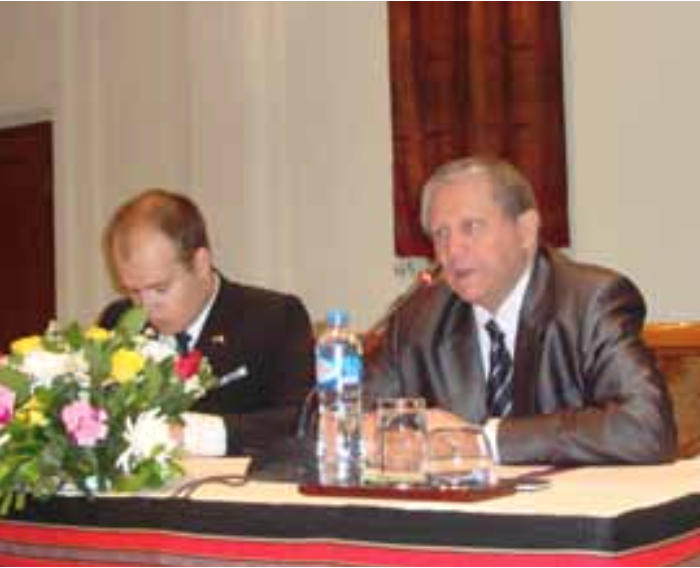
Russian Ambassador to Laos, Mikhail Baranov delivered the message about the perspectives on cooperation between the two countries at a meeting held in Vientiane on Wednesday between Russian officials and representatives from different agencies of the Lao government along with media personnel.

The ambassador mentioned geological exploration, which he said complied with the programme on international development cooperation, and would be useful for Laos.

According to him, this means Russian geologists will assist Laos in exploring and setting the record about what valuable minerals are existing in the country’s territory.

This assistance to the Lao side will help it make better and more rational use of its abundant resources, Ambassador Baranov said.

After Laos and Russia reached an agreement on economic cooperation in 1991, the economic and trade cooperation between the two countries has gained new momentum in recent times.

As of 2009, Russia has invested US$52 million in 12 projects in Laos concerning mining and energy development, and industrial administration.

Mr Baranov referred to the outcome of the 12th meeting of the Laos-Russia joint commission on trade-economic and scientific-technical cooperation held in June, which has confirmed the fields of telecommunications, hydropower, civil aviation, minerals and mining, and office supplies as priorities of cooperation between the two countries.

He noted VimpelCom Lao, the telecommunications service provider of Beeline as a major Russian investor in Laos, which he said had a secure business operation, providing quality mobile phone and internet signals.

Also mentioned by the ambassador, the International Book Company-Securities (Mezhdunarodnaya Kniga), which has been operating in Laos for many years, will prove a reliable partner for the country.

The agreement of the two governments on permission for their citizens to stay in each other’s countries for periods up to 30 days without a visa was noted by the ambassador, as part of joint efforts in promoting tourism and exchange visits between the two nations.

Cultural exchange and education are also in the spotlight of cooperation between Laos and Russia, with increasing offers of scholarships by Russia for Lao students to continue their studies at Russian institutes and universities.

More than 80 Lao students received Russian scholarships this year, while only 37 students received the awards last year.

Laos’ Ministry of Science and Technology and Russia’s Tomsk State University signed a Memorandum of Understanding on cooperation last month, while both sides agreed upon the establishment of a Russian university research centre at the National University of Laos.

An artists’ group from Saint-Petersburg also performed in Vientiane last year, while Russian Week was organised in the Lao capital this year.

A joint orchestra concert of youths from ASEAN and Russia will take place in Vientiane next year, according to the ambassador.

Source: Vientiane Times

Nayoby Bank to Increase Loan Amounts, Expand Branches

Nayoby bank will increase the maximum loan amount it releases to a customer from the current 30 million kip to 50 million kip next year and expand its service coverage in a move to enable more farmers to access finances for their production needs, a bank governor has said.

Governor of the Bank of the Lao PDR, Dr Somphao Phaysith revealed the plan recently when he addressed the National Assembly (NA)’s ordinary session.

We will increase the credit budget for the bank [Nayoby bank]. We plan to announce the new policy by the end of this year, he told the session.

The state-own Nayoby [policy] bank, whose policy is to particularly release loans for poverty-fighting schemes, will also expand its loan service coverage along with considering lower interest rates for loans, Dr Somphao said.

We will study lowering our interest rates appropriately, he said.

The planned improvement of the bank’s policy including its plan to expand service coverage will be made in line with the Party and government’s policy that intensifies efforts to alleviate poverty, the bank governor told the NA.

To expand its loan service coverage to reach local people in remote communities, the bank – which now has 10 branches and 71 service units – will inaugurate a pilot scheme by integrating its loan services with some village funds.

Dr Somphao admitted that commercial banks in Laos have been unable to expand their branches and service units to all communities across the country.

The bank governor responded to a question raised by members of the parliament asking about the loan policy of the Nayoby bank after learning there have been irregularities in the loan approval process.

Dr Somphao admitted that there were 17 irregular cases over the past few years but all those cases have been addressed and those officials involved have been disciplined.

The cases included some where individuals who collected the names of local people and claimed they were representing the people in applying for loans from the Nayoby bank, for which the bank released the loans.

The bank’s officials thought they [the individuals] were truly representing the people and released the loans, he said.

In this regard, once the loans were disbursed and the bank’s officials came to collect the money back, they found that the people did not know and did not receive any loans.

In addition, there were cases in which borrowers (people) paid back the loans but the bank’s officials did not hand out the money to the bank.

Dr Somphao said a number of measures have been taken to address the cases and penalise the involved parties.

Source: Vientiane Times

Laos-China Railway Awaits Landmine Clearance

Construction of the Laos-China railway in Luang Namtha province has yet to commence as some UXO clearance activities need to be completed before the rail builders can move full steam ahead with the project.