Home Blog Page 6412

ASEAN Officials Discuss Cooperation on Labour Practices

ASEAN labour officials are meeting over two days in Vientiane to update progress, share experiences and seek ways for future cooperation on labour practices.

The ninth meeting of Senior Labour Officials Meeting’s Working Group (9th SLOM-WG), on progressive labour practices to enhance the competitiveness of ASEAN, will conclude today an

Source: Vientiane Times

d is being attended by Deputy Minister of Labour and Social Welfare, Mr Bounkhong Lasoukan, Director General of the Labour Management Department under the Ministry of Labour and Social Welfare, Mr Phongxaysack Inthalath, and senior labour officials from ASEAN countries .

The government of Laos highly values the importance of the SLOM-WG meeting because it is a venue for ASEAN officials to update each other on the progress of labour practices, share experiences and seek ways for further cooperation, MrBounkhongLasoukan told the meeting yesterday.

He said its main purpose was for senior labour officials to update themselves on completed and planned projects over the year since the 8th SLOM-WG Meeting to enhance the competitiveness of ASEAN.

The meeting is also significant for Laos as it will hand over the chairmanship role of SLOM-WG to Myanmar.

At this year’s ASEANLabour Ministerial Meeting, the International LabourOrganisation (ILO) selected Transition from Informal Employment to Formal Employment towards Decent Work Promotion as the thematic topic, MrBounkhong mentioned.

This shows the commitment from ASEAN Members States to implement the ILO Recommendation 204 for the transition from the informal to formal economy. In this connection, ASEAN leaders have adopted the Vientiane Declaration on the Transition from Informal Employment to Formal Employment towards Decent Work Promotion in ASEAN’, he added.

Apart from that, this is the first year for implementing the United Nation’s Sustainable Development Goals, particularly goal No. 8 which promotes Decent Work and Economic Growth and this goal calls for a focus on vulnerable groups and addressing inequality. In this regard, world leaders, including ASEAN leaders have made commitments to promote inclusive and sustainable growth and decent work for all.

Beside our efforts to enhance the competitiveness of ASEAN, we are facing a number of challenges. One ILO study finds that about 179 million workers in ASEAN are in poor quality jobs and vulnerable employment – meaning that they have informal working arrangements, inadequate social protection and poor working conditions. That’s why close and active cooperation from all of us is very essential to tackle the problem, Mr Bounkhong explained.


Source: Vientiane Times

BCEL-KT: Trade Summary (Nov 23, 2016)

Trade Summary

After the significant exchange of institutional investors yesterday, today Lao securities exchange trended in modest volume. The index was down by 0.04 % to close at 1,015.10 points with 11,500 shares matched for the turnover of 58 million kip. The electricity shares today traded at 5,000 kip, with the total trading volume of 11,500 shares, while LWPC lost 100 kip due to the technical adjustment. In the meantime, other stocks saw no matching, with BCEL closing at 5,150 kip, PTL at 2,500 kip and SVN at 3,000 kip.

BCEL-KT: Trade Summary (Nov 22, 2016)

Trade Summary

On Tuesday, Lao Securities Exchange reported tremendous trading volume of 8,924,800 shares, worth more than 44,445 million kip, while the index edged up by 1.64 % to 1,015.48 points. After being serene for so long time, EDL-Gen has given market stimulation with 8,922,200 shares; the price of the electricity stock went up 100 kip to close at 5,000 kip. In addition, BCEL and PTL contributed in the market volume for 2,200 and 400 shares, closed at 5,150 kip, 2,500 kip respectively. However, LWPC and SVN closed unchanged without trading volume.

Doctors’ Training Course Boosts Health Prospects for Newborns

Paediatric experts need to learn more about infectious diseases, hematology, cancer, heart disease, kidney disease and neurology if they are to improve the health of newborns and children.

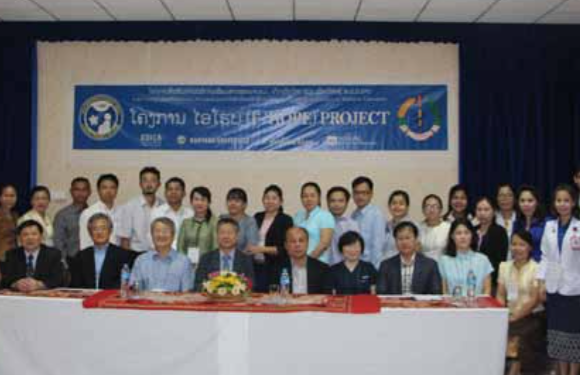
Speaking at the opening ceremony of the Second Paediatrician Training on Monday, President of the Paediatrics Association of Laos, Associate Prof. Dr Khampe Phongsavath, said it is necessary to provide more training for paediatricians if they are to save the lives of more children.

Deputy Director of the Children’s Hospital, Dr Somxay Billamay, said he hoped the training would help to improve the skills of the 38 paediatricians attending the one-day session.

Topics covered included accurate diagnosis, cardiology, infection, parasitological diseases, nephrology, neonatology, hematology, allergies and respiratory conditions, radiology, emergency medicine, pathology, gastrointestinal problems, nutrition and obstetrics.

An official from the Department of Pathology at Kyungpook National University in the Republic of Korea, Prof. Yong-Jin Kim, also attended the event.

The I-HOPE project run by the Korea International Cooperation Agency supported the training course.


Source: Vientiane Times

Road Users Call for End to Tolls in Champassak

Business operators in Champassak province have called on the provincial government to close down the toll booths located on Road No. 16 but so far their calls have gone unheeded.

Instead, the provincial government has offered to close police and customs checkpoints in a bid to remove some of the red tape.

Local people don’t like the tolls being charged at two points along Road No. 16 from the Laos-Japan Mekong Bridge to the Vangtao-Chongmek border crossing between Laos and Thailand.

They view the tolls as overly expensive and want the government to cancel them.

One local resident told Vientiane Times on Monday that this route is being used to transport agricultural products to Thailand but that vehicles are being burdened by the tolls.

Business operators are displeased with these road tolls because their 10-wheel vehicles carrying agricultural products are paying 300,000 to 400-000 kip for a round trip, she said.

Now transporters are struggling to find other routes to avoid using Road No. 16 to deliver their products to Thailand.

Head of the provincial Administration Office, Mr Onkeo Phetphoumy, said that based on the provincial Standing Committee’s ordinary meeting in October, it was announced that checks on motorists on roads within the province would be cancelled.

The reason given was that the province needed to provide good public transport facilities to enable the shipment of agricultural products to neighbouring countries.

But provincial authorities want to eliminate complaints by business operators about the fact that there are two or three different checkpoints used by police and customs officers in the district.

Minister of Public Works and Transport, Dr Bounchan Sinthavong, answered questions at the National Assembly’s debate session which ended last week concerning the Champassak road tolls.

Laos’ small population means that road tolls are higher than in countries with a larger population in order to collect sufficient funds to pay the cost of construction and maintenance.

Road No. 16 runs for a distance of 40 kilometres and crosses into Thailand. The company responsible for building the road, Duangdy Bridge-Road Construction Company, calculated the toll at 500 kip per kilometre.

If the toll on this road is reduced, the company will lose their investment, Dr Bounchan said.

The price of a one way trip for a car along this road is 20,000 kip and 40,000 kip for a round trip.

Road users began paying tolls on August 17 with the fees varying depending on the type of vehicle.

The government signed a concession with the Duangdy Bridge-Road Construction Company allowing them to collect fees for a period of 45 years in order to repay the company’s investment.

The company claims it is charging a high price because it invested heavily in the project.


Source: Vientiane Times

IFRC Confirms further Cooperation with Lao Red Cross

The International Federation of Red Cross and Red Crescent Societies (IFRC) has agreed to continue its partnership with the Lao Red Cross on relief assistance and disaster response.

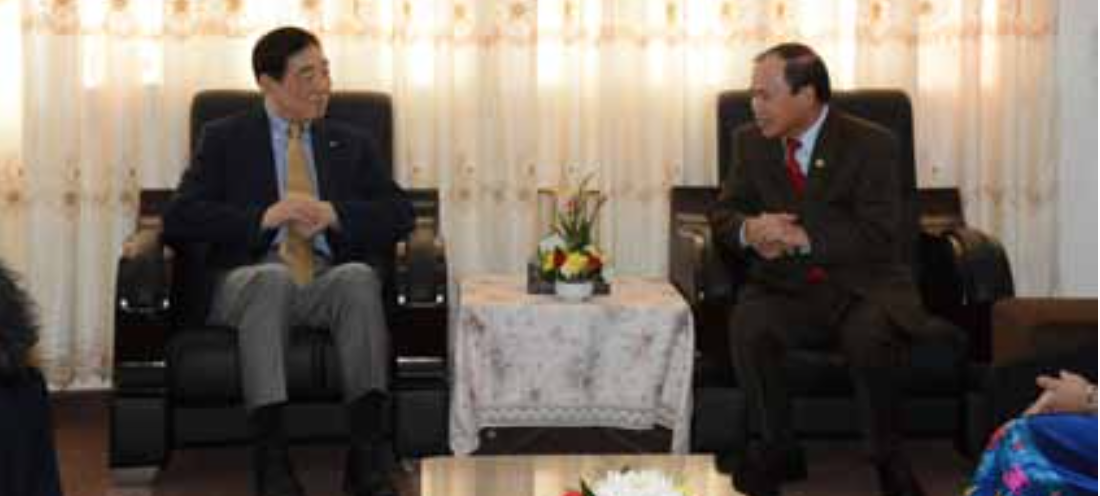
President of the IFRC and President of the Japanese Red Cross, Mr Tadateru Konoé, on Monday met with Lao Red Cross President Mr Khamhoung Heuangvongsy in Vientiane to discuss further cooperation.

A welcome ceremony took place at the Lao Red Cross office in Vientiane, attended by officials from both organisations.

The two parties discussed plans for relief assistance, aid supply storage and logistical systems. They also discussed the mobilisation of funding resources.

Mr Khamhoung said the IFRC and Lao Red Cross have worked together in the past on relief assistance, disaster response and capacity building for Lao Red Cross personnel.

Some years ago, the IFRC provided vital assistance to Lao people affected by natural disasters at a cost of more than 800 million kip.

The Lao Red Cross was founded on January 1, 1955, and recognised by the ICRC on May 23, 1957, becoming a member of the IFRC on October 25 of the same year. The Lao organisation is one of 190 members comprising the National Societies of the IFRC movement, the world’s largest humanitarian aid organisation.

The Lao Red Cross works to provide emergency assistance to vulnerable people, including the provision of aid and medical treatment in response to natural disasters.

It also works with communities to improve health conditions and livelihoods, in line with the fundamental principles of the Red Cross and Red Crescent Movements.

Mr Tadateru Konoé also paid a courtesy visited to the Vice President Mr Phankham Viphavanh at the President Office in Vientiane on Tuesday.


Source: Vientiane Times

Online School Testing Project Set to Launch Nationwide

An initiative that tests the knowledge of learners via an online system will be launched at schools in other provinces after good results were obtained from a trial run held in Vientiane province last Friday.

The scheme is being rolled out by the Ministry of Education and Sports’ Educational Standards and Quality Assurance Centre (ESQAC) and the FPT University of Vietnam.

ESQAC Director Mr Vanxay Noraseng explained the project after the ministry agreed to partner with the FPT University on the development of a database for education quality management at every level of the state and private sector.

An agreement on developing a database for education quality management was signed by the two parties in 2014.

In an interview with Vientiane Times yesterday, Mr Vanhxay said the project would be officially launched at the beginning of 2017.

The project also includes development of a knowledge test through online systems, he added.

Information technology is very important for the education sector. The management of educational management databases and online teaching and learning sites are of great significance, he said.

The trial of the project in Vientiane province aims to develop quality education in Laos and also to provide a data-information platform for teachers, students and administrators.

Also on Friday, ESQAC launched the website http://www.laolympic.la, aiming to test the knowledge of learners online, and to promote the use of technology in teaching and learning at all levels.

Mr Vanhxay said that initially the website will only allow students to test in two subjects but will later be upgraded to test in other subjects. The tests cover levels from primary to university.

The project serves to enhance cooperation between ESQAC and the FPT University through support from Lao Star Telecom (Unitel).

Before the official launch next year, ESQAC will train officials how to use the software as well as further refining it.

After that they will present it to the ministry along with handbooks on the use of the database and website.

During the development of the database and website, Lao Star Telecom and FPT will provide free internet access to the programme. The internet system is registered with the Lao National Internet Centre.

The website will be available in provinces throughout the country, serving primary and secondary schools as well as adult learners free of charge, ESQAC reported.

Source: Vientiane Times

WFP Helps Farmers Adapt to Climate Change

The United Nations World Food Programme (WFP) and the National Agriculture and Forestry Research Institute (NAFRI) in Laos recently signed an agreement to develop new tools for farmers to adapt to climate change.

The project will give farmers weather information so they can make decisions about their crops in times of fluctuating meteorological patterns, and will provide them with real-time rainfall forecasts, provided by the National Department of Meteorology and Hydrology.

The institute’s Director General Dr Bounthong Bouahom told Vientiane Times yesterday that WFP and NAFRI will also establish schools where farmers can learn more about crop management and how to best adapt to climate variations.

WFP’s support to this project comes at an important time and will be crucial in ensuring the country is better prepared to deal with climate change, Dr Bounthong said.

Helping farmers with extreme weather linked to climate change is key to improving food security, WFP Country Director to Laos Sarah Gordon-Gibson said.

Over the past few years, Laos has experienced higher temperatures and reduced rains during the dry season, and more intense rainfall during the rainy season, leading to longer and more severe droughts, and an increased risk of floods.

In an economy highly dependent agriculture, particularly in rural areas, reducing the impact of climate change in agricultural production is important in order to protect household food security.

The NAFRI-WFP project aims to help farmers in the seven main rice growing provinces of Xayaboury, Borikhamxay, Khammuan, Savannakhet, Saravan, Attapeu and Champassak.

It will also have a longer-term impact on the agricultural development sector by improving the knowledge and resources of national institutions and policy makers.

WFP is working with the Lao government to achieve the 8th National Socio Economic Development Plan, especially to reduce malnutrition and its impact on human and national development by providing food assistance and technical support.

NAFRI is the national research institution, under the Ministry of Agriculture and Forestry, in charge of the coordination of agriculture and forestry research activities within the country and the development of a National Agriculture and Forestry Research System.

NAFRI’s mandate is to undertake integrated agriculture, forestry, livestock and fisheries research in order to provide technical information, norms and results that help to formulate strategy in accordance with Lao government policies. NAFRI’s main functions include carrying out adaptive research, developing methods, tools and information packages, providing policy feedback, and coordinating and managing research.

WFP is the world’s largest humanitarian agency fighting hunger worldwide, delivering food assistance in emergencies and working with communities to improve nutrition and build resilience. In 2015, WFP assisted nearly 80 million people in 81 countries. WFP has been present in Laos since 1975, with projects aimed at improving the food security and nutritional status of the most vulnerable.


Source: Vientiane Times