

Home Blog Page 6477

PUM Netherlands Senior Experts Ready to Assist Businesses in Laos

PUM helps businesses in Laos
PUM Senior Expert Paul Van Den Berg posing next to Vientiane-based Kualao Restaurant staff before heading back to Holland

Does your business have an issue that you just cannot resolve? Or do you think your business can achieve more? Do you ever wonder how bigger and more experienced companies have succeeded? Many of us have most definitely given thought to these questions. Unfortunately, a majority of Lao SMEs either do not have the money to hire a professional business consultant or, in the case we do, there is simply no local consultant available with the required knowledge and experience.

Look no further: PUM can help.

What is PUM?

PUM is a non-profit organisation established in in 1978 by the Dutch employers’ federation VNO-NCW, with financial support from the Netherlands Ministry of Foreign Affairs. Since 1978, they have assisted over 40,000 organisations world-wide.

The PUM network includes some 3,000 senior experts who are available to share their knowledge on a one-on-one basis for free either through short-term and repetitive advisory missions, or through online coaching activities. These experts have been sent to many different countries around the world, including Laos, to lend a hand and help businesses and entrepreneurs grow and improve their businesses.

Why not invite a PUM Senior Expert to help you?

The magic word here is invite. When you invite a PUM expert to your country, you only have to pay for his/her board, lodging, interpreter costs (if necessary) and local transportation costs. PUM pays for the expert’s airplane ticket, insurance, visa costs, admin and other expenses. If you should request a follow-up mission you may be asked to contribute to those costs as well.

A PUM consultation mission normally takes two weeks. During this period, a PUM senior expert will work with you intimately and leave practical recommendations for you to follow up. Once she/he has returned home, the expert shall support you remotely with the implementation of the recommendations, via email or conference-call.

What fields/industries does PUM cover?

PUM has experts for the following sectors:

Agriculture & Horticulture

Arts, Crafts, Product Design, Culture, Sport & Mass Media

Building, Construction & Trade

Banking & Insurance

Business Consultancy

Chemical & Synthetic Materials

Food & Beverages Production

Government Services & Unions

Healthcare

Metal Industry

Energy, Water, Waste and Environment/CSR

Electro Technical Industry & Engineering

Paper & Packaging

Printing, Cross-Media & Publishing

Stockbreeding, Fisheries

Tourism, Hotels & Catering

Transport & Logistics

Trade

Textile & Leather

Vocational Education & Training

Wood Trade & Timber Processing

Recent Missions of PUM in Laos

The identity of Lao businesses that have chosen to work with PUM are kept confidential. One example of a recent successful mission is Kualao Restaurant, the owner (Mrs. Dalaphone Pholsena) of which was kind enough to share her experience:

“I think one of the best things about the PUM experience was that it gave us fresh insight into the inner workings of our own business that we otherwise would not have had. Our expert was able to notice both large and even the minutest of problems. We had issues across a host of fields and he was able to provide extremely useful recommendations that, when implemented, would not only increase our bottom line but also improve the efficiency of our restaurant. I just know that we’re going to have a great year, this year! To be very honest, when I first read his curriculum vitae, I was a bit skeptical and nervous to be hosting such an intelligent, worldly and experienced expert. But when he arrived, I found him to be patient, understanding and quite down-to-earth. The staff had a great time working with him,” states Pholsena.

How to apply?

For interested businesses, please contact an official PUM country representative.

For Vientiane Capital, please contact Aditta Kittikhoun.

For Paksé, please contact Chris Mulder.

For Luang Prabang: please contact Yoxa Dahm.

Once your application is approved, PUM will send a volunteer senior expert to your business straight from Holland.

Alternatively, one can visit the PUM website for more information.

A lao version of the article can be found here.
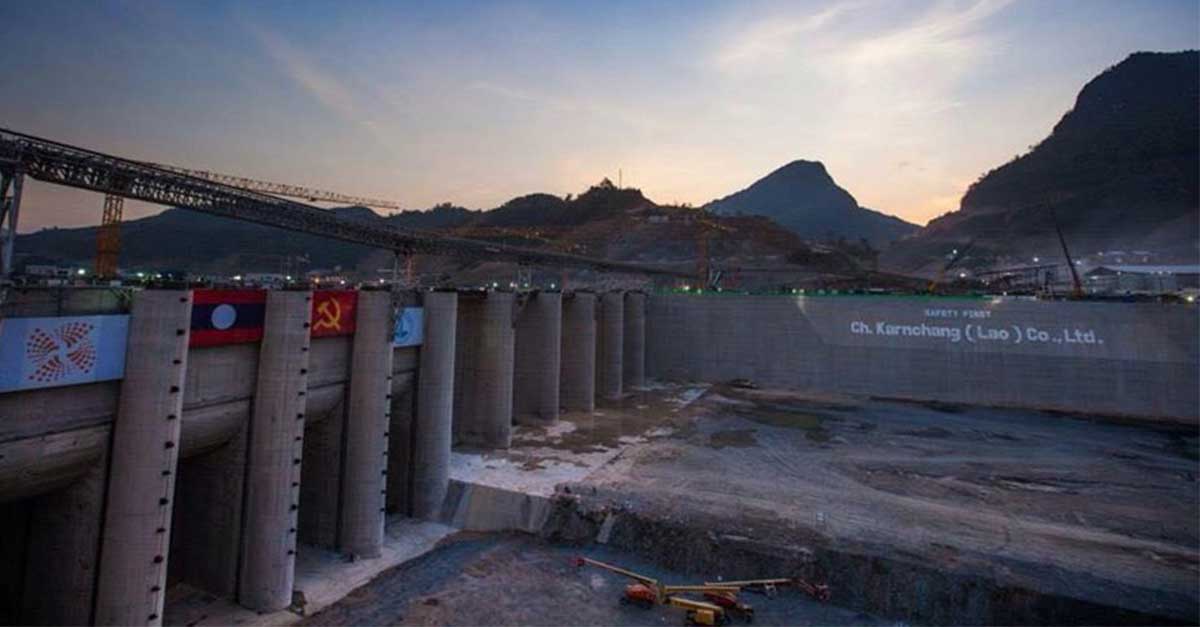
LAOS: Electricity Facts

Electricity Facts Laos (hydropower, dam)

Certain members of the foreign media have hailed Laos as the “battery of Southeast Asia,” with one of the nation’s economic development strategies centered on the export of electricity to Thailand and other neighboring countries.

With 42 power plants now operational, the country is poised to realize its electricity ambitions. With a current installed capacity of approximately 6,000MW, the Lao government expects to achieve 14,000MW by 2020.

Click to View Full Size


Laos plans to install:
54 more electricity transmission lines and build another 16 substations by 2020

Current number of high voltage electricity transmission lines: 53,000km

Current number of high voltage electricity substations: 53 substations

Transmission lines that connect with neighbouring countries: 14 carry power to Thailand, 2 to Vietnam, 1 to China, 2 to Cambodia, and 1 to Myanmar.

Households that have access to electricity: 92 percent of households nationwide

Alternative renewable energy sources being considered: solar power, biomass and wind turbines (12,789 families – 1.15 percent of all families across the country – are using solar power)

Current number of operational power plants: 42 (with installed capacity of 6,391MW; generating about 33,822 GWh annually (primarily for export)

Operation of power plants: 15 are managed by the Government (EDL and EDL-GEN) with an installed capacity of 738.5MW; 27 are managed by independent power producers and have an installed capacity of 5,652.45MW

Types of power plants: 39 hydropower plants, 1 coal-burn lignite plant, and 2 sugarcane-powered plants

Number of power plants soon to be completed in 2017: 12 (expected installed capacity of 468.45MW and will generate electricity at an average of 1,872.92 GWh per year)

Number of power plants soon to be completed by 2020: 53 hydropower plants under construction or in the planning stage, including those set to be completed this year; there will be more than 90 hydropower plants in Laos with a combined installed capacity of almost 14,000MW by 2020.

Source: Vientiane Times

Vientiane Capital Aims to Become More Livable City

Vientiane Capital Infrastructure Development

Authorities hope to make major improvements to infrastructure in Vientiane Capital with the aim of making it a more livable city.

Improvements are to be made in easing traffic congestion, road upgrades, construction of embankments, waste management, and a host of other issues.

Mayor Dr Sinlavong Khoutphaythoune made an announcement at the second session of the Vientiane People’s Council, which is being held from January 9 – 17.

Mayor Sinlavong stated that improvements to basic infrastructure is a major component of the government’s 8th National Socio-Economic Development Plan.

Dr Sinlavong went on to say that the improvements of roads will ensure road safety, and will help residents enjoy a more attractive place to live.

The road network has required expansion for quite some time, as narrow streets have caused frequent traffic jams. The Mayor mentioned that among other things, authorities needed to better enforce traffic regulations and construction laws within city limits.

In terms of planning, commercial properties have been constructed in areas without parking, which as left residents with no alternative but to park their cars on roadsides or sidewalks, and sometimes blocking smaller streets.

ADB Bus Station Artist Impression
Artist’s Impression of Improved Public Transport in Vientiane Capital

This people’s council session will also see discussion of the government’s strategic development policies for promotion of economic growth, stability, and developing human resources through improvements in the health and education sectors.

Anti-social behavior is also high on the agenda, including issues such as drug abuse and other crimes. Although law enforcement in many districts has improved, there are still may issues that need attention.

Drug abuse will be dealt with through public awareness campaigns that will target at-risk groups.

The people’s council meeting will consider the vision for Vientiane Capital until 2030, and the strategy for up to 2025. It will finalize the budget plans for the next five years, and the five-year plan of the council itself, including the drafting of new laws for administration of the capital city.

Images: ADB

More Funds Required to Develop Lao Education

Lao Education

More funds are required to develop Lao education, according to the Ministry of Education and Sports, as disparity between urban, rural and remote is still quite broad. The Ministry of Education and Sports is working to bolster education and sports development in target areas, however.

According to the ministry, the education and sports sectors have requested 70 billion kip to improve the standard of education in 2016-2020, while 5 billion kip has been requested for development in 2017.

The government has designed special programmes for education and sports in 2017, recognising that if literacy can be improved in rural areas then more communities will be able to escape from poverty.

Minister of Education and Sports Ms Sengdeuane Lachanthaboun recently said that key education development programmes will improve management and administration within the sector by assigning appropriate personnel.

Programmes will focus on teacher skill development at all levels and providing assistance for students who lack opportunities. Teachers are in high demand in many rural areas.

The ministry will step up cooperation with foreign countries in the education and sports sectors, aiming to upgrade education and bolster educational links within the region and internationally.

This year the ministry will launch pilot programmes to improve conditions in rural areas by building teacher and student dormitories in target areas.

The ministry will also develop a funding group for education development to help teachers and students in remote areas, and source funding to support outstanding teachers and students with talents in sports and music so they can attend competitions in Laos and other countries.

The ministry and its development partners have been focusing on improving basic education, post-basic education and other areas, and these initiatives have served as excellent models to further develop education so that goals are achieved and disparities in access to basic education are reduced.

Disparities between remote rural districts and urban areas must be addressed so that development can move forward and these disparities can be gradually narrowed, the ministry said.

Source: Vientiane Times

BCEL-KT: Trade Summary (Jan 4, 2017)

Trade Summary

LSX was up 54.58 points or 5.21 percent on the second trading day of 2017 as EDL-Gen rose by 300 kip to 5,500 kip and BCEL has hit 6,000 kip threshold for the first time since August 2015. Today, BCEL closed up by 500 kip at 6,000 kip, with the total trading volume of 21,000 shares. BCEL enjoyed improved financial report for the nine months of 2016 which showed its EPS of 708 kip, compared with just 233 kip for the same period in 2015. In the meantime, EDL-Gen also rose strongly by 300 kip at 5,500 kip with far less sellers on Wednesday, while PTL lost 50 kip to finish at 2,450 kip with 23,400 shares, worth about 57 million kip. On the other hand, SVN stayed unchanged at 2,700 kip with 4,300 shares but LWPC saw no trading at the unchanged price of 5,900.

Lao Food Businesses Receive Korean Expertise

Lao Food Korea

Korea’s food experts are sharing their experience in branding with Lao food companies.

The “Product Development Workshop for Micro, Small & Medium Enterprises (MSMEs),” organized by the ASEAN-Korea Centre and Lao PDR’s Ministry of Industry and Commerce, provides an opportunity for the companies to “enhance competitiveness and develop market strategies targeting domestic and overseas markets through lectures and consultations on branding, marketing, and packaging of food products.” The event runs Jan. 9-11.

“With an aim to graduate from the least-developed country by 2020, the Laotian government recently established its eighth National Social Economic Development Plan for 2016-2020, of which one of the key sectors is the food industry,” ASEAN-Korea Centre Secretary General Kim Young-sun said.

“Despite great potential, with rich natural resources, a strategic location bordering five major markets, and a competitive labor force, the food industry of the nation remains underdeveloped, mainly due to a lack of infrastructure and packaging and processing technologies.”

During the workshop, the Korean delegation lectured on food branding, marketing, and packaging.

Participants learned about basic packaging technologies and took part in simulation exercises on the first day of the meeting.

According to the ASEAN-Korea Centre, the following session will focus on marketing strategies targeting overseas markets. The Korean experts will visit local companies for on-site consultations and market research.

The organization said the MSMEs have been a backbone of the ASEAN economy, accounting for around 95 percent of businesses. It has conducted such product development workshops in 10 ASEAN members.

In July, a team of Korean businesspeople visited Brunei to help the ASEAN nation boost investment and promote bilateral trade in several high value-added industries such as biotechnology, cosmetics and e-commerce through the Investment and Market Research Mission and the Product Development Workshop. The ASEAN-Korea Centre, with the Energy and Industry Department at the Prime Minister’s Office and the Ministry of Foreign Affairs and Trade, hosted the event.

The ASEAN-Korea Centre is an intergovernmental organization established in 2009 to promote exchanges among Korea and the 10 countries. 


Mon Ta Champa Lao Gardens Opens at Bolaven Plateau

Mon Ta Champa Lao Gardens

The Mon Ta Champa Lao Gardens is a new tourism site that has opened in Paksong, on the Bolaven Plateau in Champasack Province. The Mon Ta Champa Lao Gardens (literally the “Enchantment of the Eyes”) contains a stunning flower garden, as well as an organic fruit and vegetable garden located at KM 11 village, just outside of Paksong.

The Mon Ta Champa Lao gardens are ideal for families and people who want to see some of the exotic native flora of Laos, as well as see some plants that have been introduced from abroad. Visitors can enjoy a walk in the cool mountain air through the rows of seasonal flower gardens. The thousands of flowers will dazzle guests with their striking colors.

In the fruit and vegetable gardens, visitors can learn about organic gardening practices, as well as trying some of the foods grown here. Children and adults alike will delight at the opportunity to pick strawberries and other fruits which are difficult to find in Laos, but grow well in this cooler climate.

Accommodation is also available in stylish wooden bungalows that blend in with the local surroundings for those that might enjoy a longer stay.


[ngg_images source=”galleries” container_ids=”3″ override_thumbnail_settings=”1″ thumbnail_width=”100″ thumbnail_height=”75″ thumbnail_crop=”1″ images_per_page=”20″ number_of_columns=”0″ ajax_pagination=”0″ show_all_in_lightbox=”0″ use_imagebrowser_effect=”0″ show_slideshow_link=”0″ slideshow_link_text=”[Show slideshow]” template=”/home4/laotiantimes/public_html/wp-content/plugins/nextgen-gallery/products/photocrati_nextgen/modules/ngglegacy/view/gallery.php” order_by=”sortorder” order_direction=”ASC” returns=”included” maximum_entity_count=”500″ display_type=”photocrati-nextgen_basic_thumbnails”]

For more information, visit the Mon Ta Champa Lao Gardens at its Facebook page.


Silvère Jarrosson Shares Techniques With Aspiring Lao Artists

French artist Silvère Jarrosson was been invited by the French Institute and Alisa Phommahaxay to give courses at The National Institute of Fine Arts. Jarrosson holds exhibitions worldwide and has developed a new style of painting that he taught and demonstrated to the students.

After talking about the history of innovative techniques in art creation, the class focused on how the students could use them in their own work. The goal is to give them new tools to improve their ability to be creative. “Hazard is not a choice, it is a necessity. Your only choice is what you do with it,” said Jarrosson. This French artist uses those theories himself in his own work.

The students were asked to participate in workshops where they had the fortunate opportunity to work with those new techniques.

A public exhibition of their artworks will be held on Friday 13th of January at the National Institute of Fine Arts, Vientiane (from 4pm).

[ngg_images source=”galleries” container_ids=”1″ display_type=”photocrati-nextgen_basic_thumbnails” order_by=”sortorder” order_direction=”ASC” returns=”included” override_thumbnail_settings=”1″ thumbnail_width=”100″ thumbnail_height=”75″ thumbnail_crop=”1″ images_per_page=”20″ number_of_columns=”0″ ajax_pagination=”0″ show_all_in_lightbox=”0″ use_imagebrowser_effect=”0″ show_slideshow_link=”0″ slideshow_link_text=”[Show slideshow]” template=”/home4/laotiantimes/public_html/wp-content/plugins/nextgen-gallery/products/photocrati_nextgen/modules/ngglegacy/view/gallery.php” maximum_entity_count=”500″]
