Home Blog Page 6496

Indochina Aviation Centre Introducing Bizav to Mekong Region

First-time MEBAA exhibitor Indochina Aviation Centre (Stand 936) is here to introduce potential customers to travel opportunities in the Mekong region and to meet with current partners and clients. “We want to tell people that the region is open,” said Indochina Aviation director and founder Christian Mosebach. “People might not think about traveling to the region, and we want to make them feel more confident.”

Indochina Aviation Centre was founded in 2012 to provide ground handling and trip planning services in Myanmar and Cambodia, initially for airlines. A year later, the company added business aviation, government and military customers in the entire Mekong region, which includes Thailand, Cambodia, Laos, Vietnam and Myanmar. Indochina Aviation’s services include ground handling, permits, catering, hotel arrangements and fuel access as well as arrangements through a sister company for tailor-made trips and tours.

From the beginning, Mosebach made sure that Indochina Aviation put in place its own personnel in each country, people with local backgrounds, but who have lived and been educated abroad. The company does all of its own training to ensure a consistent level of service and is an approved training organization for Myanmar and an IATAexamination center.

Roughly 60 percent of Indochina Aviation’s ground handling and permit arrangements come from business aviation customers, according to Mosebach. The company was hired to make all the ground handling arrangements for U.S. President Obama’s visit to Laos in September.

All Indochina Aviation operations are managed by a central control office in Bangkok, which is open 24/7 and briefs local teams based at airports throughout the Mekong region. Company operations-planning specialists are also responsible for customer invoicing, including incorporating third-party billing from other suppliers, and this ensures that accurate invoices are sent to customers, he explained. Indochina Aviation welcomes questions from clients or any operators needing to understand how to fly in the Mekong region, because they will likely become future customers.

As the only ground handling service provider in the Mekong region, Indochina Aviation often works with other handling companies to serve their customers. Business aviation activity has grown in the region, especially in Myanmar where there are 33 airports available for business aviation travelers. Some of these are seasonally busy, and five airports in the country are typically used by customers on a frequent basis. On December 1, Indochina Aviation added full-time ground handling personnel in Mandalay.

Other growth areas in the region include Kawthaung and Savannahkhet (in Laos) and Haiphong (in Vietnam), where investments in tourism are growing. “Many secondary and smaller airports are becoming more popular,” he said, especially in areas where manufacturers are looking for land to build factories away from expensive metropolitan areas. This is especially true in Cambodia and Vietnam.

Business aviation operators traveling to the Mekong region come primarily from Europe, North America, the Middle East and Asia. Runways at the region’s airports are in relatively good condition, he said, but many facilities are basic, and not all airports are open for night operations. Many lack ground-support equipment, which must be sourced from local airlines, but when doing this, Indochina Aviation takes full responsibility for use of the equipment, according to Mosebach.

Customs and immigration services are available at the larger airports, but at some smaller airports, Indochina Aviation can arrange to transport customs and immigration officials to the airport to clear arriving aircraft. Indochina Aviation is often in the position of educating officials about business aviation, for example, the need to make frequent changes to a flight plan. “Typically, they’re very supportive of business aviation,” he said.

Mosebach is well aware that his company’s 100 employees must deliver outstanding service. “We want long-term relations,” he said. “We’re in the hospitality business, and we want return business.”

Source: AIN Online

BCEL-KT: Trade Summary (Dec 8, 2016)

Trade Summary

Lao Securities Exchange trade mixed on Thursday. The index ended lower by 1.4 percent or 14.43 points to 1,014.05 points, weighed sharply by loss of the hydro-power stock by 100 kip to close at 5,000 kip. Even though. EDL-Gen lost 150 kip to 4,950 kip at mid morning, seeing 53,300 shares executed. In contrast, LWPC reversed its loss from previous session, gaining 500 kip to 5,900 kip of just 100 shares matched. Moreover, BCEL and PTL had no change in price, exchanging 200 shares and 100 shares respectively. In addition, there was no dealing for SVN.


Sericulture Requires Support

Laos needs to promote sericulture (the production of silk products) in the effort to create jobs for local people in response to labour market demands.

A recent training session was attended by a representative of the Vientiane Agriculture and Forest Research Centre and an administrator of the Lao Handicrafts Association.

The Lao Handicrafts Association is concerned for the future of sericulture because the local people are leaving the industry for other more enticing occupations and has therefore implemented the “Strengthening Technical and Vocational Education and Training Project” to help build labourers skills in areas like sericulture.

The policy to support sustainable sericulture aims to respond to the demand for silk products by ensuring the long term viability of the business.

President of the Lao Handicrafts Association, Mr Hansana Sisane spoke about the issue on Wednesday in Hadxaifong district, Vientiane, at the second training course on the skill development programme of sericulture as part of the Strengthening Technical and Vocational Education and Training Project.

He said during the training course, the participants exchanged knowledge and ideas on the sericulture so as to improve their knowledge through the training and sharing of information.

As part of this project, communities are required to implement a viable and sustainable sericulture management model. This means that villages can earn income from the sericulture for sale to markets. An important aspect of maintaining the industry is ensuring that sericulture still exists as an occupation for the future generations of Laos, he said.

“I think the training plays an important role in providing knowledge and methods to the local people, who will generate revenue for their families from sericulture,” he added.

For several years, the business of Lao handicrafts has continued to develop. But, we still haven’t responded to the demand for silk products in the business sector because sericulture at the local level has decreased.

According to the association, the Strengthening Technical and Vocational Education and Training Project aims to promote vocational skills training to ensure continued improvement in national productivity, job creation in the formal and informal sectors, an increase in agricultural productivity to create jobs in rural areas and the establishment of technical, vocational education and training networks to assist both men and women, especially the poor, disabled and vulnerable, to respond to labour market demands.


Source: Vientiane Times

LG CNS Sells Electronic Tax System to Lao Government

LG CNS, the IT solutions arm of LG Group and one of the Korea’s leading IT service providers in the e-Government sector, is accelerating its inroads into the overseas market along with visible results.  

LG CNS said on Dec. 6 that it has won a project worth 26 billion won (US$23 million) to build up a new tax revenue information system (TaxLIS) in Laos, following its receiving of the electronic library system order from the Uzbekistan government in September this year.

The Tax RIS, one of the 12 tasks for the Lao government’s electronic tax system establishment plan, is to digitize the nation’s entire tax administration works with an aim to launch in 2020.

LG CNS will help the Lao government digitalize tax-related works and set up related infrastructure such as servers, networks and data centers while providing the government’s tax workers with some training on the e-Government system.

Starting with getting the order of e-Government system for the National Police Agency of Indonesia in 2006, LG CNS has won 40 e-Government system orders, leading its cumulative export volume to US$210 million.

LG CNS’ major exports of e-Government include a 74.4 billion won (US$66 million) deal in 2009 to build an integrated finance information system for the Indonesian Ministry of Finance and a 13.4 billion won (US$12 million) deal signed in October this year to build an ICT-based digital library system in Uzbekistan.

“We will continue to help overseas countries build up the most fitting and effective e-government systems for themselves and transfer Korea’s internet technology and know-hows to them,” LG CNS CEO Kim Young-shub said.

In the meantime, LG CNS is preparing the additional e-Government projects for the governments of Uzbekistan and Bahrain, which is expected to raise its overseas portion of the total annual revenue to 20 percent this year. The portion in 2010 was 10 percent.

Source: Business Korea

Ministry of Health, UNICEF Discuss Nutrition Project

The Ministry of Health and UNICEF are reviewing the progress of UNICEF’s health and nutrition programme as they plan for the year ahead.

A review of past work and planning for the next year took place at the meeting about the Health and Nutrition Programme on Thursday in Vientiane, attended by the Director General of the Hygiene and Health Promotion Department under the Ministry of Health, Dr Phath Keungsaneth, and the Deputy Representative of UNICEF in the Lao PDR, Dr Myo-Zin Nyunt.

The purpose of the meeting was to review the entire Country Programme Cycle (2012- 2016), supported by UNICEF in addition to presenting the Country Programme Development Outputs and other areas wherein UNICEF supports interventions for the new Country Development Programme.

The Health and Nutrition Programme will ensure that children and their families, especially the most vulnerable, have access to immunisation, proper nutrition, deworming and management of childhood illnesses.

Meanwhile, the Wash and Climate Change Resilience Programme will ensure that the most disadvantaged children and their families have equitable access to sustainable water sources and sanitation facilities in addition to education on the adoption of good hygiene practises. The programme will

support community resilience- building in response to climate change and natural disasters.

During the period 2012- 2016, the Ministry of Health and UNICEF successfully ran disaster mitigation projects in five provinces and supported hygiene programmes at 100 schools in Saravan province. Many people in the rural areas gained access to clean water sources and hygiene education for the first time through the programme.

The country programme goal and strategy of 2017-2021 is to ensure that children, especially the most disadvantaged, fully enjoy their rights to survival, development and protection.

Speaking at the meeting, Dr Myo-Zin Nyunt said, “UNICEF is proud of its long and fruitful partnership with the Ministry of Health to improve maternal and child health and nutrition, as well as to provide access to improved sources of water, basic sanitation and hygiene promotion in schools and communities for the most disadvantaged children and their families”.

“During the next five years, UNICEF will continue to support the Ministry of Health in addressing the challenges that the most vulnerable children and their families face. UNICEF support will include improving access to vaccinations and the nation’s capacity for mass immunisation campaigns. In addition, we plan to improve access to nutrition to stem the issue of severe acute malnutrition,” Dr Myo-Zin Nyunt concluded.


Source: Vientiane Times

Authorities Confer on Agro-biodiversity Initiative

Northern provincial authorities are focused on restoring biodiversity in agriculture to support production development for upland farming families as part of poverty alleviation efforts.

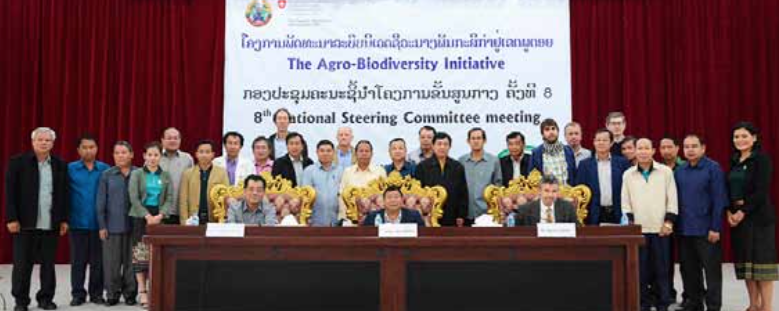
Provincial authorities from Xieng Khuang, Huaphan and Luang Prabang recently met in Xieng Khuang province for the 8th National Steering Committee meeting to discuss The Agro-Biodiversity Initiative (TABI).

At the meeting, participants discussed plans to manage farmland and forestry protection to ensure remote areas are developed and to upgrade the living standards of residents in mountainous areas.

The programme plans to support beekeeping and commercial honey production as well as livestock breeding including pigs and chickens.

TABI also aims to develop new rice seed varieties, increase the various kinds of fruit trees available while supporting the growing of industrial plants.

Meanwhile, programme officials will upgrade the skills of local farmers in their efforts to support biodiversity development as well.

TABI aims to improve capacity for effective governance of the UN Convention on Biological Diversity in Laos.

This includes sustainable agriculture systems which improve livelihoods of upland men and women farmers while enhancing and conserving biodiversity.

Farmers in TABI operational areas will be able to grow agricultural produce on a sustainable and profitable basis, based on the principles of economic viability, social equity, and biodiversity conservation.

It also aims to allow communities to maintain access and control over their natural resource base. Indicators include local land use plans to protect high biodiversity habitats, farmers using land conflict resolution recourse mechanisms to protect their rights and women having equal rights with men for land ownership.

The programme aims to exchange knowledge and information, relevant for developing and implementing sustainable approaches to agro-biodiversity conservation, for shaping the necessary policy framework and for monitoring impacts that are generated, shared and systematically evaluated.

TABI is a long term commitment by the government and Swiss Agency for Development and Cooperation which seeks to conserve, enhance and manage the biological diversity found in farming landscapes in order to improve the livelihoods of upland farming families in northern Laos.

Source: Vientiane Times

SNU-Lao Foundation Provides Dental Training to Students

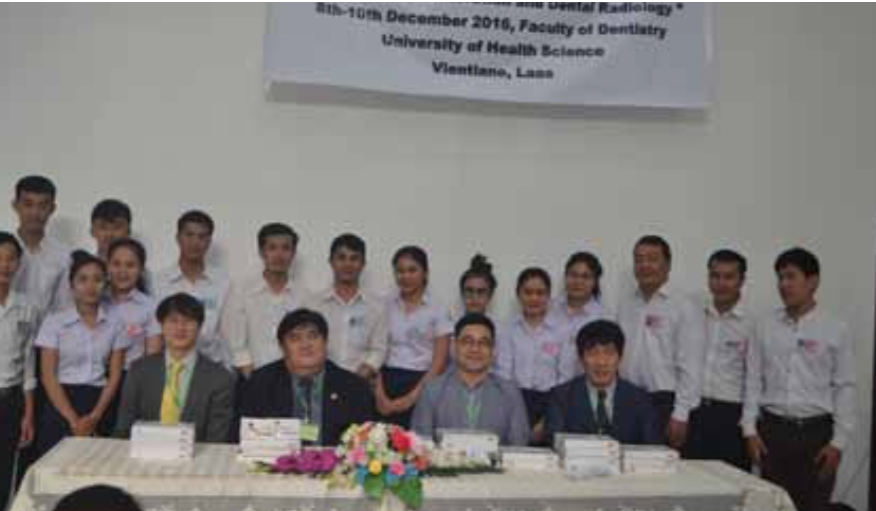
Students and teachers from the Faculty of Dentistry at the University of Health Sciences recently participated in a training seminar on dentistry aimed at improving and developing dental treatment in Laos, run by a representative of Seoul National University, Dr Lee Jong-Wook.

The seminar was supported by the SNU-Lao Foundation of the Republic of Korea. The seminar provided training to the dental students on various topics such as endodontics, teeth restoration, treatment of jawbone infection, radiographic interpretation and radiation protection.

Dean Deputy of the Faculty of Dentistry, Dr Boungnong Sidaphone, told Vientiane Times yesterday at the 2nd Lao-Korean Dental Workshop on the Importance of Improving Dental Treatment that the seminar’s aim is to build the capacity and knowledge of students in the faculty.

For several years, the faculty has cooperated with their Korean counterparts focusing on the dental radiology as a core aspect of the faculty’s development.

Dr Boungnong said that the foundation played an important role in contributing to the country’s social and economic development, especially in the health sector, by supporting outstanding students’ development in key areas where the Faculty of Dentistry does not have the resources to train their students. The students will provide dental and oral health services in Laos after finishing their training.

The foundation also supports the University of Health Sciences by providing scholarships to outstanding dental students to pursue a Master’s degree in dentistry at the Seoul National Medicine University and has also awarded bonuses to teachers visiting Seoul over the past year, he said.

According to the SNU-Lao Foundation, their objectives in this area are to develop and promote learning and teaching to foster research and knowledge development in the field of dentistry.

The SNU-Lao Foundation was set up in 2010 to centralise the management of scholarships to ensure they are allocated in line with the faculty’s human resource development needs to the Faculty of Dentistry.

Source: Vientiane Times

Govt, Microsoft to Accelerate Digital Transformation

Software giant Microsoft has underscored its commitment to empowering every person and every business in Laos.

The initiative is in line with Microsoft’s National Empowerment Plan, which aims to advance the adoption of emerging technologies for sustainable development.

Another objective is to generate new business development opportunities, especially those with positive societal impacts.

This information was outlined during the Empowering Laos’ Conference, co-hosted yesterday by the Ministry of Post and Telecommunications and Microsoft in Vientiane.

Attended by key government officials and partners, the event demonstrated how the government can leverage technology to digitally transform and support economic development. This cloud-based, digital transformation roadmap is especially aimed to enable emerging markets, such as Laos, to harness the power of technology to embark on a digital transformation journey, aligned with their national priorities.

Speaking at the government solution day event, General Manager, Public Sector, Microsoft Asia Pacific, Vivek Puthucode, said the benefits of the digital economy remain out of reach for many in emerging markets despite the enormous untapped opportunities across various industry sectors.

Our approach is to work closely with governments and public sector agencies to support them in overcoming challenges and building more cloud-enabling environments to accelerate their competitiveness, productivity and modernisation of operations through trusted technology, Puthucode said.

We have worked with governments in neighbouring Indochina countries and witnessed how they have successfully harnessed the power of technology to leapfrog to their next stage of economic development. We are confident that Laos will be able to follow suit and build on their learning as part of their own digital transformation journey, Puthucode added.

With the introduction of Microsoft Office 365 business productivity services in Laos, Microsoft also aims to set in motion a reinvention of productivity in enterprises across the nation, transforming employee collaboration and customer engagement through the power of the cloud.

Embracing trusted technology, particularly the power of cloud computing, will be key to enabling Laos’ growing economy to take a giant leap forward, propelling our nation into a lower-middle income country, said Minister of Posts and Telecommunications Dr Thansamay Kommasith.

Government Solution Day affirms our vision of working with a trusted solutions innovator such as Microsoft to drive inclusive growth transforming the way both public and private sectors operate not only by ensuring the accessibility of tools, but also by establishing the right processes and building the digital skills of our citizen.

Besides having access to the right tools, people must also know how to use them, General Manager of Southeast Asia New Markets, Microsoft Asia Pacific, Michelle Simmons said.

Looking ahead, what will be critical for Laos to thrive is digital literacy. We are working with the government to not only deliver educational programmes, but also to support the educators themselves with the right resources to impart science, technology engineering, and mathematics skills to local youth, preparing them for the jobs of the future.

Microsoft had previously inked a Memorandum of Understanding with the Ministry of Education and Sports in Laos to develop a holistic plan to leverage technology for education, covering a range of programmes that support the development of 21st century skills and employability of students.

Source: Vientiane Times