Home Blog Page 6507

Laos-Viet Border Crossings Considering Extended Opening Hours

The Ministry of Transport of Vietnam has proposed expanding opening hours at Vietnam-Laos border crossings to boost investment, trade and tourism between the two nations and region.

Vietnamese Minister of Transport, Mr Truong Quang Nghia submitted the proposal to the Minister of Public Works, Dr Bounchanh Sinthavong at the end of last month during his delegation’s working visit to Laos.

Mr Truong Quang Nghia proposed to Dr Bounchanh Sinthavong to extend the closing time for Viet-Laos borders from 5pm to 8pm.

Laos’ nine provinces of Huaphan, Xieng Khuang, Luang Prabang, Borikhamxay, Khammuan, Savannakhet, Saravan, Xekong and Attapeu share borders with Vietnam.

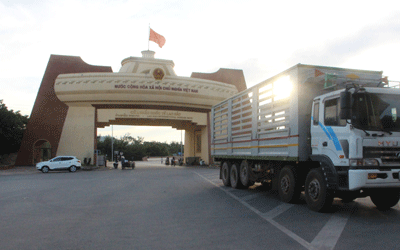
The busy Namphao-Cau Treo international border crossing between the two countries has already extended opening hours from 6am to 9pm.

Meanwhile, at lower volume traditional border crossings between Laos and Vietnam the opening hours will remain 8am to 4pm.

Director of Khammuan provincial Finance Department Mr Khamven Panyanouvong, told Vientiane Times on Monday that the Namphao-Cau Treo crossing opening hours were approved following agreement between the province and Vietnam’s Nghe An province.

The central government has yet to give the green light to extending opening hours for all Laos and Vietnam borders from 5 pm to 8 pm preferring to let Lao and Vietnamese provinces to make the decision on a case by case basis.

Deputy Head of the Administration Office in Khammuan province Mr Vannavong Vongprachanh also said that Naphao-Chalo international border between Laos and Vietnam in the province was open for freight trucks from 8 am to 5:30 pm, but stayed open for bus tours and travellers until 7:30 pm.

Director of the Savannakhet provincial Public Works and Transport Department, Mr Prasongsin Chaleunsouk, said Dansavan-Lao Bao international border has had an operational one door, one stop service since early 2015 which has reduced the time it takes vehicles to cross the border since its introduction.

The single window service means vehicles entering Laos from Vietnam are not checked at the Vietnamese border but only at the Lao border. Meanwhile vehicles from Laos entering Vietnam have to present their documents on the Vietnamese side only.

It now takes only 15 minutes for trucks to complete customs declarations at the Lao Bao-Dansavan border crossing between Vietnam and Laos. Vietnam needs to quickly build a strategy and policies for the development of cross-border transport, especially transport corridors.

The Nam Heuang-Nakaxeng International border in Xayaboury province also has an operational one door, one stop service.


Source: Vientiane Times

Intercontinental Set for 2021 Laos Debut

Intercontinental Hotels Group (IHG) is set to open its first Intercontinental-brand property in Laos in 2021, as part of the new mixed-use World Trade Centre development. The more than 400-room Intercontinental Vientiane will join a retail mall, medical centre, conference centre, office tower and residential towers when it opens.

The hotel and development will be situated next to Lan Cang Avenue, Vietnam Street and French Street, in close proximity to key buildings including the Prime Minister’s office, numerous international embassies and major convention centres. Meanwhile Wattay International Airport is a short drive from the location, and public transportation options will allow for convenient access to Lao National Museum and the Morning Market.

“Laos is currently one of the region’s fastest growing nations with close to five million international arrivals each year and future infrastructural and industrial developments underway to continue boosting economic growth and attract foreign investment,” said Leanne Harwood, vice president, operations for IHG, South East Asia and Korea. “It is well on its way to becoming one of the region’s busiest business and tourist destinations and it’s a great time to be bringing the Intercontinental brand into the country to tap on this potential.”

Guests at the hotel will be able to make use of the brand’s signature Club Lounge, in addition to a swimming pool, spa and fitness centre. A specialty restaurant, all-day international restaurant, lobby lounge and bar will make up the F&B offerings.

Speaking about the opening, Lao International Development Co. CEO, Xiao Long, said: “In looking for a hotel management partner we were seeking one with a strong track record in operating hotels in new markets and a well-known premium hotel brand to complement the mix of offerings which would draw business and leisure travellers to stay with us when they travel.”


Source: Business Traveller 

BCEL-KT: Trade Summary (Dec 1, 2016)

Trade summary

Lao stock market marked was quiet day on the final day of the week, index closed up by 0.13 percent or 1.33 points to stay at 1,028.48 points because of rising from BCEL’s price, making 400 shares traded and worth about 2,040,000 kip. EDL-Gen had the small trading volume with 300 shares, traded unchanged price at 5,100 kip. On the other hand, BCEL moved up during the price 5,000 kip to 5,100 kip, which had trading volume of just 100 shares.  In the meantime, other stocks saw no matching, with LWPC closing at 5,400 kip, PTL at 2,500 kip and SVN at 3,000 kip.

Infant Immunisation against Polio Falling Short of Target in Meun District

Only 70 percent of children under the age of five in 22 target villages in Meun district, Vientiane province, have been immunised against polio and given protection against seasonal diseases.

The district health office had set a target for 98 percent of children under the age of five to be vaccinated against polio, with the vaccines made available in villages and at dispensaries. But some dispensaries were failing to administer the vaccines.

The number of children being immunised against polio may fall short of the target because children under the age of five did not always make use of the service, according to a district health official, Dr Seng Soixa.

Dr Seng spoke to the media recently about the progress made in the ongoing supplementary immunisation campaign, which aims to secure the gains made against polio through stronger immunisation of children under the age of five.

“We know that not all children under the age of five are being vaccinated as their parents don’t understand the importance of vaccination.”

Since the launch of the supplementary immunisation campaign to prevent outbreaks of disease in the district, health officials and village volunteers have been entrusted to collect information directly from villagers, he added.

The figures collected revealed that the vaccination rate for this age group was less than the figure recorded by the authorities.

The programme aims to immunise and protect all children in the one-to-five age group through oral polio vaccines.

Children in the district are being vaccinated to further boost their immunity against polio under the government’s policy to provide effective public health services.

“The number of children being vaccinated in this district has continued to decline as many parents living in remote areas of the country don’t make use of health services because they don’t understand their importance,” Dr Seng said.

Children under five years of age are at risk of polio infection due to the failure to inoculate the entire population, highlighting the vital importance of this round of vaccinations in fully eradicating the virus.

According to the WHO Laos office, the organisation will boost the Ministry of Health’s initiatives on the prevention of polio by focusing on children at risk in target provinces. If their plan succeeds, polio will be eradicated in Laos by 2017.


Source: Vientiane Times

Entrance Fees Taking Toll on Champassak Tour Operators

The imposition of entrance fees to tourist sites in Champassak province is causing a downturn in visitor numbers, according to local tour operators.

As a result, some operators have halted their services while others still running are complaining about the decline in visitor numbers, blaming the fees.

Entrance fees are currently being collected from local and foreign visitors at World Heritage-listed Vat Phou Champassak and at the Phasuam and Khonephapheng waterfalls.

A hotel operator in Champassak, who did not wish to be named, told Vientiane Times on Thursday that tour operators can still conduct tours but are shying away from the main attractions because of the entry fees.

“Some tour companies have suspended services because the lack of visitors is making their businesses unviable,” she said.

“This year we are encouraging visitors to go to Nheuan, Fan, Phasuam, Nong Luang, Champee Nang Sida, and Lakpaed waterfalls, along with Don Nong Luang waterfall, which are all beautiful spots that tourists can enjoy,” she added.

“Some tour operators have commented that it’s acceptable for tourist sites to collect fees, but visitors shouldn’t have to pay 50,000 kip at Vat Phou,” the hotel operator said.

To add to their woes local operators are finding the going tough because they can’t compete with the lower prices of tour packages.

Thai tourists like to visit Vat Phou and Khonephapheng Waterfall, whereas visitors from Europe and the US prefer Khong district and the waterfalls in Pakxong district.

According to the Management Office at the Vat Phou World Heritage Site, about 600,000 tourists visit Champassak, but only about 100,000 people make it to Vat Phou each year.

Deputy Director of the Management Office, Mr Amphol Sengphachanh, said it was possible that newly introduced road tolls on the road leading to the province from Thailand were having a negative impact on visitor numbers.

But an official from the provincial Department of Information, Culture and Tourism, Mrs Mala Chanthalam, said the sheer number of tourist sites now available was giving visitors more attractions to choose from.

Overall, the total number of foreign tourist arrivals in Laos increased from 2.7 million people in 2011 to 4.1 million last year.


Source: Vientiane Times

Suspected Drug Dealers Nabbed in Provinces

INTERNET OUT Undated Police handout photo of a handful of different types of Ecstasy. Two thousand drug dealers have been arrested during the first four months of a campaign by Scottish police forces, it was announced today August 13 2001. Police have also seized more than â14 million worth of drugs, including heroin, cocaine and Ecstasy, as part of the Know the Score campaign, which ends on August 31. Heroin accounted for almost â £9 million of the total amount of drugs recovered, while officers also seized â1 million worth of cocaine. Drug squad officers also found 142,000 Ecstasy tablets and 40 kilogrammes of amphetamines. See PA 0430 story SCOTLAND Drugs. PA Handout photo.

Police in the provinces of Bokeo and Luang Namtha have made significant arrests involving large quantities of illegal drugs, local media reported.

The Bokeo Drug Prevention and Control Department recently arrested a couple and confiscated 12kg of crystal methamphetamine and about 42,000 amphetamine pills in Namkerng village, Tonpheung district.

According to the Khuamsangob newspaper, police received a tipoff from a local resident regarding the transport of illegal drugs from Bokeo province to Vientiane.

Police used a vehicle inspection checkpoint in Namkerng village to stop and examine a bus and found the crystal methamphetamine and amphetamine pills in the couple’s bags.

The pair were named as Mr Maysengyod, 51, and Ms Fong, 48, of Huaypherng village, Tonpheung district.

They told police that a drug dealer, who they couldn’t name, hired them to take the drugs from Bokeo province to Vientiane for which they would be paid about 102,000 Thai baht.

Police are continuing their investigation into the case in hopes of identifying other people involved in the drug ring.

Meanwhile, in Luang Namtha province police arrested two men after finding 18,000 amphetamine pills concealed in a motorbike.

The men were named as Mr Korpa, 32, and Mr Kermue, 27, both of Poungxay village, Long district.

Police set up a road block in Sing district and stopped the motorbike, finding the stash inside.

Mr Korpa confessed to buying the pills from a man in Myanmar, with the intention of selling them. He paid Mr Kermue 500,000 kip to take him and the pills by motorbike to a Mr Yaso in Homxay village, Sing district.

Under amended Article 146 of the Criminal Law, for cases involving refined drugs as opposed to precursor chemicals, the penalties are the following:

For the possession, trading, sale or trafficking of between 0.3 and 100 grammes of synthetic drugs such as amphetamine, ecstasy, ice or crystal methamphetamine or other mind altering substances, the punishment shall be a prison sentence of 5-10 years. For between 100-500g of any such substances the punishment under the law is 10-20 years in jail plus financial penalties.

Under the law, anyone convicted of possessing over 500g of heroin can be handed the death penalty.


Source: Vientiane Times

Employees Enjoy Better Working Conditions, Rights

More than 400 state enterprises and private factories in Vientiane have signed on to collective bargaining agreements to protect the rights and benefits of both employees and employers.

Most people working at state enterprises are more satisfied with their working conditions than employees in factories, because some state enterprise workers earn a better income.

But both employees in state enterprises and privately-owned factories have seen their social welfare improve after many local businesses entered into collective bargaining agreements, which were initiated by the Lao Federation of Trade Unions and development partners in 2008.

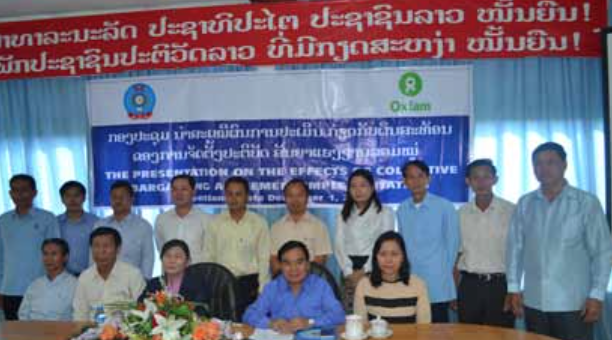
This information was revealed last week at a meeting of the Lao Federation of Trade Unions and the National University of Laos, who have set up a joint cooperation programme. The meeting, which was chaired by the federation’s Vice President Mr Simoun Ounlasy, heard about the effects of collective bargaining agreement implementation.

Participants discussed the ways in which the collective bargaining agreements had helped to improve efforts to protect the rights and benefits of employees and employers.

The Collective Bargaining Agreement Implementation Committee presented a survey of the status changes of business units, employees and employers.

The survey showed that the status of business units had improved and that working conditions were safer in many cases, employees had better and stable jobs, and employees were earning a decent wage and enjoying social welfare benefits.

The average salary in some privately-owned factories is between 1-2 million kip per month and 2-5 million kip in some state enterprises in Vientiane.

It was also found that employees were paying more attention to their work, complying with workplace rules, sticking to working hours, showing more responsibility, and enjoying their work more.

Mostly people working at factories in Vientiane who were not normal residents of the capital came from Huaphan and Luang Prabang provinces, while most of those working at state enterprises who had migrated to Vientiane came from Vientiane province.

The status of employers had also changed for the better, as they had developed better relationships with employees, provided good advice, explained the situation when employees made a mistake, and gave larger bonuses on special occasions.

Some employers also provided facilities, housing and transport, and improved the workplace to provide more convenience for employees.

The Lao National Chamber of Commerce and Industry strongly believes that skill development, labour migration, education, and human resource development are important and benefit the country.

The Chamber advised that businesses should do more to develop labour skills, in addition to ploughing in more investment and creating more job opportunities for Lao people so that Laos can graduate from Least Developed Country status by 2020.


Source: Vientiane Times

Savannakhet Gears Up for That Inhang Festival

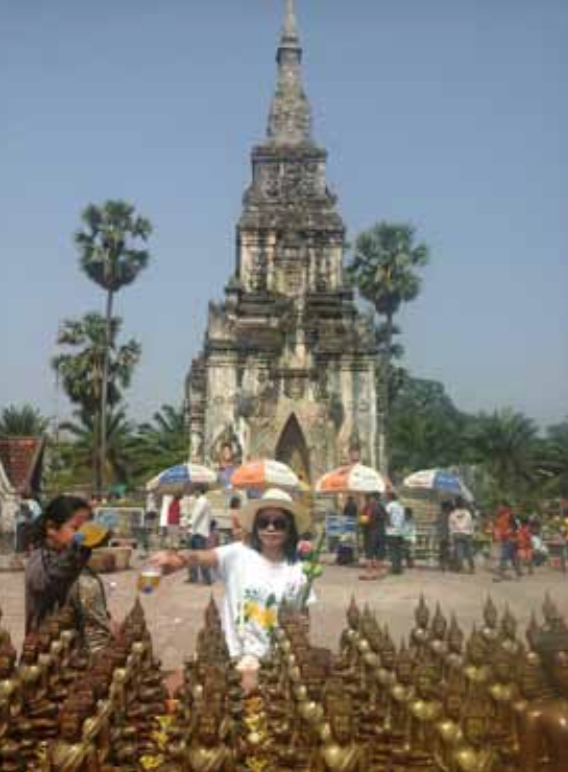
The annual That Inhang stupa festival in Kaysone Phomvihane district, Savannakhet province, is ready to go ahead from December 10-14, local authorities have confirmed.

Kaysone Phomvihane district Governor, Mr Bounyou Thammavong, told Vientiane Times on December 1  For this year’s festival we focused on local cultural activities in the hope they will interest visitors and make them want to come back again.

During the afternoon of the official opening ceremony day on December 12, attendees can enjoy a cultural performance with over 10 programmes. I hope they will teach all visitors more about the lifestyle here in Savannakhet province.

During the five-day festival, the organising committee will hold a trade fair which will mainly exhibit products from the province’s 15 districts. Meanwhile, the provincial authority will also present the One District, One Product (ODOP) logo to three districts, namely Kaysone Phomvihane, Songkhon and Atsaphon, so they will be known as ODOP districts, he added.

According to the festival schedule, on the afternoon of December 13 thousands of devotees will take part in a wax castle procession around the stupa and on the morning of December 14 there will be a tak baat (alms giving) ceremony. This is a traditional ritual that is a highlight of the annual festival, allowing people to pay homage to the revered stupa.

According to tourismlaos.org, That Inghang is a sacred stupa and reportedly the burial site of one of Buddha’s bones. It is an important place for Buddhists and is registered as a National Treasure of Laos. It was built about 450 years ago during the reign of King Marukhanakhone to commemorate the Buddha’s visit to the site.

Buddha is believed to have delivered a sermon to people at the site and later took a rest under the Hang tree. This is the reason why the stupa is called That Inghang.

The That Inghang festival takes place every December. The stupa is located in That village, Kaysone Phomvihane district. The easiest way to get there is to head out along Route 9 for about 12km and turn left at the police post, and then drive straight for about another 3km and you will come directly to the stupa.

Women are required to wear a traditional sinh (long Lao skirt) to enter the site. These are available next to the entrance. Normally, on days other than the festival, the gate is open daily from 8am to 6pm.

Savannakhet province is situated in central Laos and is the largest province with about 21,774 square kilometres, bordered by Vietnam to the east, Thailand to the west, Khammuan province to the north and Saravan province to the south. About 60 percent of the land is covered by forests.


Source: Vientiane Times