Home Blog Page 688

MGI Tech Celebrates 10 Years of Innovation, Empowering 3,560 Users Across Six Continents

SHENZHEN, China, April 13, 2026 /PRNewswire/ — MGI Tech Co., Ltd. (MGI), a company dedicated to developing core tools and technologies that drive innovation in life sciences, celebrates its 10th anniversary, a decade marked by breakthroughs that have helped transform genomics into a scalable, data-driven and accessible engine of discovery.

Since its founding in 2016, MGI has tackled the fundamental challenges of making genomics affordable, scalable, and ready for real-world deployment. Providing trusted platforms for cutting-edge research and diagnostics, MGI serves over 3,560 users and 5,300 installations globally, contributing to 18,009 peer-reviewed publications to date. Now entering its second decade, the company is accelerating into the next chapter where artificial intelligence, integrated workflows, and multi-omics technologies converge to accelerate scientific discovery and real-world impact across medicine, agriculture, and environmental science.

From Ultimate Tool to Deployment-Scale Systems

MGI’s decade of progress is rooted in a singular philosophy: “to advance science, one must sharpen one’s tools.”

A decade ago, sequencing systems were physically large, operationally rigid, and economically prohibitive. Throughput was limited, workflows fragmented, and adoption concentrated within well-funded research centers.

To address these challenges, MGI has focused on building foundational tools ranging from high-performance sequencing to automated laboratories and integrated multi-omics platforms.

Early platforms such as the G400 and G50 introduced streamlined workflows designed for broader adoption. These systems helped lay the foundation for scalable genomic research by making high-quality sequencing more accessible and adaptable.

In 2018, the T7 set a new benchmark—ultra-high-throughput platforms capable of sequencing up to 60 human genomes per day, marking a decisive increase in production capacity.

In 2022, MGI launched E25, the world’s first sequencer based on self-luminous sequencing technology, and G99, a compact platform designed for rapid, mid-to-low throughput applications. Notably, both sequencing platforms demonstrated resilience under extremely high-altitude conditions on Mount Everest, underscoring growing geographic adaptability.

By 2023, the launch of the T20×2 “Super Sequencing Factory” further transformed the economics of genomics. Capable of sequencing up to 50,000 human genomes annually, the platform helped push the cost of whole-genome sequencing below $100 per genome, redefining economic benchmarks for population-scale genomic programs.

The evolution continued in 2025 with the introduction of next-generation platforms, such as T1+ and T7+, which further increased data density and reduced turnaround times, delivering terabyte-scale output within 24-hour cycles.

Together, these advancements demonstrate how sequencing has evolved into a scalable genomic infrastructure that supports large-scale research and clinical deployment.

Rather than highlighting a single milestone, the past decade reflects the shift of genomics from specialized laboratories into integrated research and clinical workflows driven by commercialization, cost reduction, ecosystem collaboration, and automation. Today, genomics can be deployed across research institutions, hospitals, and global initiatives, enabling broader access, faster discovery, and support for precision medicine worldwide.

From Sample to Insight: Building Intelligent Laboratories

As life science enters the era of multi-omics and large-scale biological datasets, generating data is no longer the hurdle; the real challenge lies in running complex workflows with speed, precision, and reproducibility.

MGI has therefore expanded its focus from instruments to intelligent laboratory ecosystems.

  • Automation at Scale

Platforms such as SP-960 and SP-Smart8 automate critical steps from sample preparation to library construction, enabling high-throughput laboratories to dramatically reduce manual variability while increasing productivity. For labs seeking an even higher level of integration and control, D4 offers a fully enclosed digital microfluidic solution.

  • Precision at the Cellular Level

MGI’s DNBelab C Series, including C4 and C-YellowR 16, enables high-resolution single-cell analysis—allowing scientists to map complex biological systems cell by cell.

These technologies are part of a broader shift toward AI-enabled, modular, and automated research workflows to scale multi-omics research and accelerate scientific discovery. 

From Sequencing to Multidimensional Biology

Modern genomic research requires multiple sequencing approaches to address complex biological questions. Yet no single modality can meet all research needs, and combining systems from different suppliers often introduces technical incompatibilities, workflow misalignment, and operational inefficiencies at scale.

Following the acquisitions of STOmics and CycloneSEQ, MGI has become one of the world’s only life science technology providers capable of delivering integrated short-read sequencing, long-read nanopore sequencing, and nanoscale spatial transcriptomics within a single ecosystem. 

This integration enables researchers to capture biological information across multiple dimensions:

  • DNA — decoding the genetic blueprint of life
  • Cell Omics — analyzing biological processes at single-cell resolution
  • Spatial Omics — mapping molecular activity within tissues and biological systems
  • Proteomics — revealing functional molecular networks and protein dynamics

Together, these capabilities form the foundation of MGI’s SEQALL + GLI + Omics strategy, combining sequencing technologies, Generative Lab Intelligence, and integrated multi-omics solutions into a unified ecosystem for next-generation research.

From Rule-based to AI-driven

As artificial intelligence continues to reshape biotechnology, genomics is transitioning from proprietary systems toward modular, programmable architectures.

MGI introduced the G400RS FluoXpert Vision to advance single-cell spatial analysis in multiplex immunofluorescence studies. Powered by an AI Assistant using the DeepSeek V3 large language model (LLM), the system enables the processing and visualization of complex datasets through workflow-driven prompts. Complementing this, the PMIF-20 Multiplex Fluorescent Staining and Imaging System automates spatial proteomics workflows, providing high-resolution insights into the tumor microenvironment and illuminating cellular interactions in cancer research.

Through these platforms, MGI enables scientists to study biology not only at scale but also in context— across time, space, and molecular layers.

Toward the Era of Biological Intelligence

The expansion of genomic capacity over the past decade has supported national genomics initiatives, expanded oncology sequencing programs, advanced rare disease diagnostics, and enhanced public health surveillance. Whole genome sequencing (WGS) has transitioned from a research output to a clinically integrated workflow.

“Over the past decade, genomics has transitioned from specialized capability to foundational scientific infrastructure,” said Duncan Yu, President of MGI. “The responsibility now is to build open, intelligent systems that reduce barriers to access while maintaining rigor and enabling sustainable precision medicine worldwide.” This responsibility also includes ecosystem partnerships, AI integration, and modular system design that reduces technical barriers without compromising scientific standards.

Looking ahead, MGI believes the future of life science will be defined by the convergence of large-scale biological data, artificial intelligence, and intelligent laboratory systems.

Industry consensus is increasingly pointing toward reducing the cost of whole-genome sequencing to $10 per genome. Reaching that threshold would redefine preventive medicine, population health management, global disease surveillance, precision agriculture, and environmental monitoring.

About MGI

MGI Tech Co., Ltd. (or its subsidiaries, together referred to as MGI) is committed to building core tools and technologies that drive innovation in life science. Our focus lies in research & development, manufacturing, and sales of instruments, reagents, and related products in the field of life science and biotechnology. We provide real-time, multi-omics, and a full spectrum of digital equipment and systems for precision medicine, agriculture, healthcare, and various other industries.

Founded in 2016, MGI has grown into a leader in life science, serving customers across six continents and establishing research, manufacturing, training, and after-sales service facilities globally. As one of the few companies capable of independently developing and mass-producing clinical-grade gene sequencers, MGI empowers global users with scalable sequencing capabilities ranging from Gb to Tb levels. MGI also stands out as one of the only providers of a full-stack product portfolio that spans three core segments: SEQ ALL (short- and long-read sequencing), GLI (Generative Lab Intelligence), and Multi-Omics. With unparalleled expertise, cutting-edge products, and a commitment to global impact, MGI continues to shape the trajectory of life sciences into the future.

For more information, please visit MGI Tech, Linkedin, X, Instagram, and Youtube.
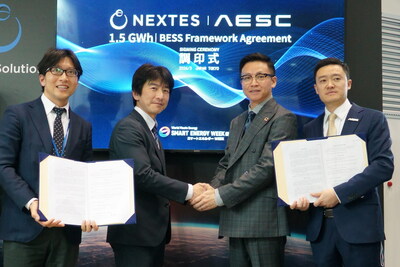
AESC and NEXTES Sign 1.5 GWh Strategic Supply Agreement, Marking Japan’s Largest Energy Storage Cell Order of 2026

Three-year deal to supply BESS cells for grid-scale deployments across Japan and international markets

TOKYO, April 13, 2026 /PRNewswire/ — AESC and NEXTES, a Japanese energy storage integrator, recently announced a three-year strategic supply agreement at SMART ENERGY WEEK in Tokyo. Under the agreement, AESC will supply 1.5 GWh of energy storage cells beginning in 2026 — the largest single ESS cell order placed in the Japanese market this year.

AESC and NEXTES Sign 1.5 GWh Strategic Supply Agreement

Japan’s energy storage market demands rigorous JIS certification, compatibility with the country’s unique grid frequency and voltage characteristics, and long-term performance commitments including capacity warranties of up to 20 years. AESC’s track record in large-capacity energy storage cell production — leading the generational shift from 300+ Ah to 500+ Ah to 700+ Ah — combined with a comprehensive global certification portfolio spanning JIS (Japanese Industrial Standards), IEC (International Electrotechnical Commission standards), and UL (Underwriters Laboratories standards) and zero critical safety incidents across more than 100 GWh of cells delivered worldwide, were decisive factors in NEXTES’s selection.

As NEXTES expands its project pipeline beyond Japan, AESC’s manufacturing footprint across Asia, Europe, and North America — with 14 gigafactories in Japan, China, the United States, the United Kingdom, France, and Spain — enables both companies to serve diverse regional certification requirements and support long-term operational partnerships at scale. In Japan specifically, AESC’s local R&D and manufacturing base in Yokohama provides NEXTES with direct access to technical support and supply chain proximity.

Japan’s grid-scale energy storage market is projected to grow steadily, driven by accelerating renewable energy deployment and ongoing power market reform. The AESC-NEXTES partnership positions both companies to capture this growth with a supply chain built on proven safety, certified quality, and long-duration performance.

About AESC

AESC is a global leader in high-performance batteries for electric vehicles and energy storage systems. Founded in Japan in 2007 and headquartered in Yokohama, the company operates 14 gigafactories across Japan, China, the United States, the United Kingdom, France, and Spain. In the energy storage sector, AESC has pioneered early mass production of ESS large-capacity cells exceeding 300Ah, 500Ah, and 700Ah, demonstrating clear technological leadership. To date, AESC has delivered over 100 GWh of energy storage cells across more than 400 projects in over 20 countries, partnering with leading global system integrators including Envision Energy, Fluence, Nidec, and NEXTES.

About NEXTES

Founded in 2008, NEXTES has developed advanced in-house technology for efficient lithium-ion battery control and offers a broad portfolio of lithium-ion battery solutions integrated with its proprietary systems. Guided by its mission “THE ADVENTURERS – Adventurers solving energy challenges for the coexistence of people and the planet,” the company delivers long-life energy storage systems through its innovative technologies. With the growth of renewable energy, its solutions have been widely adopted for grid-scale energy storage and other applications. NEXTES is also actively engaged in battery reuse initiatives, working toward the realization of a sustainable society. Addressing global energy challenges through professional technical expertise, NEXTES is committed to building businesses for a sustainable future. As part of its growth strategy, the company officially rebranded from its former name, NExT-e Solutions Co., Ltd., to NEXTES on April 1, 2026.

Annual Role-Model Enterprise Honored at the 2026 China ESG Gala | Muyuan: Empowering High-Quality Agricultural Development through ESG

BEIJING, April 13, 2026 /PRNewswire/ — Muyuan, a representative enterprise in the agricultural sector, was honored as a Role-Model Enterprise at the 2026 China ESG Gala for its exemplary practices in green and low-carbon operations, circular agriculture, and social responsibility. Qin Yinglin, Chairman of Muyuan, attended the ceremony and used “family” as a metaphor to interpret the philosophy that “with pigs and grain, the nation is secure,” demonstrating China’s firm commitment to sustainable agricultural development.

In 2025, Muyuan supplied to the market 77.98 million pigs, with a carbon emission intensity of only 0.883 kg CO₂e per kg of pork. It reduced carbon emissions across its entire industrial chain by 6.0588 million tons – equivalent to planting 600 million trees – breaking the stereotype that “agriculture struggles to become an ESG benchmark.” Leveraging its integrated pig farming industry chain, Muyuan pioneered a crop-livestock cycle model, realizing 100% resource utilization of pig manure and urine, covering 4.92 million mu (approx. 328,000 hectares) of farmland, and increasing farmers’ annual income by over CNY 1 billion. Additionally, it improved 300,000 mu (approx. 20,000 hectares) of saline-alkali land in regions such as Da’an, Jilin Province, turning barren soil into fertile farmland with rice yields exceeding 900 jin per mu (approx. 6,750 kg per hectare). Guided by its “Five Plus” and “Five Minus” green development concepts, Muyuan ensures “safe, delicious, and green” consumption, aligning ESG practices with people’s aspirations for a better life.

Muyuan firmly believes that ESG is a must-do task for high-quality development. Going forward, it will continue to drive green transformation through technological innovation, offering a “Chinese Solution” for the sustainability of global agriculture.


Narwal Launches Flow 2 Robot Vacuum with Vision Language Model(VLM) and Upgraded FlowWash Mopping System

Featuring unlimited object recognition, a 140°F self-cleaning track mopping system, and a reimagined premium design for smarter, more efficient home cleaning.

NEW YORK, April 13, 2026 /PRNewswire/ — Narwal, a global leader in smart home cleaning, today announced the launch of its 2026 flagship robot vacuum, the Narwal Flow 2, bringing advanced AI capabilities and enhanced cleaning performance to modern homes. Building on its industry-recognized mopping technology, the Flow 2 introduces a Vision Language Model (VLM) that enables human-like spatial understanding, along with new scenario-based features such as Baby Care Mode, Pet Care Mode, and AI Floor Tag. The product also features a redesigned, premium aesthetic that blends seamlessly into contemporary living spaces.

Narwal Flow 2
Narwal Flow 2

First unveiled at CES 2026, the Narwal Flow 2 immediately captured widespread media attention and earned multiple prestigious awards. Today, with its official release, Narwal brings this highly anticipated innovation to households across North America.

FlowWash Mopping System: Building on the acclaim of the original Flow’s FlowWash Mopping System, the Flow 2 further raises the bar by increasing heated water temperature from 113°F to 140°F. Traditional dual-spin or flat mops easily spread dirt due to a lack of timely self-cleaning. To resolve it, the Flow 2 features a high-speed track mop rolling at over 100 rotations per minute with 12N of downward pressure, while using heated water through a 16-nozzle rinsing system. An integrated scraper removes debris from the track, and wastewater is collected internally, together with real-time hot water washing to keep the mop clean throughout. Unlike roller mops that clean along a rotating “line,” the Flow 2 provides full 0.157 ft² surface coverage per pass, ensuring genuine surface contact for more effective and efficient cleaning. While conventional roller mops’ central rotating-axis design is prone to hair tangles, the flat-loop track rotates on a plane with attached hair releasing more easily, preventing tangling at the source.

Human Vision. AI Decisions: Equipped with dual RGB cameras and an onboard AI processor, the device enables adaptive obstacle avoidance and distinguishes between different types of messes to optimize cleaning strategies. The introduction of Narwal’s cloud-based VLM Omni Model expands recognition capabilities beyond onboard limitations, enabling continuous learning and more accurate contextual understanding. This empowers advanced features such as Pet Mode, which includes auto pet zone cleaning and pet locating, and Baby Mode, featuring ultra-quiet operation near cribs and toy recognition. With the AI Floor Tag mode, the robot can identify valuable objects and alert users upon detection.

Brand-New Industrial Design: Narwal’s latest flagship base station features a sleek, semi-enclosed design with a square silhouette and frosted glass surfaces, transforming the robot from a bulky appliance into a refined home centerpiece. An ambient light strip beneath the glass indicates its status and creates a dynamic visual effect, blending function with elegant design.

Comprehensive Upgrades for Effortless Home Cleaning: Additional flagship features include a 7,000 mAh battery with AI-powered battery health management supporting simultaneous washing and fast charging, a 3D color mapping system for enhanced control and interactivity, upgraded 31,000Pa suction power with CarpetFocus technology and anti-tangle design, and a fully automated base station with self-emptying, AI Adaptive Hot-Water Mop Washing, and a large dust bag supporting up to 120 days of maintenance-free use.

Availability
The Narwal Flow 2 will be available for pre-order from April 13 to April 28 on the Narwal website and Amazon, with a promotional price of $1,099.99 (MSRP $1,499.99).

About Narwal
Narwal is dedicated to developing innovative products that transform daily life. Our range of solutions addresses common challenges, with a focus on understanding and meeting user needs through extensive R&D. This commitment has yielded industry-firsts like the Auto-washing mop, AI-powered DirtSense™, and the DualFlow Tangle-Free System. We obsess over every detail to ensure our products are both functional and aesthetically pleasing, aiming to blend design and performance for a better daily life. As a top-five global vacuum brand, Narwal serves over 5 million users across 30 countries, including North America, South Korea, Germany, and Australia. Our innovations have been honored with awards like the CES Innovation Awards, Edison Gold Award, and Time Magazine’s Best Inventions.

Media contact:
Dede Liu, xichen.liu@narwal.com 

SKF to publish Q1 report on 21 April

GOTHENBURG, Sweden, April 13, 2026 /PRNewswire/ — SKF will publish its Q1 results for 2026 on 21 April at approximately 07:30 (CEST).

Investors, analysts and media are invited to join an audio webcast, which will be held in English, at 08:30 (CEST). Please note that the start time differs from previous quarters.

To join the webcast, please login at least 10 minutes before the start using the below link or phone numbers:
Link to web event: https://www.investis-live.com/skf/69aab7a8e4fbb0001603e68d/laodr
Sweden: +46 8 5051 0031
UK / International: +44 207 107 0613

All information regarding the results will be made available on the Group’s IR website: https://www.skf.com/group/investors/financials/quarterly-reports?page=1 

Media: To book interviews with Rickard Gustafson, President and CEO, please contact Carl Bjernstam on carl.bjernstam@skf.com.

Aktiebolaget SKF
      (publ)

For further information, please contact:
Press Relations: Carl Bjernstam, +46 31-337 2517; +46 722 201 893; carl.bjernstam@skf.com
Investor Relations: Sophie Arnius, +46 31-337 8072; +46 705 908072; sophie.arnius@skf.com

This information was brought to you by Cision http://news.cision.com

https://news.cision.com/skf/r/skf-to-publish-q1-report-on-21-april,c4333660

The following files are available for download:


37-Year-Old Singapore Florist Launches AI Chatbot That Saves Over $4,500 a Month in Customer Service Costs

Heritage flower brand deploys conversational AI across WhatsApp, proving that traditional SMEs can lead, not follow, in technology adoption

SINGAPORE, April 13, 2026 /PRNewswire/ — Singapore Florist, a heritage flower brand established in 1987 and acquired by Jim Ng’s team in 2024, has launched an AI-powered sales chatbot that handles the workload of a full-time customer service employee at a fraction of the cost.

The chatbot, nicknamed “SingBee” after the brand’s mascot, handles the full customer journey on WhatsApp, from product recommendations and occasion-specific suggestions to order placement and delivery scheduling. It operates 24/7 across both Singapore Florist and its sister company, 1 Mayflower Pte Ltd, which together serve over 15,000 customers annually.

“This brand has been arranging flowers since 1987. That is 39 years of customer knowledge baked into the business,” said Jim Ng, who acquired Singapore Florist in 2024. “After the acquisition, we noticed a clear pattern. A large volume of customer enquiries were coming in after office hours, between 9pm and midnight. By the time the team responded the next morning, many of those customers had already ordered elsewhere. The average response time was sitting at 4 hours. That was the pain point that pushed us to build the chatbot.”

Key results from the first month of deployment:

  • Average customer response time reduced from 4 hours to under 25 seconds
  • 24/7 availability captured orders previously lost during off-hours (11pm to 8am accounted for 18% of AI-assisted orders)
  • Reduced full-time customer admin costs in excess of $4,500 monthly, replacing what would require a salaried employee to perform at the same level of output
  • Google Reviews improved from 4.7 to 4.8 stars for both 1 Mayflower Pte Ltd and Singapore Florist, driven by faster response times and consistent service quality

The AI infrastructure is a joint venture between 1 Mayflower Pte Ltd and Singapore Flower Delivery Pte Ltd. The system is trained on nearly four decades of florist domain knowledge, including flower care instructions, cultural gifting etiquette across Singapore’s multi-ethnic communities, and real-time inventory from the company’s Eunos studio.

What makes this story remarkable is who built it. The entire system was developed by a two-person team with no formal engineering background. Neither holds a computer science degree. Neither had built an AI product before.

“Most SMEs think AI adoption means hiring a tech team and spending six figures,” said Ng. “We built this with two non-technical people in under 90 days. With how far AI tools have advanced, you do not need to be a developer to build something that works. You just need to understand your customer well enough to teach a machine how to help them.”

The deployment is part of a broader digital transformation at both Singapore Florist and 1 Mayflower Pte Ltd, sister companies that share the same AI infrastructure, supply chain, and Eunos-based studio. The shared technology stack allows both brands to offer identical AI-assisted service quality while maintaining distinct brand identities. Singapore Florist focuses on direct-to-consumer gifting, while 1 Mayflower Pte Ltd specialises in wedding florals, corporate events, and large-scale installations.

The companies plan to extend the AI system to handle post-purchase follow-ups, loyalty programme management, and proactive reorder suggestions based on customer purchase history.

About Singapore Florist and 1 Mayflower Pte Ltd

Established in 1987, Singapore Florist is a heritage flower brand operating from its studio at Eunos, acquired by Jim Ng’s team in 2024. The company offers free same-day delivery islandwide with no GST, and maintains a 4.8-star Google rating across 195+ reviews. Singapore Florist and 1 Mayflower Pte Ltd are sister companies that jointly invest in shared AI and logistics infrastructure, collectively serving the full spectrum of floral needs from everyday bouquets to large-scale event installations.

Media Contact: 
Singapore Florist
Singapore Flower Delivery Pte Ltd
Jim Ng
jim@bestmarketing.com.sg
+65 9231 3757

Note to editor: Jim Ng is available for interview. High-resolution images of the AI chatbot interface, the Eunos studio, and the SingBee mascot are available on request.

Xayaburi Cracks Down on Shirtless Celebrations, Roadside Water Guns, Inappropriate Behavior

Laos officially authorizes Lao New Year (Pi Mai) celebrations
Lao New Year (Pi Mai) festivities include spraying water on passers by (Photo: Phoonsab Thevongsa)

Authorities in Xieng Hon district, Xayaburi Province, have issued a notice outlining strict rules for Pi Mai Lao celebrations, including bans on roadside water guns, late-night gatherings, and inappropriate public behavior.

The notice, signed on 7 April by District Administrative Committee Chairman Bounchan Keochaeng, applies to all 43 villages during the holiday period.

Authorities banned the use of vehicles equipped with water tanks, buckets, or hoses to splash water on roads. Residents must not use dirty water, paint, water mixed with harmful substances, or water thrown in plastic bags.

The notice also prohibits group gatherings that involve removing clothing or wearing revealing outfits that do not align with Lao cultural norms.

Street dancing in groups is also not allowed.

Curfews, Business Hours, and Safety

Entertainment venues and restaurants must close by 23:30. Authorities require all celebrations to end by this time, the notice reads.

Officials further urged residents to follow traffic laws and avoid drink driving. Children under 15 cannot operate motorcycles or cars, with guardians held responsible for violations.

Authorities also ban heavy vehicles from using roads during the holiday and prohibit speeding.

Carrying weapons is prohibited, except for on-duty officers.

Authorities also banned firecrackers, homemade rockets, and explosives, along with illegal substances including methamphetamine, ketamine, and electronic cigarettes.

Foreign Visitor Registration

Foreign visitors staying with relatives or friends must register with the district police within 24 hours of arrival.

Authorities warned that violations will result in warnings, fines, or legal action.

Ongoing Focus on Cultural Conduct

Xieng Hon has previously drawn attention for strict cultural rules.

In an earlier notice in 2025, authorities banned public kissing during wedding ceremonies and prohibited nighttime wedding processions, citing the need to preserve traditional Lao values.

Officials described public displays of affection as inappropriate in formal settings and instructed event hosts not to encourage such behavior.

The latest Pi Mai regulations align with the district’s continued effort to promote safety, order, and cultural preservation during major celebrations.

Haisco Enters into Exclusive License Agreement with AbbVie to Develop Novel Medicines for Pain

BEIJING, April 13, 2026 /PRNewswire/ — On April 10, 2026, Haisco Pharmaceutical Group Co., Ltd. (Ticker Code: 002653) announced that it has entered into an exclusive licensing agreement with AbbVie (NYSE: ABBV), a global biopharmaceutical company. Under the agreement, Haisco grants AbbVie the exclusive rights to develop, manufacture, and commercialize novel medicines for the treatment of pain globally, excluding mainland China, Hong Kong, and Macau.

The program includes multiple compounds designed to address pain-related indications. These compounds are currently at various development stages in China, ranging from preclinical to Phase 1 clinical development.

“This collaboration is highly aligned with our international development strategy and is expected to generate sustainable value and long-term returns,” said Dr. Pangke Yan, chief executive officer of Haisco. “By partnering with a global biopharmaceutical leader such as AbbVie, Haisco aims to accelerate the global development of innovative pain therapies and deliver high-quality treatment options to patients worldwide.”

The collaboration strengthens Haisco’s global presence and pipeline by leveraging AbbVie’s development and commercialization capabilities, as well as its recognized expertise in neuroscience.

Haisco will receive an upfront payment of USD $30 million and is eligible to receive up to USD $715 million in aggregate development, regulatory, and commercial milestone payments. In addition, Haisco is eligible to receive tiered royalties on future net sales.

About Haisco

As a benchmark enterprise in China’s innovative pharmaceutical sector, Haisco adheres to a core strategy of “innovation-driven growth and global expansion.” The company has established a diversified R&D pipeline encompassing small-molecule innovative drugs, biologics, and high-end generics. Haisco is actively advancing more than 50 R&D programs across key therapeutic areas including pain management, oncology, respiratory diseases, autoimmune disorders, metabolic diseases, and central nervous system disorders; notably, over 10 of these programs have entered pivotal clinical stages. The company has maintained a strong commitment to R&D, with investment exceeding 15% of revenue in each of the past three years. It has established major R&D centers in Chengdu, Shanghai, and Silicon Valley, supported by a research team with extensive global experience, forming an integrated innovation system combining in-house capabilities and external collaboration.

As early as 2015, Haisco initiated its global strategy and has since actively expanded into international markets through multiple approaches, including out-licensing transactions, co-development partnerships, and overseas mergers and acquisitions.

Looking ahead, Haisco will continue to focus on areas of unmet medical need, strengthen its capabilities in independent innovation and global collaboration, and strive to deliver high-quality, China-originated innovative medicines to patients around the world.